Autocar India

Last Updated on: 14 Apr 2026

MG Windsor variants
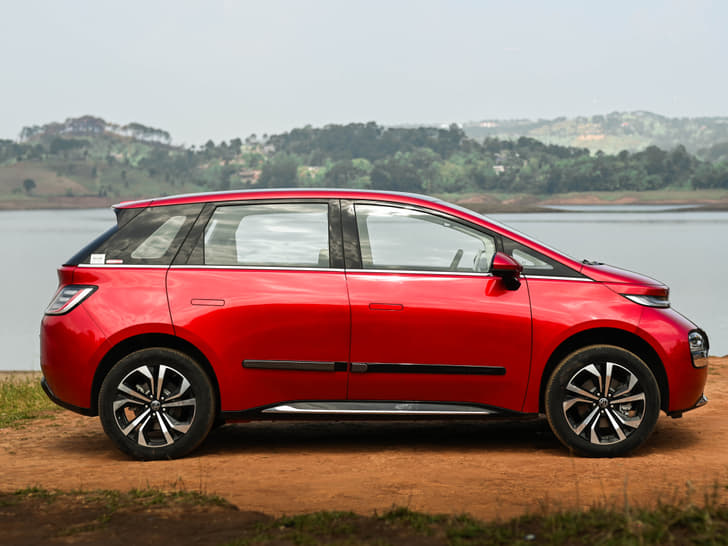
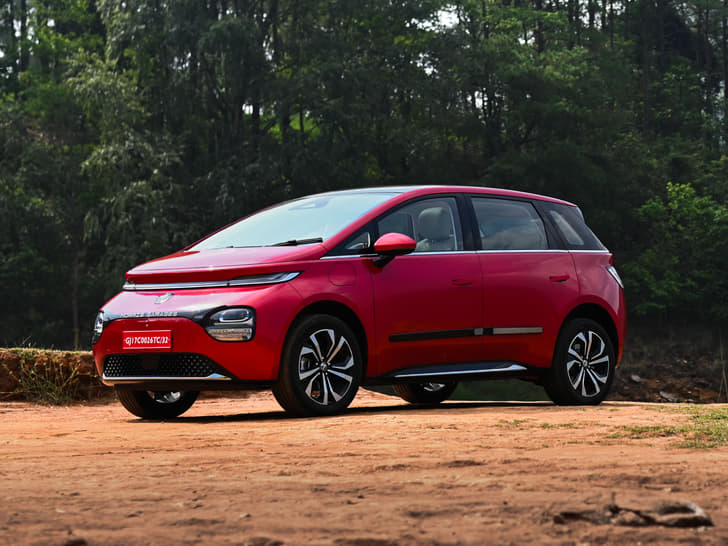
Front Left Three Quarter
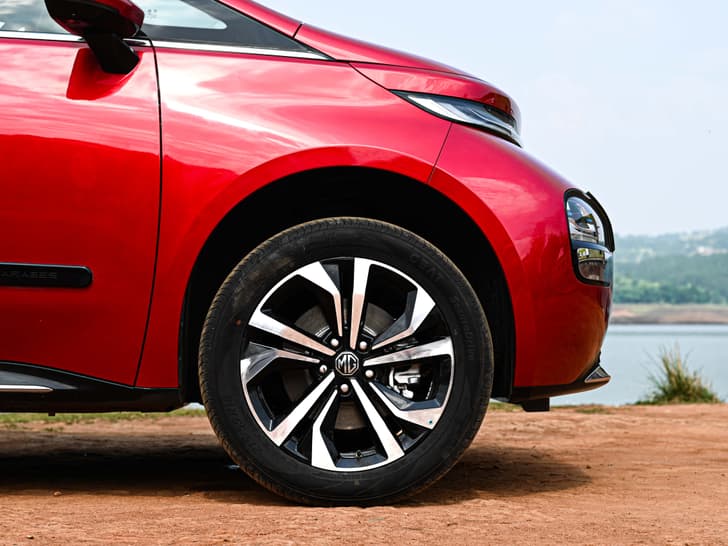
Alloy Wheels
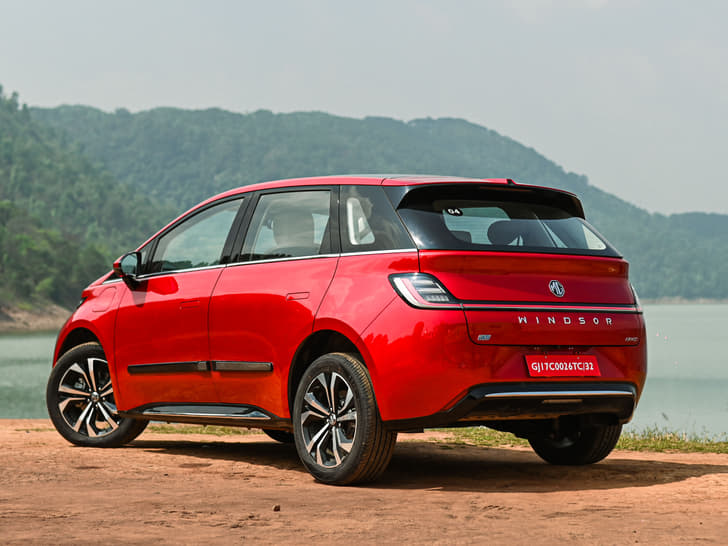
Rear View
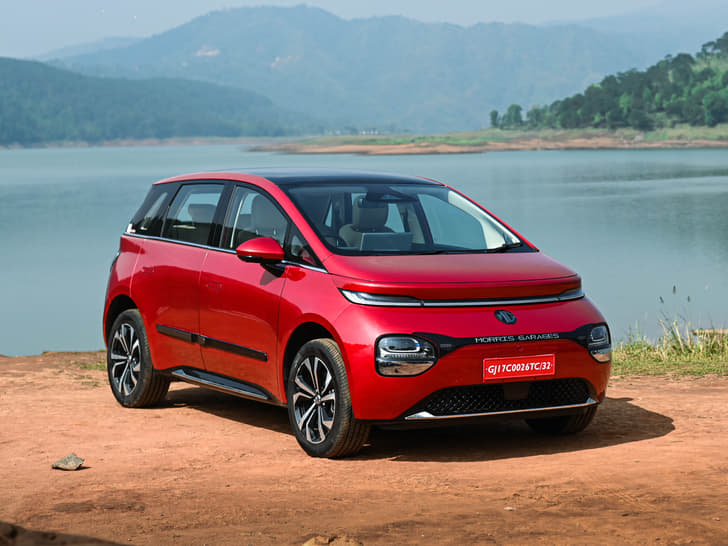
Front Right Three Quarter
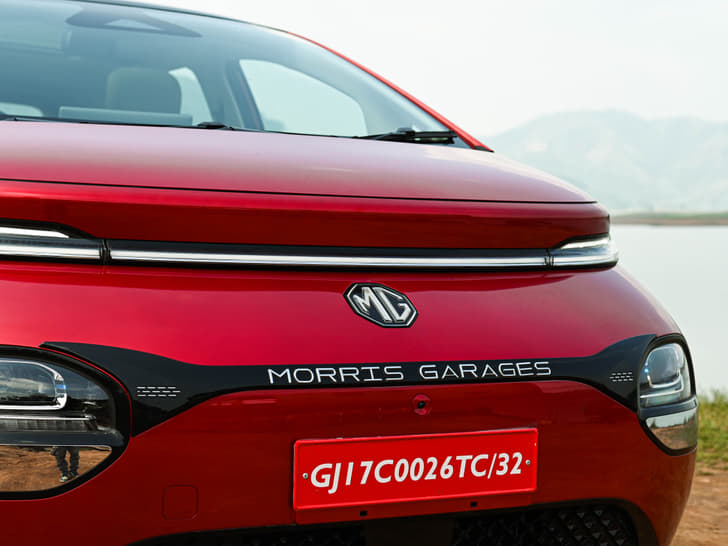
Front View
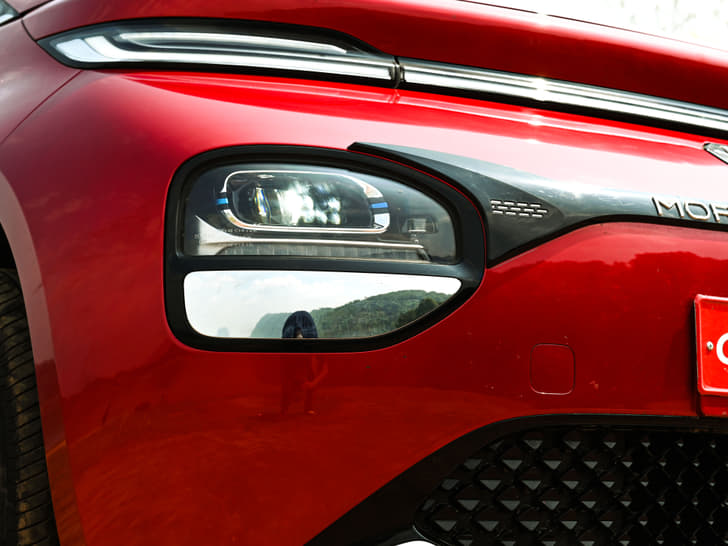
Front Right Three Quarter
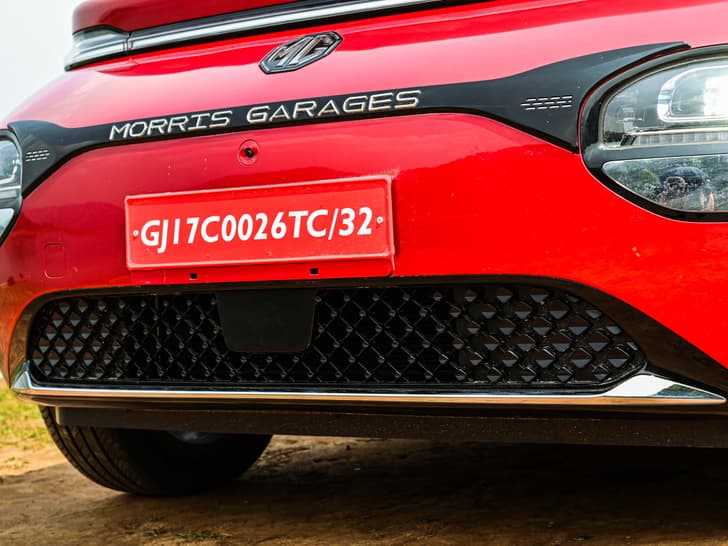
Front View
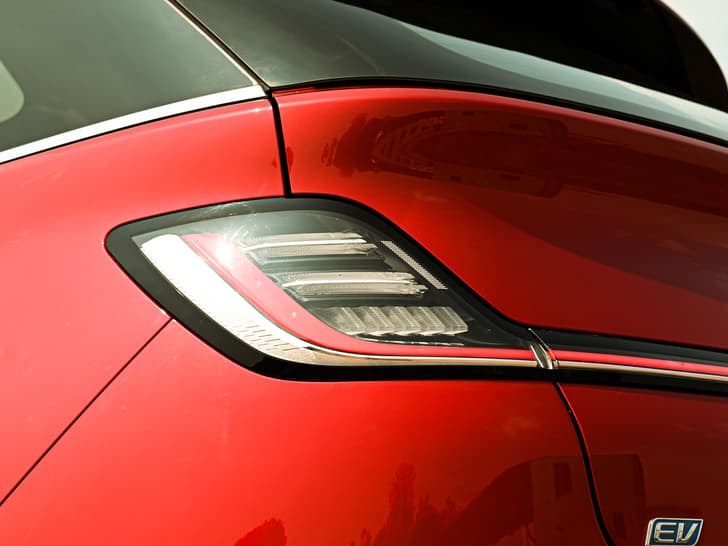
Tail Light Tail Lamp
Rear View

MG Windsor Exclusive EV

VariantExclusive EV
CityBarabanki
₹16.46 Lakh
On road price, Barabanki
View price breakup
Starting₹23,812 /month
EMI calculator

MG Windsor Exclusive EV specifications

Engine & Transmission

Fuel Type/ Propulsion
Electric
Motor Type
Permanent Magnet Synchronous Motor
Number of Motors
1
Max Motor Power
136hp
Max Motor Torque
200Nm
Drive Layout
Front-Wheel Drive
Gearbox Type
Auto
Number of Gears
1
Lockable Differential/s
No

Fuel & Performance

Battery Capacity
38 kWh
City Fuel Economy as Tested
327kpl
Highway Fuel Economy as Tested
289kpl
Claimed Range
332 km
Charging Time
13.8Hrs (0 - 100 % 15A)6.5Hrs (0 - 100 % 7.4kW)55m hrs
Auto Start/Stop
No
0-100kph
9.79 s
20-80kph (in third gear/ kickdown)
5.22 s
40-100kph (in fourth gear/ kickdown)
6.92 s

Suspension & Steering

Front Brakes
Discs
Rear Brakes
Discs
Type of Power Assist
Electric
Steering Adjust
Tilt and Telescopic
Steering Adjust type
Manual
Front Suspension Type
Independent, MacPherson Strut
Front Springs
Coil Springs
Rear Suspension Type
Non-independent, Twist Beam
Rear Springs
Coil Springs
Damper Control
No
Ride Height Adjust
No
Wheels
Machine finished alloys
Wheel Size
18 inches
Front Tyre Size
215/55 R18
Rear Tyre Size
215/55 R18
Spare Wheel
Space Saver

Dimensions

Length
4295 mm
Width
1850 mm
Chassis Type
Monocoque
Height
1677 mm
Wheelbase
2700 mm
Doors
5
Ground Clearance
186 mm
Boot Capacity
604 litres

MG Windsor Exclusive EV features

Comfort

Power Windows
Front and Rear
Glove Box
Steering Mounted Controls
Audio and Phone
Trunk Light
Electric Tailgate Release
Bluetooth Connectivity

Safety

Airbags
6
Pretensioners & Force Limiter Seatbelts
Side Airbag
Rear Cross Traffic Alert
Rear Cross Traffic Collision Avoidance
Lane Departure Avoidance

Exterior

Body Coloured Bumpers
LED DRLs
Pop-Out Door Handle
Auto
ORVM turn indicators
Outside rear view mirror (ORVM)
LED taillights

Interior

Speedometer
Digital
Tachometer
Trip Meter
Average Fuel Consumption
Average Speed
Distance to Empty

Entertainment

Audio System
Branded Music System
CD Player
Speakers
6
Front USB port
Type A
USB Input

Connected Car Features

Geo Fence
Over the air (OTA) updates
Remote Car Lock/Unlock via App

MG Windsor variants

VariantsOn road price
MG Windsor Excite EV
Electric | Auto
₹14.96 Lakh
Electronic parking brake
Cruise control
Airbags
Rain sensing wipers
GPS navigation system
Value for money
MG Windsor Exclusive EV
Electric | Auto
₹16.46 Lakh
Electronic parking brake
360 view camera
Cruise control
Airbags
Wireless phone charging
Autocar's pick
MG Windsor Essence EV
Electric | Auto
₹17.51 Lakh
Electronic parking brake
360 view camera
Ambient interior lighting
Cruise control
Ventilated seats
MG Windsor Exclusive Pro EV
Electric | Auto
₹18.40 Lakh
Electronic parking brake
360 view camera
Cruise control
Airbags
Wireless phone charging
MG Windsor Essence Pro EV
Electric | Auto
₹19.68 Lakh
Electronic parking brake
360 view camera
Adaptive cruise control
Ambient interior lighting
Cruise control

MG Windsor comparison

MG Windsor
MG Windsor
₹14.10 - ₹18.60 Lakhs
8
Transmission
Auto
Engine
-
Fuel type
Electric
Mileage
332 km - 449 km
Tata Nexon EV
Tata Nexon EV
₹12.49 - ₹17.49 Lakhs
8
Transmission
Auto
Engine
-
Fuel type
Electric
Mileage
275 km - 489 km
Mahindra XUV400
Mahindra XUV400
₹15.49 - ₹17.49 Lakhs
7
Transmission
Auto
Engine
-
Fuel type
Electric
Mileage
359 km - 456 km

MG Windsor FAQs

The MG Windsor EV comes in   variants, with five trims to choose from: Excite, Exclusive, Essence, Exclusive Pro and Essence Pro. 

The MG Windsor EV offers Level 2 ADAS features on the top Essence Pro variant.

The MG Windsor EV base model gets a 3.3kW AC charger as standard, with the 7.4kW AC charger available as an optional extra.

Need an expert opinion on your car related queries?

Questions you may find useful

KS

Kishor Solanki

5d

I am confused between the Duster Tech Automatic 1.3 litre and the MG Windsor EV. Which should I buy?

Autocar India team

Autocar India

Verified
3h

The MG Windsor EV and Renault Duster 1.3 Turbo CVT cater to very different priorities, so your choice really depends on how and where you drive.If your usage is mostly city-based and your round trips are typically under 280 km, the Windsor EV makes far more sense. It’s quiet, smooth and relaxing to drive, which makes it perfect for daily commutes and stop-start traffic. There are no gearshifts to feel, the accelerator pedal response is instant, and overall refinement is superb compared to a petrol automatic. If you can install a home charger and most of your trips are within the city, ownership is refreshingly simple and economical. All you do is just plug in overnight and wake up to a full battery every morning.The Renault Duster 1.3 Turbo, on the other hand, is a great all-rounder. It’s far more versatile, comfortable over long distances, and feels reassuringly tough on rough roads. The high ground clearance and rugged build make it ideal for highway runs and weekend getaways. However, its running costs are higher than the EV’s, and the turbo-petrol plus 6-speed DCT combination isn’t quite as seamless in bumper-to-bumper traffic, with some turbo lag and gearshift delay.In short, for city life and short commutes, the Windsor EV is the smarter, calmer, and cheaper-to-run choice. But if your driving includes frequent long trips or rough-road conditions, the Duster’s durability and range flexibility make it the more practical buy.

VehicleMG Windsor
VehicleRenault Duster
RA

Raghu

1w

I need advice on choosing between the MG Windsor EV and the Tata Curvv EV. Given the ongoing discounts, the Curvv EV variants are now priced similarly to the Windsor EV. My daily usage is mostly in the city, covering around 60-80 km, along with frequent weekend highway drives. While the Windsor EV offers better rear seat space, my primary concerns are safety and ride comfort, especially since I will be travelling with a small child. I would also like to understand how useful ADAS features are on Indian roads. Do they genuinely improve safety, or can they become a hassle, such as sudden braking, particularly in heavy bumper-to-bumper traffic during daily commutes? Which of these two EVs would be the better choice for my needs?

Autocar India team

Autocar India

Verified
6d

The Tata Curvv EV rides better, and the suspension handles rough roads well, so your child will not get tossed around. Its rear seat space is reasonable, although its sloping roofline limits headroom for tall adults.As you've rightly mentioned, the MG Windsor feels much roomier, and it's got a huge boot too. However, most functions are embedded in its slow-to-respond touchscreen, and its ride comfort isn't as good as Tata's either. Alternatively, you could check out the Vinfast VF6 and Kia Carens Clavis EV, both of which are (pricier) excellent alternatives to the Curvv EV.As far as ADAS goes, these certainly provide an extra layer of safety, and can be a life-saver in case the driver isn't paying attention. However, it can occasionally feel intrusive, especially in bumper-to-bumper conditions. When other road users cut you off, you could be taken by surprise and slam on the brakes. Hence, it would be better to leave these off for the city, and use them only on the highway.

VehicleTata Curvv EV
VehicleMG Windsor
VehicleVinfast VF6
VehicleKia Carens Clavis
KJ

KJ

1w

I am planning to buy a car with a budget of ₹18-19 lakh. My initial choice was the Kia Seltos, but I have noticed that similarly sized EVs like the MG Windsor EV and Mahindra BE 6 (Pack One) are available in a similar price range due to ongoing discounts. My usage is around 800 km per month, mostly within the city (Delhi-NCR), along with occasional outstation trips once or twice a year. Given this, does it make sense to switch to an EV for my usage pattern? Should I spend around ₹18 lakh on a Kia Seltos HTK(O) IVT, opt for a similarly priced variant at around ₹16.5 lakh, or choose an EV like the Windsor at ₹19 lakh and benefit from lower running costs?

Autocar India team

Autocar India

Verified
6d

Go for the Kia Seltos HTK (O) DCT for your 800 km a month in Delhi NCR and one or two long trips a year, it is the easiest, least-stress choice in your budget. In daily city traffic, the DCT automatic, feels very smooth and makes stop-and-go driving simple. The Seltos is roomy for family use, rides well, and Kia’s service reach in and around Delhi is strong, so ownership is straightforward. For the rare outstation run, you just fill up and go, with no planning around chargers or range.One thing to be aware of is that the 1.5-litre NA engine isn't the most enthusiastic when pushed on the highway. If saving on fuel is your main goal, an EV will help, but at 800 km a month, the extra money you pay upfront will take time to come back.If you have private parking with a socket for home charging, look at the MG Windsor EV Pro. It is smooth and cheap to run in the city, but expect to plan charging stops on highway trips.

VehicleKia Seltos
VehicleMG Windsor
JV

JV

1w

I am looking to buy a compact car for my family, with an annual running of 30,000–40,000 km. My father strongly prefers diesel vehicles, while I am also considering an electric vehicle within a ₹20 lakh budget. We currently own a 2017 Hyundai i20 (top model), which is nearing 3 lakh km and needs replacement. The new car will be used mostly for city driving, along with occasional long trips of 300-500 km. We also have a 2021 Jeep Compass 4x4 Model S, which has clocked 1.2 lakh km and will be retained, although its fuel efficiency is around 11 km/l. Given our usage and long-term ownership plans (up to 3 lakh km), should we opt for an electric vehicle, a diesel car, or a hybrid? We also have an 8 kW solar setup at home with surplus power generation. I am considering EVs like the Tata Punch EV, Tata Nexon EV, MG Astor EV (if launched), and the upcoming Kia Syros EV. For diesel options, I am looking at the Kia Sonet, Hyundai Creta, and Tata Curvv. However, while I like Tata cars, I have some concerns about after-sales service. Could you suggest the most suitable electric or diesel automatic options for my needs?

Autocar India team

Autocar India

Verified
1w

With your kind of usage of 30,000-40,000 km a year, mostly city driving, long-term ownership and an 8 kW solar setup, going electric makes a lot of sense. Running costs will be significantly lower, especially since you can charge at home using surplus solar, and the smooth, silent nature of an EV suits city driving perfectly.The Tata Nexon EV Long Range is still one of the most well-rounded options here. It offers a good balance of range, practicality and ease of use, and can handle your occasional 300-500 km trips with one planned charging stop. It is also a proven product with a wide user base.However, since you have concerns about Tata’s service, it is worth considering alternatives. The MG Windsor EV with the larger battery pack is a strong option. It offers more space, a more premium feel and a bigger battery, which helps with range and reduces charging stops. The Maruti Suzuki e-Vitara is another promising option, especially from a long-term ownership perspective, thanks to Maruti’s strong service network and reliability.Diesel is still a valid fallback. If you prefer complete flexibility and do not want to depend on charging infrastructure at all, options like the Hyundai Creta diesel automatic or Kia Sonet diesel automatic make sense, offering strong mileage and effortless highway performance.So, the decision comes down to priorities. Given your high running and solar setup, an EV is clearly the smarter long-term choice. Among EVs, the Nexon EV is the proven option, the Windsor EV offers more space and range, and the e Vitara is the safest bet for long-term ownership. Diesel should only be considered if you want maximum convenience without planning charging stops.

VehicleTata Nexon EV
VehicleMG Windsor
VehicleMaruti Suzuki e Vitara
VehicleHyundai Creta
VehicleKia Sonet
AK

Akshay

2w

Which is the best EV to buy under ₹15 to ₹16 lakh on-road in Bangalore? My running is about 10,000 to 11,000 km per year. Options include Curvv Accomplished 55, VinFast VF6, Nexon EV Fearless 45, eVitara Delta 49 kWh, and Windsor EV Exclusive Pro (which is slightly out of budget and has DC charging concerns). The most promising option seems to be the Curvv EV, considering its range, boot space, looks, Tata’s EV experience, and the ₹3 lakh discount currently offered. However, I am concerned whether Tata might discontinue it once the Sierra EV is launched. If not the Curvv EV, which one should I consider?

Autocar India team

Autocar India

Verified
2w

Choose the Tata Curvv EV 55kWh Accomplished. With the Rs 3 lakh discount you are getting, it falls within your budget while offering a good range, performance and features for the money.Your yearly 10-11k km translates to roughly 200-220km a week. In our testing, the Curvv EV 55kWh delivered a real-world range of just over 350km, which means one charge should easily last you a week. Performance is strong too, with immediate throttle response, and even Eco mode feels genuinely usable in city traffic. The 500-litre boot can swallow a fair amount of luggage, and there is also a small frunk under the bonnet. As for discontinuation, there are no confirmed plans even after the Sierra EV arrives.The one thing you give up compared to the Windsor is interior volume, especially in the back seat, where headroom can be a little tight for taller occupants. If you find the interior space insufficient, then stretching to the Windsor EV Pro would be worthwhile.On the test drive, monitor how much the battery depletes with your driving style, and cycle through all the regen levels to find what feels most natural.

VehicleTata Curvv EV
VehicleMG Windsor