

Last Updated on: 10 Sep 2026

Hyundai Creta Electric price in Niuland
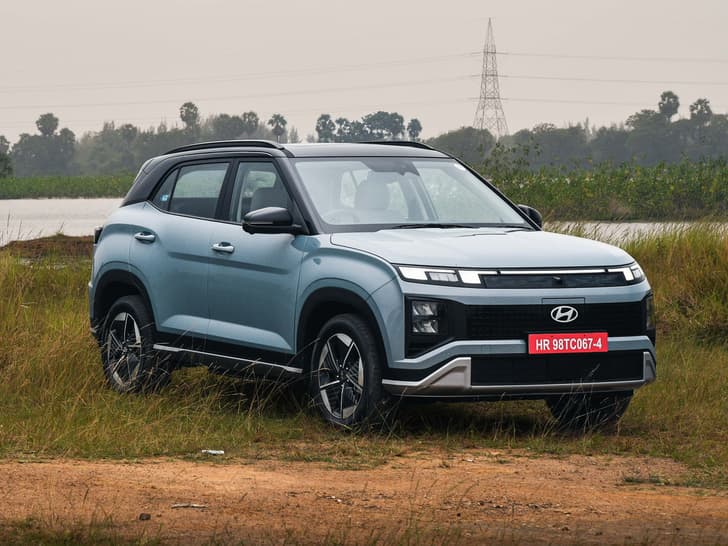
The on road price of the Hyundai Creta Electric in Niuland ranges from Rs19.12 lakh for the base model to about Rs25.38 lakh for the top variant (including all taxes, RTO fees, and insurance). In comparison, the ex-showroom prices in Niuland starts from Rs18.03 lakh to Rs23.82 lakh.
Check the Hyundai Creta Electric on road price of all variants in Niuland in the table below:
Hyundai Creta Electric price in Niuland
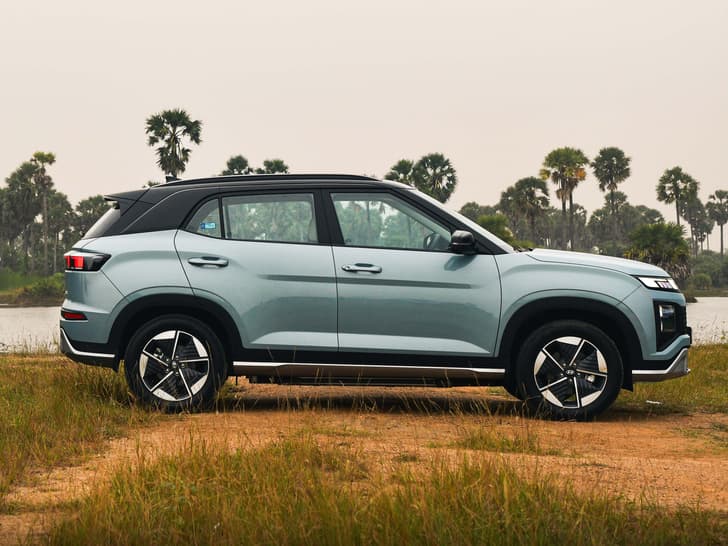
The on road price of the Hyundai Creta Electric in Niuland ranges from Rs19.12 lakh for the base model to about Rs25.38 lakh for the top variant (including all taxes, RTO fees, and insurance). In comparison, the ex-showroom prices in Niuland starts from Rs18.03 lakh to Rs23.82 lakh.
Check the Hyundai Creta Electric on road price of all variants in Niuland in the table below:
Hyundai Creta Electric On Road Price by Variants
* Estimated on-road price. Final amount may vary.
Hyundai Creta Electric Booking & Test Drive - User Reviews
Tell us about your experience
Hyundai Creta Electric Official Brochure
Download the complete brochure with specs, features, and variants.
Calculate your Charging cost for Hyundai Creta Electric
Hyundai Creta Electric Images
Hyundai Creta Electric news
Hyundai Creta Electric videos

.jpg?w=640&q=75&fm=auto)

.jpg?w=640&q=75&fm=auto)
Hyundai Creta Electric FAQs
The Rs 20 lakh Hyundai Creta Electric Executive (O) is the most accessible Long Range variant, featuring a 51.4kWh battery pack.
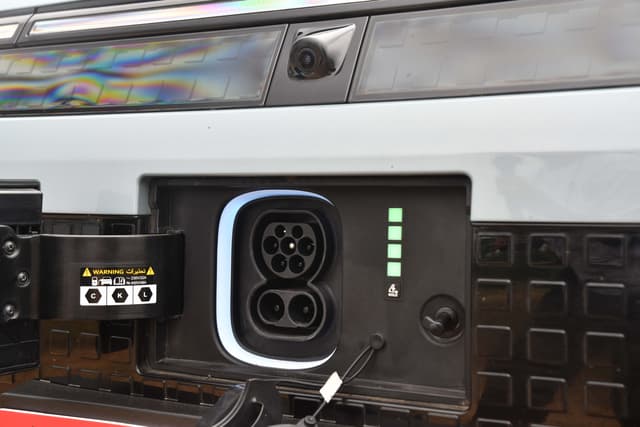
The 11kW AC optional home charger offered with the Hyundai Creta Electric costs Rs 73,000.
Hyundai claims that the matte colour choice is only available in select monotone shades at an additional cost of Rs 15,000.
Questions you may find useful
I am looking to buy the top-spec Punch EV, but I am willing to wait for Hyundai's upcoming compact EV if it is priced in a similar bracket. Is it worth waiting, or is the Hyundai likely to exceed the Rs 15 lakh price bracket?
Yes, it is worth waiting. Hyundai has now confirmed that its new compact EV, codenamed HE1i, will debut by the end of 2026. It will sit below the Creta Electric and compete with the Punch EV, Nexon EV, XUV 3XO EV and Syros EV. It will also get standard- and long-range versions.The interesting part for you is pricing. Current expected pricing puts the Hyundai at roughly Rs 10–14 lakh in Delhi, depending on the battery/variant, although these are still estimates and not Hyundai's official prices.So if your ceiling is around Rs 15 lakh, there is a good chance the Hyundai will fit, including a higher-spec version. It should also be more spacious and better suited to your requirements than the Punch EV.
I am buying a Creta EV, and the Hyundai dealership is offering an extended warranty covering the fourth and fifth years for Rs 50,000. This is significantly more expensive than the extended warranty for the ICE counterpart. I plan to keep the car for five years. It comes with a standard three-year warranty and an eight-year battery warranty. Should I go for the extended warranty, or should I skip it considering Hyundai's reliability?
Yes, you should buy the extended warranty for your Creta Electric. The primary misconception is that the standard 8-year battery warranty covers the entire electric powertrain, but it strictly applies to the high-voltage battery pack itself. It excludes critical, low-volume power electronics such as the Integrated Charging Control Unit (ICCU), power inverter, onboard charger, thermal management system, and digital displays.A single out-of-warranty failure in an ICCU or inverter module during year four or five can easily result in heavy repair bills, making the Rs 50,000 upfront cost a sensible risk-management expense. Furthermore, since you plan to sell the car at the 5-year mark, offering a vehicle with an active, bumper-to-bumper factory warranty significantly increases second-hand buyer confidence and helps you command a higher resale price.You do not need to purchase it on delivery day; Hyundai offers its lowest extended warranty pricing within the first 90 days of ownership, giving you a 3-month window before securing the coverage.
I am looking for an EV under Rs. 14 lakh that I plan to buy in 2027 (Q1). The car should have good range, basic features, and should be more spacious than Tata Punch but cheaper than the Windsor. Basically, I want an EV that is as spacious as Baleno/i20/Altroz. Are there any upcoming EVs in 2026 or early 2027 that might fit my budget?
Yes, since you are planning to buy an EV in 2027 (Q1), we will advice you to wait for upcoming Hyundai compact EV. This new compact electric SUV is based on Hyundai’s E-GMP (K) platform and is expected to arrive by the end of 2026. It will sit below the Creta Electric and directly target the Punch EV/Nexon EV space.For your requirement, this is particularly interesting because Hyundai is expected to offer two battery options, with the larger one potentially giving a claimed range around the 400km mark. The India-spec car is also expected to be well equipped, with Hyundai confirming Level 2 ADAS and OTA capability.The bigger question will be pricing. Hyundai has indicated that this will be its more affordable, locally produced EV, so there is a reasonable chance of it fitting around your Rs. 14 lakh ceiling, although the exact variant pricing is not yet known.Since you are buying only in Q1 2027, waiting makes complete sense. The Hyundai compact EV should offer a better combination of cabin space, range and features than the Punch EV, while potentially undercutting the Windsor. It is easily the most relevant upcoming EV for your requirements.
I stay in Hyderabad and travel 25-30 km daily. I go out once in a month covering approximately 600km. I have recently sold my XUV 700 diesel and am confused whether I should go for an electric car or hybrid petrol. My budget is approximately 20 lakh (can extend it by 2 lakh). Please guide.
With a 25-30 km daily commute and a monthly 600 km highway trip, the decision comes down to charging convenience and long-term ownership. If you have reliable home charging, an EV like the Tata Nexon EV or Hyundai Creta Electric makes strong financial sense. Your daily running is well within their range, and the low running costs will add up over time. The Creta Electric is a proven product and offers a more modern cabin and a more premium feel than the Nexon EV.If you do not have home charging or are not comfortable planning charging stops on your monthly highway trips, a hybrid is the safer choice. The Maruti Suzuki Victoris Hybrid is the best fit in your budget. It delivers excellent fuel efficiency in the city and on the highway, and you never have to worry about charging.Given your usage, the EV is the better financial decision if home charging is available. If not, the Victoris Hybrid is the more practical long-term ownership proposition.
I have a 2021 Nexon EV and am planning to replace it with a Creta EV. Hyundai is charging Rs. 75,000 for the charger. I already have the Tata charger installed at home, but the kWh capacity of the two chargers is different. Should I use the existing Tata charger for my Creta EV, even if it charges a little slower? Charging speed is not a major concern for me. Or should I buy the new Hyundai charger? Also, what should I do with the charger from my old EV? Is it usually sold separately, removed and taken back by the manufacturer/dealer, or simply left installed for future use?
You can absolutely use your existing Tata charger with the Hyundai Creta EV. Both cars use the same Type 2 AC charging standard, so the charger will work perfectly fine. The only difference is the power rating: if your Tata charger is a lower kW unit than the one Hyundai is offering, the Creta EV will simply charge a bit slower at home. Since you have already said charging speed is not a major concern, there is no need to spend on a new charger.As for what to do with the old charger, you have a few options. If you are keeping the charger installed at your home and using it for the Creta EV, there is nothing more to do. If you are moving or no longer need it, you can either sell it (there is a small second-hand market for EV chargers) or have it removed by a qualified electrician. Some Tata dealers will also buy back the charger if you are selling the Nexon EV, but the price offered is usually quite low.The only thing to check is whether your Tata charger is a 3.3 kW or a 7.2 kW unit. If it is the lower-rated 3.3 kW charger and you want faster home charging, then upgrading to a higher-rated charger may make sense. Otherwise, there is no technical reason to replace a perfectly good charger.
Hyundai Creta Electric On Road Price in India
Upcoming Cars


Hyundai Cars


Trending Cars


Latest Cars