Autocar India

Last Updated on: 23 May 2026

BYD Sealion 7 variants
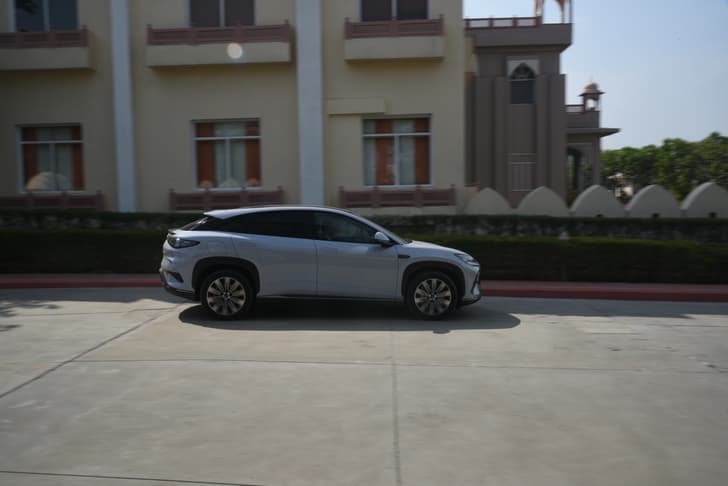
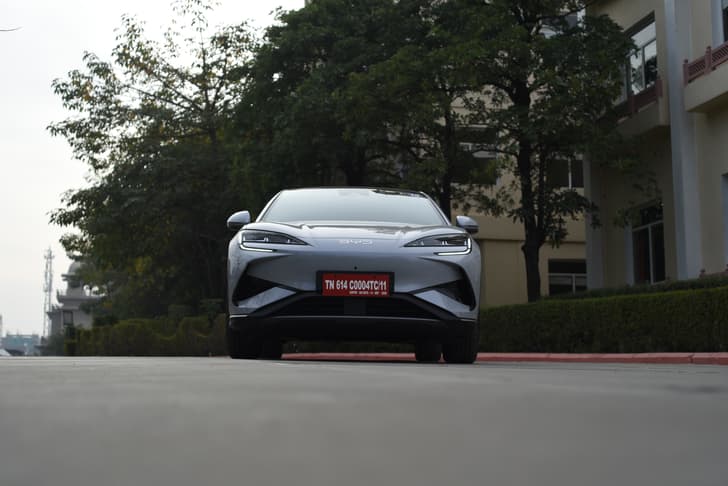
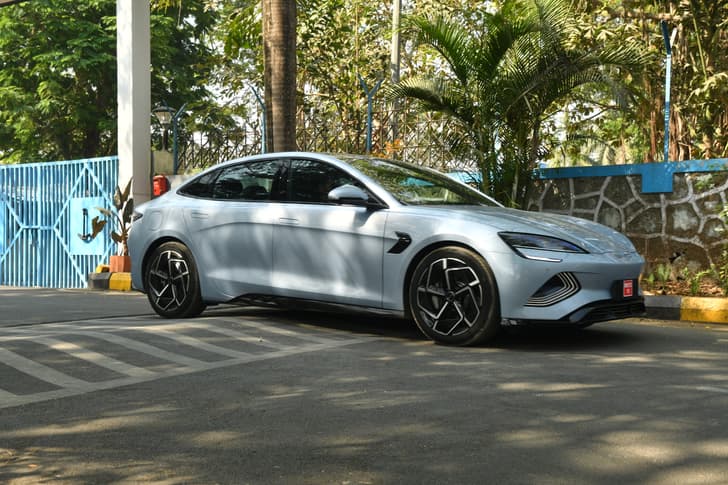
Front View
Headlight
Front Right Three Quarter
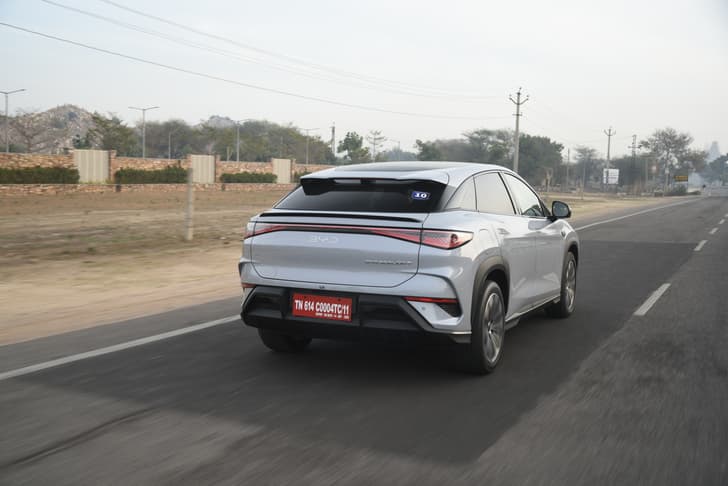
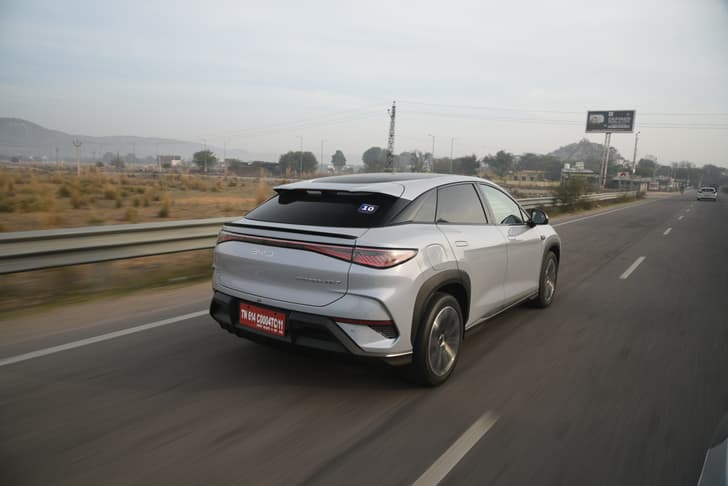
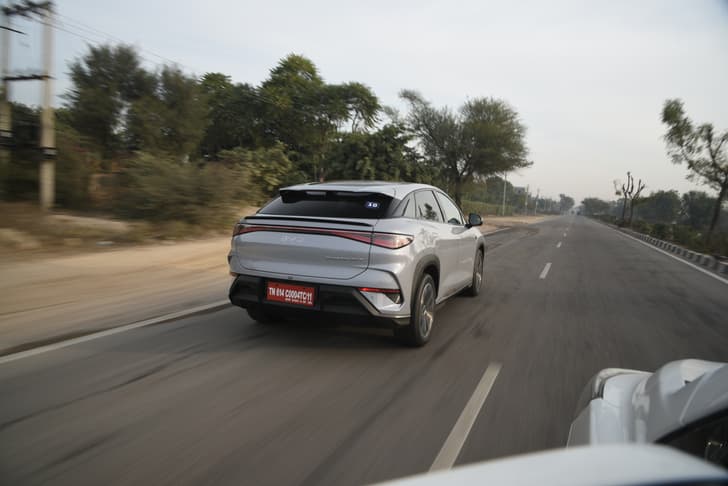
Rear View
Rear View
Rear View
Body Colored Bumpers
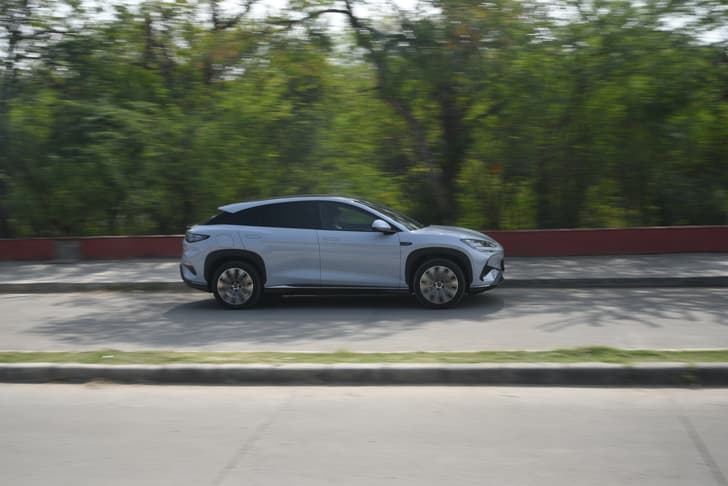
Color Silver
Front View

BYD Sealion 7 Performance

VariantPerformance
CityDelhi
₹58.08 Lakh
On road price, Delhi
View price breakup
Starting₹84,146 /month
EMI calculator

The BYD Sealion 7 Performance variant is priced at ₹54.90 lakh. The Performance variant offers key features like Electronic parking brake, 360 view camera, Adaptive cruise control, Cruise control, Ventilated seats. Explore complete specifications, and features below.

Show more

BYD Sealion 7 Performance specifications

Engine & Transmission

Fuel Type/ Propulsion
Electric
Motor Type
Permanent Magnet Motor
Number of Motors
2
Max Motor Power
530hp
Max Motor Torque
690Nm
Drive Layout
All Wheel Drive
Gearbox Type
Auto
Number of Gears
1
Lockable Differential/s
No
Sport Mode for Automatic Gearbox
No
Manual Shifts via Gear Lever on Automatic Gearbox
No
Paddle Shifters for Automatic Gearbox
No

Fuel & Performance

Battery Capacity
82.56 kWh
City Fuel Economy as Tested
405 km
Highway Fuel Economy as Tested
344 km
Claimed Range
542 km
Charging Time
45 min 10% to 80% (150kW DC)11 hrs 0% to 100% (11kW AC) hrs
Auto Start/Stop
Yes

Suspension & Steering

Front Brakes
Discs
Rear Brakes
Discs
Type of Power Assist
Electric
Steering Adjust
Tilt and Telescopic
Steering Adjust type
Manual
Turning Radius
5.85 m
Front Suspension Type
Independent, Double Wishbone
Front Springs
Coil Springs
Rear Suspension Type
Independent, Multi-link
Rear Springs
Coil Springs
Damper Control
Yes
Ride Height Adjust
No
Wheels
Alloys
Wheel Size
20 inches
Front Tyre Size
245/45 R20
Rear Tyre Size
245/45 R20
Spare Wheel
No

Dimensions

Length
4830 mm
Width
1925 mm
Chassis Type
Monocoque
Height
1620 mm
Doors
5
Wheelbase
2930 mm
Ground Clearance
170 mm
Kerb Weight
2340 kg
Boot Capacity
500 litres

BYD Sealion 7 Performance features

Comfort

Power Windows
Front and Rear
Front Seatback Pockets
Cabin Boot Access
Cooled Glovebox
Cooled Storage
Cup Holders

Safety

Airbags
Curtain Airbag
Dashcam
Rear Cross Traffic Collision Avoidance
Rear Cross Traffic Alert
Day Night Interior Mirror
Automatic

Exterior

Body Coloured Bumpers
Follow Me Home Headlamps
ORVM turn indicators
Projector Headlamps
LED taillights
LED headlamps

Interior

Speedometer
Digital
Tachometer
Digital
Trip Meter
Average Fuel Consumption
Average Speed
Distance to Empty

Entertainment

Audio System
CD Player
Speakers
12
USB Input
AUX Input
Bluetooth Audio Streaming

BYD Sealion 7 variants

VariantsOn road price
Autocar's pick
BYD Sealion 7 Premium
Electric | Auto
₹52.27 Lakh
Electronic parking brake
360 view camera
Adaptive cruise control
Cruise control
Ventilated seats
Best for driving
BYD Sealion 7 Performance
Electric | Auto
₹58.08 Lakh
Electronic parking brake
360 view camera
Adaptive cruise control
Cruise control
Ventilated seats

BYD Sealion 7 comparison

BYD Sealion 7
BYD Sealion 7
₹49.40 - ₹54.90 Lakhs
8
Transmission
Auto
Engine
-
Fuel type
Electric
Mileage
542 km - 567 km
Compare
Hyundai Ioniq 5
Hyundai Ioniq 5
₹55.70 Lakhs
9
Transmission
-
Engine
-
Fuel type
Electric
Mileage
690 km
Kia EV6
Kia EV6
₹65.97 Lakhs
8
Transmission
Auto
Engine
-
Fuel type
Electric
Mileage
663 km
BMW iX1 LWB
BMW iX1 LWB
₹51.40 Lakhs
7
Transmission
Auto
Engine
-
Fuel type
Electric
Mileage
531 km

Questions you may find useful

PJ

PJ

2w

I am in a rather peculiar situation and genuinely need advice on how to move forward while keeping the right perspective. To give some background, I owned a used BMW 523i for four years and absolutely loved the experience. I eventually sold it because I moved back to Mumbai and only had access to open parking. By then, the car had also completed nearly 10 years in total. Over the last five and a half years, I have changed cars multiple times: Tata Nexon EV Prime (bought for ₹19 lakh, sold for ₹13 lakh) Upgraded to Nexon EV Max within 1.5 years (₹19.5 lakh, sold for ₹13.5 lakh) Upgraded again to MG ZS EV after 1.3 years (₹22 lakh, sold for ₹16 lakh) Finally bought a Skoda Kushaq top-end in September 2025 for ₹20.2 lakh through a good deal I do like the Kushaq, but now it feels slightly small after a new addition to the family (my baby), and my family also finds the rear seat less comfortable. At the same time, I still feel internally unsatisfied. It is not the badge value I miss, but rather the unmatched sense of satisfaction, thoughtful design, premium feel, and driving experience that I experienced with the BMW 523i and generally associate with luxury cars. I miss that feeling quite a lot. Luxury cars are beyond my ideal budget, but I could stretch financially with some sacrifices. I am seriously considering options like the BMW iX1 LWB, Mercedes-Benz CLA EV, or the Hyundai Ioniq 5 with the 84kWh battery. I feel I could manage the loan over seven years, and if I make this purchase, I would ideally want to keep the car for at least 10–15 years. At the same time, I worry about EV resale values in the long term, although luxury EVs seem to hold value slightly better than mainstream EVs. Given my situation, do you think moving into a premium EV makes practical and emotional sense, or should I hold on to the Kushaq for longer? I would really appreciate an honest perspective.

Autocar India team

Autocar India

Verified
1w

If you're looking to spend around Rs 53-57 lakh (on-road, Mumbai) for an EV, you have a lot of options - BYD Seal, BYD Sealion 7, Hyundai Ioniq 5, BMW iX1, Kia EV6, Mini Countryman, Mercedes CLA, Volvo C40 Recharge and Tesla Model Y.The BYD Sealion 7 is among the more affordable options here - it feels like a flagship product, with a richly appointed interior, and a solid, satisfying drive experience. The BMW iX1 gets its fundamentals right and will come closest to the BMW 523i's experience, as far as interior quality, sound insulation, and refinement go, although performance isn't its strong suit. For strong performance, a laundry list of features, and a larger and more spacious interior, consider the Kia EV6. Sure, on paper it is much more expensive; however, Kia dealers are offering mouth-watering discounts. Also, the AWD version's price is lower than the recently launched RWD Hyundai Ioniq 5.As far as resale value goes, EVs across the board don't hold strong residual values compared to their ICE counterparts, irrespective of the badge they wear or the segment they belong.

VehicleBYD Sealion 7
VehicleBYD Seal
VehicleHyundai Ioniq 5
VehicleKia EV6
VehicleBMW iX1 LWB
TT

T Tejas

3w

Hi, I'm planning to buy my first luxury car, preferably an SUV. We are a family of 4 adults and 1 child. My daily run is approx 30 kms, mainly within the city and then occasionally, once a month, a highway run. Total monthly running is around 1000 kms. My budget is between 50-60 lacs. I'm currently confused between BMW iX1 LWB, BYD sealion, Toyota Fortuner and newly launched Tesla model Y L (least likely due to concerns of resale value of Tesla 5 years down the line and uncertainty regarding import duties). I can also consider waiting for the upcoming BMW iX3 and Mercedes GLC EV. Will it be worth the wait of almost another 10-12 months, yes I'm aware of the fact that I'll have to stretch my budget a little bit for these two. Kindly advise. Thanks a lot

Autocar India team

Autocar India

Verified
1w

The BMW iX1 LWB is the strongest value-for-money package here, priced at Rs. 53-54 lakh. It gives you a solid luxury badge, a spacious and practical cabin, good tech and features, and an enjoyable driving experience at a very competitive price for what it offers.The BYD Sealion 7 also delivers a very premium experience and, if anything, feels a touch more luxurious inside than the iX1, with strong performance and range. However, it still cannot match BMW for badge pull, dealer reach and long-term service ecosystem, which matters for a first luxury purchase.We actually quite like the Tesla Model Y L: it’s very aggressively priced for a three-row imported EV, gives you all-wheel drive, excellent range and that useful third row where your child can sit comfortably and safely. Your concern about resale is valid, but most EVs take a bigger depreciation hit anyway, and because the Model Y L is priced keenly for a CBU, the percentage drop in value may not be disproportionately worse than rivals if demand holds up. Also, there is unlikely to be any import duty reduction that may impact the resale value in the near future since the Model Y is made in China. The upcoming BMW iX3 and Mercedes GLC EV will likely feel the most premium and high-tech of all, with plenty of wow factor, especially in their cabins and brand perception. They will definitely be more expensive and, realistically, you’re looking at at least another 6-10 months before they’re easily available, so you have to weigh that wait and budget stretch against how soon you want to start enjoying the car.

VehicleBMW iX1 LWB
VehicleBYD Sealion 7
VehicleTesla Model Y
DD

Dr DEBASHISH SARKAR

5w

Which car is better, the Sealion 7 or the Volvo EX30? I am looking to buy a premium EV alongside my Fortuner.

Autocar India team

Autocar India

Verified
1w

As a second car alongside your Toyota Fortuner, the Volvo EX30 Single Motor Long Range is the stronger fit because it is small on the outside and easy to park, yet feels very upmarket inside. It is also quick, refined, and very quiet in city traffic.Three reasons it suits your brief. One, the compact size makes daily driving and tight parking far less stressful than a bigger EV, which is what you want when the Fortuner already handles the long trips. Two, Volvo’s safety focus and the helpful driver add peace of mind. Three, the cabin, though cramped at the back, feels special, which keeps the “premium” feel you’re after every time you get in.A couple of trade-offs to note. The back seat and boot are not very big, so it is not the best choice if you often carry five people or a lot of luggage. Also, most controls sit on the centre screen, which takes a few days to get used to.If you expect more family use or frequent highway drives in the EV, pick the BYD Sealion 7 instead. It is larger, offers more rear seat space and a bigger boot. Plus, its battery is likely to give you a longer real-world range. The flip side is that it is bulkier in the city, and BYD’s service reach is still building up.Overall, as a premium, easy-to-live-with city EV to pair with your Fortuner, the Volvo EX30 fits best. Choose the Sealion 7 only if space and range matter more than compact size.

VehicleVolvo EX30
VehicleToyota Fortuner
VehicleBYD Sealion 7
LM

LMK

5w

I own a Maruti Ignis-Zeta AMT Petrol (9-year-old) and a Hyundai Tucson-Diesel (5-year-old). I am considering the BMW X3 30i and Volvo XC60 (not considering GLC due to poor rear seat comfort) for a new car purchase later this year. Which other car(s) should I explore? (Not considering EV unless there is something exceptionally good; not considering sedans due to poor ground clearance, but if there is any worth considering, do recommend. We prefer travelling by road and require good boot space. The rear seat comfort is equally important as is on the driver seat. We are driving enthusiasts and enjoy well-built cars.

Autocar India team

Autocar India

Verified
5w

The BMW X3 is the better driver's car, while the Volvo XC60 is the better all-rounder. The recently introduced X3 xDrive30 gives the SUV the performance its chassis has always yearned for, and some crucial interior updates like more leatherette trim for a premium feel. It handles exceptionally well and rides comfortably too, plus it meets your other requirements of ground clearance and boot space. However, it still doesn't feel quite luxurious enough, and that's despite costing nearly Rs 10 lakh more than the Volvo.We think you should go for the Volvo XC60, which, though far more relaxed on the performance and handling front, still feels capable and predictable, with more than enough power. Moreover, though, it works much better as a luxury car, with more comfortable seats, front and rear, and a much better-appointed interior. In fact, though it is much older than the X3, the fact that it feels more contemporary on the inside is a testament to this. Its infotainment system is also more logically laid out and easier to use, and it's better equipped than the BMW, including an exquisite Bowers & Wilkins audio system. Its boot isn't quite as large as the X3's, however, though it should be more than large enough for most of your needs. And it's worth bearing in mind that Volvo's dealer and service network isn't as big as BMW's.If you consider a sedan, it should be the BMW 530Li - it's even better to drive than the X3 and has a more spacious and comfy back seat, as well as plenty of boot space. More than ground clearance, it's the car's long wheelbase you have to be careful of over bumps. And if you're considering an electric car, look at the BYD Sealion 7, which is an excellent all-rounder with a luxurious interior and good range. However, if you do long drives regularly, any EV might not be worth the hassle of depending on the public charging infrastructure.

VehicleBMW X3
VehicleVolvo XC60
VehicleBYD Sealion 7