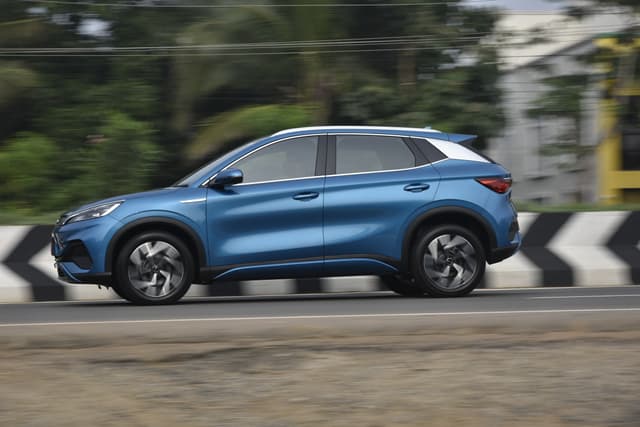
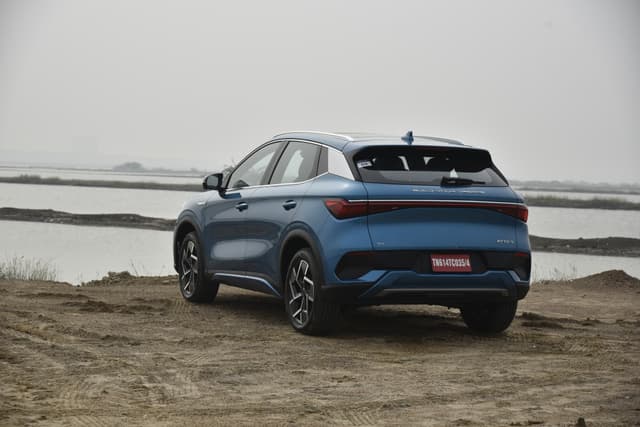
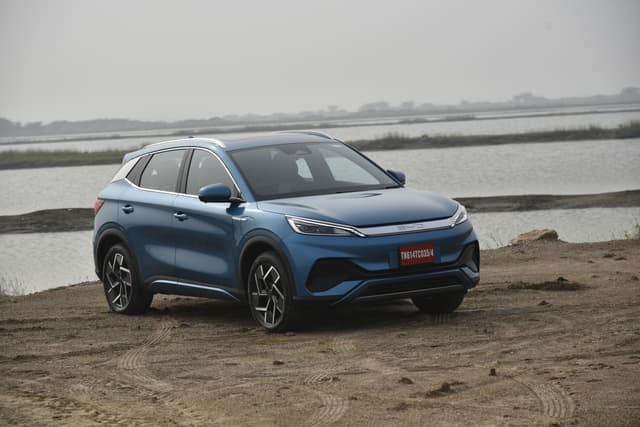
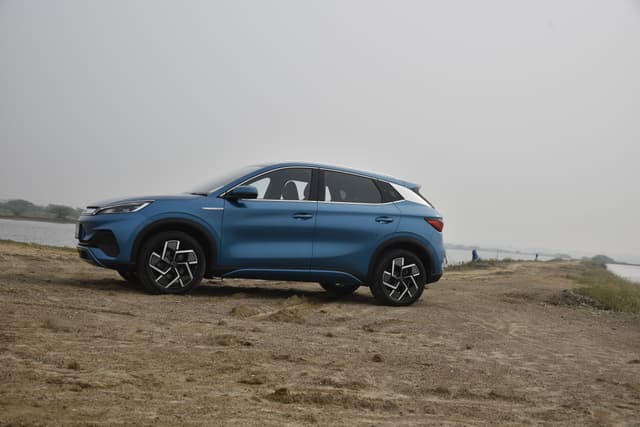
Byd Suv Cars in India (4)
Discover the best Byd Suv Cars. Our comprehensive guide covers detailed specifications, expert reviews, pricing information, and buying advice for Byd Suv Cars. Find the perfect cars that matches your requirements and budget.


Filter your search

Filter your search
Trending Questions on BYD Cars - Answered by Autocar Experts
Hi, I'm planning to buy my first luxury car, preferably an SUV. We are a family of 4 adults and 1 child. My daily run is approx 30 kms, mainly within the city and then occasionally, once a month, a highway run. Total monthly running is around 1000 kms. My budget is between 50-60 lacs. I'm currently confused between BMW iX1 LWB, BYD sealion, Toyota Fortuner and newly launched Tesla model Y L (least likely due to concerns of resale value of Tesla 5 years down the line and uncertainty regarding import duties). I can also consider waiting for the upcoming BMW iX3 and Mercedes GLC EV. Will it be worth the wait of almost another 10-12 months, yes I'm aware of the fact that I'll have to stretch my budget a little bit for these two. Kindly advise. Thanks a lot
The BMW iX1 LWB is the strongest value-for-money package here, priced at Rs. 53-54 lakh. It gives you a solid luxury badge, a spacious and practical cabin, good tech and features, and an enjoyable driving experience at a very competitive price for what this BMW car offers.The BYD Sealion 7 also delivers a very premium experience and, if anything, feels a touch more luxurious inside than the iX1, with strong performance and range. However, the BYD car still cannot match BMW for badge pull, dealer reach and long-term service ecosystem, which matters for a first luxury purchase.We actually quite like the Tesla Model Y L: it’s very aggressively priced for a three-row imported EV, gives you all-wheel drive, excellent range and that useful third row where your child can sit comfortably and safely. Your concern about resale is valid, but most EVs take a bigger depreciation hit anyway, and because the Model Y L is priced keenly for a CBU, the percentage drop in value may not be disproportionately worse than rivals if demand holds up. Also, there is unlikely to be any import duty reduction that may impact the resale value of the Tesla car in the near future since the Model Y is made in China. The upcoming BMW iX3 and Mercedes GLC EV will likely feel the most premium and high-tech of all, with plenty of wow factor, especially in their cabins and brand perception. They will definitely be more expensive and, realistically, you’re looking at at least another 6-10 months before they’re easily available, so you have to weigh that wait and budget stretch against how soon you want to start enjoying the car.
I live in Andhra Pradesh, and most of my driving is on quarry roads and double-lane roads. I drive nearly 5,000 km per month. Please suggest a 7-seater SUV, MPV, or EV with captain seats within a budget of ₹30-40 lakh.
Your usage and requirements point to a tough yet comfortable diesel SUV with lots of space. In that use, the Tata Safari 6-seat diesel automatic Accomplished X+ fits you best. It rides comfortably on broken surfaces, feels steady at highway speeds, and the captain seats in the middle row are wide and easy to get in and out of, which matters when you are in the car for hours every day. They're also widely adjustable and even ventilated, which is a bonus. The diesel with an automatic gearbox means less effort in slow stretches and relaxed cruising between towns, and diesel makes sense for your monthly distance.Know the trade-offs. With all three rows up, boot space is tight, so plan for a roof carrier if you carry a lot of luggage, and Tata's aftersales and service network isn't quite as good as some other brands. If you are fine with a manual, the Toyota Innova Crysta 7-seat diesel remains a great long-term workhorse and is very reliable too. However, it's not as comfortable or well equipped as the Tata Safari.As for EVs, your two MPV options are the Vinfast VF MP7 and the BYD eMax7. However, due to their long wheelbases, slightly lower ground clearances and underbody battery packs, we'd recommend sticking to an ICE MPV for your usage on rough roads and quarries. Additionally, their dealership and after-sales networks are still limited compared to Tata and Toyota.
I own a Maruti Ignis-Zeta AMT Petrol (9-year-old) and a Hyundai Tucson-Diesel (5-year-old). I am considering the BMW X3 30i and Volvo XC60 (not considering GLC due to poor rear seat comfort) for a new car purchase later this year. Which other car(s) should I explore? (Not considering EV unless there is something exceptionally good; not considering sedans due to poor ground clearance, but if there is any worth considering, do recommend. We prefer travelling by road and require good boot space. The rear seat comfort is equally important as is on the driver seat. We are driving enthusiasts and enjoy well-built cars.
The BMW X3 is the better driver's car, while the Volvo XC60 is the better all-rounder. The recently introduced X3 xDrive30 gives the SUV the performance its chassis has always yearned for, and some crucial interior updates like more leatherette trim for a premium feel. It handles exceptionally well and rides comfortably too, plus it meets your other requirements of ground clearance and boot space. However, it still doesn't feel quite luxurious enough, and that's despite costing nearly Rs 10 lakh more than the Volvo.We think you should go for the Volvo XC60, which, though far more relaxed on the performance and handling front, still feels capable and predictable, with more than enough power. Moreover, though, it works much better as a luxury car, with more comfortable seats, front and rear, and a much better-appointed interior. In fact, though it is much older than the X3, the fact that it feels more contemporary on the inside is a testament to this. Its infotainment system is also more logically laid out and easier to use, and it's better equipped than the BMW, including an exquisite Bowers & Wilkins audio system. Its boot isn't quite as large as the X3's, however, though it should be more than large enough for most of your needs. And it's worth bearing in mind that Volvo's dealer and service network isn't as big as BMW's.If you consider a sedan, it should be the BMW 530Li - it's even better to drive than the X3 and has a more spacious and comfy back seat, as well as plenty of boot space. More than ground clearance, it's the car's long wheelbase you have to be careful of over bumps. And if you're considering an electric car, look at the BYD Sealion 7, which is an excellent all-rounder with a luxurious interior and good range. However, if you do long drives regularly, any EV might not be worth the hassle of depending on the public charging infrastructure.
Hello guys, I’m a 30 year old working professional and am looking to buy an EV mainly for city commute and occasional highway driving (20%). I appreciate build and ride quality, refinement and reliability. The EVs that I’m mainly looking at are the Ioniq 5, Kia EV6, BYD Sealion 7 and BMW iX1. Which do you think will be the right fit for my use case? I’m actually leaning towards the Korean cars and am not willing to spend for the iX1 just for its badge value. Thank you for the answer in advance. You guys are a great source of reliable and measured Automative content in this country. Really appreciate it!
The Kia EV6 is the most driver-focused option from the list with a sportier character and sharper handling, but it comes at a premium which might not make it justify the stretch. However, Kia dealers are offering significant discounts which could bring its price at par with the others, and only then is it a compelling buy.After its recent update, the new Hyundai Ioniq 5 no longer feels value for money, but it remains a comfortable, feature-loaded and practical option, now with more range and better DC fast charging capability. Hyundai’s service network and ownership experience are also strong, which matters for long-term peace of mind.The BYD Sealion 7 feels like a flagship offering, with a luxurious interior and a laundry list of features. Surprisingly, the two-wheel drive version is the most value-for-money option here, which makes it very compelling. However, it doesn't drive as well as the BMW, nor is its after-sales support as widespread as the others. The BMW iX1 is a fundamentally sorted car, and is relatively more compact for city usage. Its ride-handling balance are excellent and it also comes with the snob value of the BMW badge. As a 30-year old, the iX1 will speak of your success and achievements like no other. But it lacks several features, hence it might not seem value for money.In summary, get the Kia EV6 for the best drive experience provided you get a substantial discount that brings its price close to others. But if you're looking for the best bang for your buck, opt for the rear-wheel drive BYD Sealion 7.
Dear Autocar India experts, I am planning to buy a new car for my daily commute. I live in a hilly area and want my next car to be spacious enough for taking my three kids to school and for family functions. I have been waiting for the Skoda Superb for almost a year. Now that it is finally coming to India, I have heard that it may not be offered with a petrol engine, which is what I was hoping for. I am a fan of diesel cars, but I have had a bad experience with DPF issues in my Velar, so I am now hesitant to go down that route again. As an alternative, I am considering an electric car and have been looking at the Hyundai Ioniq 5 and BYD Sealion 7. I would like to know your expert opinion on these two EVs, particularly when it comes to after-sales service and ownership experience. Which one would you recommend for my requirements, or should I wait and go for the Skoda Superb anyway? I currently use a Brezza diesel for my daily commute and also have a Zen for fun drives. Kindly help me make the right choice. Thank you for your expert advice.
Given your requirements, the Hyundai Ioniq 5 is the better fit. You live in a hilly area, have three kids and need a car for school runs and family functions, so space, comfort and practicality are key. The Ioniq 5 is a large, spacious EV with a flat floor, excellent rear seat space and a big boot, making it well suited to family use. Hyundai also has a far stronger service network and EV support infrastructure than BYD, which is important for long-term ownership confidence.The BYD Sealion 7 is a very impressive EV with a larger battery and longer claimed range, but BYD's service network is still relatively limited compared to Hyundai. In a hilly area where you may need support, that matters. The Ioniq 5's range is already very strong and more than adequate for daily use, so the difference is not worth the trade-off in service confidence.As for the Skoda Superb, it is a fantastic car, but it is coming only as a diesel. Given your bad experience with DPF issues on your Velar and your preference for petrol, it is not the right choice. Modern diesels are cleaner, but DPF issues can still occur in hilly, stop-start conditions if the car is not regularly driven on longer runs.You already have a Maruti Suzuki Brezza diesel for daily use and a Zen for fun drives, so the Ioniq 5 adds a spacious, comfortable and reliable family car to your garage without the DPF concerns. It is the most sensible and future-proof choice for your needs.
Last Updated on: 23 Sept 2026