
The Renault Duster was the one that started and defined the midsize SUV segment as we know it today. Thanks to its butch stance, rugged appeal and punchy diesel engine, the Duster gained a faithful fan following over the years, becoming a brand of its own. Now, it’s back after a long hiatus and has a lot riding on it. There’s no diesel option this time, just a pair of turbo petrols. So, can the new Duster live up to the hype and stay true to its legacy? We drive both the manual and automatic variants of the top-spec 1.3 turbo-petrol to find out.
Renault Duster Exterior Design and Engineering
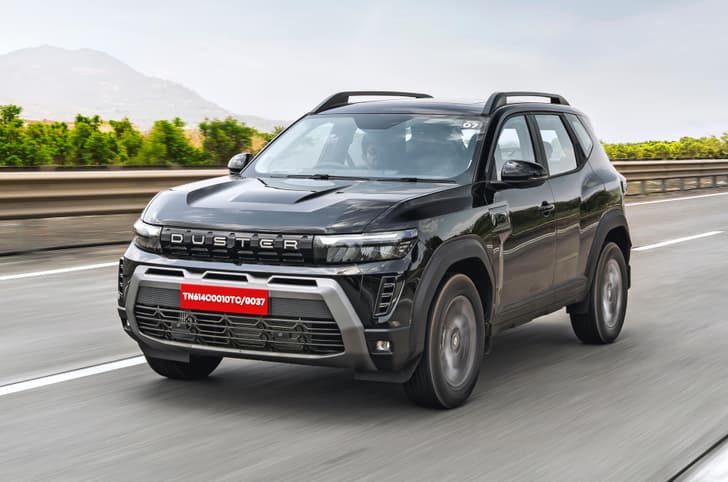
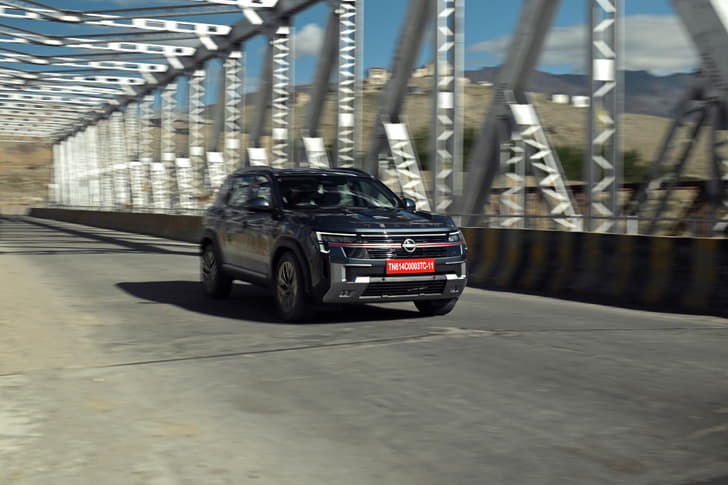
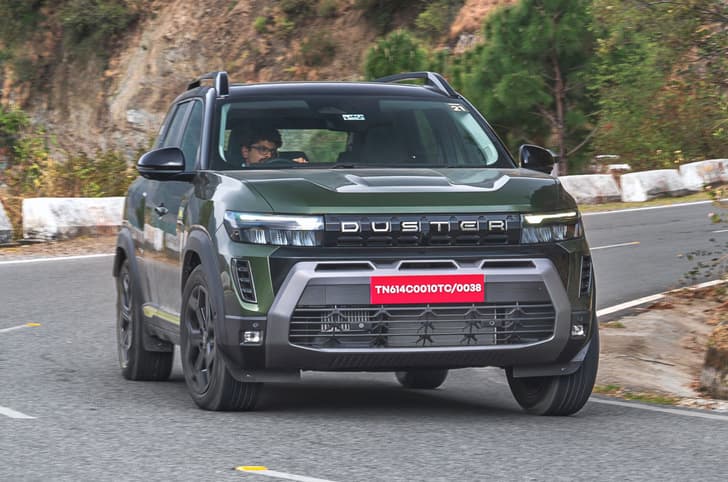
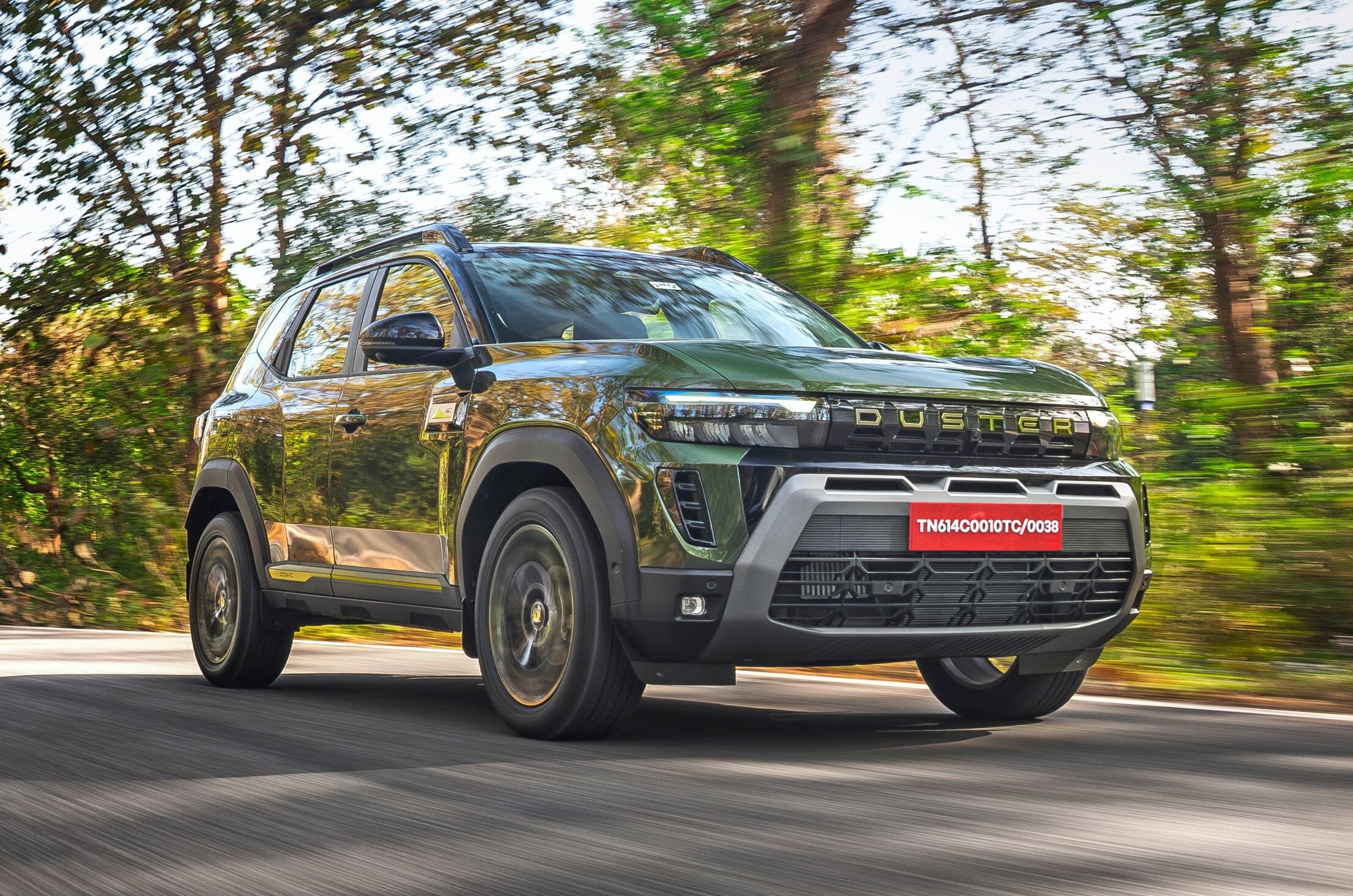
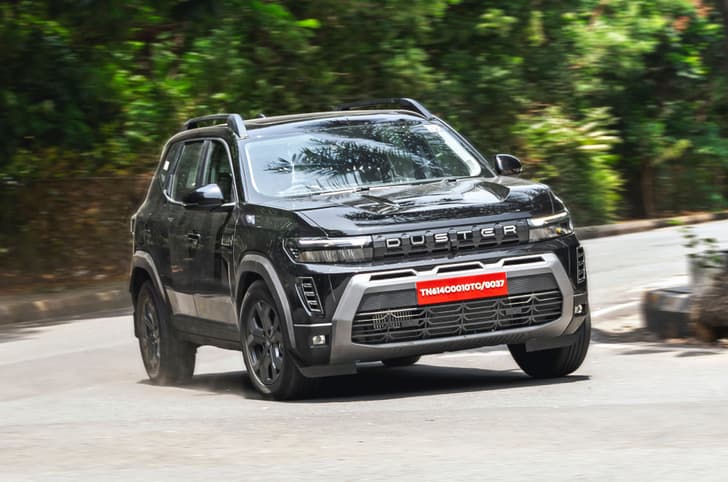
One aspect that Renault has got bang on with the new Duster is the design. It has some clear ties to the older model while featuring contemporary touches. The India-spec SUV is broadly based on the third-gen model sold abroad, but Renault has gone to great lengths to tailor it for our market. Up front, you get large LED headlights with distinctive eyebrow-shaped LED daytime running lamps (DRLs) that double up as turn indicators. The grille, too, is unique for India, doing away with the Renault logo altogether in favour of a bold ‘Duster’ badge, given the model’s strong brand identity. The front bumper channels a hint of nostalgia with its protruding silver skid plate, reminiscent of the first-gen car, while pixel-style fog lamps sit neatly at the edges. Furthermore, the sculpted bonnet and air curtains in the bumper edges do their bit to add more substance.
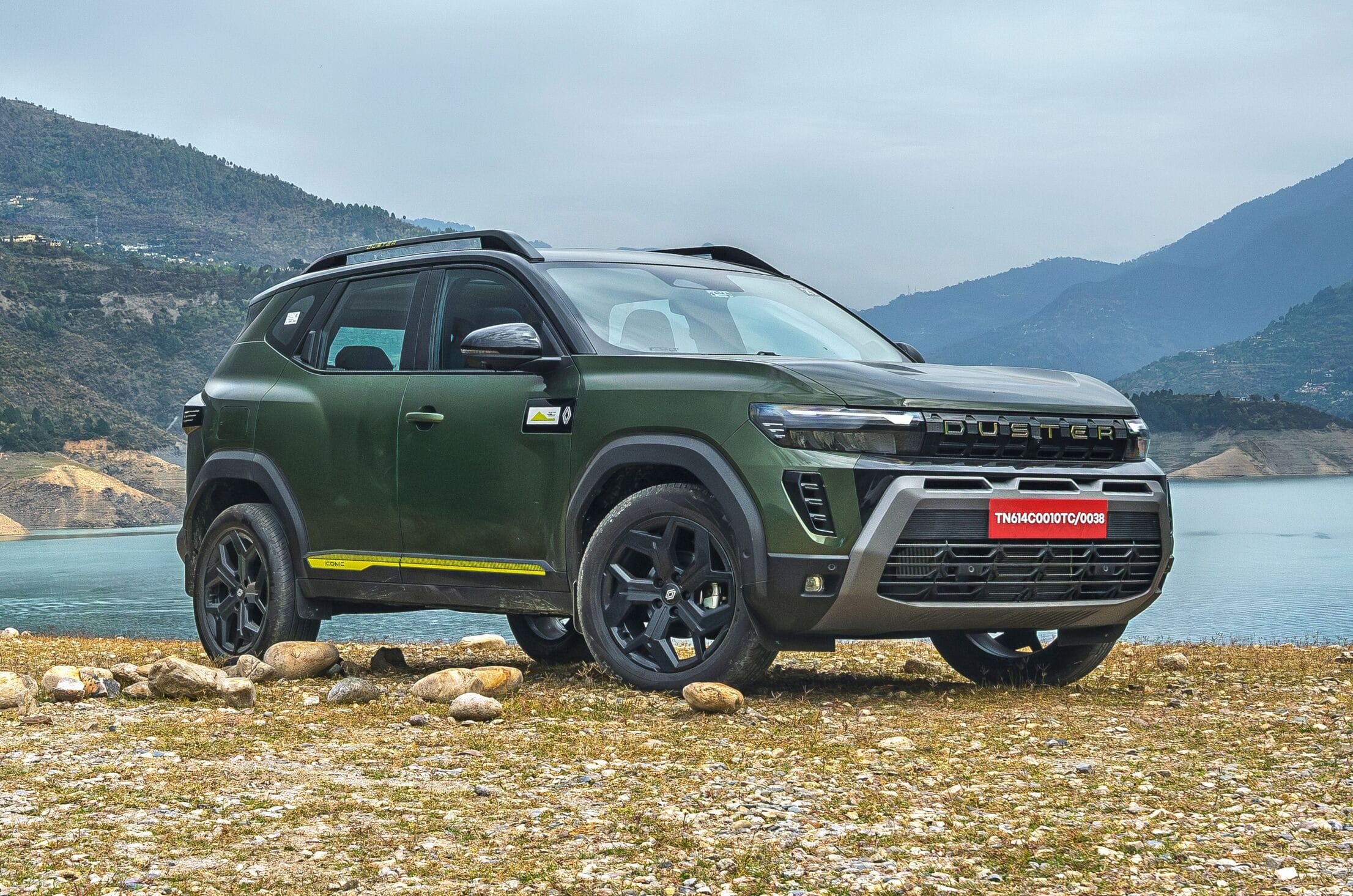
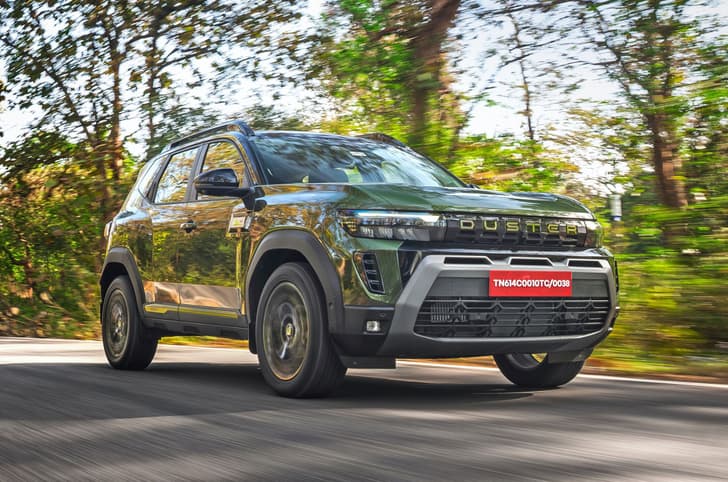
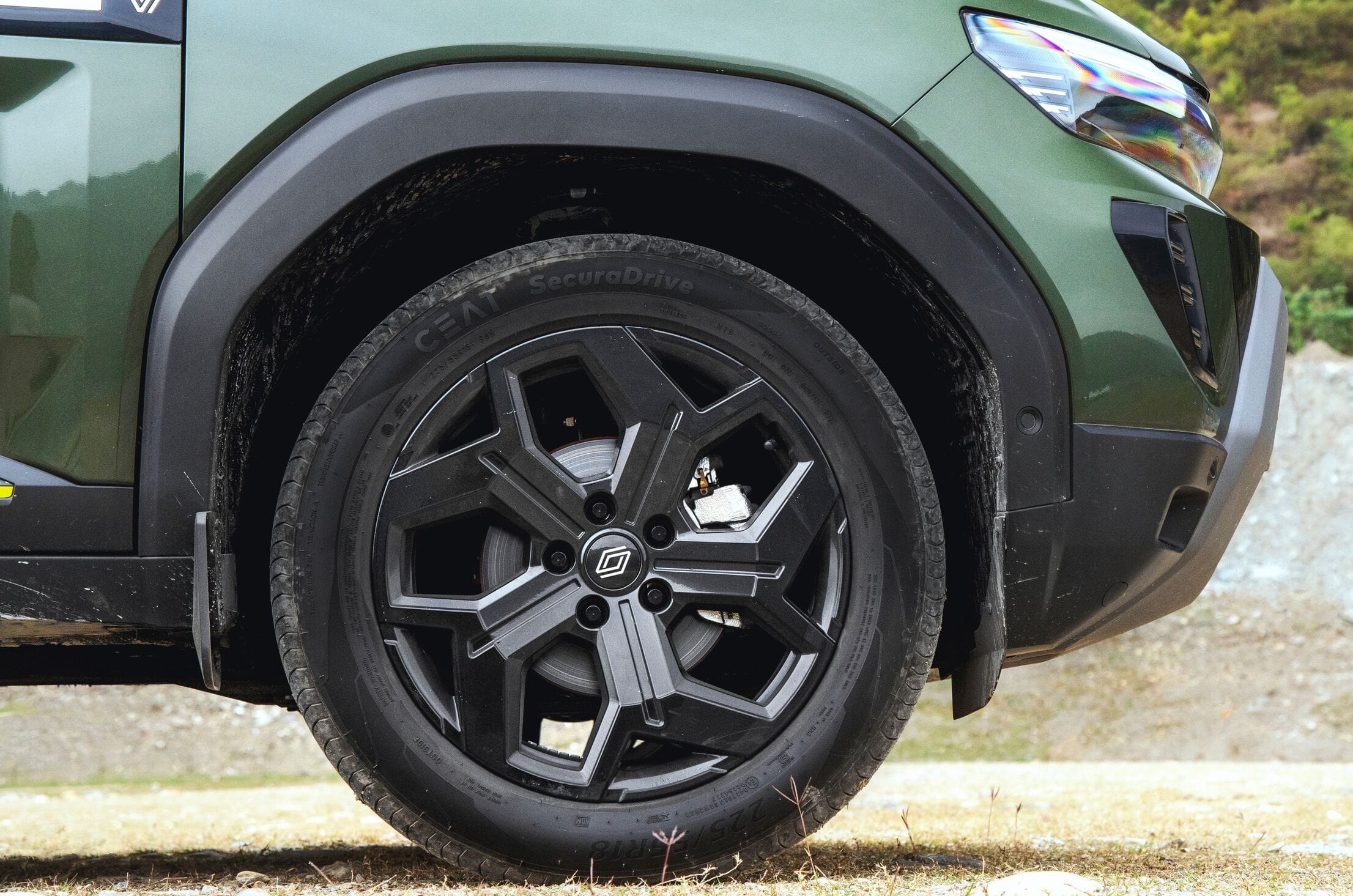
Viewed in profile, the new Duster leans heavily into its rugged brief. There’s pronounced black cladding around the wheel arches and along the lower body, adding to its butch appeal. The rear door handles are tucked into the C-pillar, and you get functional roof rails with a load capacity of 50kg, though they aren’t useful, as roof boxes and carriers have been outlawed in our country. The Duster rides on cool-looking 18-inch alloy wheels and boasts a generous 212mm of ground clearance. Other India-specific touches include subtle Himalayan motifs on the front fenders and an accent strip on the cladding with ‘Iconic’ lettering.
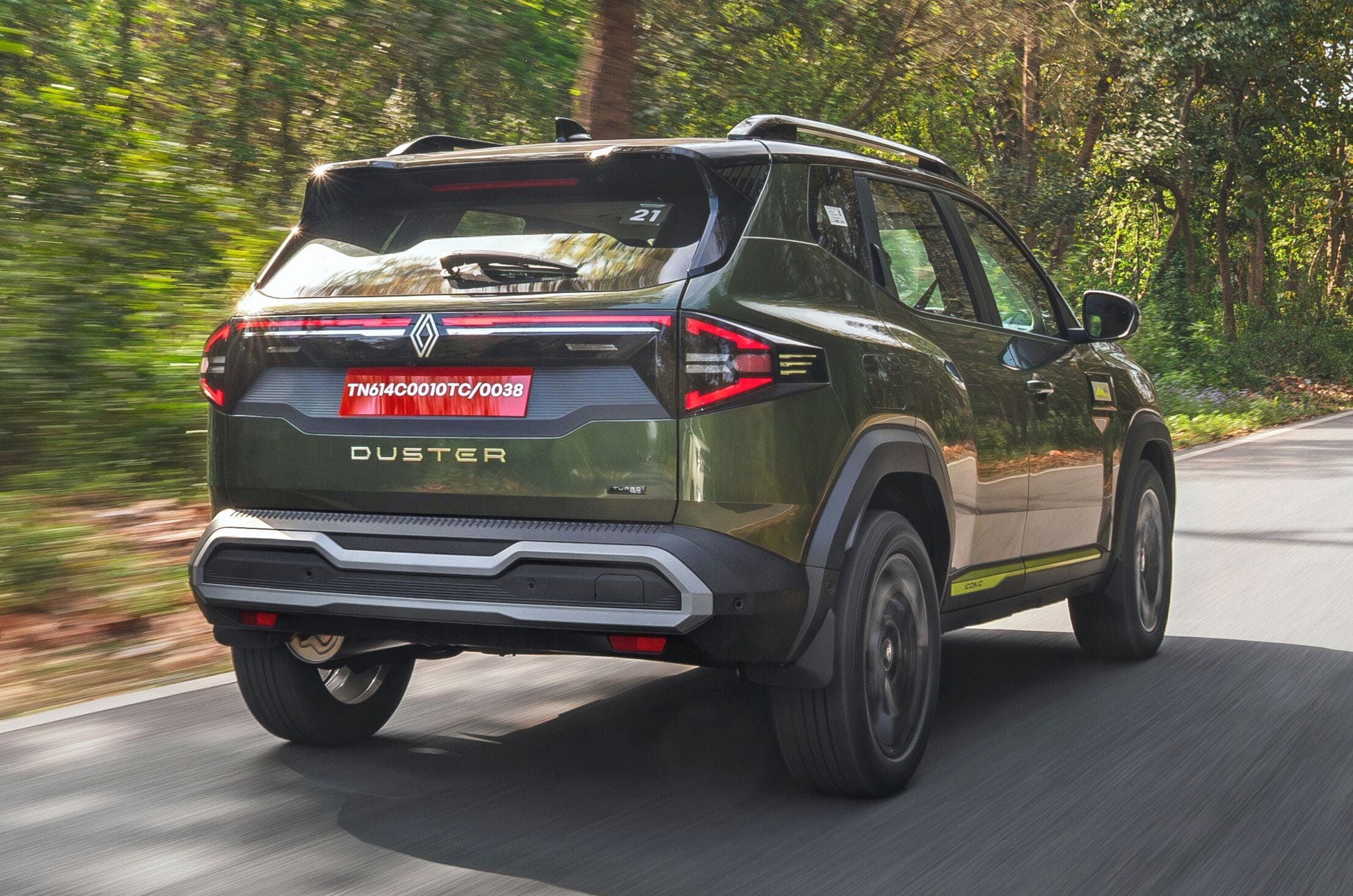
At the rear, the design is fairly simple, but there are some interesting elements. The triangular tail-lamps are linked by an LED light bar – a feature not seen on the global version. Then, there’s a roof-mounted spoiler that adds a sporty edge, while the licence plate housing gets a textured finish. The black rear bumper, contrasted by a silver insert, helps break up the otherwise clean design and furthers its rugged appeal. Overall, the new Renault Duster is big on road presence. Colour options include Sunset Red, Pearl White, River Blue, Moonlight Silver, Stealth Black and Jade Mountain Green. The version featured here is the ‘Launch Edition’, marked out by its neon green accents all around and blacked-out alloys.
Unlike the European model, which is based on the Common Module Family – B (CMFB) platform, the India-spec Duster is underpinned by the Renault Global Modular Platform (RGMP), with a new electrical and electronics (E&E) architecture co-developed with Google. Going forward, the RGMP will also underpin sub-4m cars, unlike the CMFB platform, and it can even take on full electrification as well as other powertrains such as hybrids and CNG without any compromises in packaging.
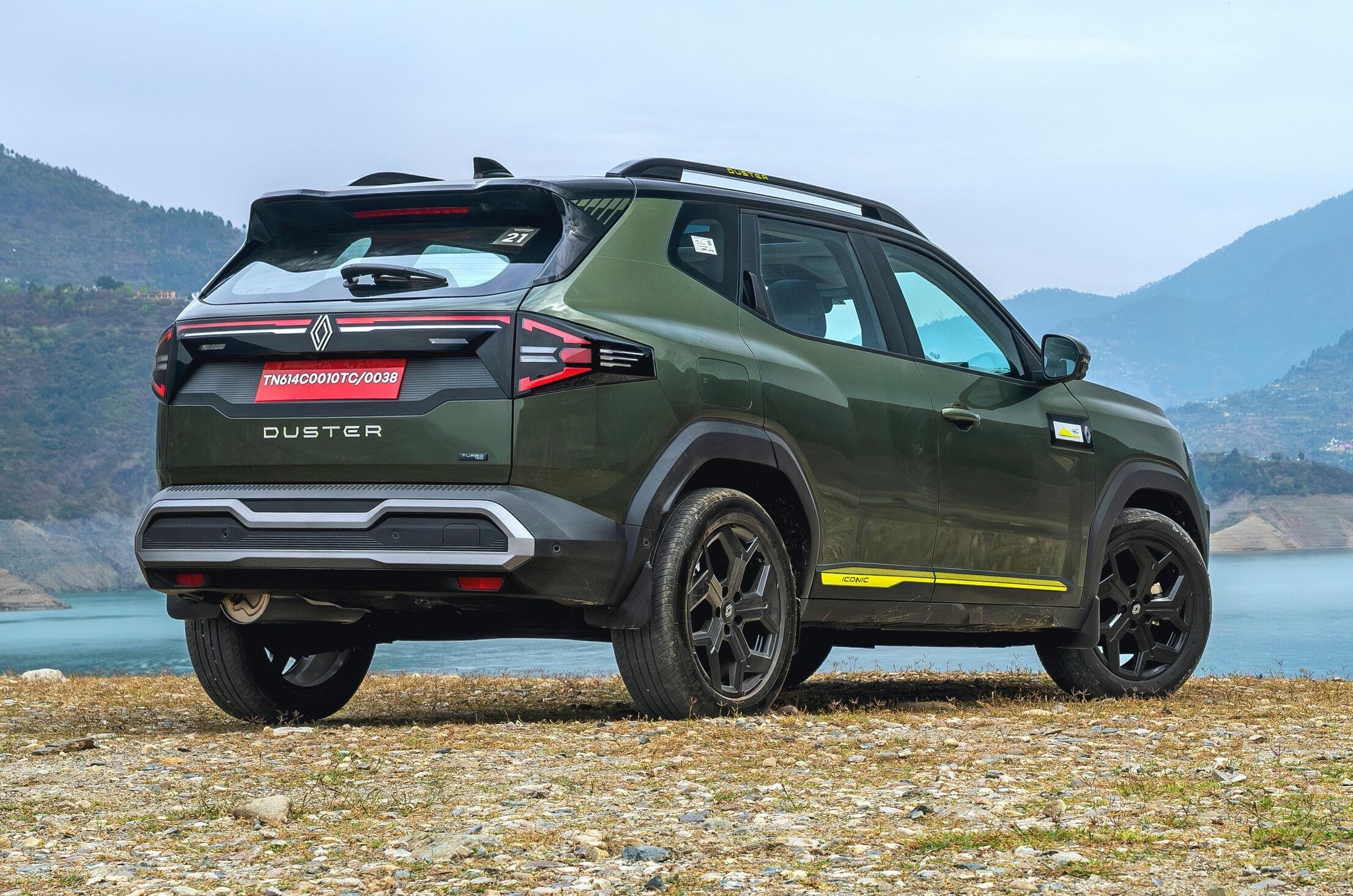
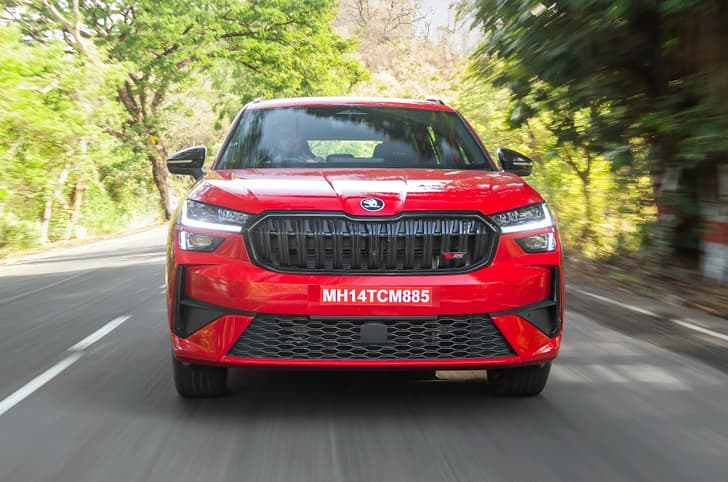
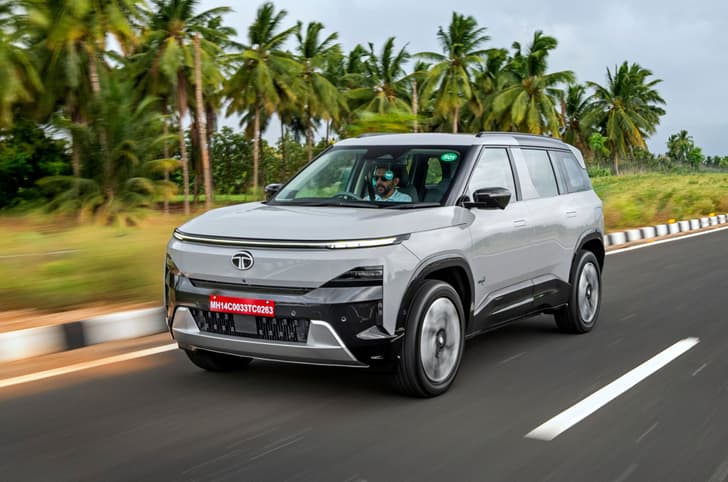
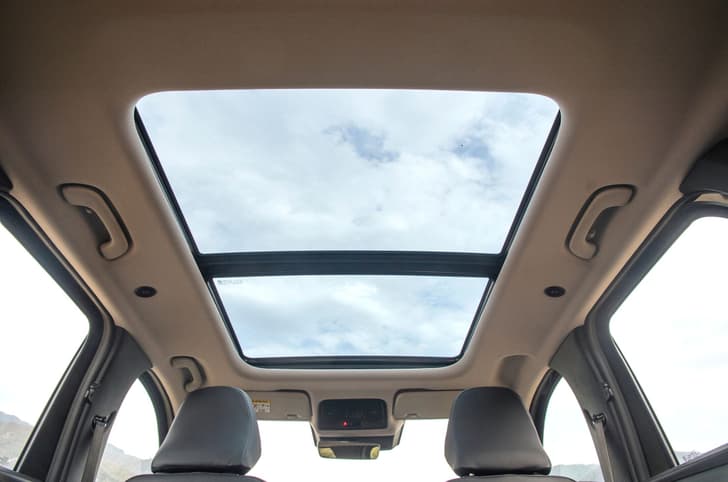
As for dimensions, the Duster measures 4,343mm in length, 1,813mm in width and 1,659mm in height, and it has a 2,657mm wheelbase, putting it in the same ballpark as its midsize SUV rivals. Overall, the new Duster fits in between, as it is not as big as the Tata Sierra but also not as small as the Skoda Kushaq and Volkswagen Taigun. Interestingly, the India-spec model is 50mm taller than the overseas one, and a big reason for that is the panoramic sunroof. Renault had to raise the roof to accommodate the mechanism for this feature while still maintaining sufficient headroom. As a result, the Indian Duster’s cabin is about 40mm taller, and the ground clearance is higher too.
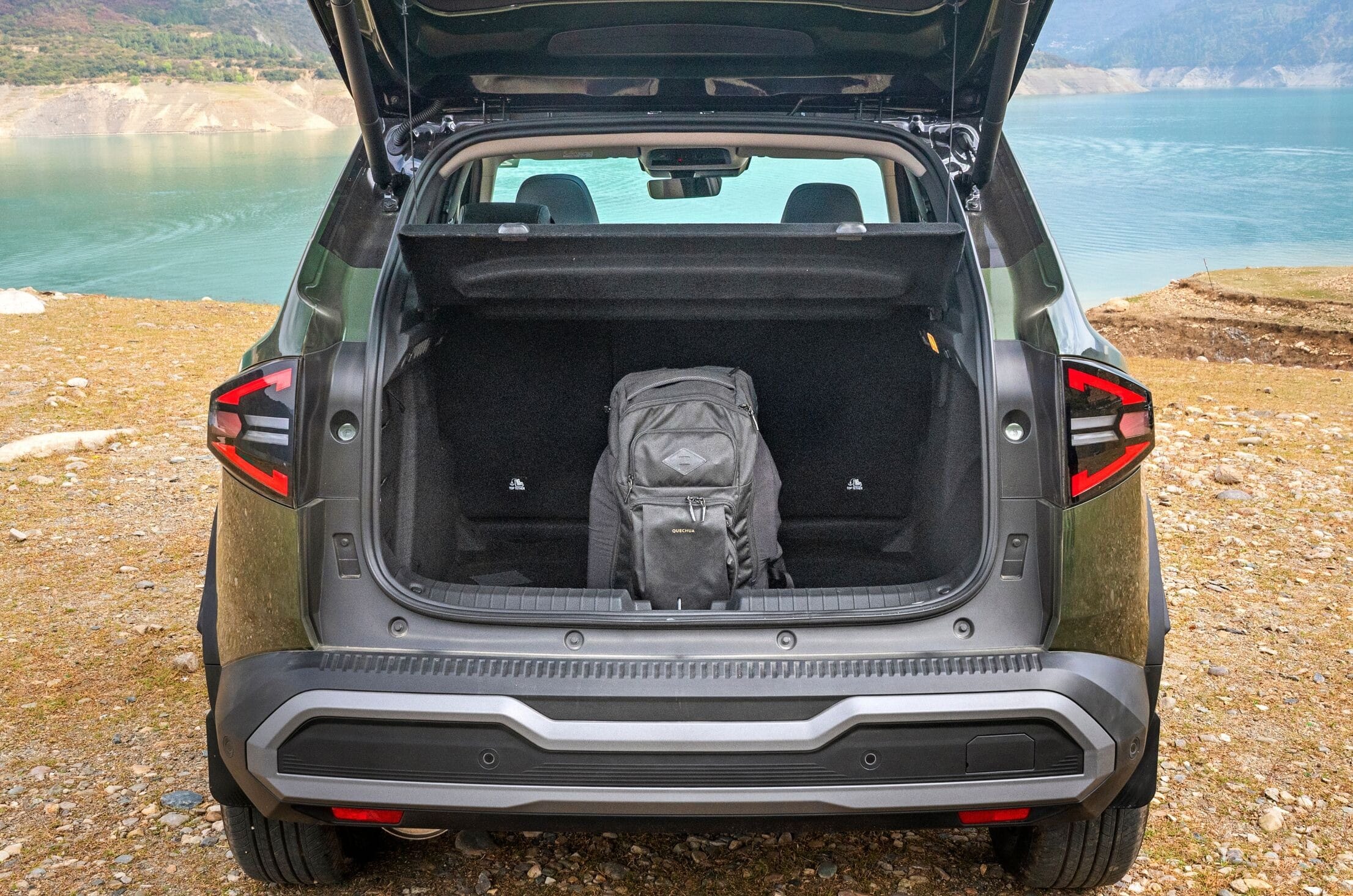
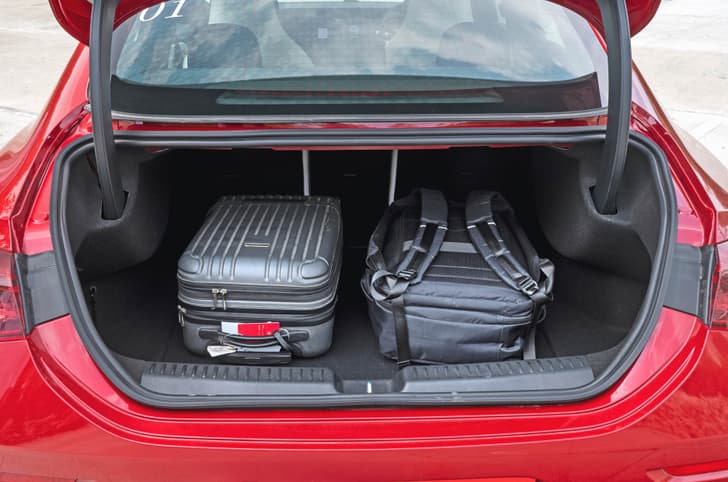
The electrically operated tailgate opens to reveal a segment-best 518 litres of boot space (700 litres up to the roof) that can swallow up a lot of cargo. Though a downer is that there’s no spare tyre as standard, and you only get a puncture repair kit. Rounding things off are a 26.9-degree approach angle and a 34.7-degree departure angle – underlining that this Duster hasn’t strayed far from its go-anywhere roots. And on a specially curated off-road course on our drive, we experienced just how capable it is tackling the rough stuff.
Renault Duster Interior Space and Comfort
Much like the exterior, the cabin of the Duster has also been reworked thoroughly from the international version to better align with local preferences. The dashboard is entirely unique, featuring a dual-screen layout complemented by a mix of textured and soft-touch materials that elevate the overall ambience. There’s also a liberal use of silver accents, faux carbon fibre trim and contrast green stitching, all of which add a sense of flair to the otherwise functional layout.
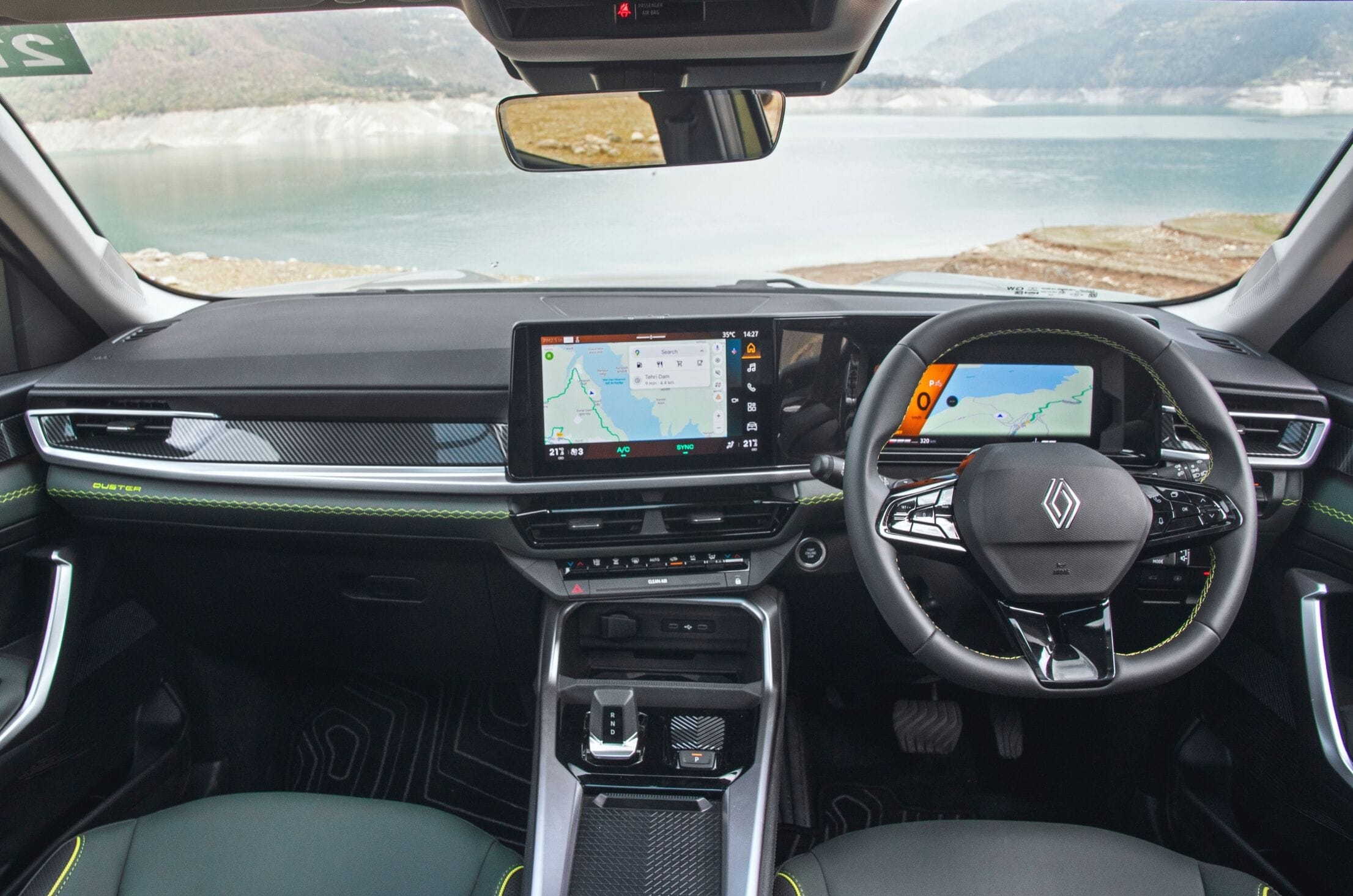
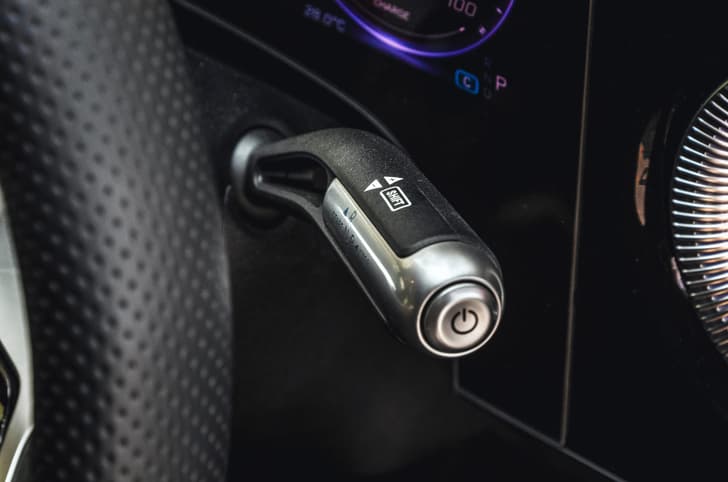
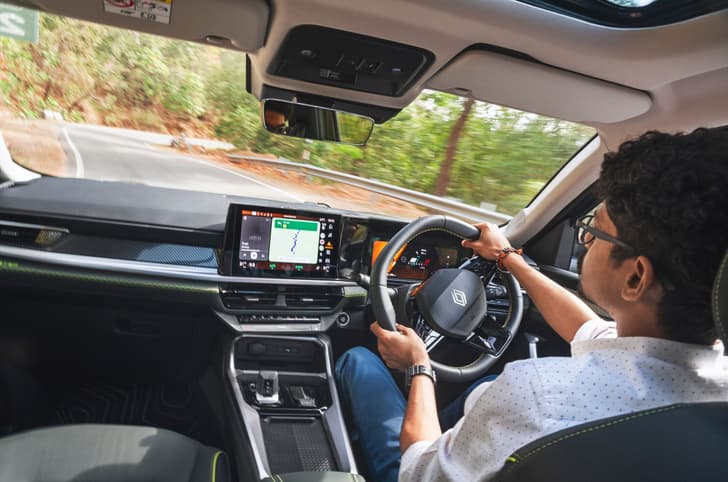
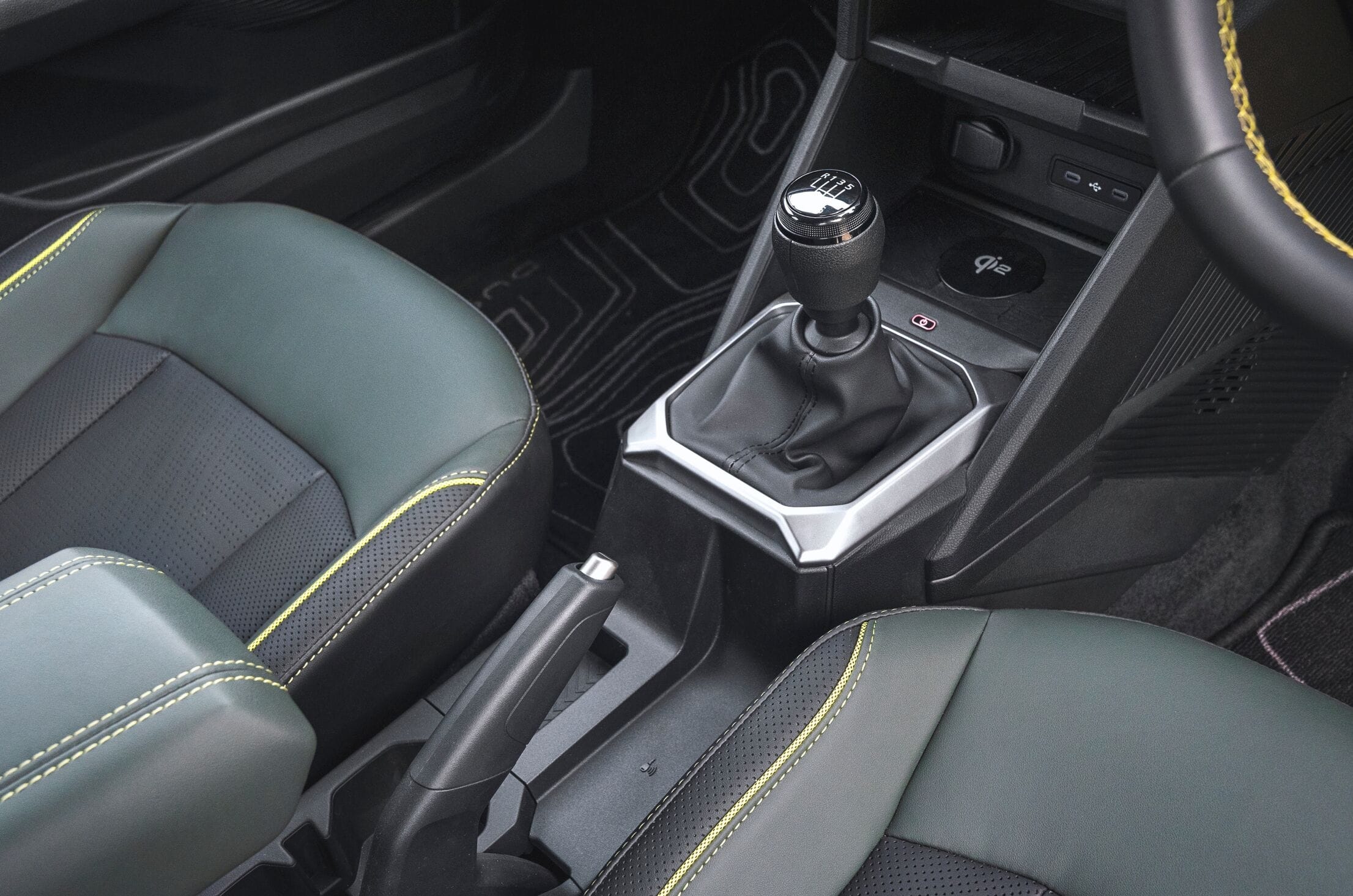
Importantly, Renault hasn’t gone overboard with digitisation. The Duster strikes a sensible balance between screens and tactile controls, with a bank of physical buttons on the centre console handling key vehicle functions, including the HVAC controls. Rather uniquely, the automatic and manual have different centre consoles. The automatic features a high-set closed-off panel that houses a deep, cooled storage area with cup holders, with the stubby gear selector, electronic parking brake and wireless charger positioned in front. The manual gets a lower-set centre console with a manual parking brake, and you also get an additional shelf for your devices just below the physical controls on the dash. A special mention also has to go to the manual gear lever, which is great to hold and look at. Practical touches are well thought out too: the front armrest is slide-adjustable and houses a storage compartment, there’s a fairly large glove box, and the door bins can easily fit 1-litre bottles.
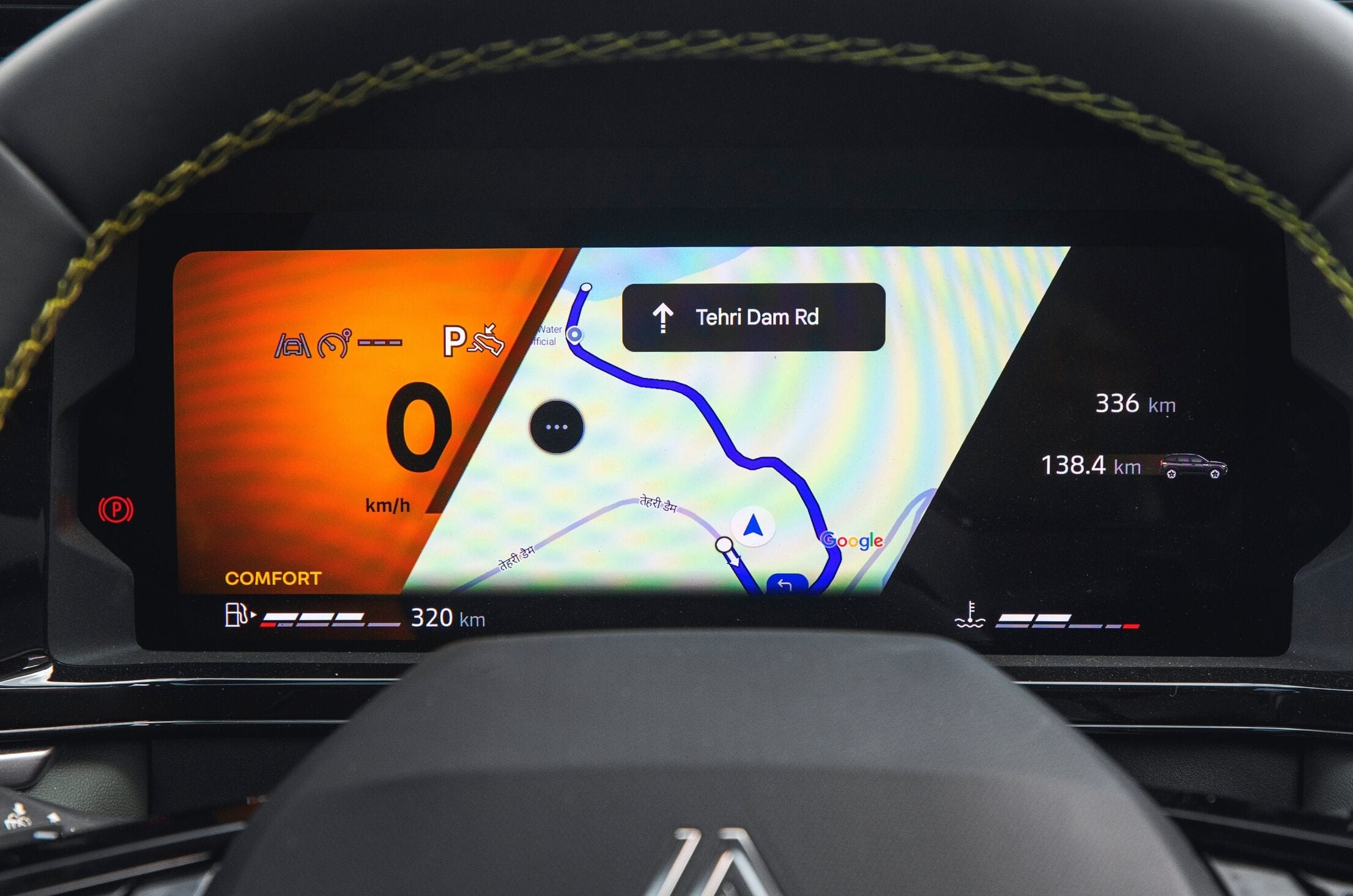
The steering, which has a flat bottom and top, feels nice to hold and houses the controls for the cluster and cruise control, while controls for the audio system are on a separate stalk behind the wheel, much like the older Duster. The digital instrument cluster features bright colours, is high-res and is configurable too, though the layout may not be to everyone’s tastes; traditional Duster buyers might miss the simple round dials of the older model. The plastic, card-like key fob, the same as that of the more affordable Triber and Kiger, looks budget-grade and doesn’t feel premium.
The seats, too, like the dashboard, feature dual-tone black and dark green upholstery with neon green contrast stitching, which does look appealing. The front seats are accommodating and well-padded to keep you comfy over long drives, and they feature electric adjustment as well as one of the most effective seat ventilation systems around. The rear seat is also a comfy place for two adults, and even though it can accommodate a third occupant, the passengers won’t be comfortable for long, thanks to the tight shoulder room and the transmission hump.
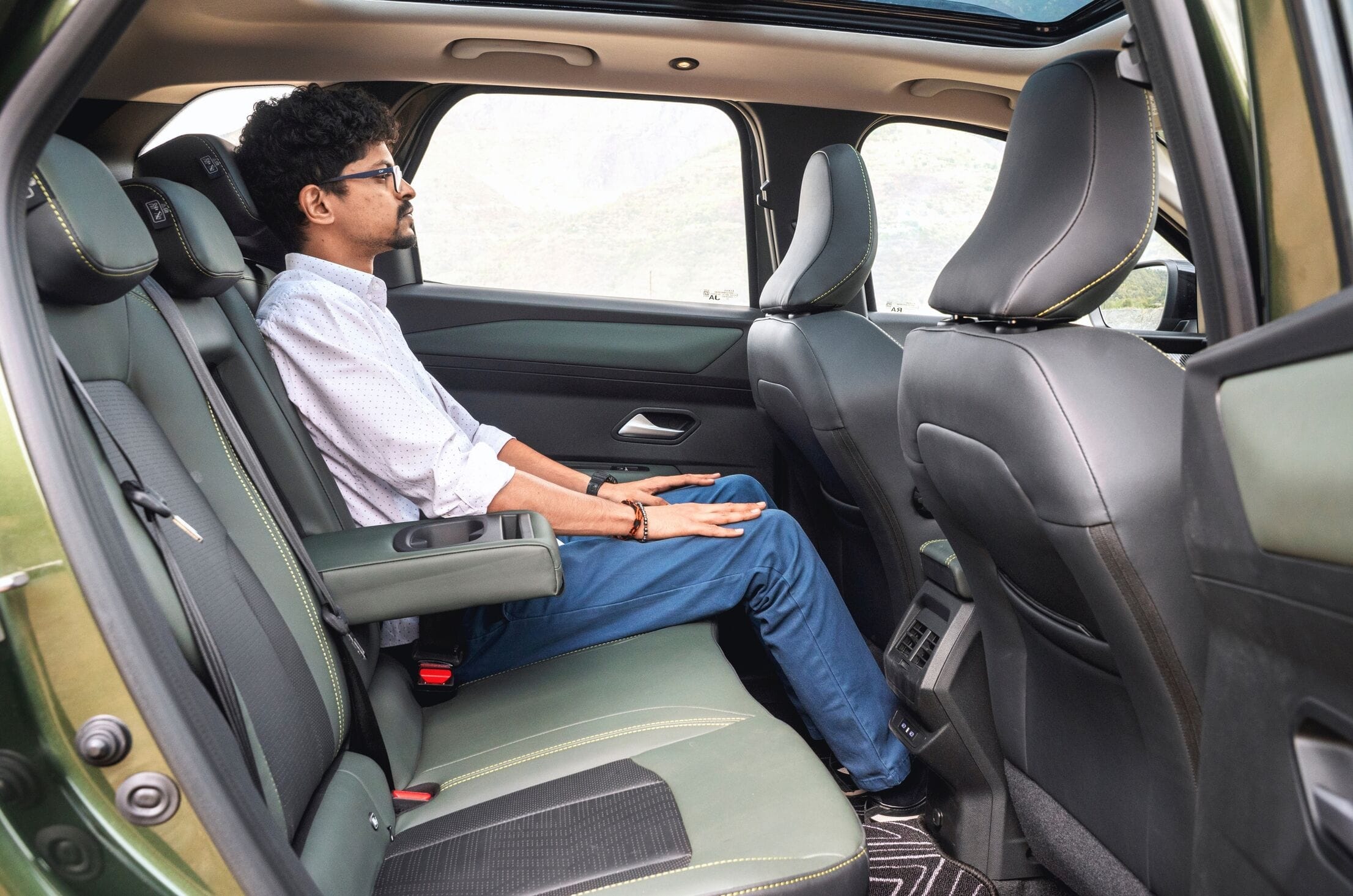
At the back, there’s decent kneeroom and ample headroom for six-footers, and the large sunroof and windows help the sense of space. You also get a centre armrest with cup holders, dedicated AC vents and charging ports, though rear sun blinds are missing. The window line is much higher than before; the earlier Duster, with its lower window line and larger glass area, offered excellent outward visibility.
Renault Duster Features and Safety
Renault has packed the Duster with all the features now expected in the midsize SUV segment. The infotainment system supports wireless smartphone integration and matches the digital cluster with its bright colours and high-resolution graphics, but the 10.1-inch touchscreen does feel a bit modest in today’s screen-size race.
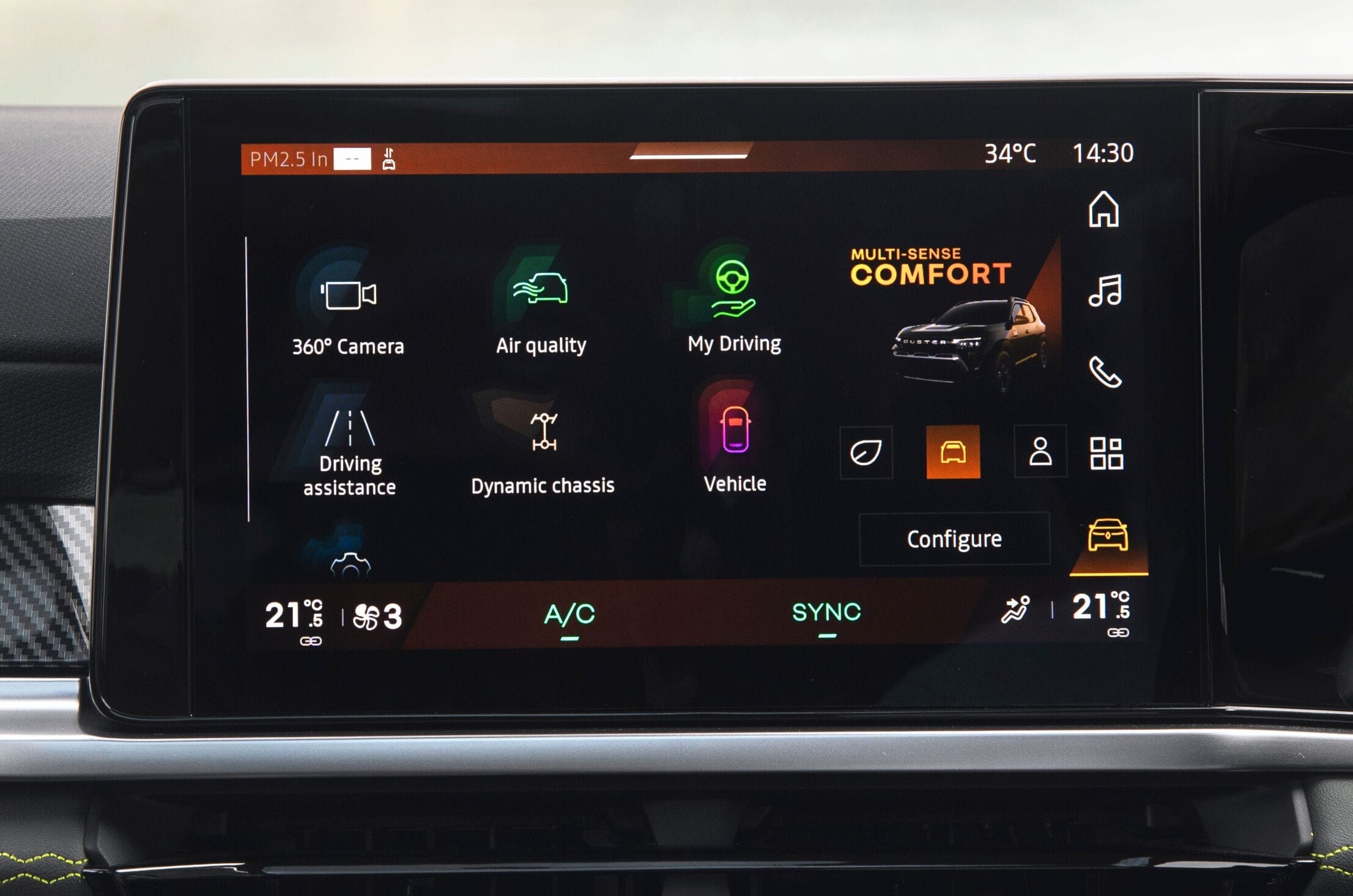
The headline feature, though, is the integration of Google services. Google Maps, Google Assistant and the Google Play Store are all built in, can be accessed directly from the system and work seamlessly. The interface itself is slick and responsive, but it isn’t the most intuitive to navigate on the move; the layout and menus lack the clarity and logical flow you get in rivals from Hyundai and Kia.
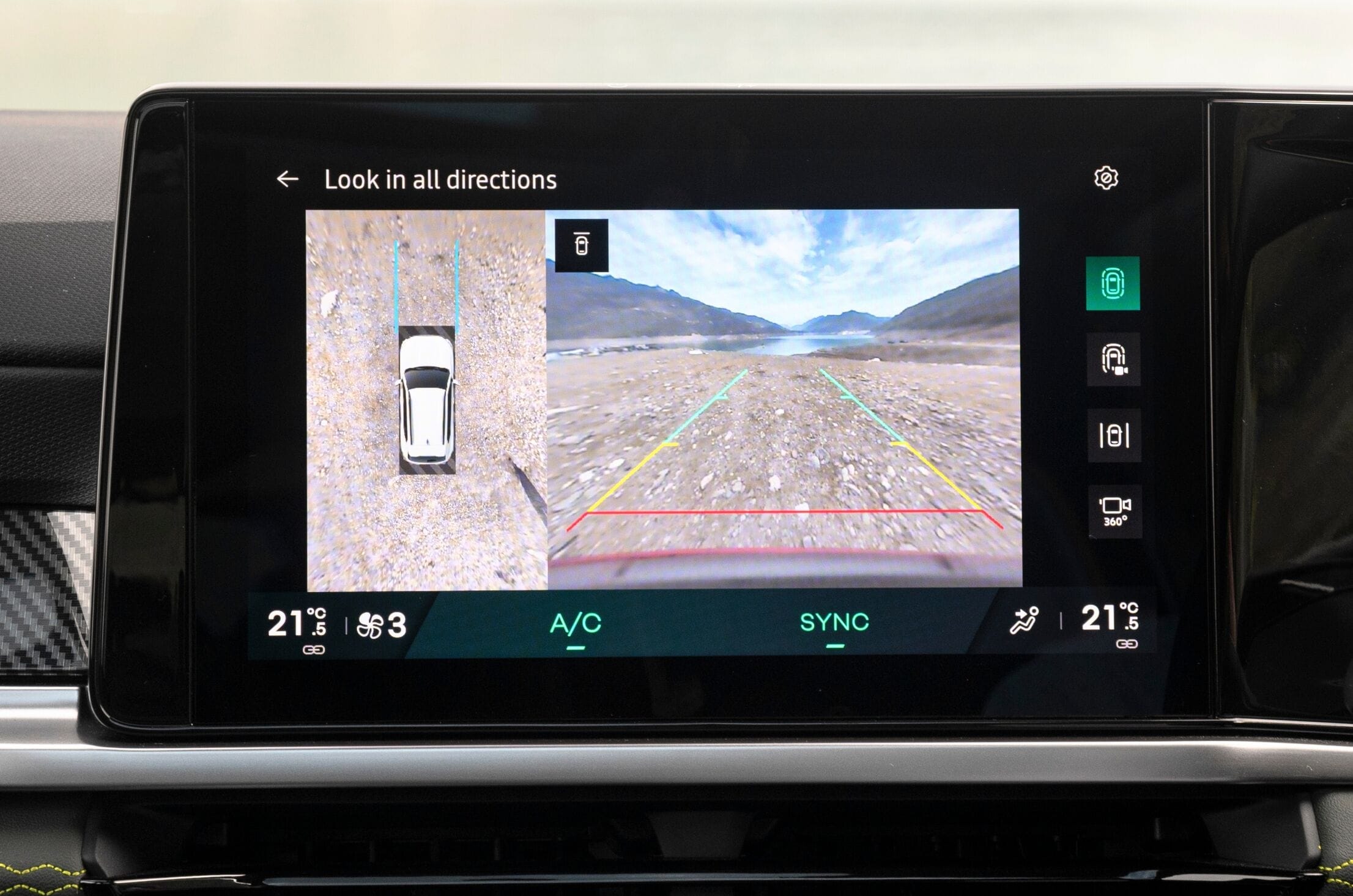
In addition to the ventilated and powered front seats, other ‘must-have’ features include a panoramic sunroof, a wireless phone charger, a 360-degree parking camera (though it’s not the sharpest around), a powered tailgate, auto headlamps and wipers, dual-zone climate control, connected car tech and much more.
Its safety suite comprises six airbags as standard, front and rear parking sensors, a tyre-pressure monitoring system (TPMS), an electronic parking brake (DCT), three-point seatbelts, adjustable headrests and disc brakes on all four wheels. Notably, the Duster is the first Renault in India to get a Level 2 ADAS suite. On our short drive, the ADAS features weren’t too intrusive, which points to a well-calibrated system. However, the lane-keep assist seemed a bit too aggressive. What’s nice is that there’s a handy button on the driver’s right side that turns off all the ADAS features, so you don’t have to fiddle through the sub-menus on the screen. Renault has also said that it will aim for a full 5-star crash safety rating with the new Duster.
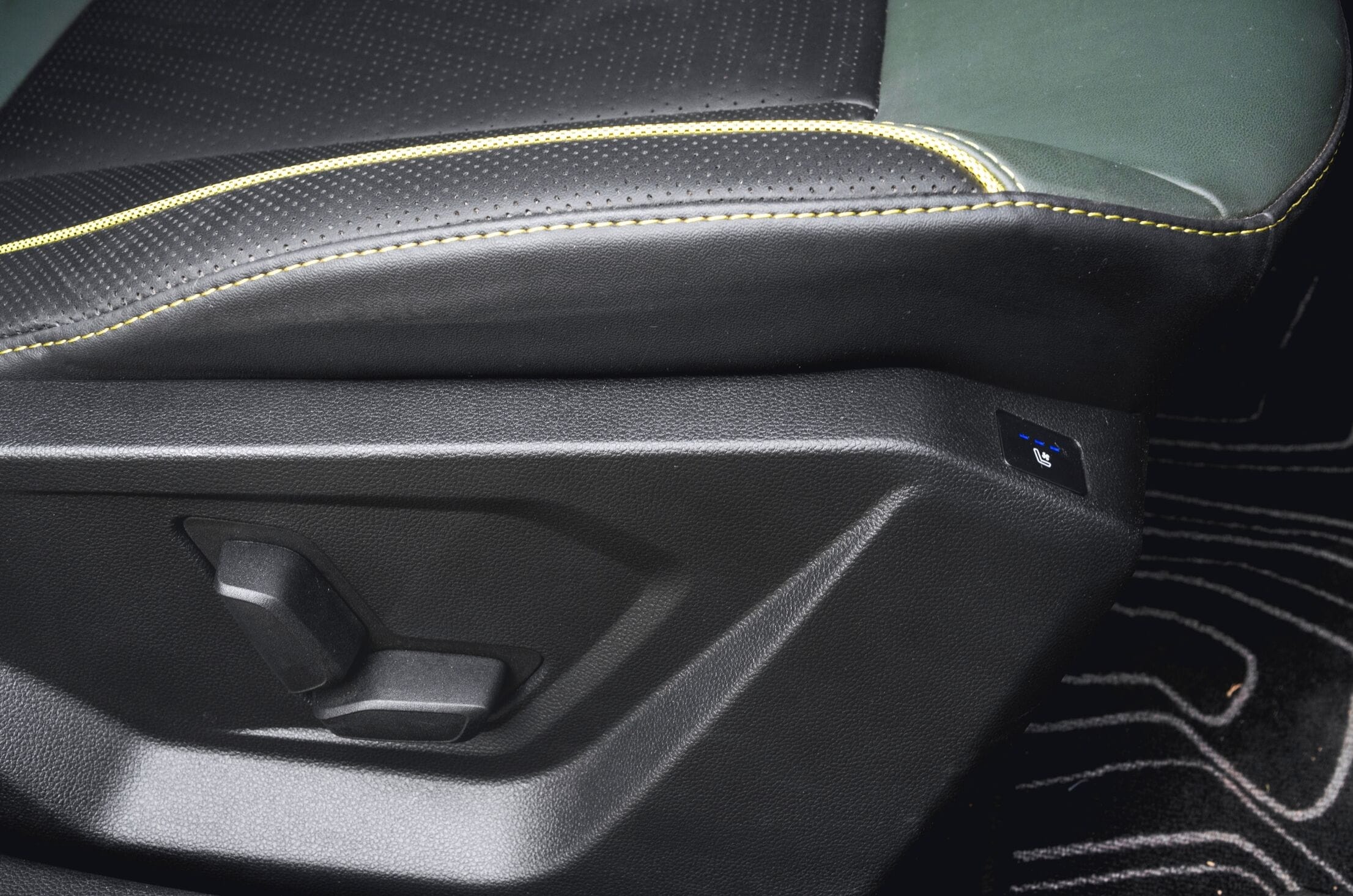
Feature-wise, then, the Duster is well-equipped to take on rivals. However, these could have been better allocated across the range, and mid- or second-to-top variants should have been equipped with goodies such as ventilated seats and leatherette upholstery.
Renault Duster Performance and Refinement
The Duster’s entry-level engine is a 1.0-litre three-cylinder turbo-petrol that puts out 100hp and 160Nm and comes mated to a 6-speed manual gearbox only. Then, there’s a 1.3-litre four-cylinder turbo-petrol that produces 163hp and 280Nm (segment-leading figures) and is paired with either a 6-speed manual or a 6-speed DCT, both of which we got to sample on this drive. Interestingly, it’s this engine that accounts for 91 percent of all Duster bookings.
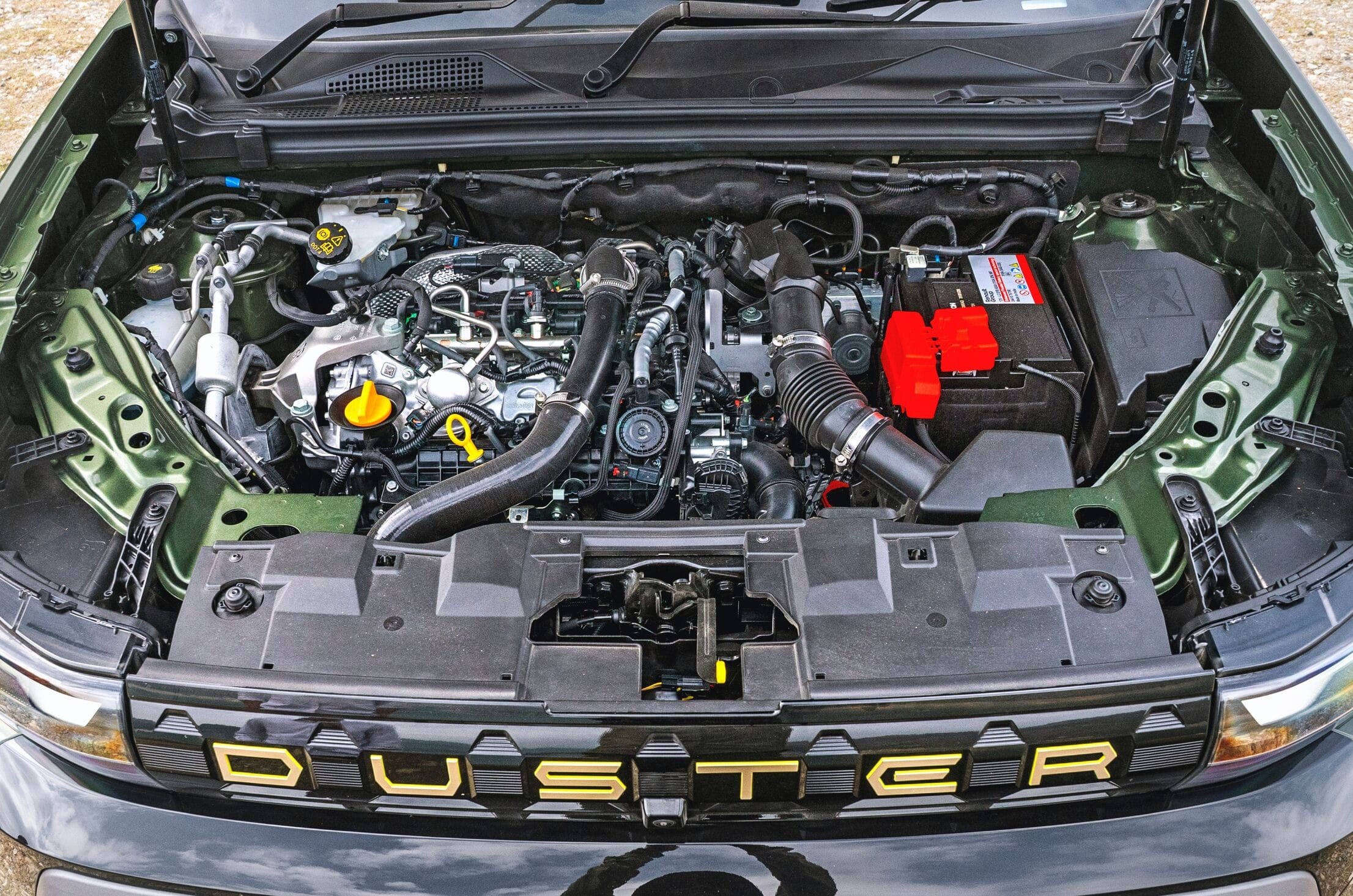
Renault is also offering a strong hybrid option, which pairs a 109hp 1.8-litre four-cylinder petrol engine with a 49hp electric motor and a 20hp hybrid starter generator (HSG), backed by a 1.4kWh (280 V) battery. This takes the total system output to 160hp and 172Nm. However, this powertrain will only be introduced by Diwali, and Renault has announced that it’s already booked out for 2026. Unlike the original Duster, there’s no diesel engine nor an AWD option.
The 1.3 DCT is definitely our pick of the two. Not only is it more convenient than the manual, but it is also nicer to drive. The engine itself impresses with its superb refinement, as there are no vibrations to be felt at idle, and even when you get going, it remains smooth throughout. The cabin insulation is very good as well, and as such, you barely hear the engine inside; it’s only when you’re really revving it out that it becomes audible. There’s some turbo lag and a prominent step up in power delivery around the 2,500rpm mark, followed by a strong mid-range punch, and it will pull cleanly till its redline.
The wet-clutch dual-clutch automatic gearbox (DCT) doesn’t have the lightning-quick shifts of Volkswagen’s twin-clutch DSGs, but it impresses with its almost torque-converter-like smoothness. This really helps in low-speed city driving, where the Duster DCT feels smooth and seamless. There are even paddle shifters, which are responsive and add to the engagement when you’re driving in a spirited manner. As for flat-out acceleration, we clocked a preliminary 0-100kph time of 10.4 seconds, which is about par for the segment. What blunts performance somewhat is the overall tall gearing, which is partly responsible for a slow response at low revs, especially in the manual.
The 1.3 manual will be the one the enthusiast will naturally gravitate towards. Our test drive was up a ghat road in the foothills of the Himalayas, and out there, the manual felt in its element. Nothing quite beats the control and engagement you get from a proper three-pedal setup when you’re in the mood to drive fast. The clutch is light and has a consistent bite point, so it doesn’t feel jerky, while the well-defined gates mean the shifts are precise. However, powering uphill out of hairpins and tight corners, the turbo lag is much more prominent in the manual than the DCT. The overall tall gearing means you have to constantly drop a gear to stay in the meat of the powerband, or you’ll lose momentum.
The Duster 1.3 MT was slightly slower than the DCT in the 0-100kph run, taking 10.8 seconds. There are even drive modes in both versions, though they only include Comfort and Eco; the addition of a Sport mode would have been nice.
Renault Duster Mileage and Efficiency - 7
Our short test drive meant we didn't get a chance to test its real-world fuel efficiency but Renault claims the 1.3 MT will do 17.75kpl while the DCT is said to do 18.45kpl. Given its a small capacity turbo engine, expect real-world city efficiency to hover in the high single digits to low double digits, while highway efficiency should be in the mid-teens. As always, this will vary depending on driving styles and traffic conditions.
Renault Duster Ride Comfort and Handling
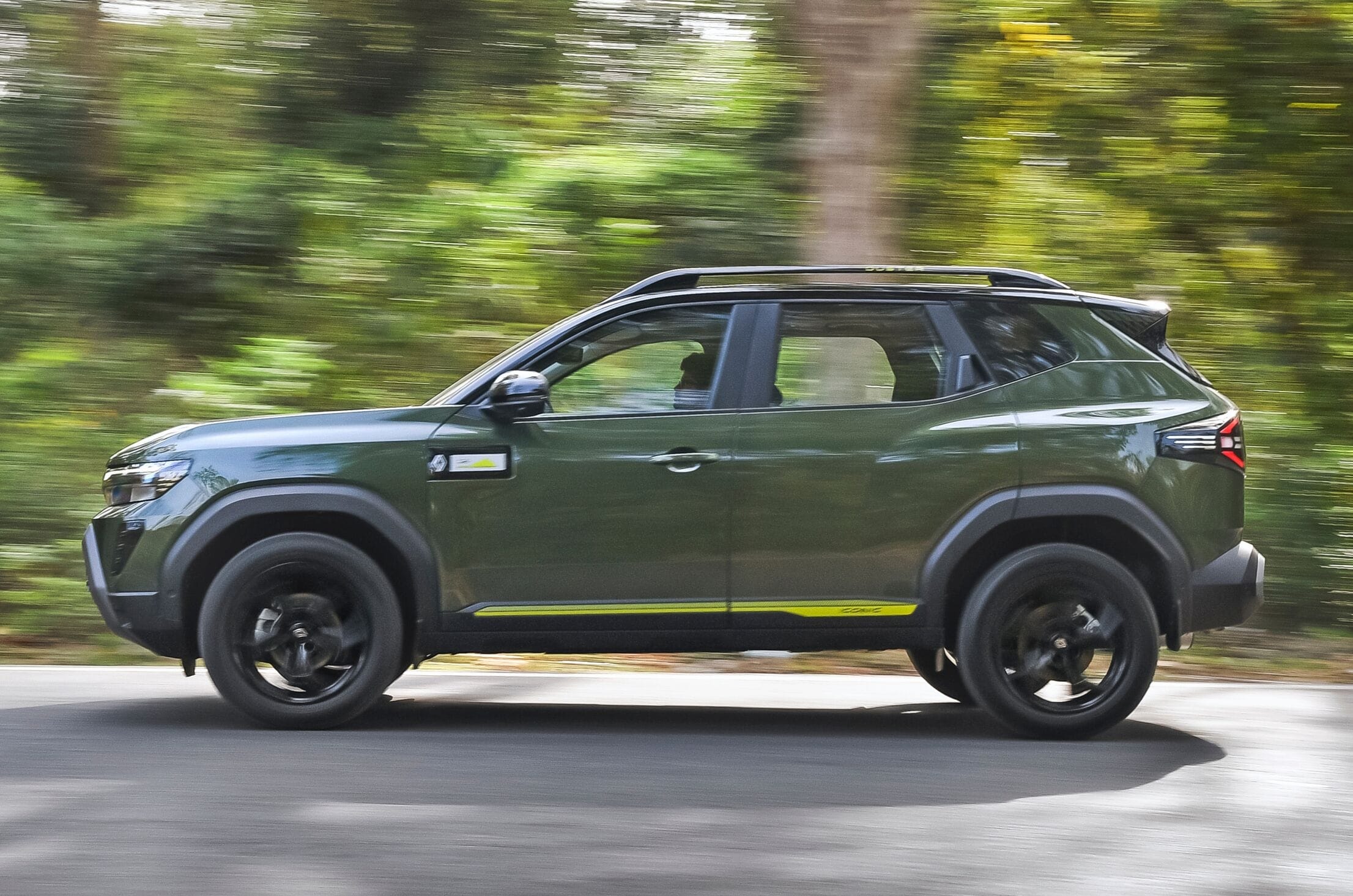
Ride comfort was a hallmark of the old Duster, and it has been retained in this new-gen model. Our drive was from Dehradun up to New Tehri in Uttarakhand, and this properly felt like Duster territory – with a mixture of smooth highway tarmac, tight ghat roads and broken patches with big rocks thanks to landslides. And the Duster dealt with all of that and barely broke a sweat.
It has that typical European hint of firmness, especially at low speeds, but that’s not to say it’s uncomfortable by any means. It simply smothers rough patches and big potholes without any of it filtering through to the cabin, and it also doesn’t have the steering kickback associated with the older Duster. What helps is the height of the 225/55 R18 tyre sidewall, which provides that additional layer of absorption. It’s equally capable at highway speeds, where it feels stable and composed.
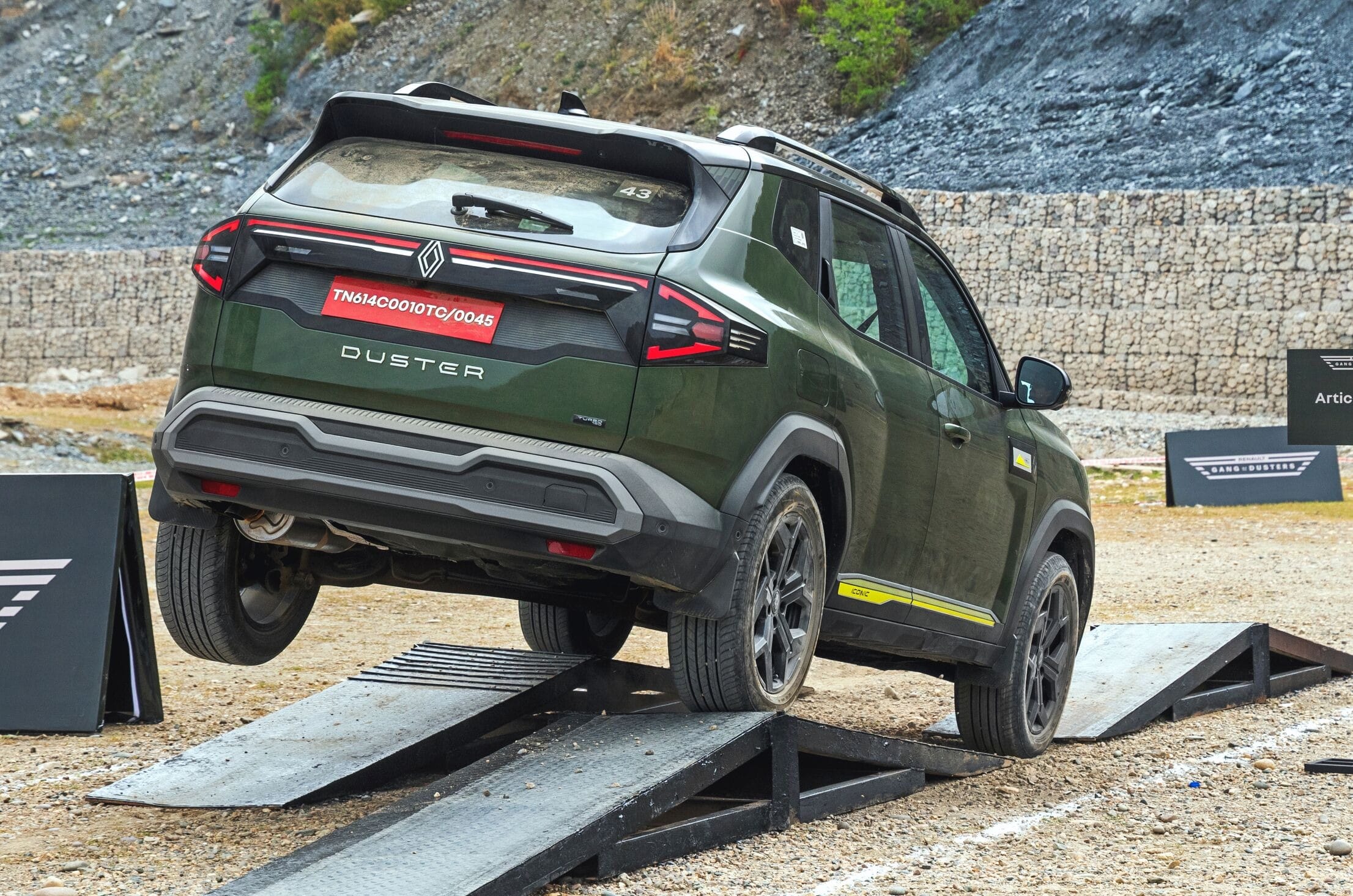
The Duster is enjoyable around corners too. Body control is impressive, but when pushed hard, there is a bit of roll, and it doesn’t feel quite as flat or tightly tied down as a Skoda Kushaq or Volkswagen Taigun. The steering, while on the lighter side, is precise and offers good feedback on a twisty road. You also get selectable steering modes, including a configurable Individual setting, which adds a welcome bit of heft for more spirited driving.
Renault Duster Value for Money
Renault is offering the Duster in five trim levels – Authentic, Evolution, Techno, Techno+ and Iconic – with prices starting at Rs 10.29 lakh and going up to Rs 18.49 lakh (ex-showroom). This represents good pricing and puts it right in the meat of the midsize SUV segment. Rivals such as the Citroen Aircross and MG Astor are more affordable at the lower end, while offerings like the Hyundai Creta, Kia Seltos, Tata Sierra and Maruti Victoris all cost more at the top end. Renault is also offering an ‘R Pass’ pre-booking benefit, which lowers the effective price of each variant by Rs 20,000-40,000 and offers priority delivery, among other benefits.
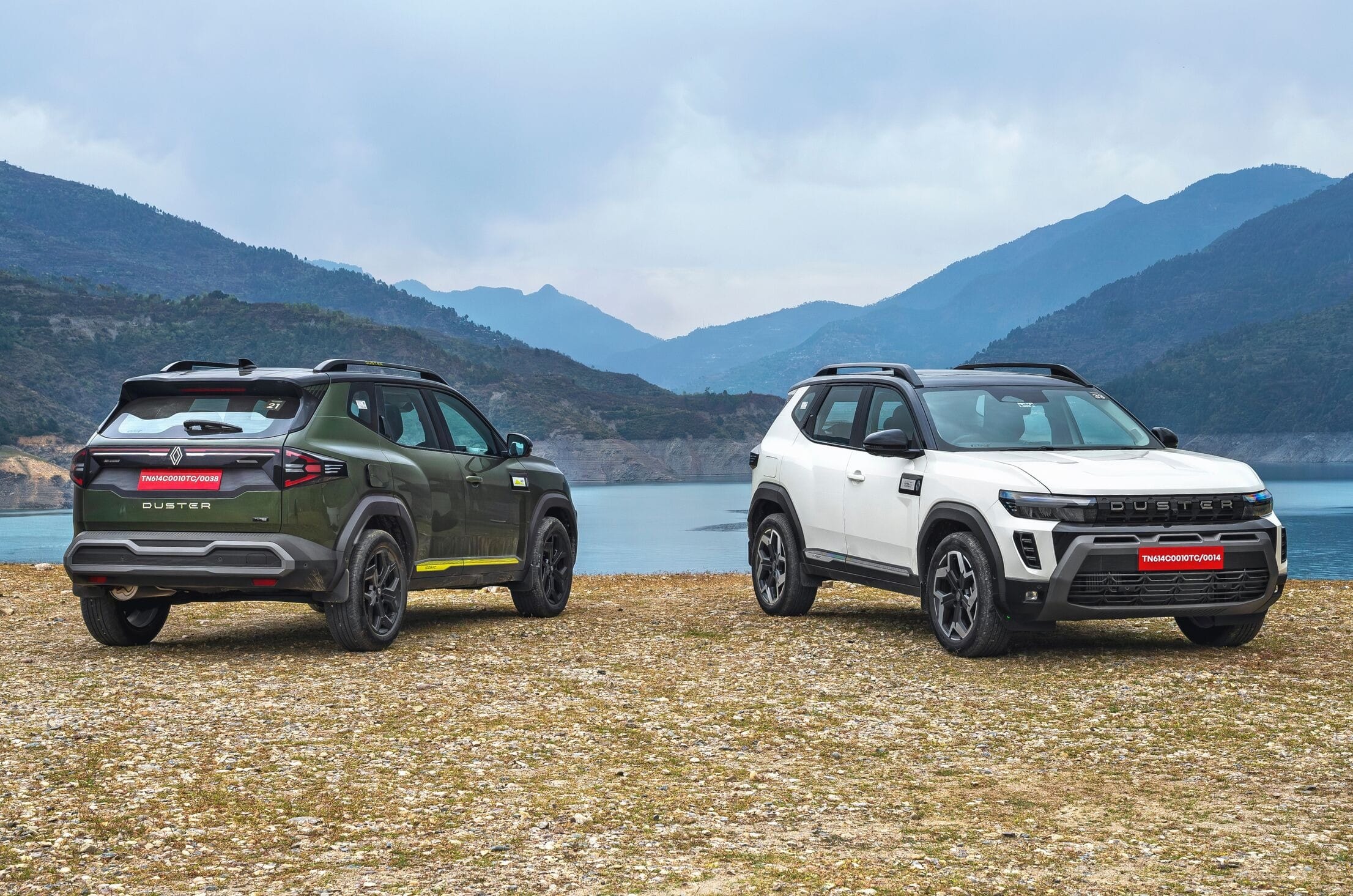
The brand is also introducing a new subscription programme, which will not require a down payment and will bundle on-road costs and servicing into a single monthly fee. Customers will be able to choose from multiple tenure and mileage options; at the end of the term, they can extend the subscription, return the vehicle or even buy it. The Duster also comes with an impressive warranty of up to 7 years/1,50,000km.
Renault may have taken its time with the Duster, but it arrives well-prepared to take on the established players in the fiercely contested midsize SUV segment. It’s got the rugged styling, a modern interior with all the expected new-age features and a genuinely engaging driving experience thanks to that superb 1.3-litre turbo-petrol. It also feels tough enough to take real-world abuse in its stride.
That said, Duster loyalists will miss the option of a diesel or AWD, and a bit more rear-seat space would have widened its appeal. Even so, the new Duster successfully picks up where its predecessor left off – staying true to its core strengths while moving the game on just enough to feel fresh, relevant and very desirable.
 Saumil Shah
 Gavin DSouza