
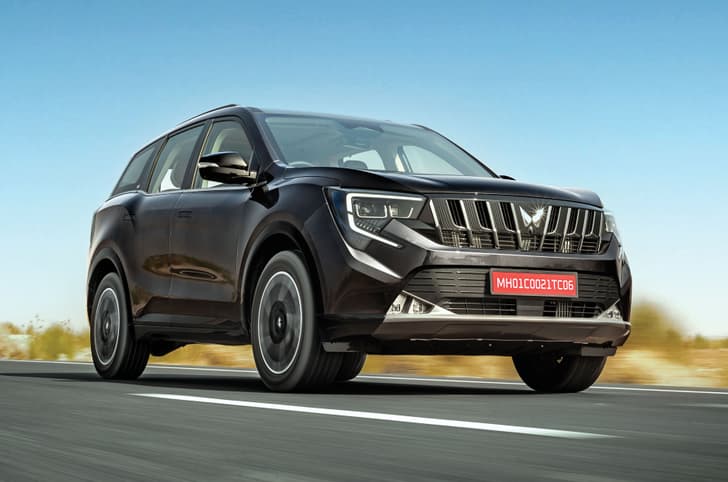
Mahindra hit the ball out of the park with the XUV700’s roundedness and clever packaging. Big on the outside, spacious and comfortable on the inside, and with a plush interior and lengthy equipment list, it truly delivered excellent bang for the buck. It wasn’t a surprise then that the XUV700 was a mega success for the Indian carmaker.
A little over four years since it launched in 2021, the XUV700 continued to turn out healthy monthly sales numbers, with only a few small updates along the way. For its mid-lifecycle update, it got an exterior makeover, a new interior, new electronic and electrical (E&E) architecture, and an updated suspension system. Mahindra also took the opportunity to rebrand it as the XUV 7XO, in line with the company’s new nomenclature. Some might argue that by adopting a new name, the company let go of all the goodwill built by the ‘XUV700’ brand, but sales seem to indicate otherwise. Like its predecessor, the XUV 7XO is off to an excellent start, almost immediately securing its spot in the top-20 bestselling cars in the country.
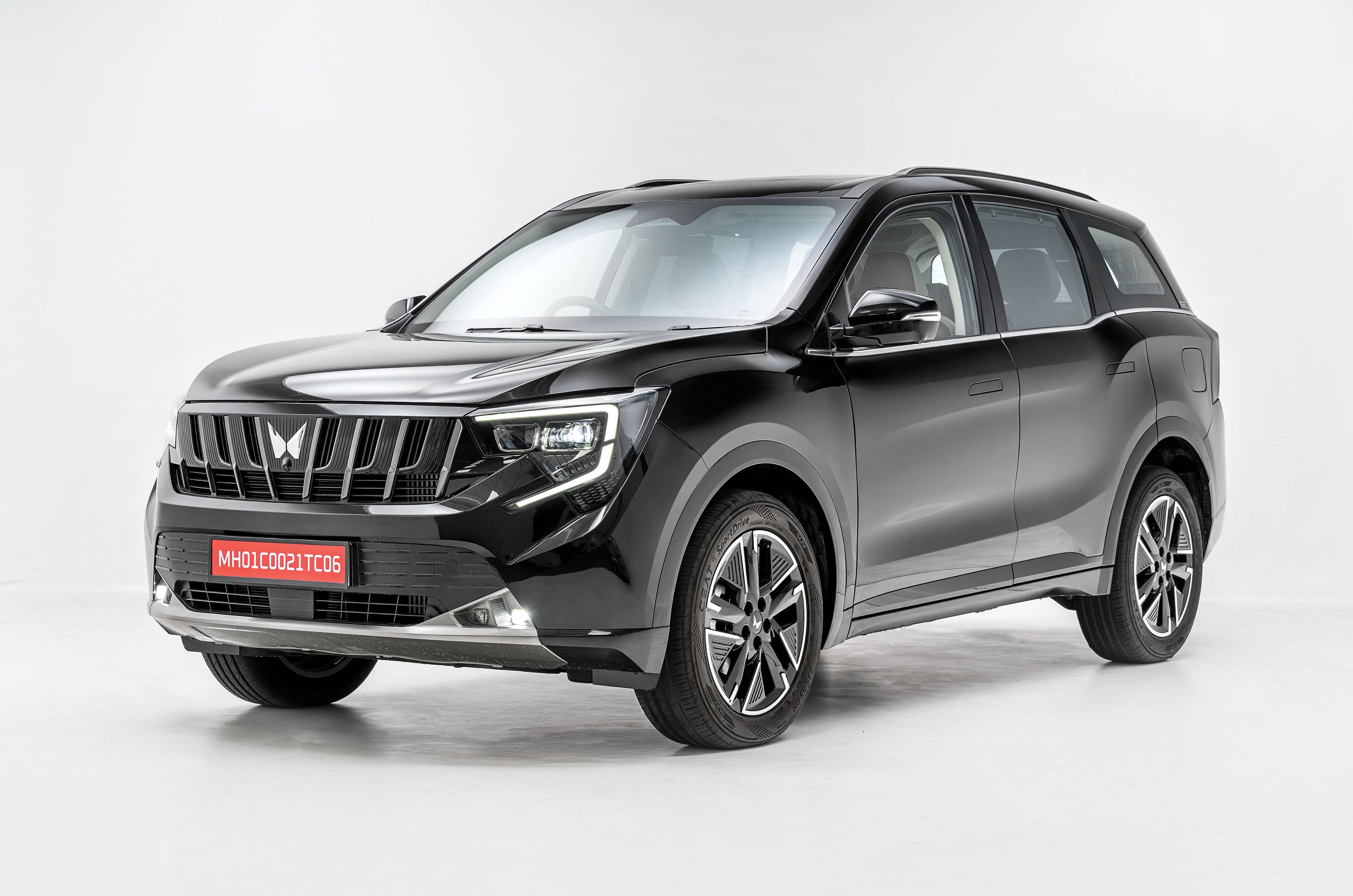
The 7XO is spread across a wide price band, ranging from Rs 13.66 lakh to Rs 25.07 lakh (ex-showroom), and is offered with turbo-petrol and diesel engine options, with manual and automatic transmission options for each. While it remains primarily front-wheel driven, the diesel-automatic version also gets an all-wheel-drive option. Unlike the XUV 700, there’s no five-seat version; a seven-seat configuration is standard, with higher variants getting the option of captain chairs for the middle row, giving a six-seat configuration.
We put the turbo-petrol and diesel automatic versions through our exhaustive real-world tests to find out how they perform.
Mahindra XUV 7XO design and engineering – 8/10
A familiar shape with more exaggerated design elements.
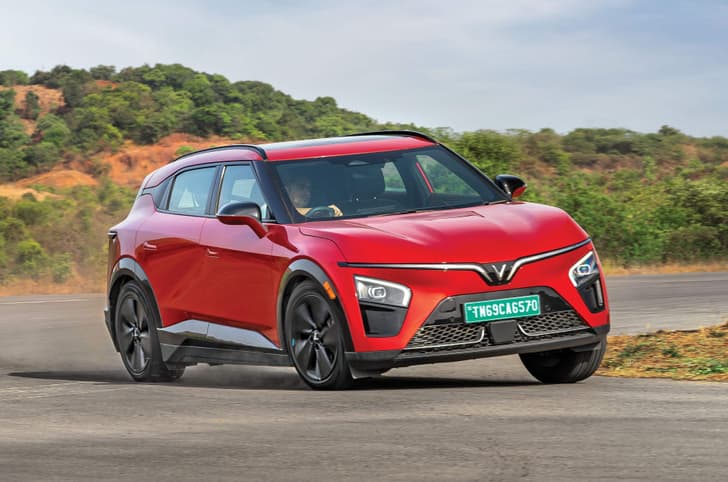
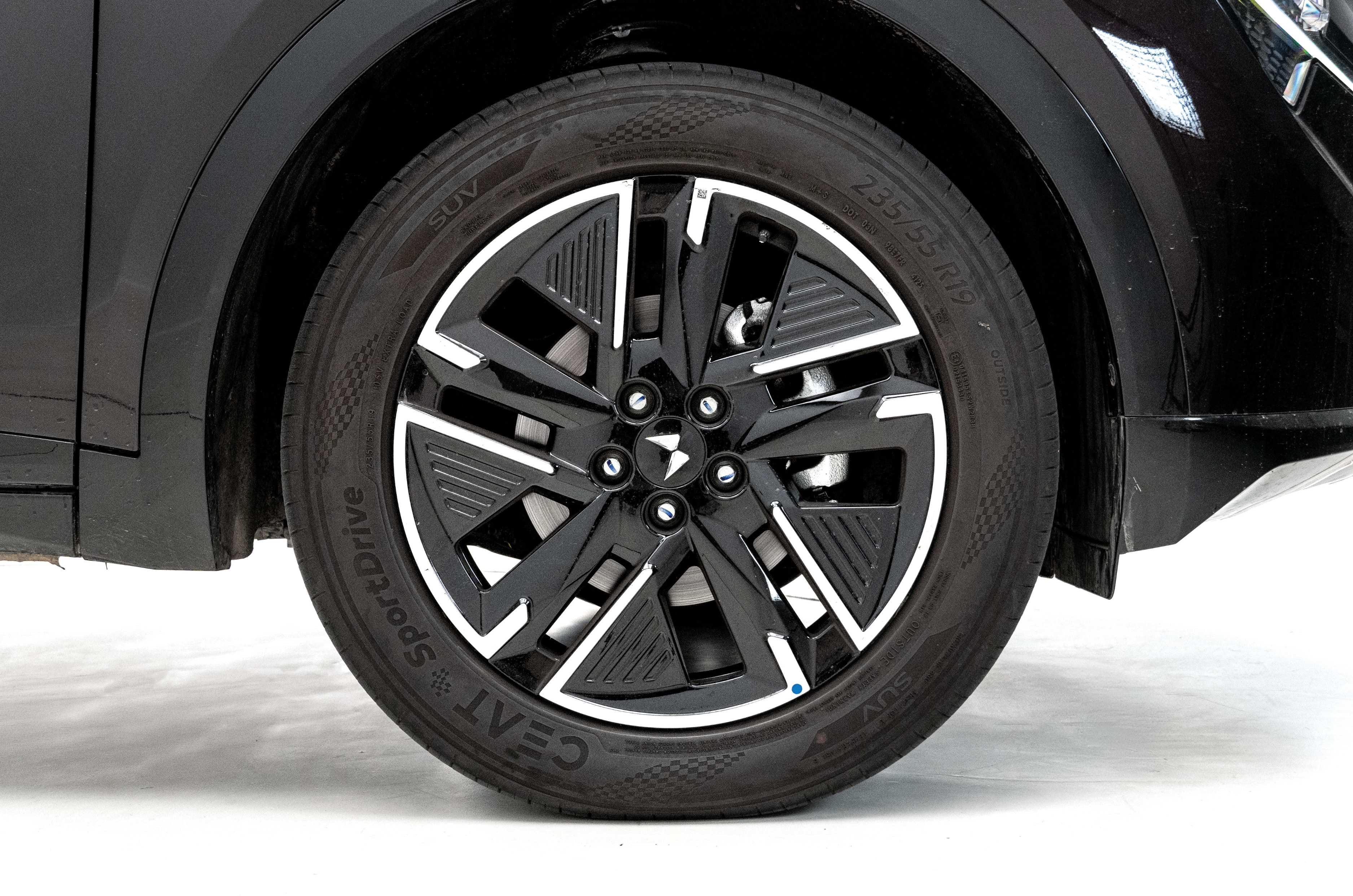
Despite minimal sheet-metal changes, the SUV has undergone a thorough makeover thanks to design tweaks to the grille, bumpers, wheels and lights. Its silhouette remains unchanged, with familiar body lines and unique design details, so it still looks like its predecessor from afar. But the styling elements have been exaggerated in an attempt to modernise its look. Interesting details include piano black for the body cladding, mirrors and roof rails. The wheel size has gone up to 19 inches from the outgoing version’s 18s. And its LED tail-lamps now feature a unique hexagonal pattern, lending it a distinct look.
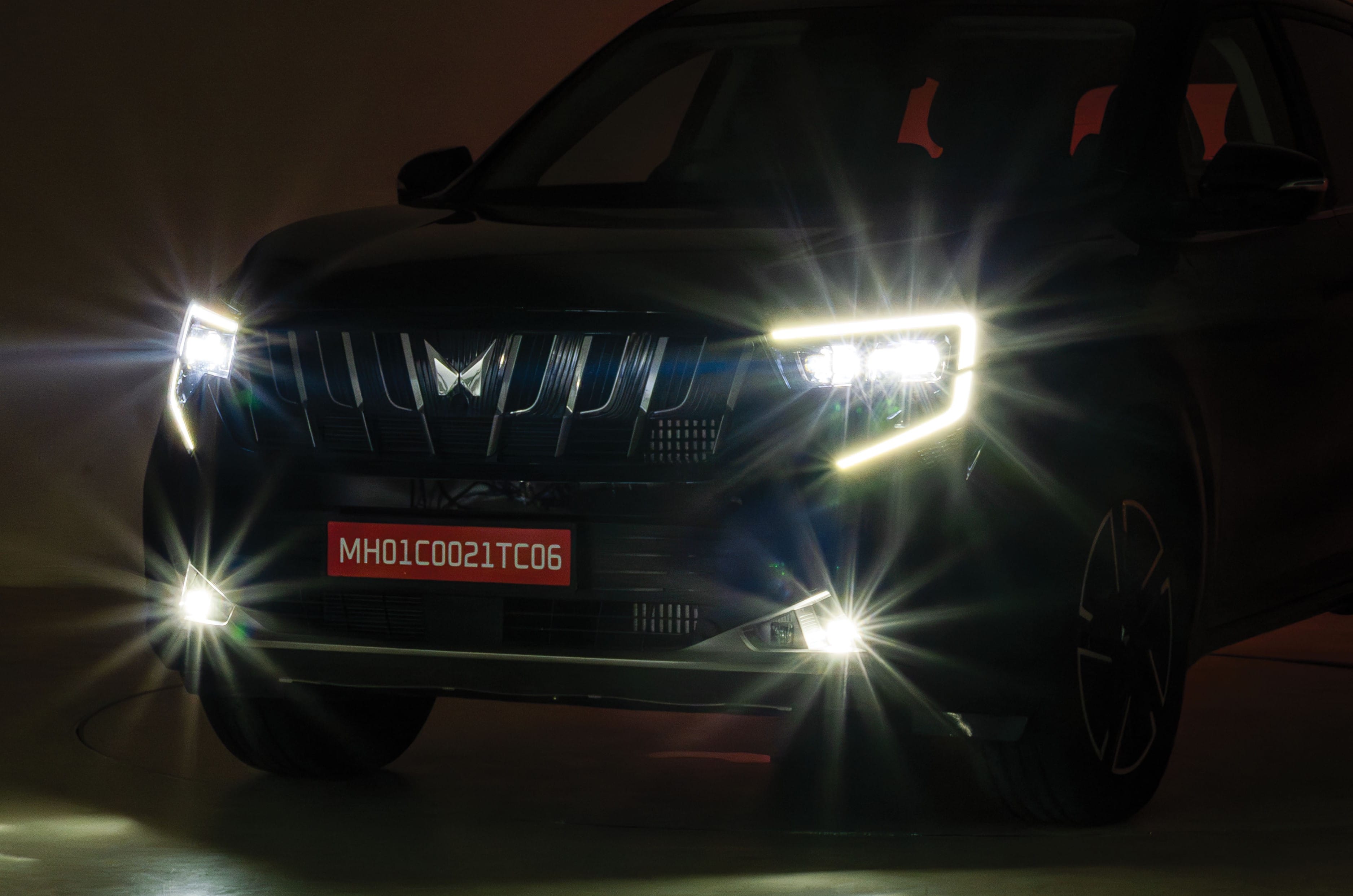
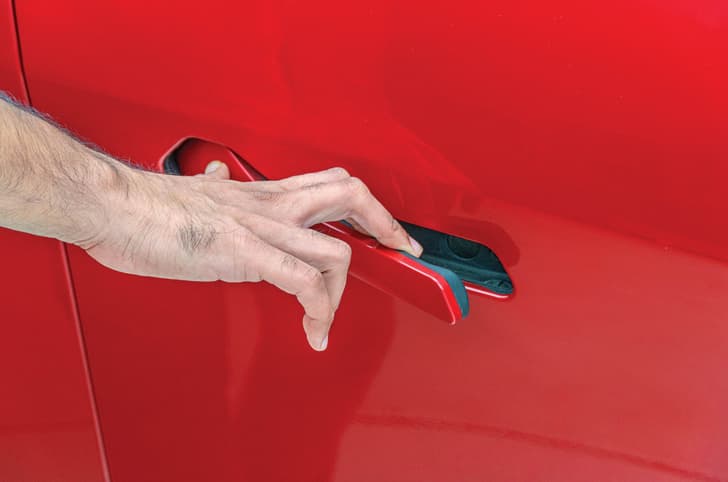
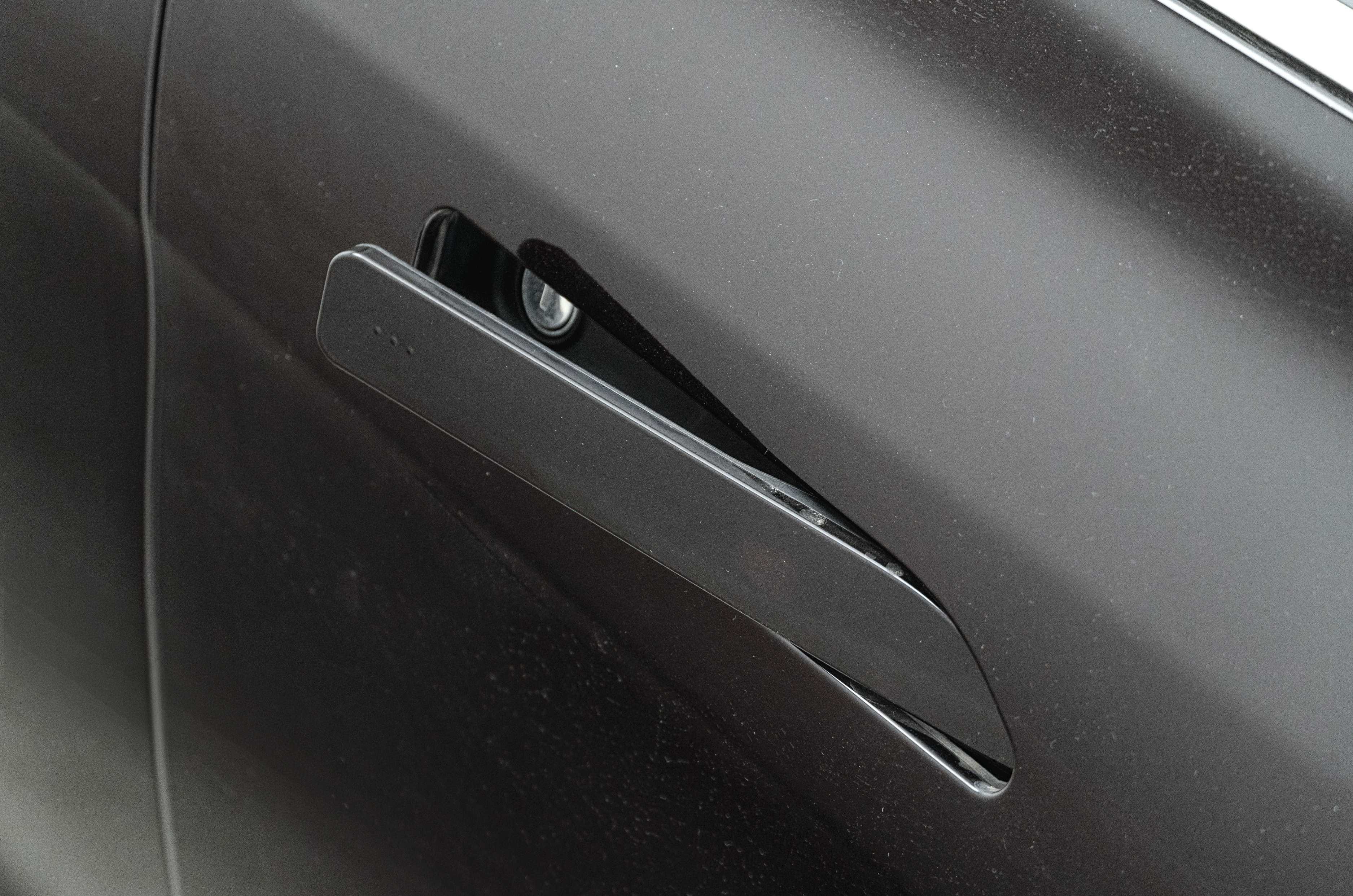
Like before, the XUV 7XO’s headlamp throw and spread are commendable, and it also gets a headlight booster, which activates above 80kph to provide better illumination, but only on high beam. The flush-type door handles have been retained; they are powered, and have proximity sensor-based pop-out function in the higher variants.
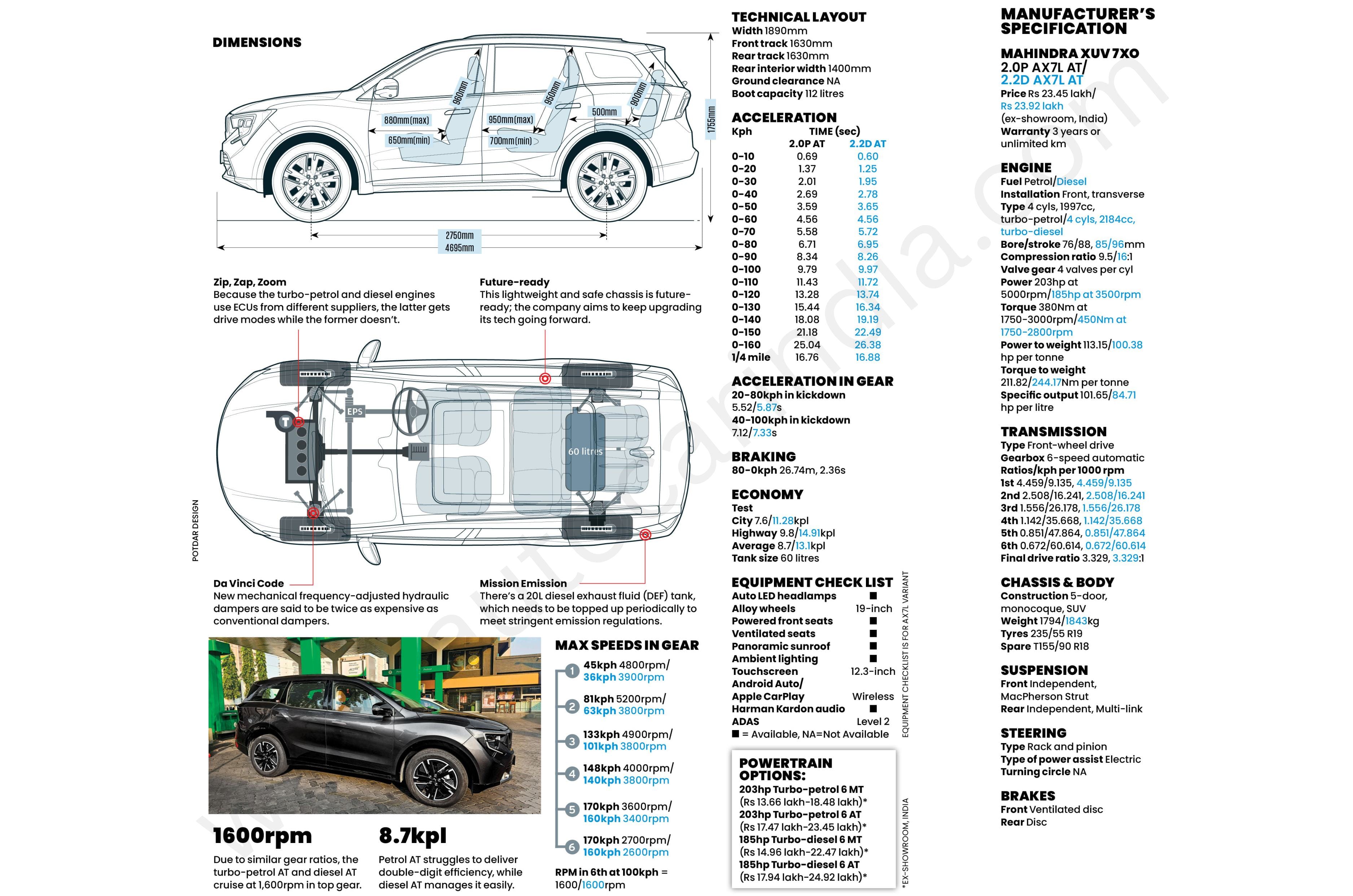
At its core is the same lightweight and safe platform of the outgoing version, and the company aims to keep upgrading its technology. The 7XO is what the company calls its first-generation software-driven vehicle, with a Qualcomm Snapdragon SA8155P chipset for key computing functions – Central Processing Unit, Graphical Processing Unit, Machine Learning Algorithms and Neural Networks. This Ethernet-based multi-functional core allows for advanced tech like the three screens, Dolby Atmos, Dolby Vision and 4K videos, and ADAS, to name a few.
Mahindra XUV 7XO interior space and comfort – 8/10
First two rows comfy, but third row, boot space are tight.
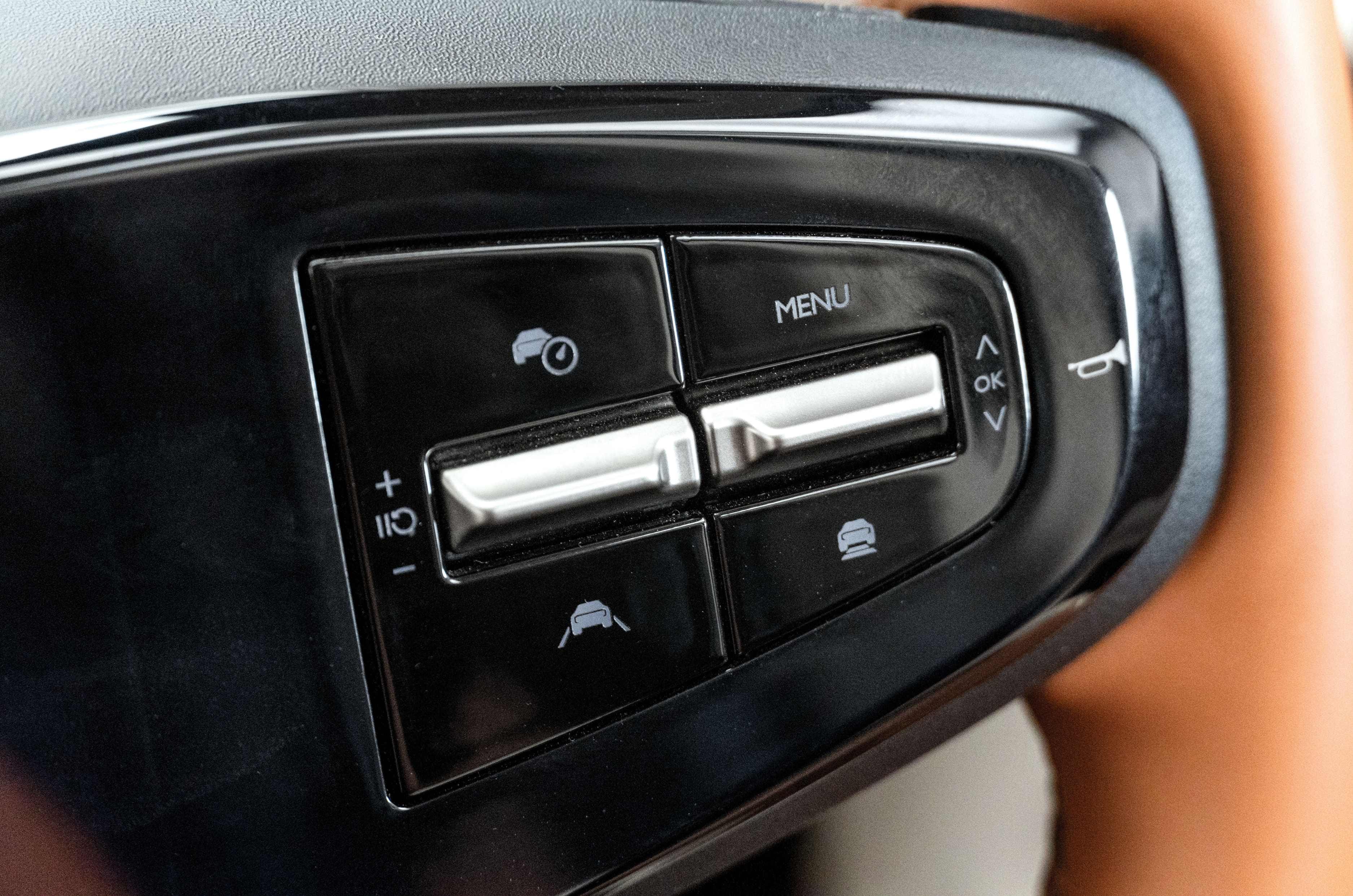
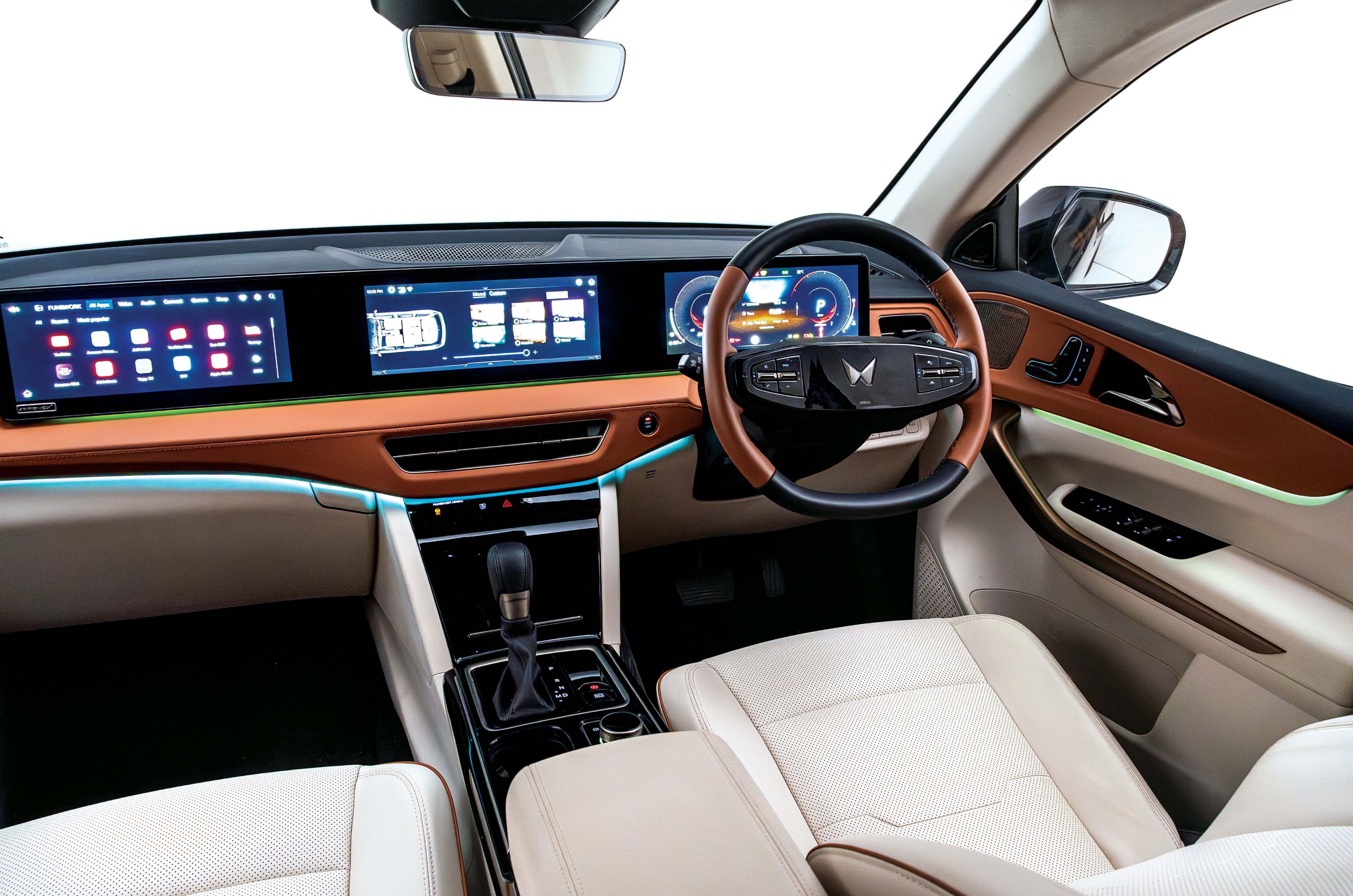
The biggest change on the inside is the three-screen layout for the dashboard. The 7XO also adopts the two-spoke steering from its EV counterpart, the XEV 9S, albeit with physical buttons instead of the touch-operable ones. But just like in the EVs, if you press them too hard, it will accidentally trigger the horn.
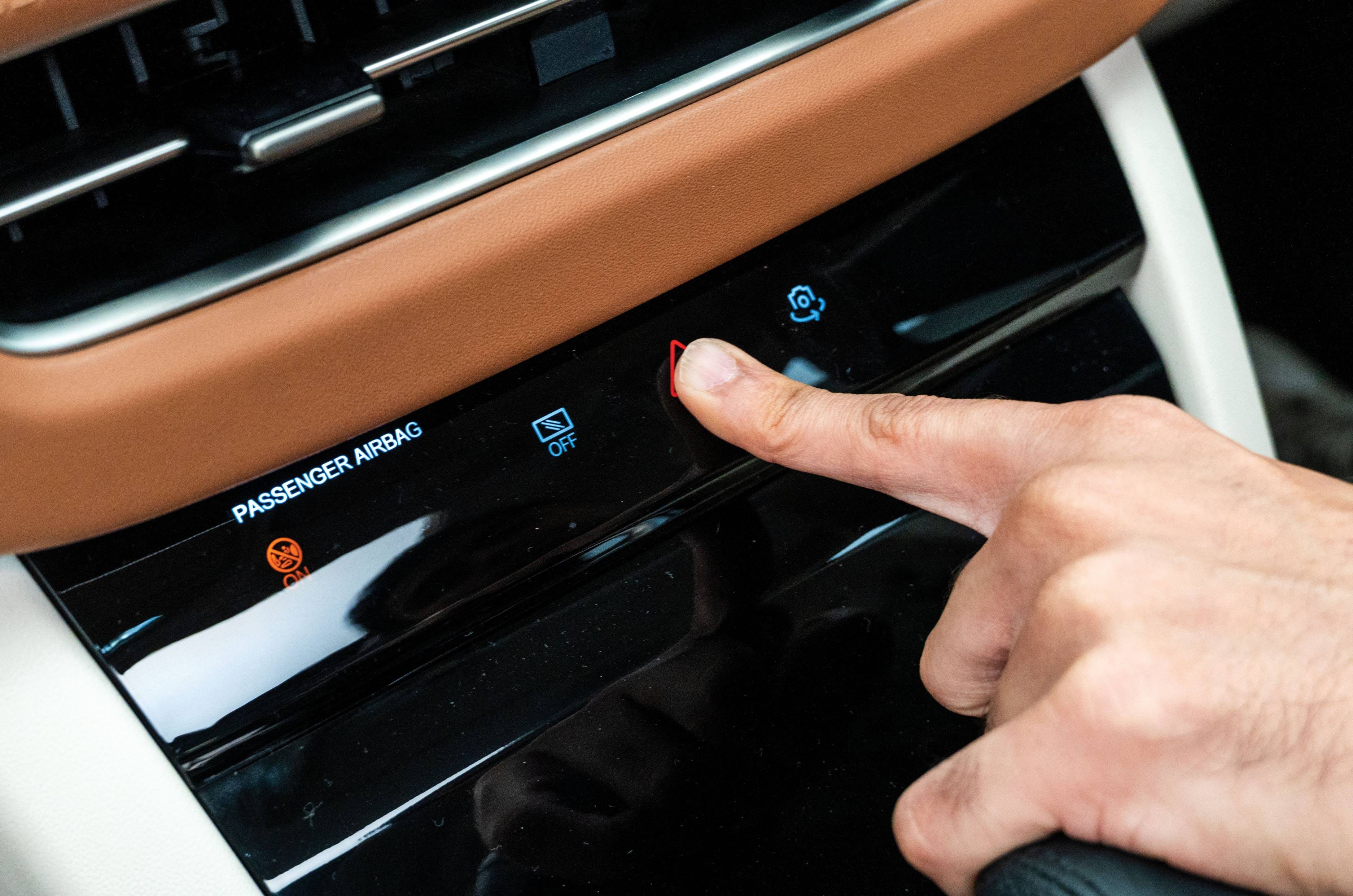
While on the topic, the buttons and knobs for the air-con have now made way for a touch panel with some shortcut keys. Sure, there are shortcut buttons on the centre console to open the AC menu (and others) on the touchscreen, but it is a two-to-three step process, and you will have to take your eyes off the road for it.
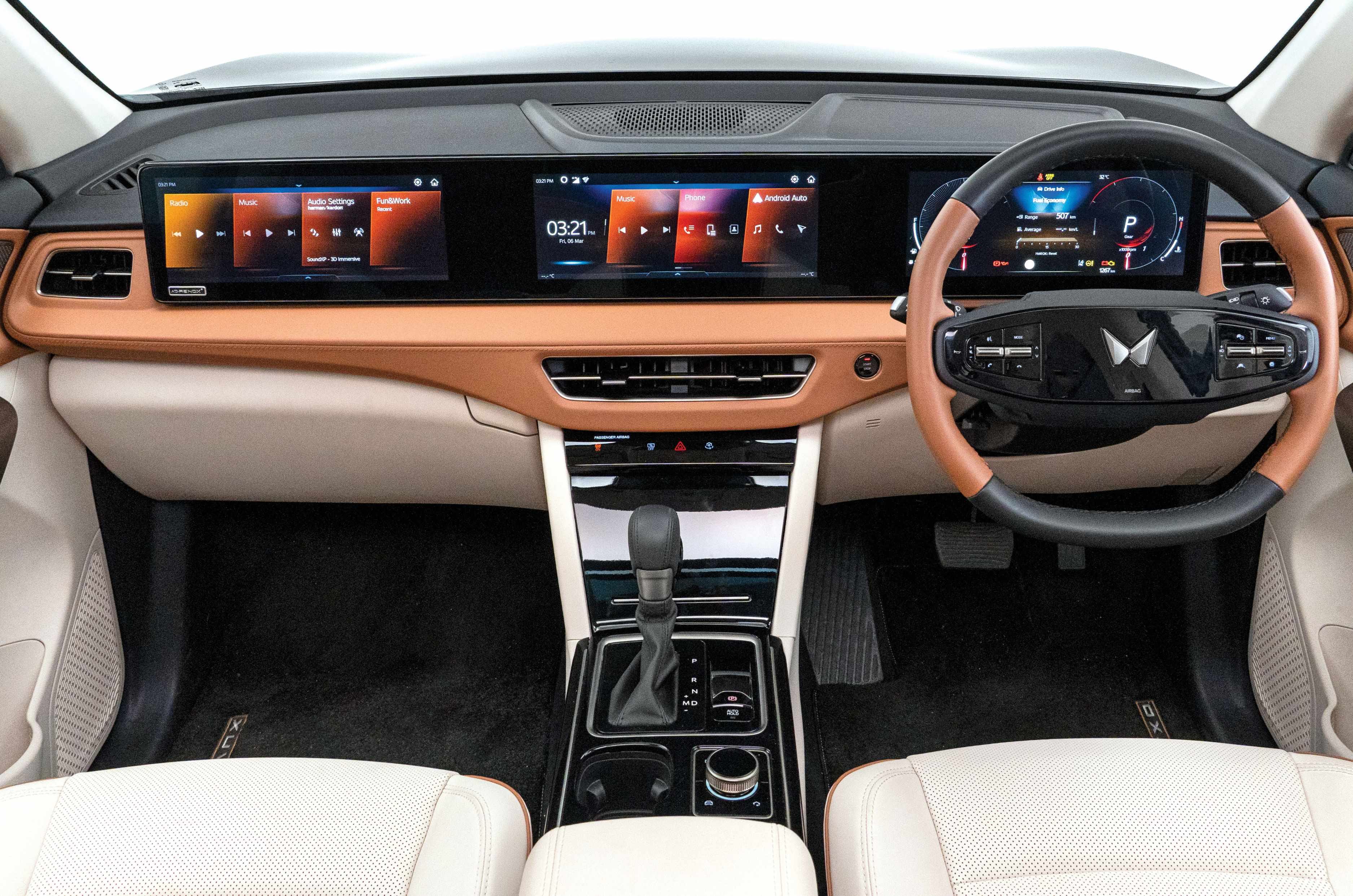
Mahindra has opted for a two-tone tan and light beige interior colour combination, which certainly gives the cabin a bright and airy feel. However, like the XUV700, most of the touch points are wrapped in light-coloured leatherette, which will need special effort to keep clean.
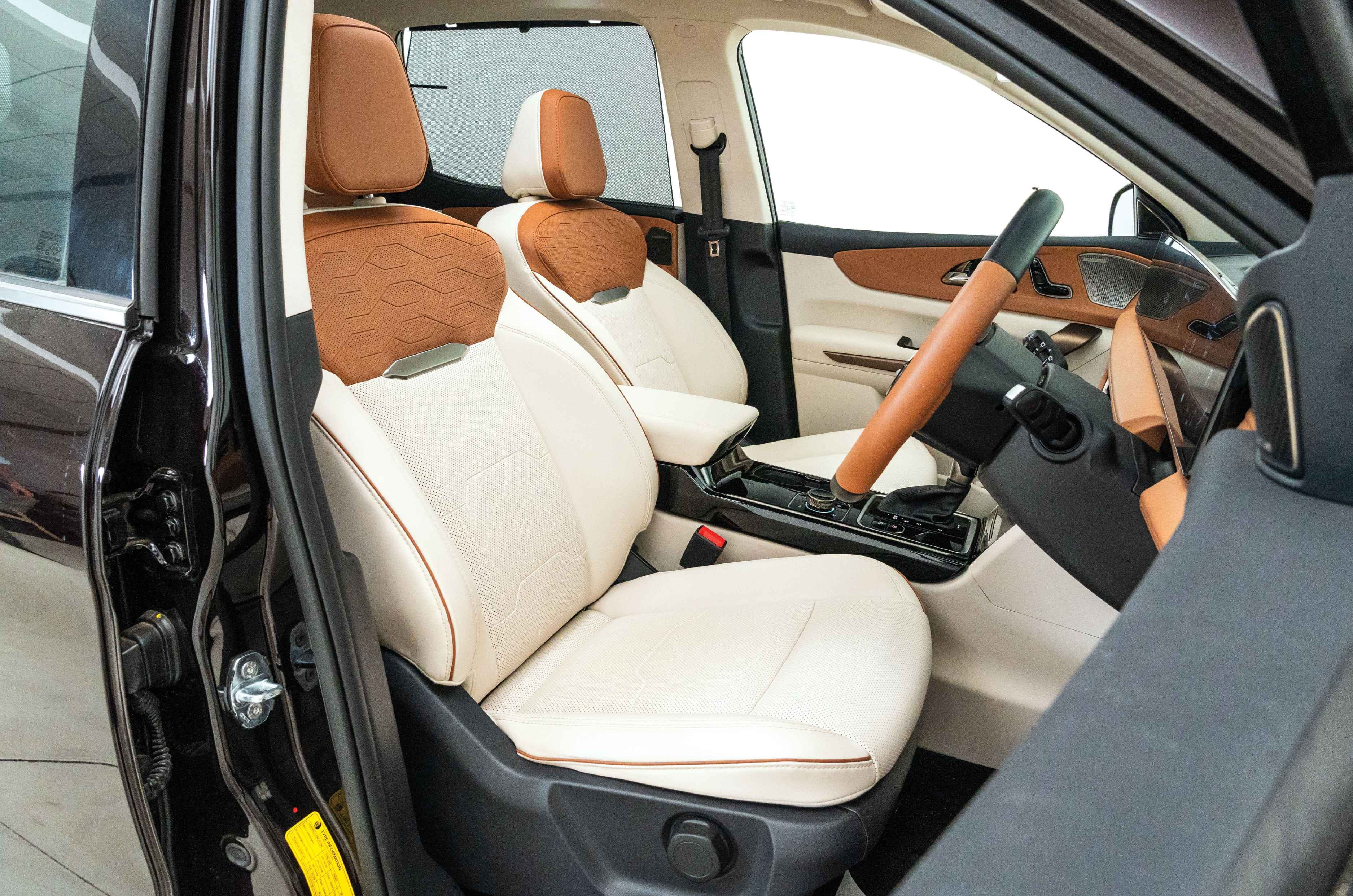
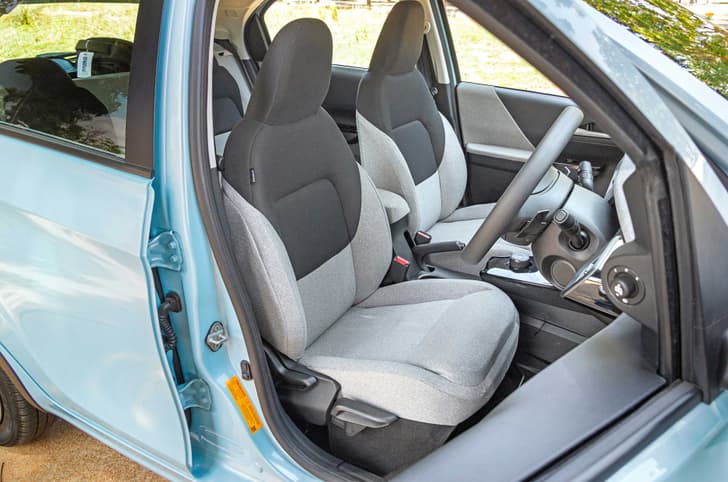
Besides the colour change, the 7XO’s seats have been modified too. The foam, foam density, comfort pads and even the ventilation system seem to have been tweaked for enhanced comfort. As a result, seat comfort is a touch better than before, and the wide seats offer good support and ample adjustment. Both front seats are ventilated, activated or deactivated via the touchscreen, which is a fiddly, inconvenient process. Both front seats are also powered, with the driver getting a memory function, while the passenger seat can be moved from the rear, which chauffeur-driven owners will appreciate.
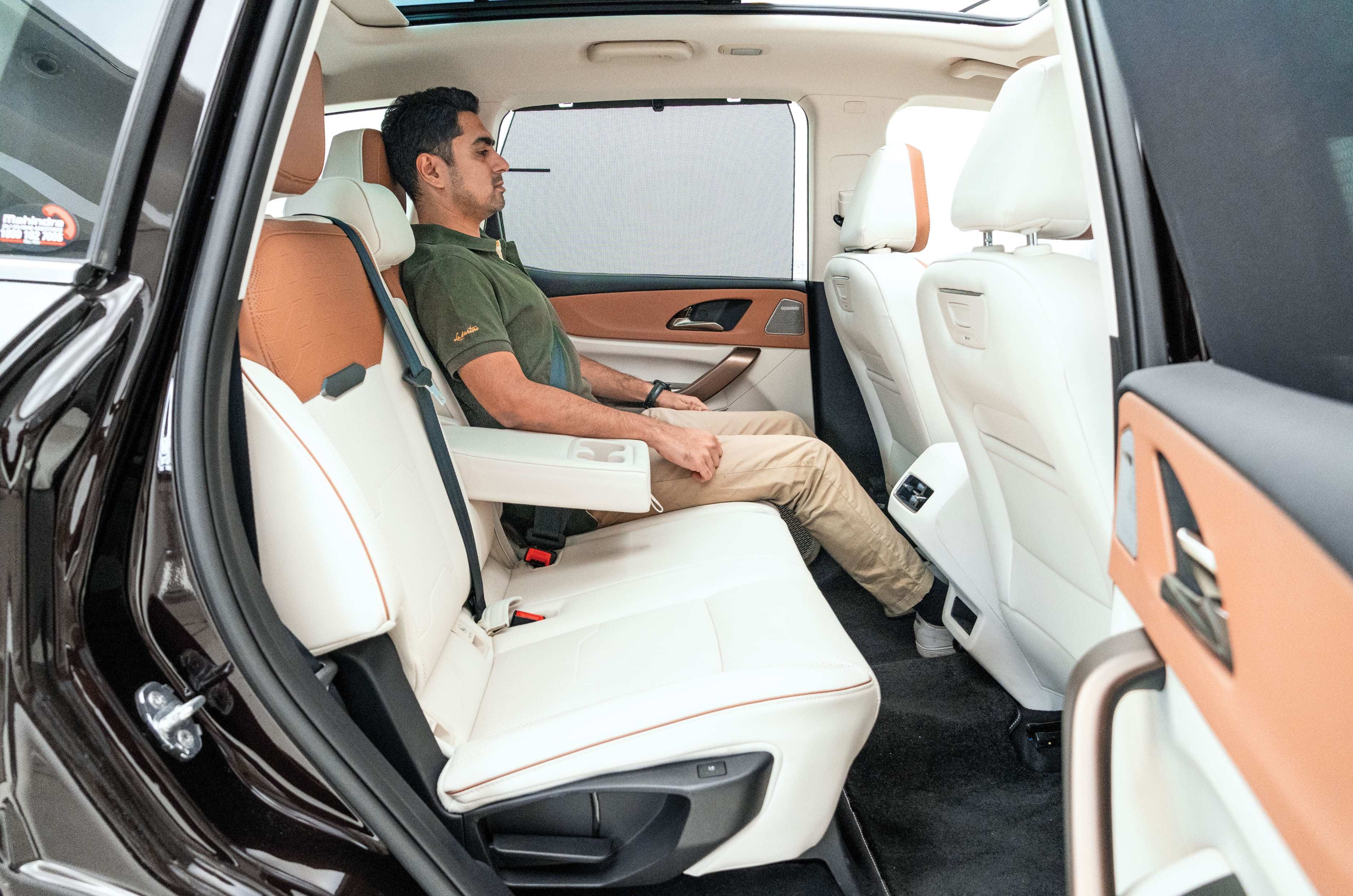
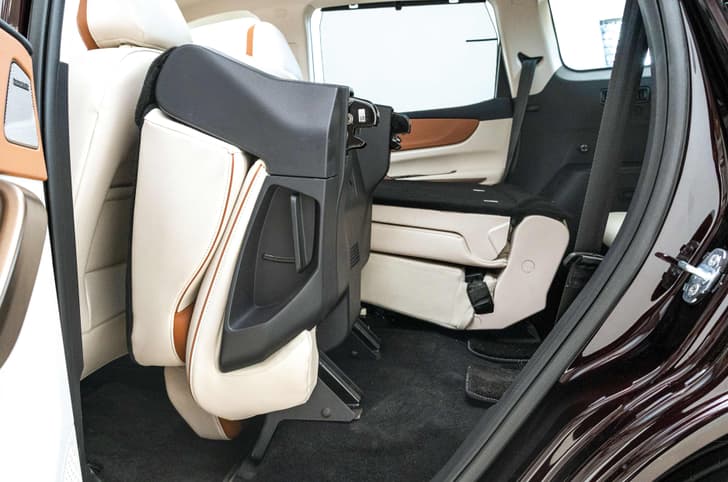
Speaking of which, the middle row is very comfortable – the seats are well cushioned, with good thigh support. And with an almost flat floor and generous cabin width, this space can accommodate three adults quite easily. As standard, the middle row is a bench, although there are optional captain’s chairs available on higher variants. Interestingly, the outer two bench seats and the captain’s chairs are now ventilated on top trims too. Other notable features here include multiple fast-charging options (including a wireless charger), as well as rear sunshades.
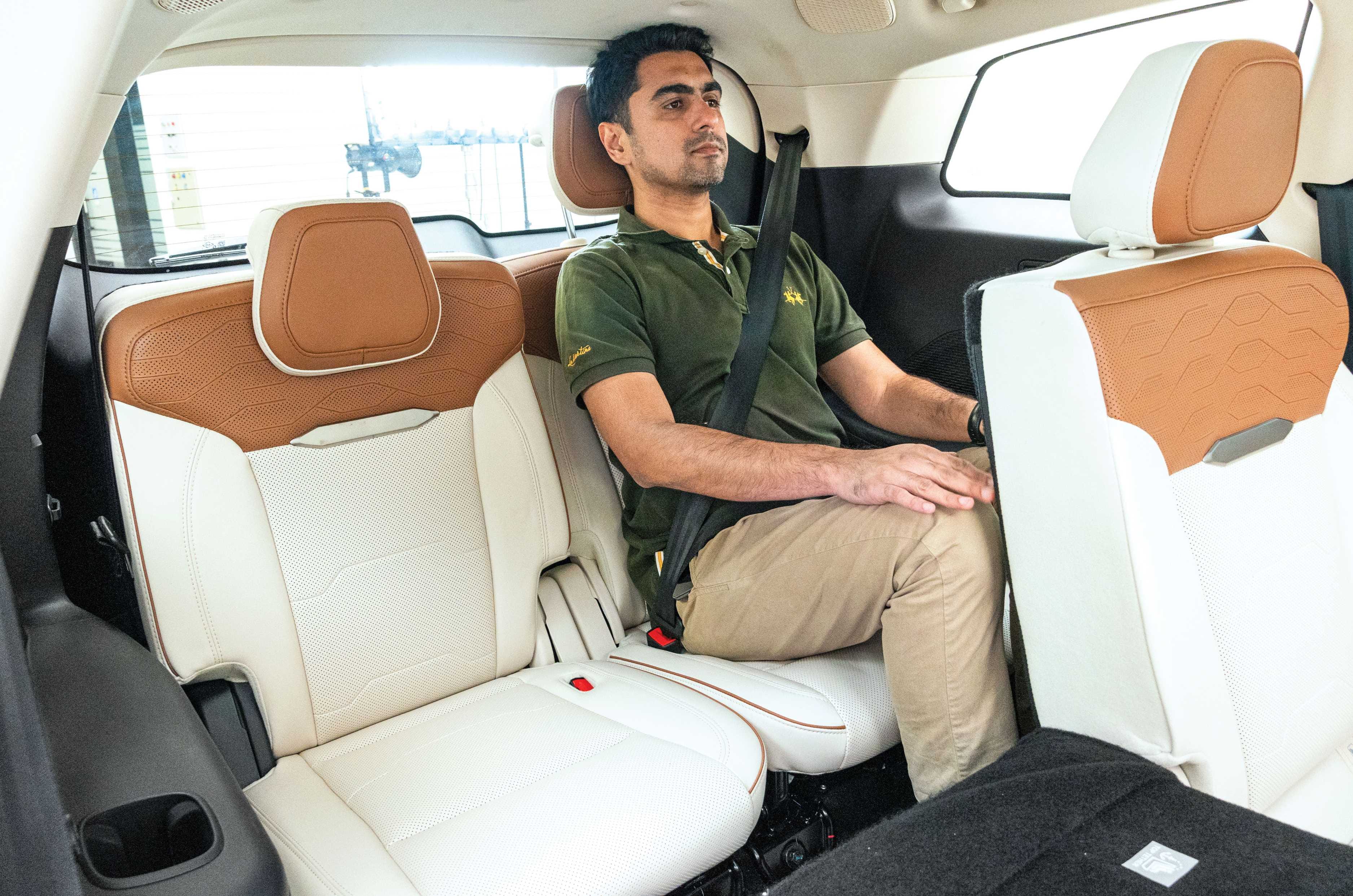
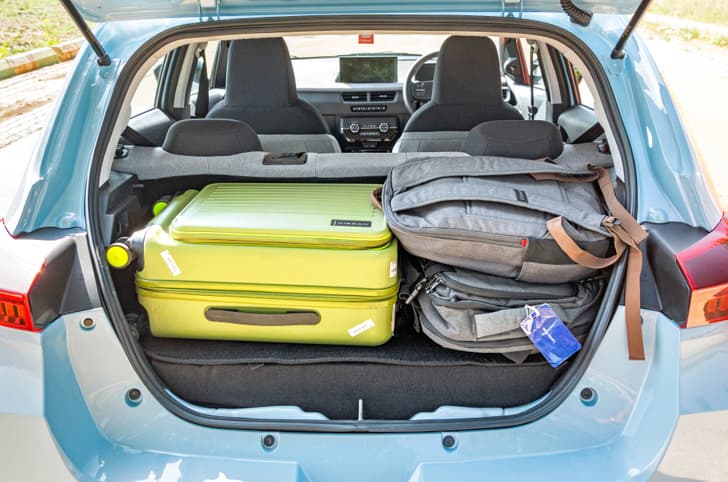
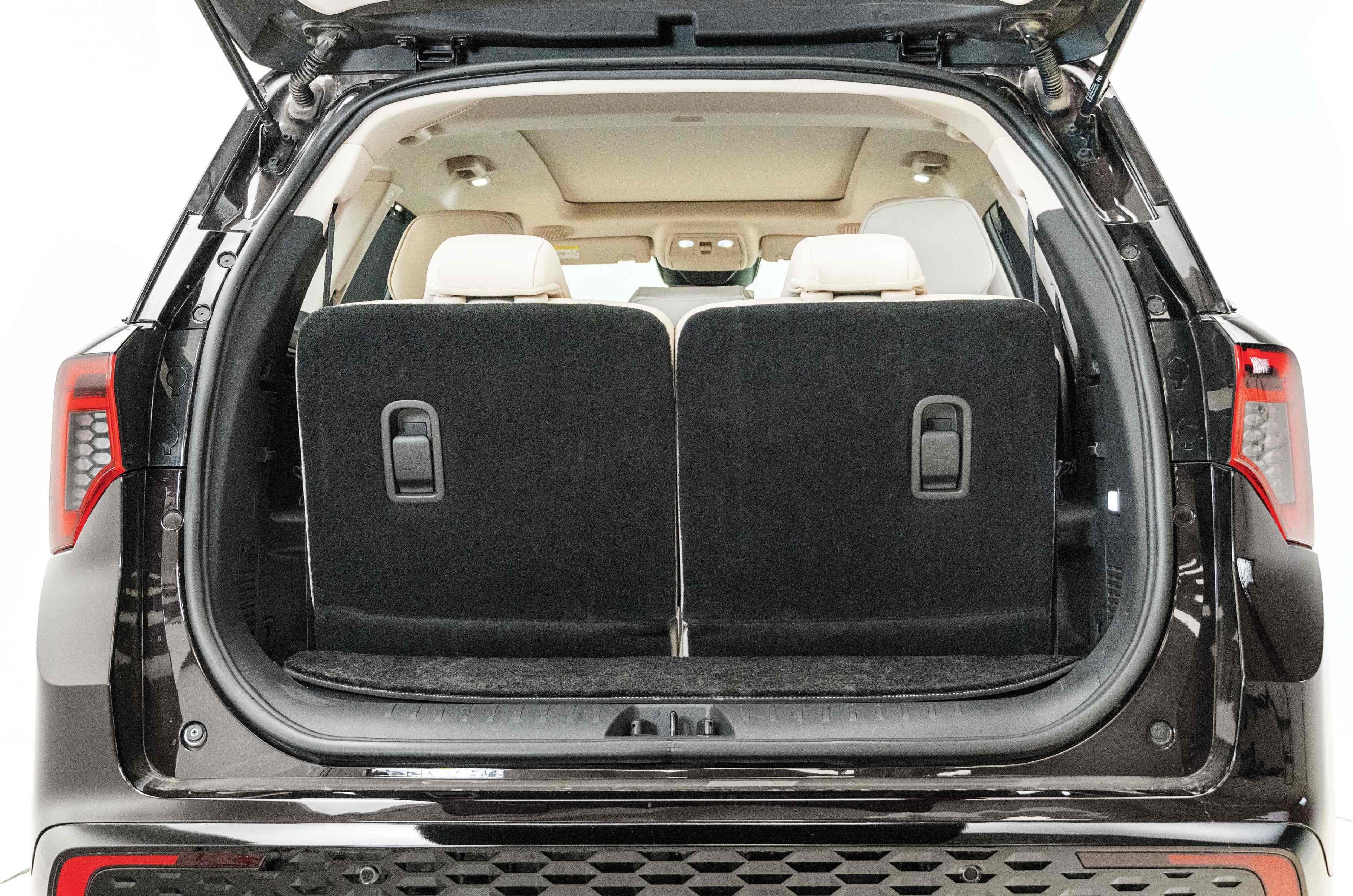
Unfortunately, the 7XO’s middle row still doesn’t slide like the one in the XEV 9S to free up more legroom in the third row. As a result, the third row is cramped for adults, and taller folk will find their head brushing against the headliner. Also, because of the large middle seat, occupants could feel a bit hemmed in back here. Hence this space is best reserved for short journeys, or folded away entirely for a cavernous luggage area. With seats in place, it’s adequate for a couple of cabin bags at best.
Mahindra XUV 7XO features and safety – 9/10
Techier and even better equipped than the XUV700.
With the 7XO, Mahindra has trimmed down the variant line-up, which earlier consisted of stripped-out MX variants as well. This is because the top-end AX7 series of the XUV700 accounted for over two-thirds of sales. The company anticipates the trend to continue with the 7XO, with buyers preferring fully loaded versions.
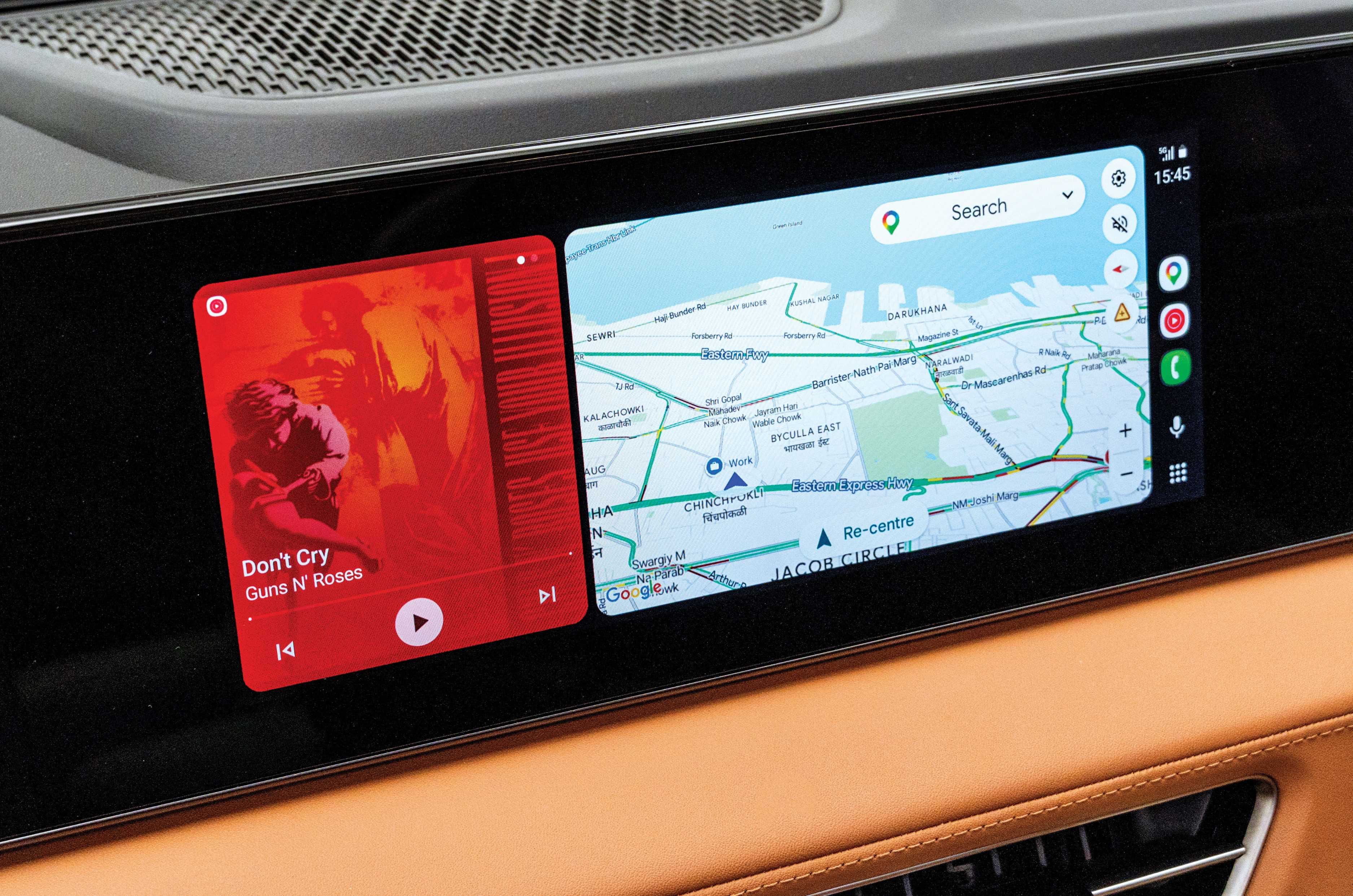
The 700’s rich feature set has been enhanced with this midlife update, starting with its three 12.3-inch screens – instrument cluster, central infotainment and passenger screen. While the instrument cluster has limited display options, the passenger screen has a plethora of menus and sub-menus with several apps and functions. Owners will need to spend some time to understand these and find their way through this system.
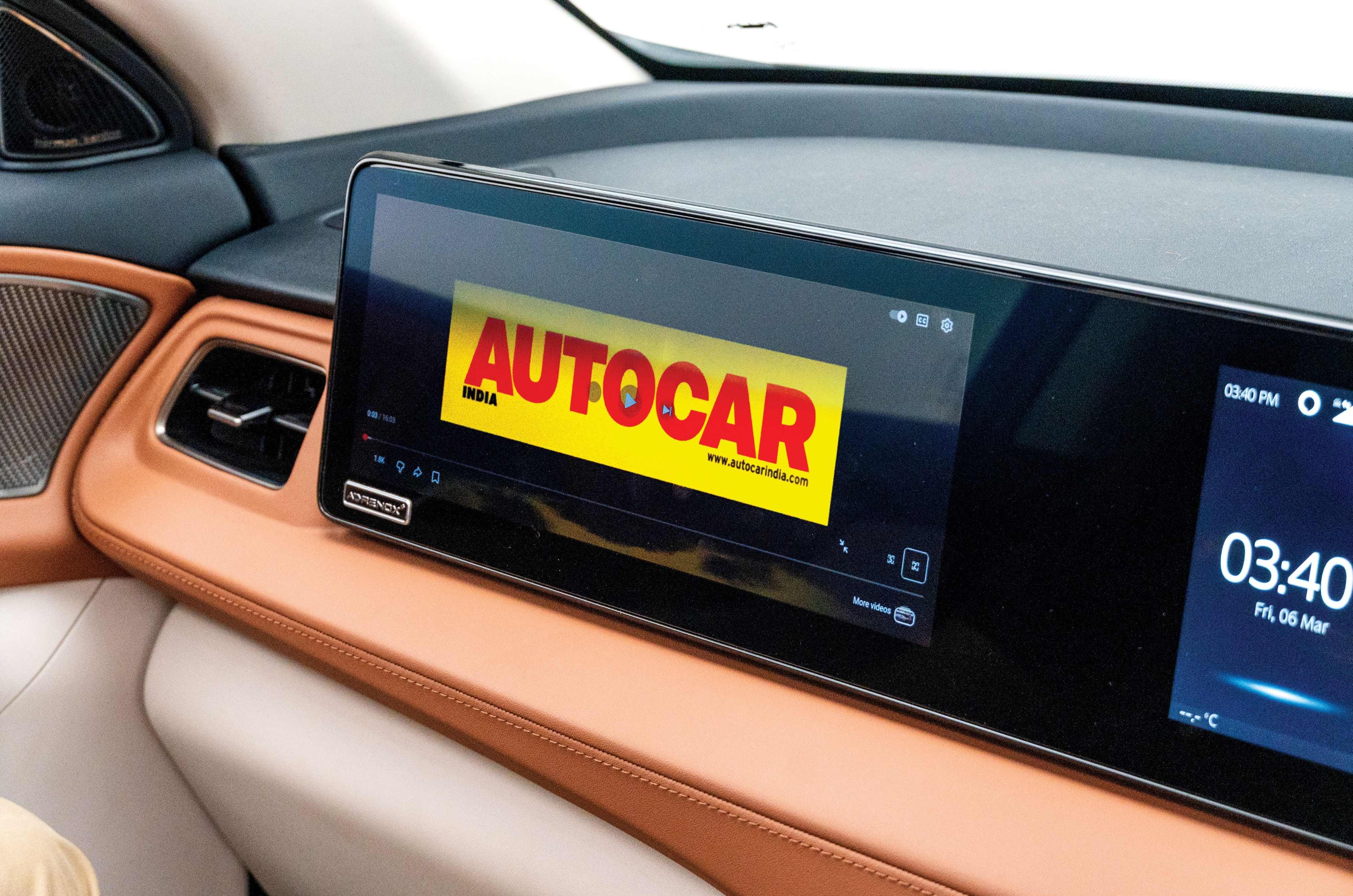
Thankfully, Mahindra has added a privacy filter on the third screen to hide it from the driver’s field of vision and avoid distraction while driving. We’re happy to report that during the day, this screen is barely visible from the driver’s seat, although the filter isn’t as effective at night, and drivers will be able to see the third screen.
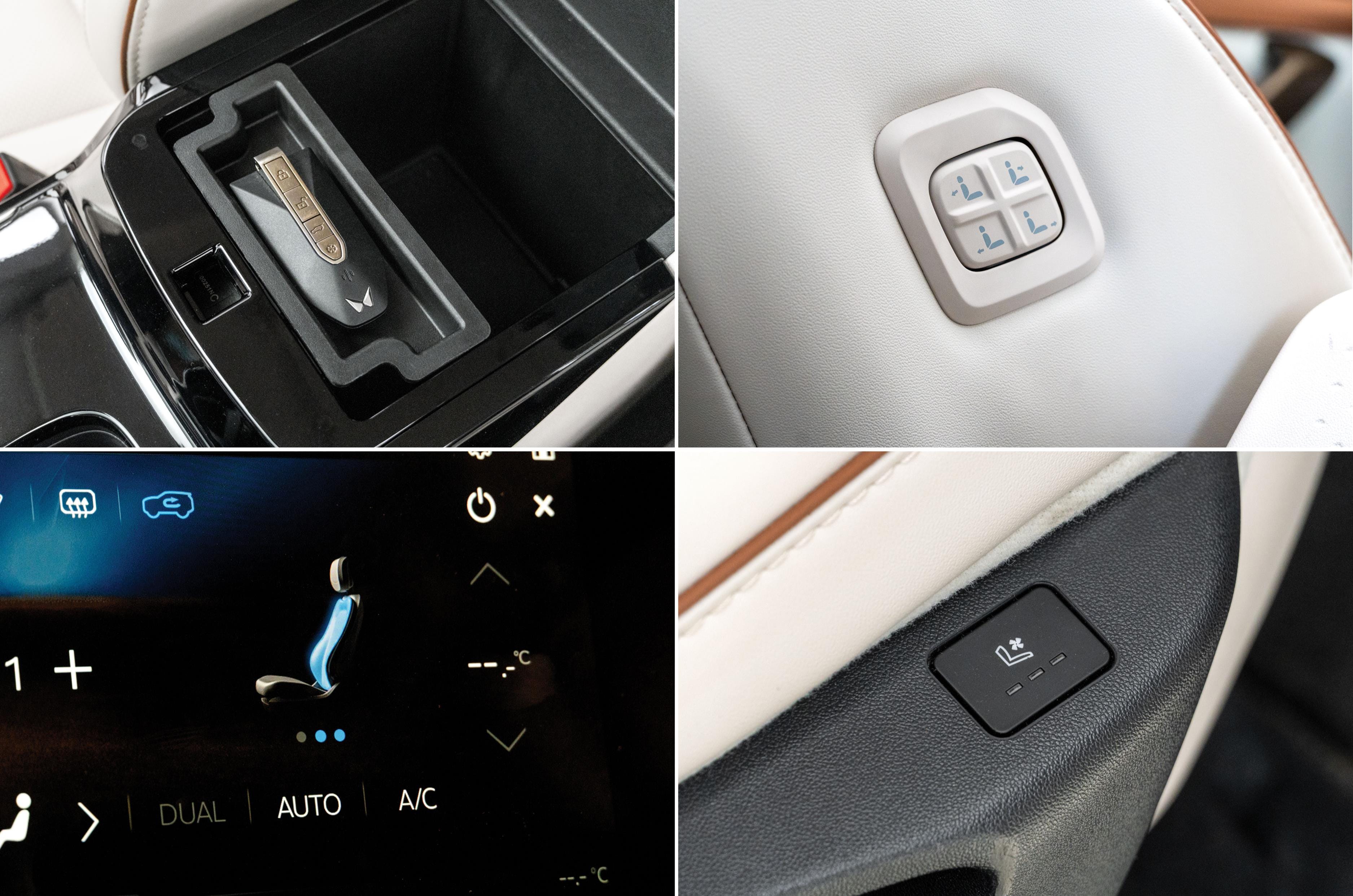
BE 6-like key slots neatly in the armrest console; powered boss function for front passenger seat; middle row gets ventilation in higher variants; accessing front-seat ventilation requires a minimum of three taps (clockwise).
The aural experience is enhanced by the 16-speaker Harman Kardon setup. The subwoofer enclosure is now larger, due to which the bass is richer and fuller than before. Furthermore, with Dolby Vision, the system can also play 4K videos, and rear occupants can also add a tablet and sync it to the twin screens ahead so that all the passengers can enjoy watching videos from their respective seats.There’s also a new 540-degrees camera, which in addition to providing a 360-degree view, will also provide a clear view of what’s under the vehicle. The camera quality and clarity is excellent, which makes parking this large car quite easy.
Thanks to the XUV 7XO’s newer E&E architecture, the ADAS is also more polished than before. There’s a new 8-megapixel camera, which detects two-wheelers, stray cattle, and pedestrians more accurately. Furthermore, thanks to the more powerful chipset with 3.5 times better computing power, the systems work smoother and are capable of better judgement and decision making. In the real-world too, the XUV 7XO’s ADAS seems to be a lot more in sync with our road and traffic conditions, without being overly sensitive.
Other notable features include a panoramic sunroof, ambient lighting, dual-zone climate control, wireless chargers (front and rear) with active cooling, a frameless auto dimming inside mirror, as well as a digital video recorder.
Mahindra XUV 7XO performance and refinement – 9/10
Strong engines complemented by smooth auto boxes.
The Mahindra XUV 7XO’s diesel engine impresses on several fronts. Producing a class-best 185hp and 450Nm, the automatic version interestingly develops 30Nm more torque than the manual (420Nm). Its strong low-end and mid-range punch suit the character of this large SUV perfectly, which explains why the diesel accounts for nearly three-fourths of XUV 7XO sales.
Performance feels effortless right from the get-go. Power delivery is smooth, turbo lag is minimal, and there is always ample torque in reserve. At 100kph, the engine is barely ticking over at 1,600rpm in top gear, giving the XUV 7XO a relaxed, long-legged cruising ability that makes highway drives particularly effortless.
The 6-speed Aisin torque converter complements the diesel well. While there is a slight pause between shifts, it generally manages to stay in the right gear. Paddle shifters are missing, though a tiptronic mode allows for manual control. The diesel also gets Zip, Zap, Zoom and Custom drive modes, which alter throttle response, gearshift points and steering weight. With the newly introduced Custom mode, users can choose to alter individual parameters based on their preference. In its quickest setting, the diesel-auto sprinted from 0-100kph in an impressive 9.97 seconds.
Refinement levels are strong too. The engine feels smooth and largely vibration free, although there is a faint diesel drone in the background, while a more noticeable clatter creeps in beyond 3,500rpm.
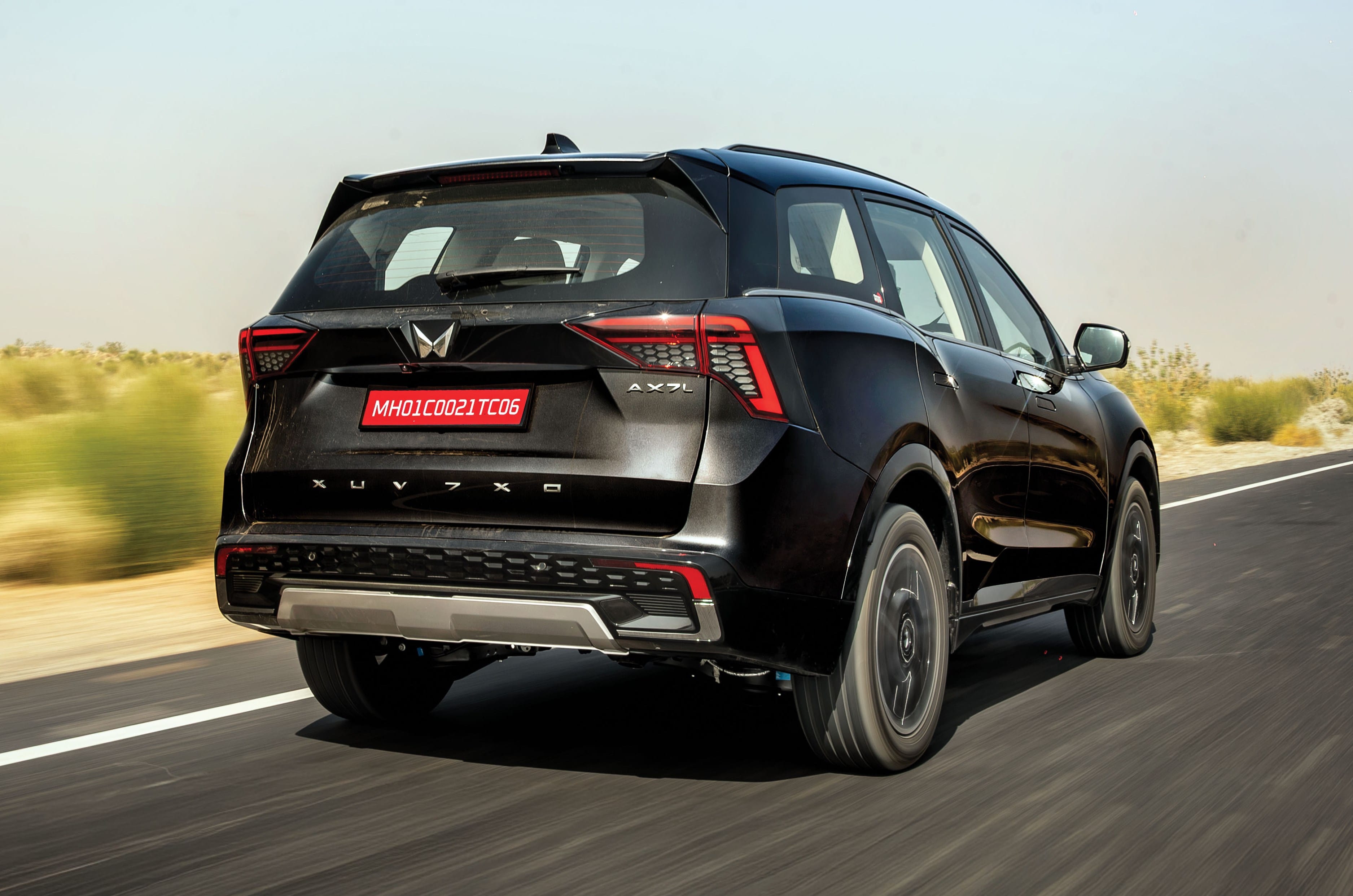
For buyers who prioritise refinement, the turbo petrol is the more appealing option. This 203hp, 380Nm 2.0-litre engine feels more responsive off the line and delivers a strong, diesel-like mid-range punch that makes the XUV 7XO feel effortlessly quick. While it is not a particularly high-revving engine – the gearbox usually shifts close to 5,000rpm – outright performance is still strong. The turbo-petrol reaches 100kph in 9.79 seconds, almost identical to the diesel, though it gets to 160kph 1.3 seconds quicker. Rolling acceleration times from 20-80kph and 40-100kph are also comparable between the two engines.
The 6-speed torque converter in the turbo petrol feels very similar to the diesel auto in terms of smoothness. Interestingly, both versions appear to share identical gear ratios, meaning the petrol also cruises at just 1,600rpm in top gear. However, the petrol’s shift logic feels noticeably more eager and responsive, readily downshifting even with gentle throttle inputs, whereas the diesel feels comparatively calmer and more relaxed.
Mahindra XUV 7XO fuel efficiency – 7/10
The diesel is efficient, but the turbo-petrol isn't.
Interestingly, the petrol and diesel versions use different ECU suppliers – Continental for the turbo petrol and Bosch for the diesel – and thus only the diesel gets drive modes.
Both versions feature an automatic engine stop-start system designed to improve efficiency in traffic, though its calibration could divide opinion. The system keeps the engine shut off for extended periods even when cabin temperatures rise noticeably above the set climate level, only restarting once the brake pedal is released. As a result, in peak summer conditions, occupants are likely to disable it. The diesel’s restart response is also slightly slower and more noticeable than the petrol’s.
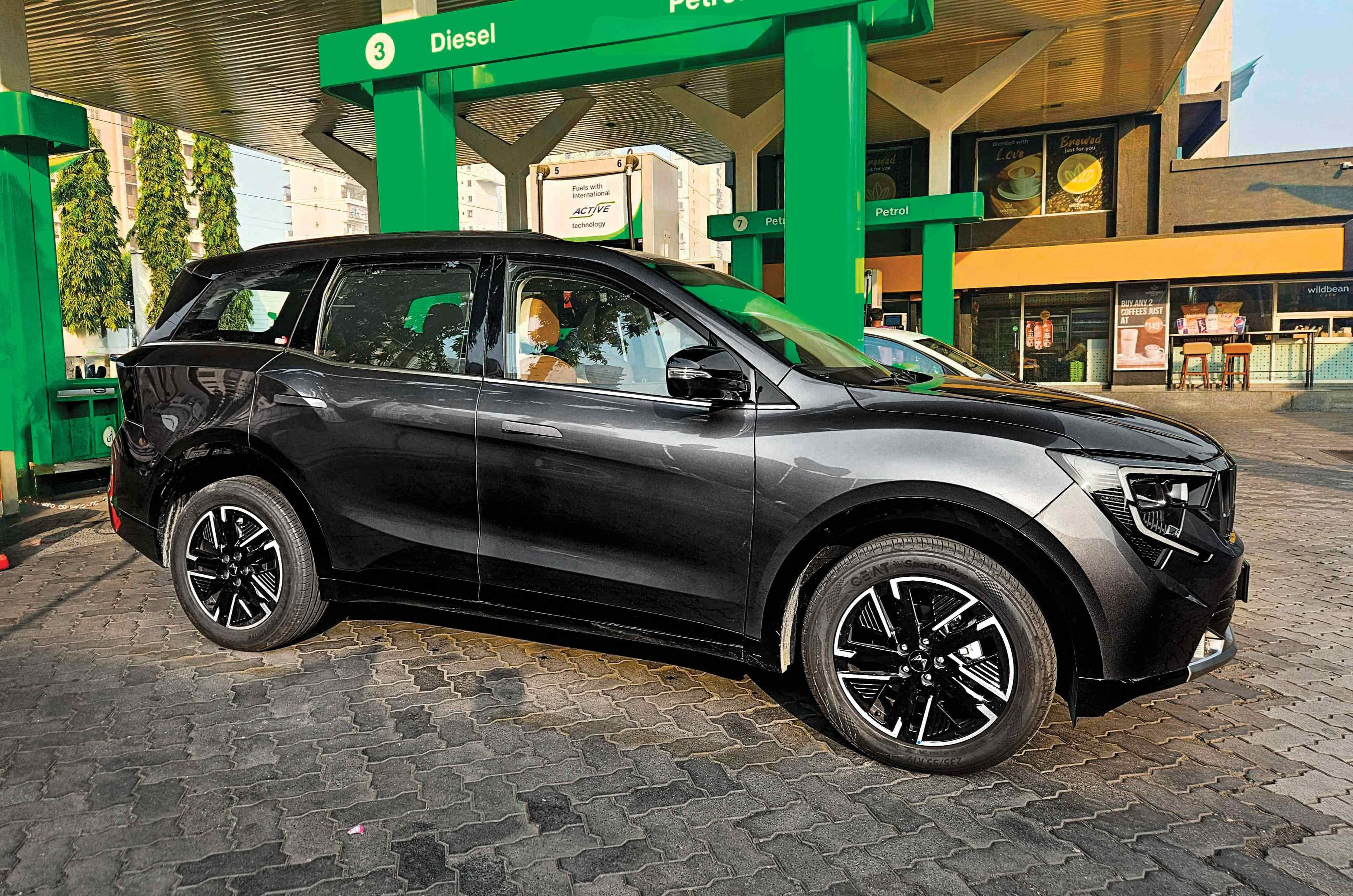
In our city tests, the petrol-automatic returned 7.6kpl, improving to 9.8kpl on the highway. At 100kph in sixth gear, the engine settles into a relaxed 1,600rpm cruise, but the aggressive throttle calibration and eager gearbox downshifts hurt efficiency. Drive gently, and double-digit figures occasionally appear on the MID, though even moderate overtakes see consumption rise sharply. Still, with a 60-litre tank, its average of 8.7kpl translates to a usable real-world range of around 520km.
The diesel, meanwhile, is considerably more efficient. Kept in the most economical Zip mode with stop-start enabled, it returned 11.28kpl in the city and 14.91kpl on the highway. Like the petrol, it also cruises at 1,600rpm at 100kph in sixth gear. Given the sizeable efficiency advantage, the diesel is likely to remain the pick for most buyers.
Mahindra XUV 7XO ride comfort and handling – 9/10
Bump absorption capability has immensely improved.
One of the key talking points of the XUV 7XO is its new suspension setup. Patented by Tenneco and jointly developed with Mahindra, the ‘DaVinci DCx’ (Double tube Comfort eXtreme valve) setup is a mechanical, frequency-adjusted hydraulic damper comprising a dual-stage flow regulator, as well as a hydraulic rebound stopper that results in non-linear damping (not just a single-damper setting) that changes based on the road and driving conditions. The DCx valves use specially engineered discs (shim stacks), which regulate hydraulic flow depending on road-impact frequency. However, high-energy impacts are managed by the hydraulic rebound stopper, which alters hydraulic fluid flow and absorbs road shocks much before they reach the chassis. This damping system adds a significant increase in cost, being almost twice as expensive as a conventional system.
But of course, the benefits of this setup are multifold. Despite riding on 19-inch wheels (versus the outgoing XUV700’s 18 inchers), ride comfort has noticeably improved. Like before, it exudes an underlying feeling of toughness while dealing with bad and broken roads, and now, commendably, the XUV 7XO rounds off sharp-edged potholes akin to some more expensive luxury SUVs. Also, while XU700 owners complained of suspension noise, that issue seems to have been solved this time around, with the 7XO’s suspension quietly doing its duties.
High-speed stability remains excellent, and even though there are soft movements while cruising over less-than-perfect roads, it doesn’t feel excessive or floaty at any point.
The steering is light and easy to twirl, which makes light work of manoeuvring and parking this car. And even though it isn’t feelsome, it weighs up progressively at highway speeds, adding to the driver’s confidence. Drive modes in the diesel automatic add some weight and resistance at low speeds for a sportier feel.
Around corners too, the XUV 7XO feels stable and confident, and impressively, mid-corner bumps don’t seem to unsettle it. Mechanical grip is good too, but there’s just no getting away from the vehicle’s sheer mass and its high centre of gravity, so a fair bit of body roll still exists.
Braking performance is strong too. In our panic-braking tests from 80-0kph, the XUV 7XO came to a halt in 26.74 metres, which is similar to lighter midsize SUVs like the Tata Sierra and Kia Seltos. In the diesel-automatic version, even the brake-pedal feel is linked to the drive modes, which just tweak the brake bite point slightly for a more immediate or laidback response.
Mahindra XUV 7XO price and verdict – 9/10
Builds on the strengths of the XUV700 and feels even better-rounded and more desirable now.
The Mahindra XUV 7XO retains the XUV700’s strong fundamentals while improving ride comfort and technology. The impressive new suspension setup lends it a more sophisticated ride quality without compromising high-speed stability. The cabin, too, feels richer than before, seat comfort has improved, and the upgraded electronics and ADAS are now better calibrated for real-world conditions. The diesel-automatic, in particular, stands out for its strong efficiency and effortless cruising ability.
The shift towards touch controls for air-con hurts usability, and while the triple-screen setup adds novelty, the sheer number of menus feel overwhelming initially. Also, for an otherwise sensibly packaged car, the middle row still doesn’t get a sliding function, and as a result, its third row remains cramped for adults.
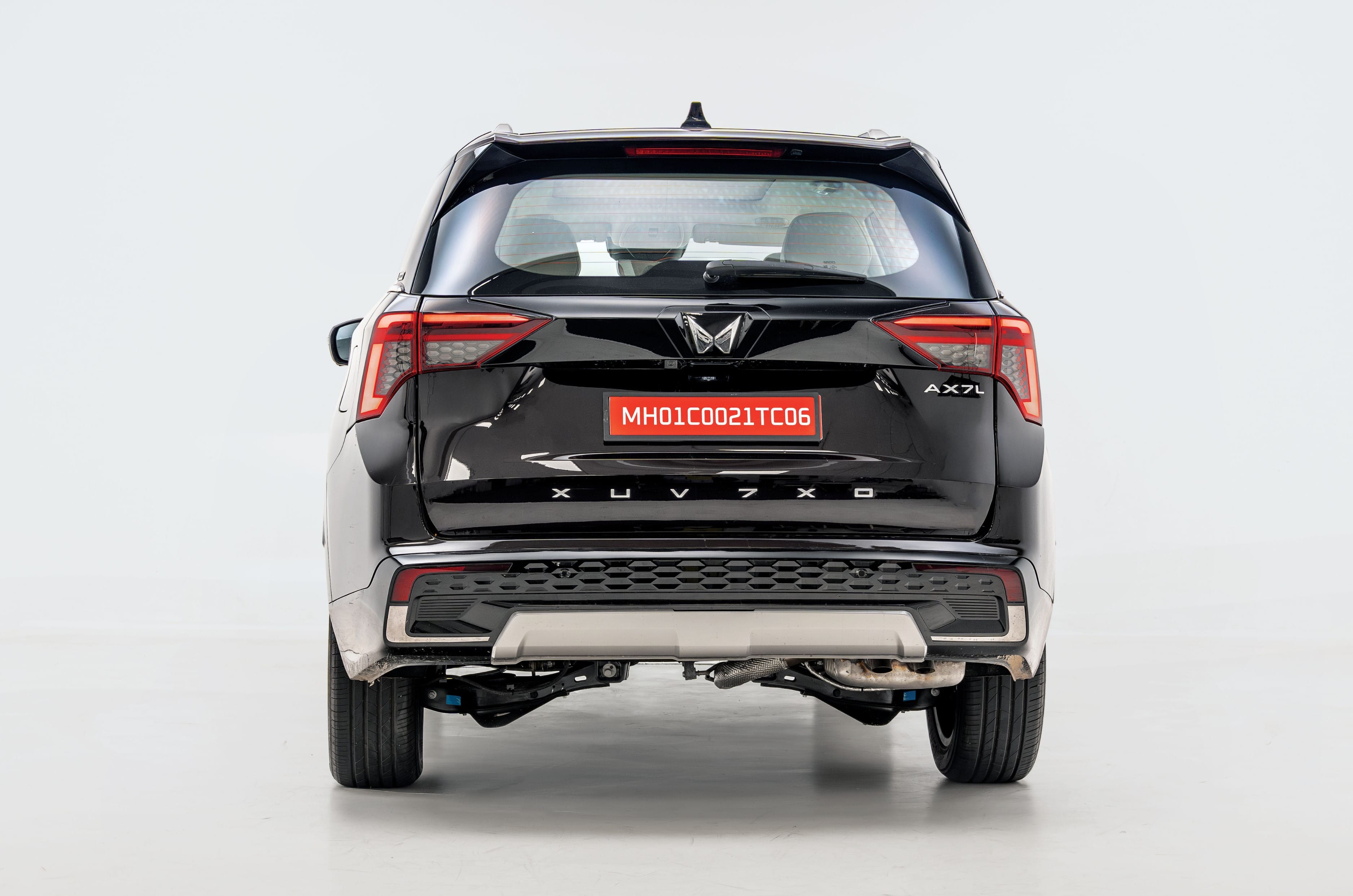
Even so, the XUV 7XO continues to offer an exceptionally broad spread of abilities. It feels more polished, more premium and more complete than before, reinforcing its position as one of the most compelling SUVs in its class.

 Soham Thakur
 Sergius Barretto
 Hormazd Sorabjee
 Lenny D'sa