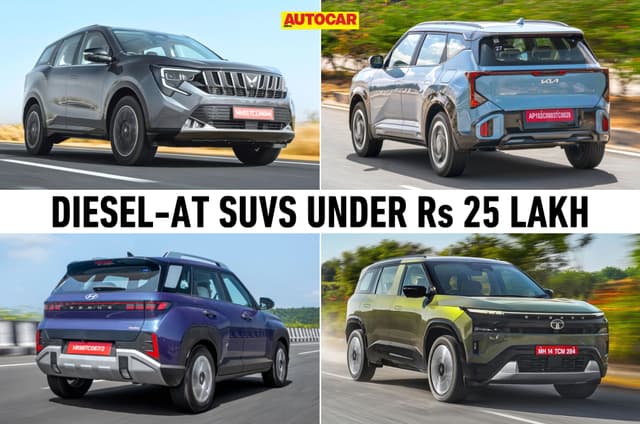

Kia Syros
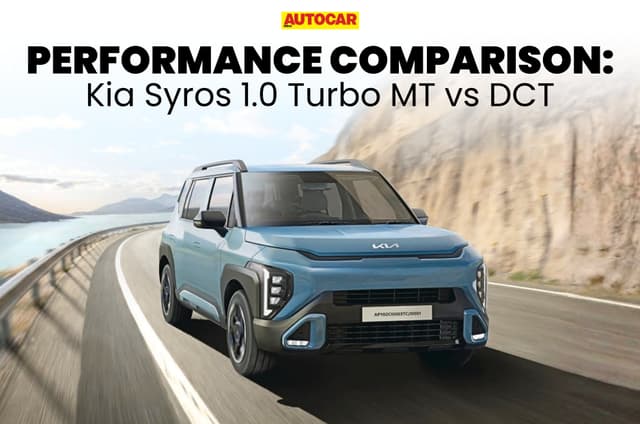
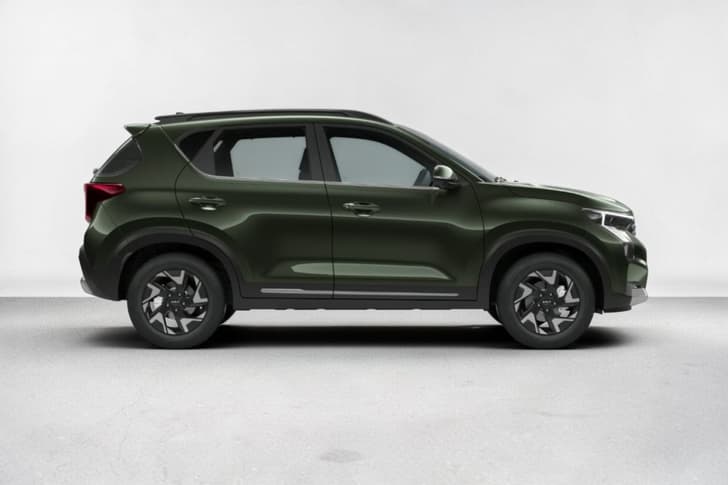
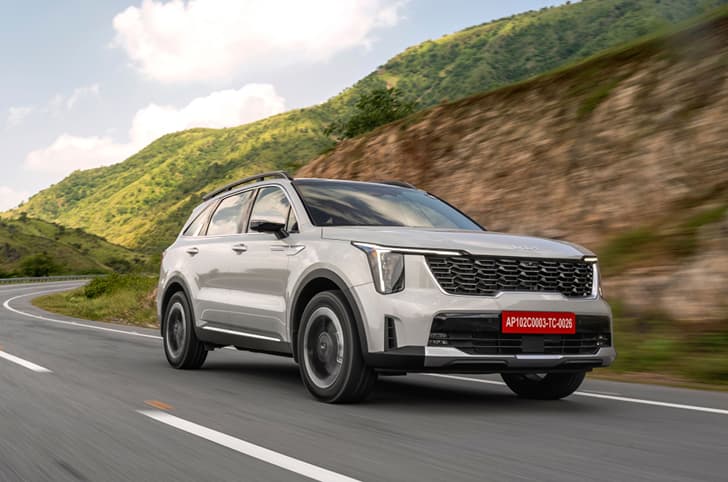
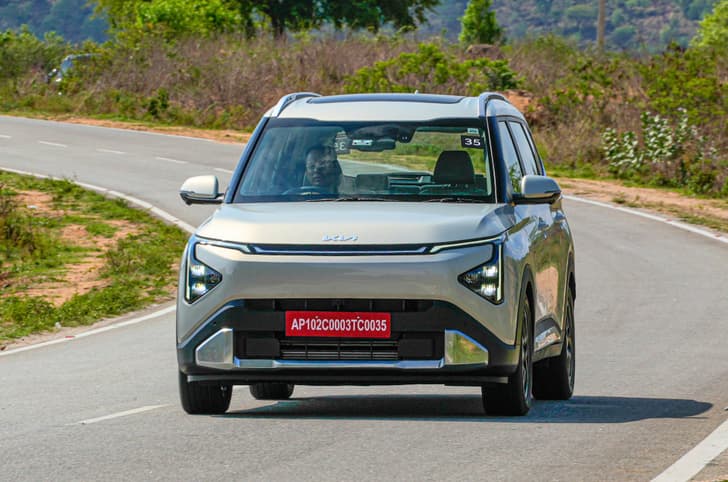
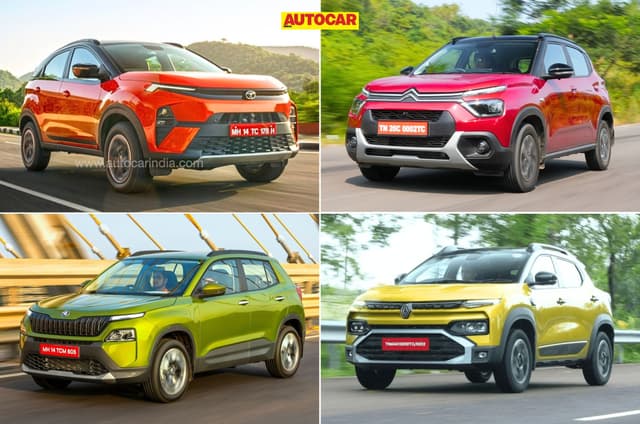
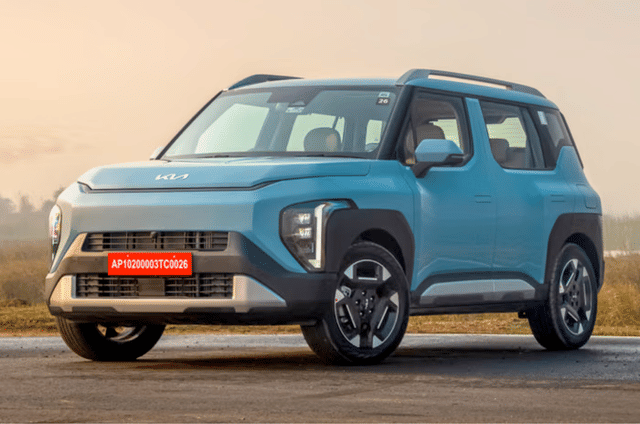
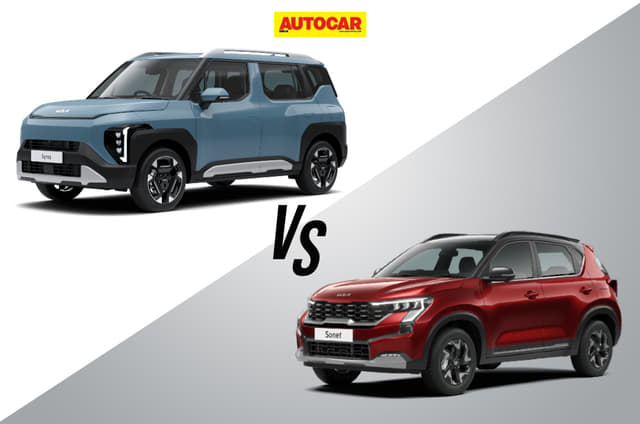
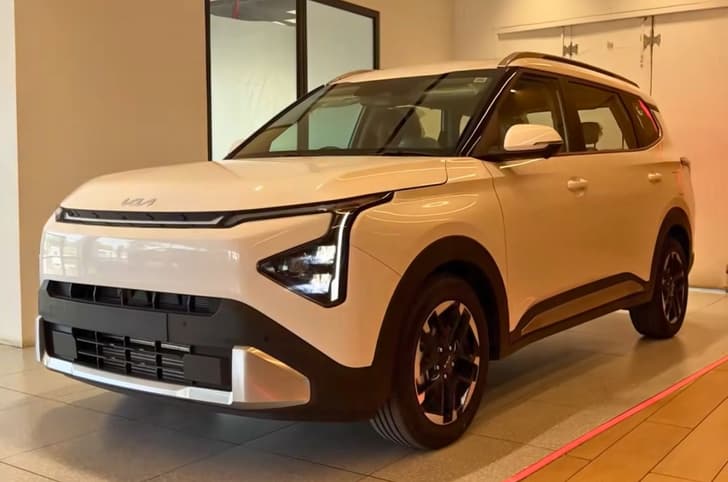
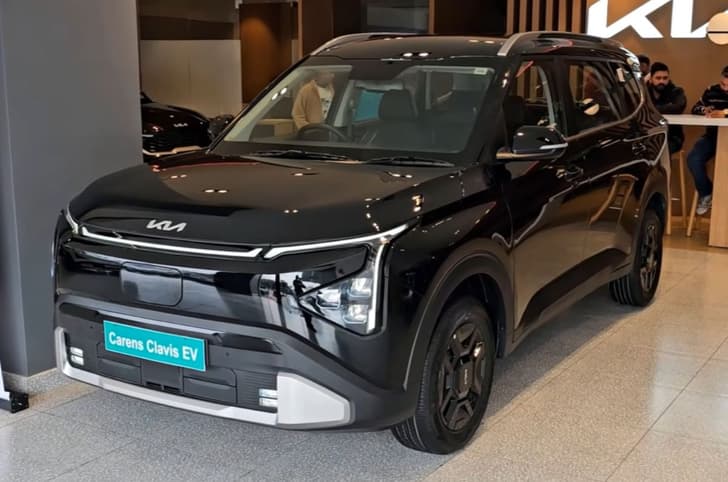
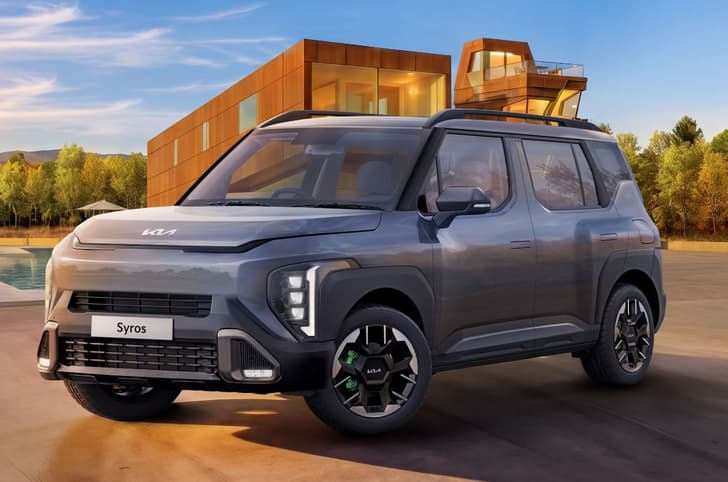
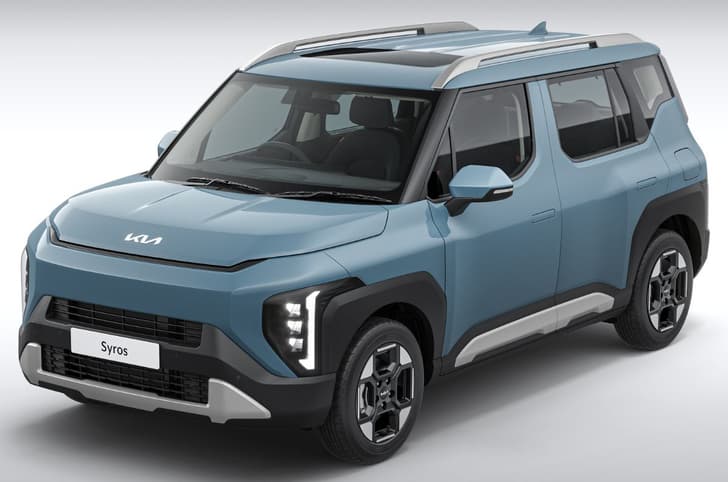
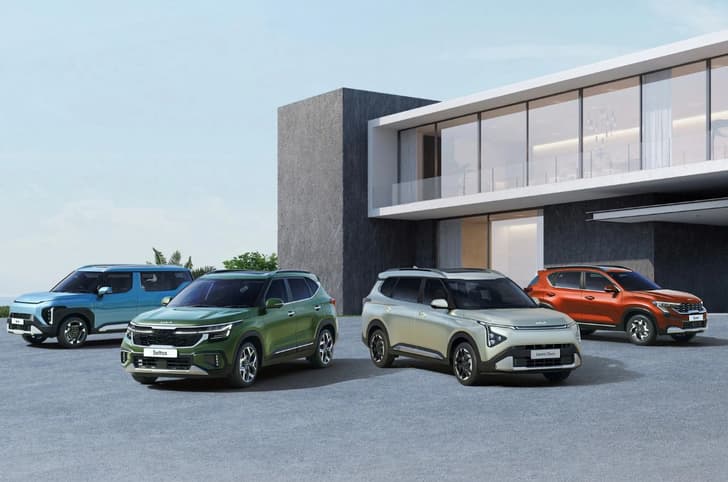
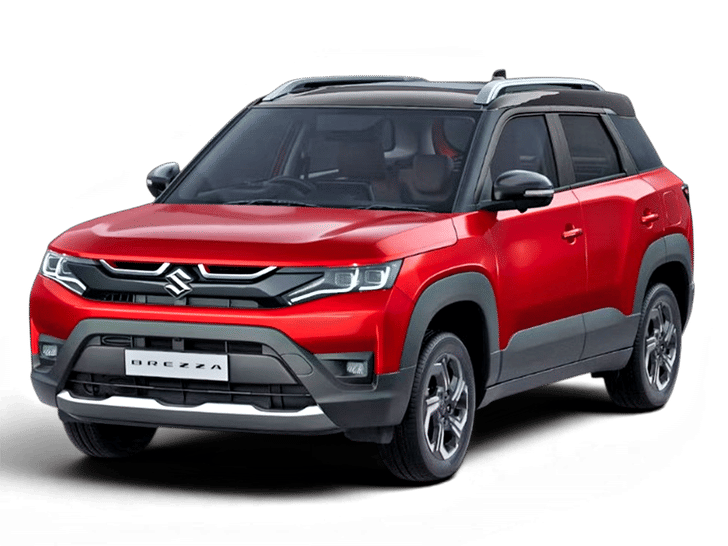
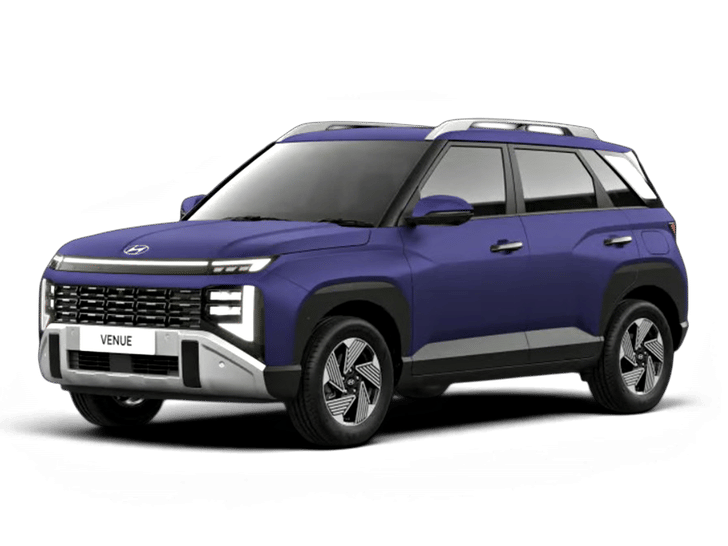
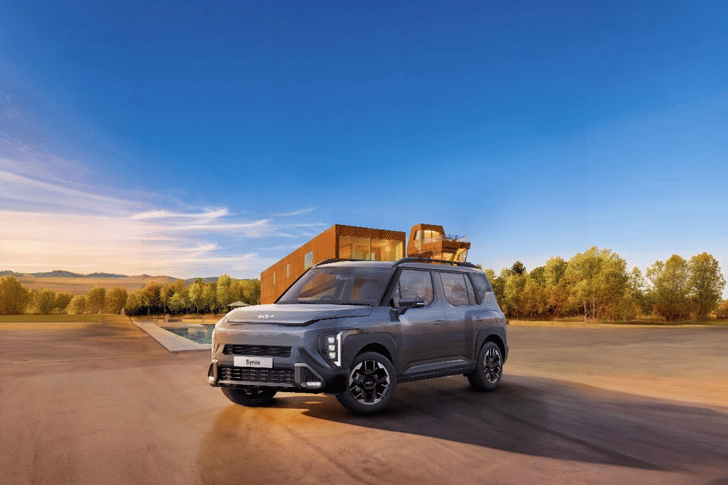
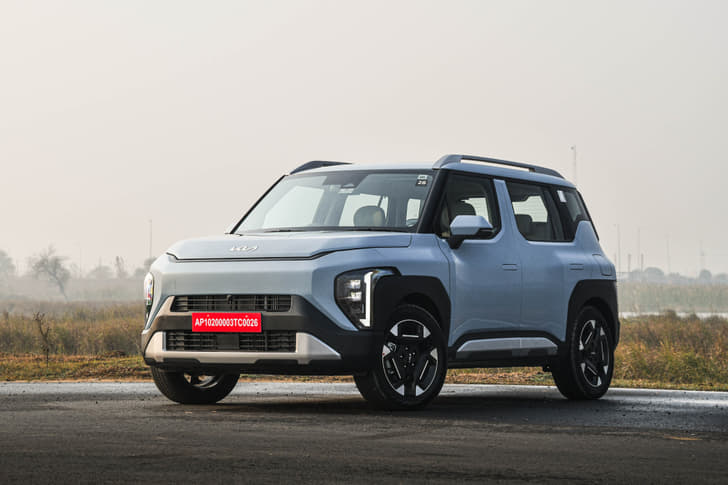
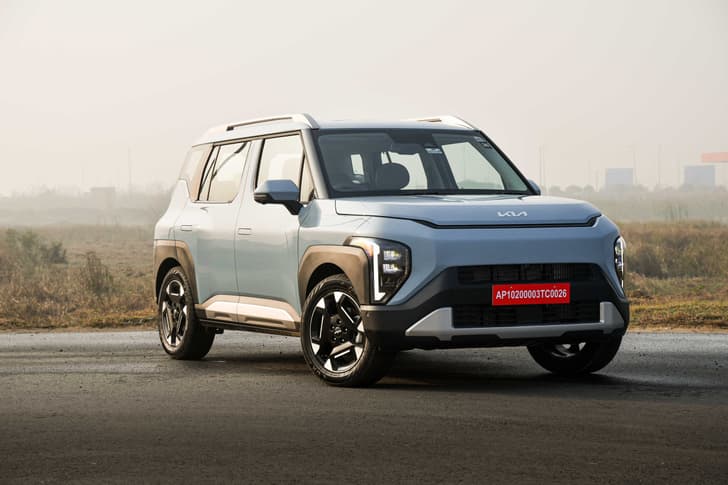
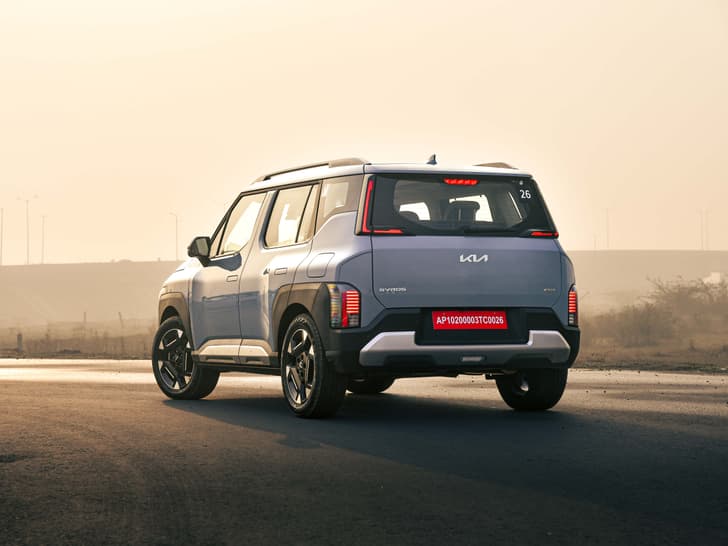
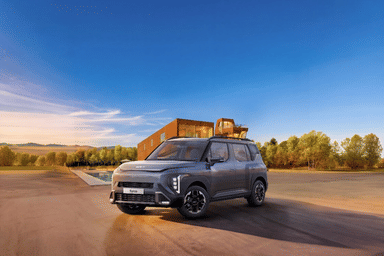
The Syros is Kia's second compact SUV, and it sits between the Sonet and the Seltos. Its tall, boxy design gives it a distinct look while making room for a spacious cabin. It is available in 18 variants across seven trims, from the HTE to the HTX (O). Engine options include a 1.0-litre turbo-petrol and a 1.5-litre diesel, both available with manual and automatic gearboxes. Its rivals include the Hyundai Venue, Tata Nexon, Maruti Suzuki Brezza and Mahindra XUV 3XO.
As per our experts at Autocar India, the Syros is overstyled and underrated. Its looks might not appeal to everyone, but the cabin is where it really shines. It has one of the best rear seats in the segment, along with good cabin quality and a long list of features. If most of your driving is in city traffic, only a few compact SUVs can keep you as comfortable as this one.
Syros Key Features
Here is what you get across the Kia Syros range
Category | Key Features |
Engine and gearbox |
|
Space and practicality |
|
Comfort and convenience |
|
Safety |
|
Syros Road Test Findings
What we liked
- The rear seat is one of the best in the segment. It has ample headroom as well as legroom. In our long-term test, it felt as roomy as the new Seltos.
- The cabin is beautifully put together. There are very few hard plastics, and the colour scheme feels fresh and youthful.
- The Harman Kardon system sounds superb. Plus, the screens are sharp and easy to use.
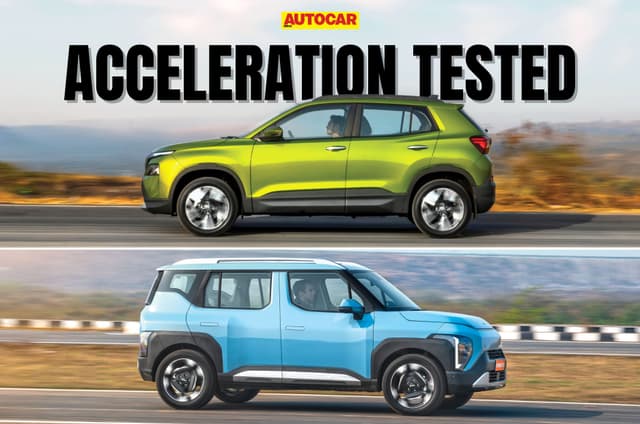
- It is quick for its class. In our test, the turbo-petrol DCT did 0-100kph in 11.63 seconds.
- The diesel automatic is smooth and pulls well from low revs.
What we did not like
- Both engines get noisy once you go past the mid-range.
- The turbo-petrol is thirsty. The petrol automatic that we drove for over 14,500km returned just 9.2kpl, mostly in the city.
- The ride is firm over broken roads, and the steering feels heavy at city speeds. The DCT can also be jerky in stop-and-go traffic.
Who Should Buy The Syros?
Who it suits | Why? |
Families who want a roomy back seat | As per us, you no longer need to move up to a mid-size SUV for rear-seat space. The Syros offers it while staying under 4 metres. |
Families with elderly members | The tall roof and low floor make getting in and out easy, which older passengers will appreciate. |
Drivers who navigate through heavy traffic | We feel Syros is built for crowded cities. It is compact enough to park easily, and comfortable enough to make long hours in traffic less tiring. |
Practical buyers | The Syros puts space and everyday comfort ahead of style. If that matters more to you than how a car looks, we think it is one of the most sensible compact SUVs on sale. |
The Syros is not the right pick if you want a car with the usual rugged SUV look. Its tall, boxy body and stacked headlamps give it an unusual look, and during our long-term test we found that this design is the main reason many buyers have stayed away from it.
Kia Syros Price Details
- Petrol HTE MT (base model): Rs 8.42 lakh (ex-showroom)
- Diesel HTK+ AT (mid variant): Rs 12.76 lakh (ex-showroom)
- Diesel HTX(O) AT (top model): Rs 15.82 lakh (ex-showroom)
Kia Syros Latest Updates
April 20, 2026: Kia introduced new trims and visual updates; starting price was also reduced and diesel-AT variants were made more affordable.
Syros Specifications
17.65 kmpl - 20.75 kmpl
998 cc - 1493 cc
Diesel, Petrol
Manual, Torque Converter, DCT
5
115.56 hp
5
250 Nm
Syros Autocar Rating
Stylish, high-quality interiors
Very comfy and spacious rear seats
High NVH levels in both petrol and diesel
Become an
Autocar Shopper
Unlock benefits up to ₹45,000 on Syros
Unbiased buying guidance
Guaranteed lowest price
Priority car delivery
Offer valid till 31st October 2026
Kia Syros price & variants
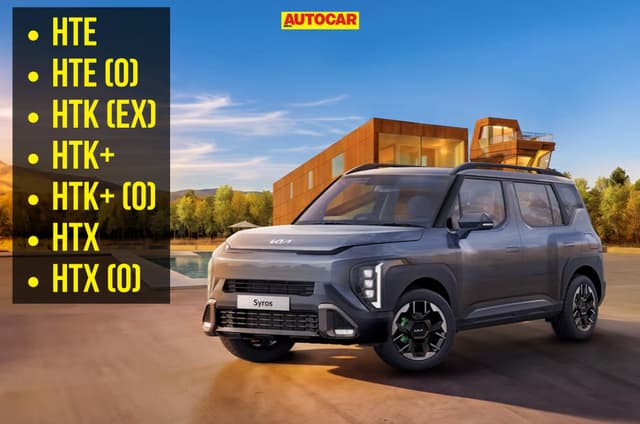
The Syros is sold in seven trims, and the easiest way to understand them is in three groups. The entry-level HTE, HTE (O) and HTK (EX) trims cover the basics and get a touchscreen with wireless Android Auto and Apple CarPlay. The mid-level HTK+ and HTK+ (O) trims add a panoramic sunroof, sliding rear seats and the choice of an automatic. At the top, the HTX and HTX (O) trims come only as automatics and get ventilated seats and a Harman Kardon sound system.
The Kia Syros price in India starts at Rs 8.42 lakh for the base variant, Petrol HTE MT and goes up to Rs 15.82 lakh for the top variant, Diesel HTX(O) AT (ex-showroom). On the other hand, the Syros on road price in major Indian cities ranges from Rs 9.39 lakh to Rs 19.62 lakh. If you are planning to buy Syros on a loan, then in that case, the EMI for the base variant will start at around Rs 13,676 per month.
Which Syros trim should you buy?
- The HTX petrol DCT variant is our pick. It gets ventilated seats and the Harman Kardon system, and costs about Rs 1 lakh less than the HTX (O) petrol DCT.
- If you cover a lot of highway kilometres, choose the HTX diesel AT instead. It is the most fuel-efficient Syros we have tested.
- Opt for the HTK+ (O) petrol MT or diesel MT. They are the best-equipped manual variants, as the HTX trims come only with automatics.
- Skip the HTX (O) trim. As per us, their extra features don't justify the higher price, especially now that they have lost ADAS and the 360-degree camera.
- The HTE (O) and HTK (EX) variants can also be skipped as they add only a few features over the cheaper version below them, so they feel overpriced.
Note: The HTE comes only with the petrol manual. Meanwhile, the HTX and HTX (O) come only with automatic gearboxes.
Kia Syros Expert Review
We like
Stylish, high-quality interiors
Very comfy and spacious rear seats
We don't like
High NVH levels in both petrol and diesel
7.0
The Syros is based on the smaller K1 platform, unlike the Sonet, which uses the K2. This newer platform allows advanced features like remote diagnosis and OTA updates for body controllers — the Syros has 16 of these. The reinforced K1 structure includes hot-stamped body parts, and the Syros has achieved a 5-star BNCAP test rating.
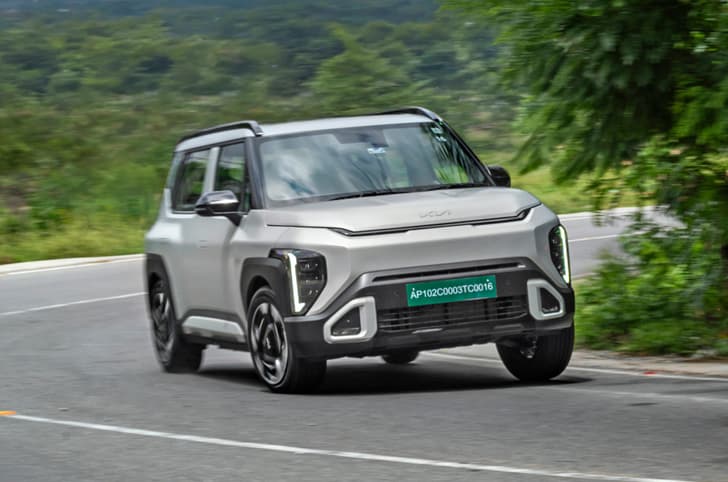
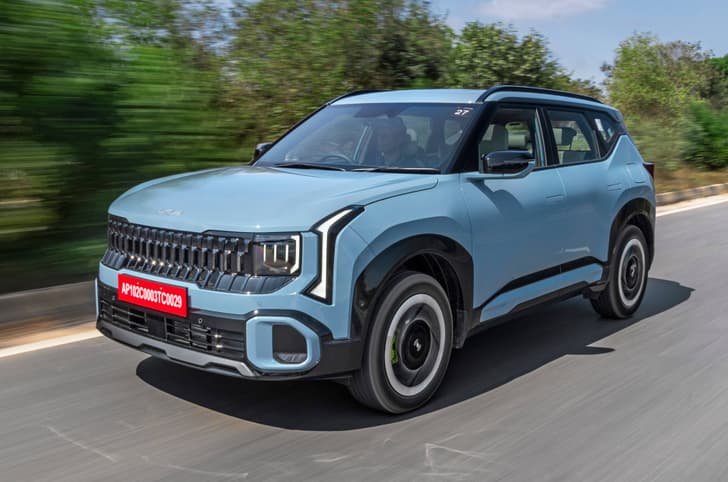
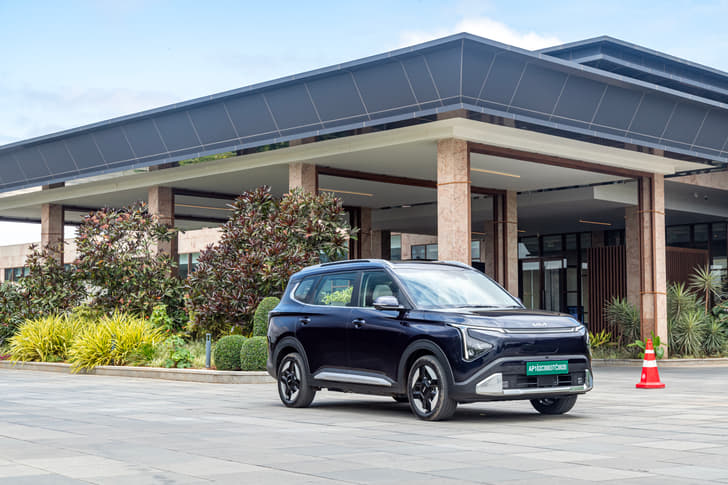
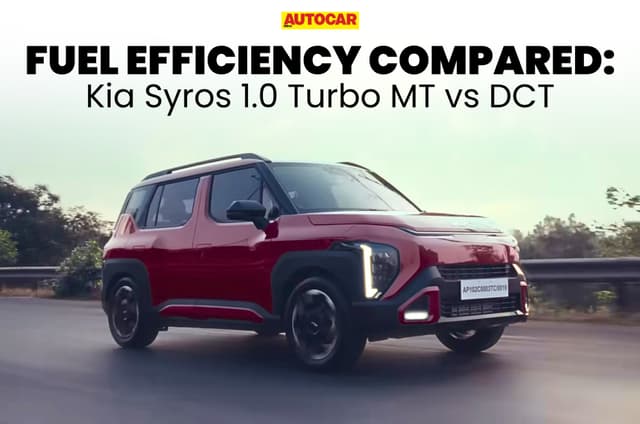
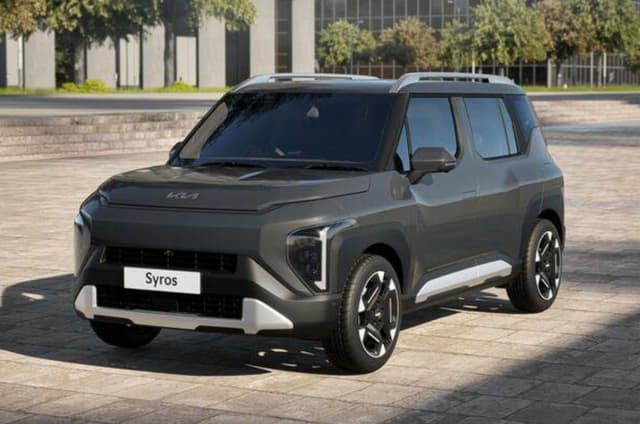
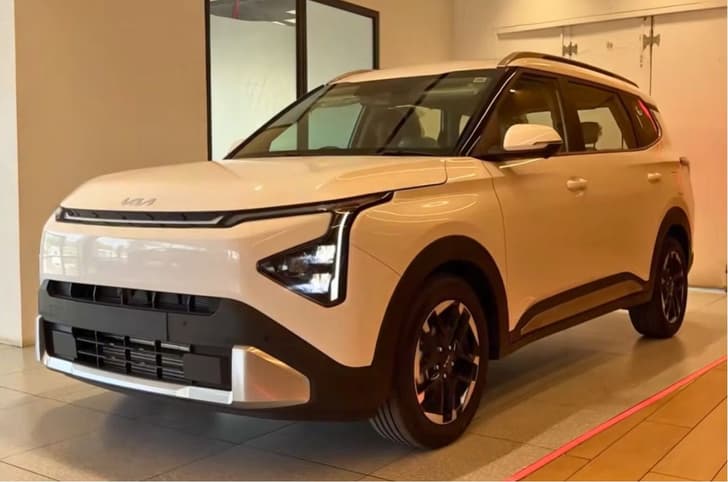
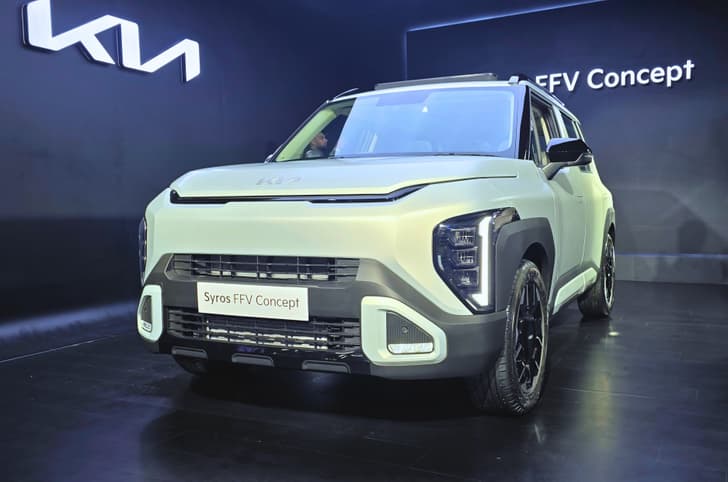
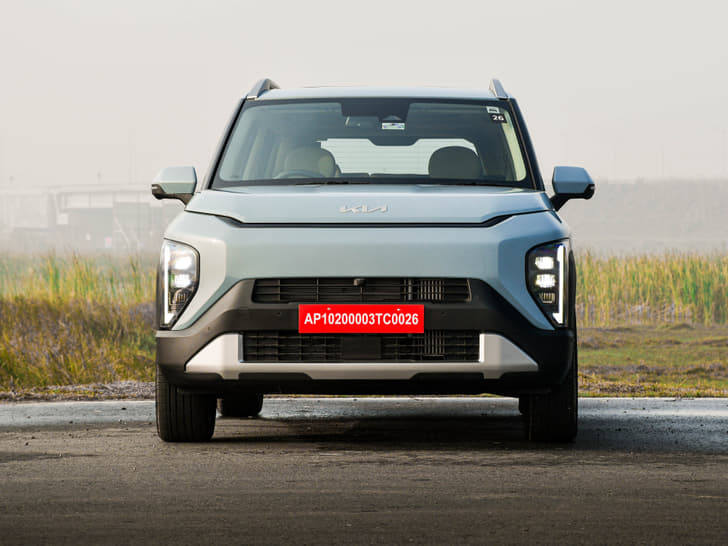
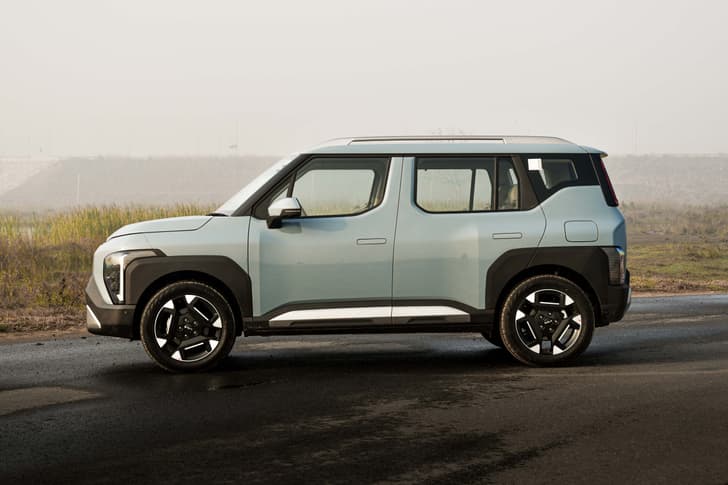
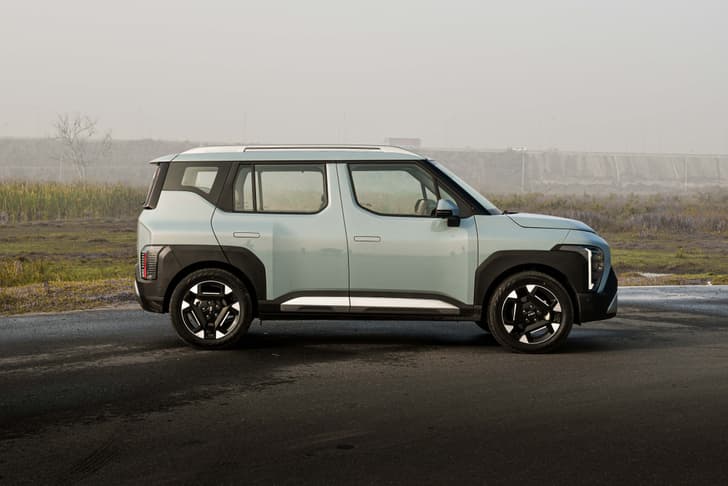
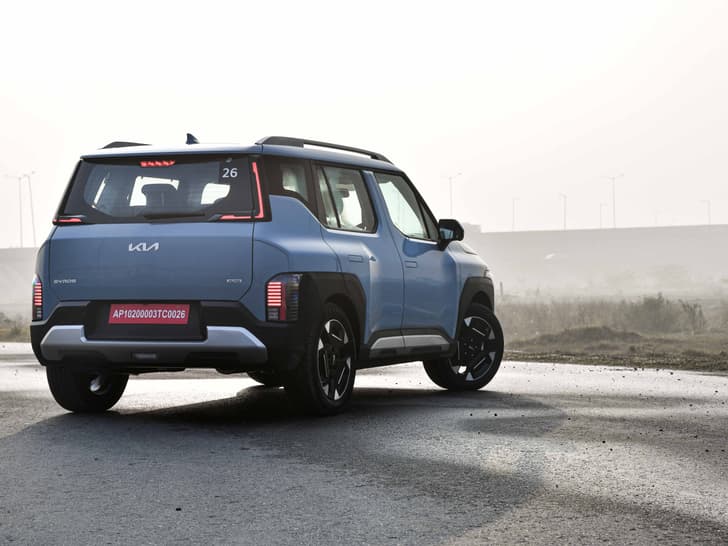
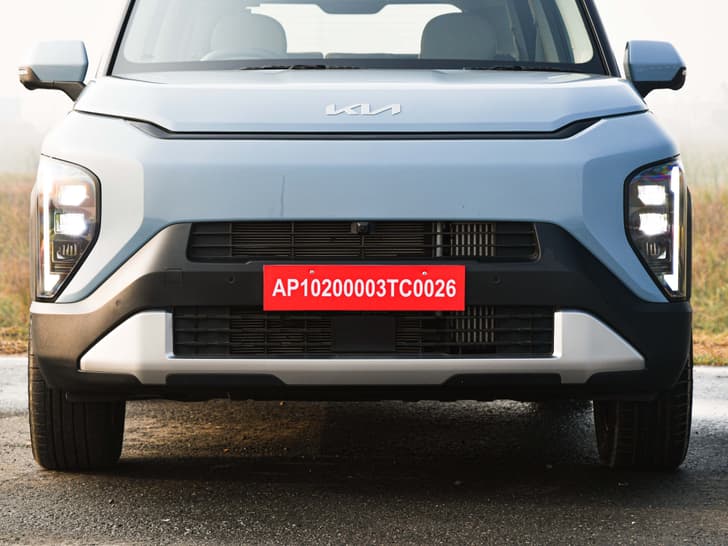
The Syros’ quirky styling will not appeal to everyone. There’s funky elements like ice-cube headlights pushed to the corners (vulnerable to parking damage), an upright nose, and EV-inspired closed grille. Wheel sizes vary from 15- to 17-inches, with black cladding running around the car. The tail-lamps merge into the cladding, and the rear gets L-shaped DRLs.
10.0
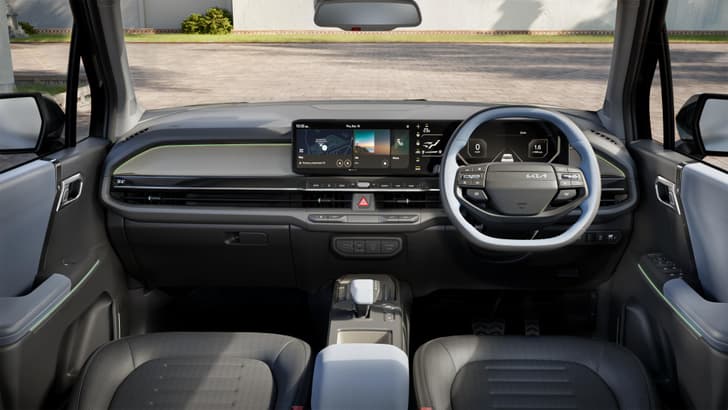
The interior is a strong point, with excellent space and segment-first features like cooled and reclining rear seats. Design is mostly conventional with some quirks, like a squircle steering wheel. Four interior themes are offered with youthful accents and ambient lighting. Sustainable materials lend a premium feel, and hard plastics are minimal.
The 2,550mm wheelbase exceeds rivals like the Brezza and Nexon. Rear seat comfort is a highlight, with sliding, reclining seats and good legroom. Only the seat base is cooled in the rear due to packaging constraints. Front seats offer better lumbar support. Boot capacity ranges from 390 to 465 litres depending on seat position.
8.0
Power comes from a 1.0-litre turbo-petrol (120hp/172Nm) and a 1.5-litre diesel (116hp/250Nm). The petrol is paired with either a 6-speed manual or 7-speed DCT. The DCT delivers an 11.63s 0-100kph time. There’s some lag below 1,500rpm, and the engine is vocal past 2,200rpm, hinting at limited insulation.
The diesel offers good low-end torque and smooth, if lazy, auto shifts. In both engines, refinement suffers as engine noise becomes noticeable past mid-range revs. The petrol manual is engaging with a springy clutch and defined gear gates.
6.0
Due to its weight, fuel economy is underwhelming. Claimed figures: 18.20kpl (manual), 17.68kpl (auto). Real-world city mileage was lower — 9.10kpl (manual petrol), 8.30kpl (auto petrol), and 10.80kpl (diesel auto). Highway mileage improves modestly.
8.0
A firm suspension setup controls body roll to some extent but makes ride stiff over ruts. Diesel variants feel sharper over bumps. Steering offers good highway stability but feels heavy in the city.
9.0
The Syros is well equipped, with a large glass panel housing a 12.3-inch touchscreen, digital instrument panel, and a 5-inch HVAC touchscreen. Main climate controls are physical toggles. Lower trims get buttons instead of the HVAC screen.
Other key features include a Harman Kardon 8-speaker system, ‘Hey Kia’ voice assistant, 360-degree camera, dual-pane sunroof, and connected car tech. There’s also radar- and camera-based ADAS, including smart cruise control and lane assist. Additional safety includes hill start assist, ABS with ESC, and 6 airbags and it has a 5-star BNCAP rating.
8.0
Priced between Rs 9 lakh and 17.8 lakh, the Syros sits between the Sonet and Seltos. It’s clearly built around comfort and features, not performance or highway cruising. NVH levels disappoint, but the rest — spacious interior, reclinable cooled seats, extensive equipment — makes it a compelling urban SUV for comfort-seekers.
Reviewed by: Sergius Barretto
Kia Syros Official Brochure
Download the complete brochure with specs, features, and variants.
Kia Syros reviews

Kia Syros comparison


Kia Syros EMI Calculator
Kia Syros Mileage
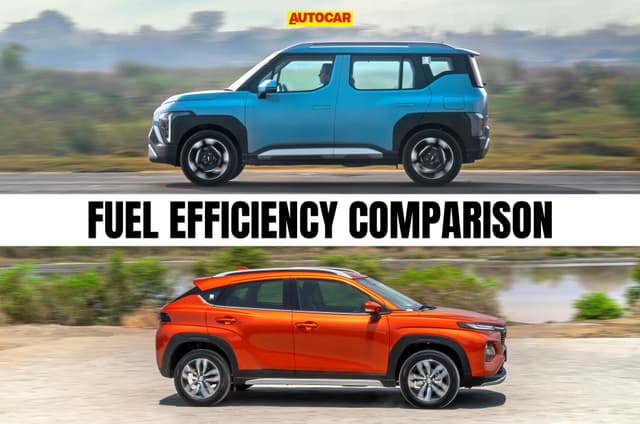
The Kia Syros mileage isn't one of its strengths, as it is a heavy car. As per ARAI, the turbo-petrol returns 18.2 kpl with the manual and 17.68 kpl with the DCT automatic. If you want the most fuel-efficient Syros, the diesel automatic is your best bet, as it returns 20.75kpl. The diesel manual is rated at 17.65kpl.
In our city tests, however, the real-world figures were much lower. The petrol manual returned 9.10kpl, the petrol DCT returned 8.30kpl and the diesel automatic managed 10.80kpl.
| PowertrainThe combination of engine type, fuel, and transmission that powers your vehicle and determines how it drives and what it runs on. | ARAI MileageMileage certified by the government, tested under controlled lab conditions. Real-world mileage will vary. | Autocar Tested MileageAutocar's experts test each vehicle on fixed city and highway routes under standardised conditions - single occupant, AC running, manufacturer-recommended tyre pressures. Tanks are filled to the brim before and after each run to calculate efficiency. Results reflect realistic real-world usage. |
|---|---|---|
Petrol-Manual 998 cc | 18.2 kmpl | 10.85 kmpl |
Diesel-Manual 1493 cc | 17.65 kmpl | NA |
Petrol-Automatic (DCT) 998 cc | 17.68 kmpl | 9.9 kmpl |
Diesel-Automatic (Torque Converter) 1493 cc | 20.75 kmpl | 12.2 kmpl |
Hear from the
Autocar Community
Join the Discussions
Kia Syros news
Kia Syros Images
Our Syros images gallery has 32 photos. These are the details worth a closer look:
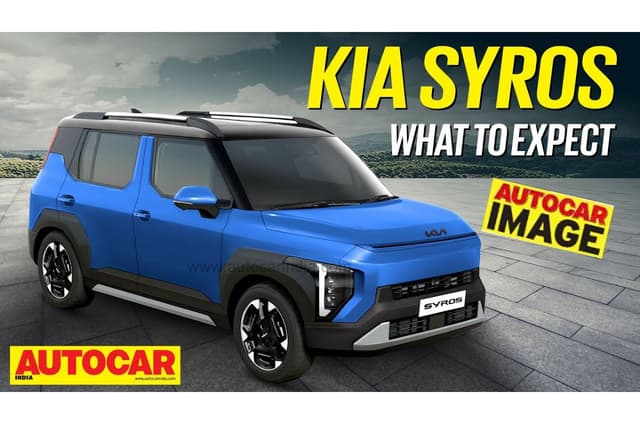
- The stacked 'ice-cube' headlamps and vertical DRLs, pushed right to the corners
- The L-shaped LED lights that frame the rear windscreen
- The flush door handles and the tall, boxy profile
- The three-screen dashboard, the squircle steering wheel and the cube-shaped gear knob

Kia Syros videos
Our Syros video gallery has 6 videos that show:
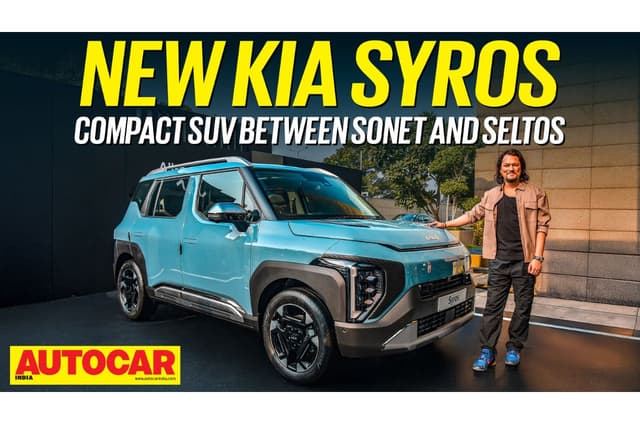
- A walkaround of the Syros, covering its design, cabin and features.
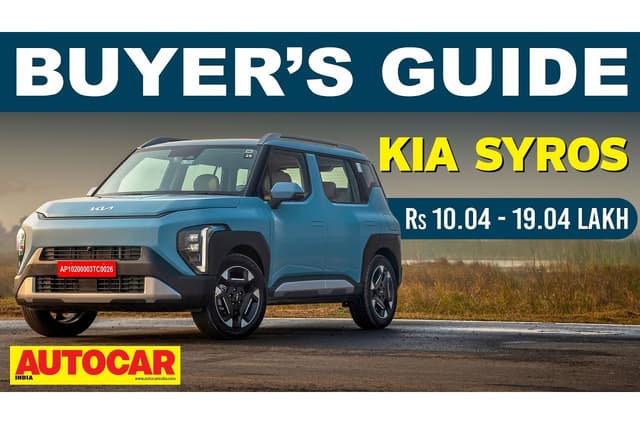
- Our buyer's guide, which helps you pick the right variant.
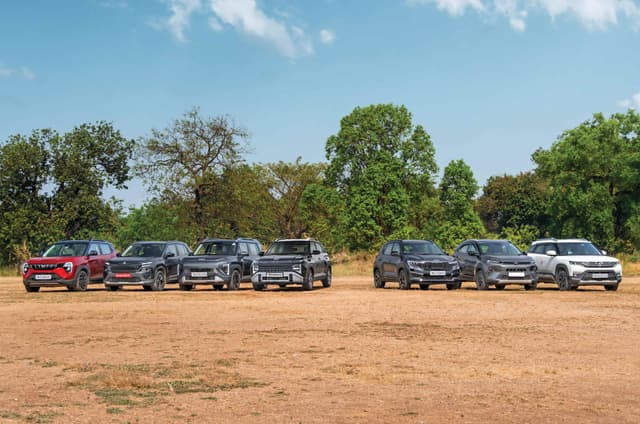
- Our mega compact SUV comparison, where the Syros takes on its rivals.


.jpg?w=640&q=75&fm=auto)
Kia Syros Colours
The Kia Syros colour palette includes 9 single-tone colours, and you can have any of them on any variant.
Colour | Notes |
Glacier White Pearl, Aurora Black Pearl, Gravity Grey | The safe, everyday shades |
Ivory Silver Gloss, Ivory Silver Matte | Added in April 2026; the matte finish is the more unusual pick |
Frost Blue, Imperial Blue, Pewter Olive, Magma Red | The bolder options, with Magma Red new for 2026 |
Kia Syros Similar Cars to Explore
Kia Syros FAQs
The Syros' unique-in-segment tall-boy styling maximises headroom, giving the cabin an airy feel, aids in ingress and egress, and it also has a spacious back seat
The Syros sits between the Sonet compact SUV and the Seltos mid-size SUV in Kia's model lineup.
The engine and gearbox option of the Kia Syros depends on your driving behaviour. If your monthly running includes a lot of highway runs, then the diesel automatic is the one to go for. If that's not the case, then the petrol DCT suits best.
The ride quality of the Kia Syros is not one of its strong points. The tall boy design and heavy panoramic sunroof contribute to body roll when cornering, and the ride is on the firm side.
Space on the Kia Syros is one of the best in the class. Legroom at the back is excellent, while the rear seats can slide, recline and feature ventilation (seat base only).
Questions you may find useful
Namaste Autocar Team, I am from Kolkata and am considering two cars within a budget of Rs. 15 lakh on-road: the Hyundai Venue HX7 diesel manual and the Kia Syros HTK+ (O) diesel manual. My monthly running is around 1,500-1,750 km, with a 90:10 split between city and highway driving. I mostly drive in the city, and my 2017 petrol Hyundai i20 is becoming expensive to run. Hence, I am considering a diesel car, although I am not interested in an EV at the moment. Which of these two cars would be a more practical and reliable choice for long-term ownership, considering a 10-year ownership period, service costs, comfort and mileage? I am tempted by the new Venue, but the Syros offers slightly more rear-seat and boot space, which is important for my family of four. I would appreciate your honest opinion and observations.
The Kia Syros HTK+O diesel manual is an excellent option. For your usage, a diesel car makes sense, and the Syros is the more practical long-term choice. Thanks to its boxy cabin and adjustable rear seats, it gives you the flexibility to free up more rear seat space for passengers or increase boot space. Its cabin experience also feels more premium than the Venue. The Syros and Venue share their 1.5 diesel powertrain, but do keep in mind that since your usage is mainly in the city, you will have to periodically drive the car at high engine speeds for 20-30 minutes to ensure the diesel particulate filter doesn't clog up.Hyundai has a wider service network than Kia, and its ownership costs are likely to be a bit lower, if not similar, to the Kia's. However, the cost difference is only going to be marginal. Overall, the Syros is a good family car, and if you like its design, it is a sensible choice.
I am planning to buy my second car, a sub-4m petrol automatic SUV, with a budget of around Rs 15 lakh. I currently own a WagonR, and my usage is primarily city driving, with occasional long trips. I am confused between the Kia Sonet, Kia Syros and Hyundai Venue. I particularly like the Syros, but I am concerned about its low sales figures and the positioning of its headlamps. I am also unsure whether a 360-degree camera is worth having, as it is available only in the top variant of the Sonet, while the Syros does not offer one. I would appreciate your guidance on which of these SUVs would be better suited to my requirements.
For a second car that will primarily see city use with occasional long trips, the Kia Syros is the most interesting choice of the three. The Syros gives you a more substantial upgrade, with a spacious cabin, excellent rear seat comfort, a 465-litre boot and a premium interior while remaining under four metres. Its 2,550mm wheelbase is also longer than both the Kia Sonet and Hyundai Venue, which is why it feels particularly roomy inside.The low sales numbers would not be a major concern. The Syros uses familiar Kia powertrains and components, and Kia's service network is already well established. The headlamp position is unconventional and does expose the units to a greater risk of damage in a minor bumper corner impact, but it should not be a deal breaker if you like the car otherwise.The 360 degree camera is useful but not essential. It is particularly helpful in tight parking spaces and narrow city lanes, but a good rear camera and sensors do most of the job. It would not be worth choosing the Sonet's top variant solely to get a 360 degree camera. The Venue is the safer conventional choice if you prefer a newer, more established package, while the Sonet makes sense if you want a smaller, sportier-feeling cabin and more familiar product. But for your requirements, the Syros offers the most meaningful upgrade from a WagonR.
I’m a first-time car buyer in Bangalore, and I’m currently learning how to drive. Should I buy a manual car to learn how to drive a manual and then switch to an automatic for my next car, or should I get an automatic right away? I’m considering the manual Kia Syros and the automatic Hyundai Venue.
For a first-time buyer learning to drive in Bangalore, buying a manual just to learn the gearbox and then switch to an automatic later offers little benefit. Learning the basics of steering, braking, positioning, judging gaps, and handling traffic is already a substantial task. An automatic lets you concentrate on those skills without adding clutch and gear changes, which is particularly useful in Bangalore traffic.Between the two, the Hyundai Venue automatic is the more suitable choice for a first car. Its 1.0-litre turbo petrol paired with a seven-speed DCT has adequate performance for both city driving and highway use.The Kia Syros manual is a good option if learning manual driving is itself an important goal or if you genuinely enjoy being involved in driving. This Kia car shares the same 1.0 turbo as the Venue, and the six-speed manual is well matched to the engine. However, buying a manual only as a training exercise does not make much sense when the eventual preference is for an automatic.
Hi Team, I want to buy the Kia Syros EV HTK (base variant). My daily running is around 280 km.
With a daily run of 280 km, the Kia Syros EV 42kWh HTK might not be an ideal option. This Kia car is a very good family EV with a comfortable ride, spacious cabin and a premium feel, but with a real-world range of around 300- 350 km depending on driving conditions. At 280 km a day, you are using around 80-90% of the battery every single day, which means you will need to charge it daily, and you will have very little buffer for unexpected detours or highway driving at higher speeds, where range drops. For your usage, at the current price, consider diesel-automatic options of the Venue or Syros diesel-automatic, which start at around Rs 15 lakh.If you must have an electric car, opt for the extended range version of the Syros EV with a 51.4kWh battery that'll have a real-world range of around 400km, which will be a bit more reassuring given your 280km daily usage.
Hello Autocar, I am quite confused between the Kia Syros and Hyundai Venue. Which one should I buy? My usage will mainly be city driving in moderate to heavy traffic, and I have shortlisted the HTK+ and HX5+ variants.
It's a close call given that both cars are the same underneath, but given your usage, go for the Kia Syros HTK+. For mostly city driving with moderate to high traffic, the Syros is the better fit. It is a larger car than the Hyundai Venue, with a more spacious cabin and a bigger boot, which makes it more comfortable for family use and daily practicality. The HTK+ variant is well equipped and offers good value for money. The petrol engine is smooth and refined, and the car is easy to drive in city conditions.The Venue HX5+ is also a good car, but it is a smaller SUV and does not offer the same level of space and comfort as the Kia Syros. Both cars are mechanically similar and share the same engine options, so the decision really comes down to size and practicality. The Kia car mentioned above doesn't ride as well as the Hyundai car, but given your mostly city use, that should not be too much of an issue.
Upcoming Cars


Kia Cars


Trending Cars


Latest Cars


Last Updated on: 26 Oct 2026