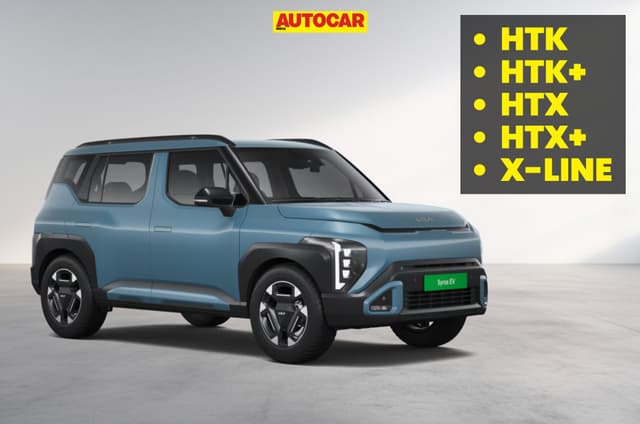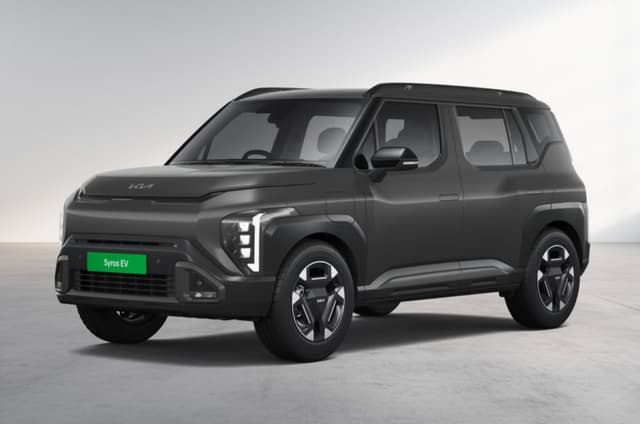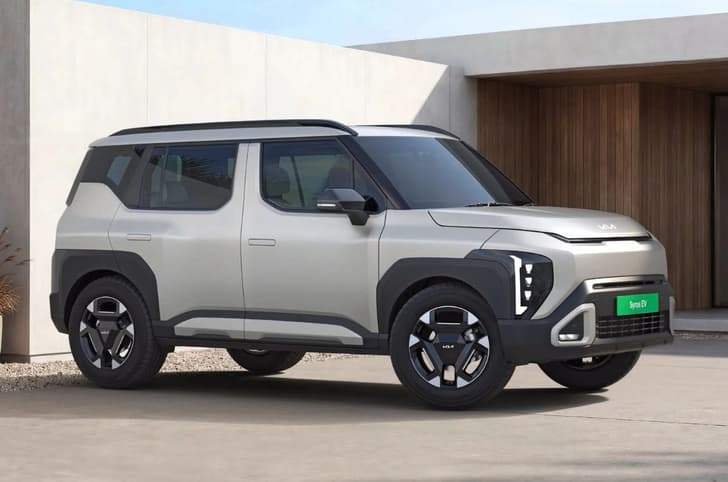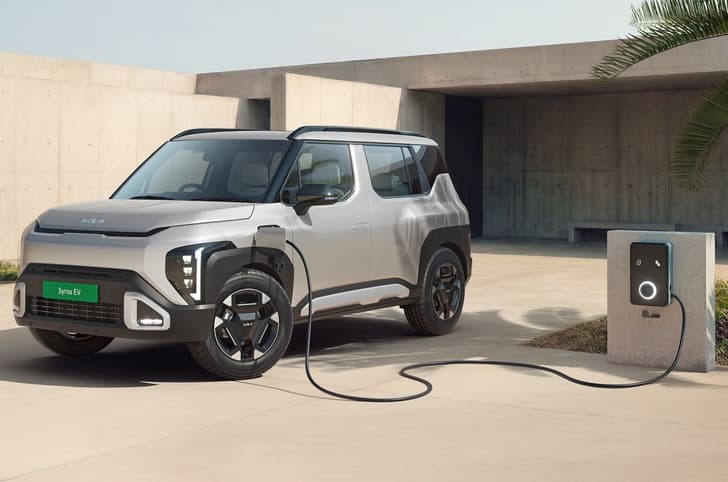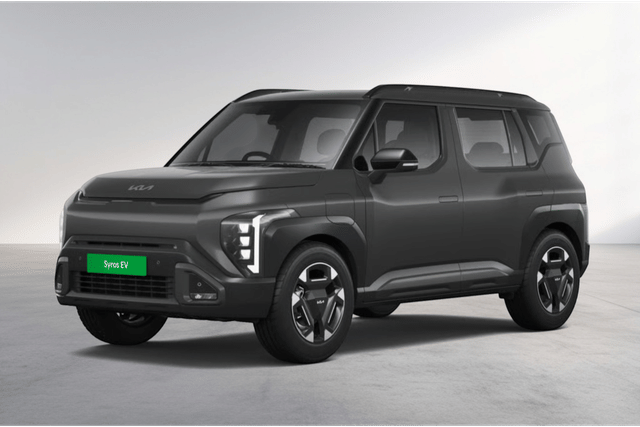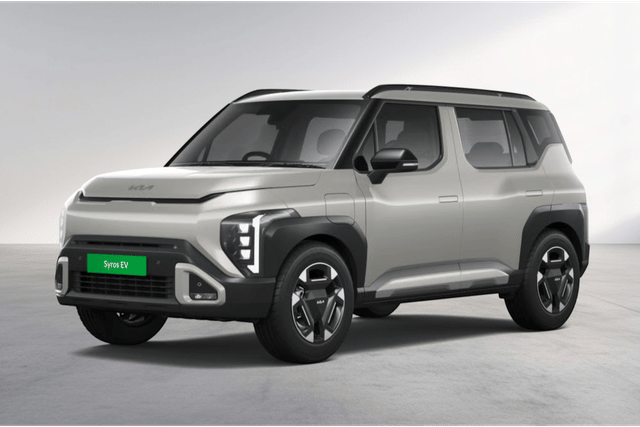
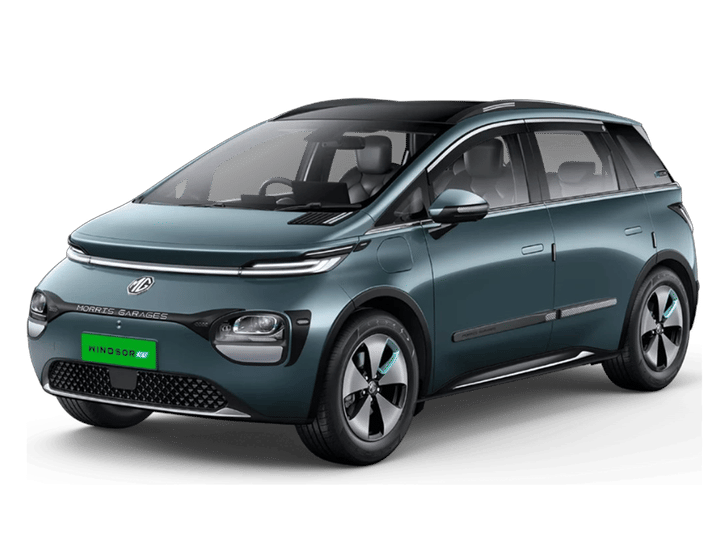

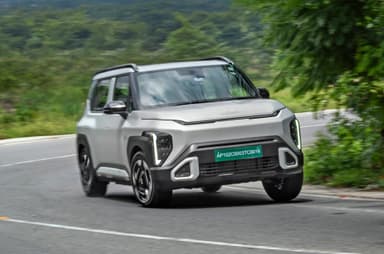
Kia Syros EV
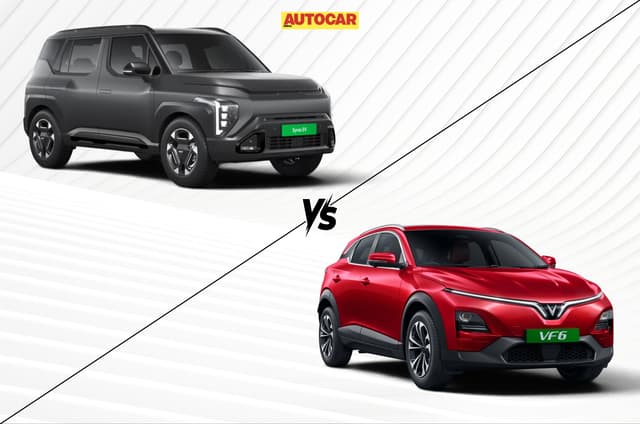
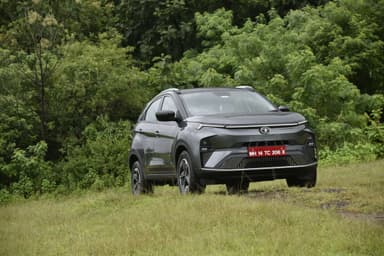
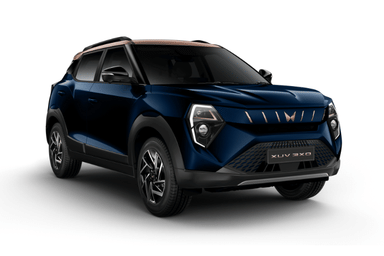
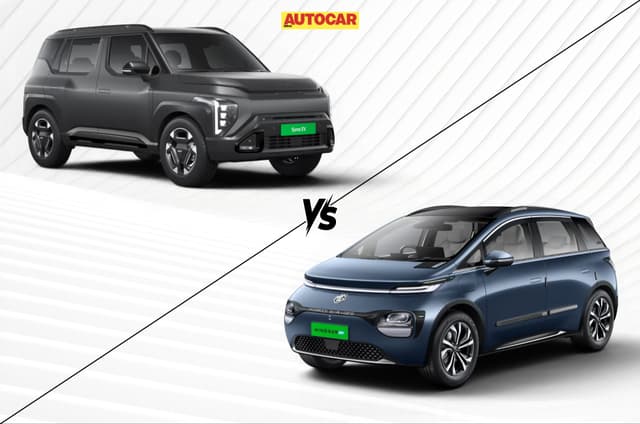
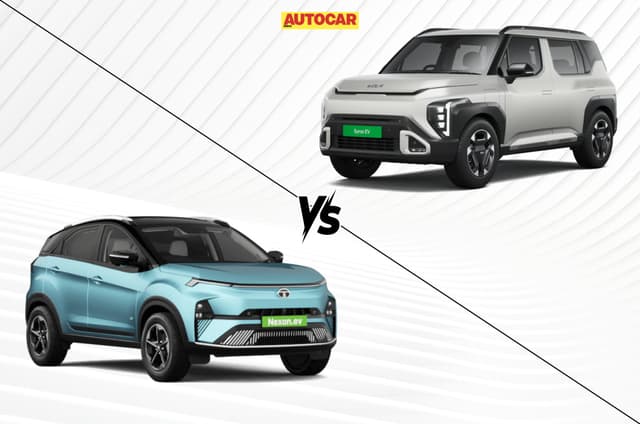
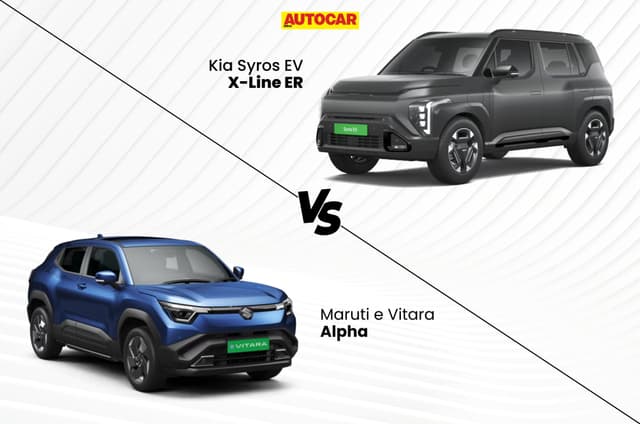
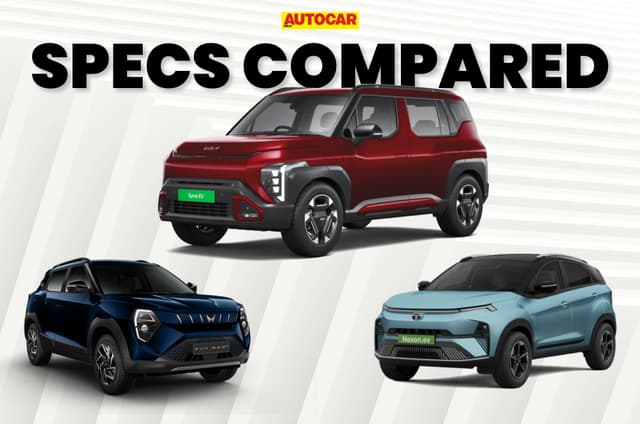
The Kia Syros EV is the carmaker’s second mass-market all-electric model in India. The Kia Syros EV price ranges between Rs 13.50 lakh and Rs 20.00 lakh. This makes it the most affordable Kia electric car in India. The Kia Syros EV rivals include the Tata Nexon EV and the Mahindra XUV 3XO EV.
The Kia Syros EV is available in 7 variants. Its battery options include 42kWh and 51.4kWh. Both battery packs are paired with a 255Nm front-mounted motor, which produces 135hp and 171hp in the 42kWh and 51.4kWh guises, respectively. The ARAI-claimed Kia Syros EV range is 443km for the 42kWh battery and 526km for the larger 51.4kWh unit.
As standard, the Kia Syros EV is equipped with 6 airbags, ABS, brake assist, ESC, stability control, hill-start assist, a tyre pressure monitoring system (TPMS), all-wheel disc brakes, an electronic parking brake with auto-hold, follow-me-home headlamps, a virtual engine sound system, a child lock, rear parking sensors, speed-sensing door locks, impact-sensing auto door unlock, 3-point seatbelts for all seats, ISOFIX anchors, a front passenger airbag on/off switch, and rear occupant alert. Higher variants in the lineup also get a 360-degree camera, an auto-dimming IRVM, and a Level 2 ADAS suite.
Key Highlights of Kia Syros EV
- The Syros EV gets the largest battery pack (51.4kWh), most powerful motor (171hp, 255Nm), and highest ARAI range in the segment (526km).
- EV-specific features for the Syros EV include Vehicle-to-Load (V2L) functionality, battery heating system, and regenerative braking.
- The Syros EV gets segment-first features like reclining and sliding rear seats and ventilated seat bases.
- Apart from Level 2 ADAS, the Syr features automatic flush door handles, a 360-degree camera, a digital key, puddle lamps, multi-colour ambient lighting, and metal pedals over the ICE Syros.
- The Syros EV is offered with three interior themes and seat upholstery options depending on the variant chosen.
- A 10-80 percent charge takes 39 minutes using a 100kW DC charger.
Kia Syros EV Latest Updates
- 17 August 2026: Kia dealer partner Incheon Kia delivers 150 Syros EV units in one day, setting a new record for maximum single-model electric cars delivered in a single day
- 23 July 2026: Kia Syros EV launched at Rs 13.49 lakh
- 15 July 2026: Kia Syros EV revealed with up to 526km range
- 11 July 2026: Kia Syros EV all details leaked ahead of launch, unofficial bookings open.
- 5 July 2026: Kia teases upcoming Syros EV.
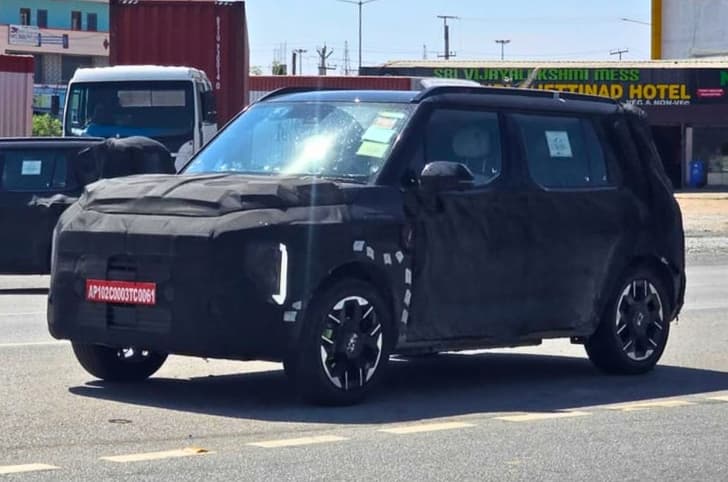
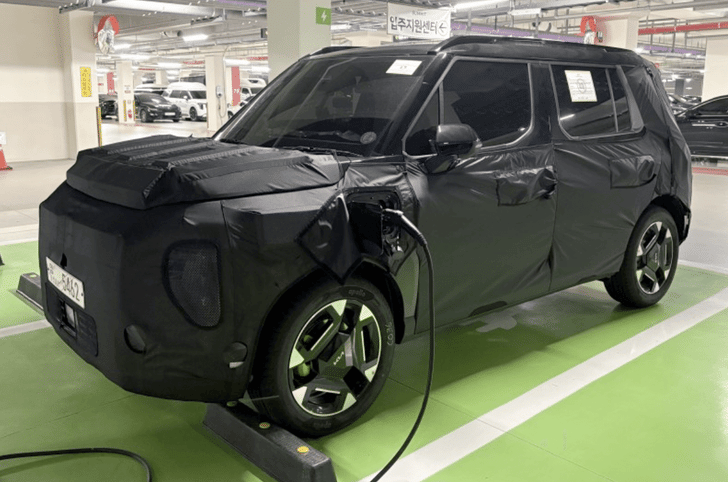
- 26 February 2026: Kia Syros EV spied in India.
Syros EV Specifications
443 km - 526 km
51.4 kWh
AC 4hour (11kW)
5
171 hp
6
255 Nm
Syros EV Highlights
6 Airbags
Rear AC Vents
51.4 kWh Electric Battery
Harman/Kardon Music System
Auto Pop-out door handle
Front & Rear Ventilated Seats
+6
7
Syros EV Autocar Rating
Impressive performance and range
Spacious and practical cabin
Feature packed
Pricey at the top end
Kia Syros EV price & variants
The Kia Syros EV is sold in five trim levels, namely HTK, HTK+, HTX, HTX+, and X-Line. Two battery options are on offer, 42kWh and 51.4kWh (Extended Range, or ER). Both are wired up to a 255Nm front-mounted motor, outputting 135hp and 171hp, respectively.
The 42kWh pack delivers an MIDC range of 443km, while the 51.4kWh unit is rated at 526km. Kia offers the 42kWh battery in the lower half of the Syros EV line-up, while the higher-spec variants get the 51.4kWh pack.
Here are the notable features of each Syros EV trim:
HTK: 6 airbags, front and rear disc brakes, tyre pressure monitoring system (TPMS), rear parking sensors, LED headlamps and tail-lamps, LED front fog lamps, 16-inch alloy wheels, dual 12.3-inch displays, wireless Android Auto and Apple CarPlay, 6-speaker sound system, electronic parking brake with auto-hold, powered windows. The Syros EV's base trim is very well-equipped and leaves little to be desired. If your usage is strictly in the city and you can forgo some of the creature comforts in higher variants, the HTK trim is a great option.
HTK+: Rear camera, cruise control, front USB Type-C fast-charging port, 17-inch alloys (ER only). The HTK+ adds crucial features like a rear camera and cruise control, and is the most affordable trim to offer the 51.4kWh battery option. However, it commands a hefty premium over the HTK trim and the added equipment may not be enough to justify the extra outlay.
HTX: Panoramic sunroof, rear wiper/washer, sliding and reclining rear seats, 60:40 split rear seats, rear armrest, 17-inch alloys (ER only), connected car tech (ER only), day/night IRVM (ER only). This trim is the cheapest to offer the crowd-favourite panoramic sunroof, as well as sliding and reclining rear seats that substantially improve the experience for occupants at the back. It's worth stretching for this trim over the HTK+, and it's our value pick of the Syros EV line-up.
HTX+: Flush door handles, front parking sensors, 8-speaker Harmon Kardon sound system, built-in dual-channel dashcam, auto-dimming IRVM, ventilated front seats, ventilated rear seat bases, 4-way powered driver's seat, wireless charging pad. The HTX+ is available only with the 51.4kWh battery, but compared to the HTX ER, the price difference is reasonable for all the added features.
X-Line: 64-colour ambient lighting, Level 2 ADAS, vehicle-to-load (V2L) function, side parking sensors, puddle lamps, 360-degree camera, digital key. The X-Line trim is mostly a dark cosmetic package, but adds nice-to-haves like ambient lighting and Level 2 ADAS. It also gets a segment-first safety feature – side parking sensors. That said, the X-Line's price rivals electric SUVs of a segment above.
Kia Syros EV Expert Review
We like
Impressive performance and range
Spacious and practical cabin
Feature packed
We don't like
Pricey at the top end
7.0
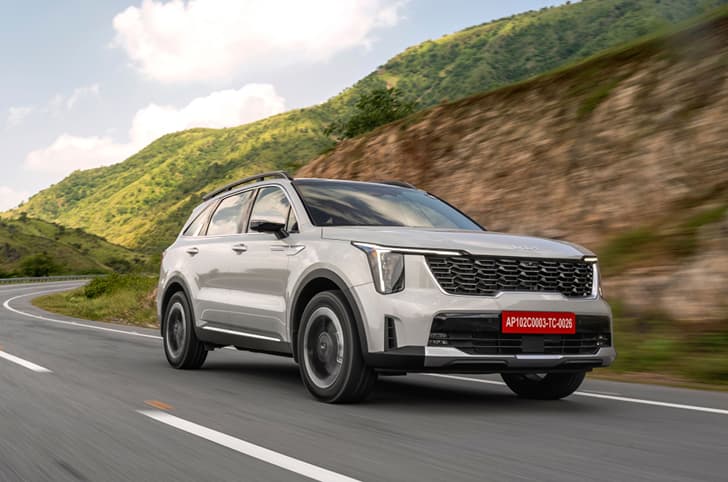
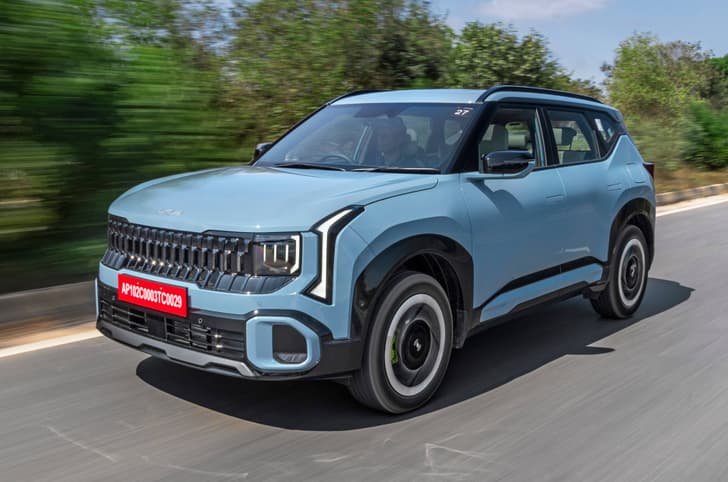
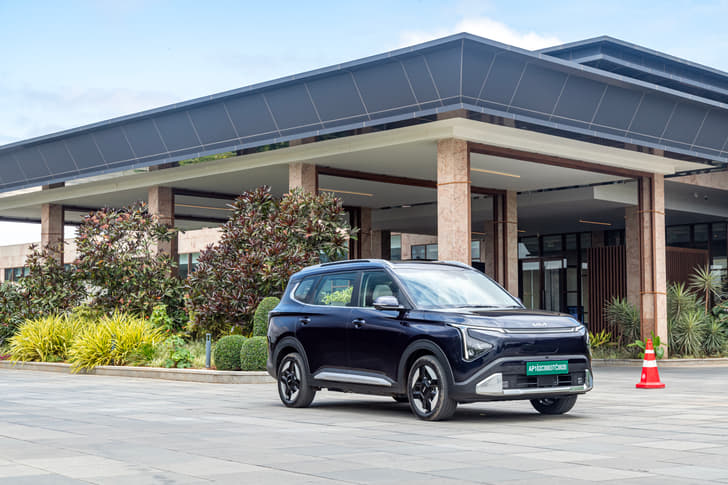
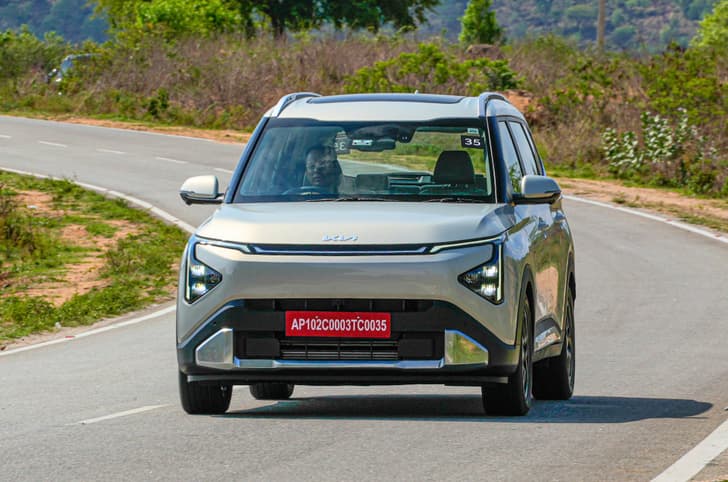
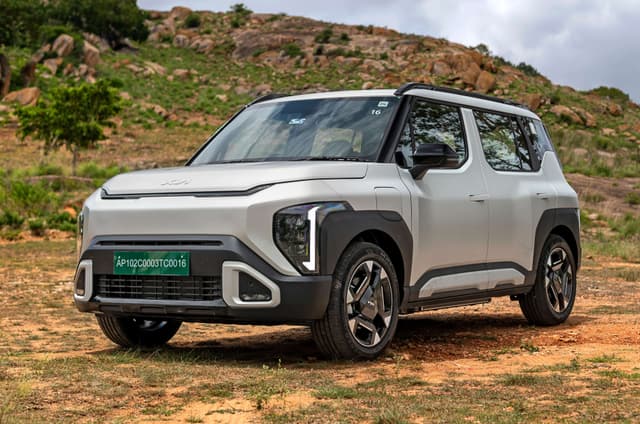
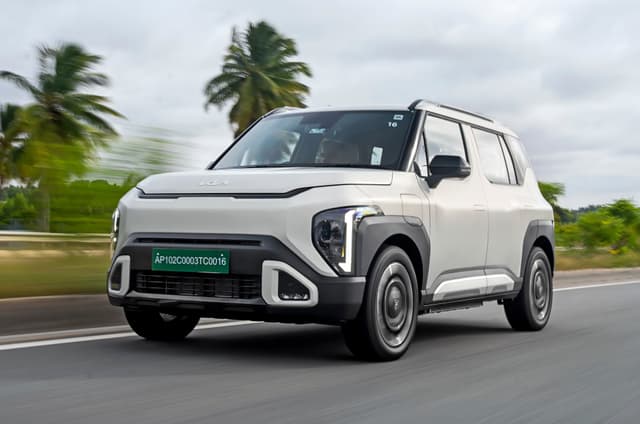
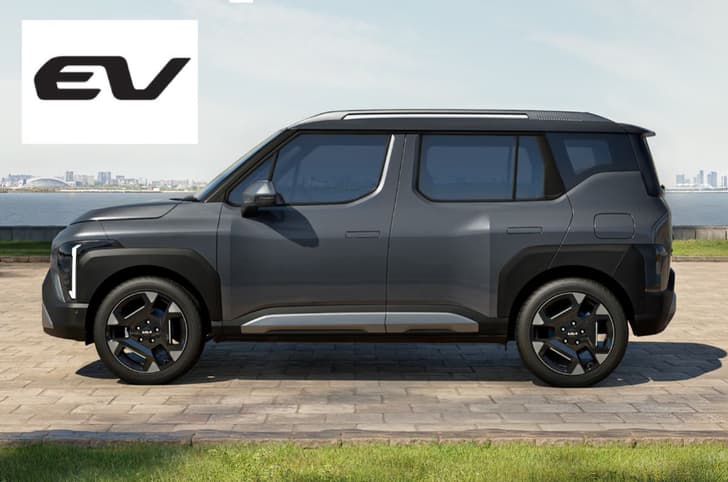
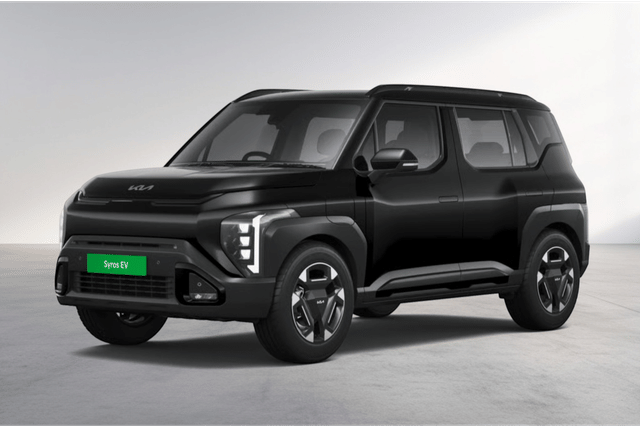
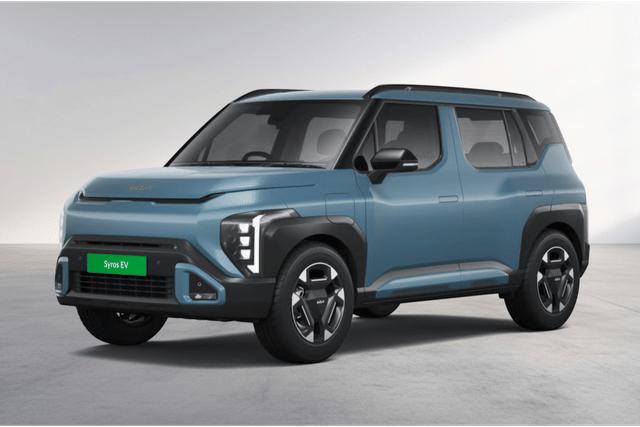
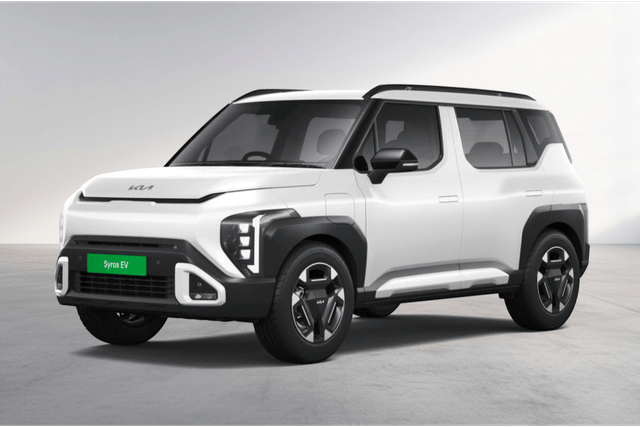
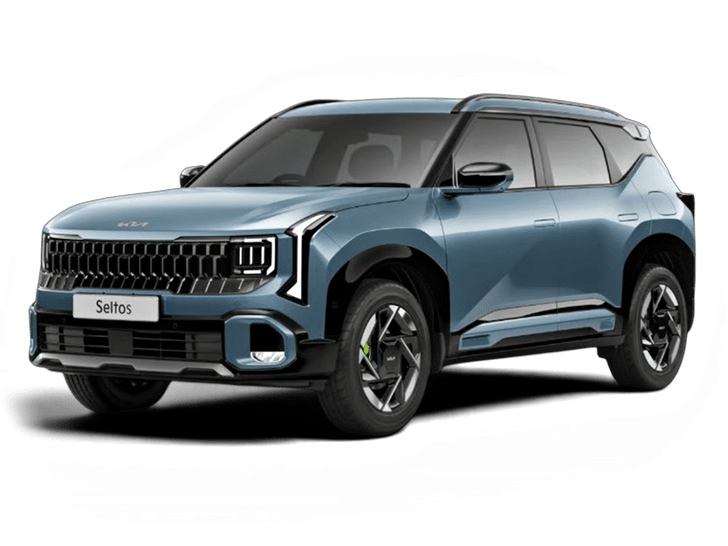
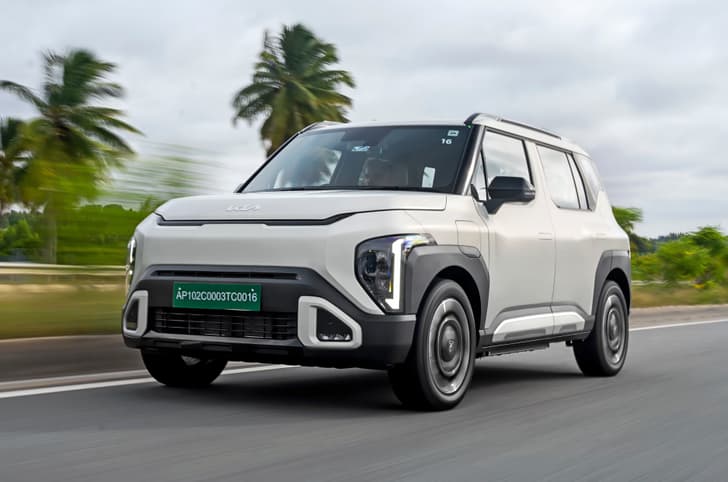
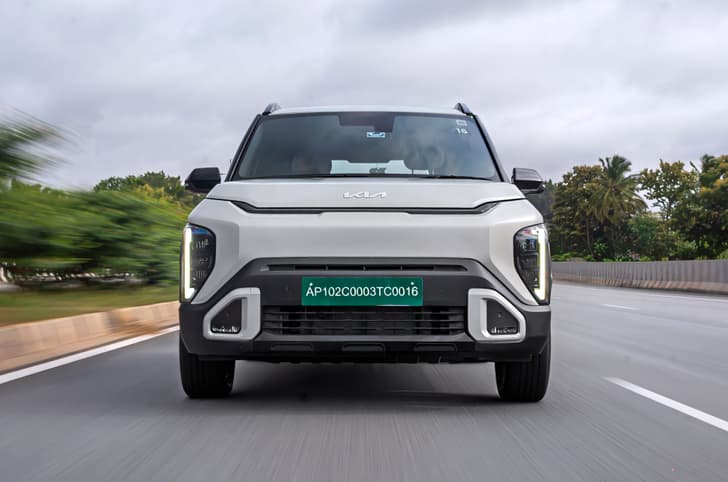
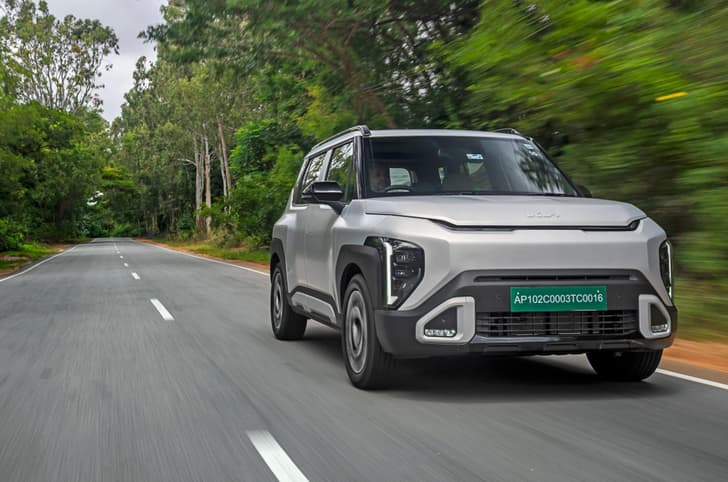
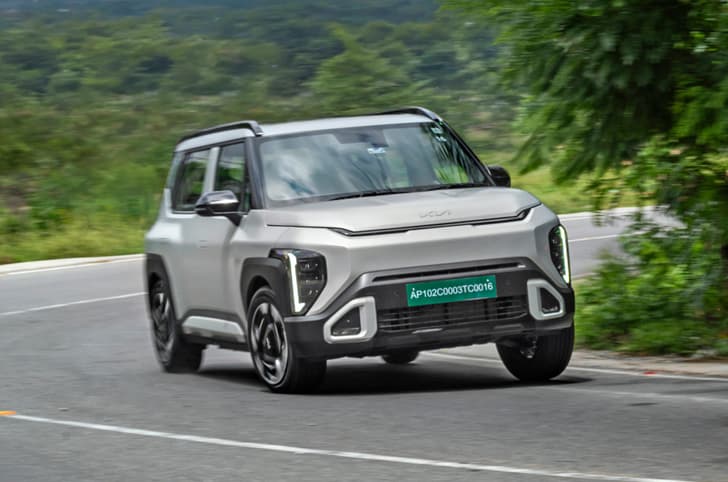
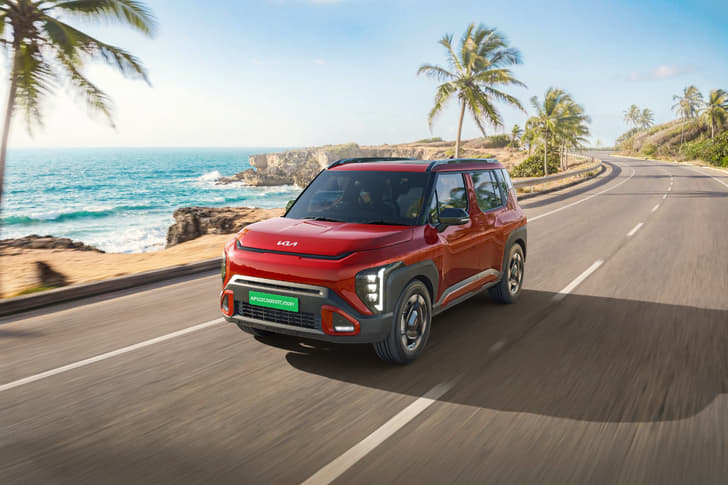
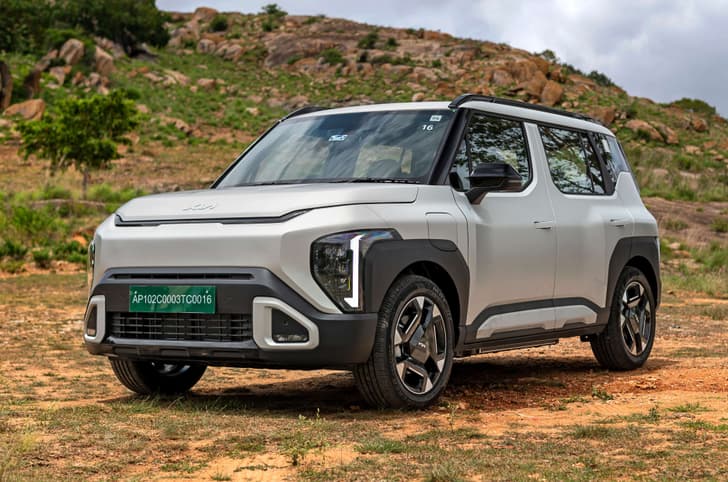
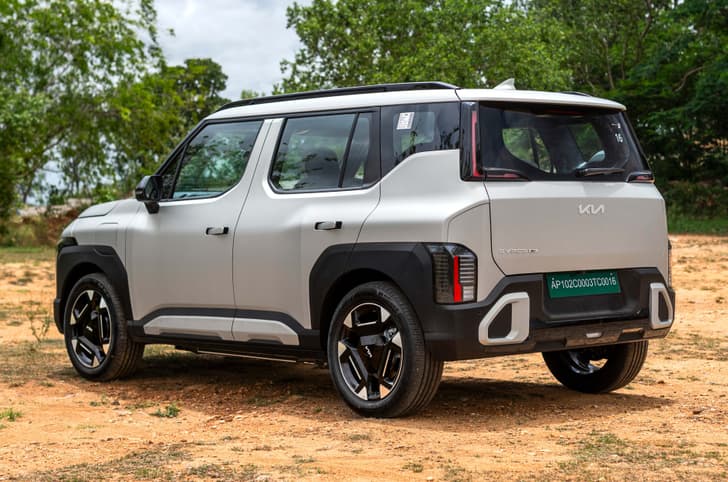
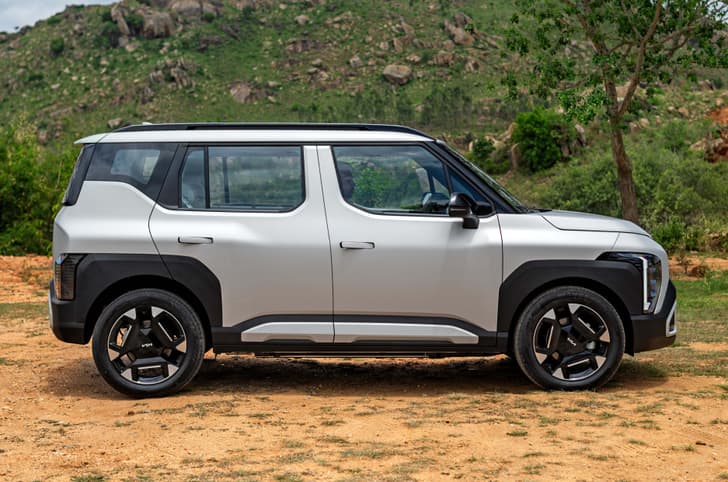
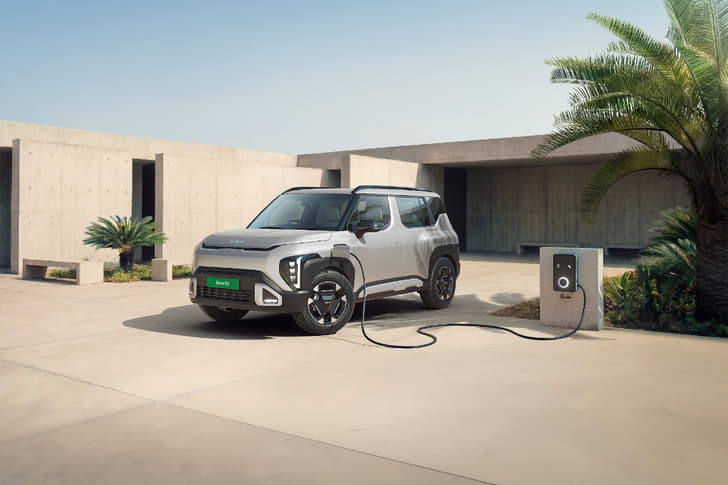
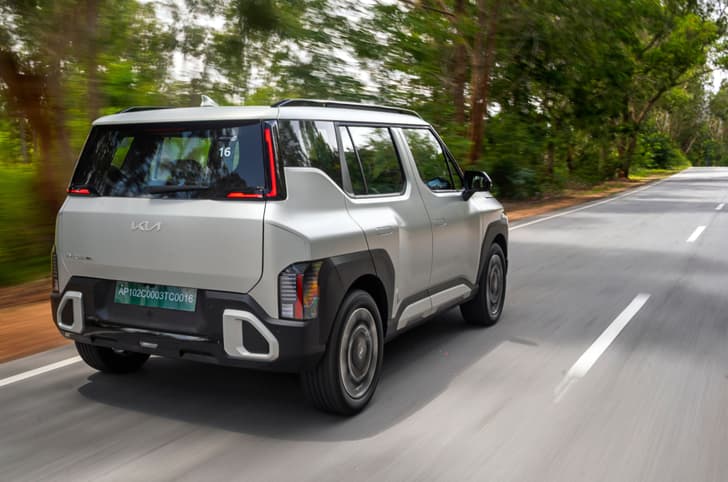
The Kia Syros EV looks largely similar to its ICE counterpart, with only subtle EV-specific changes. These include a slightly redesigned front bumper, a slimmer cooling slot, revised fog-lamp housings, a charging port on the front-left fender, and an EV badge on the tailgate. The battery pack is visible beneath the vehicle, though Kia claims 197mm of ground clearance, which is 7mm more than the ICE Syros. The upright, boxy proportions, vertical headlights and distinctive lighting elements remain.
10.0
Cabin space remains one of the Syros EV’s strongest attributes. Moving the drive selector to the steering column has allowed Kia to redesign the centre console with significantly more storage, including multiple cupholders, a wireless charger and a large lower storage area. The front seats are supportive and comfortable and offer heating, ventilation and four-way powered adjustment for the driver. Material quality, fit and finish are impressive despite the extensive use of hard plastics. Rear-seat space is generous, and the sliding and reclining bench remains a highlight. However, the battery raises the floor slightly, reducing thigh support compared with the ICE version. Boot capacity remains unchanged at 390 litres with the rear bench fully back and 465 litres with it slid forward, while a small 16-litre frunk provides additional storage.
9.0
The Syros EV is very well equipped, featuring Kia’s Trinity Panoramic Display comprising two 12.3-inch screens and a 5-inch HVAC display. The infotainment system offers dedicated EV information, charger location, battery pre-conditioning and charging schedules, along with wireless Android Auto and Apple CarPlay. Higher variants also get an eight-speaker Harman Kardon audio system, panoramic sunroof and integrated dashcam. The top-spec X-Line adds Level 2 ADAS, a 360-degree camera, ambient lighting and a three-pin household-style socket. Standard safety equipment includes six airbags, all-wheel disc brakes, tyre-pressure monitoring and Isofix mounts. The comprehensive ADAS suite includes adaptive cruise control, lane-keep assist, collision avoidance systems and a blind-spot camera.
9.0
The Syros EV is offered with 42kWh and 51.4kWh battery packs, both powering a single front-mounted motor. The smaller battery version produces 135hp, while the Extended Range version makes 171hp; both generate 255Nm of torque. The 51.4kWh version has a claimed 0-100kph time of 8.1 seconds and delivers brisk performance. Eco, Normal and Sport drive modes progressively sharpen throttle response, but power delivery remains smooth and linear initially before delivering stronger acceleration deeper into the pedal travel. The regenerative braking system is particularly well calibrated, with clearly differentiated levels and a seamless one-pedal driving mode. Refinement is also good, with very little motor noise entering the cabin, though some road noise is more noticeable because of the otherwise quiet powertrain.
8.0
The 42kWh Syros EV has a claimed MIDC range of 443km, while the 51.4kWh Extended Range version is rated at 526km. Based on experience with other models using the same battery setup, the Extended Range version should be capable of around 400km in real-world driving, though this was not verified during the short test drive. Charging from 10-80 percent using a 100kW DC fast charger is claimed to take 39 minutes. With the optional 11kW AC wallbox, the same charge takes around four hours for the Standard Range version and close to five hours for the Extended Range.
8.0
The Syros EV rides slightly better than the ICE version, absorbing sharp bumps more effectively, although an underlying firmness remains. This helps body control, but its tall and narrow proportions result in noticeable body roll through corners. Despite this, overall grip is strong and the car feels stable at speed. The steering has good feel and gains weight as speeds increase, improving highway confidence. Four-wheel disc brakes provide strong stopping performance. The Syros EV is not especially entertaining to drive, but it feels secure, predictable and easy to manoeuvre in urban conditions.
7.0
The Syros EV is priced from Rs 13.5 lakh for the 42kWh version, while the 51.4kWh Extended Range starts at Rs 17 lakh and the fully loaded X-Line costs Rs 20 lakh. A Battery-as-a-Service scheme is also offered, with prices starting at Rs 7.99 lakh plus battery rental of Rs 3.3 per kilometre. The 42kWh version makes a particularly strong case thanks to its spacious cabin, generous equipment and competitive pricing against similarly sized EVs. However, the value proposition becomes less convincing with the 51.4kWh version, which overlaps with larger electric models offering bigger batteries. While the Syros EV remains spacious, well equipped and capable, buyers at the upper end of the range may be tempted by larger alternatives available for similar money.
Reviewed by: Lenny D'sa
Kia Syros EV Official Brochure
Download the complete brochure with specs, features, and variants.
Kia Syros EV reviews

Kia Syros EV comparison


Kia Syros EV EMI Calculator
Kia Syros EV Range
The Kia Syros EV gets a claimed range of 423km for the 42kWh battery pack. Meanwhile, the larger 51.4kWh battery pack gets a claimed range of 526km.
| PowertrainThe combination of engine type, fuel, and transmission that powers your vehicle and determines how it drives and what it runs on. | ARAI RangeMileage certified by the government, tested under controlled lab conditions. Real-world mileage will vary. |
|---|---|
Electric-Automatic (Auto) 42 kWh | 443 km |
Electric-Automatic (Auto) 51.4 kWh | 526 km |
Hear from the
Autocar Community
Kia Syros EV news
Kia Syros EV Images
The Kia Syros EV images showcase its tall-boy design, EV-specific design bits, interior and colours on offer.
Kia Syros EV Colours
The Kia Syros EV colours include Ivory Silver Matte, Frost Blue, Gravity Grey, Pewter Olive, Magma Red, Ivory Silver Gloss, Aurora Black Pearl, Glacier White Pearl, and Xclusive Matte Graphite. Of these, the top X-Line trim is available solely in the Aurora Black Pearl and Xclusive Matte Graphite colours.
Kia Syros EV Similar Cars to Explore
Kia Syros EV FAQs
Being an EV, the Kia Syros EV features a charging flap on the front fender, different alloy wheel designs and EV badging on the tailgate.
Its interior gets a revised centre console design as the gear lever is moved to the steering column.
Additionally, the Syros EV gets more features like Level 2 ADAS, automatic flush door handles, a 360-degree camera, a digital key, puddle lamps, multi-colour ambient lighting, and metal pedals.
Yes, with the most powerful version delivering 171hp and 255Nm, the Syros EV is more powerful than the ICE Syros' 120hp, 172Nm petrol and 115hp, 253Nm diesel powertrains.
With a 51.4kWh battery pack paired to a motor producing 171hp and 255Nm and a claimed range of 526km, the Syros EV gets the largest battery, is the most powerful, and has the highest claimed range in the compact eSUV space.
While the prices of the Syros EV are yet to be revealed, it is expected to be more affordable than the Carens Clavis EV since it's a compact model. Currently, it's the Clavis EV that's the most affordable Kia EV on sale in India.
Questions you may find useful
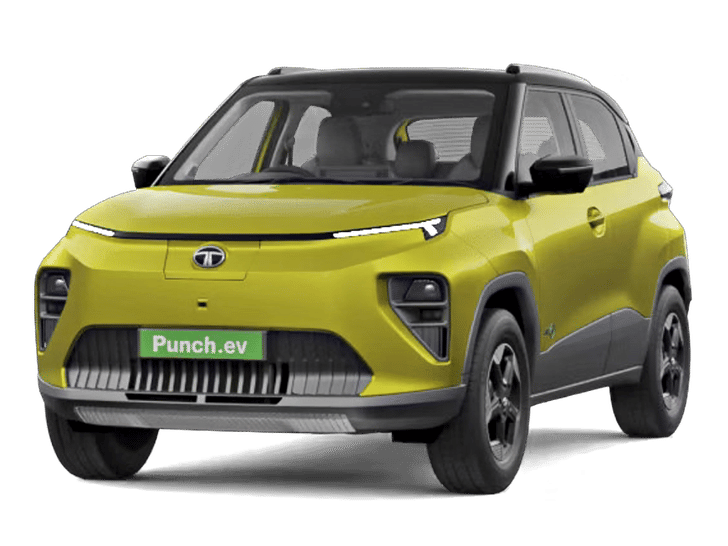
Hi Autocar Team, I'm looking for some guidance on whether I've made the right decision or whether I should reconsider before delivery. My current car is Toyota Etios Liva V Petrol, which has been extremely reliable but now it delivers only around 10-12 kpl for my usage. This results in high running costs. My monthly driving is approximately 1,200-1,500 km that consists of daily commute and occasional highway trips. My initial plan was to keep costs under control and I had booked the Tata Punch EV Empowered+ 40 kWh, largely to restrict my budget to around Rs. 15 lakh on-road. However, while researching alternatives up to approximately Rs. 20 lakh ex-showroom in Kerala, I ended up booking the Kia Syros EV X-Line. The Syros EV appeals to me because of significantly better rear-seat space and cabin width as compared to my Etios Liva, more premium interior and features, better long-term family comfort, larger battery and range as well as better overall sense of upgrade from my current car. However, I'm still feeling anxious about whether I'm overspending. The jump in EMI from the Punch EV to the Syros EV is substantial and will have a noticeable impact on my monthly finances. While I can manage it, I want to be sure that the additional expenditure is genuinely justified and not merely an emotional decision. Based on my monthly running of 1,200-1,500 km, could you please advise if the Syros EV worth the additional cost over the Punch EV 40 kWh? From a value-for-money perspective, would you proceed with the Syros EV or step back to the Punch EV? Are there any other EVs under Rs. 20 lakh ex-showroom that I should seriously consider instead? I am not interested in the MG Windsor EV due to its styling, so alternatives apart from the Windsor would be appreciated. If you were in my position and were planning to keep the vehicle for 8-10 years, which option would you choose and why? Looking forward to your expert opinion.
You have made a sensible shortlist and your thinking is on the right track. The key question here is whether the Syros EV's higher cost is justified by your usage and priorities. At 1,200-1,500 km a month, an EV makes strong financial sense, but the Punch EV 40 kWh already delivers a very low running cost and a usable real-world range. The Syros EV's larger battery and longer range are nice to have, but the real justification for the extra spend is the significantly larger cabin, wider rear seat and more premium interior, which will make a meaningful difference to family comfort over an 8-10 year ownership period.If your primary concern is value for money and keeping EMIs under control, the Punch EV 40 kWh is the more rational choice. It will do the job well and keep your running costs low. However, if you are looking for a genuine upgrade from the Etios Liva and want a car that will feel comfortable and premium for the long term, the Syros EV is worth the extra spend. It is not just an emotional decision - the additional space and comfort will matter over time.Given your usage and ownership horizon, we would lean towards the Syros EV X-Line. It strikes a better balance between running cost savings and long-term comfort, and it feels like a proper step up from your current car. If you are not comfortable with the EMI jump, the Punch EV remains a very good alternative, but the Syros EV is the more complete upgrade.
Hi team! 🙋 Hope you are having a good day. Wanted your help in reaching an informed decision. I'm getting a used 45K Run 2024 Curvv EV Empowered+ A 55 for 16.5L . Do you think it is an okay price? I haven't negotiated yet. What will I be missing in comparison to the new SeriesX? Is the backseat of the old model comfortable for long journeys? I heard there were some complaints before n they improved it in the new one. Was there anything else bad apart from the headroom before, and how bad was it anyway, if tall passenger won't be sitting at the back? Also r there any known issues? What should I double check before buying one used? Or should I wait n buy a new Syros EV instead? Really appreciate your work in helping us out. Thanks in advance.
I want to buy my first car in 2027, and I am yet to learn how to drive. My daily commute is around 25 km in the city, with occasional highway trips. I am considering an EV within a budget of Rs. 15-18 lakh. What are my best options?
Since this will be your first car, we'd suggest you consider the Tata Punch EV for its compact size. Its high seating and SUV-like driving position will help you get a good judgment of the edges of the car, and being compact, it'll be easy to park and manoeuvre in traffic. Moreover, the Punch EV delivers respectable real-world range; it is smooth to drive; and it has all the features you'd expect in a car of this price.Alternatively, you could consider a Kia Syros EV that's compact with exceptional cabin space thanks to its excellent packaging. It will be much pricier, but it is certainly worth serious consideration.An MG Windsor is also a competent offering which is extremely spacious and has a huge boot. But do keep in mind that the Windsor is deceptively large in size, which, as a new driver, might not be as easy to drive and park.
Hi Autocar Team, I own a Maruti Suzuki Grand Vitara AT (non-hybrid) and spend around Rs. 12,000-14,000 per month on petrol. Its city mileage has dropped from around 13 kmpl to 10 kmpl. I also have solar panels at home, so EV charging would be almost free or cost a maximum of Rs. 3-4 per unit. I am confused about whether I should replace the Grand Vitara with an EV or keep it and buy a Tata Tiago EV for daily city use. Am I thinking too much about fuel savings? Should I simply keep the Grand Vitara and avoid buying a second car altogether? I would like to hear from people who have been in a similar situation. What makes more financial sense in the long run?
You are not overthinking it. With solar at home and a monthly fuel spend of Rs 12-14k, switching to an EV makes strong financial sense. The question is whether to replace the Grand Vitara or add a Tiago EV as a second car.If your usage is predominantly city-based, replacing the Grand Vitara with an EV is the better solution. You eliminate fuel costs almost entirely, simplify ownership and make full use of your solar setup. If you have the budget for it, EVs like the Kia Syros EV, Hyundai Creta Electric or Kia Carens Clavis EV are a good mix of price to range. Or if you can budget for it, move a step up to the Mahindra XEV 9S, Tata Sierra EV or MG Tomahawk EV.Adding a Tiago EV as a second car only makes sense if you have a genuine need for two cars. The Tiago EV is a great city runabout, but keeping the Grand Vitara just for occasional use while continuing to pay insurance, maintenance and depreciation does not make financial sense unless you regularly need a second car.If you are happy with the Grand Vitara and do not want to change cars, that is also a perfectly valid decision. But from a purely financial perspective, with your fuel spend and solar setup, switching to an electric car is the smarter long-term move.
I have pre-booked the electric Mercedes-Benz GLC, but the India-spec version does not get air suspension or rear-axle steering, despite being advertised as the fully loaded, top-spec AMG 400 4Matic. This is disappointing, especially since EVs need to manage their added weight. However, the extra weight could also help the car handle undulations and potholes on Indian roads, much like how the Kia Syros EV reportedly rides better than the ICE Syros. Is this reasoning sound? Also, what do you think of Mercedes-Benz leaving out these features despite the high price? I understand that a final verdict should wait until a test drive, but could Autocar India question Mercedes-Benz India CEO Santosh Iyer about this at the launch? The two features reportedly cost only Rs 2.5 lakh together, and it seems disappointing that they might have been omitted to compete with the upcoming BMW iX3.
Your logic is partially sound, but it doesn't tell the whole story. The extra weight of an electric car does help the suspension settle over small undulations and broken patches, which is why cars like the Kia Syros EV can feel more planted than their ICE counterparts. However, that same weight also puts more strain on the suspension over larger bumps and potholes, which is where a more sophisticated setup like air suspension and rear axle steering really makes a difference. Air suspension can better manage the weight and provide a more consistent ride, while rear axle steering improves agility and stability, especially in a heavy EV.As for Mercedes-Benz not offering these features on the India-spec car, it is disappointing, especially at this price point. The decision is likely driven by cost and positioning relative to the BMW iX3, but it does feel like a compromise on what should be a flagship product. We will certainly raise this with Mercedes-Benz India at the launch.Ultimately, the best way to judge the car will be to drive it on Indian roads. If the suspension tuning is well sorted, the absence of air suspension may not be a deal-breaker, but it is something to be aware of given the price.
Upcoming Cars


Kia Cars


Trending Cars


Latest Cars


Last Updated on: 12 Oct 2026