Last Updated on: 22 Jul 2026
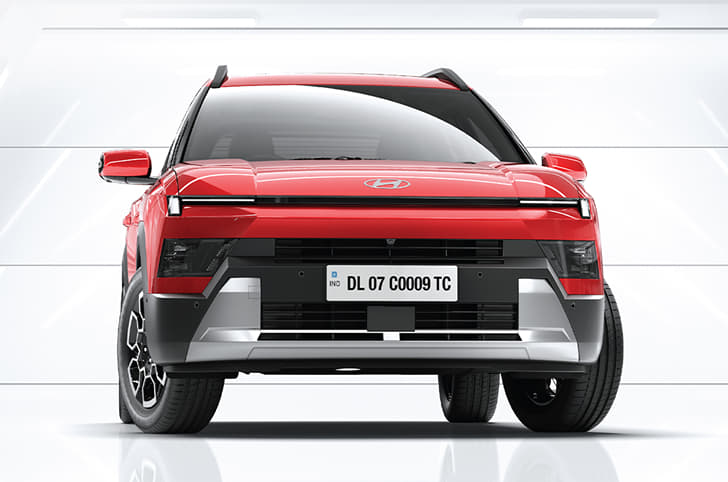
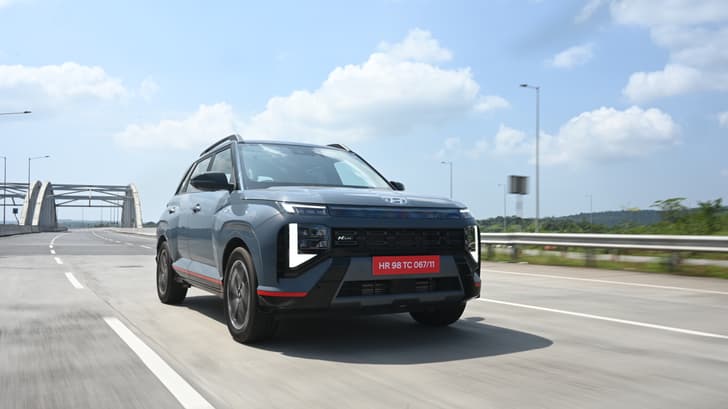
Hyundai Creta Electric highlights
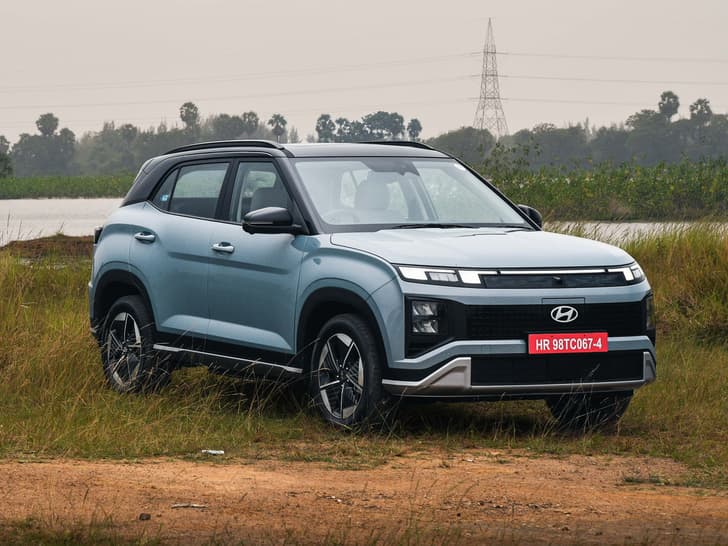
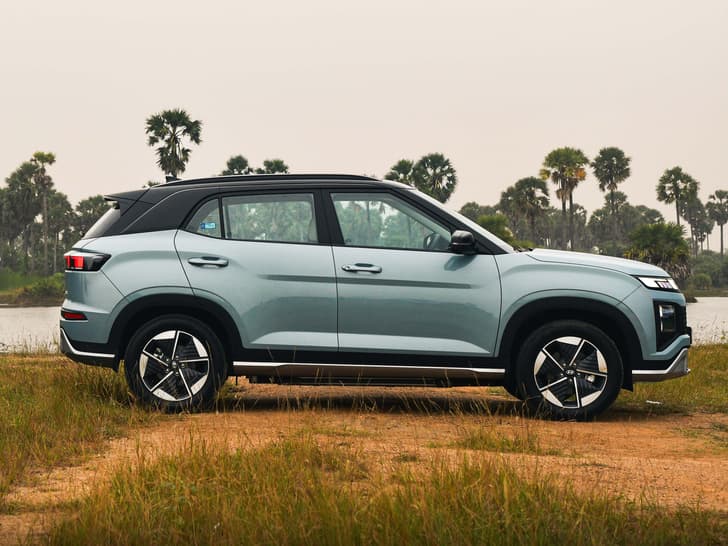
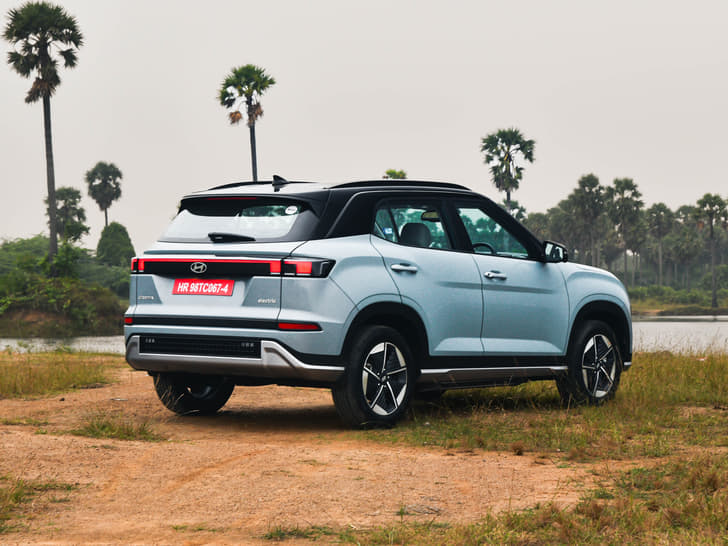
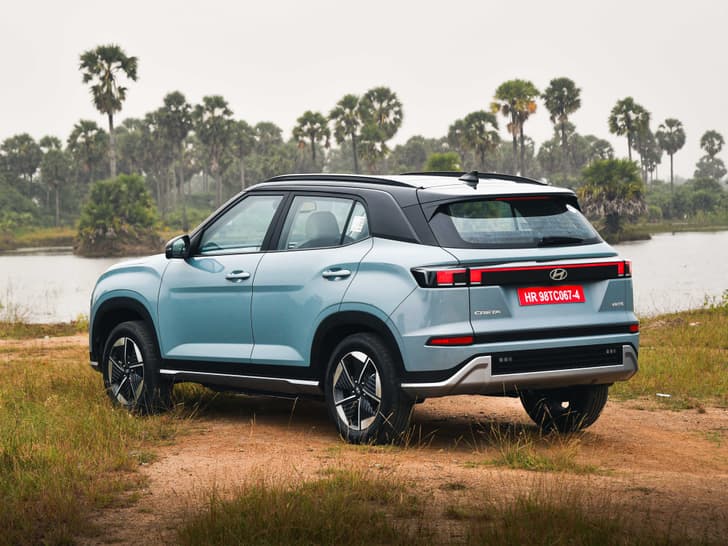
Creta Electric dimensions are 4,340mm (length), 1,790mm (width), and 1,655mm (height). It sits on a 2,610mm wheelbase, and the unladen ground clearance is 200mm.
Hyundai Creta Electric key specifications
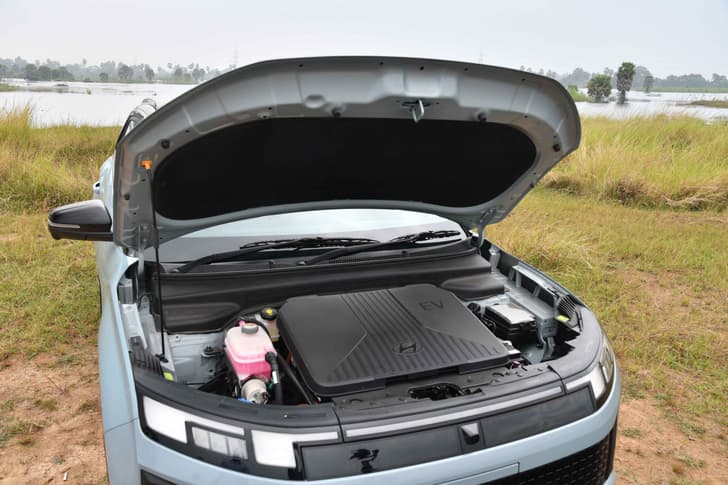
The Hyundai Creta EV is a 5-seater electric SUV. It has a front-mounted motor and an automatic transmission.
Hyundai offers it with 42kWh and 51.4kWh battery packs, delivering a range of 390km to 473km. It supports 11kW AC and 100kW DC fast charging. The Hyundai Creta Electric's ground clearance is 200mm, and its boot space is 433 litres.
Battery Range 420 km - 510 km | Fuel Type Electric |
Transmission Auto | Body Style SUV |
Seats 5 |
Hyundai Creta Electric specifications
The Hyundai Creta Electric uses a front-mounted permanent magnet synchronous motor paired with an automatic transmission. It makes 135hp with the 42kWh battery and 171hp with the 51.4kWh unit.
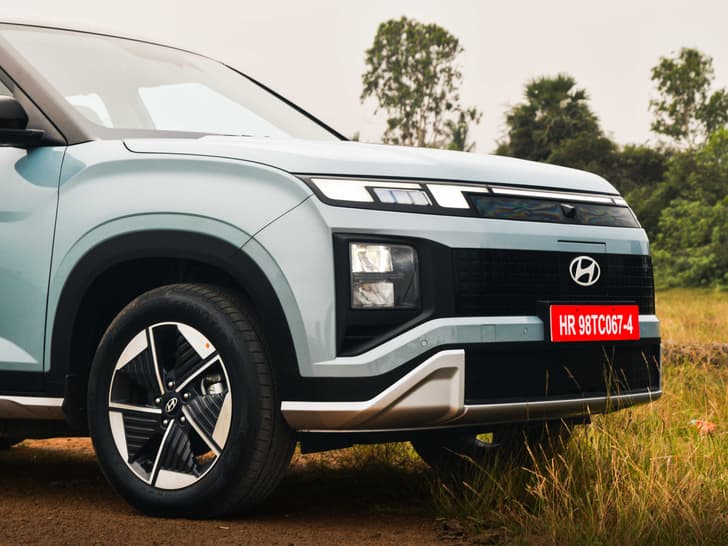
Key highlights of Creta Electric include 17-inch alloys, 215/60 R17 tyres, 4340mm length, 1790mm width, and a 2610mm wheelbase.
Engine & Transmission
Max Motor Power | 171hp |
Fuel Type/ Propulsion | Electric |
Max Motor Torque | 255Nm |
Pure Electric Driving Mode | Yes |
Motor Type | Permanent magnet synchronous motor |
Number of Motors | 1 |
Manual Shifts via Gear Lever on Automatic Gearbox | No |
Sport Mode for Automatic Gearbox | No |
Drive Layout | Front Wheel Drive |
Paddle Shifters for Automatic Gearbox | No |
Number of Gears | 1 |
Gearbox Type | Auto |
Lockable Differential/s | No |
Fuel & Performance
Charging Time | 4.50hrs 10%-100%(11kW AC)58min 10%-80%(50kW DC) |
Terrain Modes | No |
Auto Start/Stop | No |
Claimed Range | 510 km |
Battery Capacity | 51.4 |
Autocar Tested EV Range | 406.06 km |
Autocar Tested City Efficiency | 7.0 km/kWh |
Autocar Tested Highway Efficiency | 8.8 km/kWh |
20-80kph (in third gear/ kickdown) | 4.55 s |
0-100kph | 8.04 s |
40-100kph (in fourth gear/ kickdown) | 5.23 s |
Suspension & Steering
Front Brakes | Disc |
Rear Brakes | Disc |
4 Wheel Steer | No |
Type of Power Assist | Electric |
Turning Radius | 5.3 m |
Steering Adjust type | Manual |
Steering Adjust | Tilt and Telescopic |
Front Suspension Type | Independent, MacPherson Strut |
Front Springs | Coil Springs |
Damper Control | No |
Rear Springs | Coil Springs |
Rear Suspension Type | Non-independent, Torsion Beam |
Ride Height Adjust | No |
Spare Wheel | Full Size |
Rear Tyre Size | 215/60 R17 |
Front Tyre Size | 215/60 R17 |
Wheel Size | 17 inches |
Wheels | Alloys |
Dimensions
Length | 4340 mm |
Height | 1655 mm |
Ground Clearance | 200 mm |
Doors | 5 |
Chassis Type | Monocoque |
Boot Capacity | 433 litres |
Width | 1790 mm |
Wheelbase | 2610 mm |
Hyundai Creta Electric features
Comfort
| Rear AC Vents | |
| Power Windows with One Touch-Down | Driver Window Only |
| Cabin Boot Access | |
| Front Passenger Seat Adjust from Rear | Yes (Powered) |
| Powered Tailgate | |
| Foldable Seatback Table |
Safety
| Child Safety Lock | |
| Side Airbag | |
| Video Recording | |
| Brake Fade Support | |
| Airbags | 6 |
| Seat Belt Warning |
Exterior
| ORVM turn indicators | |
| Welcome and Goodbye Animation | |
| Body Coloured Bumpers | |
| Outside rear view mirror (ORVM) | |
| Stop Lamp | |
| Headlight Height Adjuster |
Interior
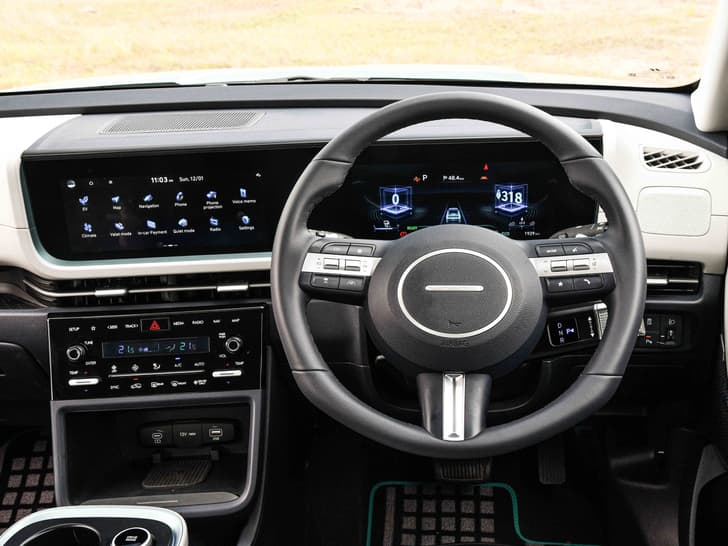
| Speedometer | Digital |
| Distance to Empty | |
| Shift Indicator | |
| Average Speed | |
| Average Fuel Consumption | |
| Tachometer |
Entertainment
| USB Input | |
| Wireless Phone Charging | |
| Web Browser | |
| Voice Commands | |
| Rear Entertainment Screens | |
| Video Player |
Connected Car Features
| Find My Car | |
| Remote Car Lock/Unlock via App | |
| In Car Payment | |
| Over the air (OTA) updates | |
| Geo Fence | |
| Live Location Sharing |
Hyundai Creta Electric variants comparison
Specifications of Hyundai Creta Electric alternatives
Questions you may find useful
I am planning to replace my Tata Nexon with a new car. I drive around 60 km daily in Bangalore city for my office commute, with no highway use. Can you please recommend a reliable, safe, and fuel-efficient car other than a Tata for my daily commute? My budget is around ₹25 lakh, and I would also like a recommendation for the most value-for-money variant.
If you're only commuting in Bengaluru traffic with no highway use, the Maruti Victoris ZXI+ (O) Strong Hybrid fits your brief best. It is built for city use, is very fuel-efficient in stop-go traffic, and comes from a brand known for easy, low-stress ownership.In your kind of traffic, the strong-hybrid system spends a lot of time running on its electric motor. As a result, the car feels very smooth and quiet at low speeds and uses less fuel than a regular petrol automatic. The e-CVT removes the usual shift shocks, so crawling through traffic feels far less jerky. Moving from a Nexon, you will also appreciate the easy step-in height, good ground clearance for speed breakers, and the clear outward visibility. Maruti’s service network in Bengaluru is excellent, and the car also covers the essential safety basics with stability control and multiple airbags.There are a few trade-offs to keep in mind. The hybrid battery takes up a significant amount of boot space, so it is less spacious than some other cars of this size. It is also not particularly exciting to drive, if that matters to you.Alternatively, if you're open to the idea of an EV, you can also consider the Hyundai Creta Electric. The top-spec Excellence LR variant should fit within your budget. It is more spacious than the Victoris, arguably more comfortable, reliable, and uses no fuel. It is also exceptionally efficient among EVs in its class. The main drawback, of course, is charging, so you will need to ensure that you can install a charger at home.
I am planning to buy a new car and would appreciate your expert recommendation based on the following requirements: Budget: ₹20-22 lakh (on-road) Usage: Daily commute of around 50 km, mostly in heavy city traffic (Mumbai) Priorities: Ease of driving in city conditions and overall comfort I am open to all fuel types: petrol, diesel, or electric, but I am unsure which would be the most sustainable and cost-effective option for my usage, especially considering heavy traffic conditions.
Go for the Hyundai Creta Electric for your 50 km Mumbai commute, an EV is the easiest and most comfortable to drive while keeping running costs low. In traffic, it pulls away smoothly, feels very quiet inside, and with a rated range of 420km to 510km, depending on which battery you choose, charging requirements will be minimal. The driving position is commanding, visibility is good, the steering is light, and the ride handles bumps well, which helps on broken city roads. One thing you have to make sure of, however, is that a charger can be installed at your home, which is essential to EV ownership today. If you're uncertain about the charging, consider a strong hybrid like the Maruti Suzuki Victoris. It also delivers very low running costs (though not quite as low as an EV), and the advantage is that you don't have to charge it.
I am a senior citizen planning to buy an electric car or SUV with a budget of up to ₹25 lakh. I live in a farmhouse about 70 km away from Bangalore and typically travel at least 100 km, four days a week, along with occasional longer trips of around 250 km at least three times a month. I am looking for an SUV that offers comfortable driving on steep gradients, along with high levels of safety, durability (including resistance to water and fire risks), and a real-world driving range that is close to the claimed figures. Which electric SUV would be the most suitable for my needs? Please suggest.
The Hyundai Creta Electric is one of the best-suited options here. It is a spacious and comfortable SUV, which makes a big difference for long drives. The ride quality is well-tuned for comfort, the seats are supportive, and the overall driving experience is relaxed, which will suit you well as a senior driver.It is also extremely easy to drive. The controls are light, the power delivery is smooth and predictable, and the car feels very natural to get used to. Unlike some newer EVs like the Mahindra BE 6, which feel more futuristic and tech-heavy, the Creta EV feels like a normal, familiar car that just happens to be electric. This makes it far less intimidating and more comfortable to live with day to day.Performance is strong enough for inclines thanks to instant torque, and it feels confident on highways. The real-world range is sufficient for your 100 km regular drives and can manage your 250 km trips with some planning. Safety is also well taken care of, with modern features and driver aids adding reassurance on longer journeys.
I am planning to buy an EV primarily for city use as a self-driver. My app runs about 600 km per month, and my budget is around ₹20 lakh (can stretch if needed). I have ruled out the BE 6 due to its rear seat, and I find the Tiago and Tigor have cheap-filling plastics inside. I am considering the Nexon or the Curve. My priorities are comfort, easy ingress and exit, reliability and good resale value. What do you recommend?
The Hyundai Creta EV would be a good choice; the ride comfort is excellent, the space inside is good, and it is very well loaded. Ingress and egress are natural and easy, and the car is very reliable with all of the powertrain as well as the body electronics well sorted. As for resale value, it's hard to predict that for any EV currently, as benchmarks have not yet been set.
I have been using a diesel car for the past 10 years. My daily commute is 25 to 30 km, with occasional long drives of around 300 km once a month. I want to switch to an electric car this time. Is it a good idea to buy an EV now? I am from a Tier 3 city in Andhra Pradesh, and I like feature-rich EVs. Please suggest one around Rs 25 to 30 lakh.
An EV certainly beats a diesel when it comes to running cost and efficiency, but the biggest trade-off, especially for you, will be the long range. Diesel cars are known for their strong one-tank range and the ability to find a diesel pump almost everywhere in the country.An EV, on the other hand, heavily relies on route planning and charging infrastructure. While the network of chargers is increasing by the day, it is still nowhere close to the availability of fuel pumps, and the charging times are a lot slower in comparison to a fill-up.So if you need one for your daily commute, the electric car will be excellent as it is refined and cheaper to run, but for your outstation trips, you will need to do a fair bit of planning and check for chargers on your route and factor in the waiting time as well.If you go for an EV, a home charger is absolutely essential, and it is also important to note for voltage fluctuations. Tier 3 cities usually have frequent power cuts, and high demand leads to a load on the power grids, which can mean the charger does not have enough juice to charge your car.If everything checks out, though, the Hyundai Creta electric is an excellent package that has good range, all the essential features and is great for occasional long trips too. If not, this Hyundai car also has a very good diesel engine with the same features and equipment as the Electric, and will take away most of the EV downsides.