Autocar India
10w

I am planning to buy a new car and would appreciate your expert recommendation based on the following requirements: Budget: ₹20-22 lakh (on-road) Usage: Daily commute of around 50 km, mostly in heavy city traffic (Mumbai) Priorities: Ease of driving in city conditions and overall comfort I am open to all fuel types: petrol, diesel, or electric, but I am unsure which would be the most sustainable and cost-effective option for my usage, especially considering heavy traffic conditions.

Verified
10w

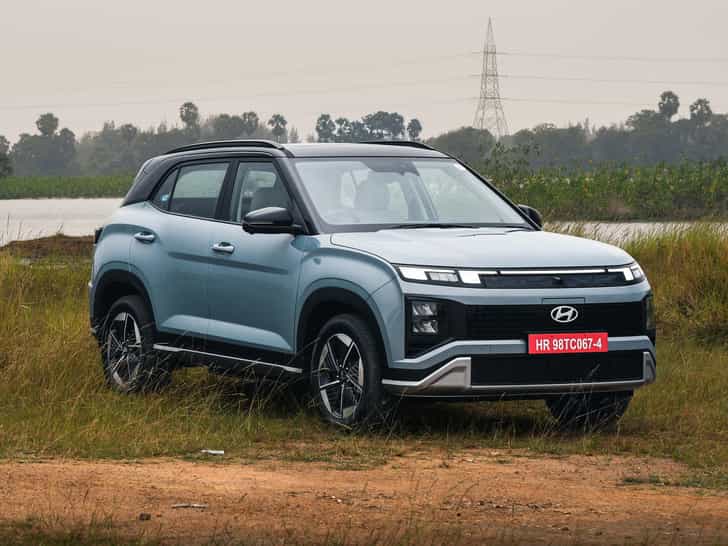
Go for the Hyundai Creta Electric for your 50 km Mumbai commute, an EV is the easiest and most comfortable to drive while keeping running costs low. In traffic, it pulls away smoothly, feels very quiet inside, and with a rated range of 420km to 510km, depending on which battery you choose, charging requirements will be minimal. 

The driving position is commanding, visibility is good, the steering is light, and the ride handles bumps well, which helps on broken city roads. One thing you have to make sure of, however, is that a charger can be installed at your home, which is essential to EV ownership today. 

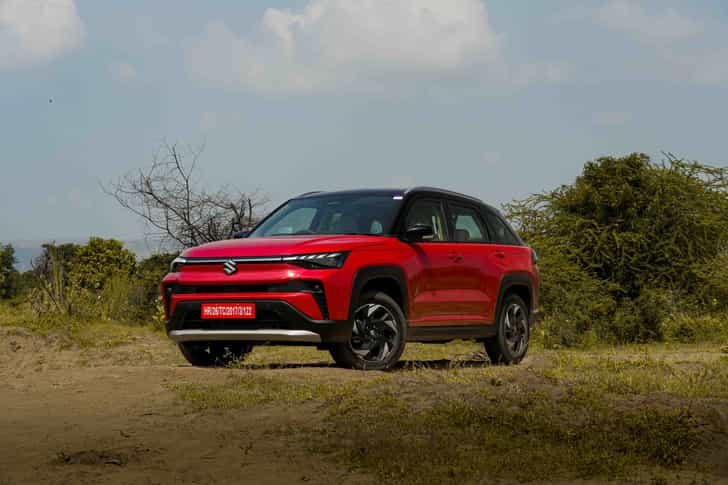
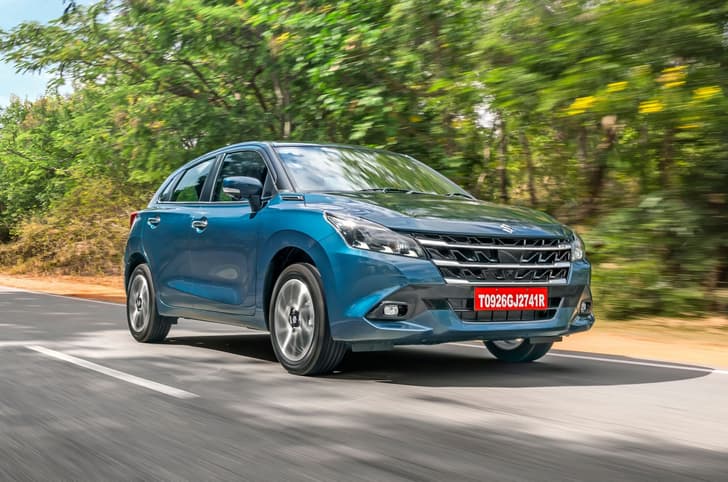
If you're uncertain about the charging, consider a strong hybrid like the Maruti Suzuki Victoris. It also delivers very low running costs (though not quite as low as an EV), and the advantage is that you don't have to charge it.  
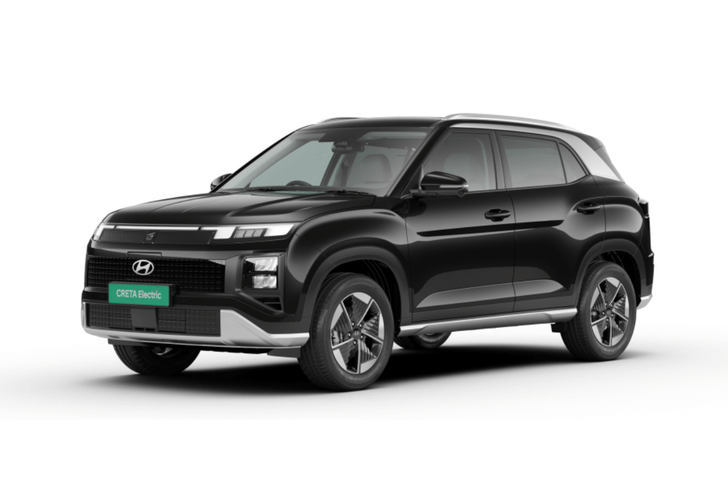
Hyundai Creta Electric

Hyundai Creta Electric

Was this helpful? Ask a follow-up

More questions on similar cars

4d

I’m looking for a compact SUV for India. My main consideration is great driving dynamics and power. I’m looking for a petrol variant and an automatic transmission. I’ll be using it mainly on long road trips and broken road explorations. Our dream is to do all India / global trips. In about 2 years, there’s a chance we’ll travel with four people (including me) more regularly, so I don’t want the car to struggle then. I don’t need features like ADAS, and I’ll want to upgrade the sound system and camera after purchase. While I’m leaning towards Renault, Skoda, and Volkswagen, could you give me 4-5 options and the best variant? My budget on road is 23-24 lakhs max.

Verified
1d

Pick the Skoda Kushaq 1.5 TSI DSG, in either Prestige or Monte Carlo. It’s the most fun-to-drive in your budget, with strong mid‑range power for four-up highway climbs, and a suspension that rides well on broken roads without feeling floaty. It stays stable at speed, and the steering feels natural on long drives. One honest caveat: the 7‑speed dual‑clutch can feel a bit jerky in stop‑go traffic, but your use is mostly highways, so it suits you fine.Close second is the Volkswagen Taigun 1.5 TSI DSG. Same punchy engine and gearbox, and equally enjoyable on twisty hill roads. Between the two, buy the one that gets you the better deal or closer service centres in your city.From Renault, the new Duster turbo‑petrol DCT is a solid choice too. It’s also great on rough roads and enjoyable in the twisties with enough performance for quick highways. Its DCT uses a wet clutch compared to the dry clutch from VW/Skoda, which means shifts are smoother in the city. Wet clutch transmissions are also generally more robust than dry clutch units.Alternatively, consider the Kia Seltos 1.5 turbo-petrol DCT. It has a roomier cabin, which will be important when you are travelling four up. It isn't quite as sharp as the above competitors, but it is enjoyable with plenty of performance.If you are going to be travelling to remote locations, service availability can be scarce. If that is a concern, then include the Maruti Victoris or the Grand Vitara 1.5 petrol. They can also be had with AWD, which can be very useful on rough roads and in icy conditions.

VehicleSkoda Kushaq
VehicleVolkswagen Taigun
VehicleRenault Duster
VehicleKia Seltos
VehicleMaruti Suzuki Victoris
VehicleMaruti Suzuki Grand Vitara
16h

Am looking for a 7-seater SUV EV and am awaiting the Tata Safari EV launch. How will having the battery pack under affect seating comfort? Also, is the 3rd row usable or will it be suitable for short people and short trips? Will the AWD version be suitable for off-roading?

Verified
13h

The Tata Safari EV certainly looks promising if you're after a 7-seat electric SUV, but some questions can only be answered once we get behind the wheel. Based on what we know so far, there are a few reasonable expectations. As with most modern EVs, the battery pack is mounted under the floor. Manufacturers usually compensate by raising the seating position slightly, so outright comfort shouldn't be compromised significantly. That said, there can be some impact on under-thigh support and seating posture, particularly in the third row, depending on how successfully Tata has packaged the battery.As for the third row, don't expect miracles. Like most three-row SUVs in this size class, it is likely to be best suited to children, teenagers or shorter adults on longer journeys. Average-sized adults should be fine for shorter trips, but if you regularly carry seven adults, the third row is unlikely to be as accommodating as the one in the Kia Clavis EV. The AWD version should offer noticeably better traction on loose surfaces, gravel, mud and rough trails than the standard model. However, it is important to remember that the Safari EV is still a monocoque family SUV, not a dedicated off-roader. It should be capable of handling mild to moderate off-road conditions and adventure touring, but serious off-roading won't be its primary brief.

VehicleTata Safari EV
VehicleKia Carens Clavis EV

Popular discussions right now

3d

I am planning to purchase a new automatic car for my daughter. She recently obtained her driving license and is currently driving an automatic Tata Nano. Now that she is comfortable and confident with it, I am considering upgrading her to a larger vehicle. I am evaluating options such as the Kylaq and the Kia Sonet. However, my wife is insisting on an electric car. I am a bit sceptical about EVs, as they are not yet fully proven to be trouble‑free, and her weekly commute is around 150 km. I am also waiting for the launch of the updated Brezza, and my preference is for a torque‑converter automatic rather than a DCT. I would appreciate your opinion on electric cars, the Kia Sonet diesel, the Brezza, and which one I should go for. This car will be mostly used for city drives since I have an Ertiga manual for long trips.

Verified
3d

Of your shortlisted cars, go for the Skoda Kylaq automatic. For mostly city use and just 150km a week, its punchy turbo petrol engine with a smooth torque converter is a great mix of fun and ease of use. Its light yet sharp steering, upright seating and compact size feel like a natural step up from a Nano, and the interior feels fresh and upmarket too.The Kia Sonet diesel automatic is quick and efficient, but a diesel engine is overkill for your daughter's limited usage. Not only is it pound-for-pound more expensive than an equivalent petrol to buy, but it also requires extra care, such as regenerating the DPF (diesel particulate filter) every so often via a high-speed run, as well as top-ups of the ad-blue tank. The Brezza is a good option thanks to its simple, naturally aspirated engine, which should deliver better fuel economy than the Kylaq. But in its current form, it's just a bit uninteresting and unenthusiastic an offering, and it's best to wait for the facelift, which is right around the corner, before making that decision.For 150 km a week, an electric car is actually ideal if you have a private parking spot with a 15A socket or a home charger. The powertrains these days are much smoother, batteries carry long warranties, and city running is silent and cheap. Upfront cost, charging access and resale value are the only real hurdles, so if you are interested, a compact EV like the Tata Punch EV is a great option.

VehicleSkoda Kylaq
VehicleKia Sonet
VehicleMaruti Suzuki Brezza
VehicleTata Punch EV

Posted on: 9 Apr 2026