Last Updated on: 18 Jun 2026
TVS iQube price in Panaji
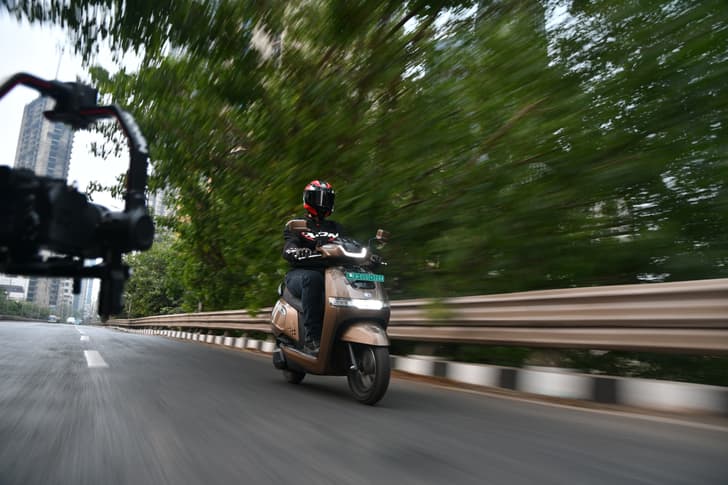
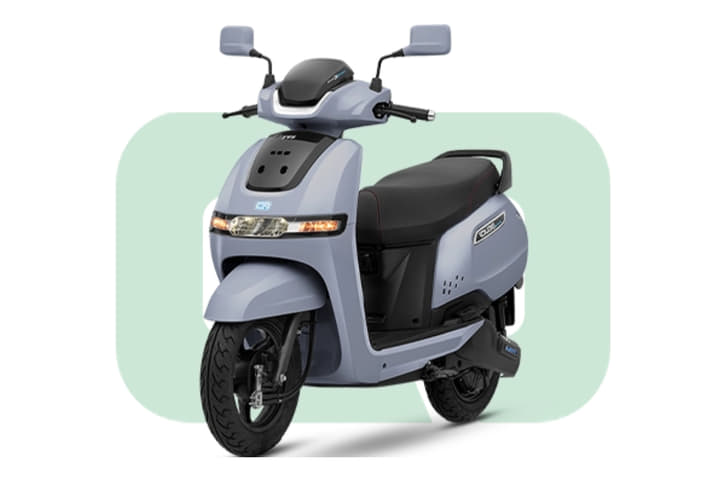
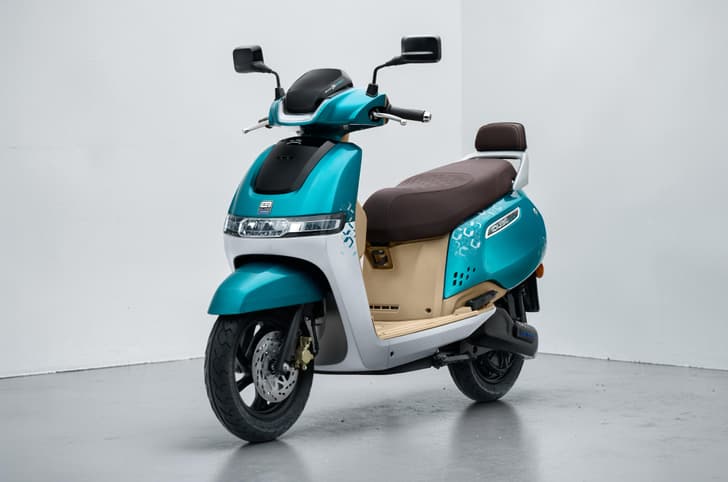
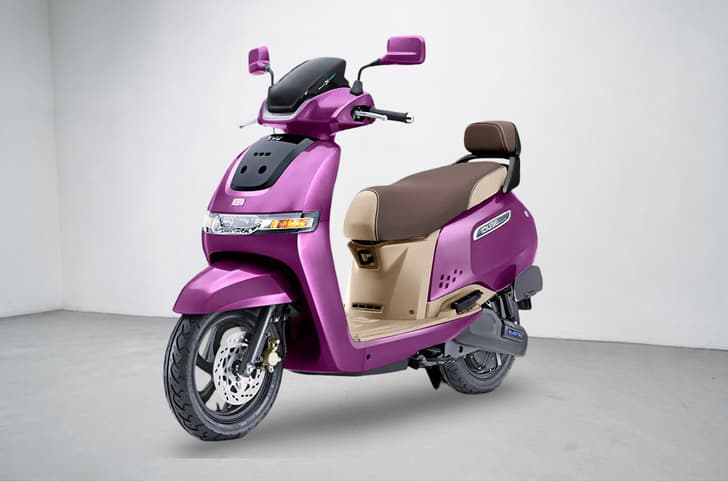
The TVS iQube is available in 5 variants (iQube 2.2 kWh, iQube 3.1 kWh, iQube 3.5 kWh, iQube S 3.5 kWh, and iQube ST 5.3 kWh) and depending on the variant selected, the price varies. The TVS iQube price in Panaji starts at ₹1.11 lakh and goes up to ₹1.62 lakh (ex-showroom).
The TVS iQube on road price in Panaji ranges between ₹1.20 lakh and ₹1.75 lakh. View the latest iQube on road price in Panaji for all variants, in the table below:
TVS iQube price in Panaji
The TVS iQube is available in 5 variants (iQube 2.2 kWh, iQube 3.1 kWh, iQube 3.5 kWh, iQube S 3.5 kWh, and iQube ST 5.3 kWh) and depending on the variant selected, the price varies. The TVS iQube price in Panaji starts at ₹1.11 lakh and goes up to ₹1.62 lakh (ex-showroom).
The TVS iQube on road price in Panaji ranges between ₹1.20 lakh and ₹1.75 lakh. View the latest iQube on road price in Panaji for all variants, in the table below:
TVS iQube Pricing by Variants
* Estimated on-road price. Final amount may vary.
TVS iQube User Reviews
Tell us about your experience
Calculate your Charging cost for TVS iQube
On Road Price of TVS iQube Alternatives in Panaji
TVS iQube Images
TVS iQube Colours
TVS iQube news
TVS iQube videos

TVS iQube FAQs
The TVS iQube price in Panaji starts at ₹1.11 lakh and goes up to ₹1.62 lakh (ex-showroom).
The TVS iQube on road price in Panaji ranges between ₹1.20 lakh and ₹1.75 lakh.
The iQube base variant is priced at ₹1.11 lakh (ex-showroom).
The top variant, TVS iQube ST, is priced at ₹1.62 lakh (ex-showroom).
Questions you may find useful
I am 47 years old. My first motorcycle was a Suzuki Samurai, and I currently ride a Honda Shine (2013 model). I am now looking to replace my bike, but I am not sure whether I should go for the latest version of the Honda Shine or consider a different motorcycle altogether. I commute around 40 km to the office, three days a week, and typically ride another 20-30 km on weekends. I also have two daughters, and they are taller than their age would suggest. Would an EV be a better option for my usage? I live in a rented house, so I am not sure how convenient charging would be. I am also considering options such as the Honda Unicorn and a Royal Enfield Bullet. I have a lean build and weigh around 64 kg. Considering my requirements, which motorcycle would you recommend?
Since you have had a long and drama-free stint with your Shine, the logical next step to make would be the Honda Unicorn. For your use case, which is mostly inside the city with short weekend leisure rides, the Unicorn makes for a good fit. It will offer a noticeable step up in performance and comfort compared to the Shine with only a small drop-off in fuel economy. The Royal Enfield Bullet 350 is lovely if you want a relaxed bike with new-age reliability and old-school feel, but since you have mentioned you are on the slimmer side of the spectrum, its weight could be a problem at slower speeds and its fuel economy will also be noticeably lower.If your landlord and the building you reside in, don't have a problem with you installing a charging solution at home, you can consider electric scooters like TVS iQube, Bajaj Chetak, Ather Rizta and Vida VX2. If not, stick with a petrol-powered bike for now.To decide between the Unicorn and Bullet, we'd recommend a test ride of both since they are very different machines.
Hi, I am a subscriber of your channel. Could you please help me choose the best electric scooter for my needs? My average monthly usage will be less than 50 km. Which electric scooter would you recommend?
With less than 50km running a month, the TVS iQube 2.2 is the best option since you are leaning towards an electric scooter. Since it will give you minimum 60km range on a single charge (provided it isn't left idle for multiple days allowing the battery to drain slowly) you will charge the scooter only once in a few weeks.Do bear in mind that with your miniscule run, you will not recover the higher price you'll pay over an equivalent petrol-powered scooter any time soon.
Hello, my two-wheeler usage is quite limited, as I travel to work by office cab from Monday to Friday. On weekends, I typically ride around 5-15 km, while on weekdays, my total usage is usually less than 5 km. Given this usage pattern, would a petrol-powered two-wheeler be the best option for me?
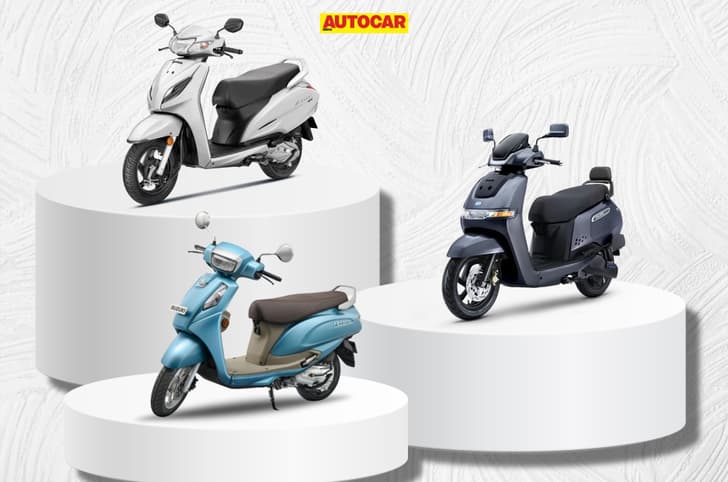
With your very limited weekly running, the extra cost you'll pay upfront while buying an electric two-wheeler over a petrol-powered one will take quite some time to recover. While petrol today surely is costly, you will not spend much on fuel every month. Petrol-powered scooters also have wider dealer networks and easy spares, handy when you use it irregularly. One point to bear in mind will be that servicing an ICE vehicle will be slightly more expensive on a yearly basis. If you are leaning towards an EV, that is also a credible option so long as you have a socket where you park. However, you'll be buying it for the smoothness and silent running not savings at your usage. Depending on which sort of powertrain you want in your next purchase, make your decision and we've provided some of the highest rated scooters available in India today. In the ICE scooter segment, options like Honda Activa 110 / 125, TVS Jupiter 110 / 125 and Suzuki Access / Burgman Street would be our top picks. Whereas, in the electric scooter segment, options like TVS iQube, Bajaj Chetak, Ather Rizta and Vida VX2 are proven, reliable machines we'd recommend.
I am planning to buy either the TVS iQube ST 5.3kWh or the Ather Rizta. I want a scooter that is reliable and durable in the long term, without battery-related issues. I have already owned a Honda Activa for many years, so I am expecting a similar level of reliability from an EV scooter as well. My daily commute is around 30km on the highway.
Since you travel around 30km on the highway every day, the TVS iQube ST 5.3kWh makes more sense because its larger battery pack gives you a substantial range buffer, meaning you won't need to charge it very often.At higher highway speeds, EVs tend to consume more energy than they do in city conditions, where speeds are generally lower. In that regard, a larger battery pack is a significant advantage.On top of that, the iQube is as straightforward and easy-going as an electric scooter can be. It feels very much like a conventional scooter to ride and live with, apart from the EV-specific traits of silent operation and instant torque. It has also built a strong reputation in the market, with very few issues reported so far, and it benefits from the backing of an established manufacturer like TVS.
My daily running is around 60km. Is an electric scooter the right choice for me? If yes, which one would you recommend?
There are plenty of options in the electric scooter market that will comfortably meet your needs. We'd recommend you choose from reputed options like TVS iQube, Bajaj Chetak, Ather Rizta and Vida VX2. All of them are offered in a range of variants with different battery capacities, so pick an option with a battery capacity in the 3kWh - 3.5kWh ballpark.Our advice would be to take test rides of all four and pick the option you get along with the best. Try to choose an option with a service centre or showroom near you; this is an important factor in EV ownership.
Hi Autocar India, I am planning to buy an electric scooter or motorcycle for my daily office commute of around 60 km (1,200 km per month). My priorities are strong performance, comfort on bad roads, reliability, and good after-sales service. I currently ride a Bajaj Avenger Street 160 and would like my next vehicle to feel like an upgrade or at least offer comparable performance. My budget is ₹1.5-1.8 lakh, although I can stretch it for the right product. I like the Ultraviolette Tesseract, but the repeated delays make me unsure about waiting for it. Pillion comfort, spacious seating, and a reasonable seat height are important as I often ride with family. My previous two-wheelers included Activa, Shine, Unicorn, and Avenger, and if I were buying an ICE vehicle today, I would choose the TVS Ronin. Based on these requirements, which EV would you recommend?
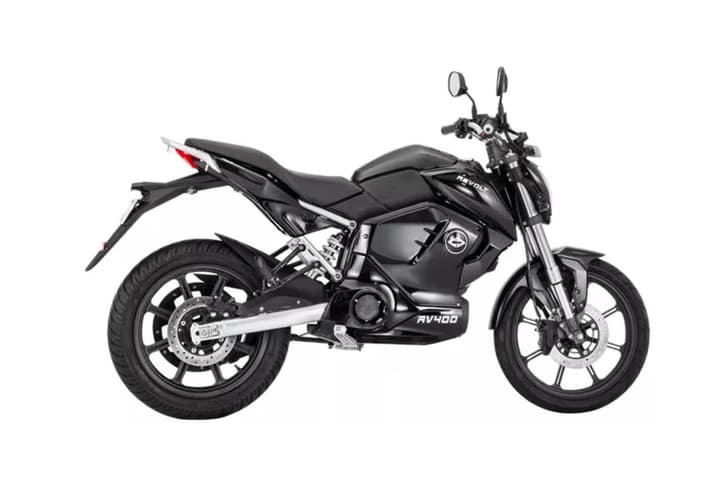
Since you have a comfortable budget, our recommendation would be the TVS iQube S 4.7 / ST 5.3 variants, because they have big batteries which should comfortably help you cover multiple days' worth of riding on a single charge. The iQube is a proven, no-nonsense product from a big, reputed brand and TVS also has a widespread service network among EV scooters, which will matter more than spec-sheet numbers and feel-good farkles when you’ll use it every day. While the iQube's performance won't blow you away, its comfort, practicality and stress-free nature are sure to compensate for that.If performance is your number one priority and you can live with less comfort, the Ather 450S/450X are exciting options. However, given your long daily commutes, do bear in mind, it will demand serious commitment day after day, especially over bad roads. If you must have an electric motorcycle form at this budget, the Revolt RV400 is the most settled option, but neither its performance nor its range are attributes to write home about. The e-bike space is still very nascent and our recommendation today is to buy an electric scooter over them.
I want to buy an electric scooter for nearly 30 km of daily travel. My budget is around Rs. 1.45 lakh. I am confused between Vida VX2 Plus and Chetak 3503. I also looked for Ather Rizta S Base which has low range but it is out of my budget. For TVS IQube, I looked for 3.5kwh base model that was around Rs. 1.49 lakh but I have heard of some issues with it during rainy days and it does not support fast charging. Vida VX2 Plus is the cheapest of all but I have heard about its AUX issues, build quality of switches, app glitches. For Chetak, I have heard of its battery issues and that, it does not support fast charging for 3503. Please suggest which EV would be suitable for daily city use in this budget. My priorities are good reliability, low maintenance and good range.

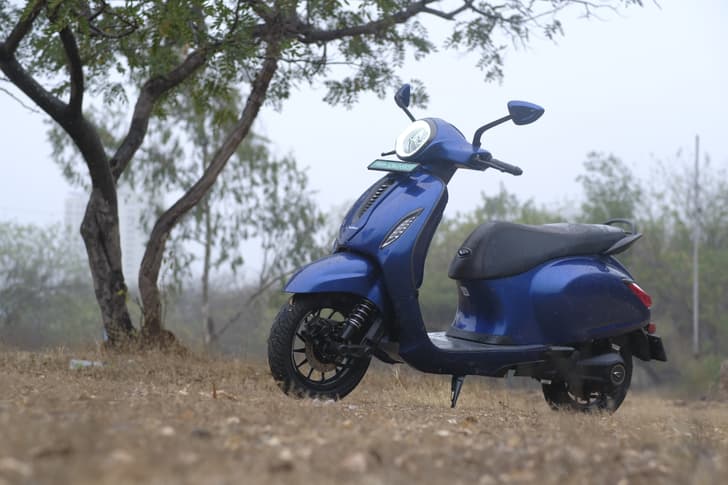
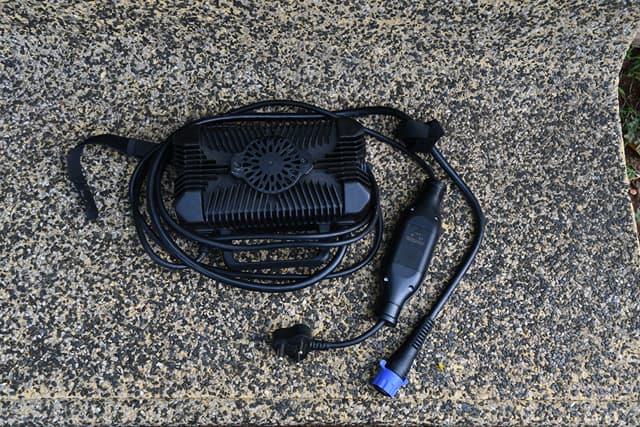
In the electric scooter segment, the TVS iQube and Bajaj Chetak models are hard to go wrong with, and no matter which one you choose, you're likely to end up with a safe purchase which will safely last you many years. Coming to issues with using the iQube during the monsoon, you're unlikely to have any - this is a scooter that has proven its mettle over the past 6 years that it has been on sale. The base 3.5 variant of the iQube in your shortlist, has a 650W charger as standard and it should be sufficiently quick for most daily needs. Its a similar story with the Bajaj Chetak. Any unfortunate battery issues you face will be covered under warranty and even so, these instances are few and far between, not widespread occurrences. The Chetak 3503 also has pretty quick charging times, with the Bajaj website stating a 3hr25min duration for a 0-80 percent top-up, which should be more than enough for your daily needs. Hero's Vida VX2 has come onto the scene relatively later but judging by the fact that these have started to become a fairly commonplace sighting on our roads, the market seems to have given it a good response. We'd recommend a visit to each scooter's authorized dealership and take thorough test rides to ensure you cover every aspect before you make your decision.
I need advice on choosing between an EV scooter and a petrol scooter. I live in Chennai, and my usage is quite low, less than 15 km per day, with only occasional long rides. Could you please suggest which option would be better for my needs?
Since your daily running is quite low, getting an electric scooter doesn't make sense, as recouping the higher initial purchase cost will take quite a while. In the petrol scooter space, sticking with proven models like Honda Activa 110 / 125, TVS Jupiter 110 / 125 and Suzuki Access would be prudent. The 110cc models will have better fuel economy, but the 125cc versions usually have more features and a noticeable step up in performance. However, considering that petrol prices are on the upswing currently, one electric scooter you could consider to combat that is the TVS iQube 2.2. Its price isn't much higher than most of the aforementioned ICE scooters, and it has a real-world range of 75km - we've verified this in our tests. Take test rides of these scooters before you make a decision. Remember that with an EV, longer journeys will need a little bit extra planning and preparedness than with an ICE scooter.
Is there any news about more variants of the TVS Orbiter launching this year, especially one with a 4.7kWh battery pack?
There’s no official word yet from TVS about additional Orbiter variants launching in the near term, and nothing has been shared publicly about a larger 4.7kWh battery - seen on the recently resurrected TVS iQubeS - for it.If range is a key consideration for you, we'd recommend you stick with the higher iQube models only. The iQube has better judged acceleration and braking performance for nearly all real-world situations than the Orbiter, which can feel a little too slow in its quest to maximise range.
I need guidance between Ather Rizta and TVS iQube. Daily commute around 45 km. Which is better, and what is the real-world range?
Both the TVS iQube and Ather Rizta are accomplished electric scooters with very few factors to pick between them in terms of the product proposition they present. The iQube is as straightforward and fuss-free as an electric scooter can get in comparison to a petrol option, and if this is your first EV, it would make for a smooth transition. There are five variants available within the iQube lineup, and we'd recommend choosing between the 3.1 / 3.5 models for your daily 45km commute.Where the iQube is the straightforward choice in the EV arena, the Rizta doesn't lag too far behind. Ather's first family e-scooter is comfortable, practical and has more tech than machines three times the price (if you're into that sort of thing). The small 2.9 battery variants can return close to or just above 100km real-world range, which should be more than enough for your use case. Do bear in mind that the S 2.9 variant has a simpler LCD display and doesn't have Ather's Magic Twist regenerative braking system and traction control. This model also comes with a very slow charger, meaning you'll need to plug it in overnight for a full charge.A test ride of both will help you decide which is the better option for you. Whichever option you decide to go for, make sure you have a service centre nearby, that's a key factor in EV ownership because a roadside mechanic can't really fix much when it breaks down, as most functions are electronically controlled.
TVS iQube price in India
TVS Bikes