
Last Updated on: 16 May 2026
Honda Elevate price in Bahraich
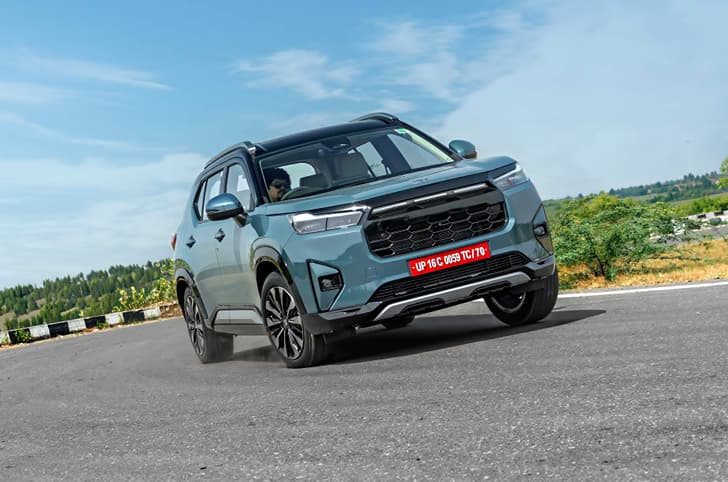
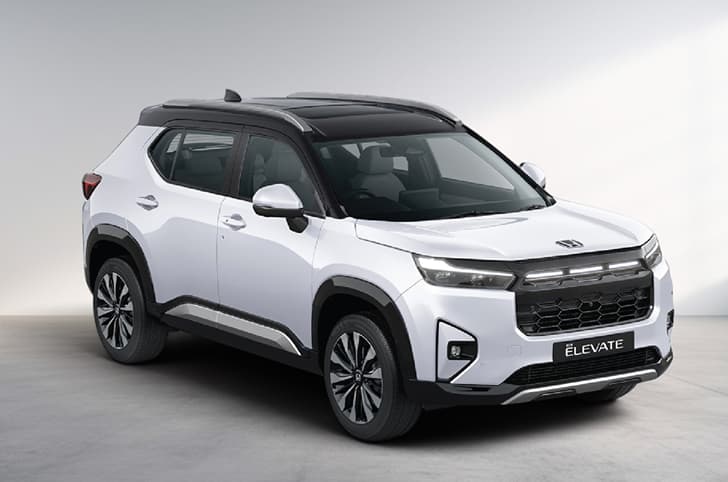
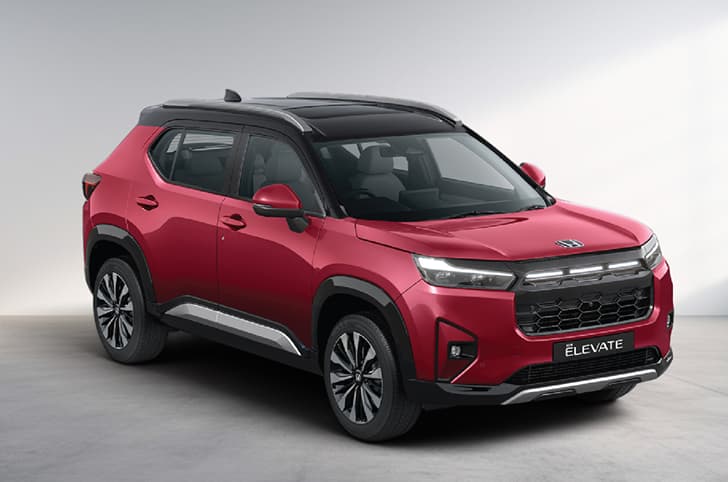
The Elevate price in Bahraich starts at ₹11.68 lakh (ex-showroom) for the base Petrol SV MT variant, while the Elevate Petrol ADV Edition CVT top variant starts at ₹16.77 lakh (ex-showroom). The Honda Elevate on-road price in Bahraich is ₹13.35 lakh for the base variant, while the top model Honda Elevate on road price in Bahraich is ₹19.10 lakh.
Below is the Honda Elevate on-road price in Bahraich. Check with a Honda dealership for the actual on-road price of the Elevate in your region as prices can fluctuate based on availability and location.
Elevate price list in Bahraich 2026 (ex-showroom)
- Honda Elevate petrol manual price range: ₹11.60 lakh to ₹15.07 lakh
- Honda Elevate petrol CVT price range: ₹13.22 lakh to ₹16.25 lakh
Honda Elevate price & variants
Price of Honda Elevate alternatives
Honda Elevate news
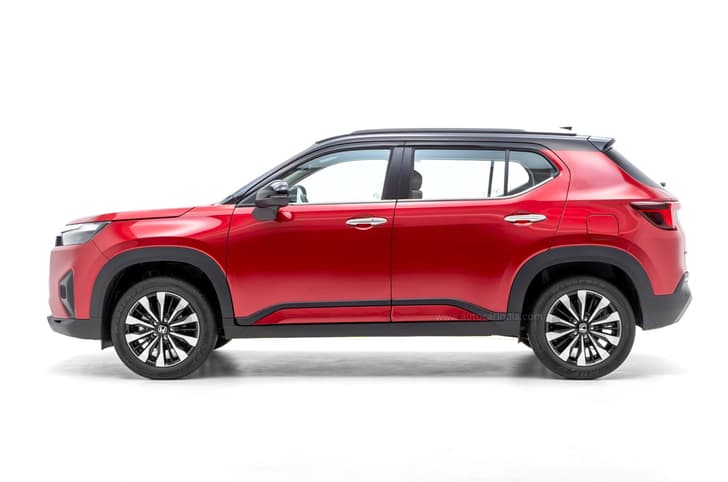
Honda Elevate Images
Honda Elevate videos


Honda Elevate Colours
Honda Elevate FAQs
Honda Elevate price in India starts from Rs 11.68 lakh (ex-showroom).
The Elevate ZX Black CVT price is Rs 16.73 lakh, while the manual gearbox version is priced at Rs 15.51 lakh (both ex-showroom).
Yes, the Honda Elevate ZX Black Edition and Signature Black Edition come with a slight price premium over standard variants. These editions are priced from Rs 15.51 lakh to Rs 16.93 lakh (ex-showroom).
The price range of the Honda Elevate in Bahraich ranges between Rs 11.68 lakh and 16.77 lakh
The on-road price range of the Honda Elevate in Bahraich is Rs 13.35 lakh and Rs 19.10 lakh
The Honda Elevate’s price in Bahraich ranges between ₹11.68 lakh and ₹16.77 lakh (ex-showroom).
The Honda Elevate’s on-road price in Bahraich ranges from ₹13.35 lakh to ₹19.10 lakh.
Questions you may find useful
Deepak
•2dI am confused between the Honda Elevate and the Tata Harrier Diesel base variant. My usage is around 60% city driving and 40% highway driving. At the same time, I also want a car that is enjoyable to drive and feels engaging behind the wheel. Could you please advise which one would be the better option considering driving experience, comfort, maintenance costs, long-term ownership, and overall value for money? Also, would it make sense to wait for any upcoming updates or facelifts before making a decision?

Autocar India
The Honda Elevate manual/CVT seems to be the better fit for you. It feels light and easy in traffic, the petrol motor is smooth, and the steering is quite light, so daily drives are calmer. It also costs less to buy, and its routine service is likely to be cheaper than a big diesel. On the highway, it stays steady and performance is strong, so it feels friendly and confident.The Tata Harrier diesel base is great if most of your use is on wide highways. But in the city, it feels big, the manual needs more clutch work, parking is harder, and overall, it isn't as easy to drive as the Honda.If you can wait, the Elevate facelift is expected in the second half of 2026. If not, pick the outgoing version.
KARAN NATH
•3dHi Team Autocar, Thank you for the invaluable expert advice you provide to so many enthusiasts and buyers. I currently drive a 2017 Renault Duster 110PS AMT Diesel and am now considering purchasing a used petrol automatic SUV that is around three years old. My priorities are decent fuel efficiency, low running and maintenance costs, and overall reliability. My monthly city driving is approximately 1,000-1,200 km. Please note that I am not considering vehicles from Maruti, Mahindra, or Tata. Could you please recommend the most suitable options for my requirements and budget? Regards, Karan

Autocar India
With mostly city use at 1,000-1,200 km a month and a focus on mileage and low upkeep, a three-year-old Toyota Urban Cruiser Hyryder hybrid automatic suits you best. In slow city traffic, it often runs on electric power, so fuel use is far lower than that of a regular petrol car, and the automatic transmission is very smooth and quiet. Coming from your Duster diesel AMT, you will notice easier stop-go driving, lower vibration, and Toyota’s simple, predictable service experience.Do note a couple of trade-offs. The hybrid’s boot is smaller than some rivals, and it doesn’t feel very strong if you push hard on the highway. Clean used examples can also cost more than a regular petrol.If the hybrid price stretches the budget, look for a Hyundai Creta petrol automatic from the same period. It is easy to drive, comfortable over bad roads, and has wide, affordable service support.Another sensible pick is the Honda Elevate automatic for its simple ownership and light steering. For your brief, the Hyryder hybrid lines up best, with the Creta or Elevate as safer-value backups.
Amit
•6dHi Autocar, I am looking for a car to keep for 10 years. My driving is not much at the moment. I currently own a Nexon AMT that has done 20,000 km. I mostly do frequent short trips in the city and occasional long highway drives. I love the turbo in the Nexon, but not much else, as it started giving me trouble as soon as it entered its fifth year, so I am no longer sure about its reliability. I am now thinking mainly from a reliability perspective and am confused between the Seltos/Creta diesel automatic, Seltos/Creta iVT, and Elevate CVT. However, I would still like to retain Nexon’s grunt and avoid DCTs.

Autocar India
For a ten-year ownership period with strong reliability, mostly short city runs with the occasional highway trip, the Honda Elevate CVT is a good fit. Given your usage is fairly low and largely limited to the city, a petrol would be a better choice than a diesel. Being naturally aspirated, it won’t have the same grunt as the Nexon’s turbo-petrol, but among naturally aspirated midsize SUVs, it feels one of the most energetic.Test drive it to see if the performance feels adequate, but if you miss that turbo punch, then consider the Skoda Kushaq 1.0 TSI AT instead. It comes with an 8-speed torque-converter automatic, which avoids your DCT concerns, though overall upkeep cost will be higher than Honda’s.If you want the least hassle with many short city trips, pick the Honda Elevate.
Apurv
•6dI own a 2017 Renault Kwid 800cc manual and am looking to upgrade mainly for comfort, space, and some more power. My budget is around Rs 15-17 lakh on-road in Hyderabad. My monthly running is around 300 km, mainly in city stop-and-go traffic. Please suggest whether I should extend my budget for a CVT (Elevate/Creta) or go for a torque-converter automatic (Kylaq/3XO).

Autocar India
For mostly city use within a 15-17 lakh on-road budget, where comfort, space and ease of driving matter most, the Honda Elevate automatic fits best. The automatic is very smooth at low speeds, so stop-go driving feels calm, and compared to your Kwid, the seat is higher, the cabin is wider, and the ride is more comfortable over bad roads. Power is not wild, but it is a big step up from your Kwid and feels relaxed in the city.A quick word on gearbox types for your use: for pure city traffic, the automatics in the Elevate and Creta feel smoother because there are no obvious gear changes. Torque‑converter automatics in the Kylaq and XUV 3XO are also smooth, but you will feel a few more gear changes at low speeds.The trade-offs with the Elevate are that the engine does not feel particularly quick when pushed hard, and the cabin does not feel as premium as the Creta’s.If you can stretch, the Hyundai Creta automatic adds a plusher cabin and a bit more space. If you want more punch for less money and can live with a smaller back seat, the Mahindra XUV 3XO automatic is the value pick. Overall, for your city commute and budget, the Elevate automatic lines up best.
NIPEN
•1wI booked the Kia Seltos HTX IVT model, but there are supply constraints and uncertainty regarding the delivery. So, I am planning to change my choice. Which SUV would be a better alternative in comparison? My usage is 90% city driving, with an average of 40 km daily.

Autocar India
If your driving is 90 percent in the city with around 40 km a day, the best alternative to the Kia Seltos HTX IVT is the Hyundai Creta IVT. It uses the same naturally aspirated petrol engine and IVT automatic combination, so you can expect a very similar smooth and effortless driving experience in traffic, which is exactly what matters for your usage. It is also spacious enough for family use, has a proven long term track record and is simply one of those cars you are unlikely to go wrong with.The Honda Elevate CVT is the other option worth considering if you want to save some money. It is a practical, dependable SUV with Honda’s strong reliability reputation and a comfortable enough package for both city and occasional highway use. However, the engine is not as refined as the Hyundai-Kia unit and the overall cabin and ownership experience do not feel as premium as the Creta.
Pranamya B
•1wHi Autocar Team, Reposting this query as the earlier message may not have reached you. Have been following your blogs and YouTube videos for quite some time now, and really admire the depth of analysis and practical insights in your reviews. Currently driving a Honda Brio and absolutely love the car for city use. However, a few limitations have started becoming more noticeable over time. Frequent trips to Konkan mean dealing with rough roads, large potholes, and tall speed breakers, which often result in the underbody scraping. Rear seat comfort during hot weather is another concern, especially because of the absence of rear AC vents. Planning to upgrade to an SUV that would be better suited for both daily commuting and highway trips. Family consists of five adults, and at 6'2" with a larger build, spacious seating and overall comfort are quite important. Budget is around ₹12 lakh and can be stretched slightly for the right option. Key priorities are: Strong safety credentials, Comfortable driver seat with good ergonomics, Spacious and comfortable rear seat, Good ground clearance for bad roads and ghat sections, Adequate boot space for 3–4 days of luggage, Reasonable maintenance and running costs Usage pattern includes a daily 20 km commute in heavy city traffic, along with occasional weekend trips of around 300 km round-trip. Would really appreciate your recommendation on the most suitable SUV in this budget.

Autocar India
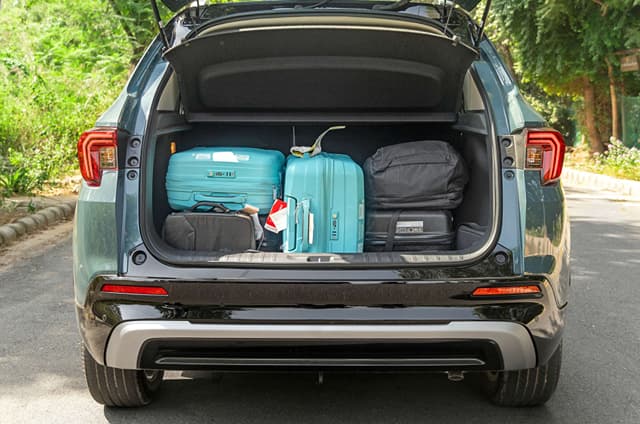
The Kia Seltos would suit your requirements well. The new Seltos has a roomier cabin, especially at the rear and will seat three adults in reasonable comfort. Legroom is plenty, even for six-footers, while headroom is adequate. The seat back angle is also adjustable, which will help with both comfort and head clearance for taller passengers. Ground clearance is good, as are the safety features, moreover the Seltos also scored a 5-star rating in the Bharat NCAP tests. The driver's seat is also comfy, though larger-framed individuals might find it snug. We would suggest checking this out yourself to see if you are happy. As an alternative, look at the Honda Elevate. There's plenty of cabin space at the front and rear, and the boot is amongst the largest in its class and will be more than adequate for your 3-4 days of luggage. There's generous ground clearance, too, and safety equipment is good. The only issue might be for the centre passenger as the tunnel is fairly pronounced.
Swapnil Kamble
•1wI am concerned about the future increase in ethanol blending percentages. Will E20 continue to be available as the base fuel option alongside higher ethanol blends in the future? I am considering the Citroen BasaltX, Honda Elevate CVT, and Kia Seltos NA CVT. My usage is mostly in the city with occasional highway drives, and my annual running is around 10,000 km. I am looking for a long-term car for at least 10-12 years.

Autocar India
You do not need to worry too much about E20 or future ethanol blends while buying a new petrol car today, especially if you are planning to keep it for 10 to 12 years. All modern petrol cars from major manufacturers, including the Kia Seltos, Citroen Basalt and Honda Elevate, are already designed to run on E20 fuel. More importantly, cars that are only E20 compatible cannot run on E85 or higher ethanol blends, because those require dedicated flex fuel engines with significant changes to the fuel system and engine calibration. This means fuel companies and the government will still have to continue supplying E20 compatible fuel alongside any future higher ethanol blends for flex fuel vehicles.For your usage, the Kia Seltos IVT is the best all round choice. Since most of your driving is in the city, the naturally aspirated petrol with the IVT automatic will feel extremely smooth and effortless in traffic, while the cabin feels genuinely premium and well insulated for long term ownership. It also strikes a very good balance between comfort, features and ease of driving, which is exactly what matters in a car you plan to keep for over a decade.The Citroen Basalt is the alternative if you are more budget conscious and want maximum practicality. It offers massive boot space, excellent rear seat room and a very comfortable ride, making it a superb family car for the money. However, it does not feel as polished, premium or as refined overall as the Seltos, especially inside the cabin and in terms of overall ownership experience. The Honda Elevate CVT sits somewhere in the middle with Honda’s strong reliability reputation and easygoing nature, but it feels less feature rich and not as plush inside as the Kia.
Rahul Sharma
•1wHi all, I own two cars - a 2017 Maruti Baleno petrol manual and an MG Comet EV. I currently use the Comet EV for my daily commute. I now want to replace the Baleno and am considering buying a new car under ₹12 lakh. I am confused among the Maruti Grand Vitara base variant, the Toyota Hyryder base variant, and the Honda Elevate V MT. Could you please help me choose the right option?

Autocar India
The Honda Elevate V MT that you've shortlisted is priced at Rs 12.14 lakh (ex-showroom), which means that by the time the vehicle is registered and insured, prices will go over Rs 14 lakh (on-road), that's before discounts.Similarly, the base Maruti Grand Vitara and Toyota Hyryder are priced just below Rs 11 lakh (ex-showroom, so on-road these should be priced at around Rs 13 lakhs.That said, between the three, the Honda Elevate's seats are comfier, its ride-handling balance is better, and its performance is stronger too. Overall, the Elevate will feel more satisfying to drive, which is why you should pick the Honda.
Dinesh Gopalani
•1wI am confused between the Mahindra 3XO, Hyundai Venue, and Honda Elevate. I am considering petrol automatic variants (preferably non-AMT). My usage will be mostly city driving with occasional highway trips. I am looking for a car without a sunroof and with good overall performance. Could you please help me choose the right option?

Autocar India
Unfortunately, both Mahindra and Hyundai have paired their respective automatic versions with a sunroof, which should rule them out for you.The Honda Elevate V CVT doesn't get a sunroof, but it delivers strong performance, and it meets your requirements. It is a no-nonsense car with comfortable seats, excellent ride-handling balance, and a smooth CVT automatic transmission. It is also a size larger than the Mahindra XUV 3XO and Hyundai Venue, so space and boot space are better too.Another option you could consider is the 2026 Volkswagen Taigun Highline 1.0TSI with the new 8-speed automatic transmission.
Balasubramanian
•1wI recently upgraded from a Skoda Rapid Diesel DSG to a Honda Elevate ZX CVT. I drive around 62 km daily in Mumbai (Navi Mumbai to Andheri) in bumper-to-bumper traffic. I like everything about the Elevate except its 40-litre fuel tank, due to which I need to refuel every 4-5 days, which is becoming frustrating. I am even considering changing my car by the end of the year to the Renault Duster (which is expected to have a larger 50-litre tank). I also need sufficient boot space. I understand the Duster may not offer a spare wheel (stepney), though space might be available to carry one. While the Duster Hybrid is tempting, the lack of boot space and a proper spare tyre could be deal-breakers, especially since I take occasional long drives to the South where a spare tyre feels essential. Given this situation, should I continue with the Elevate or consider switching? What would you suggest?

Autocar India
If you're looking to replace the Honda Elevate CVT with a Renault Duster, make sure you opt for the hybrid version. The Duster's 1.3-litre turbo-petrol-DCT combination isn't likely to deliver respectable fuel efficiency, especially in bumper-to-bumper traffic; hence, your fuel stops are likely to be as frequent, if not more so. A hybrid, on the other hand, will remain in EV mode while idling or at low speeds, which will significantly reduce fuel consumption. While Renault provides a puncture repair kit, a spare tyre will certainly come in hand in the event of a sidewall cut, which is a possibility on long drives and unfamiliar roads. Hence, you could purchase an extra tyre and place it in the boot, however that is likely to compromise luggage space.Alternatively, you could consider retaining your Honda Elevate. It is a very sensible, no-nonsense car. Also, keep in mind that because it isn't a popular model, resale value is likely to be on the lower side, hence you will have to add a fair bit from your pocket, to make the new purchase.
Honda Elevate price in India
Trending Cars


Latest Cars