Last Updated on: 14 May 2026
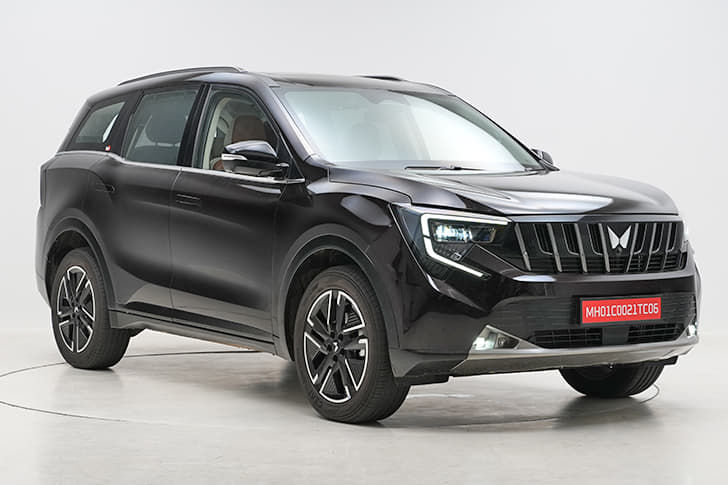
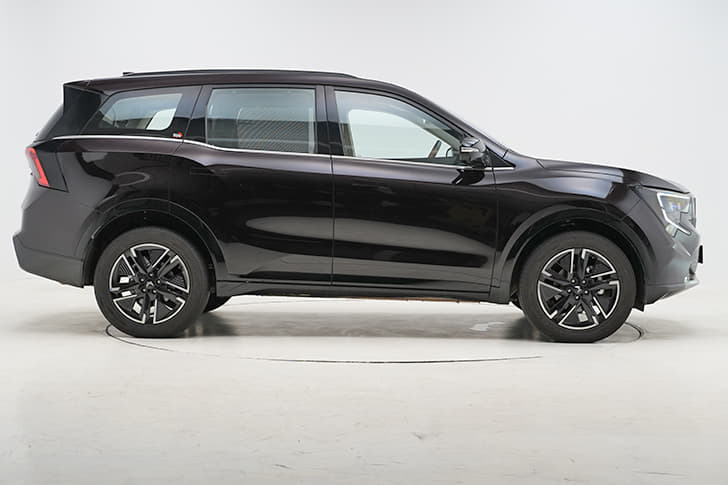
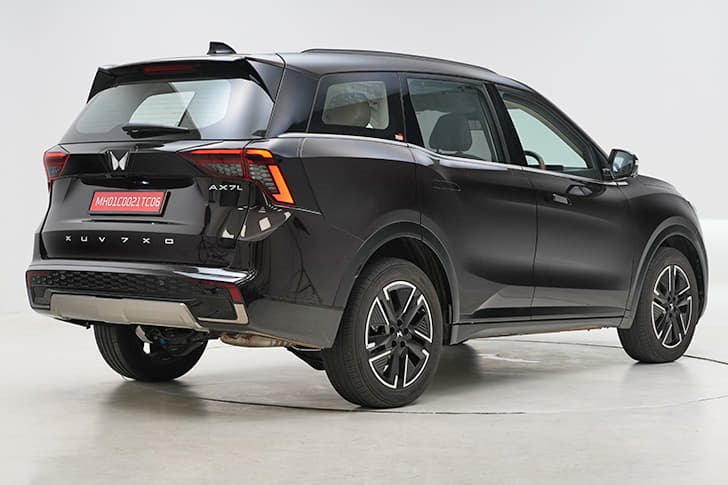
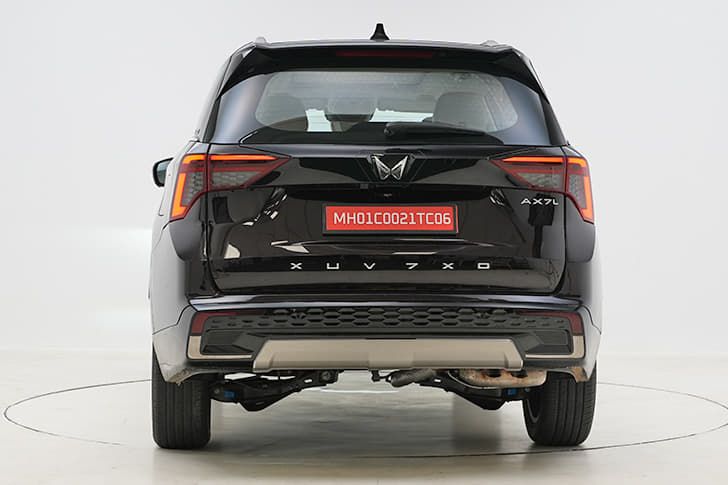
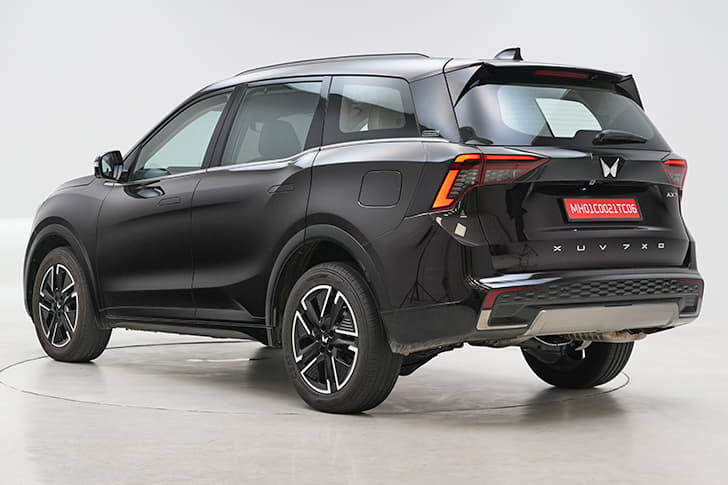
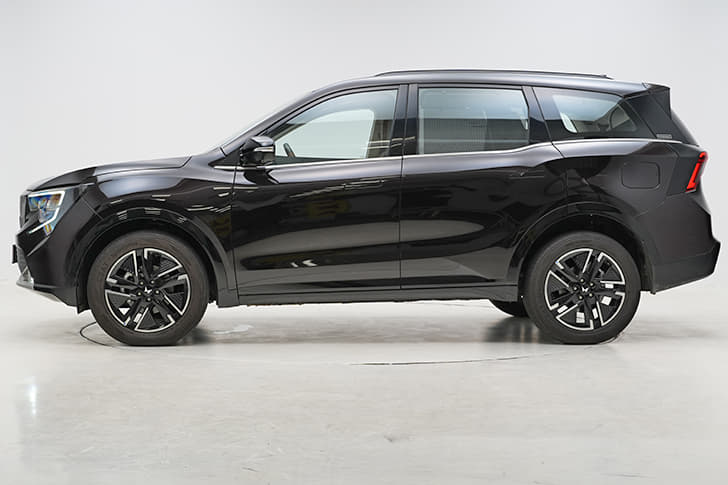
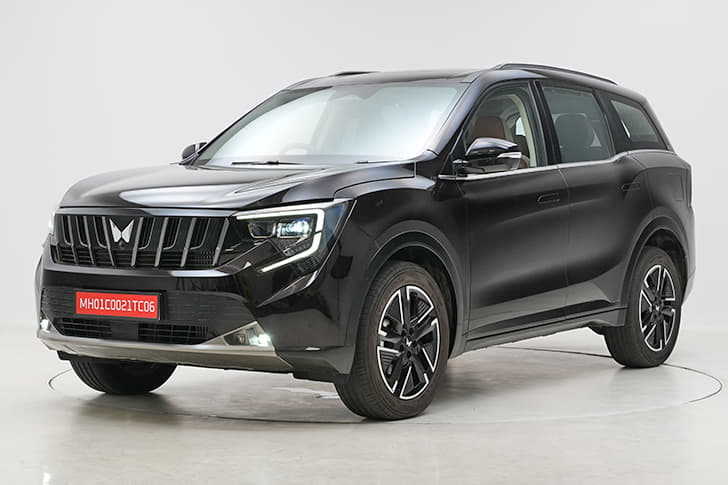
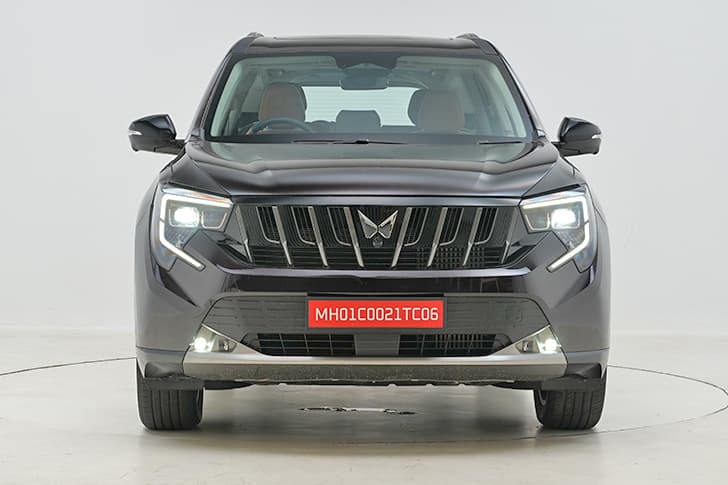
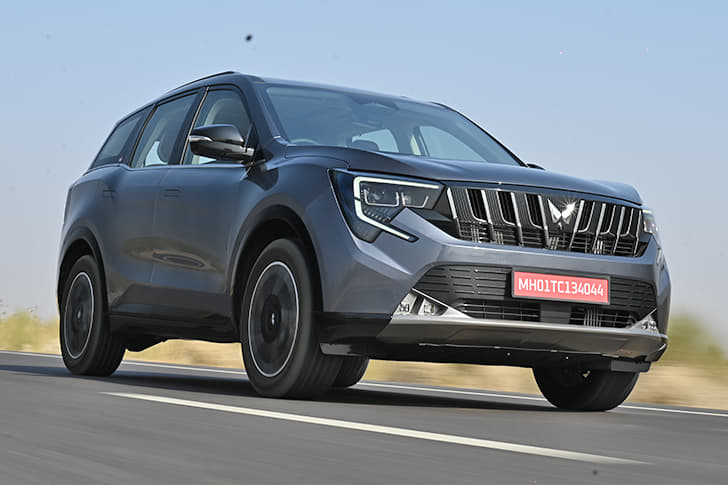
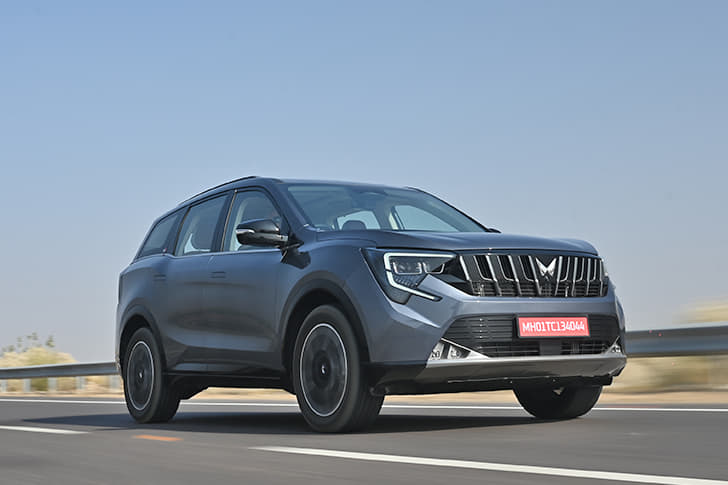
Mahindra XUV 7XO AX7 Luxury 2.2 Diesel 6 Seat AT
The Mahindra XUV 7XO AX7 Luxury 2.2 Diesel 6 Seat AT variant is priced at ₹24.11 lakh. The AX7 Luxury 2.2 Diesel 6 Seat AT variant offers key features like Electronic parking brake, 360 view camera, Adaptive cruise control, Ambient interior lighting, Cruise control. Explore complete specifications, and features below.
Mahindra XUV 7XO AX7 Luxury 2.2 Diesel 6 Seat AT specifications
Engine & Transmission
Fuel Type/ Propulsion | Diesel |
Max Engine Power | 185 hp at 3500 rpm |
Max Engine Torque | 450 Nm at 1750 - 2800 rpm |
Engine Type | Turbocharged |
Engine Installation | Front |
Engine Displacement | 2184 cc |
Number of Cylinders | 4 |
Paddle Shifters for Automatic Gearbox | No |
Number of Gears | 6 |
Sport Mode for Automatic Gearbox | Yes |
Manual Shifts via Gear Lever on Automatic Gearbox | Yes |
Drive Layout | Front Wheel Drive |
Lockable Differential/s | No |
Gearbox Type | Torque Converter |
Fuel & Performance
Terrain Modes | No |
Auto Start/Stop | Yes |
Fuel Supply System | Common Rail |
Emission Standard | Bharat Stage VI |
Fuel Tank Capacity | 60 litres |
Drive Mode Types | Multiple |
Suspension & Steering
Rear Brakes | Disc |
Front Brakes | Ventilated Disc |
4 Wheel Steer | No |
Type of Power Assist | Electric |
Steering Adjust type | Manual |
Steering Adjust | Tilt and Telescopic |
Rear Suspension Type | Independent, Multi-link |
Damper Control | No |
Ride Height Adjust | No |
Rear Springs | Coil Springs |
Front Springs | Coil Springs |
Front Suspension Type | Independent, MacPherson Strut |
Rear Tyre Size | 235/55 R19 |
Spare Wheel | Space Saver |
Wheel Size | 19 inches |
Front Tyre Size | 235/55 R19 |
Wheels | Alloys |
Dimensions
Width | 1890 mm |
Chassis Type | Monocoque |
Wheelbase | 2750 mm |
Doors | 5 |
Height | 1755 mm |
Length | 4695 mm |
Mahindra XUV 7XO AX7 Luxury 2.2 Diesel 6 Seat AT features
Comfort
| Flat Bottom Steering Wheel | |
| Power Windows with One Touch-Down | Driver Window Only |
| Power Windows | Front and Rear |
| Launch Control | |
| Keyless Entry | Yes with proximity sensors |
| Interior Lamps |
Safety
| Parking Sensors | Rear |
| Traction Control | |
| Rear Seatbelt Reminder | |
| Rear Washer/Wiper | |
| Side Airbag | |
| Speed-Sensing Auto Door Locks |
Exterior
| Outside rear view mirror (ORVM) | |
| Integrated Washer Jets with Wiper | |
| Follow Me Home Headlamps | |
| Body Coloured Bumpers | |
| LED taillights | |
| LED headlamps |
Interior
| Trip Meter | |
| Average Fuel Consumption | |
| Average Speed | |
| Distance to Empty | |
| Instantaneous Consumption | |
| Tachometer | Digital |
Entertainment
| Rear Entertainment Screens | |
| Rear Seat Infotainment Controls | |
| Bluetooth Audio Streaming | |
| Apple CarPlay | Wireless |
| Second Row USB port | Type C |
| Audio System |
Connected Car Features
| In Car Payment | |
| Find My Car | |
| Phone App | |
| Breakdown Assistance Call Button | |
| Remote Sunroof Open / Close via App | |
| Live Location Sharing |
Mahindra XUV 7XO variants
Mahindra XUV 7XO comparison
Questions you may find useful
Manoj S
•1dI currently own a 9-year-old Tata Tiago and am now planning to upgrade to either the Tata Safari Adventure X Plus Diesel Automatic or the Mahindra XUV 7XO AX7 Diesel Automatic. The Safari is around ₹3 lakh cheaper while offering almost similar specifications, except for a few additional luxury features in the XUV 7XO. I live in Bangalore, and my annual running is around 15,000 km, mostly involving city driving with occasional highway trips. Could you please suggest which of these would be the better choice?

Autocar India
Mostly Bangalore city uses about 15,000 km a year, and moving up from a Tiago - in that brief, the Tata Safari Adventure X+ Diesel automatic is the better fit. You save around Rs 3 lakh and still get the core things you’ll feel every day: a very comfortable ride over broken roads and speed bumps, a punchy engine, smooth automatic, and loads of space for family and luggage. Coming from a Tata, service and running costs will feel familiar too, which helps in Bangalore.What you give up versus the Mahindra are a few fancy extras and some advanced driver aids. If most of your driving is inside the city with the odd highway trip, you won’t miss them much. The Safari does feel big in narrow lanes and parking spots, and the diesel automatic can feel a touch slow to jump off the line if you stamp on the pedal, so plan gaps.If you do long highway runs often and value safety tech that keeps distance and warns you, the Mahindra XUV 7XO AX7T is worth the extra, and the engine is a bit more refined. Otherwise, for your use and budget, the Safari suits you better.
Satya
•1dI mostly drive in the city for my daily home-to-office commute, and we occasionally go on long highway trips. I have booked the XUV 7XO AT Petrol. Will it be a good choice compared to the AT Diesel?

Autocar India
For your use case, the Mahindra XUV 7XO petrol automatic you’ve booked is the better pick than the diesel automatic. In slow traffic, the petrol feels smoother and more refined, so daily driving is calmer and easier. The petrol is also cheaper to buy and a bit cheaper to maintain over time. Know the trade-offs. On long highway drives, the diesel will be more fuel efficient and will feel stronger when the car is full of people and luggage. For your current pattern, though, stick with the XUV 7XO petrol automatic. It fits your use best.
Gaurav
•2dMy budget is around ₹20 lakh on-road, and I am specifically looking for a diesel SUV. My usage pattern would be roughly 80% highway driving, 15% city driving, and 5% mild off-road usage. My priorities are: Spacious cabin Good fuel efficiency Comfortable ride quality I can compromise slightly on outright performance if the car excels in comfort, practicality, and mileage. At the moment, I am confused between the Tata Sierra Diesel, Mahindra XUV 7XO Diesel, Renault Duster Diesel, and Kia Seltos Diesel.

Autocar India
The Mahindra XUV 7XO AX3 diesel-manual fits your brief best. It has the roomiest cabin of your list and is the only one with three-row seating. Of course, with the last row folded, its boot is generous for luggage. On the highway, it feels steady and calm, rides bumps well, and the diesel is refined and both, punchy and efficient. Ground clearance and its inherent toughness make it capable of tackling light trails and rough roads.
SUNIL NAIR
•2dI have been using a Hyundai Grand i10 for the last 10 years. My usage is around 60% city and 40% highway. I want an automatic variant, and my budget is between Rs 20-25 lakh. I have looked at the Creta, Seltos, Harrier, and XUV 7XO. I plan to keep the new car for at least 5-7 years. I prefer a car with more dashboard features like the Seltos and 7XO, along with strong service support and maximum features for the driver and co-passenger.

Autocar India
Given your 60% city and 40% highway usage, with a budget of Rs 20-25 lakh, the Kia Seltos petrol CVT automatic suits your requirements very well. It is easy to drive in town, the 115hp, 1.5-litre petrol engine is refined, the CVT automatic is smooth in traffic, and feels steady on the highway. More importantly for you, it is packed with technology and convenience features. You get twin screens, a clear 360-degree camera, ventilated front seats and ADAS features, and Kia also has a strong service network in most cities.Two things to note: it won't have the performance of the turbo petrol, and the back seat is not as wide as the Tata Harrier or 7XO if you often seat three adults. If you want a more powerful and a bigger car, look at the Mahindra XUV 7XO petrol automatic, although the variant with the features you want may stretch beyond your budget. Overall, the Seltos lines up best for your needs and features focus.
PRABODH BOHRA
•2dMy yearly running is around 10,000-12,000 km, with usage split roughly 50% city and 50% highway driving. I am planning to buy a 7-seater diesel SUV and am currently confused between the Tata Safari Diesel and the Mahindra XUV 7XO Diesel. However, I have heard a lot about DPF-related issues in modern diesel vehicles, especially with mixed city usage. Could you please advise which of these would be the better option for my requirements?

Autocar India
With 10,000-12,000 km a year and equal city and highway use, we would recommend the Mahindra XUV 7XO diesel automatic. It feels smoother and quieter in daily use, the automatic is easy in traffic, and it has a strong pull for quick highway passes when the car is full. It also packs more active safety tech, which is reassuring on long trips with family. Most of all, it doesn't feel as cumbersome to drive around town.On your DPF worry: both the XUV 7XO and the Tata Safari use the same type of filter to trap soot. With your 50 percent highway mix, the system usually clears itself. DPF trouble mostly shows up with very short, slow city trips only. Simple habits help: once every week or two, do 15-20 minutes at a steady speed on a ring road, don’t switch off mid-cycle if you see a DPF message, use good fuel, and keep the car on the latest software at service.The Safari diesel automatic is the one to pick if you value a softer low-speed ride and a roomier third row, but its engine and gearbox aren't as smooth or refined as the XUV's. Overall, for your mix of city and highway, the XUV 7XO diesel automatic lines up best.
dipesh
•2dI need a car mainly for outstation travel under a budget of ₹25-27 lakh. I live in a tier-3 city, and my yearly running is around 15,000 km. Please advise between 7x0 petrol vs diesel and Tata Safari vs 7x0. Also, are there any other good options in the same price range?

Autocar India
Since you mostly do highway trips of 15,000 km a year and your budget is ₹25-27 lakh, the Mahindra XUV 7XO diesel automatic is the one you should consider. It suits long drives better than the petrol because the torquey 2.2-litre diesel engine pulls strongly with a full load, needs fewer fuel stops, and will likely cost less to run given your yearly use. On the highway it feels steady and sure-footed, and Mahindra’s service reach is wide, even in a tier-3 city.Between XUV 7XO petrol and diesel, pick the diesel for your use. The petrol is smooth and punchy but will use more fuel on highways and have shorter range. Between Safari and XUV 7XO, go XUV 7XO for your brief. The Safari feels tougher and has a roomier third row, but it isn't as powerful and XUV's better safety tech (ADAS) is handy on long runs.Alternatively, consider the Toyota Innova HyCross if you want the maximum space and an easy, relaxed drive feel.
Ashwanth
•3dHello, I booked the xuv 7XO AXL DIESEL AT on January 8 and am still waiting for the delivery. What concerns me is the current geopolitical tensions in the Gulf, along with rising crude oil prices and possible fuel shortages. In this situation, is it really sensible to buy a diesel car (or even a petrol car)? Or would it be better to shift to an electric car like the XEV 9e or XEV 9S? I am genuinely very confused. What will happen to all the diesel and petrol cars that are currently being sold and are already on the road? Also, the 10 and 15-year scrappage policies are making me worried that a ₹30 lakh investment could end up as scrap in the near future. Could you please advise?

Autocar India
If your primary worry is whether buying a Rs. 30 lakh diesel today is a bad decision because of fuel prices, geopolitics or scrappage rules, the short answer is no, do not panic. Petrol and diesel cars are not going to suddenly become unusable or worthless because of short term crude price spikes or geopolitical tensions. Fuel prices may fluctuate, yes, but that affects both petrol and diesel ownership economics rather than making the vehicles obsolete overnight. India’s scrappage framework is also not a blanket “scrap your 10 or 15 year old private car no matter what” rule nationally. Private vehicles are tied to fitness and registration rules, while Delhi NCR has its own stricter age based restrictions.Now to your actual car choice. Since you have already booked the Mahindra XUV 7XO diesel automatic, the bigger question is whether your usage genuinely suits diesel. If you do regular highway runs or meaningful monthly mileage, the diesel still makes complete sense because the 7XO’s diesel is effortless, efficient and a great fit for a large SUV. If your use is mostly city and low running, then yes, an EV like the XEV 9e becomes more compelling, especially if you can charge at home.But do not switch to an EV purely out of fear. Buy an EV because your usage suits it. The XEV 9e is a fundamentally different ownership proposition, not just a “future proof” version of the 7XO. If you need frequent long distance flexibility without charging planning, the diesel remains easier to live with. If your use is mostly urban and predictable, the EV makes stronger sense.
Saurabh
•4dIs the Sorento Hybrid coming to India in 2026?

Autocar India
Yes, the Kia Sorento Hybrid is slated for an India launch in August-September 2026, and Kia is clearly positioning it as a premium three-row SUV.This Kia car comes with a 1.6‑litre turbo-petrol engine paired with an electric motor, with the system developing around 227 hp and over 350 Nm, driving through a 6‑speed automatic gearbox. Globally, it’s offered in both front-wheel-drive and all-wheel-drive configurations, and that mix is likely to be mirrored for India as well.It’s a properly spacious seven-seat SUV, roughly 4.8 m long and 1.9 m wide, so think bigger than a Kia Carens and right in the zone of the Skoda Kodiaq and Toyota Fortuner in terms of footprint and cabin room. Expect a flexible three-row layout, generous boot space with the third row down, and the usual load of Kia kit - panoramic sunroof, ADAS, large screens, and connected-car features.Price-wise, the Sorento Hybrid is expected to sit in the Rs 35-40 lakh (ex-showroom) band, and it will naturally tug buyers both up from something like a Mahindra XUV 7XO and away from the Skoda Kodiaq–Fortuner crowd.
karan tikyani
•5dI am currently living outside India and will be visiting India for about a month during August–September. I am planning to buy a new car within a budget of ₹15-20 lakh. At the moment, my top choice is the Mahindra XUV 7XO Petrol Automatic. Currently, only my sister and father are at home, and neither of them knows how to drive yet. However, they keep saying that once the car comes home, they will learn driving. Considering this situation, would the XUV 7XO Petrol Automatic still be the right choice, or should I look at something easier to drive and manage for first-time drivers? Please give your expert advice.

Autocar India
If your Rs 15 to 20 lakh budget is ex-showroom, then the Mahindra XUV 7XO petrol automatic is a very good choice. If you mean on road, then even the more affordable automatic petrol variants will stretch beyond that budget in most cities, so that is the first thing to clarify. As a product, though, the XUV 7XO makes a strong case with its powerful and refined turbo petrol engine, smooth 6-speed torque converter automatic, comfortable ride and a genuinely spacious middle row, which will be great for family use. Just remember that the third row is best treated as occasional use space rather than something adults will enjoy regularly on long trips.The bigger practical question is your family situation. If your sister and dad are only now planning to learn to drive once the car arrives, the XUV 7XO may not be the easiest first car to learn in because it is a large SUV with a wider footprint, which can feel intimidating in Indian city conditions for new drivers. In that case, unless they are specifically committed to learning quickly and confidently, a smaller and easier five-seater may actually make more sense.If you are open to that, the Kia Seltos petrol automatic is a very strong alternative. It still feels premium and well-equipped, but is far easier to manage, easier for first-time drivers to get comfortable with and will comfortably fit within budget in the right variants. Overall, if the car is mainly for you and the budget works, the XUV 7XO is a great choice.
Amit Agarwal
•6dHello Sir, Need some advice, I already have a Jeep Compass diesel automatic driven 40,000 km in 5 years. Now facing an issue with service cost, its maintenance is a little higher than usual, so shall I sell the car? Is this the best time, or stick with the car? Secondly, I was thinking of upgrading to XUV 7XO, and comparing which is better in every aspect, performance, comfort, and long drive. Plz give your valuable suggestion.

Autocar India
If your Jeep Compass has otherwise been reliable, and the only real concern is rising service costs. Also, there is no urgent reason to sell it purely at 40,000 km, as that is not particularly high for a well-maintained diesel. However, if the ownership costs are starting to bother you and you are already mentally ready for a change, this is a reasonable time to exit before bigger age-related expenses start showing up and depreciation goes further.If you are upgrading to the Mahindra XUV 7XO, you will gain a much bigger cabin, stronger performance, better refinement, far more features and better overall value for money. The diesel will feel more powerful, and the SUV itself is a better long-distance family machine with stronger road presence and more space. But the Compass still has its own strengths. It feels more solid, more premium in certain touch points and has that mature European feel in the way it drives, but overall, the Mahindra XUV 7XO will still feel like a proper step up from the Jeep Compass.
Mahindra Cars
Latest Cars