Autocar India
SA

Saurabh

2d

Is the Sorento Hybrid coming to India in 2026?

Autocar India team

Autocar India

Verified
12m

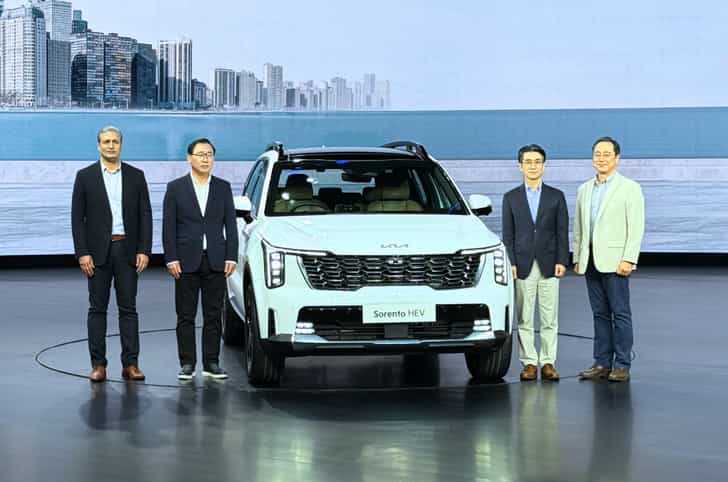
Yes, the Kia Sorento Hybrid is slated for an India launch in August-September 2026, and Kia is clearly positioning it as a premium three-row SUV.

This Kia car comes with a 1.6‑litre turbo-petrol engine paired with an electric motor, with the system developing around 227 hp and over 350 Nm, driving through a 6‑speed automatic gearbox. Globally, it’s offered in both front-wheel-drive and all-wheel-drive configurations, and that mix is likely to be mirrored for India as well.

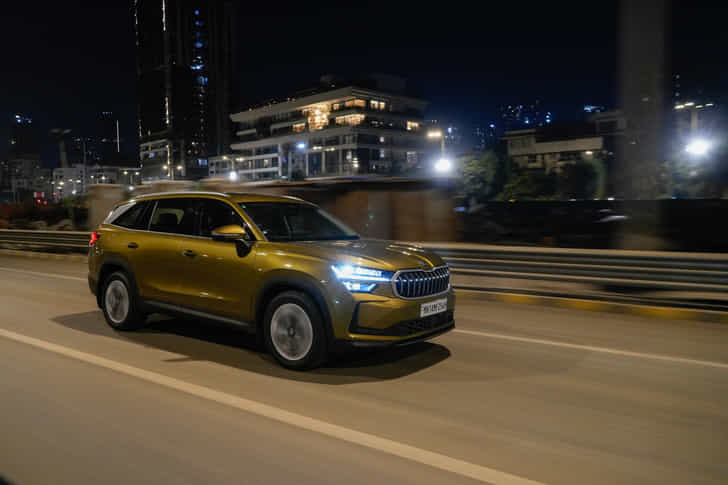
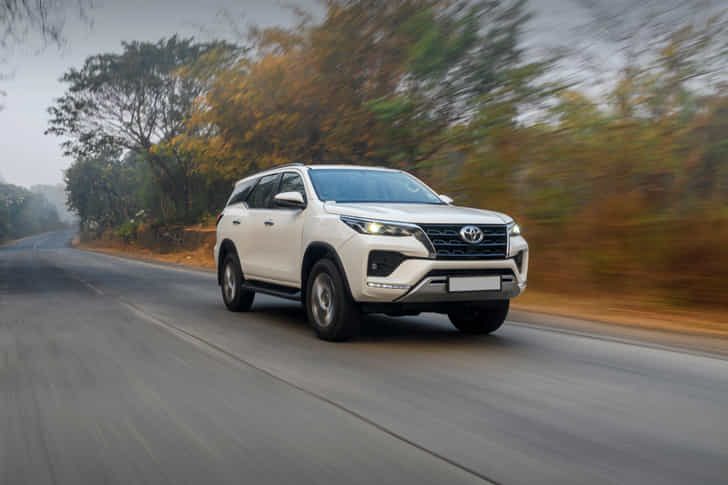
It’s a properly spacious seven-seat SUV, roughly 4.8 m long and 1.9 m wide, so think bigger than a Kia Carens and right in the zone of the Skoda Kodiaq and Toyota Fortuner in terms of footprint and cabin room. Expect a flexible three-row layout, generous boot space with the third row down, and the usual load of Kia kit - panoramic sunroof, ADAS, large screens, and connected-car features.

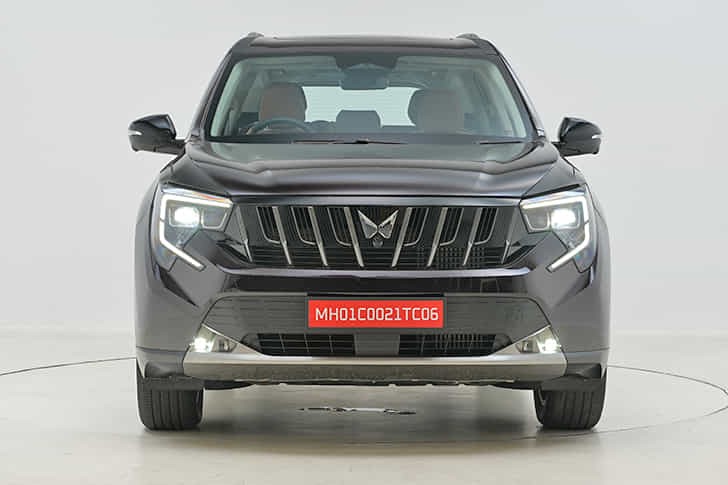
Price-wise, the Sorento Hybrid is expected to sit in the Rs 35-40 lakh (ex-showroom) band, and it will naturally tug buyers both up from something like a Mahindra XUV 7XO and away from the Skoda Kodiaq–Fortuner crowd.
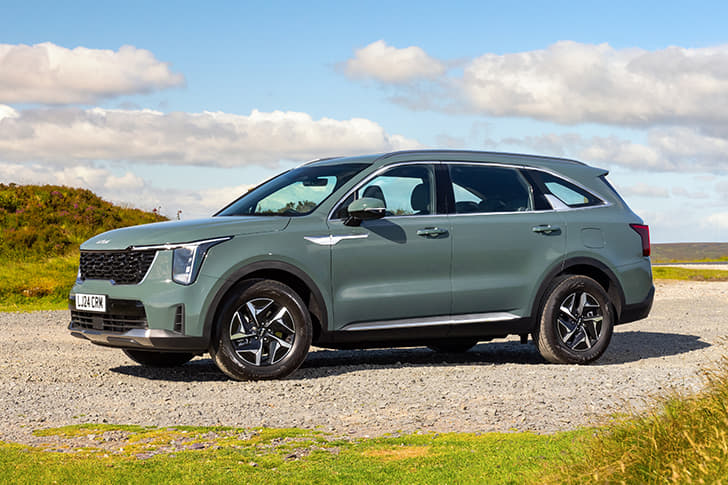
Kia Sorento

Kia Sorento

More questions on similar cars

BM

B M SAHU

1d

I have a T-Roc manufactured in 2020, which I purchased in January 2021. I primarily do long highway trips, with almost no city driving. The T-Roc has been solid for the last five years, but during very long 8 to 10-hour drives, it does not feel very comfortable because of the seating position, and my legs start to hurt a bit. My height is 6 feet. Which SUV would be best for long drives with great driving dynamics? What about the Jeep Compass? Should I make the change? Are there any chances that Jeep will launch a new Compass in India? And what about Jeep’s quality issues in India?

Autocar India team

Autocar India

Verified
3h

Given your usage, we would not change the T-Roc unless the seating comfort issue is genuinely becoming a deal breaker, because the T-Roc is still a very solid long-distance machine with excellent driving manners. However, at 6 feet tall, if the seating position is causing leg fatigue after 8 to 10-hour drives, that is a legitimate reason to upgrade, and in that case, you need something with a more relaxed seating position, better thigh support and a roomier cabin.The Jeep Compass is a strong candidate if driving dynamics matter. It still has one of the best ride and handling balances in this segment. It feels planted at highway speeds and genuinely tackles poor roads brilliantly. It also offers a more upright SUV seating position than the T-Roc, which could suit you better for long hours. Build quality and overall solidity are still strong points.On the new Compass, there are no immediate plans for an all-new generation in India. Jeep is expected to keep the current line-up fresh with special editions and updates, with a genuinely new product likely only around 2027. So, waiting specifically for a brand new India-bound Compass does not make much sense right now.If your brief is purely long-distance comfort plus great driving dynamics, we would actually look beyond the Compass as well. The Skoda Kodiaq or the Volkswagen Tayron, as they feel like a more natural upgrade from a T-Roc, with much better long-distance comfort, stronger ergonomics for taller drivers and excellent highway manners.If you want something more SUV like, the Jeep Meridian deserves a closer look than the Compass because it offers similar Jeep dynamics along with more space and a more relaxed long-distance experience.

VehicleJeep Compass
VehicleSkoda Kodiaq
VehicleVolkswagen Tayron
VehicleJeep Meridian
AS

Ashwanth

1d

Hello, I booked the xuv 7XO AXL DIESEL AT on January 8 and am still waiting for the delivery. What concerns me is the current geopolitical tensions in the Gulf, along with rising crude oil prices and possible fuel shortages. In this situation, is it really sensible to buy a diesel car (or even a petrol car)? Or would it be better to shift to an electric car like the XEV 9e or XEV 9S? I am genuinely very confused. What will happen to all the diesel and petrol cars that are currently being sold and are already on the road? Also, the 10 and 15-year scrappage policies are making me worried that a ₹30 lakh investment could end up as scrap in the near future. Could you please advise?

Autocar India team

Autocar India

Verified
1h

If your primary worry is whether buying a Rs. 30 lakh diesel today is a bad decision because of fuel prices, geopolitics or scrappage rules, the short answer is no, do not panic. Petrol and diesel cars are not going to suddenly become unusable or worthless because of short term crude price spikes or geopolitical tensions. Fuel prices may fluctuate, yes, but that affects both petrol and diesel ownership economics rather than making the vehicles obsolete overnight. India’s scrappage framework is also not a blanket “scrap your 10 or 15 year old private car no matter what” rule nationally. Private vehicles are tied to fitness and registration rules, while Delhi NCR has its own stricter age based restrictions.Now to your actual car choice. Since you have already booked the Mahindra XUV 7XO diesel automatic, the bigger question is whether your usage genuinely suits diesel. If you do regular highway runs or meaningful monthly mileage, the diesel still makes complete sense because the 7XO’s diesel is effortless, efficient and a great fit for a large SUV. If your use is mostly city and low running, then yes, an EV like the XEV 9e becomes more compelling, especially if you can charge at home.But do not switch to an EV purely out of fear. Buy an EV because your usage suits it. The XEV 9e is a fundamentally different ownership proposition, not just a “future proof” version of the 7XO. If you need frequent long distance flexibility without charging planning, the diesel remains easier to live with. If your use is mostly urban and predictable, the EV makes stronger sense.

VehicleMahindra XUV 7XO
VehicleMahindra XEV 9e
DI

dipesh

1d

I need a car mainly for outstation travel under a budget of ₹25-27 lakh. I live in a tier-3 city, and my yearly running is around 15,000 km. Please advise between 7x0 petrol vs diesel and Tata Safari vs 7x0. Also, are there any other good options in the same price range?

Autocar India team

Autocar India

Verified
17h

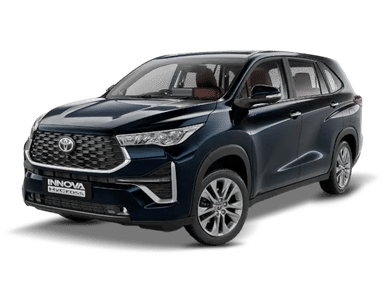
Since you mostly do highway trips of 15,000 km a year and your budget is ₹25-27 lakh, the Mahindra XUV 7XO diesel automatic is the one you should consider. It suits long drives better than the petrol because the torquey 2.2-litre diesel engine pulls strongly with a full load, needs fewer fuel stops, and will likely cost less to run given your yearly use. On the highway it feels steady and sure-footed, and Mahindra’s service reach is wide, even in a tier-3 city.Between XUV 7XO petrol and diesel, pick the diesel for your use. The petrol is smooth and punchy but will use more fuel on highways and have shorter range. Between Safari and XUV 7XO, go XUV 7XO for your brief. The Safari feels tougher and has a roomier third row, but it isn't as powerful and XUV's better safety tech (ADAS) is handy on long runs.Alternatively, consider the Toyota Innova HyCross if you want the maximum space and an easy, relaxed drive feel.

VehicleTata Safari
VehicleToyota Innova HyCross
VehicleMahindra XUV 7XO

Popular discussions right now

SA

Sam

1w

Should I wait for the Honda Elevate 2026 facelift? I have shortlisted the Elevate based on reliability (“no issues” ownership for 10+ years), brand trust, good drivability, comfort, and spaciousness. Or should I consider other options currently available in the market?

Autocar India team

Autocar India

Verified
5d

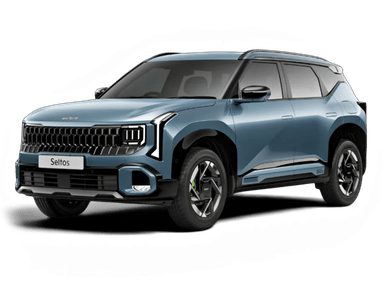
You’re after a no-drama, long-term family car that is easy to drive, comfortable and roomy. For that brief, the Honda Elevate VX CVT is a good fit. The VX CVT is the sweet spot because the automatic keeps the engine smooth in traffic, and the VX trim gets the useful features without pushing the price too high.Why it fits your list: Honda’s simple 1.5 petrol has a long, clean track record, so it suits your “no issues for 10+ years” aim. The driving position is high, the steering is light, and the CVT makes stop-go city work very easy. Space is good for four adults, the seats are supportive, and the suspension deals with broken roads well, so daily comfort is strong.Trade-offs to note: it is not the quickest for fast highway passes, and rivals offer more flashy features. If you expect a lot of high-speed use with a full load, you may want more punch.Regarding waiting for a facelift, while it may launch this year, there is no confirmed date or list of changes. An update usually brings small styling tweaks and a few extra features, and prices can go up too. The basics you care about are space, ease of driving, Honda’s engine and service and these are unlikely to change much.If you do want to look around, pick the Kia Seltos IVT for more features and a more modern cabin. Overall, for your needs, the Elevate VX CVT lines up best right now.

VehicleHonda Elevate
VehicleKia Seltos
RA

ram

1w

Hi, I am a bit confused about whether I should wait for the Maruti Brezza facelift or go ahead and buy the Kia Seltos HTE(O) or the Hyundai Creta E Summer Edition.

Autocar India team

Autocar India

Verified
6d

Going by your shortlist, you want a bigger family car on a tight budget and are looking at base trims. If you need the car in the next couple of months for mostly city use with some weekend trips, pick the Kia Seltos HTE (O) IVT. It is well equipped and, compared to the Maruti Suzuki Brezza, gives you more back-seat space and boot room.The Brezza update will be relatively minor, though we expect the 1.5 NA engine to make way for the 1.0 turbo-petrol from the Fronx. Waiting for it only makes sense if you mainly drive in tight city areas and want an easier-to-park car.Overall, for a near-term purchase and everyday comfort, the Seltos lines up best with what you’re considering.

VehicleKia Seltos
VehicleMaruti Suzuki Brezza
VehicleMaruti Suzuki Fronx
VA

Vasu

5d

I own a Honda City 4th Generation and have been getting an average fuel efficiency of 16.1 km/l over 85,000 km. Would it be worth installing a CNG kit to improve the mileage further? Please suggest.

Autocar India team

Autocar India

Verified
4d

With the kind of mileage you are already seeing from your 4th generation Honda City, I would not rush to fit a CNG kit. Around 16 kpl over 85,000 km is actually a healthy real world figure for a petrol sedan, and since the City is known for its smoothness and refinement, adding an aftermarket CNG kit will inevitably change the character of the car. Honda does not offer a factory CNG option for the City, so any retrofit will be third party, which means compromises in boot space, some loss in outright performance and the added variable of installation quality and long term reliability. Honda also recommends using fuel that meets the vehicle specifications, and aftermarket modifications can complicate warranty or support considerations on newer cars.A CNG conversion only starts making strong financial sense if your running is very high and you plan to keep the car for several more years to recover the kit cost. If your annual usage is moderate, the payback period can be longer than expected. The only real case for going CNG here is if fuel cost reduction is your absolute top priority. Otherwise, given how well your City is already performing, I would leave it as is and enjoy the refinement rather than fixing something that is not really broken.

VehicleHonda City

Posted on: 13 May 2026