Creta Turbo Petrol DCT: Buy?


Last Updated on: 11 Nov 2026
Engine Type | Turbocharged |
Engine Displacement | 1482 cc |
Number of Cylinders | 4 |
Engine Installation | Front |
Fuel Type/ Propulsion | Petrol |
Gearbox Type | DCT |
Number of Gears | 7 |
Manual Shifts via Gear Lever on Automatic Gearbox | Yes |
Paddle Shifters for Automatic Gearbox | Yes |
Sport Mode for Automatic Gearbox | Yes |
Drive Layout | Front Wheel Drive |
Lockable Differential/s | No |
Max Engine Power | 160 hp at 5500 rpm |
Max Engine Torque | 253 Nm at 1500 - 3500 rpm |
Fuel Supply System | Direct Injection |
E20 Compatibility | Yes |
Emission Standard | Bharat Stage VI |
Terrain Modes | Yes |
Official Fuel Economy | 17.5 kmpl |
City Fuel Economy as Tested | 9.27 kmpl |
Highway Fuel Economy as Tested | 14.76 kmpl |
Fuel Tank Capacity | 50 litres |
0-100kph | 9.87 s |
20-80kph (in third gear/ kickdown) | 5.61 s |
40-100kph (in fourth gear/ kickdown) | 7.07 s |
Front Suspension Type | Independent, MacPherson Strut |
Front Springs | Coil Springs |
Rear Suspension Type | Non-independent, Torsion Beam |
Rear Springs | Coil Springs |
Damper Control | No |
Ride Height Adjust | No |
Type of Power Assist | Electric |
Steering Adjust type | Manual |
Steering Adjust | Tilt and Telescopic |
4 Wheel Steer | No |
Front Brakes | Disc |
Rear Brakes | Disc |
Wheel Size | 18 inches |
Front Tyre Size | 215/55 R18 |
Rear Tyre Size | 215/55 R18 |
Wheels | Alloys |
Spare Wheel | Space Saver |
Length | 4460 mm |
Width | 1830 mm |
Height | 1635 mm |
Wheelbase | 2690 mm |
Chassis Type | Monocoque |
Boot Capacity | 447 litres |
Doors | 5 |
| Cup Holders | |
| Launch Control | |
| Bottle Holder in Doors | |
| Rear Windscreen Sun Shade | |
| Trunk Light | |
| Foldable Seatback Table |
| ISOFIX Child Seat Mounts | |
| Rear Seatbelt Reminder | |
| Tyre Pressure Monitoring System | With Display |
| Traction Control | |
| Speed Sensing Door Lock | |
| Speed-Sensing Auto Door Locks |
| Projector Headlamps | |
| Body Coloured Bumpers | |
| Pop-Out Door Handle | Auto |
| Stop Lamp | |
| Puddle Lamps | |
| Antenna | Shark Fin |
| Tachometer | Digital |
| Average Speed | |
| Average Fuel Consumption | |
| Low Fuel Level Warning | |
| Trip Meter | |
| Distance to Empty |
| MirrorLink | |
| Satellite Navigation | On-board |
| Second Row USB port | 2 Type C |
| Rear Entertainment Screens | |
| USB Input | |
| Branded Music System | Bose |
| Find My Car | |
| Remote Car Lock/Unlock via App | |
| Remote Sunroof Open / Close via App | |
| Driving Analytics | |
| Remote AC On / Off via App | |
| Remote Engine Start/Stop |
 Electronic Stability ControlFully Digital Digital Instrument ClusterPhone-based Satellite NavigationFabric Seat MaterialLED headlampsElectronic Parking Brake with AutoholdDriving ModesPart-leatherette Seat MaterialConnected LEDRear Seat Backrest ReclineRear Washer/WiperPush Button StartAuto Pop-Out Door HandleConnected LEDDriving ModesFront & Rear Parking SensorsPanoramic SunroofWireless Phone ChargingFront Only Ventilated SeatsConnected LEDAutomatic Day Night Interior MirrorVoice Assisted SunroofBose Branded Music SystemRemote Engine Start/StopLED fog lampsAdaptive Cruise ControlPanoramic SunroofBlind Spot MonitorBose Branded Music SystemRemote Engine Start/StopAutomatic WipersPanoramic SunroofBose Branded Music SystemRemote Engine Start/StopFront Only Ventilated SeatsRear Parking CameraCruise ControlDriver's Seat MemoryProjector HeadlampsPanoramic SunroofAdaptive Cruise ControlPanoramic SunroofBlind Spot MonitorBose Branded Music SystemRemote Engine Start/StopAutomatic WipersAdaptive Cruise ControlPanoramic SunroofBose Branded Music SystemRemote Engine Start/Stop


I am currently using a 2024 Kia Seltos Diesel AT GT Line. My family is not feeling good on highway ride as its interior is completely black. Also, its suspension is hard. I am planning to change the car to a 7-seater that offers ride comfort and has enough space. In the past 2 years, I have driven 34,000 km on my Seltos. Should I continue with a diesel car or change? My budget is around Rs. 30 lakh. Please help me in finding a suitable car.

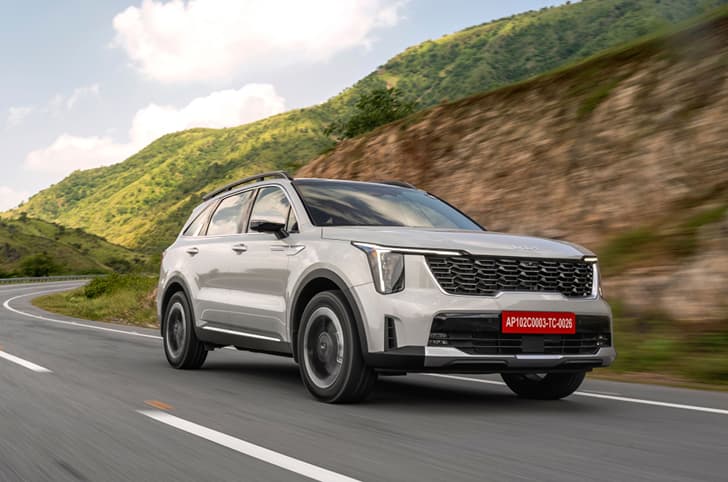
 Kia SorentoKia Seltos
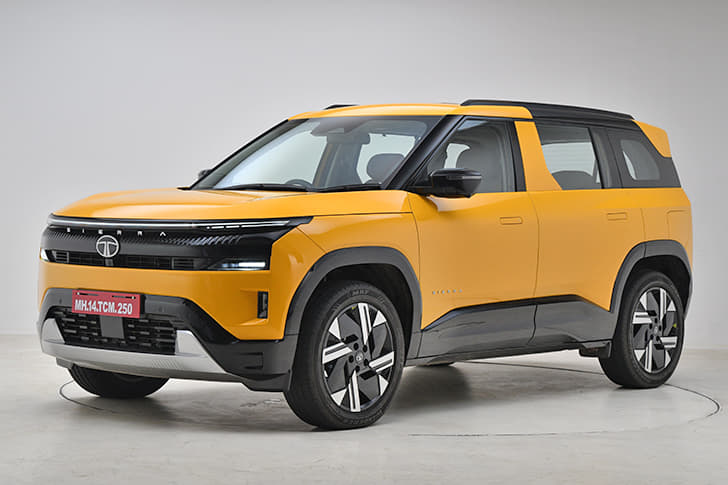
Dear team, I want a petrol automatic car with a spacious cabin, a five-star safety rating, good rear-seat comfort, easy driving manners and a responsive service network. A sunroof isn’t necessary. I’ll opt for BH registration, as I’m eligible for it. I’m considering: Kia Seltos HTK IVT: It has manual AC instead of automatic climate control. Is that acceptable? I’m also eligible for a corporate discount and a loyalty bonus. Honda Elevate VX CVT: It has all the essential features, but reviews say its infotainment screen is small and its camera feed quality is poor. Tata Sierra Pure L(O) DCT: I’m sceptical about the quality of Tata’s service centres. Please help me choose one.
Kia SeltosHonda ElevateI owned a 2019 Maruti Vitara Brezza ZDi+ manual and sold it in 2024 to buy a Virtus GT DSG. I regret selling the Brezza, although the Virtus is a great car. I bought it because my wife wanted a sedan, and I chose the automatic partly for her, but she hardly drives it. The Virtus has covered nearly 60,000 km in two years. I’m planning to replace it with a new car. I drive at least 80% on the highway and 20% in the city. At least twice a month, I make a round trip of 640 km, and my annual mileage is at least 25,000 km. I’ve decided that my next car should be a diesel. I like the Tata Harrier, but I’m concerned about reliability and potential issues. I’m also considering the Kia Seltos, Mahindra XUV 7XO, and the upcoming Hyundai Creta. I’d choose a top-end variant and am open to either a manual or an automatic. If I go for an automatic, it must have a torque-converter gearbox. What would you recommend?
Kia SeltosMahindra XUV 7XOCurrent car: 2020 Kia Seltos HTX Budget: Rs 35 lakh, but I can stretch it, as I plan to keep the car for more than 13 years. Usage: About 80 percent city driving, and around 5,000 km a year for the first five years. I want a large family SUV that feels special, offers strong value and can be owned confidently for 12-15 years without becoming a maintenance headache. I’ll be driving it myself, not a chauffeur. Ventilated front seats and a 360-degree camera are must-haves. I don’t want a diesel because of Delhi’s 10-year rule, and the idea of an expensive EV still worries me. So I’m looking at a petrol or a petrol-based strong hybrid, in the hope that E30 fuel never arrives. I’m also avoiding German brands, because of their high purchase price and very high maintenance costs. Cars I like that are currently on sale: Mahindra XUV 7XO AX7L: the value king, but almost everyone has one, so it may not feel special. Kia Sorento HTK+ Black Line: a next-generation global model may launch next year, which could make it look dated within a year. Toyota Innova Hycross: its taxi image is a drawback. Upcoming models I might like: I’ll be watching the global launch of the new Toyota Fortuner this December, and I could stretch to Rs 45-50 lakh for it if you strongly recommend it. When will the Hyundai Santa Fe launch? Also, I’ve had an extremely good experience with my Honda Jazz. Is Honda launching any model that matches my requirements?
Kia SorentoKia SeltosMahindra XUV 7XOHonda ZR-VJSW Motors CombatWith a budget of Rs 23–24 lakh, should I consider the Hyundai Alcazar Turbo Petrol DCT or the Kia Seltos GTX Petrol, comparing both the IVT and DCT options? My annual driving is approximately 6,000–7,000 km, and I would like a detailed comparison focusing on long-term ownership over 10–15 years, reliability, maintenance costs, transmission durability, fuel efficiency and overall value for money. I would also like to understand the practical differences between Hyundai’s K2 and Kia’s K3 platforms, particularly in terms of structural strength, safety, ride comfort, handling and long-term durability. Given my relatively low annual usage and preference for hassle-free ownership, which car and transmission combination would make the most sense within my budget?
Kia SeltosHyundai Alcazar