Triber Turbo for City Driving


Last Updated on: 11 Oct 2026
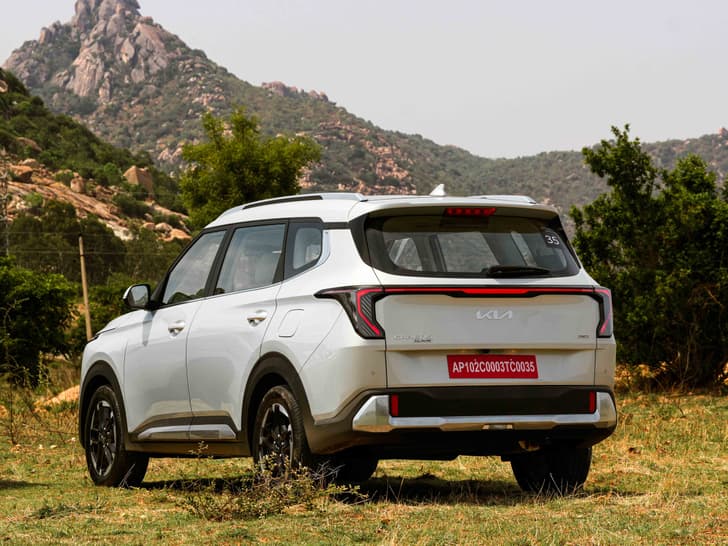
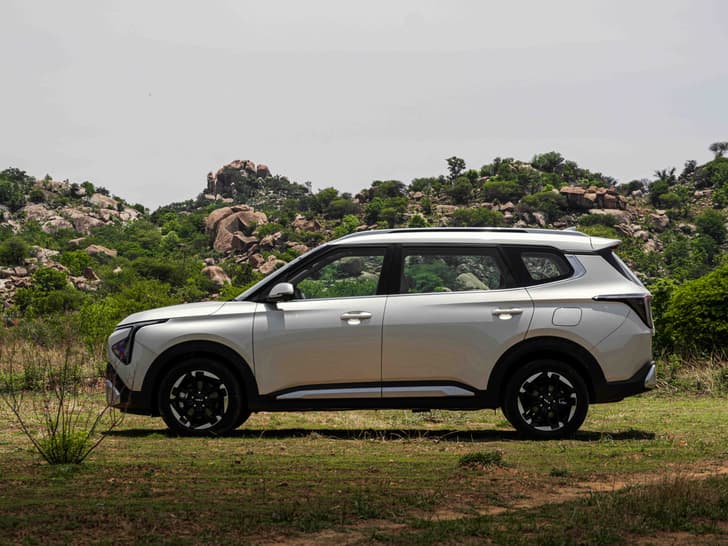
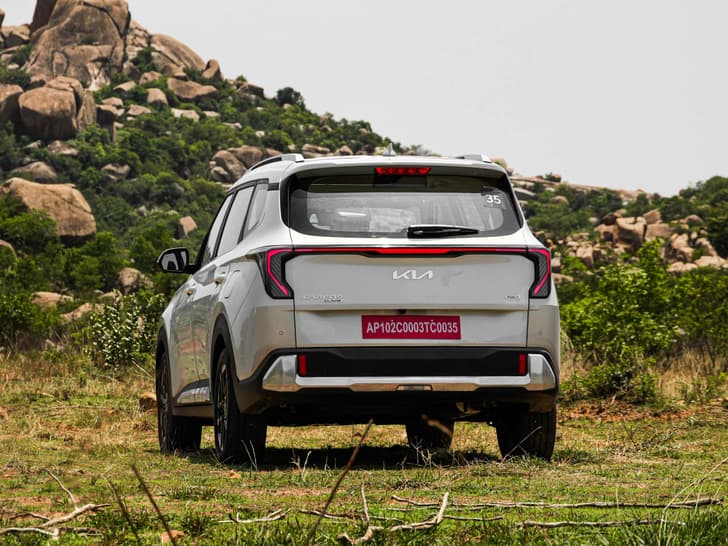
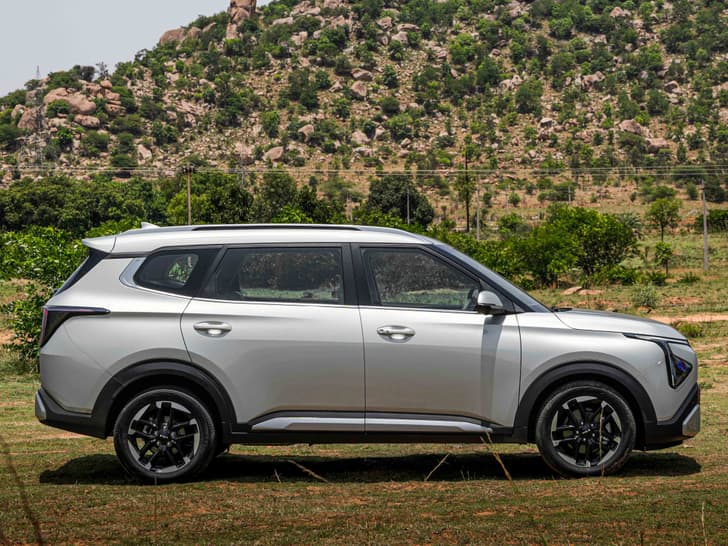
Engine Displacement | 1497 cc |
Number of Cylinders | 4 |
Engine Installation | Front |
Fuel Type/ Propulsion | Petrol |
Gearbox Type | Manual |
Number of Gears | 6 |
Drive Layout | Front Wheel Drive |
Max Engine Power | 115 hp at 6300 rpm |
Max Engine Torque | 143.8 Nm at 4500 rpm |
Fuel Supply System | MPFI |
E20 Compatibility | Yes |
Emission Standard | Bharat Stage VI |
Drive Mode Types | Multiple |
Terrain Modes | No |
Official Fuel Economy | 15.34 kmpl |
Fuel Tank Capacity | 45 litres |
User Reported Mileage | 15.87 kmpl |
Front Suspension Type | Independent, MacPherson Strut |
Front Springs | Coil Springs |
Rear Suspension Type | Non-independent, Torsion Beam |
Rear Springs | Coil Springs |
Damper Control | No |
Ride Height Adjust | No |
Type of Power Assist | Electric |
Steering Adjust type | Manual |
Steering Adjust | Tilt |
4 Wheel Steer | No |
Front Brakes | Disc |
Rear Brakes | Disc |
Wheel Size | 15 inches |
Front Tyre Size | 195/65 R15 |
Rear Tyre Size | 195/65 R15 |
Wheels | Alloys |
Length | 4550 mm |
Width | 1800 mm |
Height | 1708 mm |
Wheelbase | 2780 mm |
Chassis Type | Monocoque |
Doors | 5 |
| Rear AC Vents | |
| Climate Control | 1-zone |
| Cooled Glovebox | |
| Cruise Control | |
| Cup Holders | |
| Dead Pedal |
| Driver Airbag | |
| Central Locking | |
| Child Safety Lock | |
| Curtain Airbag | |
| Dashcam | |
| Seat Belt Warning |
| Outside rear view mirror (ORVM) | |
| Front Fog Lamps | |
| Follow Me Home Headlamps | |
| Headlight Type | Halogen |
| Connected LED | |
| Puddle Lamps |
| Low Fuel Level Warning | |
| Shift Indicator | |
| Speedometer | Analogue |
| Average Speed | |
| Average Fuel Consumption | |
| Gear Indicator |
| USB Input | |
| Steering Phone Controls | |
| Rear Entertainment Screens | |
| Touchpad | |
| Third Row USB port | 2 Type C |
| Second Row USB port | 2 Type C |
| Remote AC On / Off via App | |
| Live Location Sharing | |
| Live Traffic Updates On App | |
| Alexa Compatibility | |
| Smart Drive Information | |
| Check Vehicle Status via App |
 Electronic Stability ControlFully Digital Digital Instrument ClusterType A and Type C Front USB portPart-leather Seat MaterialFollow Me Home HeadlampsRear Parking CameraAudio and Phone Steering Mounted ControlsPhone-based Satellite NavigationRear Seat Backrest ReclineORVM turn indicatorsSingle Pane SunroofLED Daytime Running LightsPhone-based Satellite Navigation1-zone Climate ControlRear Seat Backrest ReclineTraction ControlPart Digital / Part Analogue Digital Instrument Cluster4 SpeakersIndividual Chairs at RearConnected LEDSingle Pane SunroofWireless Phone ChargingSliding Middle RowPart Digital / Part Analogue Digital Instrument ClusterPhone-based Satellite NavigationBlind Spot MonitorFully Digital Digital Instrument ClusterOn-board Satellite NavigationRemote Engine Start/StopLeatherette Seat MaterialAdaptive Cruise ControlPanoramic SunroofBose Branded Music SystemFront Only Ventilated SeatsPuddle LampsTraction ControlCruise ControlPanoramic SunroofBlind Spot MonitorBose Branded Music SystemLane Departure AvoidanceExterior Mirrors Electric FoldDigital KeyFront Only Ventilated SeatsLED fog lampsElectronic Parking BrakePanoramic SunroofBlind Spot MonitorFront Only Ventilated SeatsOn-board Satellite Navigation
Join the Discussions
I am planning to buy a new 7-seater and am confused between the Kia Carens Clavis and Maruti Ertiga, both with naturally aspirated petrol engines. I do not like the new air-conditioning setup in the Ertiga. Could you advise on the Carens Clavis in terms of mileage, reliability, and long-term service costs?

 Kia Carens ClavisKia SeltosHyundai CretaHyundai Verna
I’m planning to buy either the Kia Carens Clavis or the Hyundai Alcazar. Please advise which one would be better.
Kia Carens ClavisHyundai AlcazarI already have 2 cars including Celerio automatic and i20 diesel. My family needs a six-seater car and budget is not a problem but we want a car for driving within the city and in this case, parking is the problem. I drive less than 10,000 kilometer annually. I drive with all family members mostly within the city and my entire family is shorter than 5 feet 3 inches. I am thinking of having an i20 for highway riding as four of us usually go out. I am planning to buy Triber turbo for 6 family members within the city and for occasional highway trips rather than buying costly cars like Clavis or HyCross.
Renault TriberKia Carens ClavisToyota Innova HyCrossHyundai i20I currently own a 2016 Hyundai i20 Elite Sportz and am planning to upgrade to an SUV, but I am a bit confused. My budget is Rs. 20 lakh. I am looking for a reliable engine, low maintenance costs, and decent mileage. Since my family consists of six members, I am particularly interested in a 7-seater. Would the Tata Safari be a good option, or should I consider other alternatives?
Kia Carens ClavisTata HarrierTata SafariI am planning to buy a 7-seater car and am confused between the Kia Carens Clavis HTX (O) Petrol DCT and the Mahindra XUV 7XO AX5 Diesel. My confusion is mainly around a few points. The XUV 7XO has better looks and more power than the Clavis, while the Clavis offers better third-row space and a more spacious cabin. I do not have a very high annual running either. With my current car, I drive around 12,000-14,000km a year, including both city and highway driving, with occasional hill trips. This has left me confused about whether I should opt for a diesel or petrol. The XUV 7XO petrol is also not known for particularly good mileage, which makes the decision even more difficult. With the diesel option, I am also concerned about potential DPF-related issues, especially given my relatively low annual running. Since the car will primarily be driven in NCR, there is also some uncertainty around the applicability of BS6 diesel vehicles when GRAP Stage 4 restrictions are in force, as government regulations can change. Another concern is the DCT transmission. I have heard about DCTs facing heating issues in bumper-to-bumper traffic, although I am not sure how significant this issue is with the Carens Clavis. During my test drive, I also felt that the Clavis seemed somewhat underpowered in Normal mode, particularly when starting from a standstill. I had to press the accelerator pedal quite hard to get it moving more quickly. Is this simply a characteristic of the DCT and its calibration, or could it be specific to the particular test-drive car? I would really appreciate any suggestions or experiences that could help me clear up these doubts before making a decision. Thanks in advance.
Kia Carens ClavisMahindra XUV 7XO