Last Updated on: 10 Sep 2026
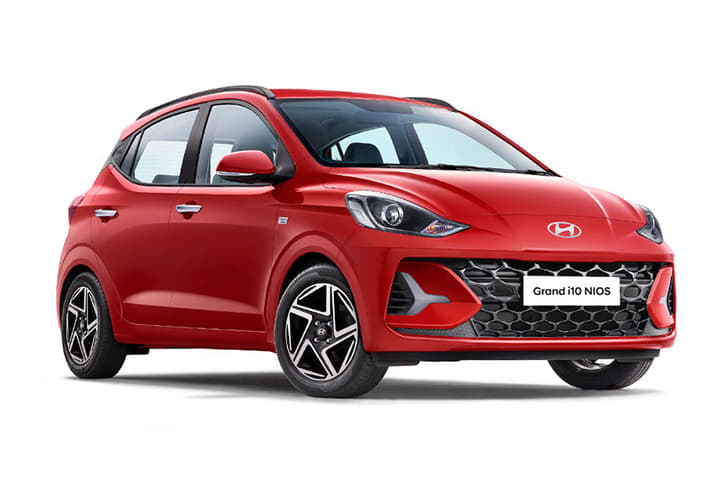
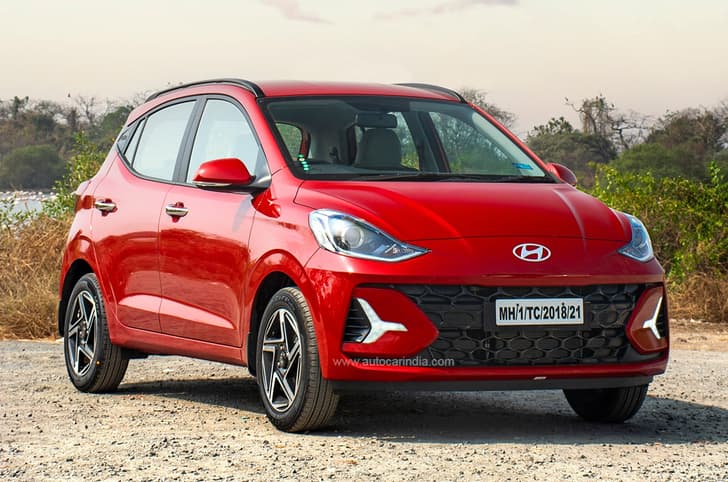
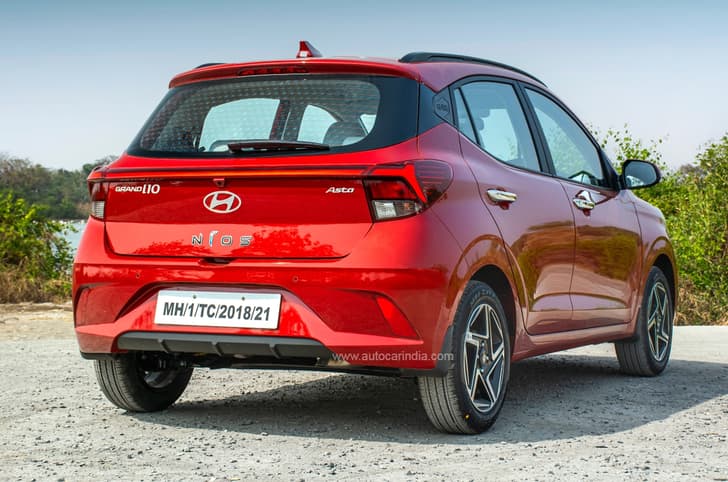
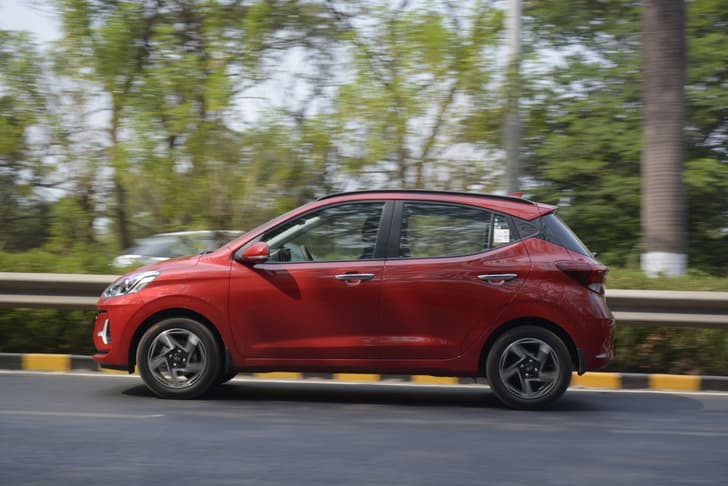
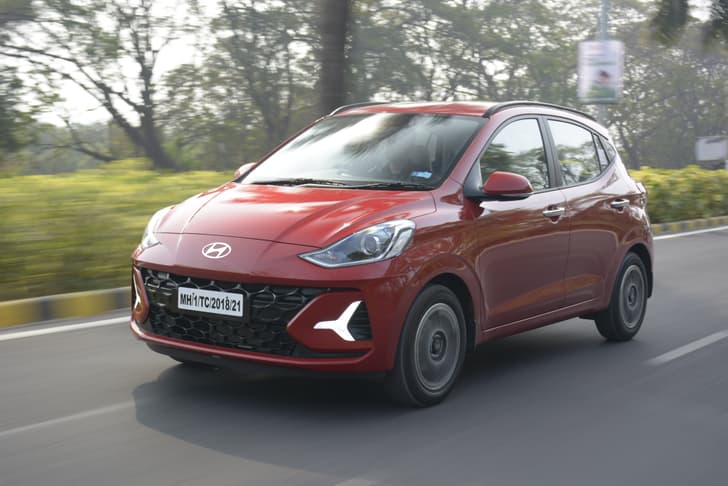
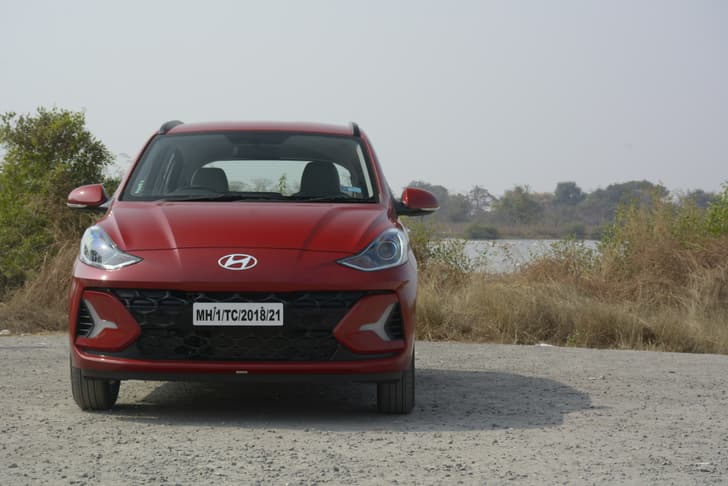
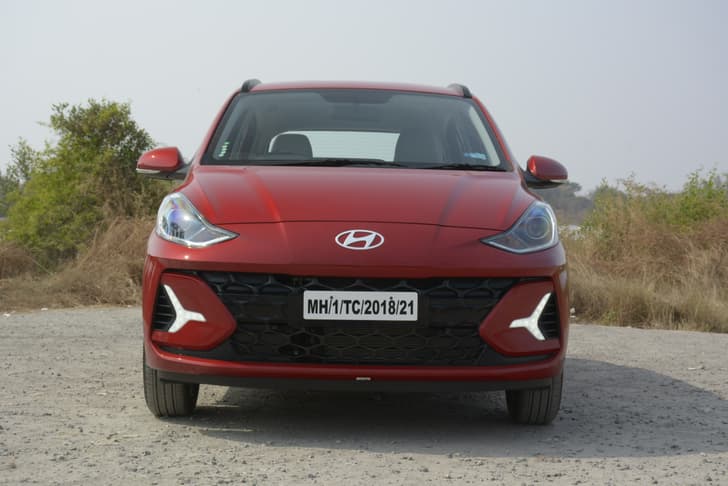
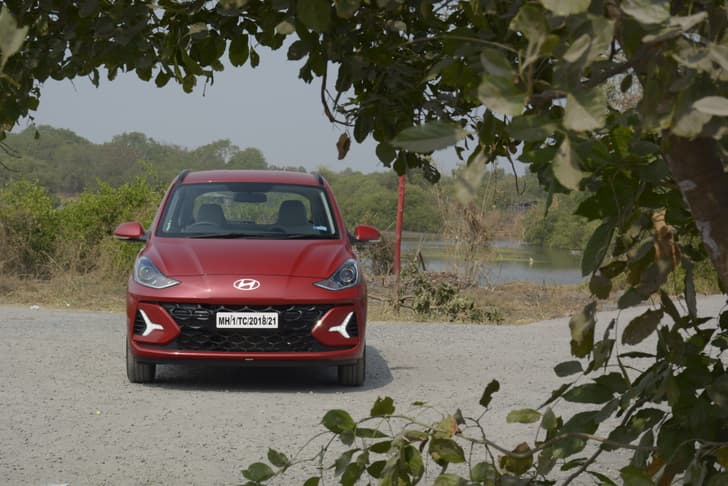
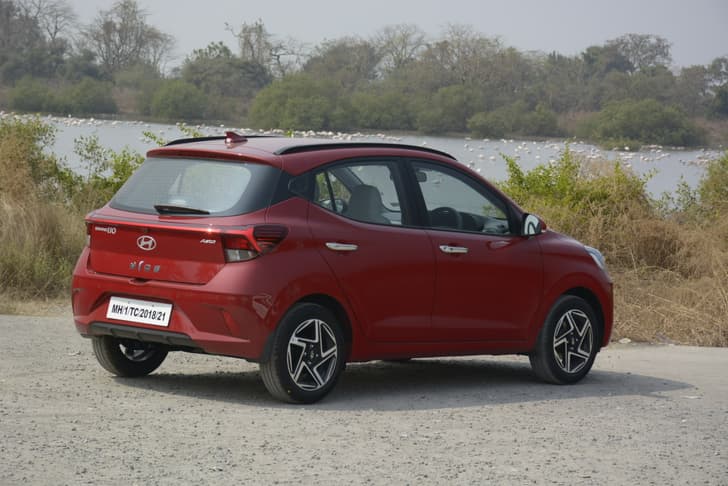
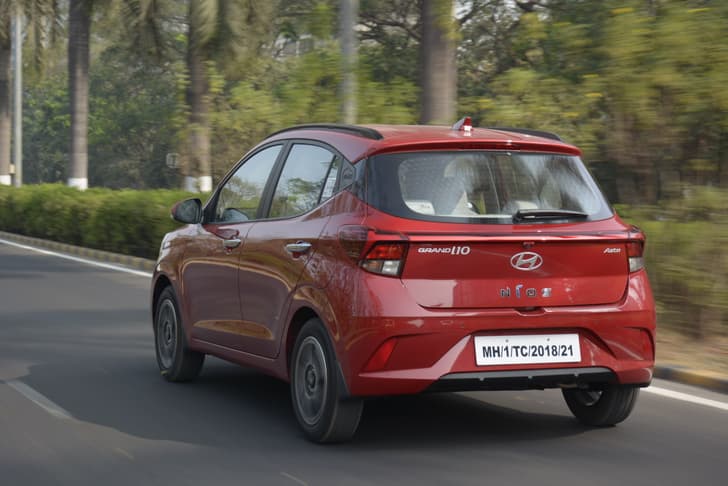
Hyundai Grand i10 Nios 1.2 Petrol Sportz Vibe AMT
Hyundai Grand i10 Nios 1.2 Petrol Sportz Vibe AMT Key Features
- Traction Control
- Dashcam
- Brake Assist (BA)
- Driver rear view monitor (DRVM)
- Exterior Mirrors Electric Fold
Hyundai Grand i10 Nios 1.2 Petrol Sportz Vibe AMT specifications
Engine & Transmission
Engine Displacement | 1197 cc |
Number of Cylinders | 4 |
Engine Installation | Front |
Fuel Type/ Propulsion | Petrol |
Gearbox Type | AMT |
Number of Gears | 5 |
Manual Shifts via Gear Lever on Automatic Gearbox | Yes |
Paddle Shifters for Automatic Gearbox | No |
Sport Mode for Automatic Gearbox | No |
Drive Layout | Front Wheel Drive |
Lockable Differential/s | No |
Max Engine Power | 83 hp at 6000 rpm |
Max Engine Torque | 113.8 Nm at 4000 rpm |
Fuel & Performance
Fuel Supply System | MPFI |
E20 Compatibility | Yes |
Emission Standard | Bharat Stage VI |
Terrain Modes | No |
Auto Start/Stop | No |
Autocar Tested City Mileage | 13.76 kmpl |
Autocar Tested Highway Mileage | 16.61 kmpl |
Fuel Tank Capacity | 37 litres |
Autocar Tested Mileage | 15.19 kmpl |
Suspension & Steering
Front Suspension Type | McPherson strut |
Front Springs | Coil Springs |
Rear Suspension Type | Coupled torsion beam axle |
Rear Springs | Coil Springs |
Damper Control | No |
Ride Height Adjust | No |
Type of Power Assist | Electric |
Steering Adjust type | Manual |
Steering Adjust | Tilt |
4 Wheel Steer | No |
Front Brakes | Disc |
Rear Brakes | Drum |
Wheel Size | 15 inches |
Front Tyre Size | 175/60 R15 |
Rear Tyre Size | 175/60 R15 |
Wheels | Alloys |
Spare Wheel | Space Saver |
Dimensions
Length | 3815 mm |
Width | 1680 mm |
Height | 1520 mm |
Wheelbase | 2450 mm |
Chassis Type | Monocoque |
Doors | 5 |
Hyundai Grand i10 Nios 1.2 Petrol Sportz Vibe AMT features
Comfort
| Digital Instrument Cluster | Part Digital / Part Analogue |
| Electric Tailgate Release | |
| Rear Parcel Tray | |
| Rear Power Outlet | |
| Driving Modes | |
| Rear Reading Lamp |
Safety
| Side Airbag | |
| Boot Open Warning | |
| Brake Assist (BA) | |
| Door Ajar Warning | |
| Central Locking | |
| Seat Belt Warning |
Exterior
| Stop Lamp | |
| Sequential Turn Indicators | |
| LED fog lamps | |
| Wheel Arch Cladding | |
| Connected LED | |
| Headlight Type | Halogen |
Interior
| Trip Meter | |
| Average Fuel Consumption | |
| Tachometer | Analogue |
| Average Speed | |
| Gear Indicator | |
| Shift Indicator |
Entertainment
| Wireless Phone Charging | |
| MirrorLink | |
| Web Browser | |
| Voice Commands | |
| Video Player | |
| USB Input |
Connected Car Features
| Find and Book Parking Slot | |
| Live Traffic Updates On App | |
| E-Call & I-Call | |
| Location Based Services | |
| Live Location Sharing | |
| Emergency Call Button |
Hyundai Grand i10 Nios variants
 Anti-Lock Brakes (ABS)Part Digital / Part Analogue Digital Instrument ClusterFabric Seat MaterialLED taillightsElectronic Brakeforce Distribution (EBD)With Display Tyre Pressure Monitoring SystemRear AC Vents4 SpeakersDriver's Seat Height AdjustLED DRLsExterior Mirrors Electric Fold with Power FoldingProjector HeadlampsLED DRLsRear AC Vents4 SpeakersElectronic Stability ControlCruise ControlPhone-based Satellite NavigationDaytime Running LightsWired Android AutoTraction Control1-zone Climate ControlType A and Type C Front USB portSemi-Fabric Seat MaterialLED Daytime Running LightsImpact Sensing Auto Door UnlockAmbient LightingType C Front USB portFabric Seat MaterialPhone-based Satellite NavigationISOFIX Child Seat MountsPush Button StartWireless Android AutoLeather-wrapped Steering WheelSpoilerTraction ControlDriver rear view monitor (DRVM)Wired Android AutoSemi-Fabric Seat MaterialBody Coloured Door Handle Finish
Hyundai Grand i10 Nios comparison
Questions you may find useful
Hello, Autocar India Team. I am a first-time car buyer with a budget of Rs 6-12 lakh. I am looking for a petrol automatic hatchback or micro SUV. I am a new driver, so I want something that is easy to drive and fuel-efficient. I have shortlisted the Tata Altroz DCA/AMT, Tata Punch AMT, Tata Tiago AMT, Maruti Suzuki Swift AMT, Maruti Suzuki Baleno AMT, Toyota Urban Cruiser Taisor AMT and Hyundai Grand i10 Nios AMT. I am confused between these options. Which one would you recommend for my requirements?

 Maruti Suzuki BalenoMaruti Suzuki SwiftTata AltrozTata PunchTata TiagoToyota Urban Cruiser TaisorHyundai Grand i10 Nios
Hi Autocar India, I'm looking to upgrade my sister's 2021 Maruti Suzuki Alto 800. Her office commute is around 30 km, four days a week, and my budget is limited. I am considering the Hyundai Grand i10 Nios Magna Manual. Would it be a good upgrade, or would you recommend a better option in the same price range? My priorities are reliability, comfort, good fuel efficiency, and low running costs.
Hyundai Grand i10 NiosMaruti Suzuki SwiftHi Autocar team! I’m a first-time driver looking for a small car for my little family. My budget is under Rs 8 lakh. I’ve currently shortlisted the Maruti Suzuki Celerio, Hyundai Exter, and Hyundai Grand i10 Nios. Which of these would be the best choice for me, or is there another car you would suggest?
Hyundai Grand i10 NiosMaruti Suzuki CelerioHyundai ExterHi everyone, I am a first-time lady driver looking for a safe, reliable, and easy-to-drive automatic hatchback primarily for heavy city traffic. I am confused between going electric with the Tata Tiago EV (I have a dedicated home charging spot) or choosing a traditional petrol automatic like the Hyundai Grand i10 Nios (AMT) or Maruti Suzuki Swift (AMT). For a complete beginner, does the Tiago EV make practical sense, or is a petrol AMT smoother and easier to live with as a first car? Please let me know which of these handles bumper-to-bumper traffic best, or if there is another model in this price range I should consider.
Tata Tiago EVTata Punch EVHyundai Grand i10 NiosMaruti Suzuki SwiftHi, I currently use a Grand i10 Nios and am planning to buy an SUV. My driving is mostly in the city, with occasional highway drives. I am looking for feature-rich interiors, good fuel economy, and decent on-road presence, while power is a secondary priority. My budget is ₹15-18 lakh.
Kia SeltosHyundai Grand i10 NiosMaruti Suzuki VictorisHyundai Grand i10 Nios price in India
Upcoming Cars
Hyundai Cars
Trending Cars


Latest Cars