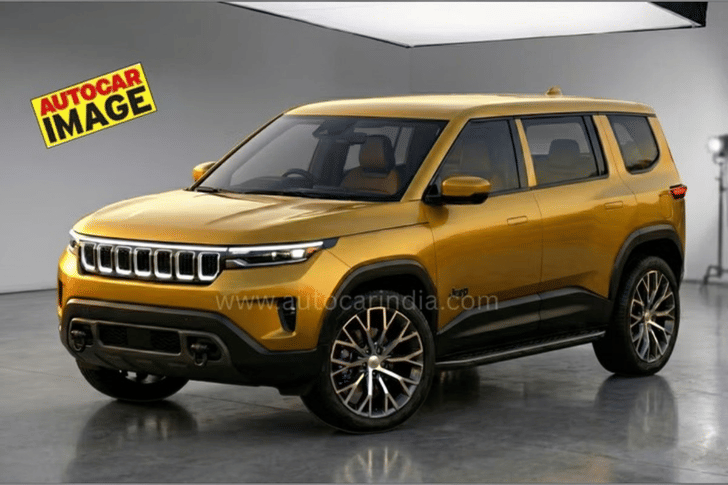

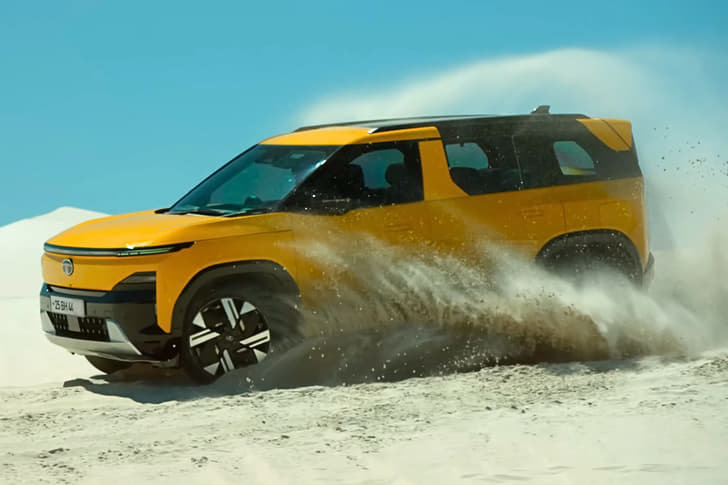
Tata Motors is slated to debut the production-spec Sierra EV on June 30, 2026. The eSUV was first showcased in concept form at the Auto Expo 2020 and once again at the Auto Expo 2023. In late 2025, its production-spec version was teased along with the ICE Sierra, giving a glimpse of its final look.
- Sierra EV gets distinct styling cues to set it apart from its ICE counterpart
- Likely to share Harrier EV’s 65kWh and 75kWh battery packs
- RWD and AWD versions to be on offer
Tata Sierra EV: What do we know so far?
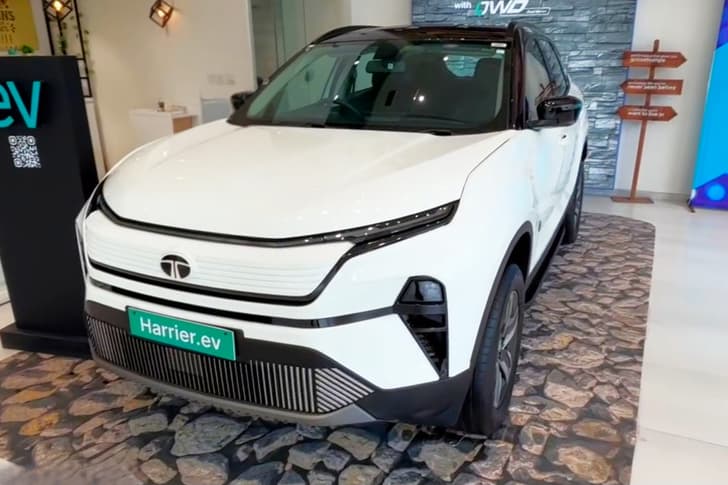
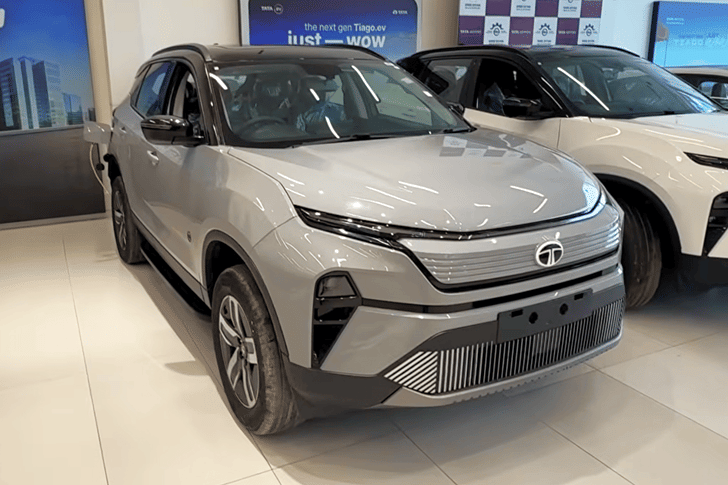
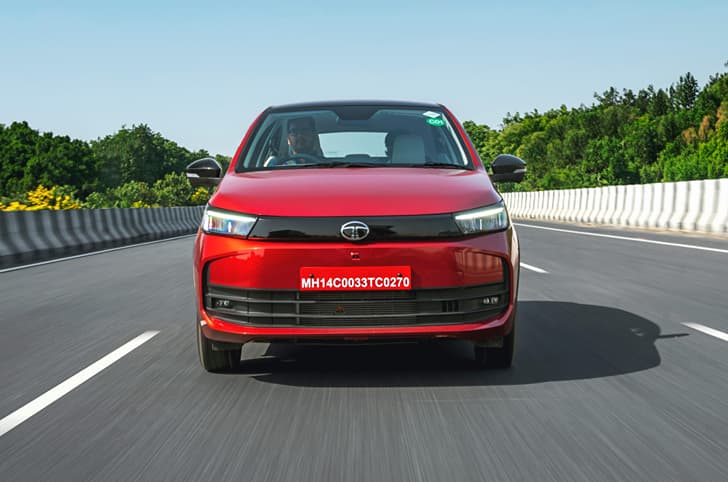
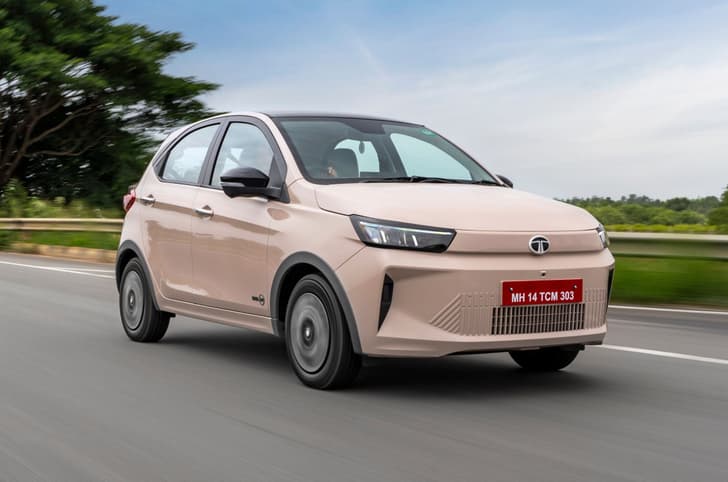
The Sierra EV will slot right in between the Curvv EV and the Harrier EV in Tata’s EV portfolio. It will sit on the acti.ev+ architecture that underpins the Harrier EV and could even borrow its 65kWh and 75kWh options. Tata’s chief commercial officer, Vivek Srivastava, in an interview with Autocar India, had confirmed that the Sierra EV will arrive in RWD and AWD versions. Tata is expected to offer AWD only with the 75kWh version.
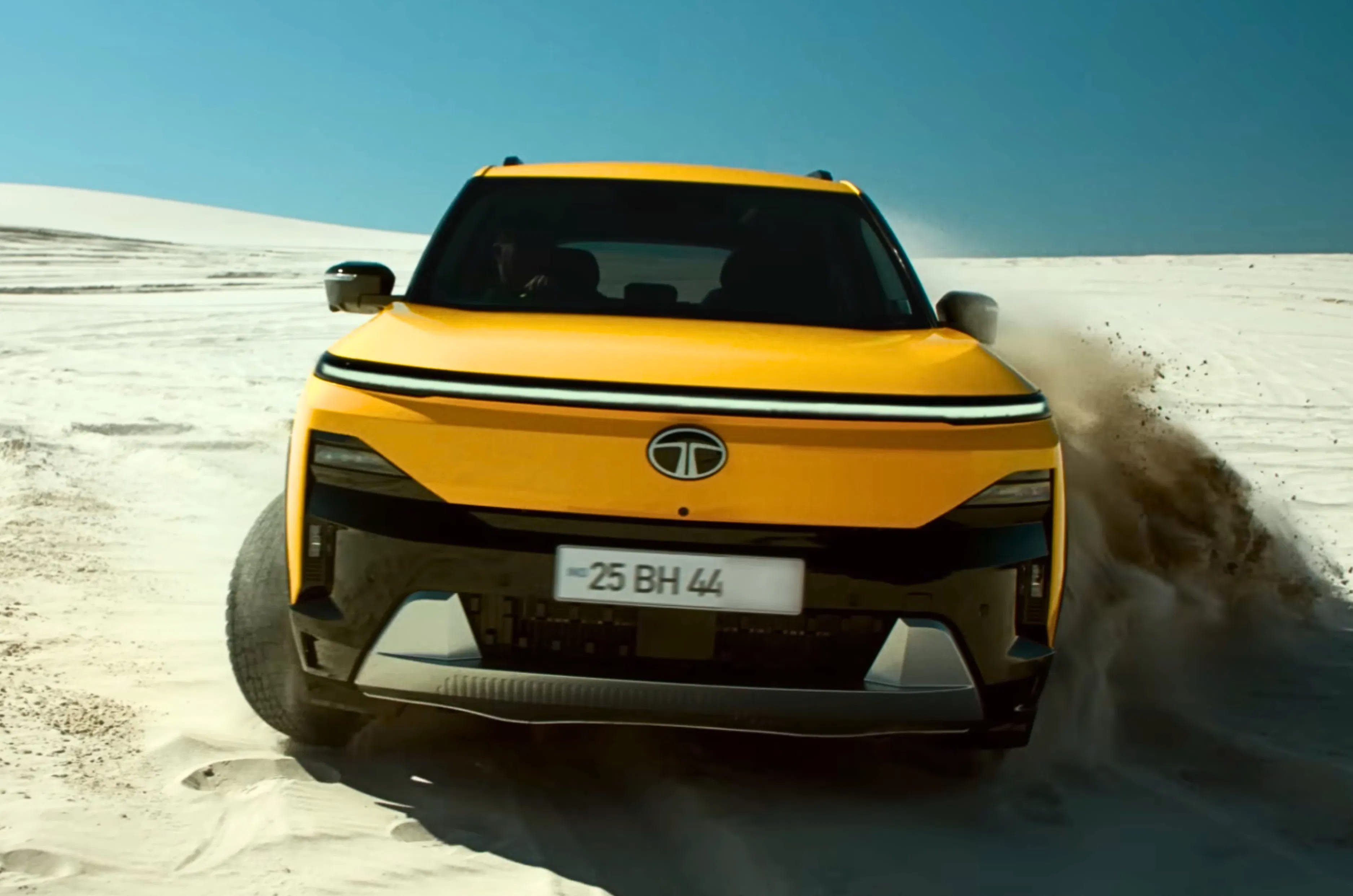
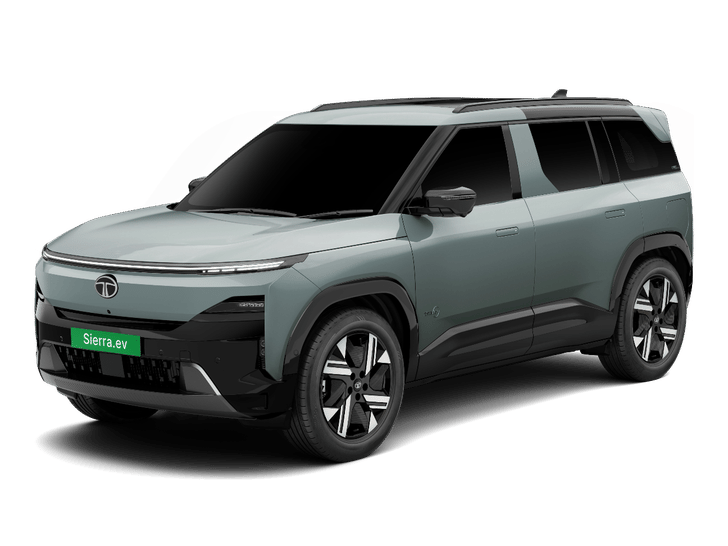
As for styling, the Sierra EV features unique design elements that set it apart from its ICE counterpart. These include a blanked-off grille and a revised front bumper. While the alloy wheels of the EV and ICE Sierra in the teaser share a similar design, the former could have a different look for added distinction. As with other Tata EVs, you can expect ‘.ev’ badging around the car.
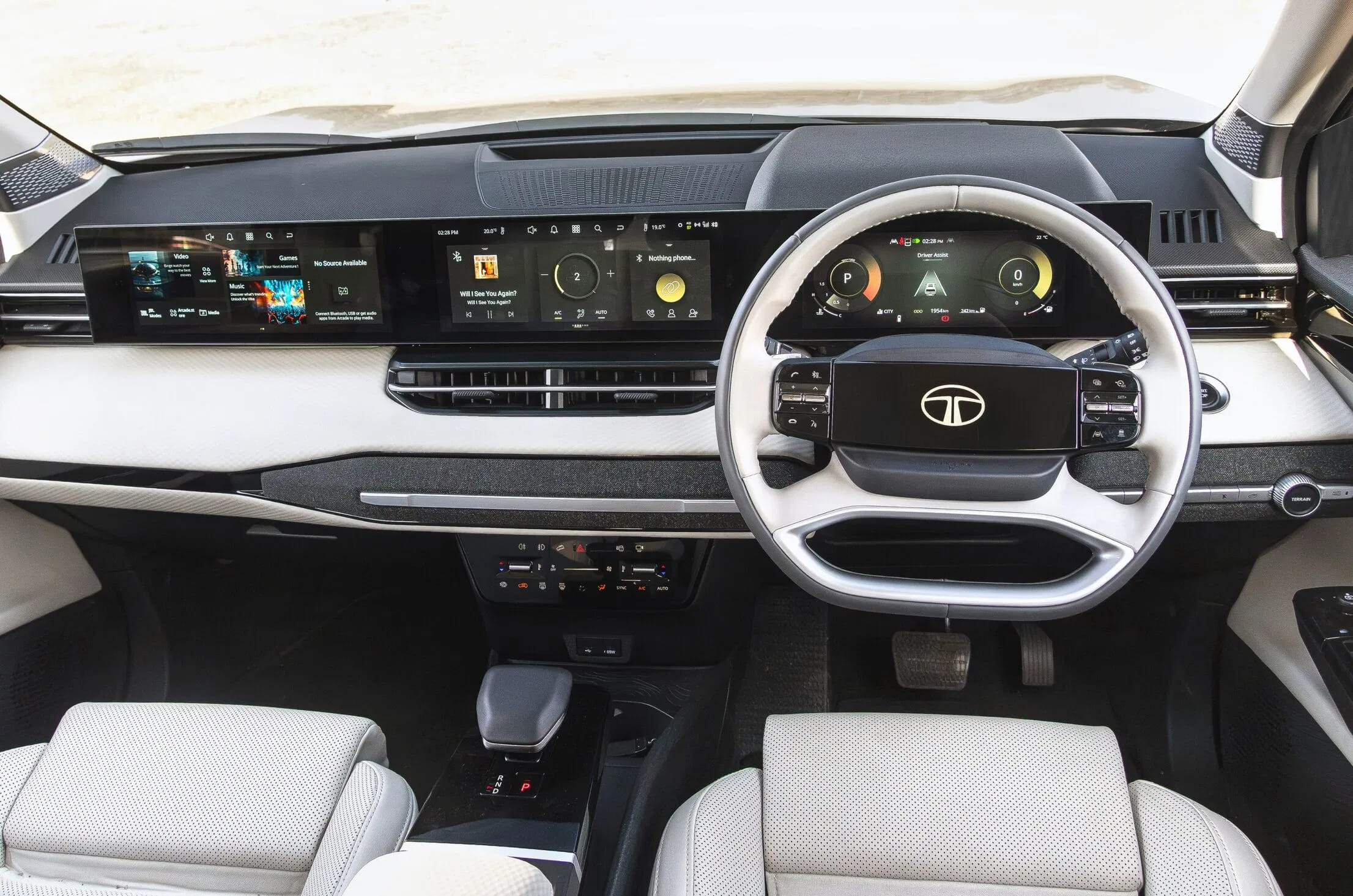
The Sierra EV is expected to carry over the ICE version’s interior. Top-spec variants could offer a triple-screen setup, comprising a 10.25-inch digital instrument cluster, a 12.3-inch central touchscreen and a 12.3-inch passenger screen, while lower variants could have a dual-screen setup and a head-up display (HUD). Likely features include a panoramic sunroof, powered and ventilated front seats, a premium audio system and drive modes.
Expect the Sierra EV to be priced in the Rs 18 lakh to Rs 25 lakh ballpark, as it will be positioned between the Curvv EV, which ranges from Rs 16.99 lakh to Rs 19.19 lakh, and the Harrier EV, which costs Rs 21.49 lakh to Rs 28.99 lakh. The Sierra EV will be Tata’s answer to the likes of the Mahindra BE 6, Hyundai Creta Electric, MG ZS EV and Maruti e Vitara.
 Dipan Sur
 Viraaj Bhatnagar