
Honda’s earlier mass-market midsize SUV, the BR-V, had a lot going for it. It had the size and space, and was even engineered to Honda’s lofty and exacting standards. Where it was lacking was in the looks department. It was too low, it was too long and it looked more like a hopped-up estate than a true-blue SUV. No surprise then that it summarily failed to capture the imagination of the Indian SUV-buying public.
Honda struggled for many years to get the formula right. Selecting an existing SUV from its global range – one with the right look, right stance and right size – was a no-no as it would be too expensive. And the only ‘SUVs’ it had remaining were crossovers, and they were too small and not upright enough. This, then, is Honda’s long-awaited answer – an SUV that should deliver the smooth running, efficiency and seating comfort of a City, but with an ‘elevated’ seating position.
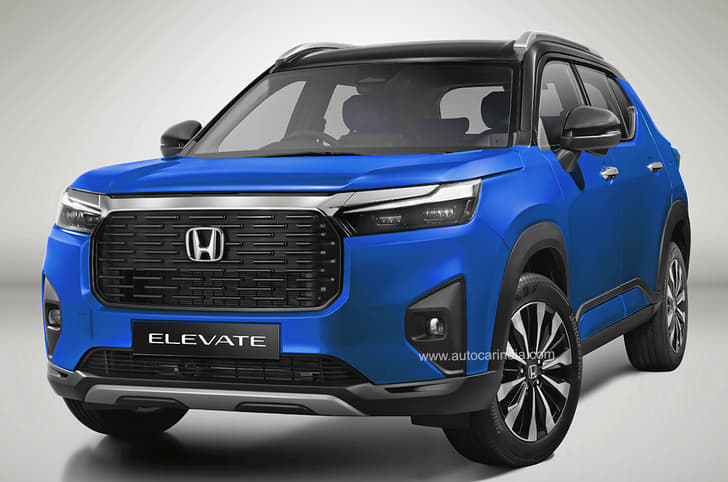
Honda Elevate front design
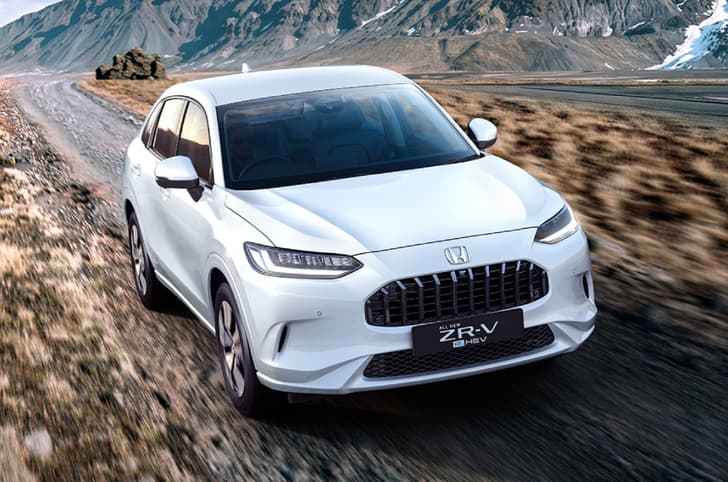
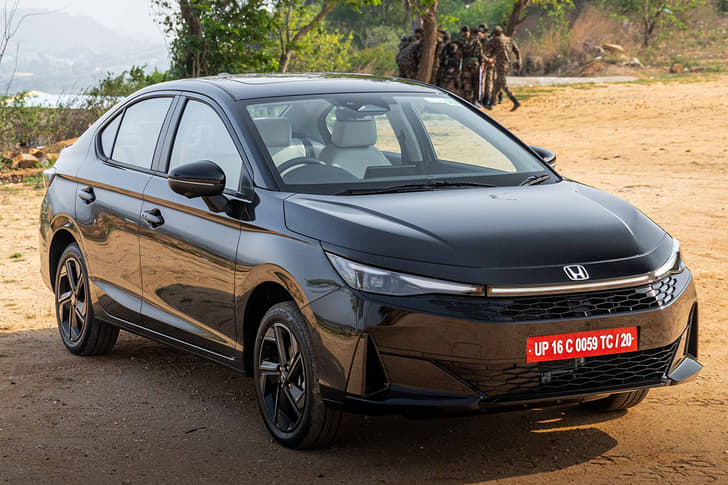
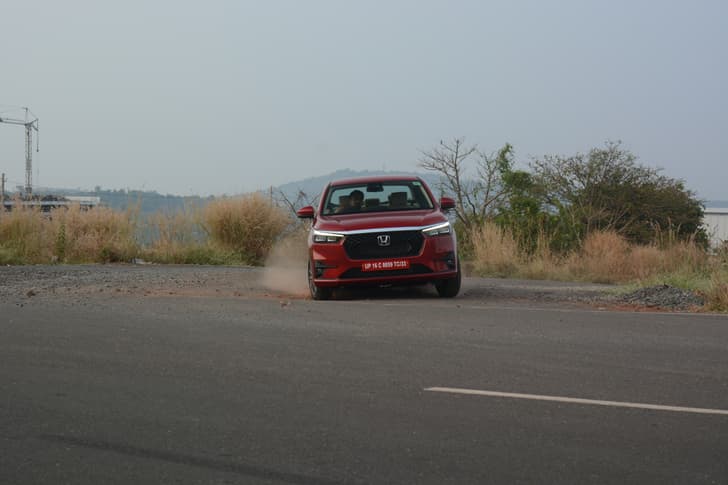
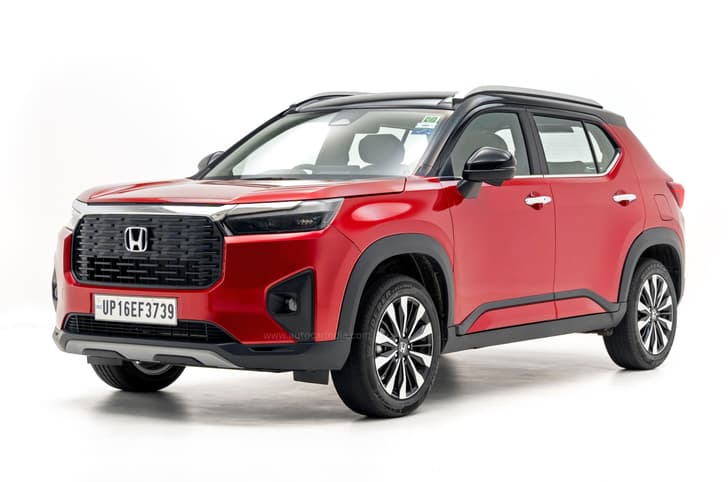
The Elevate has a bold look up front. What strikes you first is just how tall the bonnet is: it stretches horizontally from the base of the windscreen to the headlamps, with barely any dip at the front. In fact, they will be well above waist level for most. This is in line with Honda’s current global design language for its SUVs, which also includes a large grille, sleek headlight pods and a fat chrome bar that runs across the top. The look is similar to that of the new CR-V, HR-V, Pilot and even Passport.
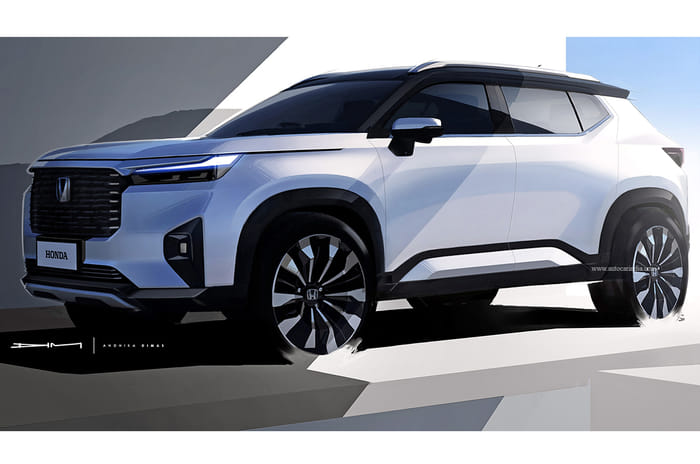
However, in the Elevate, the grille area is almost perfectly rectangular and near vertical, more so than any of the aforementioned examples. Look closer and you’ll also notice it’s also largely a blanked-off black plastic panel, with the air intake only taking up the bottom third. At the outer edges of the front bumper, triangular fog lamp housings in matte black do well to relieve some of the bulk of the front end, as does the scuff plate in the centre. The hockey stick-like LED Daytime Running Lamps lend some individuality, and what’s also unique is that the surfacing that surrounds the headlights, grille and chin is flush and clean.
Will the use of these new shapes and forms go down well with Indian customers? Honda has used a similarly bold look on the Amaze, which used large flat surfaces to impart an impression of size as well as a wedge-like nose to make it look more imposing, and that was well accepted.
Honda Elevate profile and rear
Around the side, the Elevate is both long and tall. The 4,312mm length and 1,650mm height are similar to the Creta, but the Honda has more ground clearance at 220mm, and that should give it a bit of an advantage. Look closely and the side profile looks very similar to the Seltos and Creta, but they don’t have much by way of lines or sculpture, save for one character line that links the tail-lamps to the chrome-lined window base. The Elevate also has a kick up in the rear door like the Kia Seltos. There is a nice black plastic motif at the base of the doors, which again, reduces visual bulk. Some might find the chrome door handles a bit much, though.
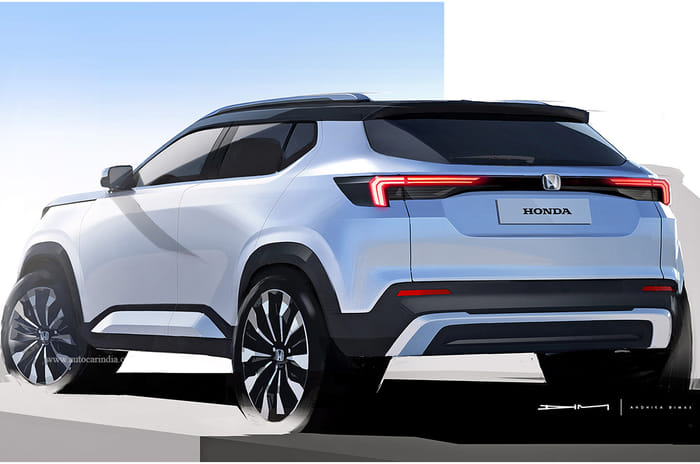
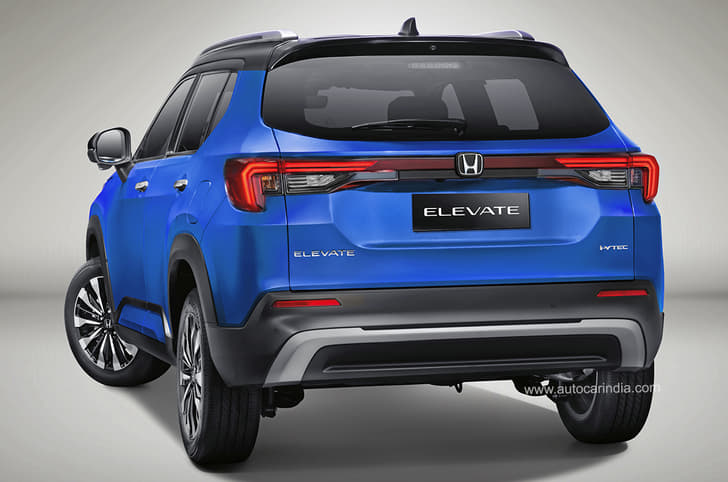
Around the rear, the ‘double-inverted L’ tail-lights look like an amalgam of a couple of SUVs, and again, are a new Honda signature. Unlike the headlamps, which are full LED, the tail-lamps are partial LED, with the rear indicator and reverse lamps using halogen bulbs. The rear windscreen does have a bit of rake to it, though not as much as the curvy crossovers we’ve had from Honda in the past, playing it far more safe and traditional.
What adds a bit of sophistication is the black roof. The bulging wheel arches are nice, leaving a big gap to the 17-inch wheels, which look a bit small for the bulk of the SUV. But what Indian SUV buyers will like are the upright glass house, the traditional SUV profile and the connected tail-lights (though only reflectors) that look neat in the rear.
Honda Elevate cabin styling
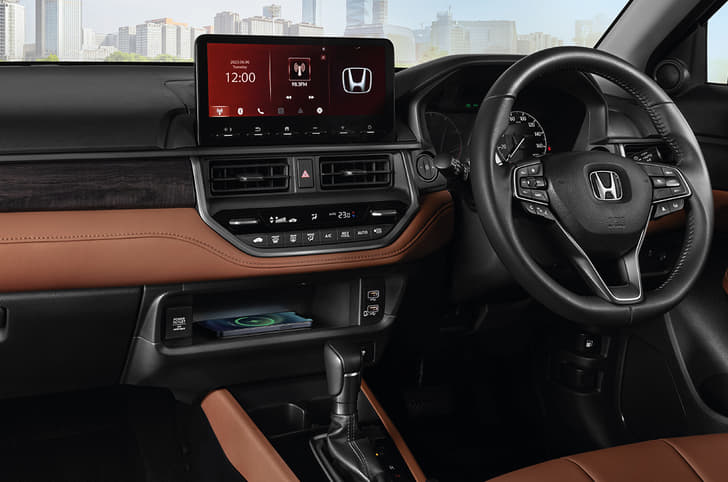
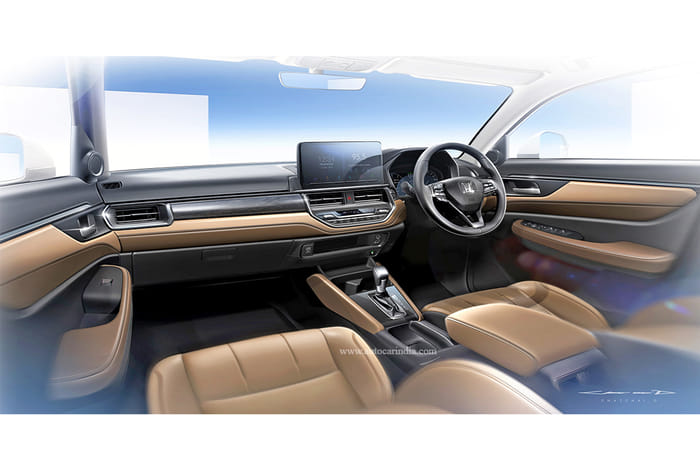
On the inside, the styling again is clean, neat and very restrained. There are many elements taken from the Honda City, the car on which this SUV is based. These include the neat-looking part-digital instrument panel, the nicely built steering wheel and some elements on the horizontally-aligned centre console. Quality is typically Honda good, with the dull wood trim feeling rich, and the leatherette trim on the dash feeling plush, although we wish there was a bit more of the sparingly used brushed silver trim; it would have brightened things up.
What is brand new on the Elevate is a free-standing 10.25-inch touchscreen with a new user interface, which is a big step up over what’s found in the City. What works particularly well are the hexagonal brackets that are used to good effect as a design element. These brackets surround the vents, and the dull metal finish contrasts nicely with the leather on the dash and the rest of the subdued cabin. Nice details include the toggle-style climate control switches (similar to the Baleno and Grand Vitara) and the well-integrated horizontal wireless phone charging shelf.
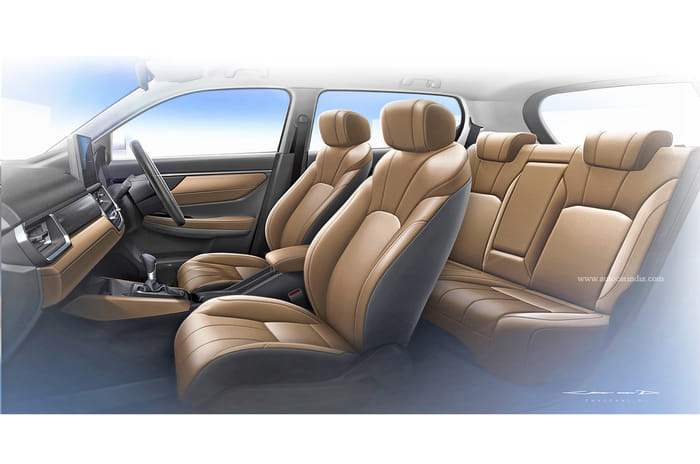
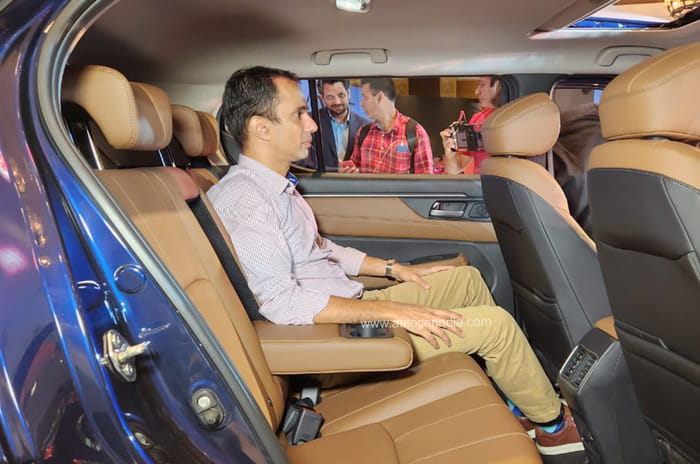
Instead of the cream or white upholstery used in the City, the Honda Elevate uses a pleasing tan leatherette colour, and the front seats are very similar to the ones in the sedan. The rear bench, with its split-fold function, however, is not as comfy as the City, although the rear headrests are adjustable this time. Space, however, is tremendous, with vast legroom and lots of headroom, thanks to a scooped out roof section. And, talking about space, it even has a huge 458-litre boot with a low loading lip.
In terms of features, the Elevate misses out on a few key items, like a panoramic sunroof (it gets a single-pane unit), powered driver seat, ventilated front seats and USB Type-C ports, while at the rear, there is only 12V charging; no USB. It, however, does get Honda Sensing ADAS features, wireless phone charging, wireless smartphone integration (Android Auto and Apple CarPlay), connected car tech, auto climate control, auto headlamps and wipers, and 60:40 split rear seats.
Also see:

 Uday Singh
 Glenn Noronha
 Dipan Sur