

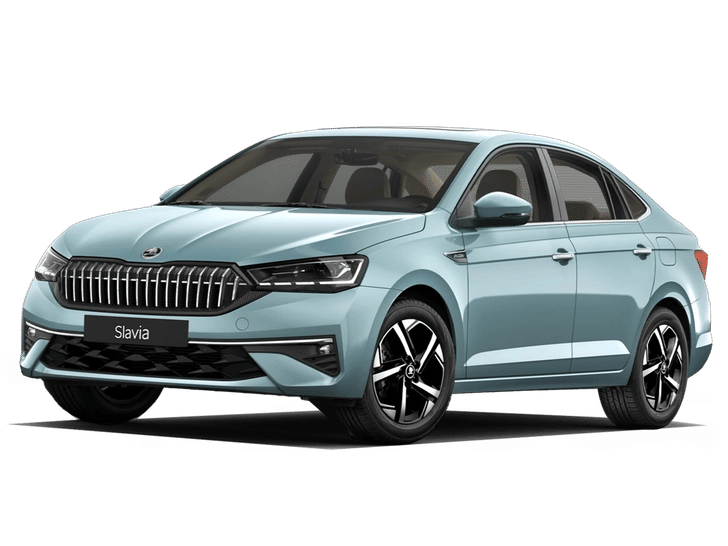
The Skoda Slavia facelift was introduced recently and it brought in new features, a new variable compressor unit for the AC, and perhaps most importantly, a new 8-speed automatic gearbox for the 1.0 engine option.
We've now put the Skoda Slavia 1.0-litre 8AT through our real world efficiency tests to see how it performs.
- Weighs 1,258kg, just 2kg more than the 6AT
- Easier to drive in stop-go traffic conditions than 6AT
- No driving modes, but automatic engine stop-start available
Skoda Slavia 1.0 TSI 8AT real-world mileage explained
The 1.0-litre, 3-cylinder, turbo petrol engine produces the same 115hp and 178Nm as before, but is now paired to a new Aisin-sourced 8-speed torque converter automatic instead of the older 6-speed unit. With the new gearbox, kerb weight has gone up by 2kg, whereas its ARAI efficiency is set at 19.5kpl, 0.77kpl more than the 6-speed automatic. The Slavia does feature an auto engine stop-start feature but doesn’t get any drive modes.


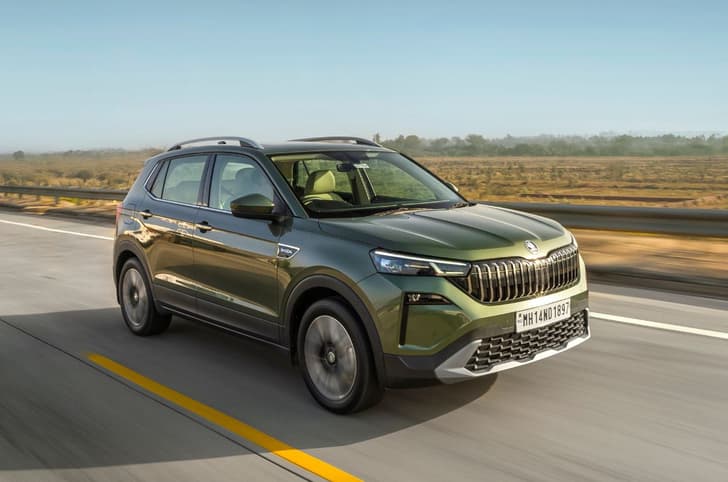
During our city run, the Slavia delivered 8.73kpl, which is a bit lower when compared to the Kushaq's city efficiency of 10.3kpl with the same powertrain. Yes, the shorter initial gears and the auto engine stop-start system improve city efficiency but on our test day, the ambient temperature went above 40deg C, making the AC work harder and impacting the car's efficiency. With slightly cooler temperatures, you can expect better fuel efficiency.
What community is saying on the Slavia?
On the highway, however, the Slavia is more efficient and delivered 15.39kpl. What helps is its ability to cruise at 100kph with the engine spinning at a relaxed 2100rpm and with better aerodynamics, it is 0.3kpl more efficient than a similarly spec’d Kushaq. However, with as many as 8 gear ratios, it would have been more efficient if it could cruise at a slightly lower engine rpm.
When compared to the older Slavia, the updated model is 1.77kpl less efficient in the city but almost 2kpl more efficient on the highway. This could just come down to factors like different ambient temperatures, fuel with different ethanol content and emission norms changing from BS6 to BS6.2.
With an overall average efficiency of 12.06kpl and 45-litre fuel tank, you can expect a range of about 540km on a tankful.
Autocar India’s fuel-efficiency testing
Before conducting our real-world fuel-efficiency tests, we fill our test cars’ tanks to the brim and maintain tyre pressures based on the manufacturer’s recommendation. These cars are then driven on fixed city and highway loops in and around Navi Mumbai, and we maintain certain average speeds. Throughout the tests, we run the aircon at 22 degrees in full-auto mode and other electronics, such as the audio system, indicators, wipers and ventilated front seats, when required – just as a regular user would. Periodic driver swaps further neutralize variations in driver patterns. At the end of each cycle, we calculate efficiency by filling the tanks to full again.

 Uday Singh

 Suraj Viswanathan

 Dipan Sur