Last Updated on: 21 Jul 2026
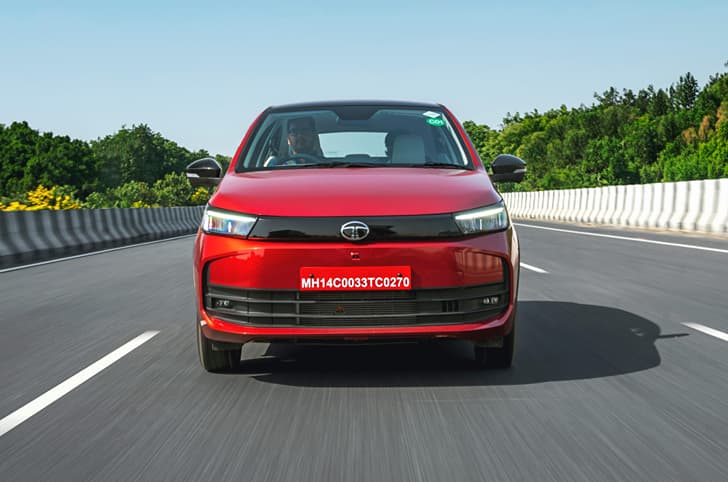
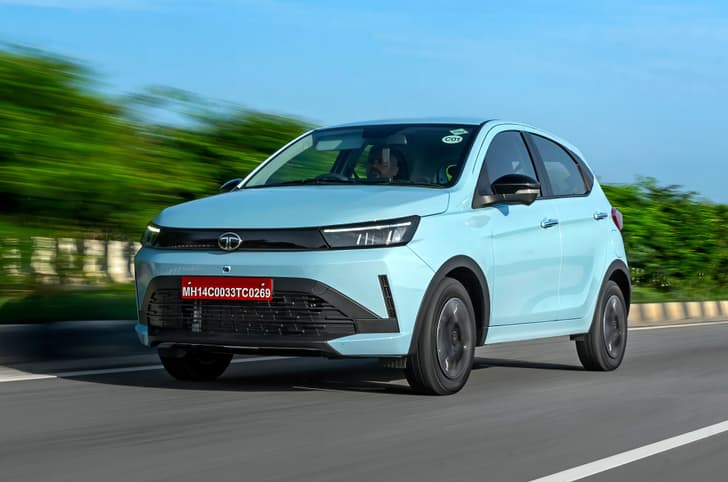
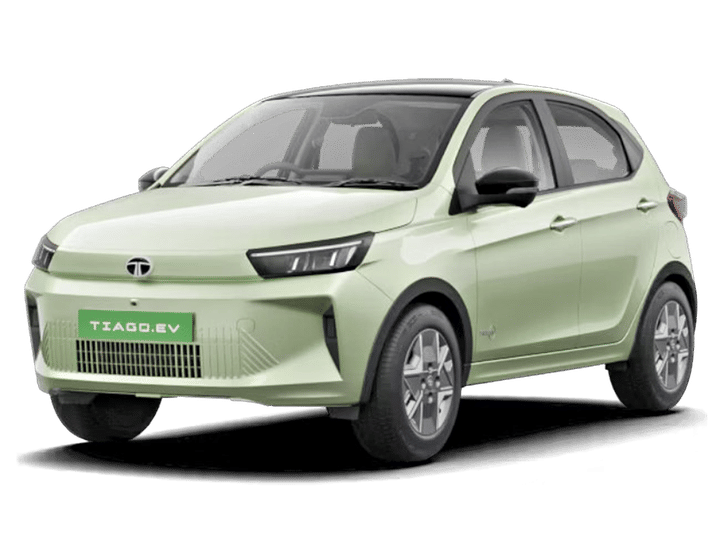
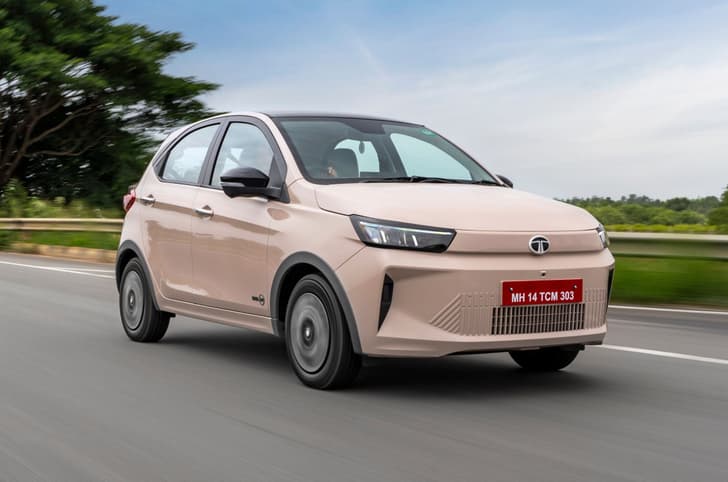
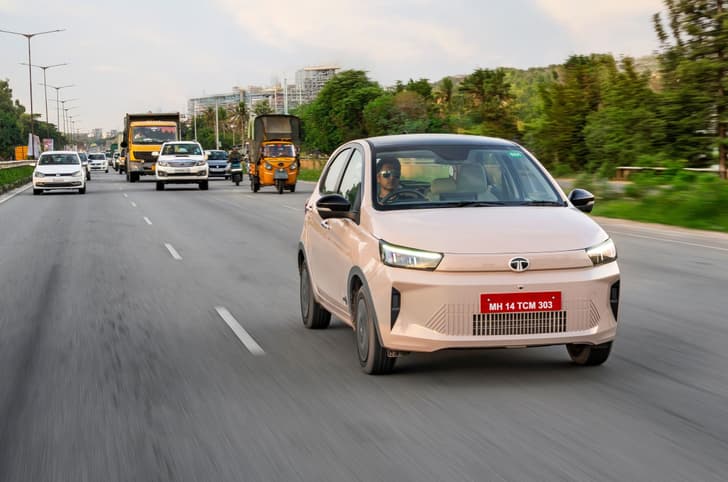
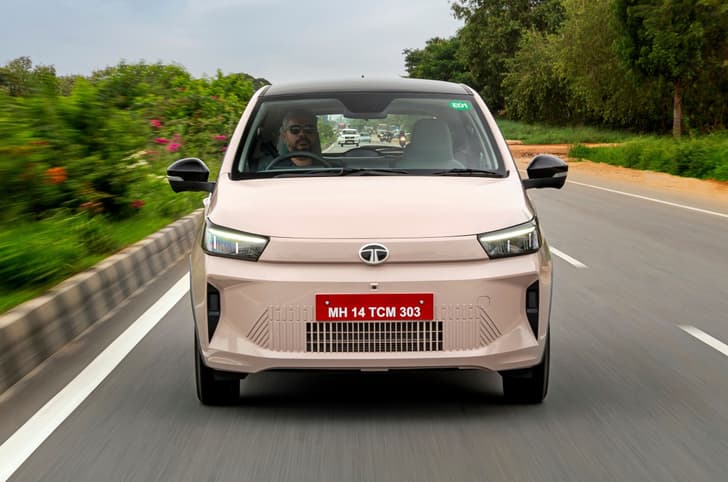
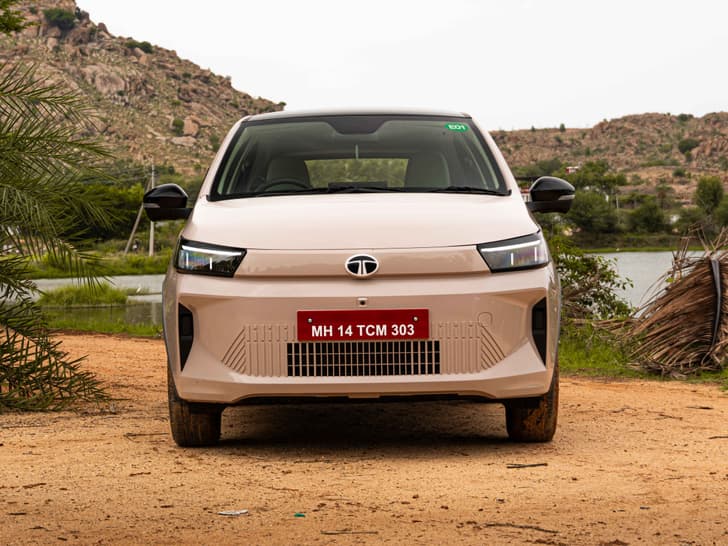
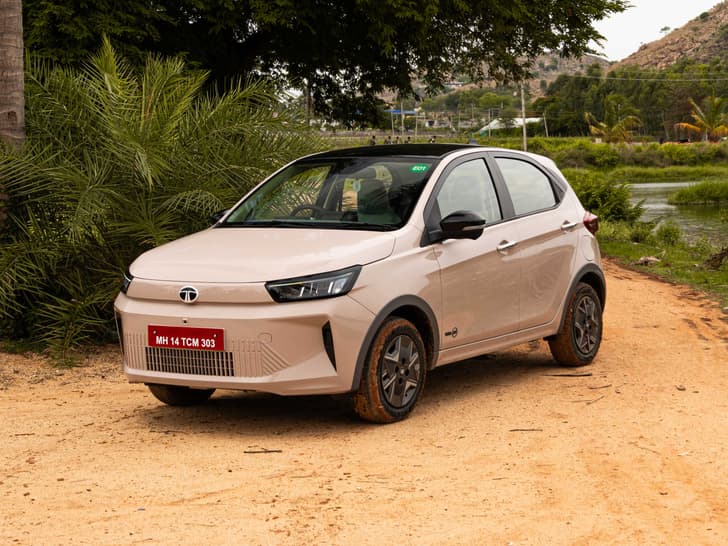
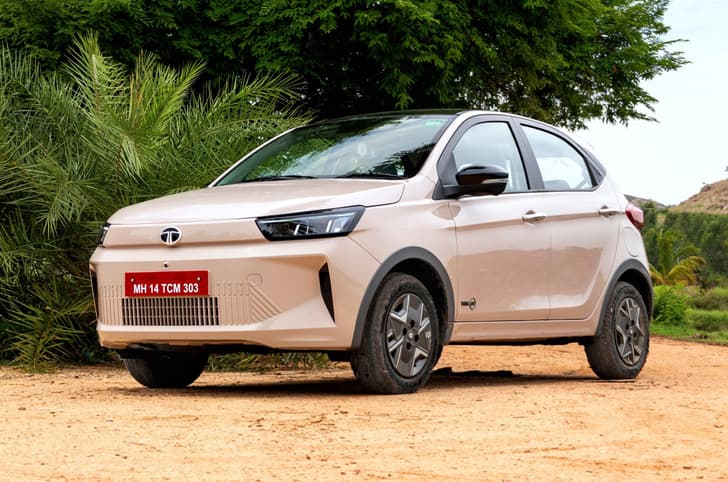
Tata Tiago EV highlights
The Tata Tiago EV is available with either a 19.2kWh or 24kWh battery pack, both paired with a front-mounted electric motor. As per ARAI testing, the claimed range stands between 226km and 285km.
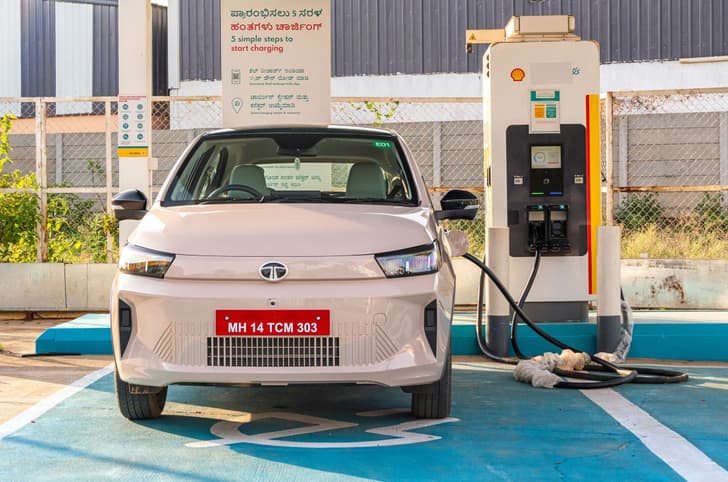
With the 3.3kW charger, the 19.2kWh battery takes 6.9 hours to charge from 10 to 100 percent, while the larger 24kWh pack takes 8.7 hours. Using the faster 7.2kW AC charger reduces those times to 2.6 hours and 3.6 hours, respectively.
The Tiago EV also supports 30kW DC fast charging. With it, both battery packs can charge from 10 to 80 percent in 35 minutes, while a 20 to 80 percent top-up takes 30 minutes.
Tata Tiago EV key specifications
The Tiago EV continues with two battery pack options: 19.2kWh and 24kWh. The smaller battery is paired with a motor producing 62hp and 110Nm, while the larger battery gets a more powerful motor with 75hp and 114Nm.
Battery Range 226 km - 285 km | Fuel Type Electric |
Body Style Hatchback | Seats 5 |
Tata Tiago EV specifications
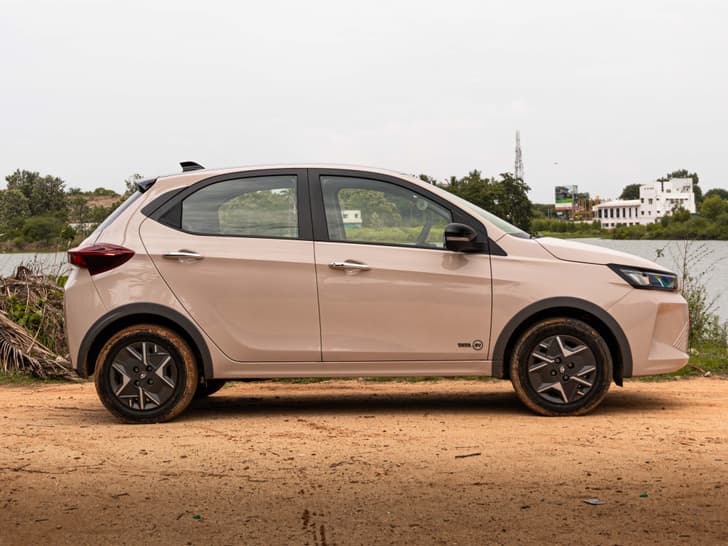
The Tiago EV measures 3,825mm in length, 1,684mm in width, and 1562mm in height, with a 2,400mm wheelbase. Boot space is 240 litres. Charging options include 3.3kW and 7.2kW AC chargers, with 30kW DC fast charging also available.
Engine & Transmission
Max Motor Power | 74.78 hp |
Max Motor Torque | 114 Nm |
Fuel Type/ Propulsion | Electric |
Motor Type | Permanent Magnet Synchronous Motor |
Number of Motors | 1 |
Gearbox Type | |
Drive Layout | Front Wheel Drive |
Number of Gears | 1 |
Lockable Differential/s | No |
Fuel & Performance
Drive Mode Types | Multiple |
Terrain Modes | No |
Claimed Range | 285 km |
Charging Time | 3.5hrs 10%-100% (7.2kW AC), 35min 10%-80% (30kW DC) |
Battery Capacity | 24 |
Autocar Tested EV Range | 187.0 km |
Suspension & Steering
Front Brakes | Disc |
Rear Brakes | Drum |
4 Wheel Steer | No |
Type of Power Assist | Electric |
Turning Radius | 5.1 m |
Steering Adjust | Tilt |
Steering Adjust type | Manual |
Damper Control | No |
Front Suspension Type | McPherson Strut |
Front Springs | Coil Springs |
Rear Springs | Coil Springs |
Rear Suspension Type | Twist Beam on Hydraulic Shock Absorber |
Ride Height Adjust | No |
Spare Wheel | No |
Rear Tyre Size | 175/65 R14 |
Wheel Size | 14 inches |
Front Tyre Size | 175/65 R14 |
Wheels | Steel rims with wheel covers |
Dimensions
Width | 1684 mm |
Length | 3825 mm |
Boot Capacity | 240 litres |
Height | 1562 mm |
Chassis Type | monocoque |
Ground Clearance | 165 mm |
Wheelbase | 2400 mm |
Doors | 5 |
Tata Tiago EV features
Comfort
| Keyless Entry | |
| Cabin Boot Access | |
| Powered Tailgate | |
| Powered Backseat Recline Adjustment | |
| Power Windows with One Touch-Up | |
| Power Windows with One Touch-Down | Driver Window Only |
Safety
| Automatic Wipers | |
| Leading Vehicle Departure Alert | |
| Heads Up Display | |
| Auto emergency braking (AEB) | |
| Automatic Headlamps | |
| Hill Descent Control |
Exterior
| Headlight Height Adjuster | |
| Headlight Type | LED |
| Welcome and Goodbye Animation | |
| Wheel Arch Cladding | |
| LED DRLs | |
| Stop Lamp |
Interior
| Average Speed | |
| Instantaneous Consumption | |
| Speedometer | Digital |
| Shift Indicator | |
| Head-up Display | |
| Trip Meter |
Entertainment
| Rear Seat Infotainment Controls | |
| Wireless Phone Charging | |
| Display | 10.25-inch Touchscreen |
| Front Passenger Screen | |
| MirrorLink | |
| Web Browser |
Connected Car Features
| App Details | |
| Driving Analytics | |
| Summon Mode | |
| In Car Payment | |
| E-Call & I-Call | |
| SOS Button |
Tata Tiago EV variants comparison
Specifications of Tata Tiago EV alternatives

Questions you may find useful
I have a Suzuki Ignis and want to replace it with a pure EV. I am looking for a small-sized car that feels easy to drive in the city. High range and top speed are not my requirements, but comfort and small size are my main priorities. Other than the Punch EV and Tiago EV, are there any more small EVs coming from Hyundai or Maruti? I do not want to go the MG route.
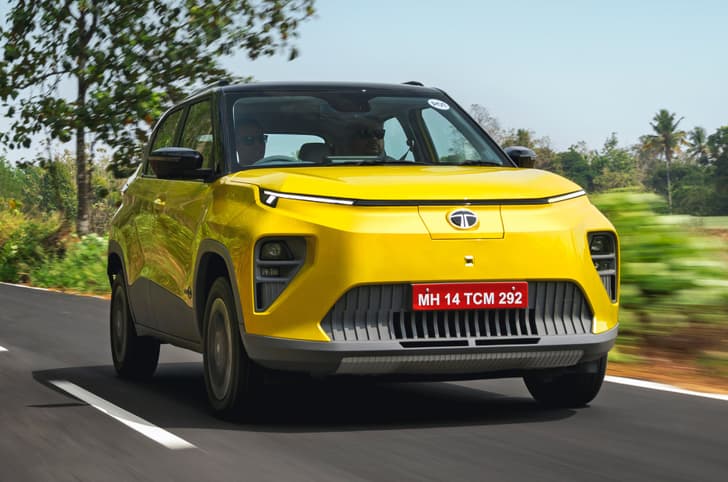
You’re moving from an Ignis and want a small, city‑friendly pure EV where comfort matters more than range or speed. Given that brief, we would pick the Tata Punch EV with the Standard battery in a mid trim, rather than the Long Range. It suits your use because the size is still easy to park, the higher seat makes it simple to get in and out, and the suspension feels more comfortable on broken city roads than most small cars. Compared to your Marutu Suzuki Ignis, the Tata Punch EV rides much better, and the cabin is far quieter, so your daily runs will feel calmer. Since you don’t need a big range, the Standard battery keeps price and weight down, which helps ride comfort too.Two things to keep in mind. The Punch EV is a touch larger than the Tata Tiago EV, so in very tight parking, the Tiago is still the easier tool. Also, Tata’s charging network is improving, but still uneven by area, so check chargers near your regular routes before you decide.On your question about more small EVs from Hyundai or Maruti, as of now, neither has a small, affordable city EV in showrooms. Maruti’s next EV is expected to be an MPV, and Hyundai too has nothing in the same bracket as the Punch EV. If you want the smallest footprint today, the Tiago EV remains the other good pick, but for comfort-first city use, the Punch EV fits your brief best.
Planning to buy an automatic hatchback under ₹11 lakh. Please advise which is the best in terms of ride, mileage, smoothness, etc.
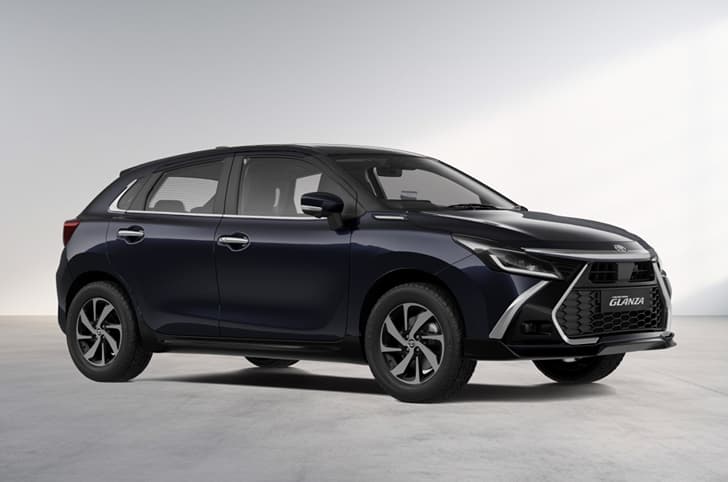
There's actually quite a variety of automatic hatchbacks within your budget. The Maruti Suzuki Baleno and its twin, the Toyota Glanza, are well-rounded products. Good ride comfort and excellent fuel economy are highlights, and the AMT gearbox is good enough for average driving. However, gearshifts aren't the smoothest, and you'll feel this over a quick overtaking manoeuvre. If you are open to the Citroen brand, the C3 is a great option. Its 1.2-litre engine and torque converter auto gearbox combo is excellent, and ride comfort is also very good.You could also look at the Tata Altroz DCA in Creative S trim. The dual-clutch auto gearbox is very smooth and well-suited to city use. There's also a toughness to the package that gives great confidence at highway speeds.We are also fans of the smooth and polished Hyundai i20 CVT, but the Sportz(O) that fits your budget isn't an ideal choice as it misses out on the safety of a rear wiper. Finally, if you have the option to install an EV charger at home or office, the Tata Tiago EV is also an option to consider. Being all-electric, it's super smooth and very refined. However, it works best as a city car.
I currently own a Maruti Dzire and drive about 80-100 km daily, mostly solo. I don’t want a large car but need good mileage and an automatic (or auto-shifting) transmission regardless of fuel type. I’m considering exchanging my Dzire for a Tiago EV. Should I go ahead with the Tiago EV?
If you are open to an EV and have easy access to charging facilities at home or your place of work, we would suggest you go ahead with one. Your daily running isn't very high, and the Tiago EV should easily manage this on a single charge. By opting for the Tata Tiago EV, you will also meet your requirements of low running costs and an automatic gearbox. In fact, with most EVs, the absence of a traditional gearbox means there are no shifts at all, leaving you with a very smooth and relaxed drive feel.On the other hand, most petrol and diesel automatics at this price segment use an automated manual transmission (AMT), which is not a smooth shifter at all. Thus, the Tiago EV would do you well.
Tata Tiago EV FAQs
With a 30kW DC fast charger, both battery packs can go from 10 to 80 percent in 35 minutes. The 20 to 80 percent top-up takes 30 minutes for both the 19.2kWh and 24kWh packs.
With the 3.3kW charger, the 19.2kWh battery takes 6.9 hours to go from 10 to 100 percent, while the larger 24kWh pack takes 8.7 hours. With the faster 7.2kW AC charger, those times drop to 2.6 hours for the 19.2kWh battery and 3.6 hours for the 24kWh pack.