Last Updated on: 04 Sep 2026
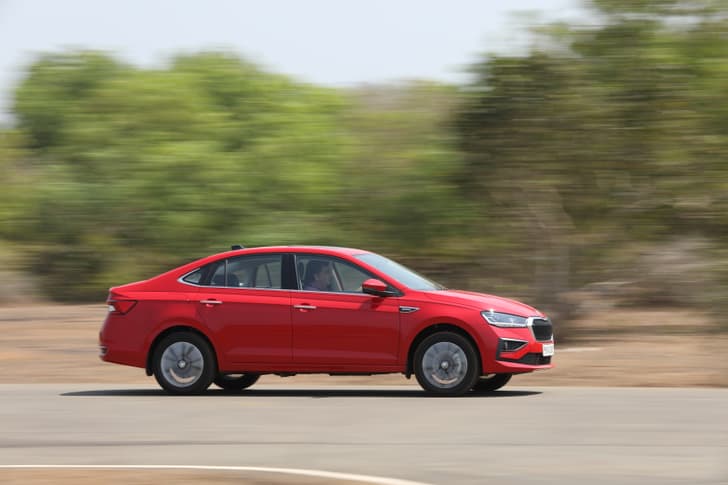
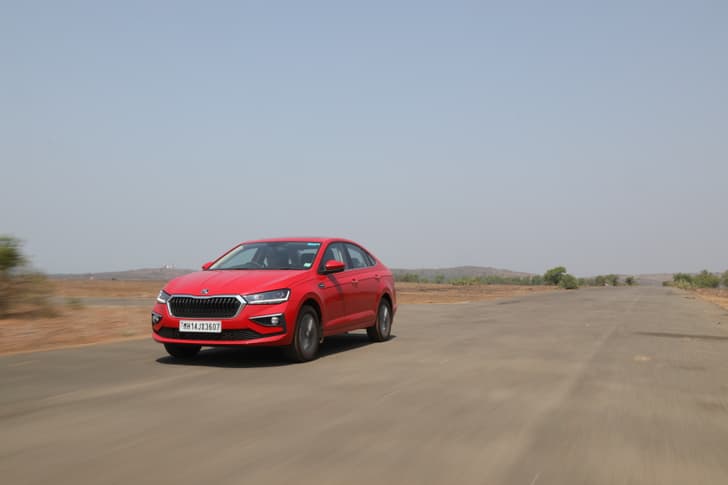
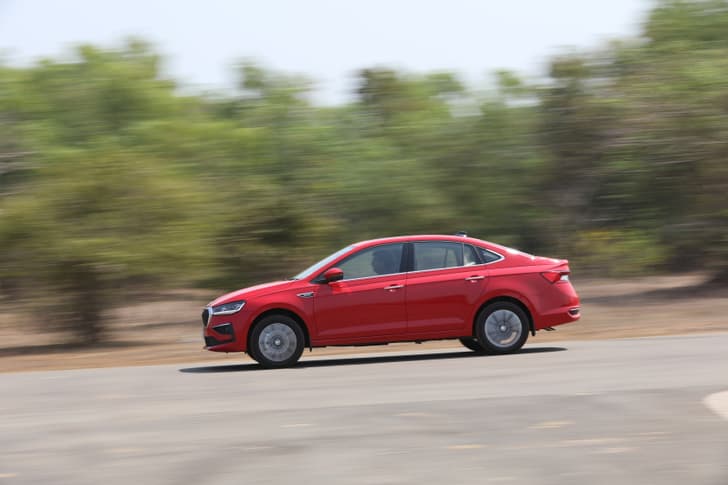
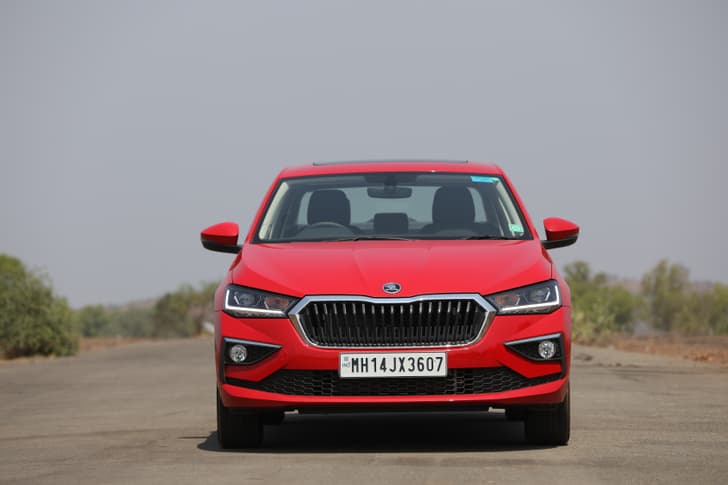
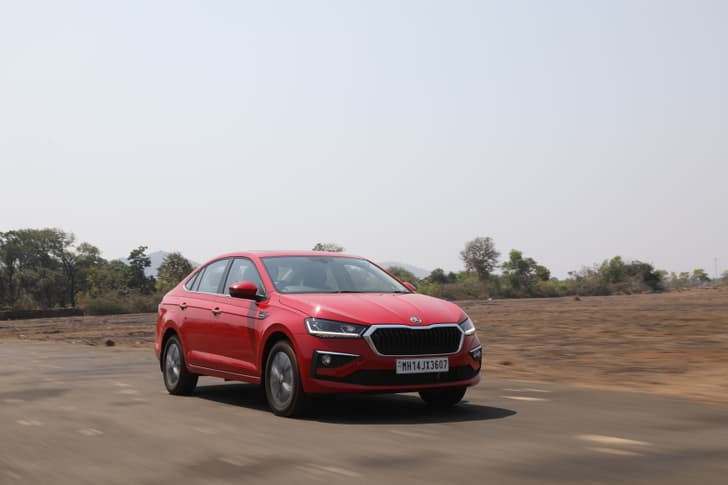
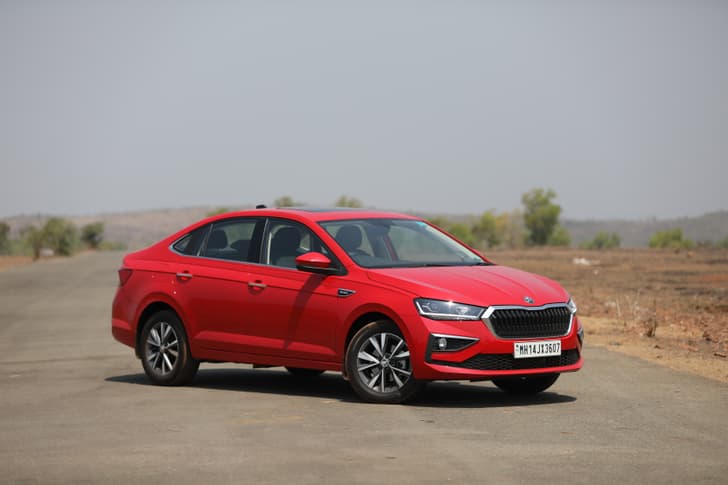
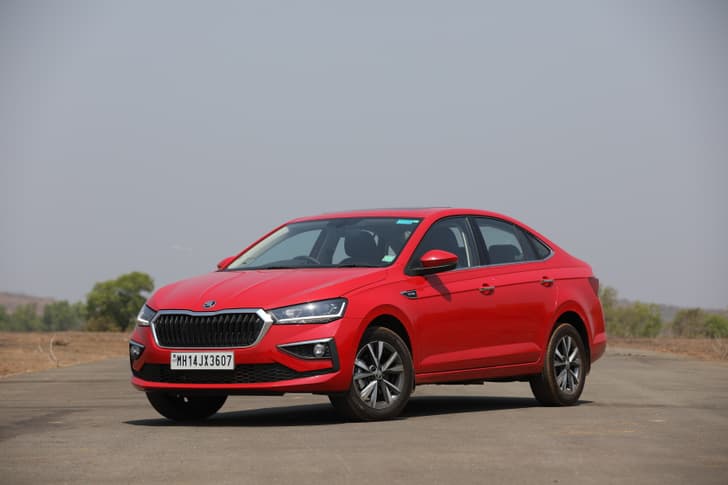
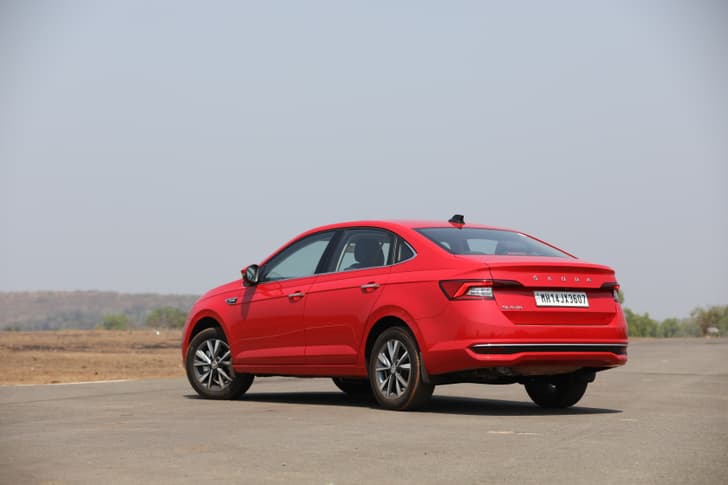
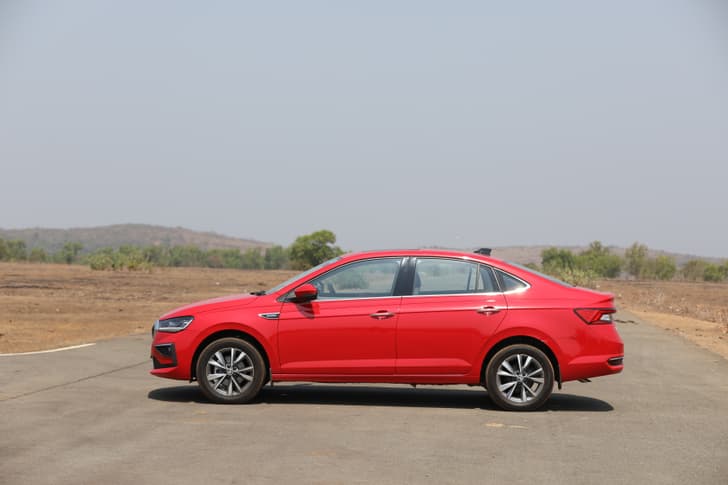
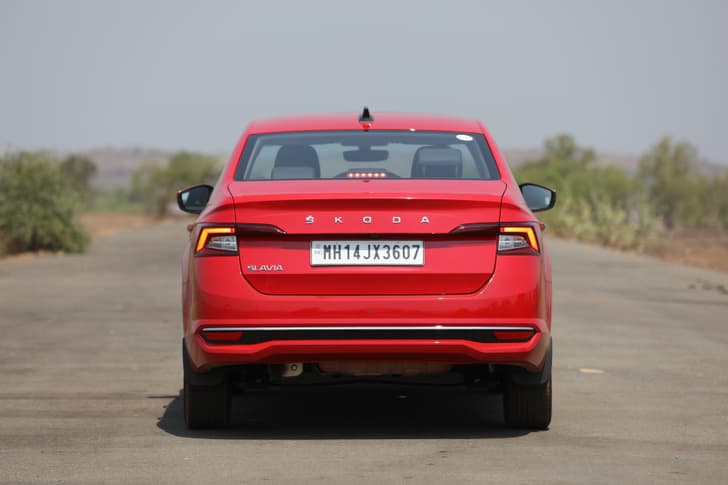
Skoda Slavia Sportline 1.0 TSI AT
Skoda Slavia Sportline 1.0 TSI AT Key Features
- Automatic Wipers
- Electric Adjust for Front Passenger's Seat
- Front Passenger Seat Height Adjust
- Projector Headlamps
- LED Headlight Type
Skoda Slavia Sportline 1.0 TSI AT specifications
Engine & Transmission
Engine Type | Turbocharged |
Engine Displacement | 999 cc |
Number of Cylinders | 3 |
Engine Installation | Front |
Fuel Type/ Propulsion | Petrol |
Pure Electric Driving Mode | No |
Gearbox Type | Torque Converter |
Number of Gears | 6 |
Manual Shifts via Gear Lever on Automatic Gearbox | Yes |
Paddle Shifters for Automatic Gearbox | Yes |
Sport Mode for Automatic Gearbox | Yes |
Drive Layout | Front Wheel Drive |
Lockable Differential/s | No |
Max Engine Power | 115hp at 5000-5500 rpm |
Max Engine Torque | 178Nm at 1750-4500 rpm |
Fuel & Performance
Fuel Supply System | Direct Injection |
E20 Compatibility | Yes |
Emission Standard | Bharat Stage VI |
Auto Start/Stop | Yes |
Official Fuel Economy | 18.73 kmpl |
Autocar Tested City Mileage | 10.5 kmpl |
Autocar Tested Highway Mileage | 13.4 kmpl |
Fuel Tank Capacity | 45 litres |
Autocar Tested Mileage | 11.95 kmpl |
0-100kph | 11.16 s |
20-80kph (in third gear/ kickdown) | 6.88 s |
40-100kph (in fourth gear/ kickdown) | 8.39 s |
Suspension & Steering
Front Suspension Type | Independent, MacPherson Strut |
Front Springs | Coil Springs |
Rear Suspension Type | Non-independent, Torsion Beam |
Rear Springs | Coil Springs |
Ride Height Adjust | No |
Type of Power Assist | Electric |
Steering Adjust type | Manual |
Steering Adjust | Tilt and Telescopic |
Front Brakes | Discs |
Rear Brakes | Drums |
Wheel Size | 16 inches |
Front Tyre Size | 205/55 R16 |
Rear Tyre Size | 205/55 R16 |
Wheels | Alloys |
Spare Wheel | Space-saver |
Dimensions
Length | 4541 mm |
Width | 1752 mm |
Height | 1507 mm |
Wheelbase | 2651 mm |
Ground Clearance | 179 mm |
Kerb Weight | 1219-1252 kg |
Chassis Type | Monocoque |
Boot Capacity | 521 litres |
Doors | 4 |
Skoda Slavia Sportline 1.0 TSI AT features
Comfort
| Power Windows | Front and Rear |
| Door Pockets | |
| Headlight and Ignition on Reminder | |
| Glove Box | |
| Bluetooth Connectivity | |
| Roof Grab Handles |
Safety
| Crash Test Rating | 5 |
| Seat Belt Warning | |
| Side Airbag | |
| High Beam Assist | |
| Speed Sensing Door Lock | |
| Rear Seatbelt Reminder |
Exterior
| Body Coloured Bumpers | |
| LED headlamps | |
| Follow Me Home Headlamps | |
| LED taillights | |
| LED fog lamps | |
| LED DRLs |
Interior
| Speedometer | Digital |
| Tachometer | Digital |
| Trip Meter | |
| Average Fuel Consumption | |
| Average Speed | |
| Distance to Empty |
Entertainment
| Audio System | |
| Speakers | 4 |
| CD Player | |
| Branded Music System | |
| USB Input | |
| AUX Input |
Connected Car Features
| Alexa Compatibility | |
| Find My Car | |
| Emergency Call Button | |
| Remote Sunroof Open / Close via App | |
| Over the air (OTA) updates | |
| Car Light Flashing & Honking via App |
Skoda Slavia variants
 Electronic Stability ControlPart Digital / Part Analogue Digital Instrument ClusterOn-board Satellite NavigationAnti Theft ImmobilisationFabric Seat MaterialHill Start AssistSingle Pane SunroofWireless Android Auto60:40 Rear Seat Backrest SplitLED headlampsAutomatic WipersElectric Adjust for Front Passenger's SeatProjector HeadlampsSingle Pane SunroofLED headlampsAutomatic HeadlampsWireless Phone ChargingEmergency Call ButtonFront Only Ventilated SeatsSingle Pane SunroofSpoilerSingle Pane SunroofLED headlampsFront Only Ventilated SeatsWireless Android Auto
Skoda Slavia comparison

Questions you may find useful
I am very confused between the Honda City V MT and Skoda Slavia Signature 1.0 MT. I have driven both and really liked the City's smooth engine. However, I feel the Slavia is better built. I also plan to travel to various places over the next five years, so I am inclined towards the Slavia because of its better build, driving feel and higher ground clearance. Please advise which one I should choose.

 Skoda SlaviaHonda City
I have a 2023 Skoda Slavia 1.5 DSG Style, which has covered around 46,000 km. Although the driving experience is unmatched, I have faced quite a few issues with the DSG and battery, and recently had to pay a Rs.16,000 bill for suspension repairs. I am now thinking of selling the car and switching to a more reliable product, possibly a Honda City or Toyota Hyryder. My daily running is around 70 km, so I am looking for something reliable and economical for long-term ownership. I will definitely have to bear a loss on the sale of the Slavia, so I was thinking along the Honda route, especially since Honda is offering better deals compared to some other brands. Please suggest what would be the best solution in my case.
Honda CitySkoda SlaviaToyota Urban Cruiser HyryderHello Experts, I have come across the following option: a 2023 Skoda Slavia Ambition 1.5 TSI Manual (second owner) with only 10,500 km on the odometer. The car is mechanically bone stock and has been maintained exclusively at authorised Skoda service centres, with complete service records. It was last serviced in May 2024. It is covered by zero-depreciation insurance, an active AMC service package valid until 2027, and an extended warranty valid until 2029. The car also has a few tasteful aesthetic upgrades, including 17-inch Skoda Kushaq rims with Continental 205/50 R17 tyres, OEM top-spec Style projector headlights, a trunk lip spoiler, and black-wrapped front grille and trunk accents. The owner is selling it due to lack of usage. I have test-driven the car twice, and it seems to be in great condition. The owner has already shared all the previous documents and service records with me and is open to having the car inspected at Skoda or anywhere else. The first owner's details have also been shared openly. Everything looks clean so far. The asking price is Rs. 12 lakh. As a driving enthusiast, I am massively tempted to buy it, but I would like an expert opinion. I also have another option: a Honda Elevate VX Manual, driven for 16,000 km, with a single owner, priced at Rs. 11.25 lakh. Please help me decide. The Slavia is the only 1.5-litre manual I have come across at this price. Many thanks in advance.
Skoda SlaviaHonda ElevateI own a Skoda Slavia Sportline that I had purchased in December 2025. After reading about so many BaaS offers on electric vehicles viz XEV 9S, where the registration charges are zero in Maharashtra, it is tempting to exchange my current car for an electric car. Should I do that? My monthly running is around 1000 km. Also, is BaaS available for the Sierra EV?
Mahindra XEV 9SSkoda SlaviaTata Sierra EVHi everyone, I have a budget around 13 lakh and my annual running is around 8,000 km. I'm confused between buying a sedan or compact SUV like Kia Seltos etc. as I have sold my Tata Punch last month that I owned almost for 4.5 years but now I want to purchase good and elegant looking car that can last for 7 to 9 year without any hassle. Me and my wife have shortlisted cars like New Honda City SV variant, New Skoda Slavia Base one, or Upcoming Virtus in sedan segment. In suv segment, I have shortlisted cars like Seltos, Grand Vitara, etc. My wife wants to shortlist sedan. Please suggest me which one should I go for as it's the matter of investing my hard earned money. Also, which car will have good resale value in future.
Honda CitySkoda SlaviaVolkswagen VirtusKia SeltosMaruti Suzuki Grand VitaraSkoda Slavia price in India
Upcoming Cars

Skoda Cars

Trending Cars



Latest Cars