Last Updated on: 18 May 2026
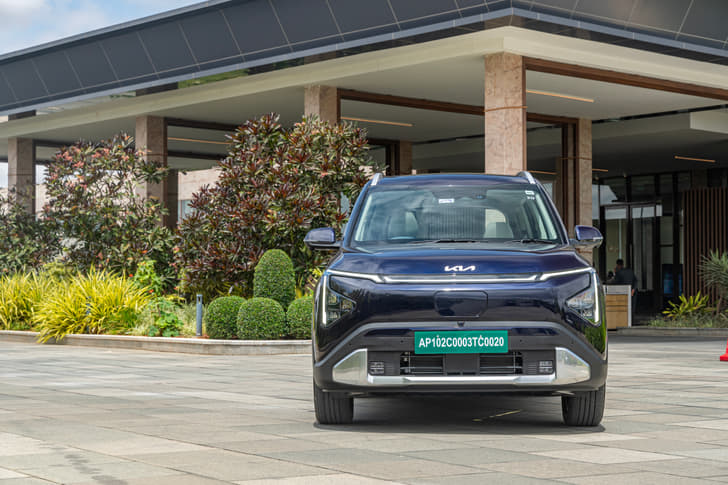
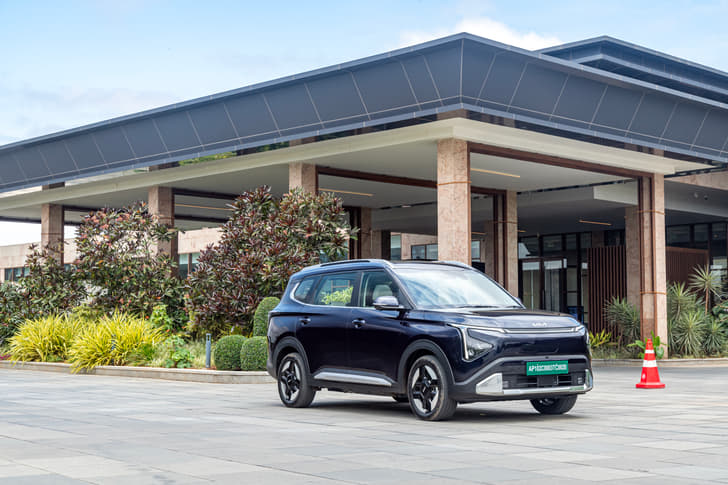
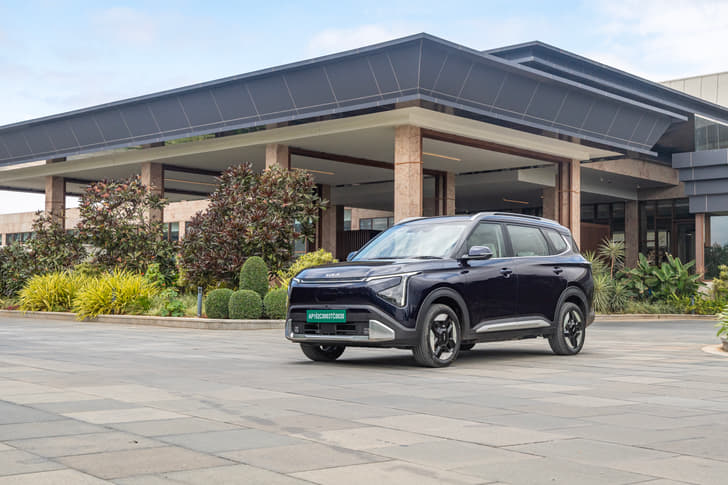
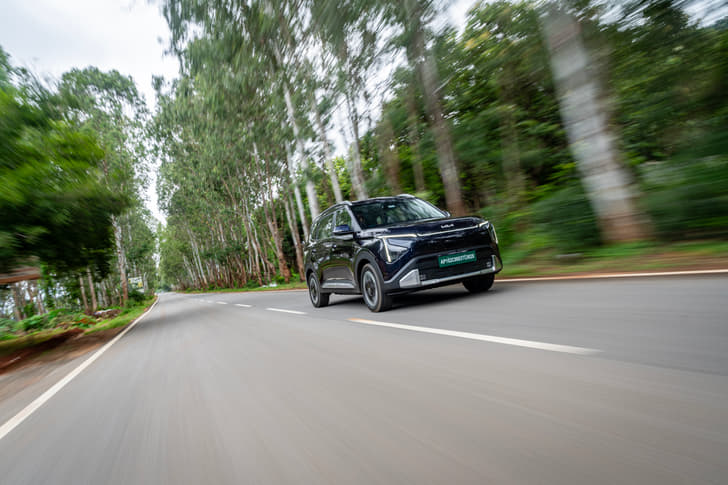
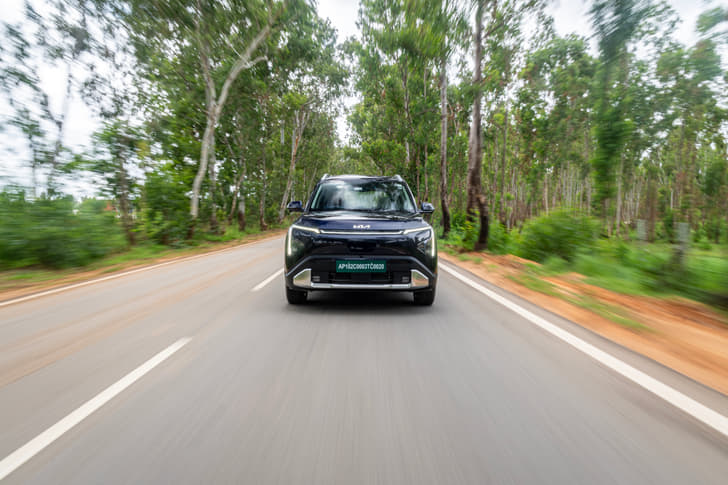
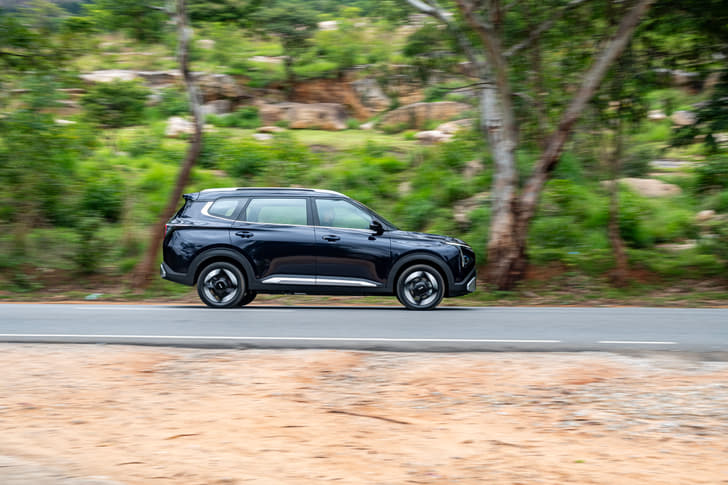
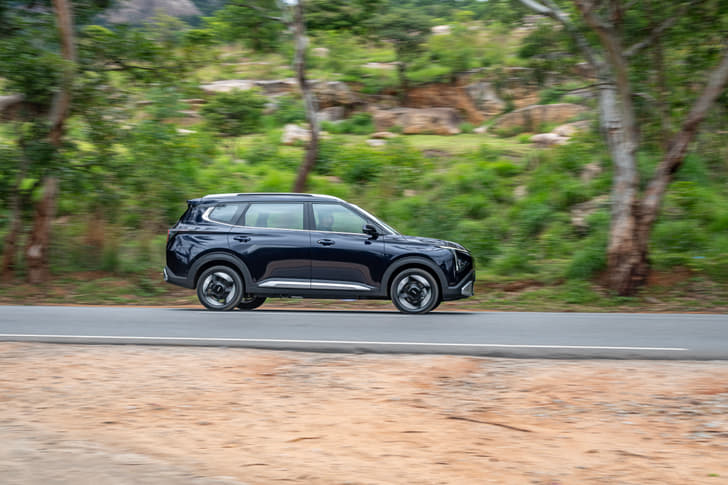
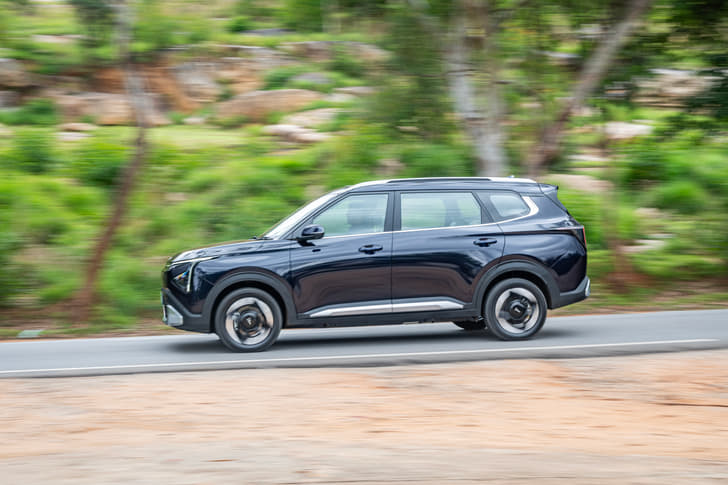
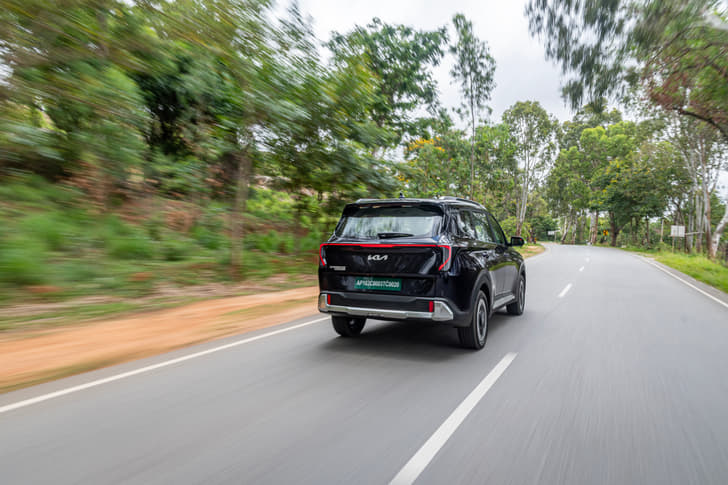
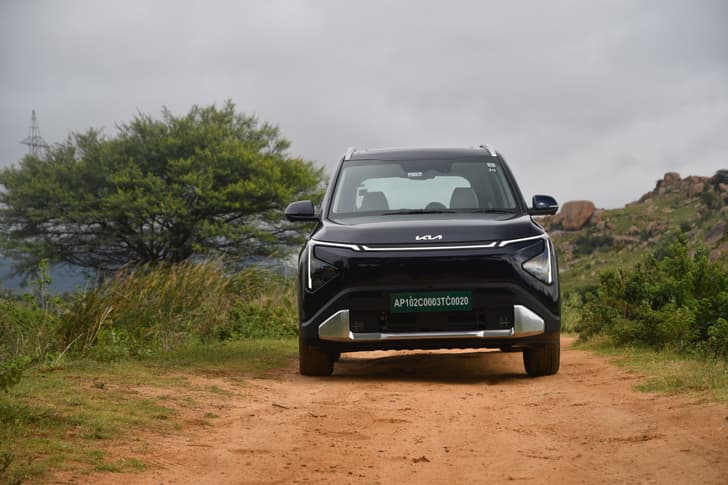
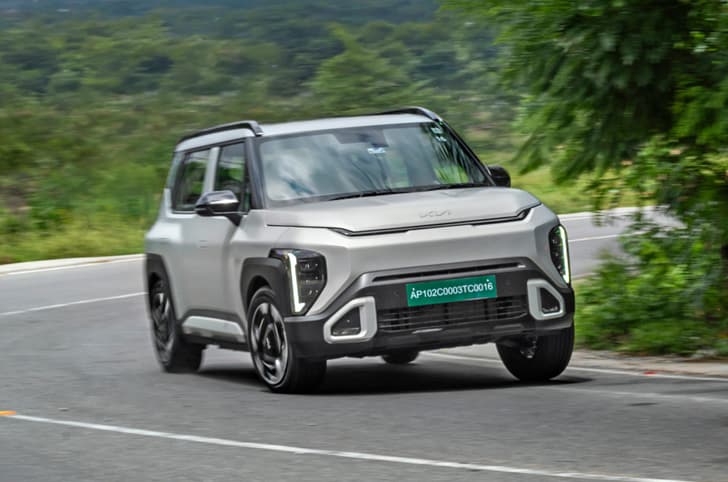
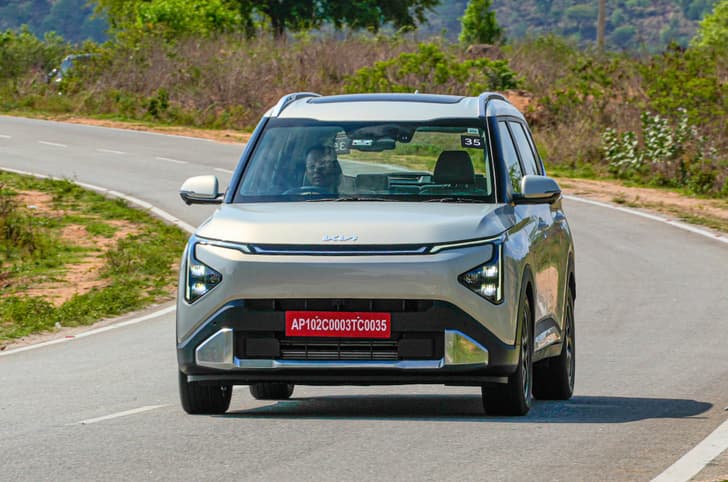
Kia Carens Clavis EV
The Kia Carens Clavis EV HTX 6 Seat variant is priced at ₹20.49 lakh. The HTX 6 Seat variant offers key features like Adaptive cruise control, Ambient interior lighting, Sunroof, Blind spot monitor, Keyless start. Explore complete specifications, and features below.
Kia Carens Clavis EV HTX 6 Seat specifications
Engine & Transmission
Max Motor Power | 135 hp |
Number of Motors | 1 |
Max Motor Torque | 255 Nm |
Fuel Type/ Propulsion | Electric |
Number of Gears | 1 |
Drive Layout | Front Wheel Drive |
Lockable Differential/s | No |
Gearbox Type | Auto |
Fuel & Performance
Battery Capacity | 42 kWh |
Charging Time | 4hrs 10%-100%(11kW AC), 39min 10%-80% (100kW DC) |
Drive Mode Types | Multiple |
Terrain Modes | No |
Claimed Range | 404 km |
Suspension & Steering
Rear Brakes | Disc |
Front Brakes | Disc |
Type of Power Assist | Electric |
4 Wheel Steer | No |
Steering Adjust type | Manual |
Steering Adjust | Tilt and Telescopic |
Rear Suspension Type | Coupled Torsion Beam Axle |
Ride Height Adjust | No |
Rear Springs | Coil Springs |
Damper Control | No |
Front Springs | Coil Springs |
Front Suspension Type | McPherson Strut |
Front Tyre Size | 215/ 60 R16 |
Rear Tyre Size | 215/ 60 R16 |
Spare Wheel | Space Saver |
Wheel Size | 16 inches |
Wheels | Machine finished alloys |
Dimensions
Width | 1800 mm |
Wheelbase | 2780 mm |
Chassis Type | Monocoque |
Doors | 5 |
Length | 4550 mm |
Height | 1730 mm |
Kia Carens Clavis EV HTX 6 Seat features
Comfort
| Flat Bottom Steering Wheel | |
| Power Windows with One Touch-Down | Driver Window Only |
| Power Windows | Front and Rear |
| Launch Control | |
| Keyless Entry | Yes with proximity sensors |
| Interior Lamps |
Safety
| Anti-Pinch Power Windows | All |
| Speed Sensing Door Lock | |
| Speed-Sensing Auto Door Locks | |
| Speed Assist System | |
| Driver Airbag | |
| Child Safety Lock |
Exterior
| Integrated Washer Jets with Wiper | |
| Body Coloured Bumpers | |
| Cornering Foglamps | |
| Wheel Arch Cladding | |
| Welcome and Goodbye Animation | |
| LED DRLs |
Interior
| Trip Meter | |
| Distance to Empty | |
| Tachometer | Digital |
| Gear Indicator | |
| Instantaneous Consumption | |
| Low Fuel Level Warning |
Entertainment
| CD Player | |
| Satellite Navigation | On-Board |
| Apple CarPlay | Wireless |
| Rear Seat Infotainment Controls | |
| Front Passenger Screen | |
| Rear Entertainment Screens |
Connected Car Features
| Remote Car Lock/Unlock via App | |
| Remote AC On / Off via App | |
| Emergency Call Button | |
| Auto Crash Alert | |
| Home to Car Connectivity | |
| Car Light Flashing & Honking via App |
Kia Carens Clavis EV variants
Questions you may find useful
Sandeep Kasireddy
•4dI currently own a Creta petrol manual 2019, driven around 85K Kms. I know not a normal petrol usage pattern, but usage turned out to be high. Now we are setting up a small-scale industry where I need a car to travel to the plant every single day for my parents, and I would visit the plant weekly. While I live in Bangalore, my parents live in a place called Tirupati. The plant would come 45 Kms to my parents, 180 Kms to me. I thought of having the creta petrol manual with my parents, and I thought of driving a diesel, but clearly looking at the current trends - I doubt a diesel and may have to think about an EV. What would you guys suggest as a second car for me, assuming that I am part of the Autocar’s core team and a friendly colleague of yours 🙂 I once decided on Creta Electric or Kia Carens Clavis Ev, clearly for the Korean tech. But not sure of its value proposition. PS: The new AAA series is just awesome. And I am an ardent fan of Autocar content. The recent episode of Hormazd with his Mum was so happy to watch.

Autocar India
Thank you for your kind words :-)Your use will be mostly in Bengaluru city, with one long 180 km run each week to the plant, while your parents do daily 45 km trips in the Creta. In this mix, pick the Hyundai Creta Electric, ideally the larger-battery version, and leave the petrol Creta with your parents. It suits your Bengaluru routine better because it is easy to drive and very quiet, so daily traffic is less tiring, and its size is simpler to park than a big three-row car. For the weekly highway run, an EV works if you charge at home and either top up at the plant or plan a quick stop on the route. There are public fast chargers on most big Bengaluru highways now, including towards Andhra, but do check your exact route and set up a charger at the plant if you can. The Kia Carens Clavis EV only makes sense if you often carry six or seven people or lots of gear; otherwise, you pay more, use more energy, and don’t gain much for solo trips. For your pattern, Creta Electric fits best.
Jitesh agrawal
•1wWhich 7-seater EV offers the best 3rd row seating comfort?

Autocar India
You should consider the Kia Carens Clavis EV. It offers a spacious cabin, with a properly usable third row that can even fit adults. Plus, it comes with a smooth and seamless powertrain, and in our real-world range test, it managed to do 383km in the city and 345km out on the highway for the 51.4kWh version. The Kia MPV also has a premium cabin and comes packed with all the feel-good and convenience features you'd need. With all these features, the Kia Carens Clavis EV prices range from Rs 19.05 lakh to Rs 26.52 lakh (on-road).
Jaivardhan Sharma
•2wI either want a 7-seater EV or a hybrid. My annual running is around 20,000 km, with most of the usage in the city and one outstation trip every month. I am confused about which would be the best overall choice in the ₹20 lakh segment.

Autocar India
With 20,000 km a year, mostly in the city, and a hard cap of around ₹20 lakh, the Kia Carens Clavis EV is the most sensible 7-seater for you. However, your budget will get you the 42kWh variant, which is fine for city use and short highway trips. If you want longer range, you will need to stretch your budget by about ₹4 lakh for the 51.4kWh variant.For your daily city runs, it will feel smooth, and an EV takes the stress out of traffic jams. It is light to drive and not too big, so parking is easier than in larger 7-seaters. For once-a-month trips, it has enough space for family and luggage if you travel light, and the third row can accommodate adults.There are no hybrid 7-seaters in your budget. The Toyota Innova HyCross hybrid starts upwards of ₹30 lakh, but if you want to stick to an ICE vehicle, the Carens Clavis with the 1.5-litre turbo-petrol and DCT is a good alternative. Do note though, the DCT can hesitate at slow speeds and won’t feel as smooth or as stress-free as the Clavis EV.Overall, for your budget and city-heavy use, the Kia Carens Clavis EV fits best.
Aniruddha
•2wHi Autocar India Team, I am planning to buy an EV in the ₹25 lakh range. It will mostly be used for a daily commute of around 40 km. My key considerations are: The car should comfortably seat five people. It should handle potholes and bad roads well. It should be reliable. Given that there are quite a few options that meet these criteria, I would appreciate your inputs to help narrow down the best choices.

Autocar India
For a daily 40 km commute with regular city use, the Kia Carens Clavis EV fits perfectly. It is a well-sorted, no-nonsense EV with a focus on comfort, space and ease of use. It seats five people comfortably, offers a compliant ride over bad roads and potholes, and feels simple and predictable to drive, which is exactly what you want from a daily-use electric car. It also has a more mature and practical approach compared to some newer EVs, which adds to long-term reliability and peace of mind.If you want something more futuristic and feature-rich, the Mahindra XEV 9e is worth considering. It delivers stronger performance, more technology and a more premium feel, along with a higher range. However, it is a larger and more expensive car, and not as easy to use in tight city conditions as the Clavis. The ride is also a bit bouncy, especially at the rear, and overall, it does not feel as polished as the Clavis EV.
Viraj Sanghavi
•2wI need a 6- or 7-seater because I have two child seats and two nannies. I have booked the Toyota Innova Hycross ZX(O) top variant for around ₹40 lakh on-road, but it doesn’t feel premium enough for the price. I am also considering alternatives like the Kia Carens Clavis EV and the BYD eMAX 7 (2025 model), which is available at a discounted on-road price of around ₹26 lakh. However, I am unsure about long-term resale value. Between the Kia and BYD, which would you recommend? Or should I stick with the Hycross considering better resale and ownership peace of mind?

Autocar India
Toyota Innova HyCross may not feel special for the price, but it delivers exactly what your usage needs with genuinely usable third row space, flexibility for two child seats plus nannies. Also, it offers excellent ride comfort for family duties and, importantly, strong resale and hassle-free ownership that Toyota MPVs are known for in India. The BYD EMax 7 is the more practical of your EV alternatives, with good space and a more relaxed drive. While the Kia Carens Clavis EV would lean more towards features and a slightly more premium cabin feel. Both come with one clear trade-off today, which is that resale values are still a question mark compared to an Innova.The only drawback with the Hycross is that it does not quite justify its price in terms of outright premiumness. But overall, it remains the most complete, dependable and financially sensible choice for your needs, making it the one to stick with.
Hrishi
•3wHi, I am planning to buy an EV and would appreciate your guidance. I own a 2017 diesel Baleno Alpha, which I will keep. The EV will be an additional car. My usage is mostly in Bangalore city, but I want to use the EV for long road trips as well. Budget is ₹25-27 lakh. I prefer a big SUV or 7-seater, but I am open to a 5-seater. Priorities are comfort, real-world range, charging support, and modern features. I liked the Mahindra XEV 9s. I plan to buy it in Lucknow with BH registration but will use it in Bangalore. Should I prioritise range or features? Is it practical to use an EV for long trips today? Should I buy now or wait?

Autocar India
Opt for the Mahindra XEV 9S, and buy now rather than wait. It best matches your brief because it gives you the size, comfort and feature set you want while also offering strong real-world range and improving highway usability, which is key if you plan to use it as your primary travel car, and with a diesel backup in place, you already have a safety net for tougher routes. In your case, prioritise range and charging ecosystem over outright features, because that is what will actually determine how stress-free your long trips from Bangalore are. Today, the main corridors are reasonably well covered if you plan stops, though you still need to be slightly more mindful compared to an ICE car.BH registration will not be an issue for usage in Bangalore as long as documentation is in order, and it actually adds flexibility if you relocate. While we would also have suggested the Kia Carens Clavis EV as a more polished and comfortable option, its smaller battery pack may not suit your need for longer highway drives.
Manvik
•3wHi, i have a kia sonet 2020. I am looking to upgrade to a car under 35 lakhs. I want a 7-seater car with all the features of the Sonet (top variant) and more. We were comfortable enough with the space and comfort of the car. So our main priority is features and technology. The third row will mostly be used by kids. Our yearly driving is less than 10000 km. We are also open to EV options, since our trips are mostly a maximum of 400km with chargers at the destination. Also, note that I won't have tax on EVs since I live in Telangana.

Autocar India
Given your focus on features, limited running, and openness to EVs, the Mahindra XEV 9S is a strong fit. It feels like a clear upgrade from your Kia Sonet in terms of tech and safety, with features like an HD triple-screen setup, a panoramic sunroof, a 360-degree camera and ADAS. It is smooth, quiet and effortless in city use, with plenty of performance for the highway. The first two rows are very comfortable and spacious, though the third row is tight for adults. Since you will mostly use it for your kids, it should work fine.If you want to stick with an ICE vehicle, then look at the Toyota Innova HyCross Hybrid VX (O) 7 seat. It is very quiet and easy to live with, and the third row is a touch better, but at this budget, you may miss some of the fancier tech that Mahindra offers. If you'd like to stay with Kia, then the Carens Clavis EV is also an excellent alternative. It isn’t as big as the Mahindra car, but it still has a better third row.
BM
•3wHi. I'm looking for a new car in the range of 20-25 lakh. My usage is primarily city-based, with an average monthly distance of about 500 km, and I plan to retain the car for around 10 years. I'm leaning towards EVs mainly due to their lower running cost, lower maintenance costs, smoother ride quality, lower exposure to fuel price fluctuations, and being the technology for the future. I can have home charging installed, and I rarely go on long road trips. Given my usage conditions, should I go for an EV instead of a regular petrol car? If yes, which car would be best suited for my needs?

Autocar India
Given your usage, an EV makes strong sense, and the Hyundai Creta Electric is a great fit. In our real-world test, the long-range 51kWh battery managed a combined 432km, which almost covers your monthly usage, so you would only need to plug in at home every couple of weeks. In city traffic, it is very smooth and quiet, with a strong pull at low speeds, so gaps are easy and you won’t feel gear shifts. Over 10 years, the simpler EV hardware means fewer routine services, and you are less exposed to fuel price swings. Most electric cars also come with a long battery warranty, which helps give peace of mind.A few trade-offs to keep in mind. At 500 km a month, the money you save on running will add up slowly, so buy it mainly for the smooth drive and ease of use. For the rare long trip, you will need to plan charging stops, but the Creta Electric can charge at up to 100kW, which makes quick top-ups easy.If you want a bit more space, the Kia Carens Clavis EV is a solid alternative in your range. Overall, for your city-heavy routine with home charging, the Creta Electric lines up best.
J A Christopher
•4wAre EVs prone to motion sickness? My daughter feels nauseated even in ICE cars during continuous 40-50 km travel. Will an EV worsen this? Kindly advise.

Autocar India
Motion sickness in cars is usually caused by inconsistent movement, not the fuel type. It happens when the body senses motion, but the eyes do not match it, which is common in stop-and-go driving, frequent braking, body roll or jerky acceleration over longer drives.In petrol cars, this often comes from gear shifts, uneven power delivery and sudden braking, while in electric cars it can come from instant acceleration or strong regenerative braking if driven abruptly. So the root issue is how smooth or jerky the car feels, not whether it is petrol or electric.This is where newer EVs can actually help. Cars like the Hyundai Creta Electric and Kia Carens Clavis EV are among the smoothest to drive, with very linear acceleration, no gear shift shocks and a comfortable ride. Driven gently, they feel far more consistent in their movement compared to their petrol or diesel versions, which can reduce the chances of nausea.Compared to your Fiat Punto Evo, both will feel like a clear upgrade in refinement, ride comfort and overall smoothness.
Adithya
•8wHi Autocar Team, I have recently moved from the UK to Hyderabad and am planning to buy a car for my family. We are a family of five (2 adults and 3 kids aged 11, 3, and 3), and my parents also live in the same apartment, so we often travel together. My usage will be around 80% city driving, with an annual running of approximately 6,000-8,000 km. I am looking for a safe 7-seater that is comfortable, enjoyable to drive (I am used to driving a VW Golf DSG), and capable of handling bad roads while offering a smooth ride for all passengers. I am currently confused between the Kia Clavis EV and the Mahindra XEV 9e. I prefer EVs due to their driving experience, but I am concerned about depreciation and resale value after 3 years. My budget is around ₹25-30 lakh. I am also considering an alternative strategy-buying a smaller EV like the Tata Punch EV for city use and using the remaining budget for a good 7-seater (new or used).

Autocar India
The Kia Carens Clavis EV will be the better pick for your needs. It's got the better third row seating and a more user-friendly cabin. Performance is good, and ride comfort is decent despite a slight firmness in the suspension set-up. The Mahindra XEV 9S has more wow factor, is quicker accelerating and has a longer range, but isn't as good a 7 seater as the Clavis EV. Your concern about EV depreciation isn't unfounded. In the fast-evolving EV world, current hardware and tech become outdated sooner, and this is part of the reason why EVs lose value faster than ICE vehicles. If this is not a dealbreaker for you, you will find an EV to suit your needs better than an ICE car. While we'd recommend one car for the family, you could also consider the combo of a Tata Punch EV and a Maruti Suzuki Ertiga AT VXI.