
Autocar India
BM

BM

7w

Hi. I'm looking for a new car in the range of 20-25 lakh. My usage is primarily city-based, with an average monthly distance of about 500 km, and I plan to retain the car for around 10 years. I'm leaning towards EVs mainly due to their lower running cost, lower maintenance costs, smoother ride quality, lower exposure to fuel price fluctuations, and being the technology for the future. I can have home charging installed, and I rarely go on long road trips. Given my usage conditions, should I go for an EV instead of a regular petrol car? If yes, which car would be best suited for my needs?

Autocar India team

Autocar India

Verified
7w
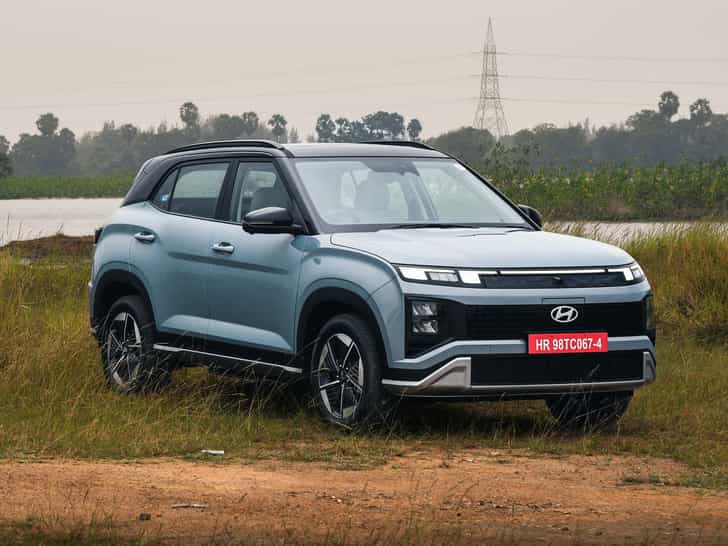
Given your usage, an EV makes strong sense, and the Hyundai Creta Electric is a great fit. In our real-world test, the long-range 51kWh battery managed a combined 432km, which almost covers your monthly usage, so you would only need to plug in at home every couple of weeks. In city traffic, it is very smooth and quiet, with a strong pull at low speeds, so gaps are easy and you won’t feel gear shifts. Over 10 years, the simpler EV hardware means fewer routine services, and you are less exposed to fuel price swings. Most electric cars also come with a long battery warranty, which helps give peace of mind.
A few trade-offs to keep in mind. At 500 km a month, the money you save on running will add up slowly, so buy it mainly for the smooth drive and ease of use. For the rare long trip, you will need to plan charging stops, but the Creta Electric can charge at up to 100kW, which makes quick top-ups easy.
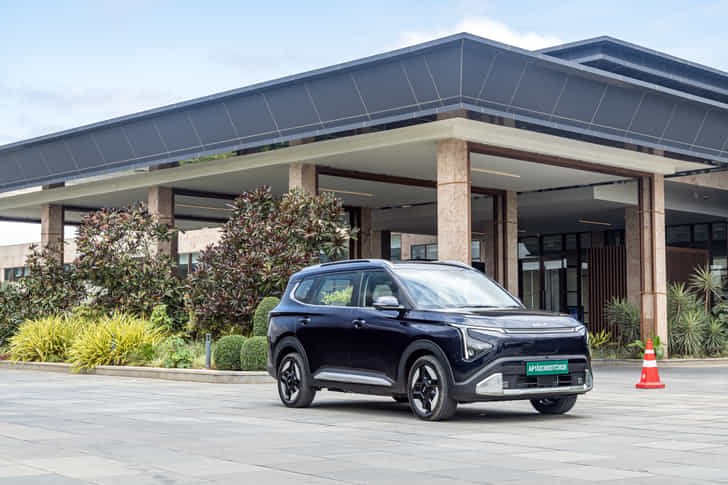
If you want a bit more space, the Kia Carens Clavis EV is a solid alternative in your range. Overall, for your city-heavy routine with home charging, the Creta Electric lines up best.
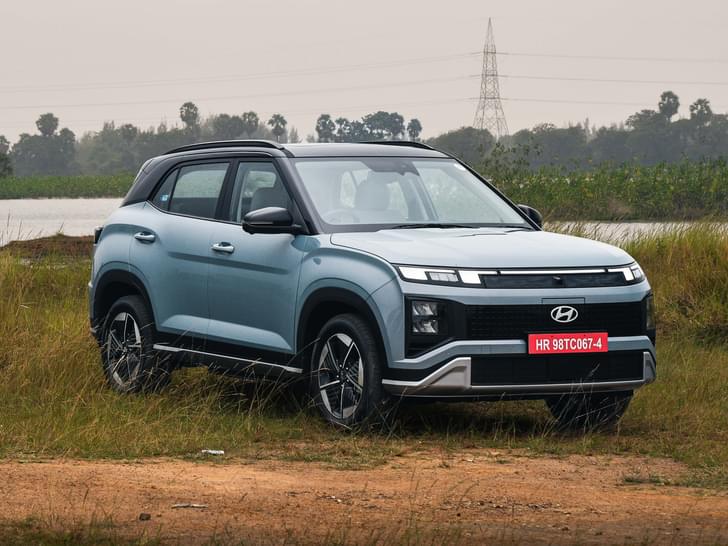
Hyundai Creta Electric

Hyundai Creta Electric

More questions on similar cars

AM

Amigonabeel

4d

I would like to buy an EV under Rs 20 lakh with a minimum real-world range of 300km, comfortable rear seats for my parents and ease of ownership for the next 6-8 years. I am a huge fan of VAG and Honda cars. Do they have any EV plans for India anytime soon? Among the existing EVs on sale in India, which one should I buy? Thank you, Team Autocar, in advance.

Autocar India team

Autocar India

Verified
2d

Of the models on sale today, Rs 20 lakh and 300km are an intersection that very few electric cars meet. Your two strongest options are the MG Windsor Pro and the Tata Curvv EV LR, both of which have their pros and cons.The MG Windsor offers a more spacious and airy interior, with soft and plush rear seats and easy ingress and egress, which should be beneficial for your parents. It's also got a very smooth and refined powertrain, although downsides include a slightly firm suspension and the fact that MG's network isn't quite as wide as other brands.The Tata Curvv's swooping roof and high ground clearance mean getting in and out is not as easy, but once you're in the car, space is ample. Quality is not as good as in the MG, and though silent and strong, the powertrain is not as smooth. It has better ride quality and a longer list of features than the MG, though, while it has a wider service network, it doesn't have the best reputation for its after-sales quality. Test drive both, ideally with your parents, and see which one they prefer to sit in the back of.If you can stretch your budget by 2-3 lakh, two even better options are the Hyundai Creta Electric and Kia Carens Clavis EV. Their range is comfortably more than the Windsor Pro or Curvv EV, and they offer far better ride quality and rear seat comfort. The Kia, being an MPV, also offers easier entry and exit for the elderly.While VW-Skoda will eventually bring out EVs for India, likely in 2027, they will be far above this budget, positioned in the Rs 50 lakh plus range. Honda's EV is due to go on sale later this year and will be a rival to the EVs we have highlighted above. If you don't mind waiting, it could be an interesting proposition, though little is known about its specifications or price at this time.

VehicleTata Curvv EV
VehicleMG Windsor
VehicleHyundai Creta Electric
VehicleKia Carens Clavis EV
YB

Yash Bhandari

2d

Hi Team, hope you are doing well. I need your honest opinion. I am planning to buy either the XEV 9e or the XEV 9S. I have watched many videos online, but I am getting mixed reviews. I know you provide unbiased opinions, so I am reaching out to you. Could you please help me decide if I am making the right choice? If I am making a mistake, please tell me why. Also, what would be the best EV choice in this price segment? PS: I stay in Mumbai, so please suggest alternatives based on their on-road price in Mumbai.

Autocar India team

Autocar India

Verified
1d

Pick the Mahindra XEV 9e unless you truly need the extra size of the 9S. It's slightly easier to drive day to day and should deliver slightly better range on a full charge. The 9S makes sense only if you carry family and luggage often and need the third row. One thing to keep in mind, early Mahindra electric cars have been reported to have software niggles, though these should have been ironed out by now, and make sure your home charging setup is sorted and check local fast-charger reliability before you commit.If you want the best all-rounder at an even more affordable price, the Hyundai Creta Electric is an easy pick. It may not look or feel particularly special, but for the job of being an EV, it is hard to fault at this price. Though it has a smaller battery than the Mahindra's, it is more efficient, and therefore its real-world range is actually higher. Its powertrain is smooth and refined, it's loaded with features, the controls and ergonomics are incredibly friendly, and its smaller size offers a great mix of space and driving convenience.

VehicleMahindra XEV 9e
VehicleMahindra XEV 9S
VehicleHyundai Creta Electric

Popular discussions right now

VV

Vaibhav Vats

5d

I own a Hyundai Venue Turbo Petrol, which is driven around 4,000 km per year and is occasionally used by my parents. I have been considering to upgrade it, as I am tired of spending money on maintenance. The car has been problematic since its second year of ownership. I am currently considering the Kia Syros HTK (EX) manual and HTK+ (DCT). However, some automobile enthusiasts have advised me against buying a DCT if I am looking for a hassle-free ownership experience, especially since the car will mostly be driven in Delhi’s office-hour traffic and the overall running is quite low. Could you please suggest whether I should opt for the DCT, stick with a manual, or consider a diesel automatic instead? Alternatively, if there are better options within a budget of Rs. 15 lakh, I would be open to considering them. I can also wait if there are any promising new launches expected this year within my budget. I am not interested in an EV at the moment. Thanks in advance.

Autocar India team

Autocar India

Verified
4d

Given your low annual running and predominantly city use in Delhi, a diesel does not make sense. Modern diesels are happiest when regularly driven on longer runs, and with just 4,000km a year, the higher purchase cost and potential emission system issues are difficult to justify.As for DCTs, they have become far more reliable than early examples, but if the priority is a smooth, stress-free ownership experience in heavy urban traffic, a torque-converter automatic is still the safer bet. It is generally smoother at low speeds and better suited to constant stop-start driving.Rather than moving to a Syros DCT, it would be worth considering the Skoda Kylaq automatic or the Mahindra XUV 3XO automatic. Both use torque-converter gearboxes and offer a more relaxed driving experience in city conditions. The Kylaq feels particularly polished to drive, while the 3XO counters with a richer feature list and a more spacious cabin.If you like the Syros, the manual remains a sensible choice given your limited annual usage, but if an automatic is preferred, a torque-converter-equipped rival would be a better fit than a DCT.

VehicleKia Syros
VehicleSkoda Kylaq
VehicleMahindra XUV 3XO

Posted on: 23 Apr 2026