
Autocar India
JA

J A Christopher

1d

Are EVs prone to motion sickness? My daughter feels nauseated even in ICE cars during continuous 40-50 km travel. Will an EV worsen this? Kindly advise.

Autocar India team

Autocar India

Verified
1h
Motion sickness in cars is usually caused by inconsistent movement, not the fuel type. It happens when the body senses motion, but the eyes do not match it, which is common in stop-and-go driving, frequent braking, body roll or jerky acceleration over longer drives.
In petrol cars, this often comes from gear shifts, uneven power delivery and sudden braking, while in electric cars it can come from instant acceleration or strong regenerative braking if driven abruptly. So the root issue is how smooth or jerky the car feels, not whether it is petrol or electric.
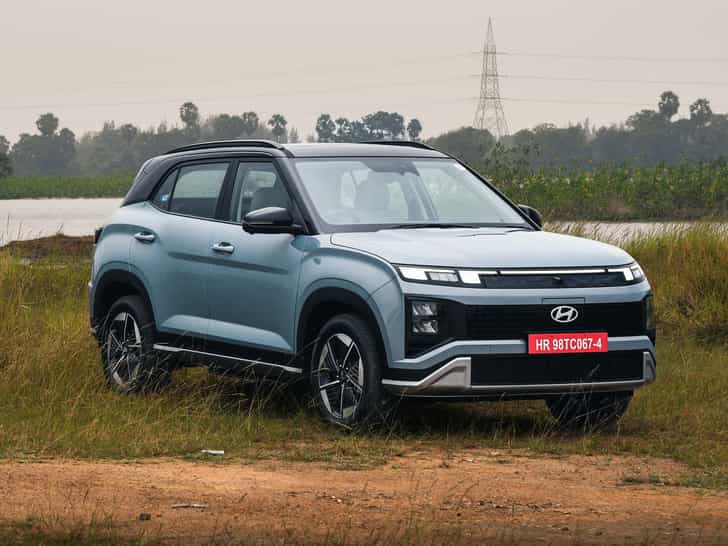
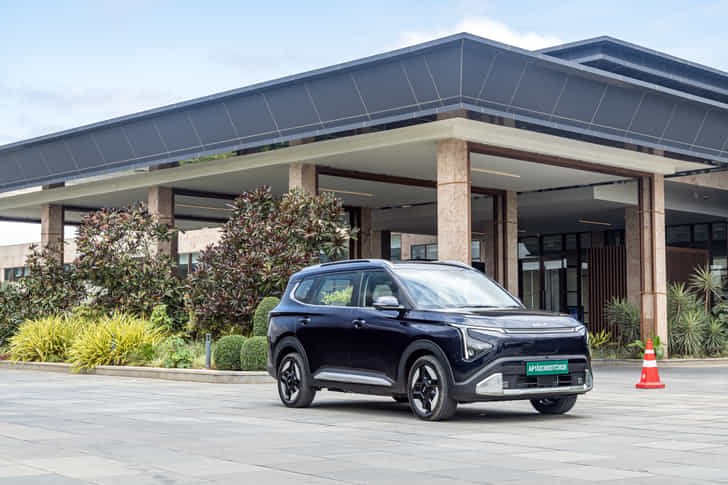
This is where newer EVs can actually help. Cars like the Hyundai Creta Electric and Kia Carens Clavis EV are among the smoothest to drive, with very linear acceleration, no gear shift shocks and a comfortable ride. Driven gently, they feel far more consistent in their movement compared to their petrol or diesel versions, which can reduce the chances of nausea.
Compared to your Fiat Punto Evo, both will feel like a clear upgrade in refinement, ride comfort and overall smoothness.
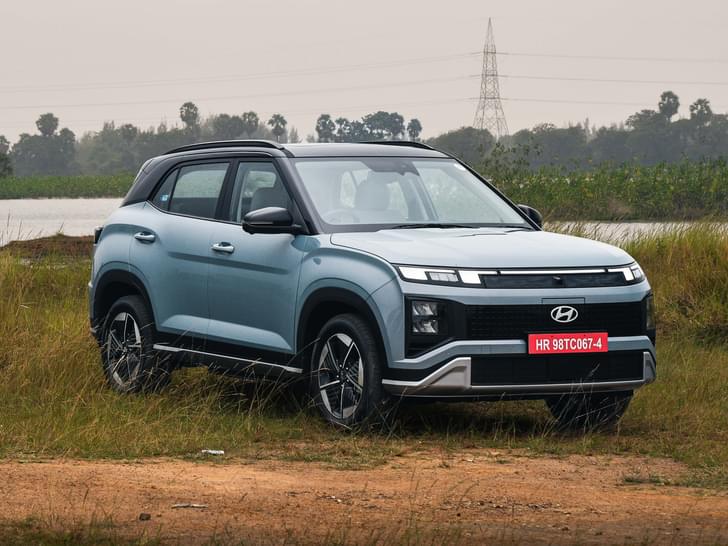
Hyundai Creta Electric

Hyundai Creta Electric

More questions on similar cars

VI

Vishu

1d

Is Honda launching the HR-V in India? If so, when, and how will it arrive? Will it be a CBU, CKD, or manufactured locally? What price segment is it likely to target?

Autocar India team

Autocar India

Verified
2h

There are currently no plans for Honda to launch the HR-V in India. It’s a model that has been evaluated in the past, but since it was not feasible cost-wise, the project was never approved.You may be thinking of the Honda ZR-V instead. That’s a more premium SUV, and Honda is understood to be considering it for India as a full import (CBU). While there’s no official confirmation or timeline yet, it could arrive sometime this year if plans firm up. As a CBU, pricing will inevitably be on the higher side due to import duties. We expect it to be in the region of Rs 60-65 lakh, which would place it firmly in the niche, premium end of the market rather than as a volume player.In short, don’t expect the HR-V anytime soon, and if the ZR-V does come, it’ll be more of a brand-building exercise than a mass-market offering.

HA

Hari

2d

I am looking for a car with a naturally aspirated petrol engine paired with a torque converter automatic gearbox, within a budget of ₹16 lakh (on-road, Chennai). Could you please share the list of available options that meet this requirement? Additionally, I would like your opinion on whether opting for a turbo-petrol engine is worthwhile for daily office commuting in a metropolitan city like Chennai, considering traffic conditions and real-world usability.

Autocar India team

Autocar India

Verified
15h

For mostly city use in Chennai with an on-road cap of Rs. 16 lakh, the Maruti Suzuki Brezza VXi AT fits your brief best. It has a simple 1.5-litre petrol, naturally aspirated engine without a turbo and a 6-speed torque-converter automatic, so it moves off gently and stays smooth when traffic is slow. The higher seat and compact size make it easy to see out, thread through gaps, and park, and Maruti service is widespread in Chennai.The flip side is that it is not very quick if you push hard, and the cabin feels a bit plain in this price range. If you want the full set of non-turbo petrol cars with a torque-converter automatic near your budget, these are the ones to look at: Maruti Suzuki Ertiga AT and Toyota Rumion AT in the lower trims if you need seven seats; the Maruti Suzuki Jimny AT has the same simple automatic but may just cross Rs. 16 lakh on-road in Chennai, so check deals. Most other petrol automatics in this price range use AMT or CVT-style gearboxes, not a torque converter.Do you need a turbo for a Chennai office run? Mostly no. In heavy traffic, you rarely use the extra power a turbo brings. Some small turbos also have a slight pause and then a jump when you press the pedal, which is not as soothing in stop-and-go driving. A non-turbo with a torque-converter automatic is usually the calmest. A turbo is worth it if you often carry a full family, climb flyovers a lot, or do fast runs on OMR/ECR or the highway. Overall, for city-only use, you will be happy without a turbo.

VehicleMaruti Suzuki Brezza
VehicleMaruti Suzuki Jimny
VehicleMaruti Suzuki Ertiga
RA

Ravi

3d

Any update regarding the Tata Harrier diesel facelift? When will they launch? What's the current stage of development?

Autocar India team

Autocar India

Verified
2d

There is no immediate plan for an update to the Tata Harrier diesel, so don’t wait.The Harrier already received its big facelift in 2023, and with the petrol and EV versions now launched, Tata has clearly completed this product cycle. In practical terms, this means the diesel will continue largely unchanged for now. You can expect minor tweaks like variant reshuffles or feature additions over time, but a major update or another facelift is still some distance away, rather than something imminent.The only drawback is that you may miss out on small updates later. Overall, what you see today is the final, sorted version for the foreseeable future, so it is safe to go ahead.

VehicleTata Harrier

Posted on: 20 Apr 2026