Autocar India
•23w

I am confused which car to buy: Creta EV or Mahindra BV 6?

Verified
•22w

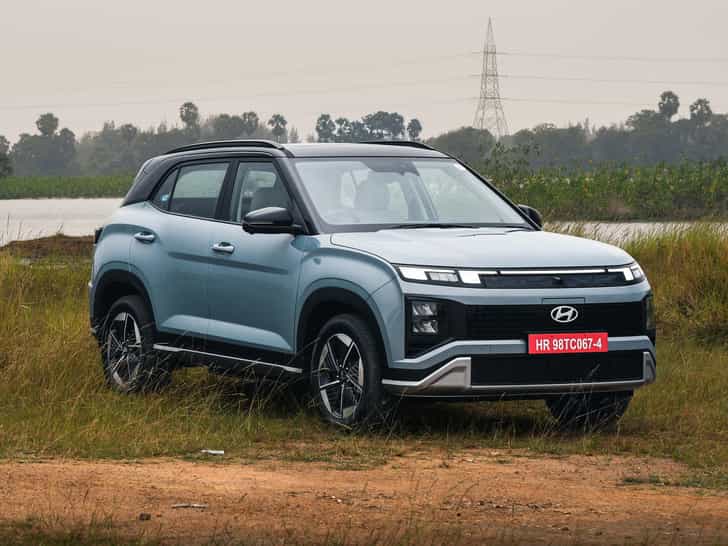
These two EVs are quite different in character and how you would use them. The Hyundai Creta Electric is a no-nonsense, practical SUV that is spacious, user-friendly, and very efficient. With a 51kWh battery delivering over 400km of real-world range, this Hyundai car is well-suited for everyday commuting and family use. The interface is intuitive, and there is a strong sense of familiarity if you have experienced the regular Creta; the EV variant essentially feels like a Creta with an electric powertrain.

The Mahindra BE 6, on the other hand, is all about making a statement. Its radical design will turn heads, though it may feel a bit too polarising for some. It is the more driver-focused option here, with a sportier feel and impressive ride quality. The range is competitive too, but practicality takes a hit because the rear seat is not as accommodating, and the infotainment and controls are not as intuitive as those in the Hyundai.

In the end, it comes down to your priorities. If you want a comfortable, easy-to-live-with EV that works well as a daily family car, the Creta Electric is the safer bet. If you are after something more distinctive, sporty, and primarily for self-driving enjoyment, the BE 6 fits the bill better.
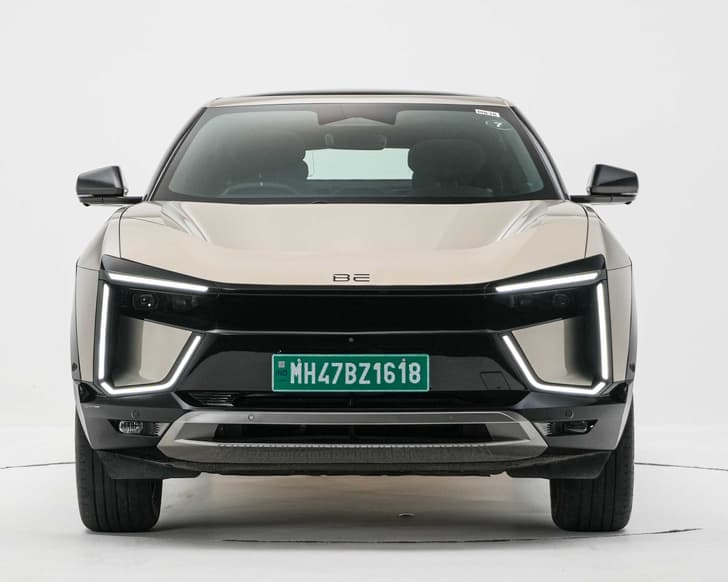
Mahindra BE 6

Mahindra BE 6

•22w•

Does Creat EV deliver real world range of 400 kms in B2B traffic situations like Bombay or Delhi? If not 400, even 350 kms?

•16w•

I want to buy a 7 seater for my family. Mostly city ride hyderabad. Long trips bi monthly suggest any vehicle

•22w•

If you’re planning to buy a Mahindra, I’d suggest you don’t go only by its old reputation. We owned an older Bolero for 13 years—crossed 2 lakh km with very low maintenance. That’s why we trusted the brand again and bought a new one in 2025. But our experience with the new vehicle has been completely different: * Clutch failed at 4,500 km * Replaced at service centre * Again major clutch + flywheel issue by 10,000 km Same driver, same usage—so this is clearly not normal. Also, the response from Mahindra Service Centre Ambattur has not been reassuring. No clear root cause, mostly part replacements and avoiding accountability. The vehicle is in Chennai service centre and we are about to receive the vehicle tomorrow.

More posts on similar cars

•4h

I’m confused between the Kia Seltos HTK Optional 1.5 NA IVT and 1.5 Turbo DCT. I plan to keep the car for 5-8 years. For the first 1-2 years, it will stay in my Tier-3 city for my parents for their daily use. Later, I may take my car to Pune for my daily commute. Overall, I expect around 80% city and 20% highway/outstation driving with occasional Pune-Vadodara trips, Goa/weekend trips, holiday road trips, and sometimes 4-5 people with luggage. My main questions are for the NA IVT. Does the 1.5 NA feel underpowered in the Seltos, especially with 4-5 people and luggage? How good is it for highway overtaking and quick acceleration? How useful are the paddle shifters/Sport mode for improving responsiveness? When accelerating hard, how noticeable is the high-RPM engine noise/CVT drone, and does it become annoying on highways? For the Turbo DCT, how does it behave in prolonged bumper-to-bumper/crawling traffic? Is clutch heat/wear or low-speed jerkiness/hesitation a genuine long-term concern over 5-8 years? What is the best way to drive it in heavy traffic to minimize clutch wear? How significant are the differences in real-world city mileage and long-term maintenance cost? Considering this usage pattern, which transmission would you recommend and why? I’m particularly interested in the real-world ownership experience rather than just performance figures.

Verified
•2h

For your 80 percent city usage and 5–8 year ownership, the NA IVT is the better fit. The 1.5-litre engine is not particularly powerful on paper at 115hp and 144Nm, but the IVT masks its weaknesses well in normal driving. It is smooth, jerk-free and relaxed in traffic, while the new Seltos has a much more comfortable ride than the previous generation.With four or five people and luggage, it will feel slower, particularly when overtaking on the highway. The CVT rubber-band effect does appear when you accelerate hard, but it is less pronounced than in many other CVTs. Sport mode and the paddles do help by keeping the engine more responsive, although they cannot turn it into a performance SUV.The turbo DCT is considerably quicker and is the obvious choice if spirited highway driving is important. However, for your predominantly urban use, the IVT's seamless low-speed behaviour is a significant advantage. A DCT can feel hesitant at crawling speeds, whereas the IVT avoids that characteristic.The IVT also returned 10.3kpl in the city and 14.2kpl on the highway in testing, with better efficiency than the turbo DCT.

VehicleKia Seltos
•3h

I am planning to buy a new vehicle for myself and my parents. I have seen the new Audi Q3 2026 and am quite interested in it, but I am not fully convinced about the petrol-only option. I was hoping for a hybrid version, especially considering fuel efficiency at this price point. Secondly, I am also looking for a 4x4 and am currently waiting for the new Fortuner. However, I am confused because many people are suggesting the new Scorpio N or Thar Roxx, saying that if the primary purpose is off-roading, there is no need to spend so much on a Fortuner. Please suggest what would be the better option for my requirements.

Verified
•18m

The Audi New Q3 is a good choice if you want a premium, comfortable SUV, but I would not buy it expecting a hybrid. The India-spec Q3 is expected to use a 2.0-litre turbo-petrol engine with 204hp, a 7-speed DCT and quattro AWD, with no confirmed hybrid version for India.If your requirement is genuine 4x4 capability, the Toyota Fortuner remains a very different proposition. The next-generation Fortuner is already being tested and is expected in India by early 2027. It is expected to retain petrol and diesel engines, 4x4 capability and the ladder-frame construction, while gaining a much more modern cabin and ADAS.The Mahindra Scorpio N is the sensible alternative if you want a capable 4x4 without spending Fortuner money. The Thar Roxx makes more sense if off-road ability is the priority, but it is less comfortable and practical as a family SUV.For parents, the Q3 will be considerably easier to live with in the city, while the Fortuner is better suited to long-distance touring and serious rough-road use.

VehicleAudi New Q3
VehicleToyota Fortuner
VehicleMahindra Scorpio N
VehicleMahindra Thar Roxx

Expert reviews worth reading

Popular discussions right now

•6d

Help me choose the right car for my usage. Please be practical and challenge my assumptions. My situation: I am 31 and work as a software developer. I currently work from home in Balsane, Dhule, but I am moving to Mumbai around March. My wife and I are expecting a baby in February. My parents live in a village where local transport is poor. My Mumbai office is near Powai, but parking is difficult. I prefer a manual car. Usage: My current running is around 10,000 km per year, but it may increase. I travel between Mumbai and Balsane, which is around 400 km one way, around 5-7 times a year, along with Dhule/Sakri and local trips. I also drive around Mumbai on weekends. The AC is usually on, and on long trips, the car will have my wife, baby, and luggage. Budget: Rs. 6-9 lakh on-road. I am willing to spend more only if it is genuinely worth it. Shortlist: - Tiago XE Petrol - Punch Pure+/Smart Petrol - Punch Pure+/Smart CNG - Brezza LXi turbo-petrol Please tell me: 1. Which one should I buy and why? 2. Petrol vs CNG for my usage? The CNG premium is around Rs. 1 lakh, and the nearby village pump may open around Diwali, but this is not guaranteed. 3. What real-world mileage can I expect with the AC on? 4. Please consider loan interest, fuel costs, maintenance, depreciation, and resale value. 5. Is the Brezza worth the extra money? 6. Give me one final choice and tell me what I should avoid.

Verified
•5d

The Brezza LXI Turbo is far superior to the Punch and Tiago as far as smoothness, performance, and cabin space are concerned. It is also backed by Maruti's widespread support network, and the ownership experience is likely to be fuss-free. The on-road cost of the Brezza LXI will fall within your Rs 9 lakh budget, and even though you might miss a few features, it still feels worth opting for. Alternatively, you could also consider the Maruti Dzire VXI MT for its large boot, comfy ride and strong fuel efficiency.

VehicleMaruti Suzuki Brezza
VehicleTata Punch
VehicleTata Tiago
VehicleMaruti Suzuki Dzire

Posted on: 20 Apr 2026