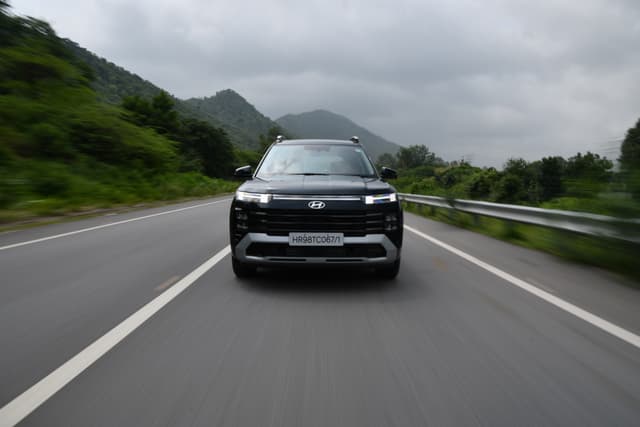
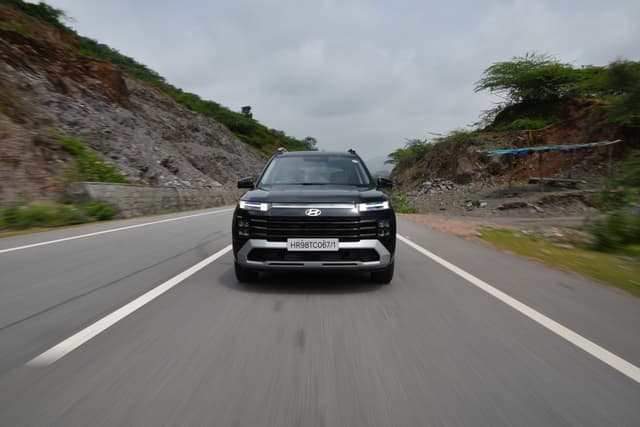
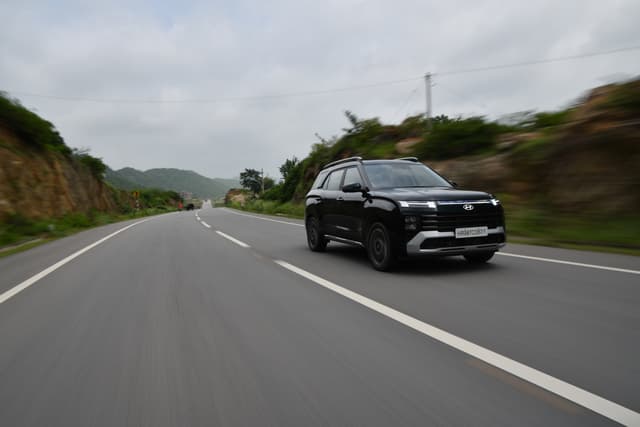
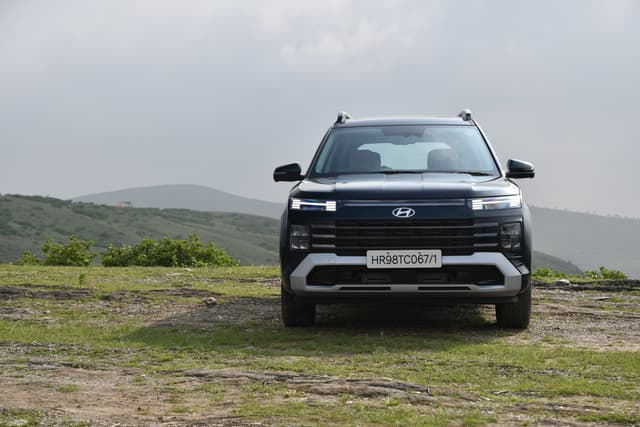
Hyundai Cars With Central Locking in India (6)
Discover the best Hyundai Cars With Central Locking. Our comprehensive guide covers detailed specifications, expert reviews, pricing information, and buying advice for Hyundai Cars With Central Locking. Find the perfect cars that matches your requirements and budget.


Trending Questions on Hyundai Cars - Answered by Autocar Experts
I have to purchase a car for my 66-year-old father. He is currently driving a 7-year-old S-Cross VXi+, which has completed approximately 1.9 lakh km. Before that, he drove a Tata Manza for 3 lakh km and a Chevrolet Beat for 40,000 km. His usage is mostly on highways and the hilly roads of Nainital, with an average daily drive of around 40 km and yearly running of approximately 22,000+ km. His height is 170 cm. He drives calmly and conservatively at around 60–70 km/h and prioritises maximum fuel efficiency. I have shortlisted the Brezza LXi (due to its turbo-like low-end feel and seat height), Punch Adventure, and Exter HX6. Features are not a priority. My basic requirements are power windows, central locking, seat height adjustment, good ground clearance for rough terrain in Nainital, and good mileage. A reliable, affordable car with low maintenance costs and easily available service support is important, as the car will also be driven by a driver around 50% of the time. Please suggest the best option accordingly. Thank you. A big fan since 2003.
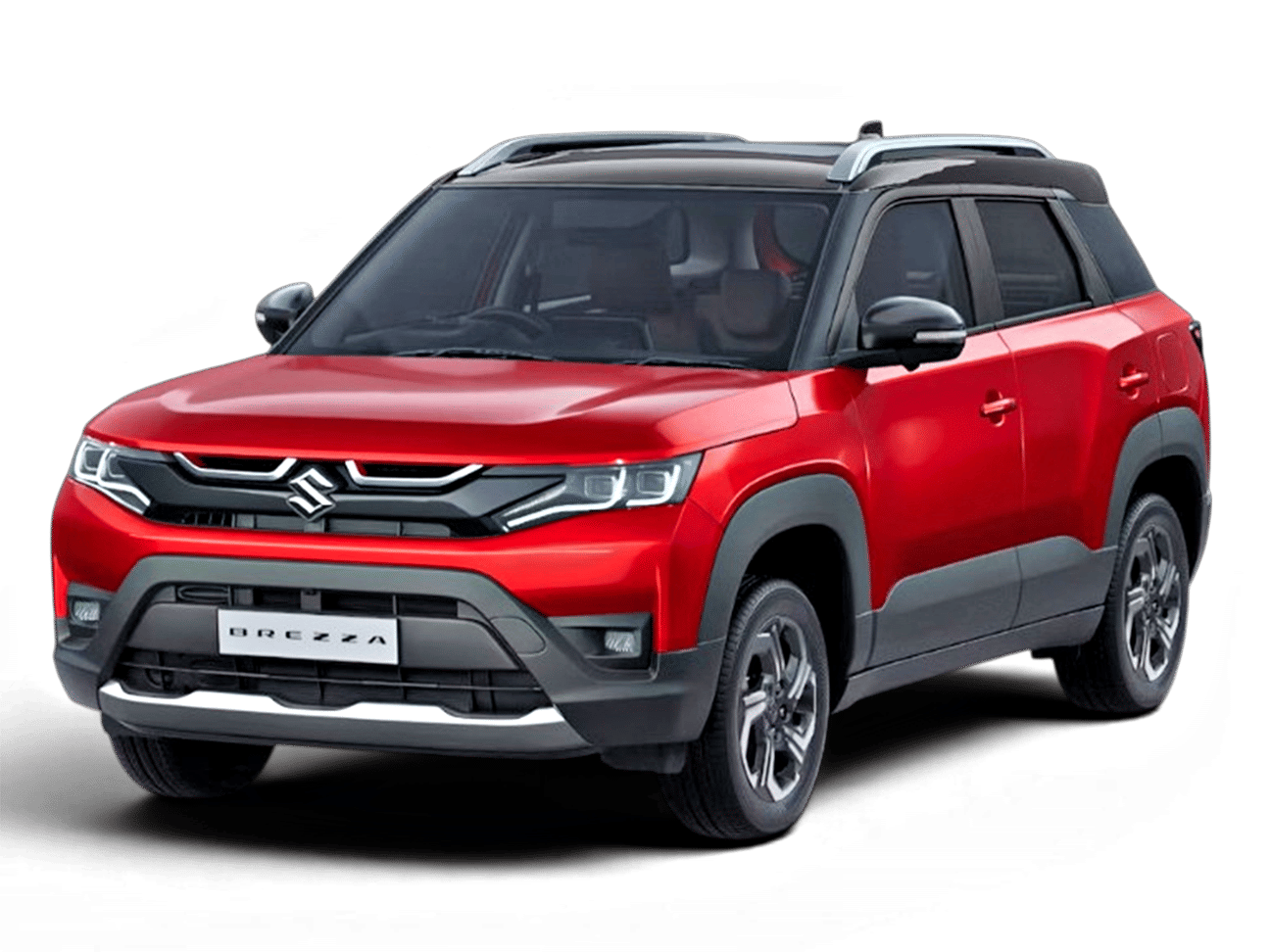
Given your father's usage pattern, the Maruti Suzuki Brezza LXi turbo is the most sensible choice. With 22,000+ km a year, a mix of highway and hilly terrain around Nainital, and a conservative driving style, you need a car that is reliable, efficient, and easy to live with. The Brezza's new turbo petrol engine is well suited to this kind of usage, offering good low-end torque for hill climbs and overtakes. The seat height and ground clearance of this Maruti Suzuki car are both strong points, making it easy to get in and out of and well suited to rough terrain, and the LXi does get driver's seat height adjust. Maruti's service network is another big advantage, especially given the car will be driven by a driver 50% of the time. The Tata Punch Adventure and Hyundai Exter HX6 are both good cars, but the Brezza is from a segment above and more spacious. Overall, the Brezza is the best fit for your father's needs.
I am looking for a manual petrol hatchback (preferably non-Maruti) within 10 lakhs on road price in Thrissur. Priorities (in order) are road visibility comparable to Wagon R, short turning radius, airbags for driver and front passenger, rear camera with sensors, central locking, tinted glass, decent infotainment unit, and reasonable seating for 3 abreast in the back seat. Also, how does the Citroen C3 measure for the above requirements and against the Punch & i10?
Given your comfort with the Maruti Suzuki Wagon R, we'd advise you against a conventional hatchback and recommend you look at a sub-compact SUV. The high seating is a boon and will put you at immediate ease in the car. Options that meet your requirements within a Rs 10 lakh budget include the Hyundai Exter, Tata Punch and Citroen C3. The Tata Punch offers more of what you need. It's got the widest cabin (though it's still not ideal as a 5-seater) and packs in all the features that you need, and then a whole lot more. The Citroen C3 makes a compelling case for itself with the best engines, well-sorted ride and handling, and the cabin experience is also vastly improved with the recent feature update. However, it's not quite as roomy as the Punch, and Citroen's service network is also not as widespread as Tata or Hyundai's.The Hyundai Exter is an easy-going option that's also worth a look.
The parking space in my apartment is very small. I can park a car similar in size to a Wagon R, but anything larger will be tight. I am planning to buy a small car by 2028. My budget is up to Rs 13 lakh, and I want a car with cruise control. As far as I have seen, only Maruti makes small cars, but none of its current models appeals to me because they feel too basic and do not offer cruise control. I have heard that Maruti is planning to launch small cars such as the Suzuki Hustler and a new small EV similar to the eWX. Is it wise to wait for these models? Are they likely to be available by 2028?
Since you are planning to buy only in 2028, there is little reason to compromise on a car that does not meet your requirements today. The upcoming Hyundai compact EV, which will sit in the Punch EV/Nexon EV space, is particularly worth waiting for. It is expected to be a compact, city-friendly SUV with modern features, and Hyundai has already confirmed Level 2 ADAS and a new-generation infotainment system.Maruti Suzuki is also working on smaller products. The Hustler-based compact SUV has been reported for around 2027, while the eWX-based affordable EV is expected around 2027–28. However, the exact specifications, pricing and launch timelines are still not confirmed.
I am planning to buy a new crossover within a month and want to keep it for four to five years. My priorities are good resale value, decent highway acceleration and mileage. My budget is Rs 15-17.5 lakh, and I am considering only cars with a DCT, torque-converter, CVT or IVT automatic. I have shortlisted the Skoda Kushaq Signature, Hyundai Creta S(O), Kia Seltos HTK and Honda Elevate VX. I am also considering waiting for the new Elevate facelift in October. I was thinking of waiting for the Creta facelift as well, but it will take a few more months. I expect to drive 60% in the city, with occasional highway trips. I want a car that performs well on the highway, offers good overtaking ability and delivers decent mileage. I have driven Honda and Volkswagen sedans abroad. Which car would be the better fit for my needs?
Based on your requirements, the Skoda Kushaq Signature 1.0 TSI with the 8-speed torque converter automatic is the best fit. It offers strong mid-range performance for highway overtakes, a proven and reliable powertrain, and a driving experience that will feel familiar and engaging given your experience with VW group cars abroad. The torque converter automatic is smooth and well-suited to your 60% city usage, while still delivering the punch you want on the highway. This Skoda car also sits comfortably within your budget and is available immediately, which is important given your one-month timeline.The Hyundai Creta S(O) IVT and Kia Seltos HTK IVT are both excellent alternatives if you prioritise refinement and a more premium cabin experience. The IVT gearbox is exceptionally smooth in the city, but the naturally aspirated petrol engine does not offer the same mid-range punch as the Kushaq for highway overtakes. The Honda Elevate VX CVT is the most reliable long-term ownership proposition, but again, the naturally aspirated engine is not as strong on the highway.Waiting for the Elevate facelift in October is a reasonable option if you are not in a hurry, but the changes are expected to be incremental rather than transformative.Overall, the Kushaq Signature 1.0 TSI torque converter strikes the best balance between performance, reliability, driving enjoyment and immediate availability. It will deliver the highway performance you want while remaining easy to live with in the city.
I am planning to buy a sub-4-metre SUV and have shortlisted the Mahindra XUV 3XO and Hyundai Venue. My main requirement is good rear-seat space along with decent performance. Should I go for the diesel or petrol variant? I am concerned about the poor mileage of the turbo-petrol engines in both cars.
Go for the Mahindra XUV 3XO petrol. It offers the most rear-seat space in the segment, a wide cabin, and a genuinely comfortable back seat, which is exactly what you are looking for. The Hyundai Venue is a good car, but its rear seat is not as spacious or as comfortable as the 3XO's. In terms of performance, both the 3XO and Venue turbo petrols are strong, but the 3XO's 1.2 turbo petrol is punchy and well suited to both city and highway driving.On the diesel versus petrol question, it really comes down to your running. If your annual mileage is below 15,000 km, the petrol makes more sense. Modern turbo petrols aren't as fuel efficient as naturally aspirated engines, but the difference isn't huge unless you are doing very high mileage. The diesel is only worth considering if you do a lot of highway driving and your annual running is high enough to justify the higher upfront cost.
Last Updated on: 12 Sept 2026