
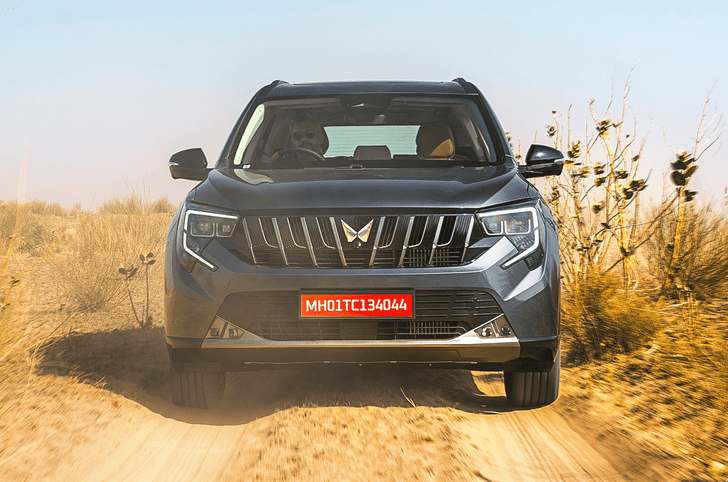
It was only a matter of time before Mahindra brought the features from its BEVs to its ICE portfolio, and that starts with the new XUV 7XO. This is essentially a facelift of the XUV700 that’s been on the market since 2021, and while on the outside, it’s more evolution than revolution, under the skin, there are some key upgrades and, of course, a whole host of new features inside. Last year, Mahindra sold over 80,000 units of the XUV700, helping it overtake Hyundai and Tata Motors to claim second place in sales. Can the XUV 7XO help the brand hold on to that spot in 2026? We drove it in Jaisalmer, Rajasthan, to find out.
XUV 7XO Exterior Design and Engineering
Design is sharpened up but still familiar; alloy wheels are now 19-inch on top trims.
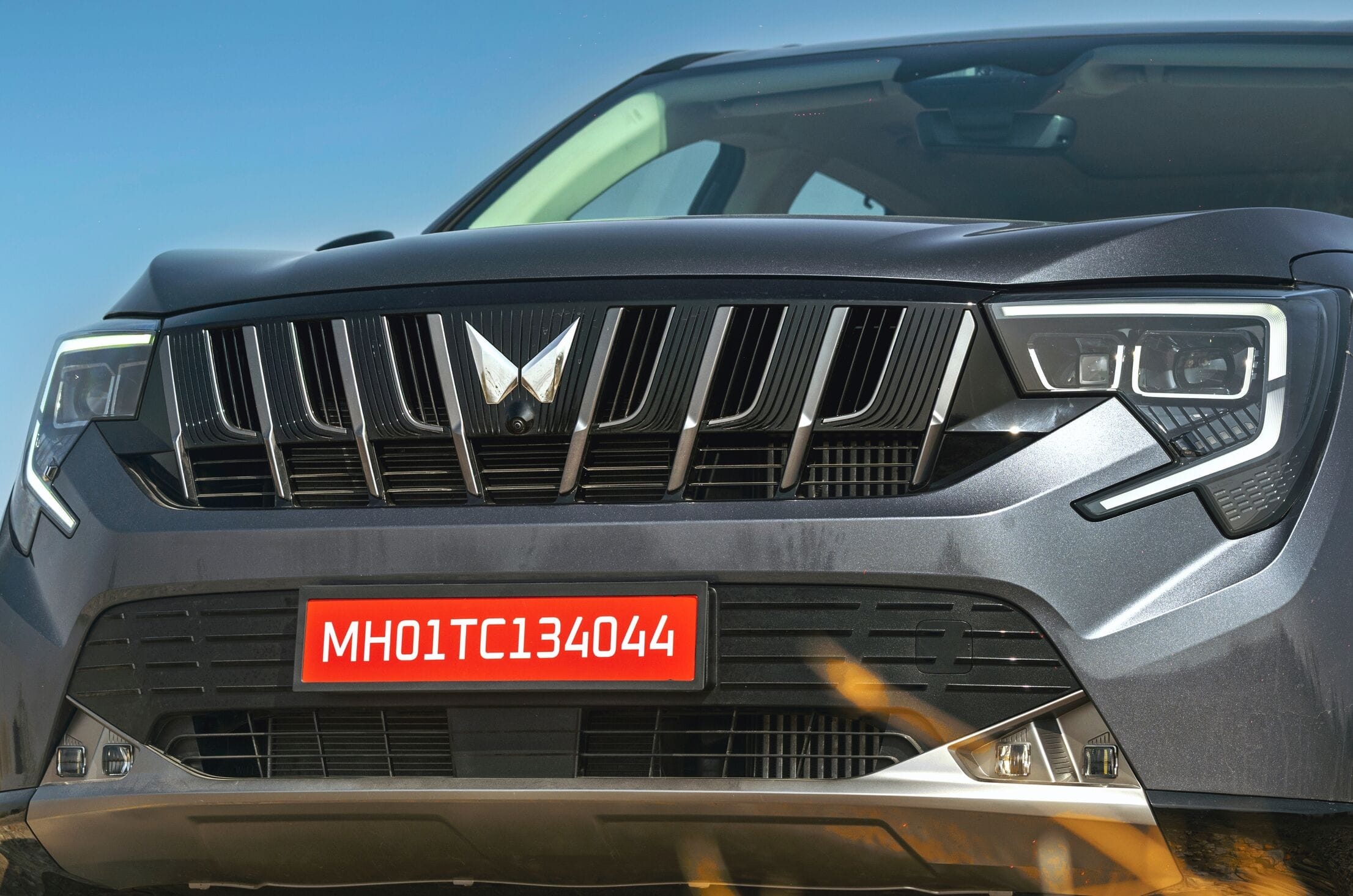
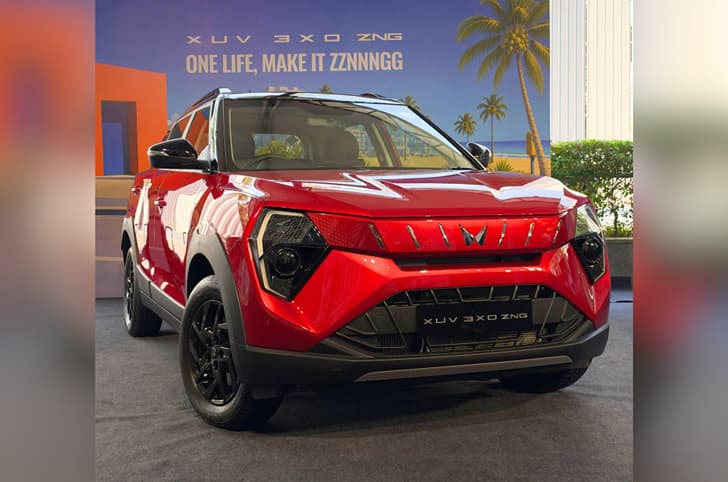
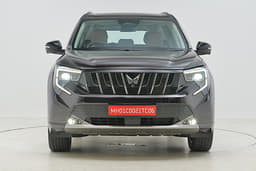
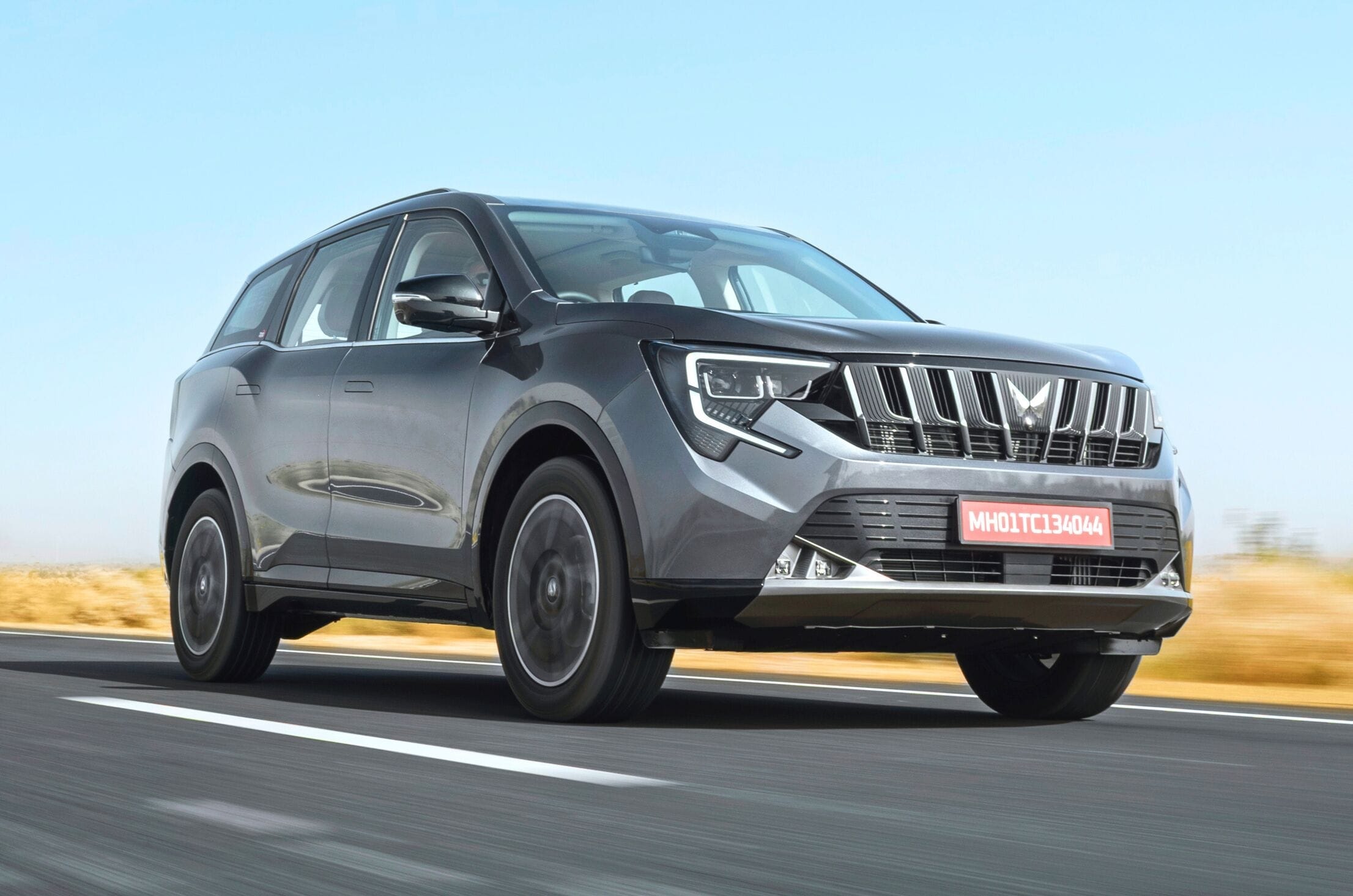
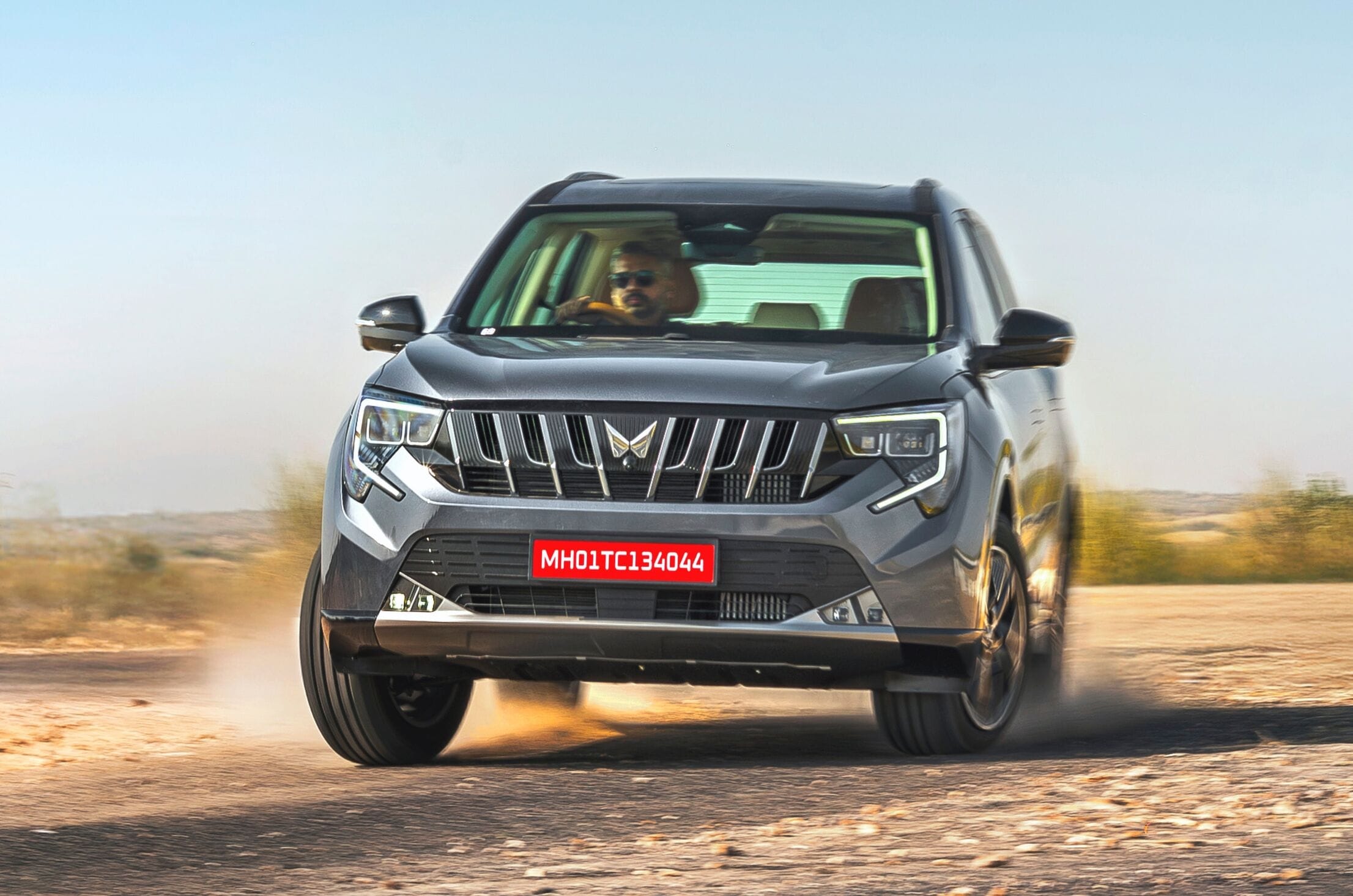
The XUV700’s design was rather well-liked, so it’s fair that Mahindra does not want to mess with it too much. The XUV 7XO is instantly recognisable, albeit with an edgier treatment for its front fascia. The signature daytime running lamps (DRLs) are still there but aren’t quite as large as before – lowercase C instead of uppercase if you will. Housed within the C is the split-beam LED headlight, which flanks a new slimmer grille. Lower down is a sharper bumper with a silver faux skid plate element and four ICE cube-shaped lighting units for the cornering and fog lamps. These units also feature what Mahindra calls a headlight booster that activates above 80kph to provide better illumination, but only on high beam.
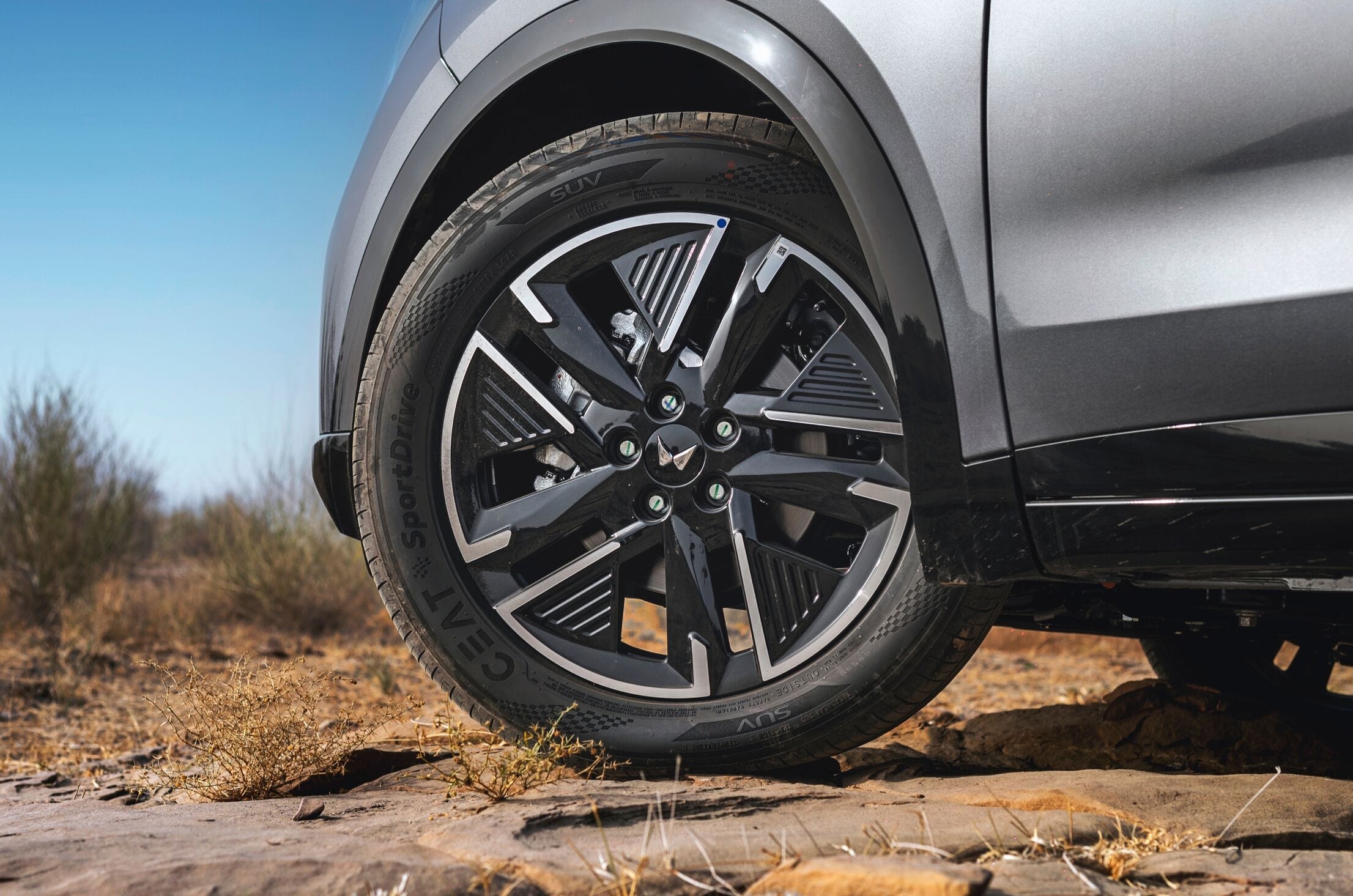
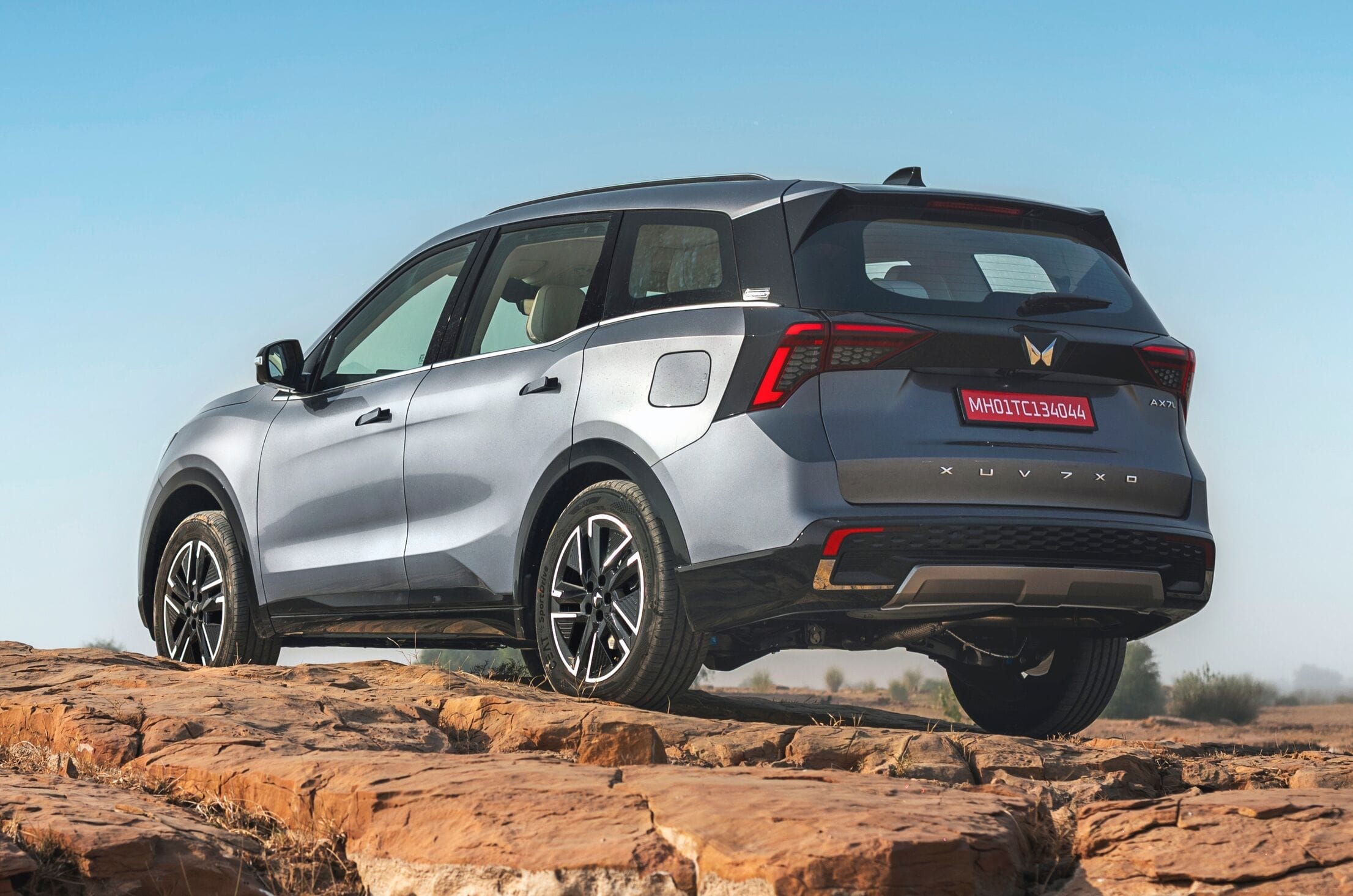
The silhouette hasn’t changed, defined by a muscular shoulder line with that trademark kick-up at the C-pillar. Wheel size has gone up from 18 inches to 19 inches on the top trim with a new design in a black and diamond-cut finish. These go well with the gloss-black trim around the wheel arches and lower portion of the doors. The flush door handles continue, and the proximity sensor-based pop-out function is now available on one trim below the top.
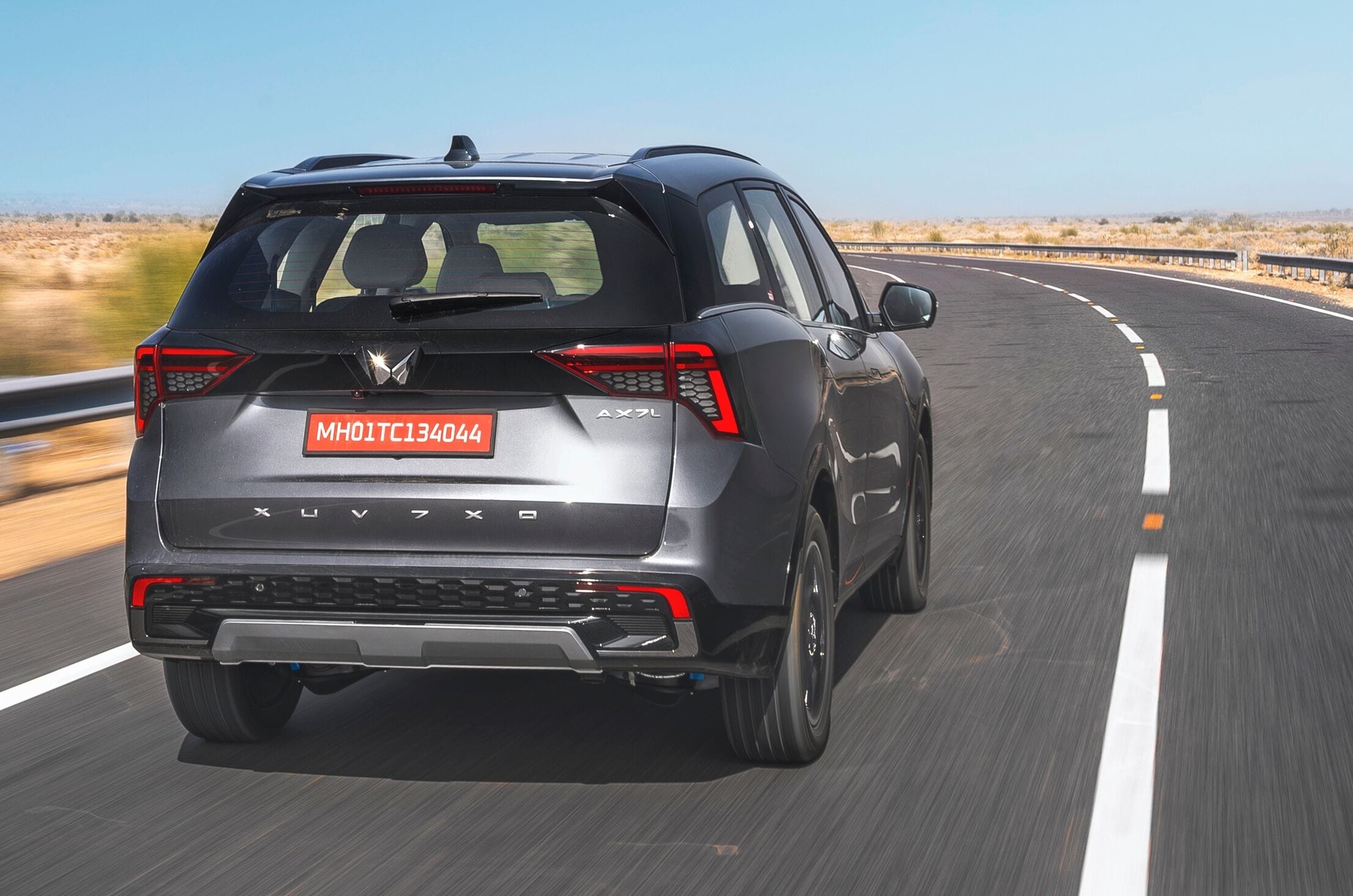
At the rear, the LED tail-lamps are taken from the XEV 9S and feature an intricate hexagonal pattern. This hexagon theme continues below on the squared-off bumper with more gloss-black trim. Overall, this facelift does a good job of freshening up the five-year-old design without needing the cliched light bars at both ends. It isn’t quite as cohesive as the original design, but it is well-executed nonetheless.
XUV 7XO Interior Space and Comfort
Cabin feels more premium, and first two rows are comfortable as ever; third row feels cramped.
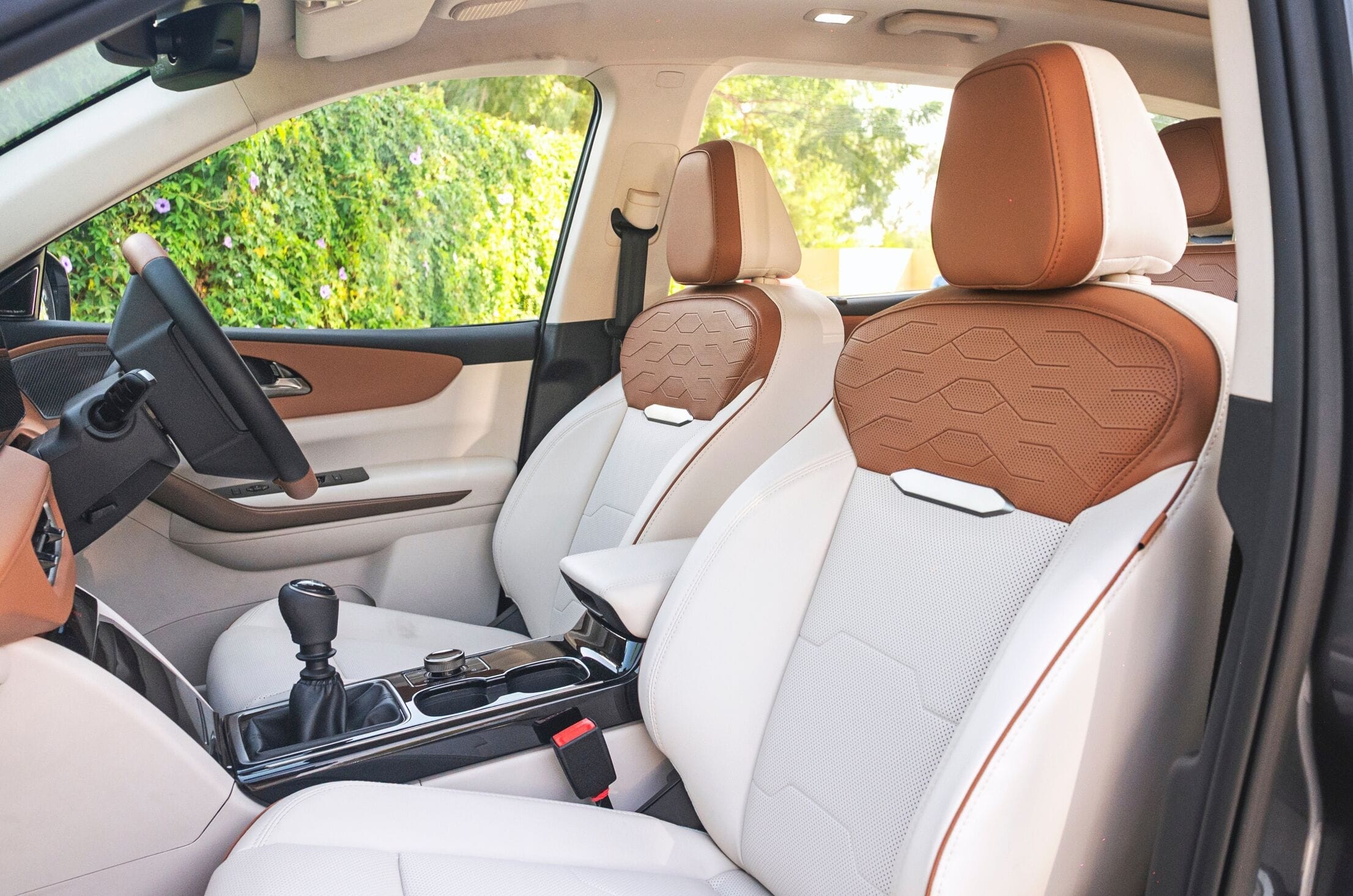
Comfort up front is excellent, with the wide seats offering good support all round and a decent range of adjustment. Both front seats are ventilated and powered, with the driver getting a memory function, while the passenger seat has a powered boss mode function. It’s easy to get comfortable, aided by the steering wheel, which now also adjusts for reach as well as rake. The two-spoke steering is also lifted from the 9S, but this time gets physical buttons instead of the haptic ones that used to get unintentionally activated.
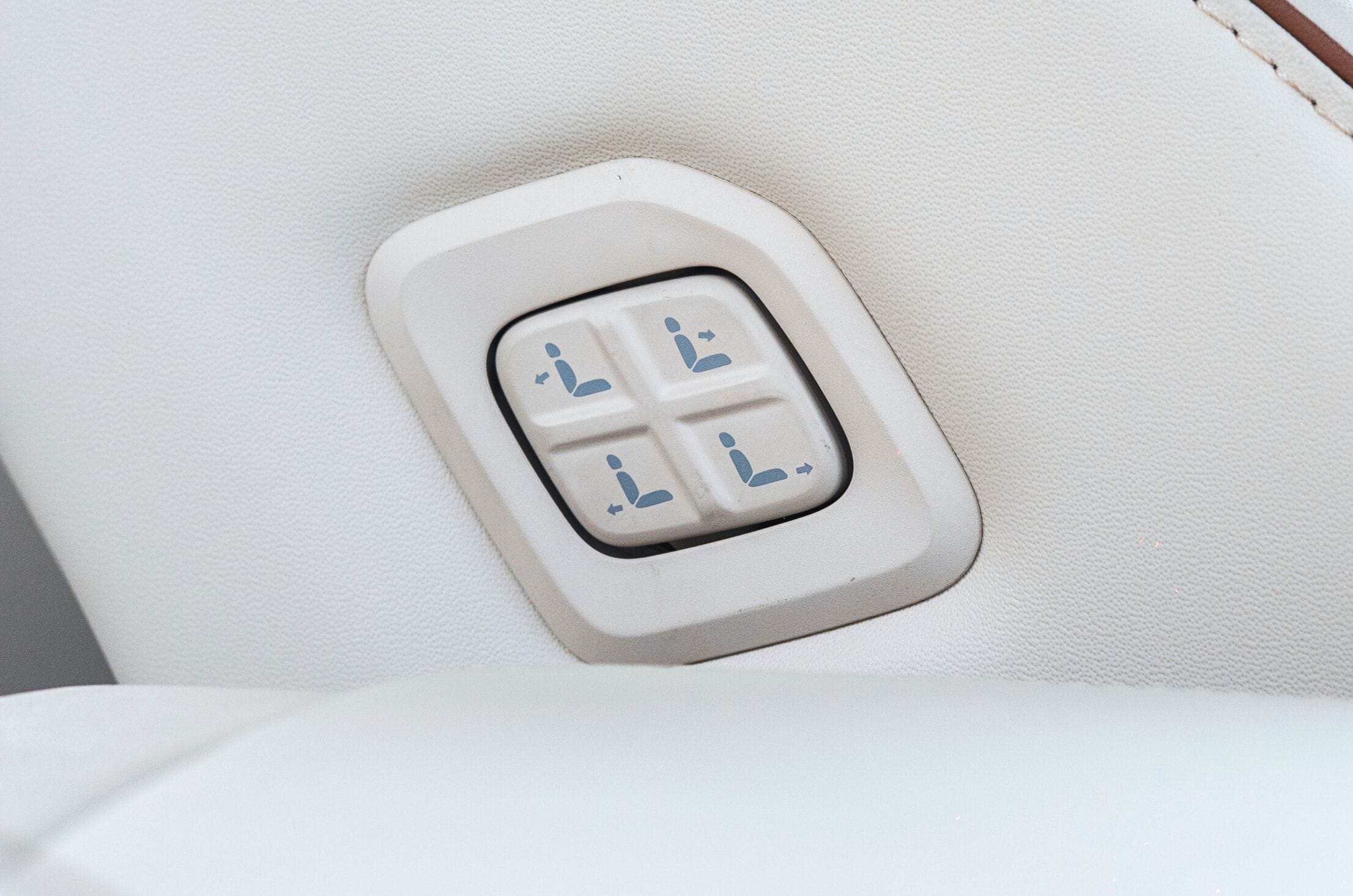
The middle row is similarly comfortable, with a wide bench or optional captain’s chairs on the top two trims. The seating for the outer two passengers and the optional captain’s chairs are also now ventilated. The seats are well-cushioned, with decent thigh support and adjustable headrests for the outer two passengers and a fixed headrest for the centre. An armrest also features, and the seatback reclines, but it doesn’t slide like the one in the XEV 9S. While there is plenty of legroom in the middle row without it, a sliding function would have helped the third row.
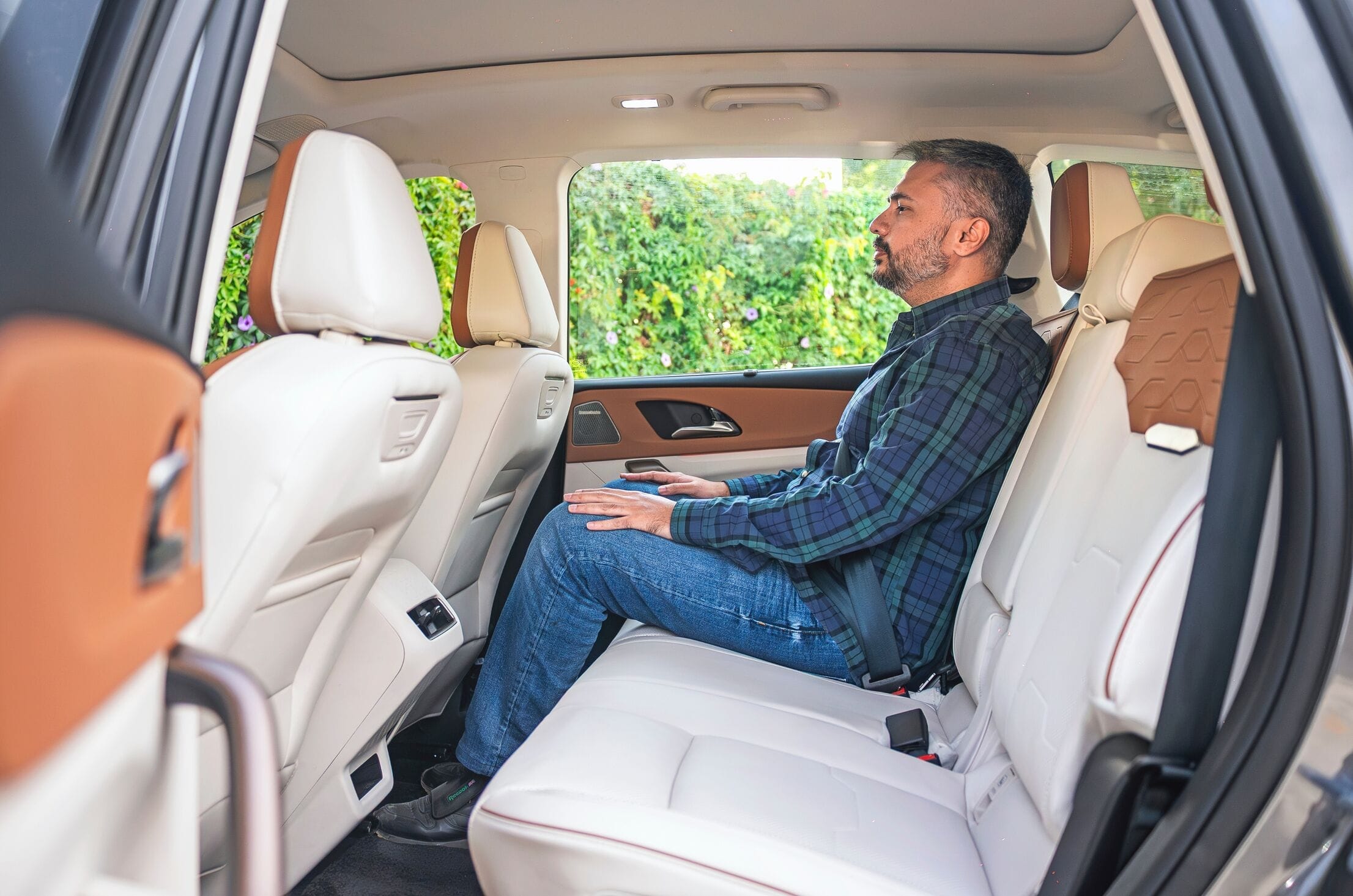
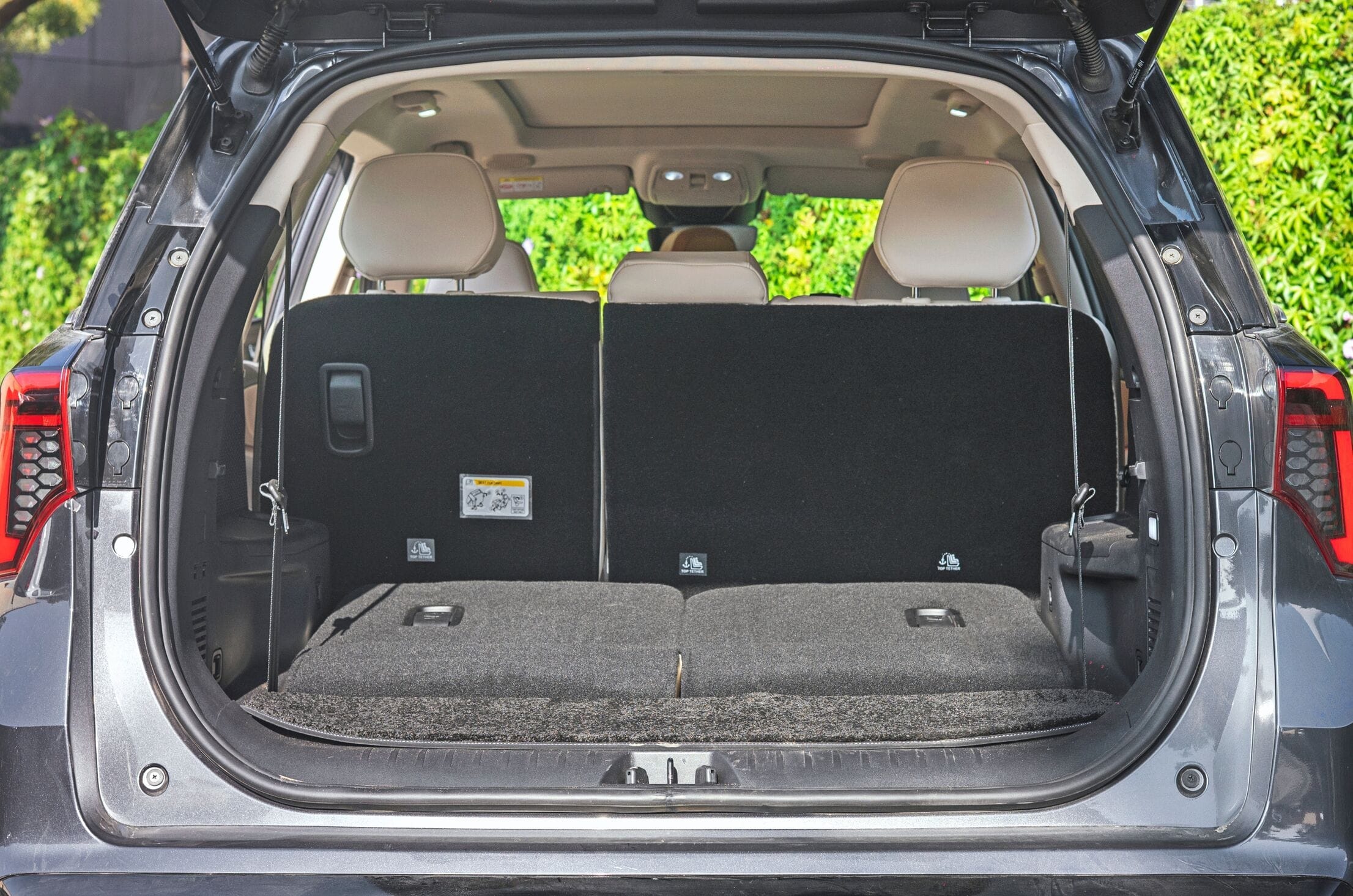
As it stands, the third row is cramped for adults. My 5’8” frame just about fit, with the second-row seatback uncomfortably upright and my hair brushing the headliner throughout. A knees-up seating position is a given. The third row is then best reserved for short journeys or stowed away entirely to reveal a cavernous luggage area.
XUV 7XO Features and Safety
Absolutely packed to the gills with features; ADAS suite works well in our conditions.
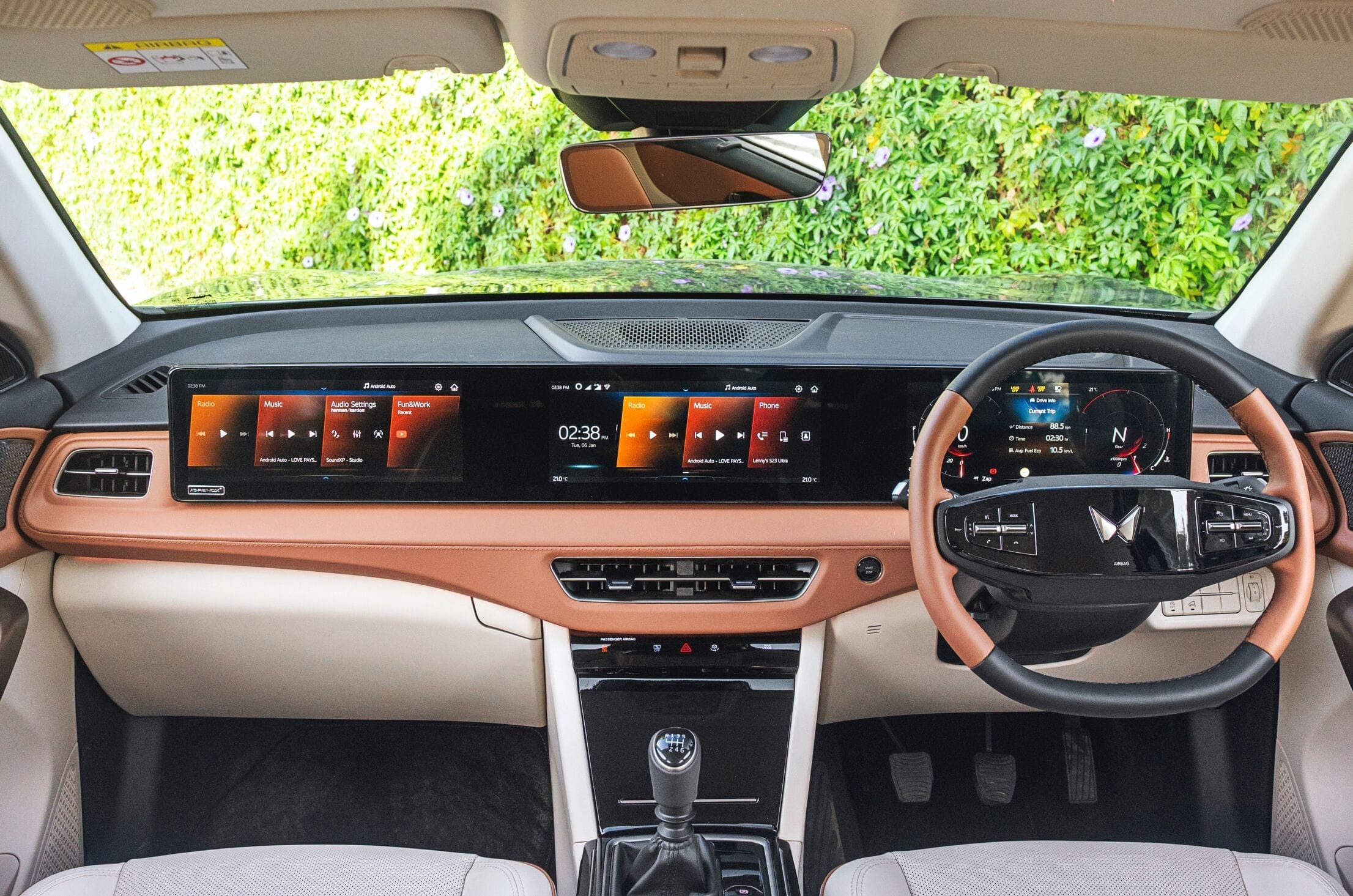
Updates to the interior feel more like a generation change than a facelift – largely down to the massive screen stretching the width of the dash and the absence of physical buttons. This brings a few issues, though, the most annoying being that adjusting the HVAC is now, at minimum, a two-step process that requires you to divert your eyes to the screen. Speaking of distractions, Mahindra has taken our feedback regarding the passenger screen on the BEVs and given it a privacy filter here, so it no longer draws your eye when you are checking the far-side mirror. However, at night, this display again becomes visible from the driver’s seat.
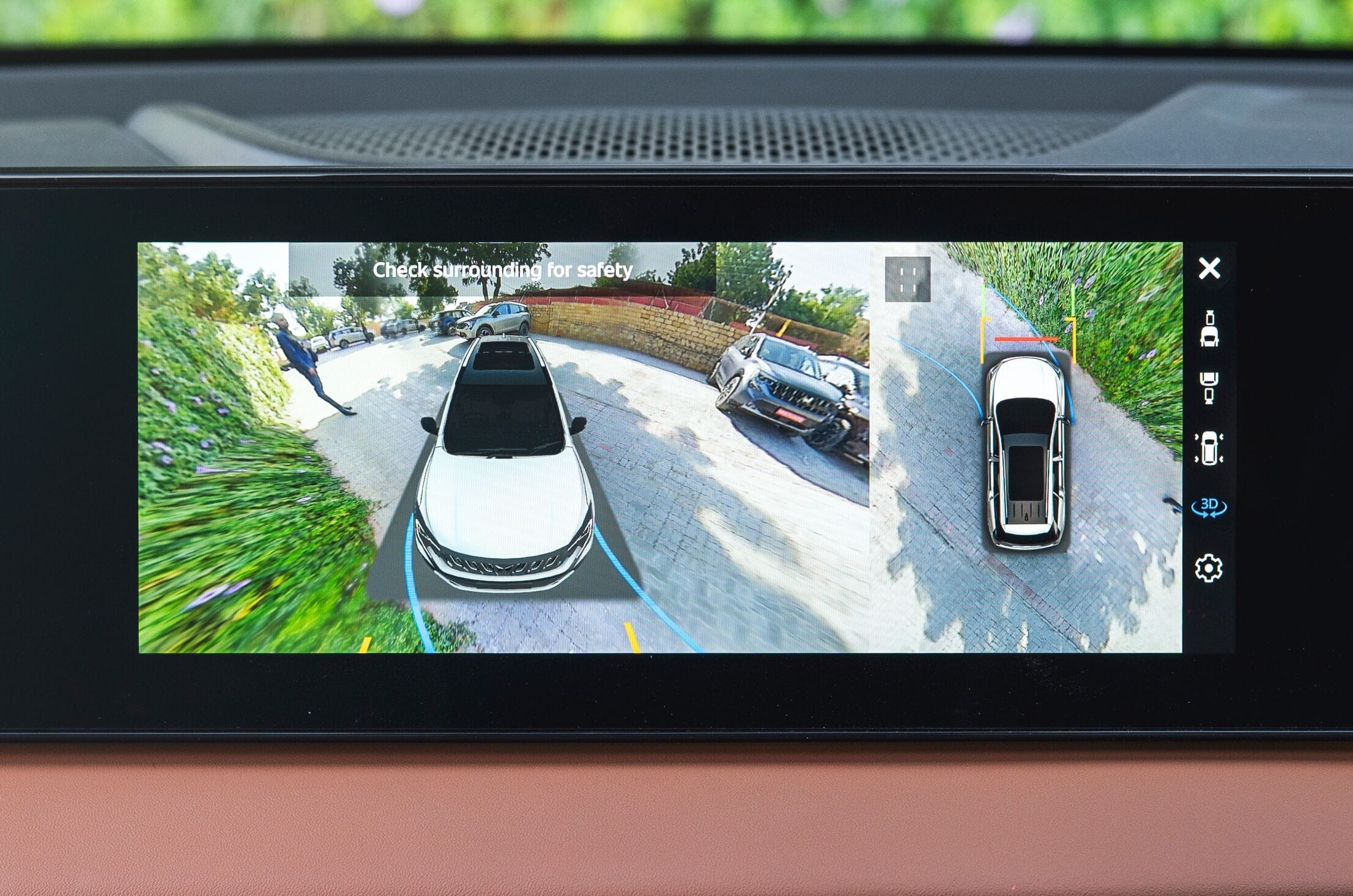
The massive screen is made up of a trio of 12.3-inch displays, which are sharp and bright, and the infotainment and passenger displays are responsive to touch, though the user interface does take some getting used to. There’s also what Mahindra calls a 540-degree camera – essentially a 360-degree camera with a top-down view – that’s clear and easy to use.
There are a host of different apps in the infotainment for everything from media streaming to online shopping, most of which are shared with the passenger display. What’s especially impressive is that this triple-screen setup is standard across the range. Also featured is a 1,400W 16-speaker Harman Kardon music system with Dolby Atmos and Dolby Vision that sounds great, but only once you spend some time on the equaliser settings.
The dashboard is lifted straight from the XEV 9S, but this time with a tan theme that looks quite rich. This continues to the door cards, which look and feel premium, with soft-touch materials and intricately detailed metal speaker covers. One quirk in this area is the window switches, where you push forward to lower the window and pull back to raise it, which feels counterintuitive.
There is also a bring-your-own-device provision to mount tablets on the front seatbacks, with an integrated 65W Type-C charger. A second wireless charger also features at the rear, in addition to the one up front. The all-important panoramic sunroof is available from the mid AX5 trim onwards, but for rear window sunblinds, you’ll need to splurge for the top AX7 L trim.
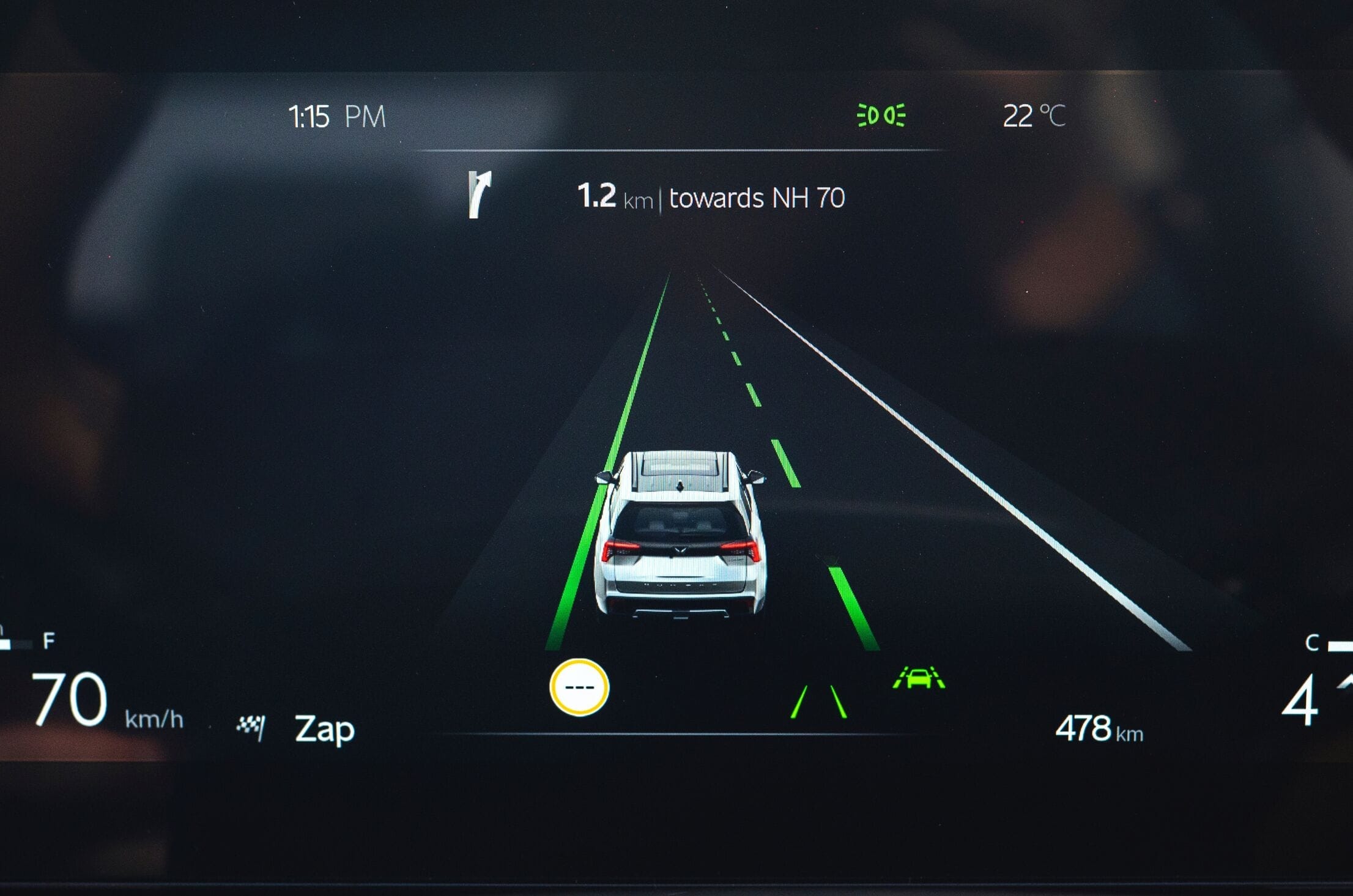
The safety kit is equally comprehensive, with six airbags, four-wheel disc brakes, ABS, ESC, hill-hold and hill-descent control as standard. A notable new addition is a three-point seatbelt for the middle passenger in the second row. The AX7 T trim adds a knee airbag and an upgraded Level 2 ADAS suite. It uses cameras claimed to have 3.7 times higher resolution than before, with radar modules and sensors offering 3.5 times the computing power. Throughout our drive, the system worked well, accurately identifying other vehicles, two-wheelers and even cattle, and displaying them on the driver’s display. It stayed between the lines neatly, and the adaptive cruise control acted predictably when slowing down for traffic.
At the time of writing, the XUV 7XO hasn’t received a crash-test rating from Bharat NCAP, but Mahindra says that it’s been engineered to achieve a full 5 stars. The XUV700 scored 5 stars in the Global NCAP crash tests back in 2021, which bodes well for the XUV 7XO.
XUV 7XO Performance and Refinement
What community is saying on the XUV 7XO?
Petrol and diesel powertrains provide punchy performance and good refinement; AWD optional on the diesel AT.

Under the hood, it’s status quo, and that’s no bad thing. During our drive, we sampled the petrol automatic and the diesel in both automatic and manual forms, all of which are strong performers. The 2.0-litre turbo-petrol makes 203hp and 380Nm, channelled to the front wheels via a 6-speed manual or torque-converter automatic. Whichever you choose, the motor has no trouble hauling this two-tonne SUV to 100kph in under 10 seconds. It feels grunty, almost diesel-like at the lower end of the rev range but is happy to extend all the way to the 5,800rpm redline. As expected, it’s refined and smooth too, with no vibrations creeping into the cabin.
The 6-speed automatic is also well-suited to the engine. Shifts are smooth, albeit with a small pause between gears, but paddleshifters are still missing. That said, I never found myself reaching for them, given the amount of performance on tap, and the gearbox is quick enough to drop a gear when required.
While petrol power is gaining popularity, it’s the diesel that brings in the numbers, accounting for around 75 percent of sales of the XUV700. It’s easy to see why. The 2.2-litre motor puts out 185hp and 450Nm (420Nm with the manual), and its torquey nature suits the character of this big SUV well. It’s not as effortless as the petrol, but it’s no slouch, with a strong shove coming in at around 1,400rpm and staying until about 4,000rpm. Refinement is good; the engine gets vocal when pushed hard, but in day-to-day driving, it’s nicely muffled. The diesel gets three drive modes – Zip, Zap and Zoom – which noticeably alter the throttle response.
Here too, the automatic is a good match for the engine, keeping it on the boil and making good use of the ample torque. The manual, on the other hand, feels shorter geared than you’d expect. This, together with the tractable motor, means it’s happy to chug along in third around town and rarely requires a downshift to make an overtake on the highway. However, a taller sixth gear would help it settle into a cruise and eke out better efficiency still. The clutch is pretty light given the amount of torque it handles, and the shifter action is smooth enough too.
XUV 7XO Mileage / Range and Efficiency
Official ARAI fuel-efficiency figures are yet to be revealed, but expect them to be similar to the XUV700.
Mahindra hasn’t quoted fuel-efficiency figures, but we don’t expect them to differ much from the XUV700. The ARAI figures for the petrol XUV700 are 13kpl with the automatic and 15kpl with the manual – in the real world, these often drop to single digits. The diesel XUV700 is more frugal, with ARAI figures of 17kpl and 16.57kpl for the manual and automatic, respectively, and it’s possible to get close to these numbers on a steady highway cruise.
XUV 7XO Ride Comfort and Handling
Trick new dampers and hydraulic bump stops elevate ride comfort to another level, while handling remains stable and predictable.
The XUV 7XO swaps out its predecessor’s Frequency Selective Dampers (FSD) for what Mahindra and suppliers Tenneco call DaVinci dampers. They are essentially dampers with a DCx piston valve, which has several thin metal discs of varying shapes that alter the flow of hydraulic fluid based on the pressure applied. In principle, they do the same job as the FSDs – providing different damping forces at low and high frequencies – but here there is a greater bandwidth with more precise tuning of the primary and secondary ride.
It's quite complex but what you need to know is that it works as advertised. Despite the wheel size going up an inch, the low-speed ride is even better than before. There’s a newfound plushness to the way it soaks up rough patches without letting anything through to the cabin. It also gets hydraulic bump stops that greatly soften that thud you get when the suspension bottoms or tops out. As before, high-speed manners are superb with an uncanny ability to mask speed. The dampers do a great job of keeping the body flat and composed through long, wavy undulations typically found on our highways.
Confidence is high through the bends as the XUV 7XO unflinchingly sticks to the chosen line. Even unsettling mid-corner bumps and dips are dealt with in a fluid, one-and-done motion. Through sharper bends, there is a fair bit of body roll, but that is to be expected of an SUV with a high centre of gravity. Helping matters is the well-tuned electric steering – it’s light enough to be twirled with one finger at a standstill but weights up nicely and provides good feedback as speeds rise. Braking performance is strong too, with disc brakes on all four corners – now standard across the range.
XUV 7XO Value for Money
A significant improvement over the XUV700 at virtually the same price as before.
The big news here is that Mahindra has done away with the MX trims altogether. Every variant is now an AX (or AdrenoX-powered) with the triple-screen setup. Also standard are the ‘DaVinci’ dampers and hydraulic bump stops, which have a huge impact on the way it drives. Considering this, the starting price of Rs 13.66 lakh – exactly the same as the outgoing MX trim of the XUV700 – is incredible bang for your buck. For the top-end AX7L, prices extend up to Rs 23.64 lakh for the petrol AT and Rs 24.11 lakh for the diesel AT. AWD is still available on the top three trims of the diesel AT 7-seater, costing between Rs 21.40 lakh and Rs 24.92 lakh.
These prices are introductory and set to rise after the first 40,000 bookings, but it is still a tremendous value for what you get. The strong engines continue to deliver the punchy performance we’ve come to love, and the ride and handling balance is even better than before. If that isn’t enough, there is enough tech to shame some from the segments above. Sure, there are still bits that need improving, such as a less confusing UI and more physical controls, and those who regularly seat seven will find more comfort in the back of some of the competition, but given the XUV7XO’s tremendous abilities in all other areas, this is something many will ignore. The XUV7XO is all set then to keep its predecessor’s momentum going strong, and Hyundai and Tata Motors certainly have their work cut out if they want to take that second place in sales away from Mahindra in 2026.



 Saumil Shah
 Soham Thakur
 Sergius Barretto