
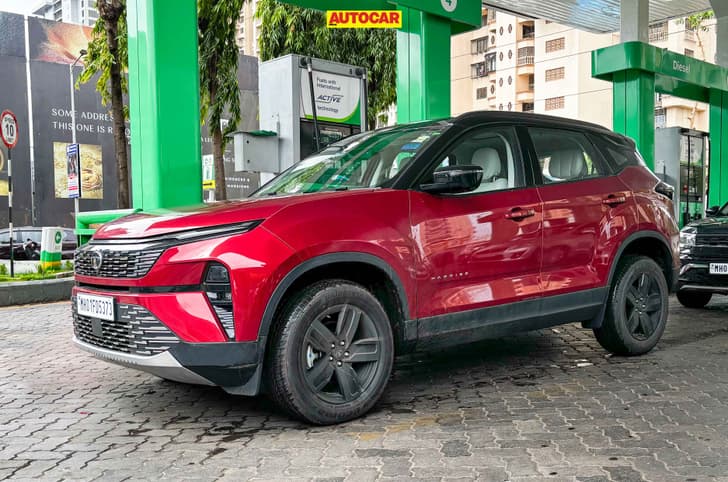
Launched with a diesel engine in 2019, the Tata Harrier finally gained a turbo-petrol option in January 2026. It’s the same 1.5-litre Hyperion mill that debuted in the Sierra, but in the Harrier, it produces 170hp and 280Nm – 10hp and 25Nm more. Unlike its sibling, the turbo-petrol Harrier is available with both 6-speed manual and automatic transmission options. We tested the latter to evaluate its real-world fuel efficiency.
- Misses out on an auto engine stop/start system
- Gets an Eco driving mode
- Weighs 1,738kg
Tata Harrier petrol mileage explained
The Harrier’s higher state of tune (than the Sierra), sharp throttle responses and revised gearing improve drivability, and despite its 1,738kg kerb weight, performance feels more than adequate. Unlike the Sierra, the turbo-petrol Harrier also gets an Eco driving mode to help curb fuel consumption. However, an automatic engine stop/start system is absent.
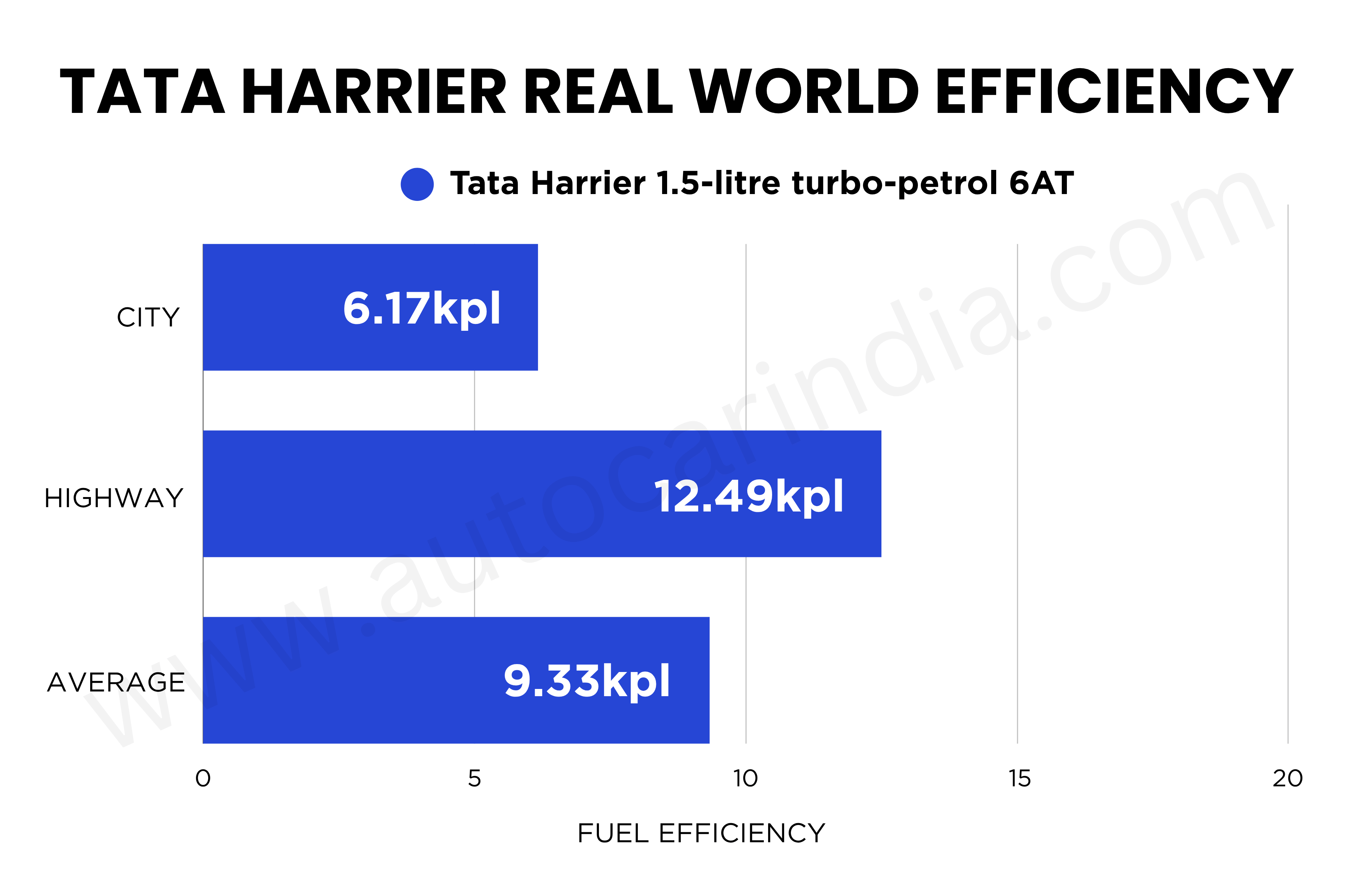
In our tests, the Harrier turbo-petrol automatic, equipped with a 6-speed torque-converter gearbox, delivered 6.17kpl in the city and 12.49kpl on the highway, resulting in an overall average fuel efficiency of 9.33kpl.

What community is saying on the Harrier?
Notably, the top-spec Harrier weighs over 180kg more than the Sierra and is, as expected, less efficient. In our tests, the Sierra delivered 0.32kpl more in the city and 1.21kpl more on the highway. The larger gap in highway efficiency can also be attributed to the Harrier’s higher cruising engine speeds. At 100kph, its engine turns at 1,900rpm in top gear, whereas the Sierra cruises at 1,750rpm in sixth gear at the same speed.
For fuel-conscious buyers, the Harrier diesel remains the more sensible choice. For reference, the 2021 Harrier diesel automatic returned 9.6kpl in the city and 14.4kpl on the highway in our efficiency tests.
Autocar India’s fuel-efficiency testing
Before conducting our real-world fuel-efficiency tests, we fill our test cars’ tanks to the brim and maintain tyre pressures based on the manufacturer’s recommendations. These cars are then driven on fixed city and highway loops in and around Navi Mumbai, and we maintain certain average speeds. Throughout the tests, we run the aircon at 22deg C in full-auto mode and other electricals, such as the audio system, indicators and wipers, when required – just as a regular user would. Periodic driver swaps further neutralise variations in driver patterns. At the end of each cycle, we calculate efficiency by filling the tanks to full again.


 Uday Singh

 Glenn Noronha
 Dipan Sur