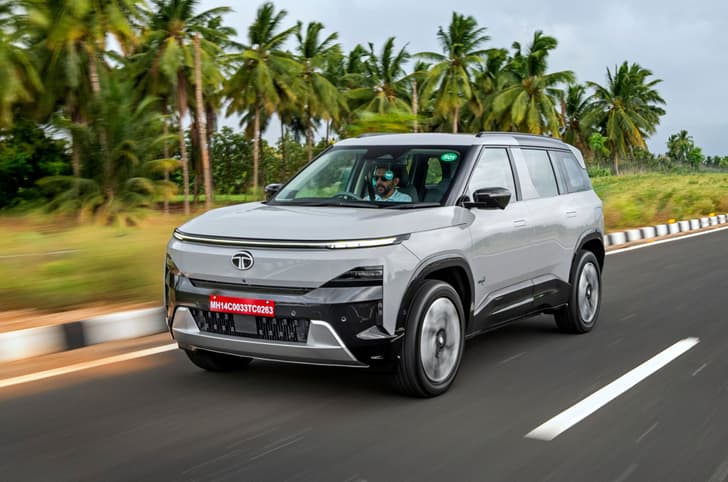


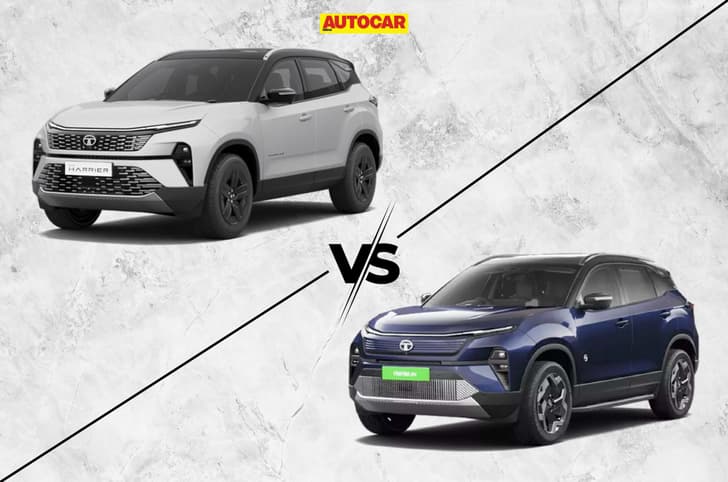
Tata Motors recently launched the Harrier EV as the carmaker’s most powerful, advanced and feature-packed electric car to date. While the EV version looks nearly identical to the diesel Harrier, both SUVs are very different under the skin and in terms of features offered. We’ve pored over the specs to see how Tata’s latest electric SUV differentiates itself.
Tata Harrier diesel vs Harrier EV exterior design
Harrier EV has subtle styling tweaks
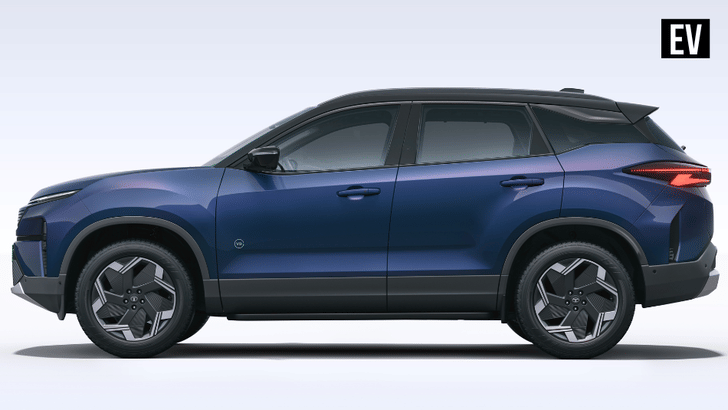
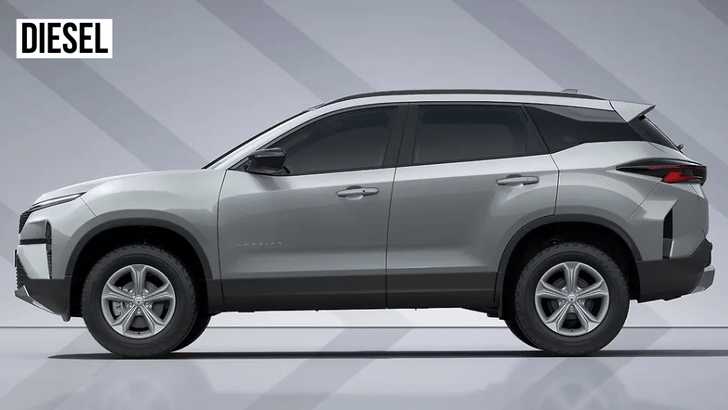
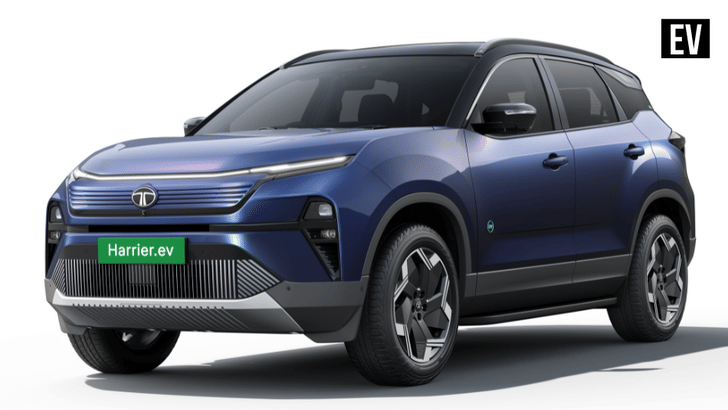
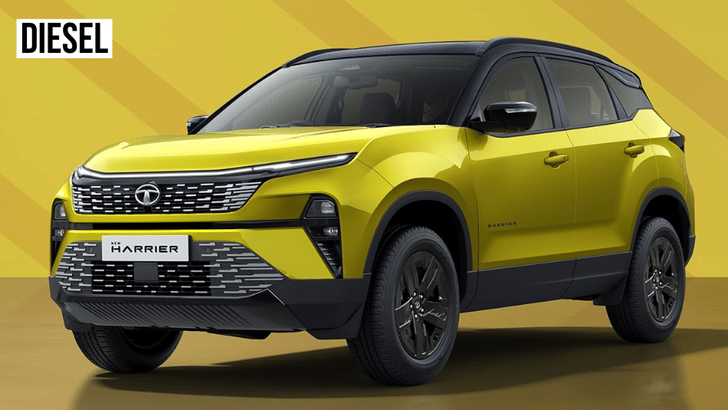
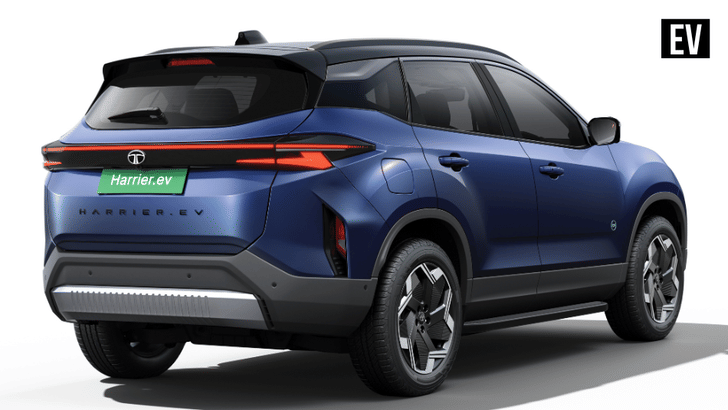
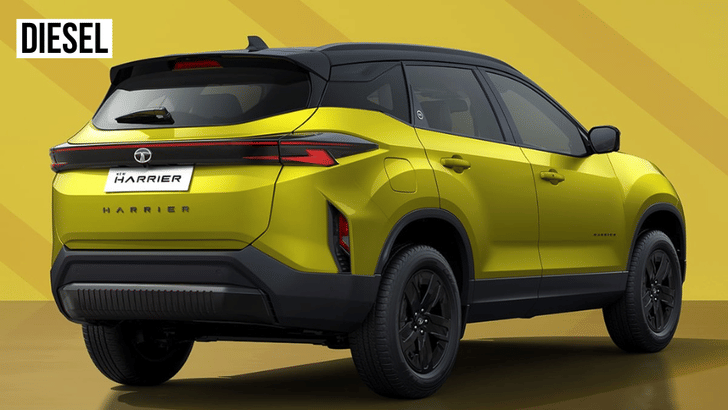
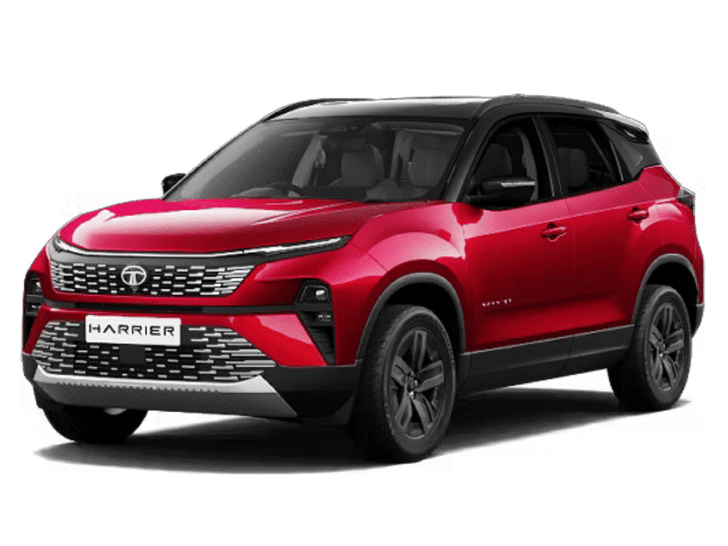
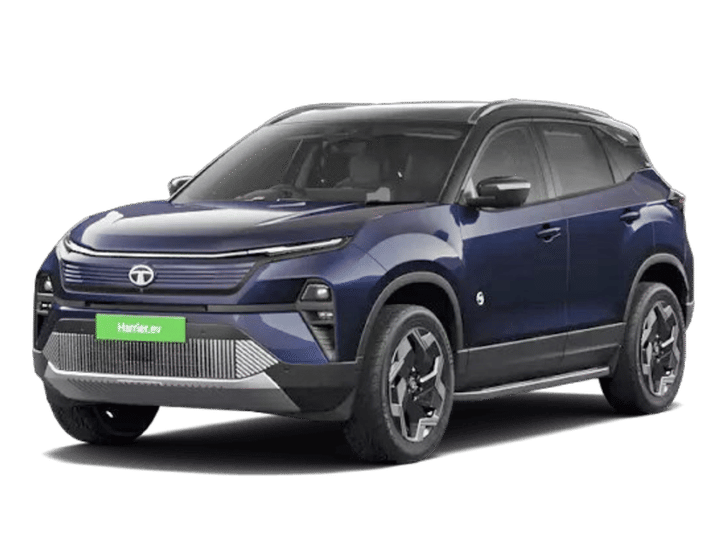
The Harrier EV gets minimal changes on the outside like a closed-off grille, revised front bumper, silver bash plates, EV badging and aero-friendly alloy wheels. Apart from these changes, the Harrier diesel’s design elements like a butch, upright stance, blade-like connected LED daytime running lights, vertically oriented headlight units, sharp rear light bar, and roof spoiler with an integrated stop lamp have been carried over to the Harrier EV.
Harrier diesel has nearly twice the colour options of Harrier EV
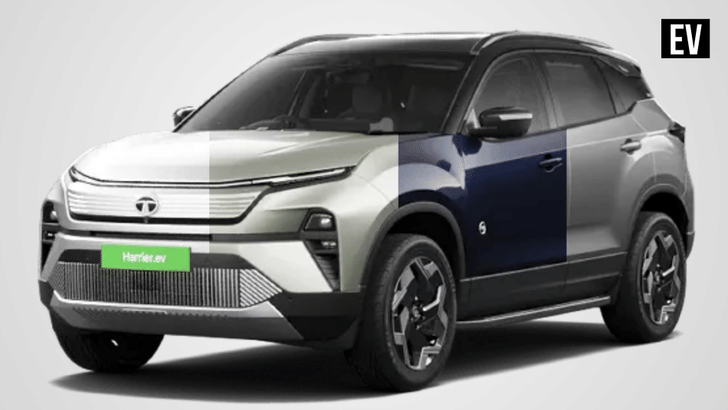
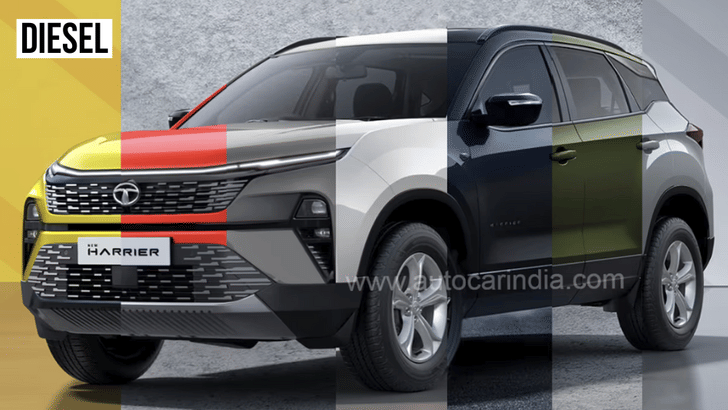
However, there’s a vast difference between the two SUVs when it comes to colour options. The Harrier diesel has eight colour options: Ash Grey, Coral Red, Lunar White, Matte Stealth Black, Oberon Black, Pebble Grey, Seaweed Green and Sunlit Yellow. The Harrier EV nearly halves this list with five unique colour options: Empowered Oxide, Nainital Nocturne, Matte Stealth Black, Pristine White, and Pure Grey.
Interestingly, the Harrier EV is 2mm longer and 22mm taller than the Harrier diesel, but the wheelbase is the same, at 2,741mm.
Tata Harrier diesel vs Harrier EV interior
Near-identical cabin layout
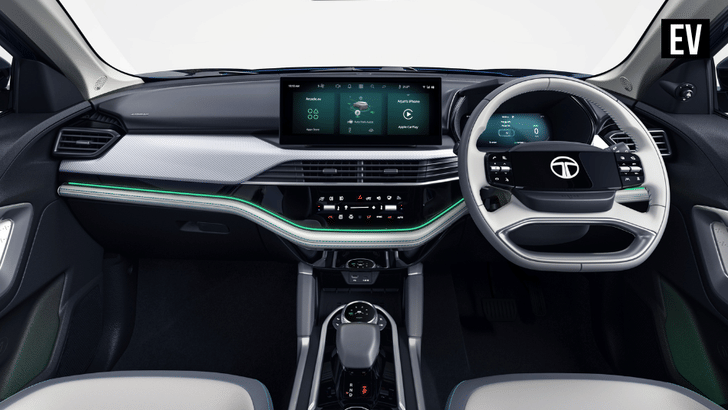
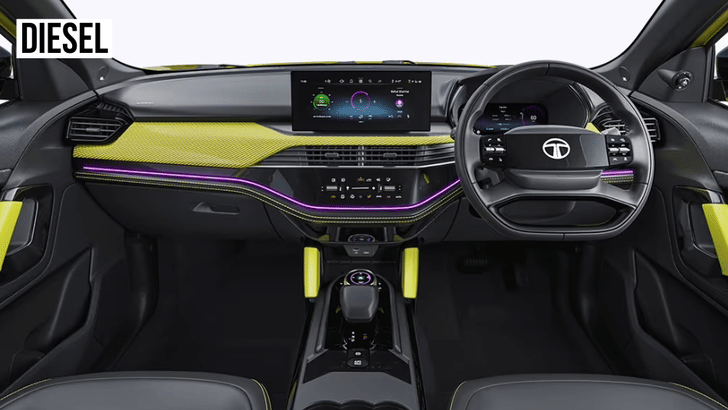
The Harrier EV’s cabin isn’t all that different from the Harrier diesel either. The dashboard layout is largely shared between the two, including the four-spoke steering wheel with an illuminated Tata logo, a 10.25-inch digital driver’s display, a floating touchscreen infotainment, touch-based HVAC control panel, and more. However, the Harrier EV gets a larger 14.53-inch unit, as against the 12.3 inch one on the diesel. Tata claims the EV's Samsung Neo QLED display on the touchscreen is a world-first feature.
Harrier EV IRVM is an all-digital unit that includes a dashcam
The Harrier EV’s inside rearview mirror is fully digital and can show unobstructed views of the front and rear of the Harrier EV. It even has an in-built dashcam with continuous front and rear recording.
With the second row up, the Harrier EV's boot space stands at 502 litres (plus a frunk), while the Harrier diesel has a 445-litre cargo area. However, while the Harrier diesel’s boot space is measured up to the parcel shelf, the EV’s is measured up to the roof.
Tata Harrier diesel vs Harrier EV features and safety
Harrier EV debuts brand-new electrical architecture
Tata has included a bevy of advanced functionality on the Harrier EV, courtesy of a new electrical architecture dubbed TiDAL (Tata Intelligent Digital Architecture Layer). This framework enables features like over-the-air updates on the infotainment system, voice commands, a 540-degree surround view function, Level 2 ADAS, and more. Speaking of the ADAS features, Tata claims that it has specifically calibrated them to work more effectively in our unpredictable conditions.
Auto park and summon mode
On the safety front, the Harrier EV notably gets Off-road Assist, which is essentially a low-speed cruise control (as low as 5kph) that allows the driver to focus on steering the SUV on off-road trails. The Harrier EV also features limited autonomous driving capabilities in the form of auto park assist and summon mode, which allows the SUV to extricate itself from tight spaces.
Harrier EV renders phones unnecessary for certain payments
Moreover, there’s a novel feature called DrivePay – a UPI-based in-car payment system that eschews the need for mobile devices to pay for FASTag, EV charging points, drive-throughs, and so on. The Harrier EV is also equipped with vehicle-to-load (V2L) and vehicle-to-vehicle (V2V) functionality.
Other common creature comforts between the Harrier EV and Harrier diesel are a powered tailgate, a panoramic sunroof, ventilated and powered front seats (driver’s seat gets memory function), dual-zone climate control, ambient lighting, cabin air purifier, a wireless charger, fast-charging USB Type-C ports, rear sunshades, sliding armrest with cooled storage, and more. To enhance the experience for second row passengers, the Harrier EV additionally comes with a powered Boss mode, which automatically folds and moves the front passenger seat forward.
What community is saying on the Harrier?
Tata Harrier diesel vs Harrier EV powertrain options
Harrier EV is built on a modified offshoot of diesel Harrier platform
The Harrier EV is built on a heavily modified version of the Harrier diesel’s Omega platform – dubbed Acti.ev. The Harrier EV is available with two LFP battery pack options: 65kWh and 75kWh. The former gets a single rear-mounted motor producing 238hp, while the bigger battery version adds a 158hp motor to the front axle with all-wheel-drive capability; combined output is 313hp and 504Nm. Four-level regenerative braking is also included, as well as a Drift mode.
AWD and various off-road features available with Harrier EV
This means the 75kWh Harrier EV brings back a feature Tata cars haven’t offered in over five years: all-wheel drive. By contrast, the Harrier diesel is front-wheel drive only. Adding AWD has allowed Tata to place a greater emphasis on the Harrier EV’s off-road capabilities, with the SUV sporting a new multi-link rear suspension with frequency-dependent dampers, as well as six terrain modes (Harrier diesel has three): Normal, Snow/Grass, Mud-Ruts, Sand, Rock Crawl and Custom. There’s also a Transparent mode in the Harrier EV, which projects a live feed of what’s under the SUV to aid while off-roading.
Harrier diesel develops 350Nm
The Harrier diesel on the other hand, is powered by a sole 2.0-litre turbo-diesel engine developing 170hp and 350Nm, paired to either a 6-speed manual or a 6-speed torque converter automatic. 0-100kph is in the 11-12 second region for the Harrier diesel, while the EV’s AWD 75kWh variant can do it in just 6.3 seconds. The Harrier EV’s 0-100kph time is achieved with the help of Boost mode, which is one of four drive modes (Eco, City, Sport, Boost) available in the SUV’s AWD versions, while the RWD variants get the same three driving modes – Eco, City, Sport – as the Harrier diesel.
The Harrier EV's MIDC-certified range is 622km for the AWD 75kWh guise, while the RWD version is rated for 627km. Tata is yet to reveal range figures for the 65kWh version of the Harrier EV. In terms of charging, the Harrier EV can be juiced up from 10-100 percent in 10.7 hours with a 7.2kW AC charger, while a 120kW DC fast charger can provide a 20-80 percent charge in 25 minutes. Tata claims that a 15-minute fast charge can top up 250km of range for the Harrier EV.
Tata Harrier diesel vs Harrier EV price and variants
16 Harrier trims available
The Harrier diesel has a wide repertoire of trim levels on offer, namely Smart, Smart(O), Pure, Pure(O), Pure+, Pure+ S, Pure+ S Dark Edition, Adventure, Adventure+, Adventure+ Dark Edition, Adventure+ A, Fearless, Fearless Dark Edition, Fearless+, Fearless+ Dark Edition, and Fearless+ Stealth Edition. Pricing for the Harrier diesel starts at Rs 15 lakh and tops off at Rs 26.50 lakh.
Full price list for Harrier EV yet to be revealed
By comparison, the Harrier EV has a far more distilled model portfolio, with only three variants on sale initially: Adventure, Fearless, and Empowered. So far, though, Tata has disclosed pricing only for the Harrier EV’s entry-level Adventure trim, which costs Rs 21.49 lakh (introductory). The top-spec Empowered trim of the Harrier EV will likely surpass the Harrier diesel in terms of pricing. Notably, Tata is offering a lifetime battery warranty on the electric SUV.
All prices ex-showroom, India.

 Uday Singh
 Glenn Noronha
 Dipan Sur