Hyundai Alcazar vs XUV700



Last Updated on: 21 Sep 2026
Engine Displacement | 1956 cc |
Number of Cylinders | 4 |
Engine Installation | Front |
Fuel Type/ Propulsion | Diesel |
Gearbox Type | Torque Converter |
Number of Gears | 6 |
Manual Shifts via Gear Lever on Automatic Gearbox | No |
Paddle Shifters for Automatic Gearbox | Yes |
Sport Mode for Automatic Gearbox | Yes |
Drive Layout | Front Wheel Drive |
Lockable Differential/s | No |
Max Engine Power | 170 hp at 3750 rpm |
Max Engine Torque | 350 Nm at 1750 - 2500 rpm |
Fuel Supply System | Common Rail |
Emission Standard | Bharat Stage VI |
Drive Mode Types | Multiple |
Terrain Modes | Yes |
Official Fuel Economy | 14.1 kmpl |
Fuel Tank Capacity | 50 litres |
0-100kph | 12.09 s |
20-80kph (in third gear/ kickdown) | 7.36 s |
40-100kph (in fourth gear/ kickdown) | 10 s |
Front Suspension Type | Independent, Lower Wishbone, McPherson Strut |
Front Springs | Coil Springs |
Rear Suspension Type | Semi Independent Twist Blade |
Rear Springs | Coil Springs |
Damper Control | No |
Ride Height Adjust | No |
Type of Power Assist | Electric |
Steering Adjust type | Manual |
Steering Adjust | Tilt and Telescopic |
4 Wheel Steer | No |
Front Brakes | Disc |
Rear Brakes | Disc |
Wheel Size | 19 inches |
Front Tyre Size | 245/55 R19 |
Rear Tyre Size | 245/55 R19 |
Wheels | Machine finished alloys |
Spare Wheel | Space Saver |
Length | 4668 mm |
Width | 1922 mm |
Height | 1795 mm |
Wheelbase | 2741 mm |
Chassis Type | Monocoque |
Boot Capacity | 420 litres |
Doors | 5 |
| Roof Grab Handles | |
| Rear Power Outlet | |
| Electric Tailgate Release | |
| Rear Reading Lamp | |
| Rear Window Sun Shades | |
| Driving Modes |
| Brake Disc Wiping | |
| Speed Assist System | |
| Brake Assist (BA) | |
| Door Ajar Warning | |
| Side Airbag | |
| Central Locking |
| Illuminated Logo | |
| Cornering Foglamps | |
| Cornering Headlights | |
| Outside rear view mirror (ORVM) | |
| ORVM turn indicators | |
| Stop Lamp |
| Low Fuel Level Warning | |
| Gear Indicator | |
| Distance to Empty | |
| Head-up Display | |
| Average Speed | |
| Average Fuel Consumption |
| Second Row USB port | Type A and Type C |
| Third Row USB port | Type A and Type C |
| Rear Seat Infotainment Controls | |
| Steering Phone Controls | |
| MirrorLink | |
| Web Browser |
| Navigation On Instrument Cluster | |
| E-Call & I-Call | |
| Summon Mode | |
| Live Location Sharing | |
| Location Based Services | |
| Emergency Call Button |
 Electronic Stability ControlFully Digital Digital Instrument ClusterNo SpeakersAnti Theft ImmobilisationFabric Seat Material360 degree Parking CameraPanoramic SunroofPhone-based Satellite NavigationOver the air (OTA) updatesElectric Adjust for Front Passenger's Seat360 degree Parking CameraPanoramic SunroofPhone-based Satellite NavigationOver the air (OTA) updatesDriver's Seat Height AdjustAdaptive Cruise ControlDriving ModesDriver's Seat MemoryPanoramic SunroofPhone-based Satellite NavigationAdaptive Cruise ControlDriving ModesDriver's Seat MemoryPanoramic SunroofPhone-based Satellite NavigationWith Display Tyre Pressure Monitoring SystemPowered Tailgate with Gesture ControlJBL Branded Music SystemFront Only Ventilated SeatsSequential Turn IndicatorsWith Display Tyre Pressure Monitoring SystemPowered Tailgate with Gesture ControlJBL Branded Music SystemFront Only Ventilated SeatsSequential Turn IndicatorsBlind Spot MonitorFront Passenger Seat Adjust from Rear10 SpeakersAlexa CompatibilityFront & Rear Ventilated SeatsFront Only Ventilated SeatsAdaptive Cruise ControlPanoramic SunroofJBL Branded Music SystemSequential Turn IndicatorsAuto emergency braking (AEB)Powered TailgateOn-board Satellite NavigationRemote Engine Start/StopFront & Rear Ventilated Seats

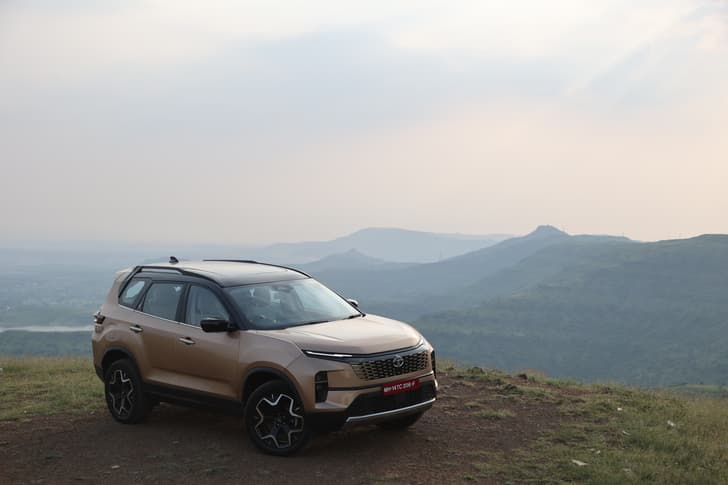
I currently own a 2016 Hyundai i20 Elite Sportz and am planning to upgrade to an SUV, but I am a bit confused. My budget is Rs. 20 lakh. I am looking for a reliable engine, low maintenance costs, and decent mileage. Since my family consists of six members, I am particularly interested in a 7-seater. Would the Tata Safari be a good option, or should I consider other alternatives?

 Kia Carens ClavisTata HarrierTata Safari
Three months into my Safari diesel. Highway comfort's been the standout so far, still getting used to the size in city parking though.
I currently own a September 2019 Kia Seltos HTX IVT (petrol), which has covered around 73,000 km without any issues, despite a major accident at 17,000 km. I am now thinking of buying a new car. My first preference is the Tata Safari petrol. However, after seeing the recent results and user reviews of the Tata Harrier EV, I am in a dilemma about whether I should buy the Harrier EV or the Safari petrol, or wait for the Safari EV.
Tata SafariTata Harrier EVI currently own a Hyundai Venue 1.2 petrol. I am considering for an upgrade and my requirements include a 7-seater petrol or diesel automatic SUV under 25 lakh (on-road) with 80:20 city to highway ratio with maximum 15,000 km annually. Can I consider electric as well. What would be your recommendation? I am considering XUV 7X0, Safari or the Alcazar but I'm open to other options as well. Thanks in advance.
Mahindra XUV 7XOTata SafariMahindra XEV 9SHyundai AlcazarHyundai VenueI’m looking for a car in the Rs 22-24 lakh budget. My daily usage is around 30km, with about 75 percent of the driving in the city. My priorities are safety, driving comfort, mileage and an automatic gearbox. I was initially looking for a 5-seater and liked the Harrier Petrol Automatic, but I am now also considering a 7-seater. Should I choose between the Harrier, Safari and XUV 7XO, and would petrol or diesel be more suitable for my usage? I’m also open to other suggestions that fit these requirements.
Mahindra XUV 7XOTata HarrierTata Safari