


Last Updated on: 13 Oct 2026
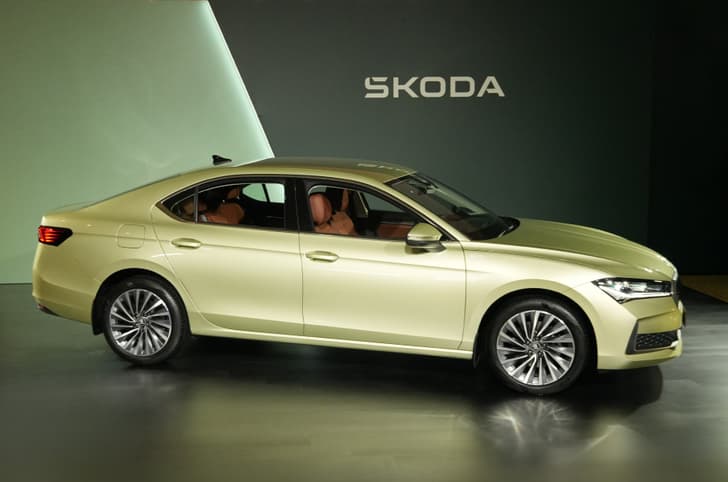
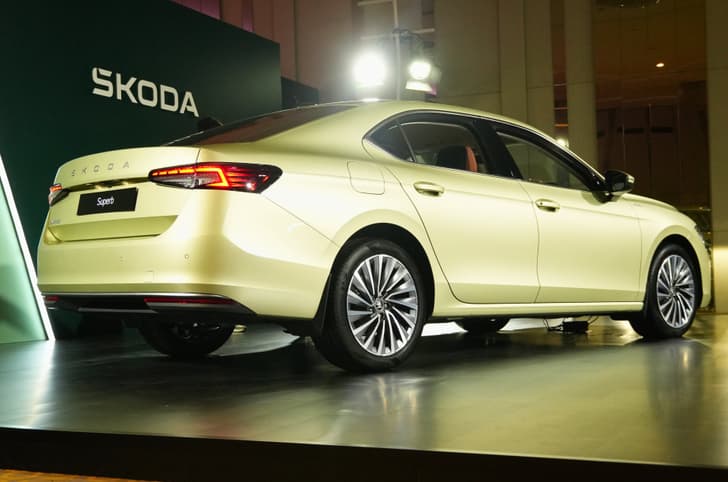
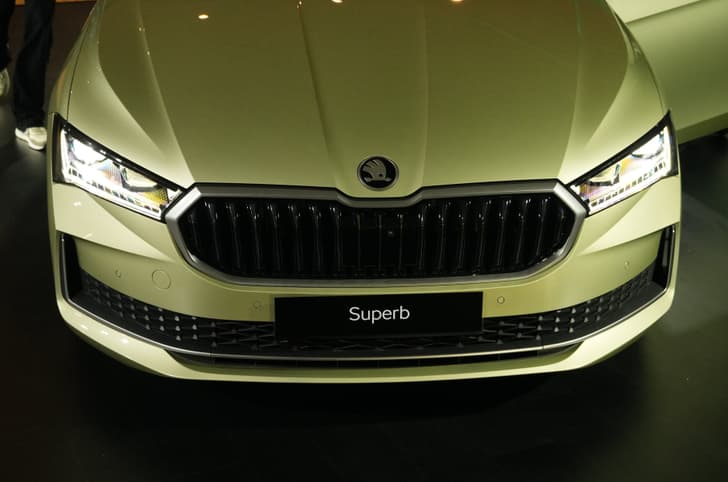
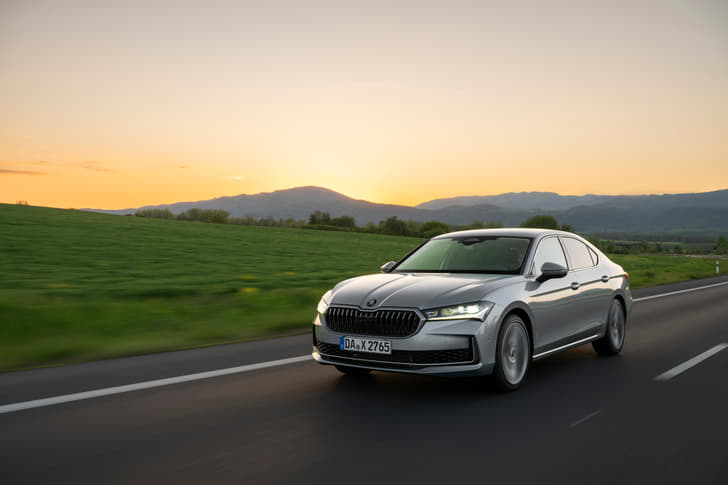
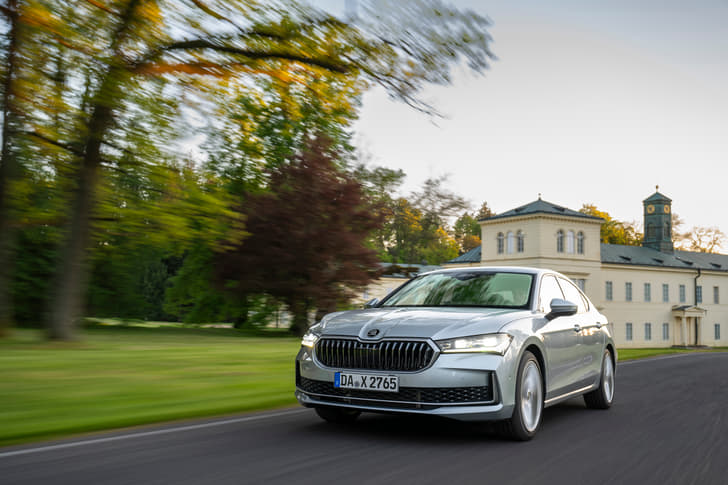
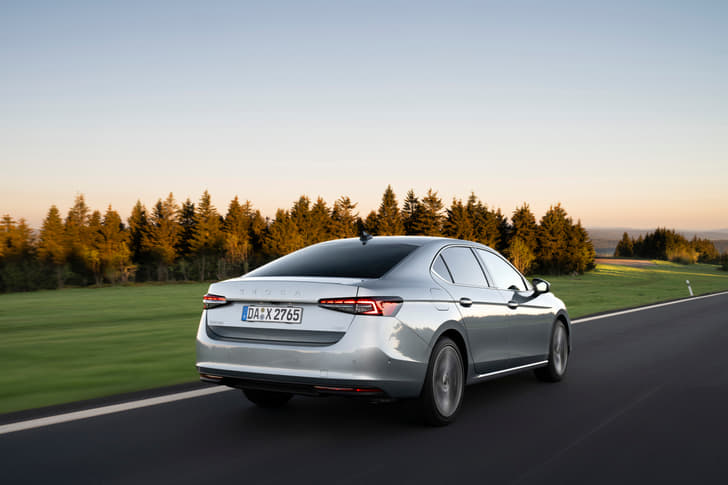
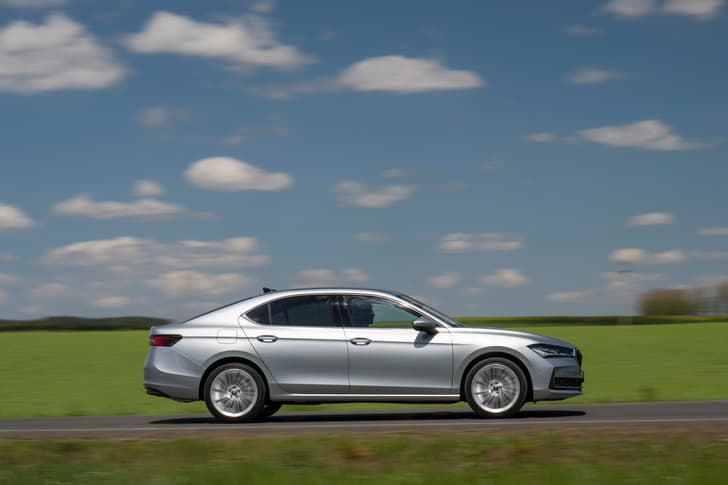
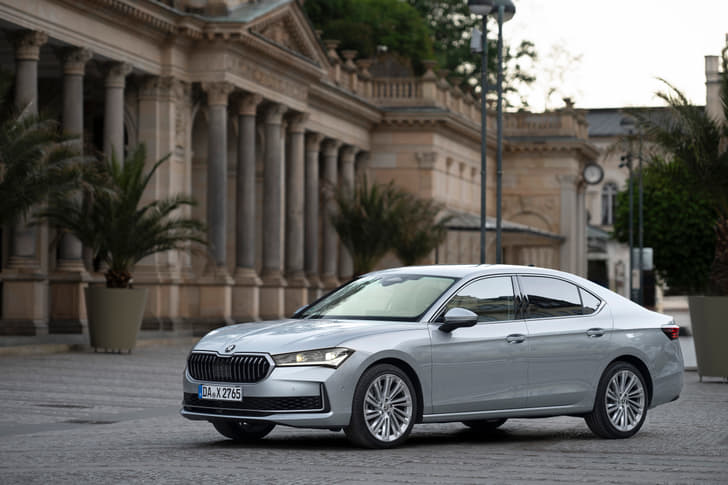
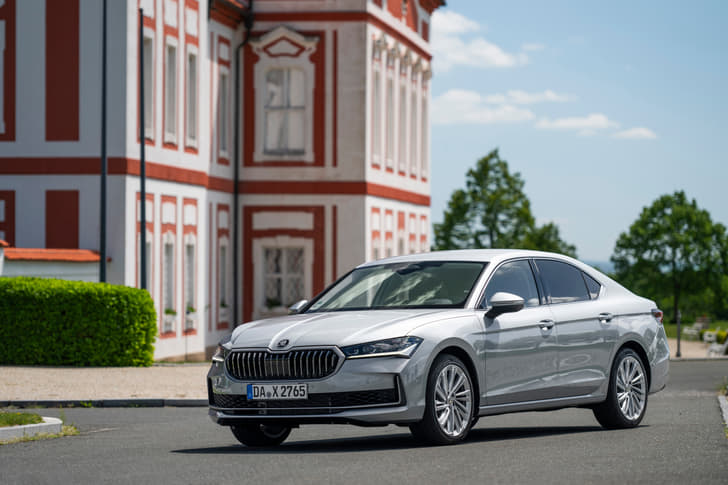
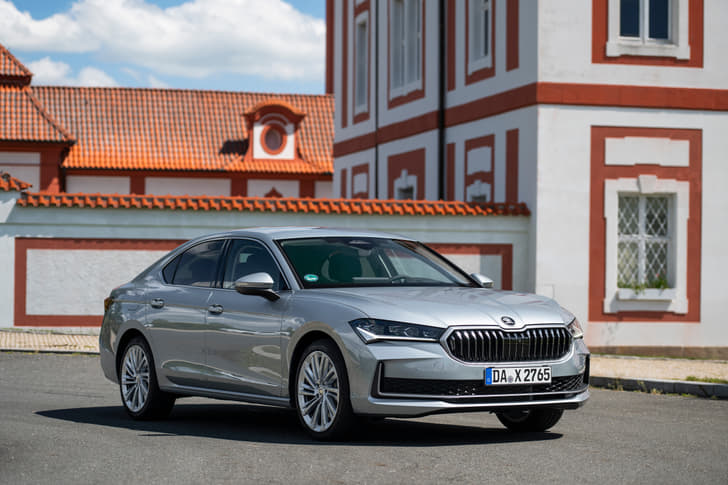
Skoda Superb L&K
Skoda Superb L&K Key Features
- Electronic Parking Brake
- With Display Tyre Pressure Monitoring System
- 360 degree Parking Camera
- Fully Digital Digital Instrument Cluster
- Powered Tailgate with Gesture Control
Skoda Superb L&K specifications
Engine & Transmission
Engine Type | Turbocharged |
Engine Displacement | 1968 cc |
Number of Cylinders | 4 |
Engine Installation | Front |
Fuel Type/ Propulsion | Diesel |
Gearbox Type | DCT |
Number of Gears | 7 |
Drive Layout | Front Wheel Drive |
Max Engine Power | 150 hp 3000 - 4200 rpm |
Max Engine Torque | 360 Nm at 1600 - 2750 rpm |
Fuel & Performance
Fuel Supply System | Common Rail |
Emission Standard | Bharat Stage VI |
Fuel Tank Capacity | 66 litres |
Suspension & Steering
Front Suspension Type | McPherson Strut |
Front Springs | Coil Springs |
Rear Suspension Type | Multi Link |
Rear Springs | Coil Springs |
Type of Power Assist | Electric |
Front Brakes | Disc |
Rear Brakes | Disc |
Wheel Size | 18 inches |
Wheels | Alloys |
Dimensions
Length | 4912 mm |
Width | 1849 mm |
Height | 1511 mm |
Wheelbase | 2841 mm |
Ground Clearance | 138 mm |
Kerb Weight | 2210 kg |
Chassis Type | Monocoque |
Skoda Superb L&K features
Comfort
| Climate Control | 3-zone |
| Powered Tailgate | Yes (Gesture Control) |
| Digital Instrument Cluster | Fully Digital |
Safety
| Airbags | 10 |
| Parking Camera | 360 degree |
| Tyre Pressure Monitoring System | With Display |
| Electronic Parking Brake | |
| Driver Airbag | |
| Passenger Airbag |
Exterior
| Headlight Type | LED |
| Daytime Running Lights | LED |
| Welcome and Goodbye Animation | |
| LED DRLs | |
| LED headlamps | |
| LED taillights |
Interior
| Speedometer | Digital |
| Tachometer | Digital |
| Seat Count | 5 |
| Seat Material | Leatherette |
| Electric Adjust for Driver's Seat | |
| Driver's Seat Memory |
Entertainment
| Wireless Phone Charging | |
| Display | 12.9-inch Touchscreen |
| Gesture Controls | |
| Speakers | 14 |
Skoda Superb variants
 Electronic Parking BrakeFully Digital Digital Instrument ClusterGesture ControlsFront Only Massage SeatsLED headlamps
Upcoming Cars
Skoda Cars
Trending Cars


Latest Cars
Questions you may find useful
Is driving a turbo-petrol car preferable for the health and longevity of the turbo, especially in the case of a 2022 Skoda Superb? My daily commute is only 6-10 km. Would it be better to switch to an NA engine?

 Skoda Superb
Dear Autocar India experts, I am planning to buy a new car for my daily commute. I live in a hilly area and want my next car to be spacious enough for taking my three kids to school and for family functions. I have been waiting for the Skoda Superb for almost a year. Now that it is finally coming to India, I have heard that it may not be offered with a petrol engine, which is what I was hoping for. I am a fan of diesel cars, but I have had a bad experience with DPF issues in my Velar, so I am now hesitant to go down that route again. As an alternative, I am considering an electric car and have been looking at the Hyundai Ioniq 5 and BYD Sealion 7. I would like to know your expert opinion on these two EVs, particularly when it comes to after-sales service and ownership experience. Which one would you recommend for my requirements, or should I wait and go for the Skoda Superb anyway? I currently use a Brezza diesel for my daily commute and also have a Zen for fun drives. Kindly help me make the right choice. Thank you for your expert advice.
Hyundai Ioniq 5BYD Sealion 7Skoda SuperbMaruti Suzuki BrezzaI have a Škoda Superb L&K 2022, which comes with a front-wheel-drive (FWD) drivetrain, while in some international markets, the Superb has been offered with a rear-wheel-drive (RWD) setup. My first question is: how does FWD differ from RWD in terms of basic driving dynamics? Secondly, what does chassis weight distribution mean in a car, and what significance does it have for driving dynamics and handling? Is an ideal weight distribution necessarily associated with an RWD setup? Also, is it correct to say that RWD is always better than FWD or AWD? Finally, does a four-cylinder engine with twin turbochargers have any significant advantage over an inline-six-cylinder engine?
Mercedes-Benz E-ClassBMW 5 Series LWBSkoda SuperbHi Autocar team, I am looking for a premium EV. I am confused between the BYD Sealion, Model Y, and Model YL. We are a family of four with mostly city driving and take outstation trips twice a month of about 350-400 km. Which would be the best option in terms of value for money? I also like sporty looks. We plan to set up home charging. I currently drive a Skoda Superb and am looking to replace it.
BYD Sealion 7Tesla Model YSkoda SuperbWhich would be the better choice among the BYD Sealion 7, Mahindra XEV 9e, and Vinfast VF7? I currently own a Skoda Superb, which is 6 years old, and my ownership experience has been good so far. However, I am considering switching to an EV as a replacement, mainly because I am concerned about potential mechatronics-related repairs and higher maintenance costs as the car ages, even though I have not faced any issues yet. My heart says the BYD Sealion 7 would be the ideal replacement or upgrade for the Superb because of its build quality, premium cabin, and overall feel. However, my mind wonders whether it truly offers good value for money considering its premium price tag, although budget is not a major constraint for me. My daily driving is around 20-30 km, mostly within the city, with only occasional outstation trips. Considering my usage pattern and expectations, which of these EVs would you recommend?
BYD Sealion 7Skoda SuperbMahindra XEV 9eVinfast VF7