Autocar India

Last Updated on: 22 May 2026

Honda City variants
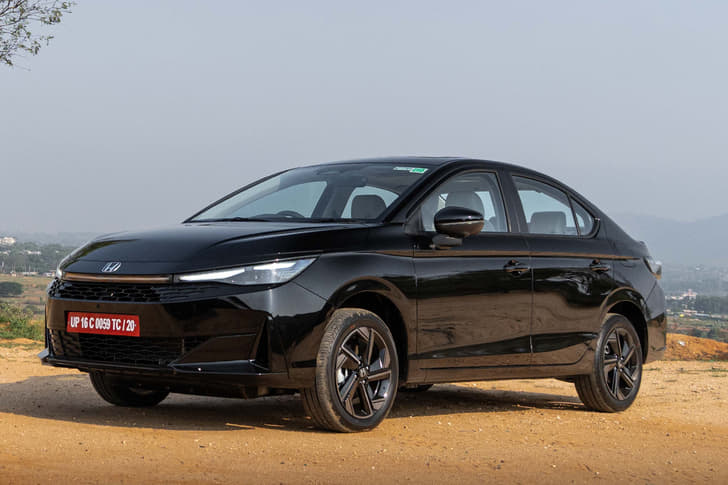
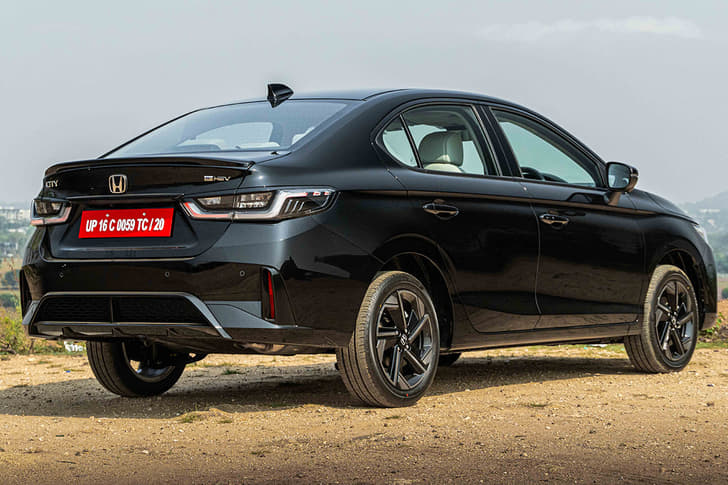
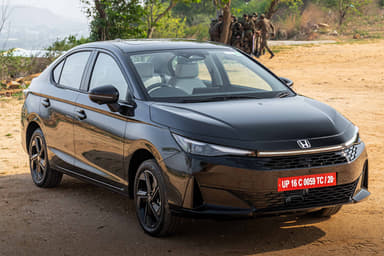
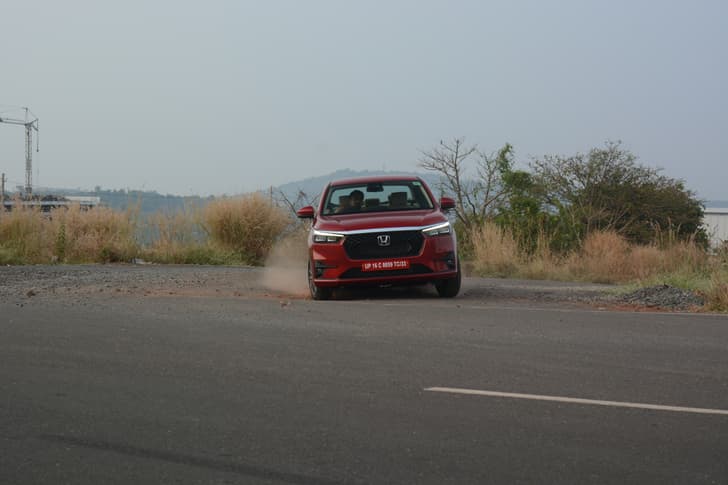
Front Right Three Quarter
Adjustable Orvm
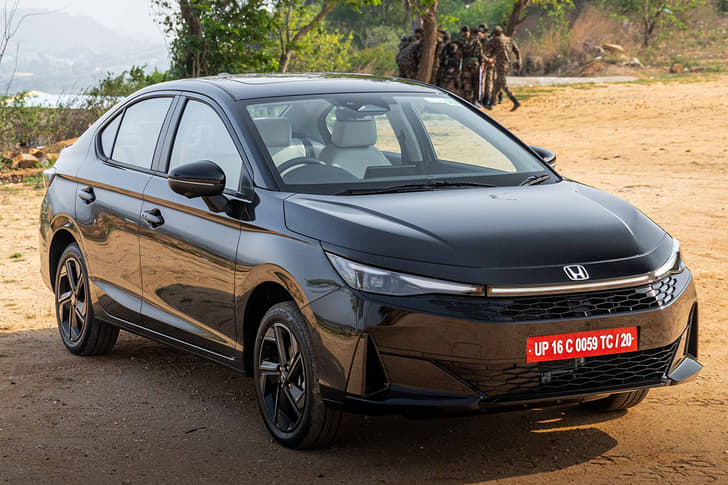
Front Right Three Quarter
Color Golden Brown Metallic
Color Lunar Silver Metallic
Color Radiant Red Metallic
Color Platinum White Pearl
Color Meteoroid Grey Metallic
Color Obsidian Blue Pearl
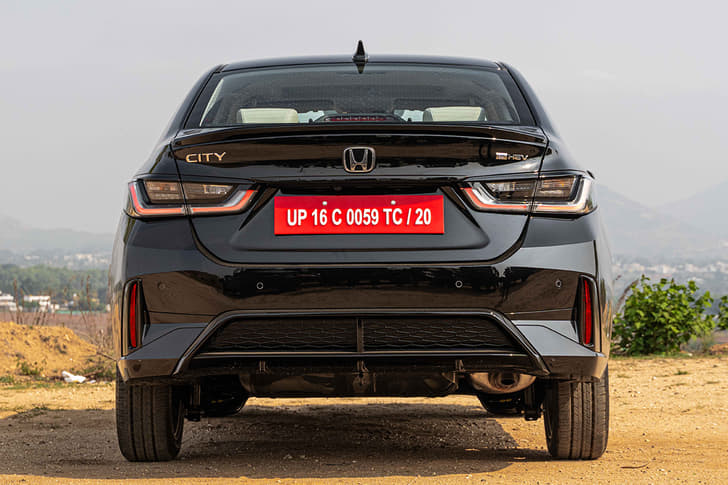
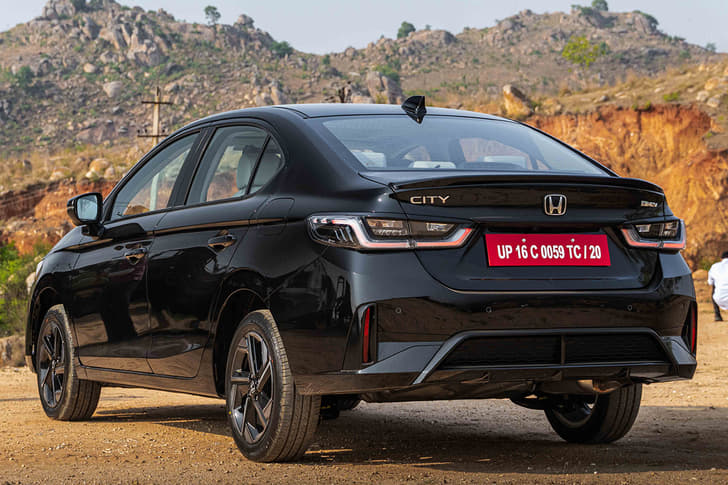
Rear View

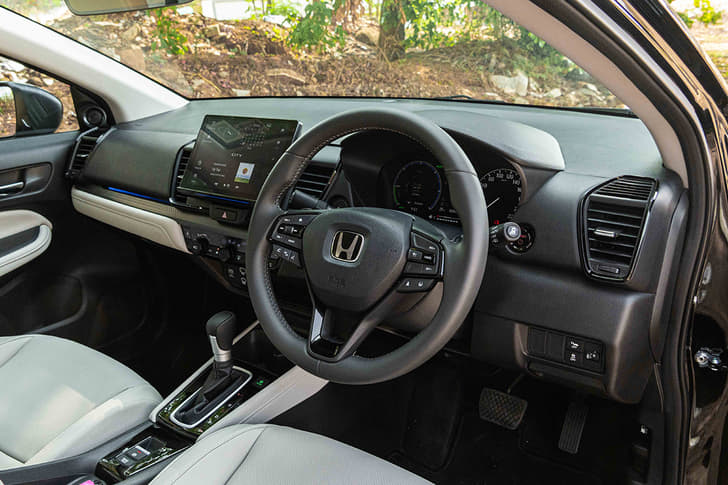
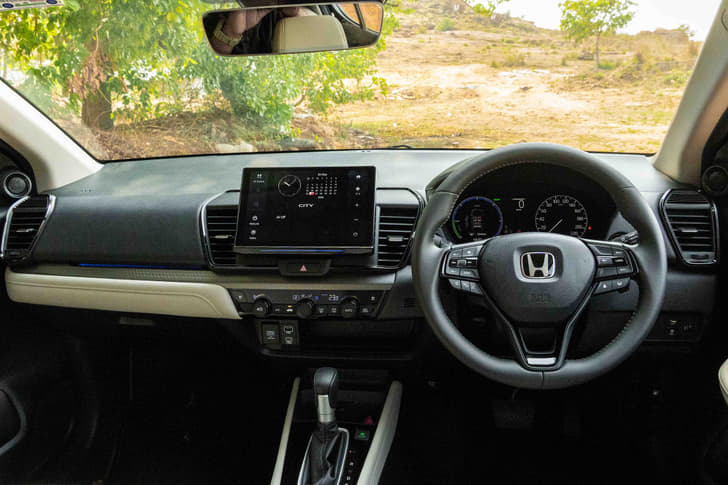
Honda City ZX CVT

VariantZX CVT
CityDelhi

Honda City ZX CVT specifications

Engine & Transmission

Engine Displacement
1498 cc
Engine Installation
Front
Fuel Type/ Propulsion
Petrol
Max Engine Power
121 hp at 6600 rpm
Max Engine Torque
145 Nm at 4300 rpm
Number of Cylinders
4
Drive Layout
Front Wheel Drive
Gearbox Type
CVT

Fuel & Performance

E20 Compatibility
Yes
Emission Standard
Bharat Stage VI

Dimensions

Chassis Type
Monocoque

Honda City ZX CVT features

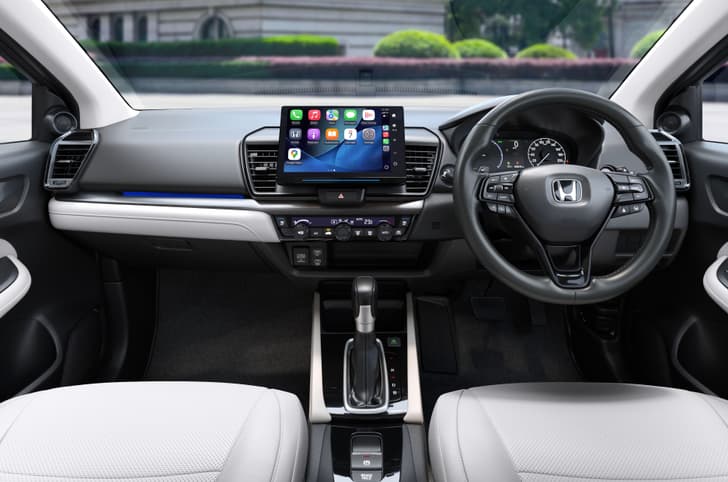
Interior

Seat Count
5

Honda City variants

VariantsOn road price
Honda City SV MT
1498 cc | Petrol | Manual
₹13.95 Lakh
Honda City V MT
1498 cc | Petrol | Manual
₹15.45 Lakh
Honda City V CVT
1498 cc | Petrol | CVT
₹16.60 Lakh
Honda City ZX Plus MT
Petrol
₹17.11 Lakh
Honda City ZX MT
1498 cc | Petrol | Manual
₹17.70 Lakh

Honda City comparison

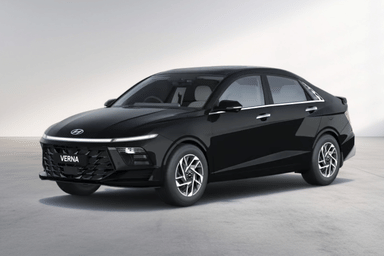
Hyundai Verna
Hyundai Verna
₹10.98 - ₹18.25 Lakhs
8
Transmission
CVT, DCT, Manual
Engine
1482 cc - 1497 cc
Fuel type
Petrol
Mileage
-
Compare
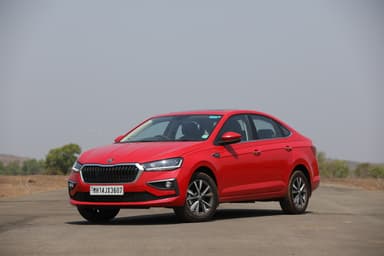
Skoda Slavia
Skoda Slavia
₹10.00 - ₹17.99 Lakhs
8
Transmission
Manual, Torque Converter, DCT
Engine
999 cc - 1498 cc
Fuel type
Petrol
Mileage
18.73 kmpl - 20.32 kmpl
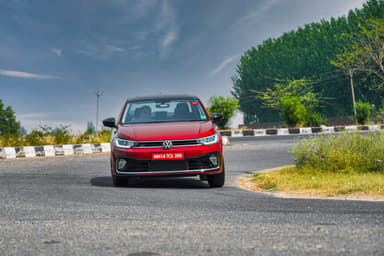
Volkswagen Virtus
Volkswagen Virtus
₹10.50 - ₹19.00 Lakhs
8
Transmission
Manual, Torque Converter, DCT
Engine
999 cc - 1498 cc
Fuel type
Petrol
Mileage
18.7 kmpl - 20.19 kmpl

Questions you may find useful

SP

Sandeep Patel

1w

My usage will be around 30 km per day, three days a week, plus a couple of weekend trips. So I don’t want just a typical city car. I’d like something that feels a bit fun to drive as well. Could you suggest some options? I see there are turbo-petrol choices available, but the Honda City’s 1.5 i-VTEC also seems like a strong and powerful naturally aspirated option. One thing I noticed during a test drive, though, was the tyre noise. Even at around 30kph, it felt noticeable and a bit annoying. Is that actually a concern in real-world city or moderate-speed driving, or am I overthinking the NVH levels? Some owners do mention that tyre and road noise in the Honda City can be more noticeable than expected, especially depending on the road surface and tyres.

Autocar India team

Autocar India

Verified
6d

For light weekday use, occasional highway trips, and a slightly fun driving experience, the Volkswagen Virtus 1.0 turbo-petrol manual suits your requirements better. It feels quick without needing to rev hard, so gaps in traffic and hill climbs are easy. The steering is light in the city, yet the car stays steady on open roads, and the big boot makes weekend runs simple. The manual is also enjoyable to use if you like being involved while driving.About the Honda City’s tyre noise: it does let in more tyre and road noise than you might expect on rough or concrete roads, but it is rarely a deal-breaker. It also varies a lot with tyre brand and pressure. Switching to a quieter set of tyres later usually helps.Two trade-offs with the Virtus: the rear seat is not as wide as the Honda City’s, and it won’t be as fuel-efficient. A close alternative with a similar driving feel is the Skoda Slavia. If you love the City’s smooth engine and spacious cabin, then that is still the one to get. Just keep in mind that a facelift is expected soon, so either wait for that or negotiate a good discount on the current stock.

VehicleVolkswagen Virtus
VehicleSkoda Slavia
VehicleHonda City
VA

Vasu

2w

I own a Honda City 4th Generation and have been getting an average fuel efficiency of 16.1 km/l over 85,000 km. Would it be worth installing a CNG kit to improve the mileage further? Please suggest.

Autocar India team

Autocar India

Verified
1w

With the kind of mileage you are already seeing from your 4th generation Honda City, I would not rush to fit a CNG kit. Around 16 kpl over 85,000 km is actually a healthy real world figure for a petrol sedan, and since the City is known for its smoothness and refinement, adding an aftermarket CNG kit will inevitably change the character of the car. Honda does not offer a factory CNG option for the City, so any retrofit will be third party, which means compromises in boot space, some loss in outright performance and the added variable of installation quality and long term reliability. Honda also recommends using fuel that meets the vehicle specifications, and aftermarket modifications can complicate warranty or support considerations on newer cars.A CNG conversion only starts making strong financial sense if your running is very high and you plan to keep the car for several more years to recover the kit cost. If your annual usage is moderate, the payback period can be longer than expected. The only real case for going CNG here is if fuel cost reduction is your absolute top priority. Otherwise, given how well your City is already performing, I would leave it as is and enjoy the refinement rather than fixing something that is not really broken.

VehicleHonda City
AN

Akshay Nayak

2w

I am planning to buy a new car and have narrowed my choice down to the Skoda Slavia/VW Virtus with the 1.5 DSG. I really love how both cars drive, and the DSG feels like magic. However, 90% of my driving is in the city, and I live in one of the most traffic-congested areas of Mumbai (Malad). Would it be a wise decision to go for the DSG gearbox? Which other cars would you recommend in this segment (no SUVs)?

Autocar India team

Autocar India

Verified
2w

Go for the Volkswagen Virtus 1.0 TSI automatic rather than the 1.5 DSG, given your 90 percent city use in Malad’s heavy stop start traffic. You get the same cabin, driving position and overall feel you liked, but the 1.0’s torque converter automatic is far better suited to daily Mumbai conditions as it is smoother at low speeds, easier to modulate in bumper to bumper traffic and less stressful to live with over time. The 1.5 DSG, while genuinely quick and engaging with its fast shifts, can feel jerky at crawling speeds, tends to heat up in prolonged traffic and can be expensive to repair once out of warranty, which makes it less ideal for your usage. The 1.0 still feels adequately quick in the city with light controls and easy drivability, so you are not really giving up much unless you drive hard on open roads. If you are considering alternatives, the Honda City CVT and Hyundai Verna IVT are even smoother in traffic and very easy to live with, while the City e:HEV is the best for city efficiency if you are willing to stretch. The only drawback with the 1.0 is that it lacks the punch and sharp shift feel of the 1.5 DSG on highways, but overall it is the far more practical and stress free choice for your driving conditions.

VehicleVolkswagen Virtus
VehicleHonda City
VehicleHyundai Verna
SB

Sachin Bhosle

3w

Hi Autocar Team, I am looking for a powerful sedan for a daily commute of around 80 km, with most of the driving on highways, along with a 600 km long drive on most weekends. I am looking for a car with solid build quality, no sunroof, and one that feels planted at high speeds. It should also offer strong safety, including ADAS features. Additionally, I would prefer a sedan with good steering feel and engaging driving dynamics.

Autocar India team

Autocar India

Verified
3w

With 80 km a day, mostly on highways and a 600 km run most months, you need a safe, steady sedan that feels good at speed and does not force a sunroof. In that brief, the Honda City V CVT with Honda Sensing fits best because it gives you ADAS without a sunroof and stays calm and secure on fast roads.The City’s steering is light in town but feels natural and sure as speed builds, and the car remains composed over rough patches. The cabin is well-made, and you get core safety features like six airbags and stability control.Do note: the City is not the most powerful in this price band, so if you want very quick bursts for overtakes, you will need to press the engine harder, and the CVT can sound loud when you do.If you want stronger power and a more connected feel and can give up ADAS or the no-sunroof requirement, look at the Volkswagen Virtus 1.5 TSI DSG or Skoda Slavia 1.5 TSI DSG. They feel very strong on the highway, and their steering has more weight, but they miss ADAS, and top versions will add a sunroof. Overall, for your highway-heavy use, ADAS and no-sunroof requirement, the City V CVT lines up best.

VehicleHonda City
VehicleVolkswagen Virtus
VehicleSkoda Slavia
PS

Prithvi Singh

4w

I am considering purchasing a car within the ₹25-30 lakh budget range. My daily commute is approximately 60-80 km between Noida and Delhi, along with occasional outstation trips every 3-4 months. I am currently unsure whether to choose an electric vehicle (EV), a petrol vehicle, or a petrol-hybrid. Given my high daily running, an EV appears to be the most cost-efficient option. However, concerns regarding charging infrastructure and range anxiety; especially during outstation travel, make it less convenient compared to petrol or hybrid vehicles, which offer greater flexibility for long-distance journeys. On the other hand, petrol or hybrid vehicles would be more expensive to operate in the long run. I would consider buying a diesel car, but due to the 10-year usage limit, I am hesitant. The Toyota Innova HyCross seems like a strong option, but its larger size may not be ideal for predominantly city driving. Additionally, since this will be my primary vehicle, I am hesitant to rely entirely on an EV at this stage, as it is still not as widely adopted or universally convenient as traditional alternatives.

Autocar India team

Autocar India

Verified
4w

With 60-80 km of daily driving, you are absolutely right that an EV would be the cheapest to run and very smooth in city traffic. However, since this is your primary car and you also take outstation trips, the need for charging planning and dependence on infrastructure can become inconvenient over time, especially on longer drives. It is usable, but not completely effortless yet.A strong hybrid fits your usage better. It gives you EV-like smoothness and excellent efficiency in city driving, while also delivering very good efficiency on highways, something modern hybrids now do surprisingly well. At the same time, you retain the full flexibility of a petrol car, eliminating any range anxiety or planning concerns. What’s even more impressive is that despite its size, it’s very easy to drive with great visibility, though its length can make parking in tight spots a bit challenging.We would have recommended you the Toyota Urban Cruiser Hyryder Hybrid instead, but considering you currently own the Honda City, the Toyota Urban Cruiser Hyryder may not feel like a meaningful upgrade in terms of space. This is where the HyCross makes a stronger case. It offers a clear step up in space, comfort and long-distance usability, while still delivering the efficiency benefits of a hybrid.A petrol-only SUV in this budget will feel simpler to own, but with your running, fuel costs will be significantly higher, which reduces long-term value.

VehicleToyota Urban Cruiser Hyryder
VehicleHonda City
VehicleToyota Innova HyCross