

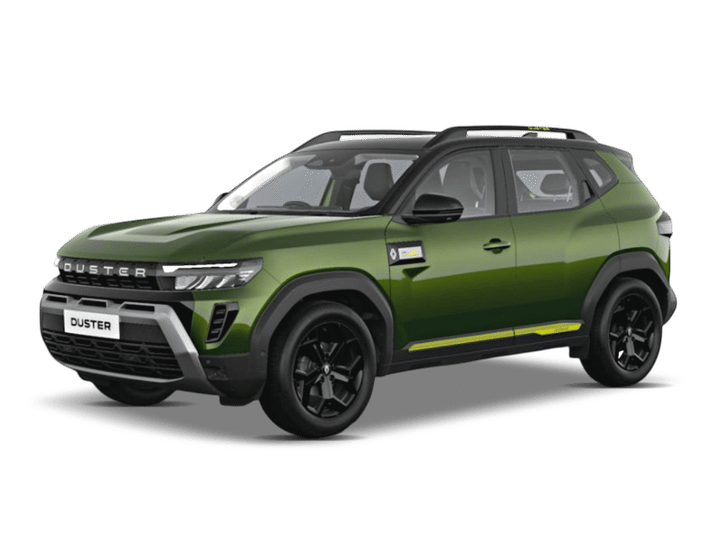
The Renault Duster’s return to the Indian market hasn’t quite yielded the high-volume traction the French automaker anticipated. One of the reasons for the slow start is a staggered launch strategy with the strong-hybrid variants only joining the Duster range nearly six months after the initial rollout — a gap that diluted the product's launch window impact. A simultaneous multi-powertrain offensive at day one would have given the Duster a more robust variant line up and may have prevented early volume stagnation.
However, the rationale behind a multi-powertrain push is already being strongly validated. Early retail traction and an encouraging initial order bank for the brilliant Duster E-Tech hybrid demonstrate that Indian mid-size SUV buyers actively demand diverse mechanical choices tailored to different usages. To capitalize on this, Renault is now aggressively course-correcting to fill a gap at the lower end of the Duster range.
Sources close to the development confirm that the carmaker is actively working on a new 1.3-litre MPFi (Multi-Point Fuel Injection) turbocharged engine destined for the Duster. Rather than serving as a direct replacement, this powertrain is being developed specifically to offer a significantly lower-cost alternative to the high-tech, expensive Gasoline Direct Injection (TGDi) variant. By opting for this simpler fueling setup, Renault is expected to price the MPFi variants roughly Rs. 1 lakh to Rs 1.5 lakh cheaper than the equivalent TGDi models, thereby substantially lowering the entry price point for the 1.3 turbo family.


Cost advantage
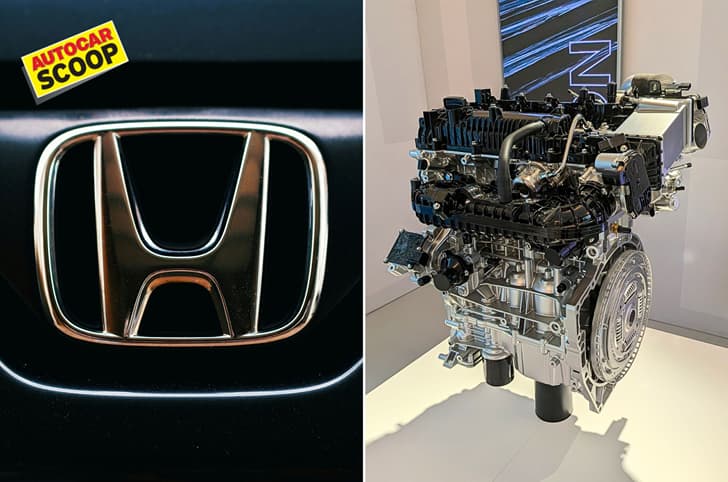
The upcoming powerplant is a direct derivative of the existing 1.3-litre HR13 four-cylinder turbo-petrol engine. The main engineering change lies in swapping out the expensive, high-pressure TGDi hardware in favour of a traditional Multi-Point Fuel Injection (MPFi) setup.
This move to MPFi offers a significant cost advantage. By deleting the high-pressure fuel rail, complex injectors, and the sophisticated dual-mass flywheel typically used with GDi engines, Renault can radically slash production costs. And because port injection inherently produces significantly lower particulate emissions than direct injection, Renault can entirely eliminate the expensive Gasoline Particulate Filter (GPF) from the exhaust after-treatment system.
Crucially, the new MPFi engine is slated to adopt a redesigned turbocharger optimized for low-end tractability. This is a deliberate move to fix the pronounced turbo-lag that characterises the current 1.3 TGDi motor. While the direct-injection unit boasts class-leading peak outputs and strong top-end power, its power delivery remains heavily skewed toward European highway condition, rendering it less than ideal for stop-go Indian urban traffic.
However, the shift from direct to port injection will impact peak power and torque. Though there are no official figures yet, expect the 1.3 MPFi to develop 140hp and 250Nm, down from the TGDi’s potent 163hp and 280Nm.
What community is saying on the Duster?
The CNG advantage

Beyond immediate bill-of-materials savings, the migration to an MPFi architecture unlocks a critical possibility - factory-fitted CNG compatibility. Direct-injection systems present severe engineering hurdles for CNG conversion, whereas port-injection systems seamlessly adapt to bi-fuel operation.
Given that the Duster’s underlying CMF-B platform is already fundamentally engineered to package CNG tanks, a bi-fuel variant is highly viable. With the Indian market showing a massive surge in demand for premium CNG vehicles, a CNG Duster could allow Renault to tap into an entirely unexploited customer demographic.
Driven by local R&D

Significantly, this powertrain project is being spearheaded independently by Renault’s India R&D team. Leveraging the extensive engineering capabilities of the Renault Nissan Technology & Business Centre India (RNTBCI) in Chennai, the local team has the autonomy to rapidly engineer and tailor powertrains for the Indian market.
While a more comprehensive engine line-up and the arrival of the hybrid will undoubtedly bolster the Duster's showroom appeal, powertrain expansion is only half the battle. To truly sustain long-term sales momentum against deeply entrenched rivals, Renault India will simultaneously need to address its broader vulnerabilities of revitalizing its dealer network and upgrading the overall ownership experience.
 Dipan Sur
 Viraaj Bhatnagar

 Uday Singh
 Kiran Murali