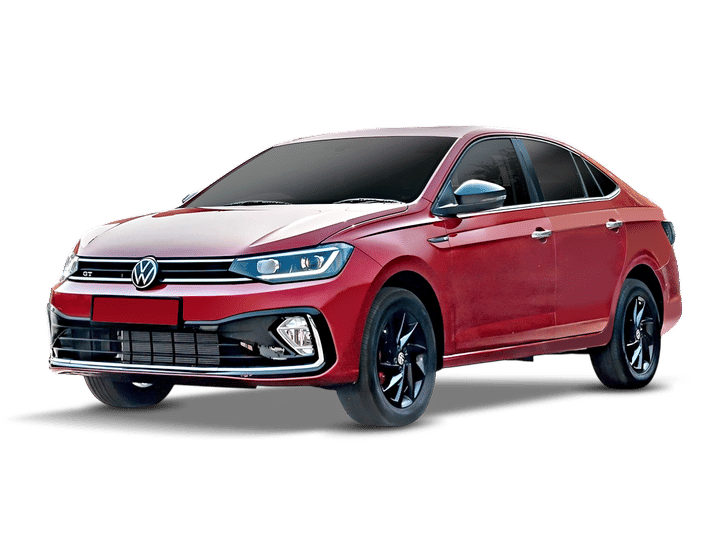


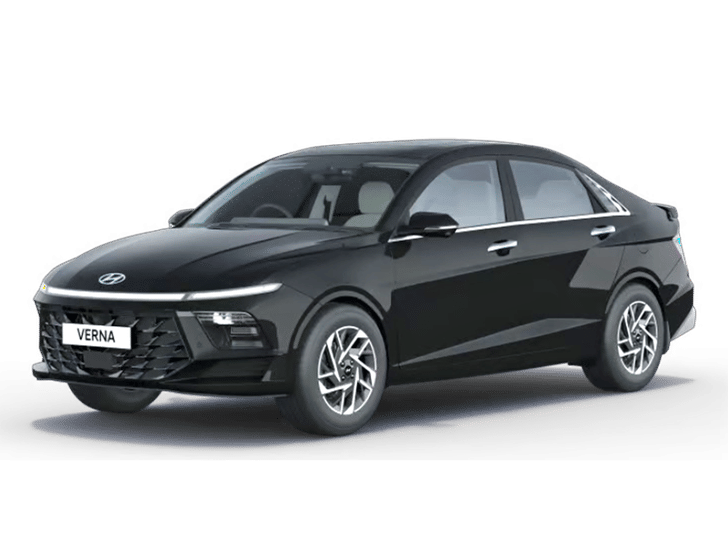
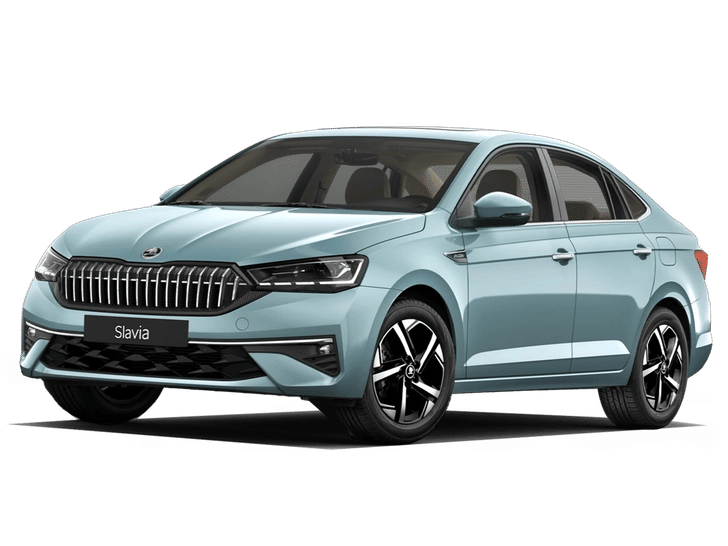
Both the Hyundai Verna and Skoda Slavia are capable midsize sedans powered exclusively by petrol engines. However, where the base engine for the Verna is a naturally aspirated (NA) four-cylinder unit, the Slavia differs majorly by offering a turbocharged three-pot motor. Their automatic transmissions are also poles apart – the NA Verna offers a CVT, while the Slavia can be had with an 8-speed torque converter. With powertrains so distinct, which of these midsize sedans performs better in the real world? We put the Verna 1.5 petrol CVT and Slavia 1.0 TSI AT through our instrumented performance tests to find out.
For full specs, features, and a price breakdown, check our Verna vs Slavia comparison.
Hyundai Verna vs Skoda Slavia petrol-automatic: Specifications
Compared to the Slavia’s three-pot, the Verna’s engine is 50 percent larger and has an extra cylinder. However, the Slavia’s engine has a turbocharger strapped on to it, allowing it to match the Verna’s power output and exceed its torque output by a considerable margin.
Coming to gearboxes, the Verna features a CVT, which is typically not very conducive to performance due to the possibility of the ‘rubberband effect’, where engine revs rise disproportionately to actual speed during hard acceleration. The Slavia, on the other hand, has a more conventional 8-speed torque converter. In our testing, we found that the 8-speed AT is much better than the pre-facelift Slavia 1.0 TSI's 6-speed AT.
Interestingly, the Verna is 34kg lighter than the Slavia, despite the Hyundai sedan packing a bigger engine. The Verna’s lower kerb weight allows it to eke out a higher power-to-weight ratio than the Slavia, but the Skoda’s higher torque output offsets its higher kerb weight and results in a significantly higher torque-to-weight ratio.
Hyundai Verna vs Skoda Slavia petrol-automatic: 0-100kph acceleration
In our 0-100kph test, the Slavia was quicker right from the word go. It started off with a mere 0.17-second advantage over the Verna, but the gap then widened significantly throughout the sprint, maxing out at 0.86 seconds at the 50kph mark. The Slavia hit 100kph more than half a second after the Verna did, earning the Skoda a definite win in this category.

Hyundai Verna vs Skoda Slavia petrol-automatic: Rolling acceleration
Starting off with the 20-80kph kickdown acceleration test, the Slavia once again was off to a better start, but this time, the Verna didn't let it pull vast gaps like in the 0-100kph test. The maximum delta between them was 0.3 seconds, and they finished just 0.05 seconds apart in the Slavia's favour.
The established pattern did not see much deviation in the 40-100kph kickdown acceleration test, with the Slavia yet again being quicker than the Verna. By the end, however, the Slavia was just 0.03 seconds ahead of the Verna – the slimmest delta between them.
Hyundai Verna vs Skoda Slavia petrol-automatic: Price
The Slavia is not only quicker than the Verna across the board (albeit slightly), it’s also more affordable. At the base level, the price difference between the petrol-automatic versions of these sedans comes down to only a few thousand rupees, but looking at top-spec variants, the Verna is Rs 42,000 pricier. So, when it comes to performance, the Slavia is the clear pick of the two. That said, the Verna feels smoother to drive in the city.
All prices are ex-showroom, India.

 Uday Singh
 Suraj Viswanathan
 Dipan Sur