


Moving to another state with your vehicle can involve more than updating your address. Under Section 47 of the Motor Vehicles Act, 1988, a vehicle registered in one state and kept in another for more than 12 months generally requires a new registration mark. This can involve additional paperwork, payment of road tax in the new state and an application by the vehicle owner for a refund of the original state's tax, subject to the applicable rules.
To simplify interstate relocation, the Ministry of Road Transport and Highways (MoRTH) introduced the Bharat series, or BH series, in 2021. It allows eligible vehicle owners to move between states without having to obtain a new registration mark solely because they have relocated. The scheme is voluntary and is available only to specified categories of vehicle owners.
Here's how BH-series registration works, including eligibility, road tax, the application process and what to consider before opting for it.
BH-series registration eligibility: Who can apply?
The BH series is available for fully built, non-transport vehicles, including cars and two-wheelers. Eligibility also depends on the vehicle owner's employment.
Those eligible to apply include defence personnel, employees of central and state governments, employees of central and state public sector undertakings (PSUs), and employees of private-sector organisations with offices in at least four states or union territories.
For private-sector employees, the organisation must have a presence in four or more states or union territories; the employee does not need to have worked at offices in all those locations. To establish eligibility, you must submit a working certificate in Form 60.
Meeting these criteria makes an applicant eligible to apply, but registration is subject to verification by the registering authority.
BH-series registration cost
How much road tax do you pay for a BH-series vehicle?
One of the main differences between BH-series and regular state registration is how you pay road tax. Under the BH scheme, you pay tax in two-year instalments or multiples of two years, rather than making a single long-term payment under the usual state-specific system. This can reduce your initial outlay, although it does not necessarily make BH registration cheaper overall.
The tax rate depends on your vehicle's invoice price, excluding Goods and Services Tax (GST), and its fuel classification. This distinction matters because the ex-showroom price quoted to you generally includes GST, while the BH-series road-tax calculation uses the invoice price before GST.
The applicable tax rates are as follows:
As shown above, diesel vehicles attract tax rates that are 2 percentage points higher than those for petrol, CNG and hybrid vehicles in the same price bracket, while electric vehicles attract rates that are 2 percentage points lower.
How is BH-series road tax calculated?
Once you identify the applicable rate, you can calculate your two-year road tax using the formula prescribed under the Central Motor Vehicles Rules:
Two-year road tax = [(Invoice price × tax slab percent × 1.25 surcharge) ÷ 15 registration years] × 2 payment years
The tax on the invoice price is calculated by applying the applicable tax rate to the vehicle’s invoice price, excluding GST. This amount is then multiplied by 1.25 to account for the government-mandated 25 percent surcharge for the convenience of not having to re-register the vehicle upon relocation. The resulting amount is divided by 15 years to calculate the annual tax, then multiplied by two to arrive at the biennial road tax. Do note that the 15-year period is used for diesel vehicles too, despite their 10-year registration limit in the Delhi-NCR region. In such cases, however, the owner is liable to pay tax for only 10 years.
The same formula applies to diesel and electric vehicles, with the applicable rate changing according to the vehicle's price bracket and fuel type. You can also pay tax for multiple two-year periods in advance.
When do you need to pay the next instalment?
A two-year tax period ending does not mean the vehicle's registration itself has expired. Instead, the owner must pay the next instalment to remain compliant with the BH-series requirements. Under the applicable rules, a delay extending beyond seven days after the due date attracts an additional fee of Rs 100 per day.
The payment schedule also changes as the vehicle gets older. From the fourteenth year after its first registration, motor vehicle tax becomes payable annually rather than every two years, with the annual amount set at half the tax payable for a two-year period under the prescribed formula.
How to apply for a BH series number plate?
The application process depends on whether you are registering a new vehicle or converting one that already carries a state-specific registration mark. In either case, you must first establish that you meet the eligibility criteria and submit the documents required by the registering authority.
Required documents
Proof of employment is central to the application. Private-sector employees must submit Form 60, a working certificate from their employer confirming that the organisation has offices in at least four states or union territories. Eligible government employees can provide the prescribed official identity card or service certificate.
Applicants must also submit the documents needed for vehicle registration, including the vehicle invoice and relevant identity and address proofs. If you are converting an existing registration, you will need the current registration certificate (RC) as well. Additional documents may be required if the vehicle is under a hire-purchase, lease or hypothecation agreement.
Requirements can vary according to the vehicle's registration status and the circumstances of the application, so check the document list with your dealer or the registering authority before proceeding.
Applying for a new vehicle registration
If you are buying a new car or two-wheeler and qualify for the scheme, you can request BH-series registration through the dealer during the purchase process. The dealer submits the application and supporting documents through the VAHAN portal, where they are checked by the registering authority.
Once your eligibility is verified, you must pay the applicable motor vehicle tax and registration charges. After the application is approved, the BH-series registration mark is allotted through the prescribed system.
It is best to tell the dealer that you want BH registration early in the process. This gives you time to arrange the employment certificate and other supporting documents before the vehicle is registered.
Converting an existing vehicle to the BH series
You do not necessarily have to buy a new vehicle to obtain a BH-series registration. If your car or two-wheeler already has a regular state registration, you can apply for conversion if you subsequently meet the eligibility requirements.
The process involves submitting Form 27A, along with the existing RC and the required employment documents, to the registering authority. The authority verifies the application and determines the applicable tax before approving the new registration mark. Any requirements associated with a loan, lease or hypothecation must also be addressed. Conversion is subject to approval by the concerned authority.
Can you choose a VIP or fancy number for a BH-series vehicle?
If you want a specific registration number, such as 0001, 0007 or 9999, the BH series may not be the best fit. Unlike the conventional fancy-number allocation process, BH-series registration marks are generated through the prescribed system rather than selected by the owner in the same way.

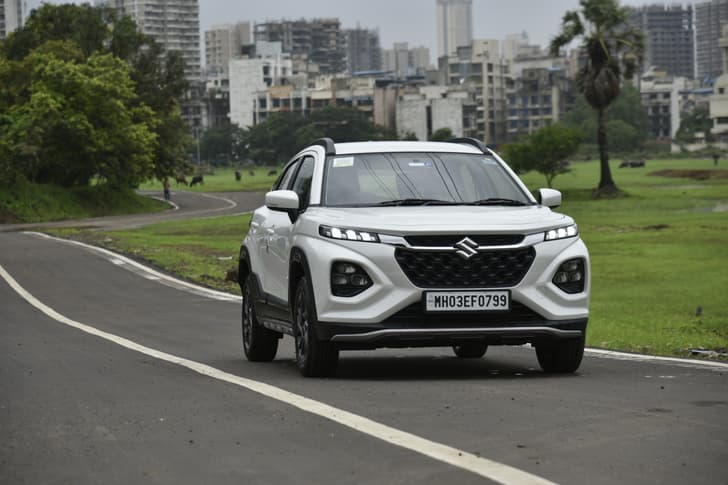
The registration mark follows the format YY BH #### XX. The first two digits (YY) represent the year of first registration, BH identifies the Bharat series, the four numerals (####) form the number sequence, and the final letters (XX) complete the mark.
If having a particular or auspicious number is important to you, check the applicable fancy-number rules before choosing a registration series. The availability of a number under a regular state registration does not guarantee that the same number can be obtained under the BH series.
Should you opt for a BH-series number plate?
A BH-series number plate is most useful if your job requires you to relocate between states frequently. It removes the need to obtain a new registration mark solely because you have moved, making it a convenient option if your work involves regular transfers.
The tax structure may also help you manage the initial cost of buying a vehicle, as you pay road tax in two-year instalments rather than as a single long-term payment. However, this does not guarantee a lower overall cost. The outcome depends on your vehicle’s invoice price, fuel type and the road-tax rules in the state where you would otherwise register it. If you expect to stay in one state, compare the costs before deciding.
You should also consider what happens if you sell your vehicle or become ineligible for the scheme. If you sell it to someone who qualifies for BH registration, the vehicle can retain its BH registration as long as the new owner remains eligible. If the buyer is ineligible, the vehicle must be assigned a regular registration mark and taxed under the applicable state or union territory rules. If you become ineligible, your vehicle can remain under the BH series for the remaining period for which you have already paid road tax.

 Uday Singh

 Suraj Viswanathan