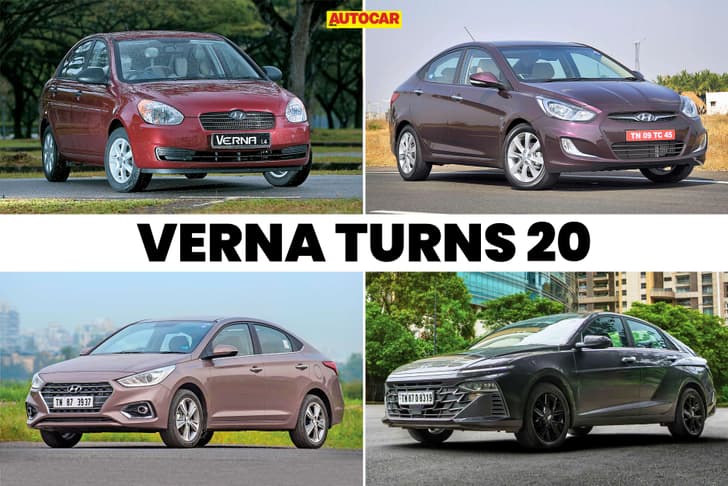

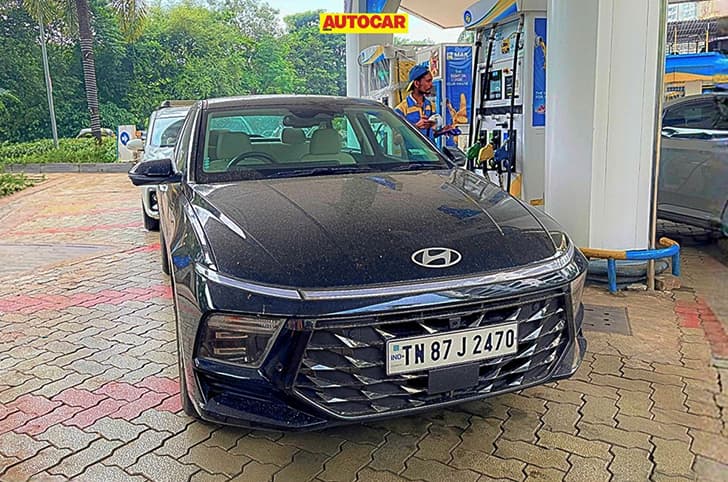
As part of the 2026 update, the Hyundai Verna got minor design tweaks with a few feature additions and deletions, but with the same engines carried over. It is available with a 1.5-litre naturally aspirated petrol engine and a 1.5-litre direct injection turbo petrol engine with the option of manual and automatic transmissions for both.
We've put the Hyundai Verna petrol CVT through our efficiency tests to see how it performs.
- Gets an auto stop-start feature
- Claimed efficiency is 19.6kpl
- Weighs 1,224kg, as tested
Hyundai Verna petrol CVT real-world fuel efficiency explained
Powering the Hyundai Verna is a 1.5-litre, four cylinder, naturally aspirated petrol engine producing 115hp and 143.8Nm that is paired with an 8-step continuously variable transmission (CVT), or Intelligent Variable Transmission (iVT) as Hyundai likes to call it. It also gets three driving modes - Eco, Normal and Sport.
For our tests, we drove the car in its most efficient 'Eco' mode in the city and on the highway.
What community is saying on the Verna?
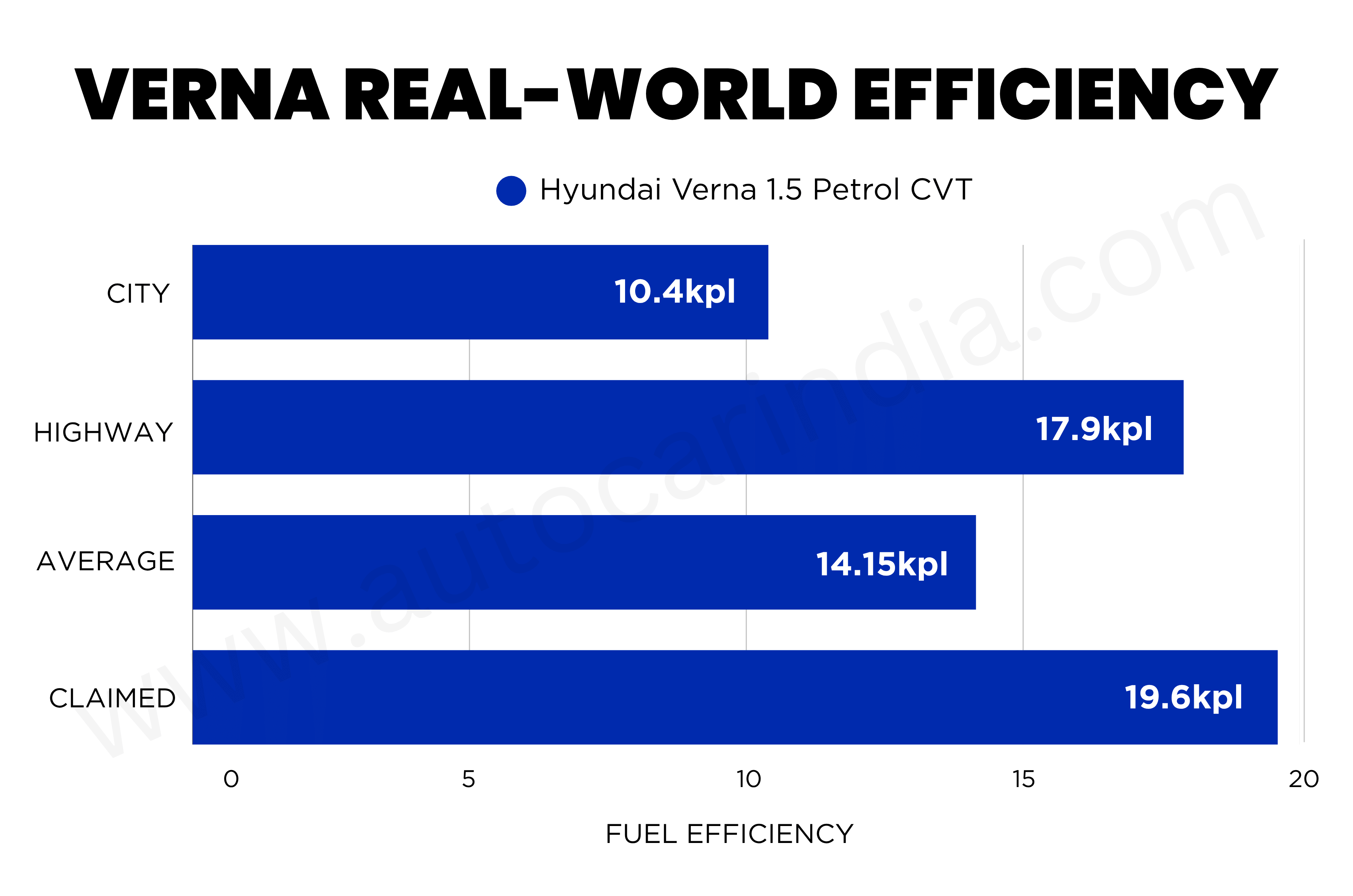
In the city, the Verna returned 10.4kpl, whereas on the highway it returned 17.9kpl, which resulted in an overall average fuel efficiency of 14.15kpl. With the 45-litre fuel tank, you can expect a real world range of 630km on a tankful of petrol.
What's impressive is that its highway efficiency of 17.9kpl is close to its ARAI claimed efficiency of 19.6kpl. With a light foot on the highway, the engine spins at a lazy ~1900rpm at 100kph, which helps its highway efficiency. In the city, the automatic stop start feature helped save fuel, especially at traffic stops. Moreover, the system wasn’t as aggressive as some other cars we’ve tested and worked exactly as it should.
Autocar India’s fuel efficiency testing
Before our real-world fuel efficiency tests, we fill our test cars’ tanks to the brim and maintain tyre pressures based on the manufacturer’s recommendation. These cars are driven in fixed city and highway loops in and around Navi Mumbai, and we maintain certain average speeds. Throughout the tests, there is only one person in each car, running the aircon at 22deg C in full-auto mode, and other electricals, such as the audio system, ventilated seats, indicators and wipers, are used when required, just like a regular user would. Periodic driver swaps further neutralise variations in driver patterns. At the end of each cycle, we calculate efficiency by filling the tanks to full again.

 Uday Singh

 Glenn Noronha
 Dipan Sur