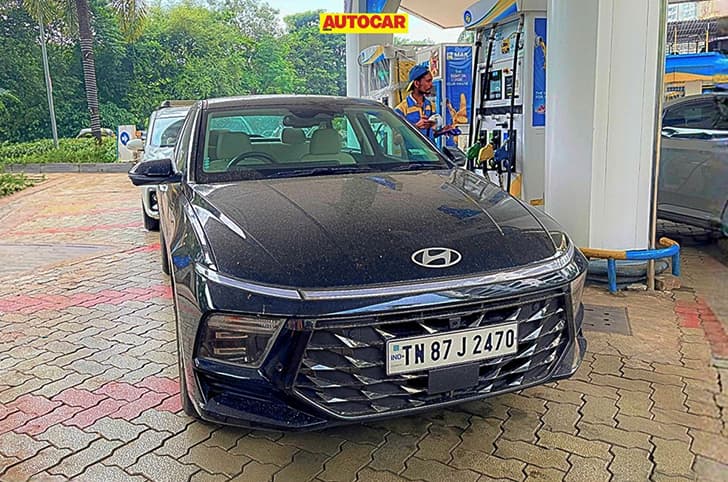

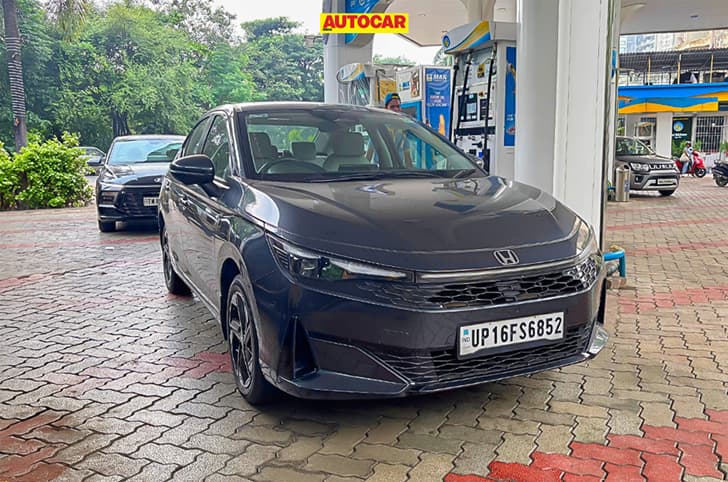
The fifth-generation Honda City received its second facelift in 2026 with a sleeker front design and some feature additions, while the powertrain options remain unchanged. It is still available with a 1.5-litre naturally aspirated petrol engine that can be had with either a 6-speed manual or a CVT automatic transmission, and then there’s a more efficient and powerful strong hybrid powertrain.
We've now subjected the Honda City petrol paired with the CVT through our efficiency tests to see how it fares.
No auto stop-start feature
Weighs 1,168kg
Claimed efficiency of 17.97kpl (CVT)

Honda City petrol CVT real-world fuel efficiency explained
The Honda City is powered by a 1.5-litre, four cylinder, naturally aspirated petrol engine that produces 121hp and 145Nm, and is paired with a 7-step continuously variable transmission (CVT). We kept the sedan in its most efficient 'ECON' mode throughout our tests.
What community is saying on the City?
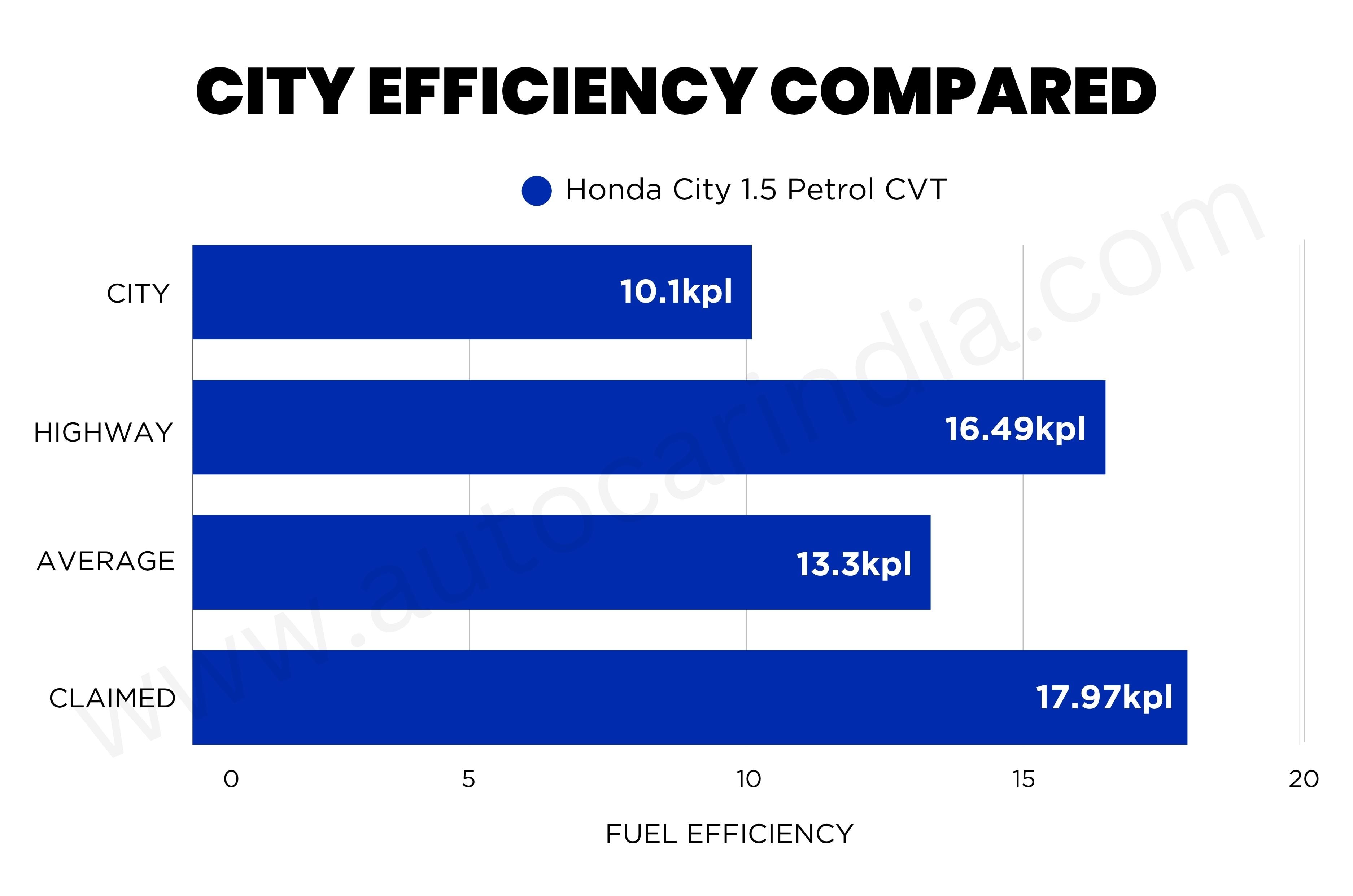
In our tests, the Honda City returned 10.1kpl and 16.49kpl in the city and on the highway, respectively. This results in an overall average fuel efficiency of 13.3kpl which translates to a real world range of 530km with the 40-litre fuel tank.
While its highway efficiency is respectable and close to the claimed 17.97kpl, an automatic stop‑start system would have further improved city efficiency. The CVT on the City also felt a bit too eager where even slight throttle inputs resulted in the engine revs going up. While this makes the car feel more responsive, it affects the overall efficiency.
Autocar India’s fuel efficiency testing
Before our real-world fuel efficiency tests, we fill our test cars’ tanks to the brim and maintain tyre pressures based on the manufacturer’s recommendation. These cars are driven in fixed city and highway loops in and around Navi Mumbai, and we maintain certain average speeds. Throughout the tests, there is only one person in each car, running the aircon at 22deg C in full-auto mode, and other electricals, such as the audio system, ventilated seats, indicators and wipers, are used when required, just like a regular user would. Periodic driver swaps further neutralise variations in driver patterns. At the end of each cycle, we calculate efficiency by filling the tanks to full again.


 Uday Singh

 Glenn Noronha
 Dipan Sur