Last Updated on: 04 Sep 2026
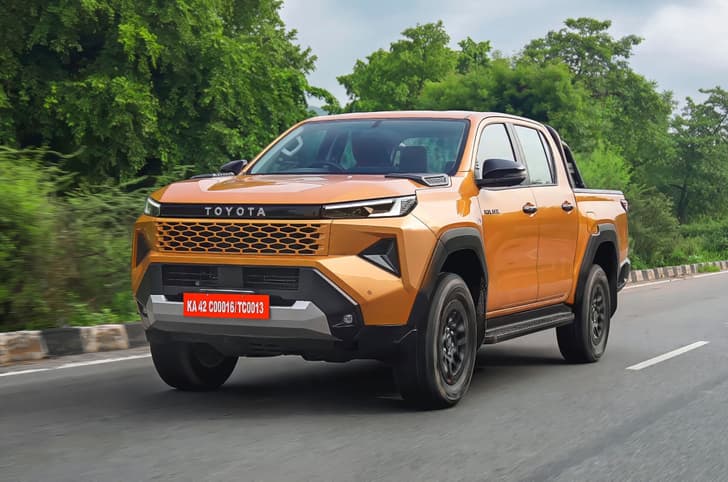
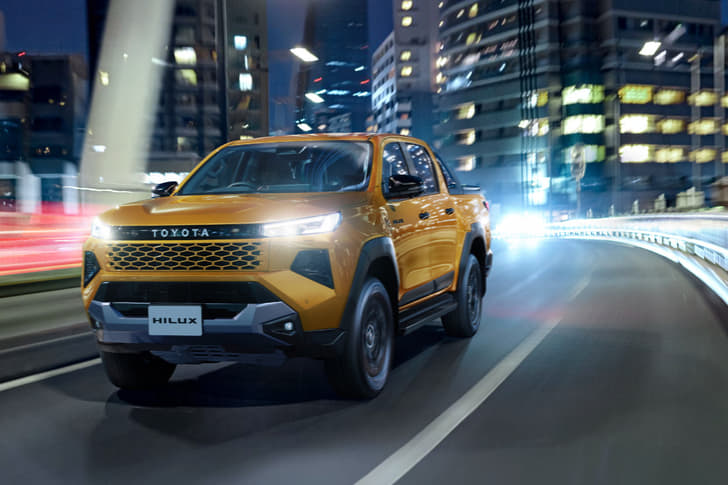
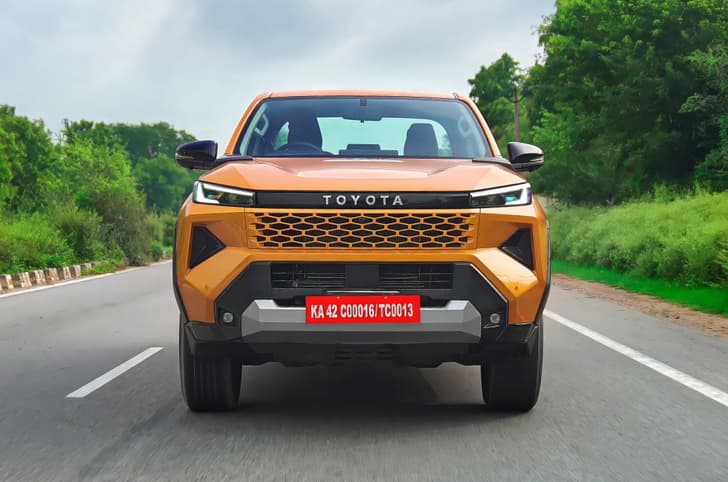
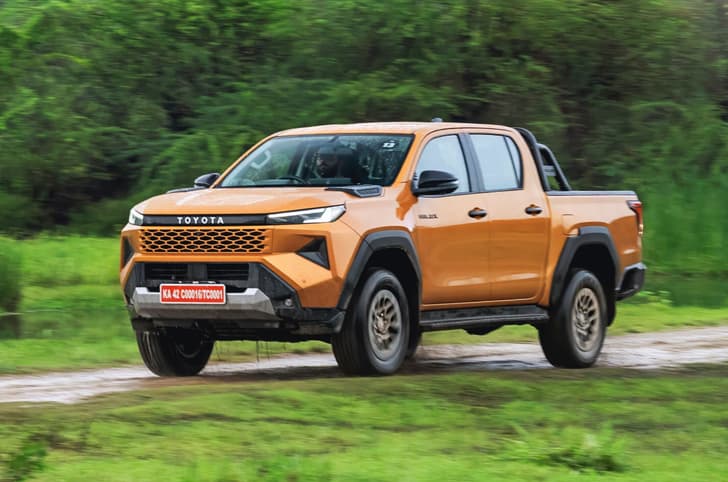
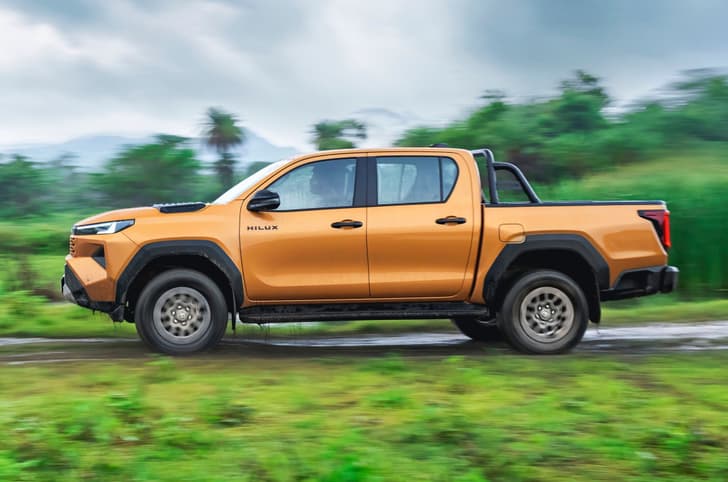
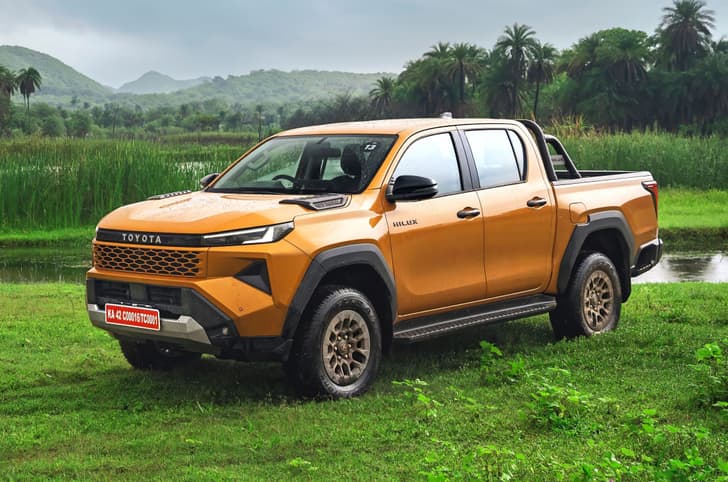
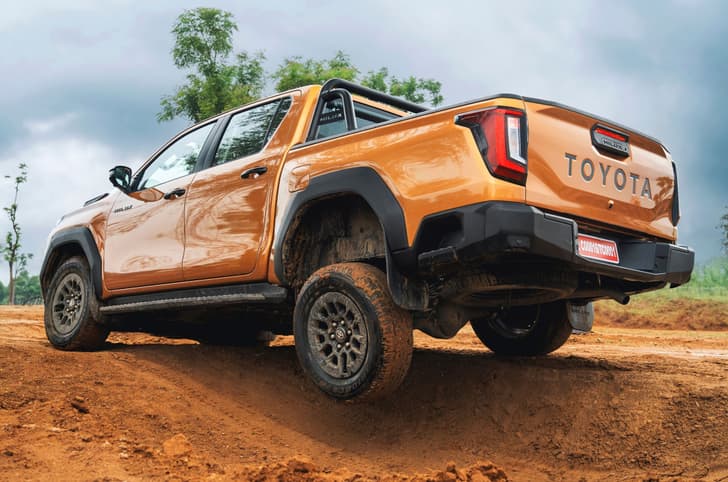
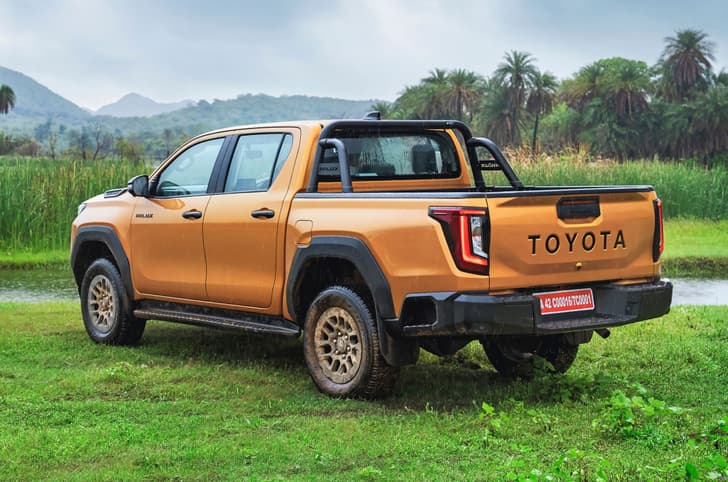
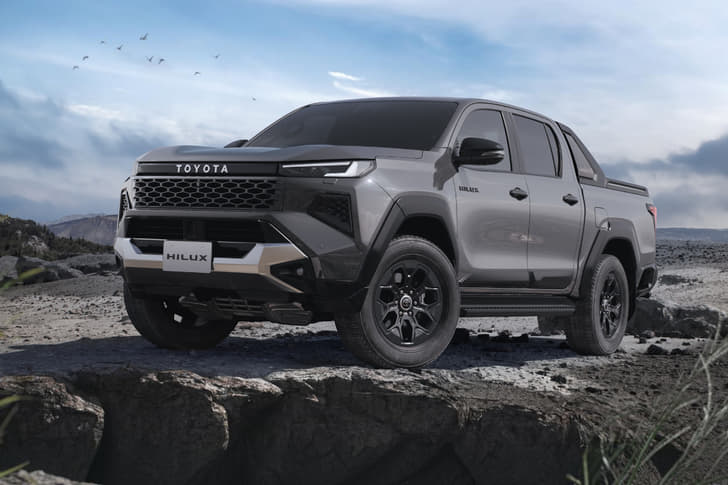
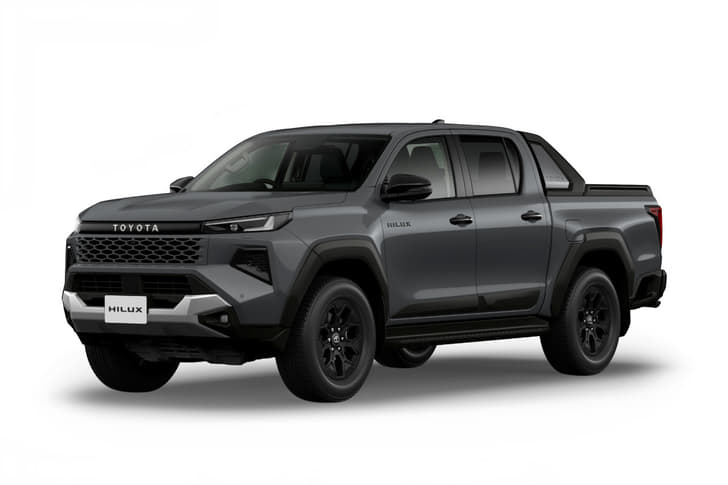
Toyota Hilux GX 4x2 AT
Toyota Hilux GX 4x2 AT Key Features
- Electronic Stability Control
- Rear Parking Camera
- Anti-Lock Brakes (ABS)
- Fully Digital Digital Instrument Cluster
- Manual Climate Control
Toyota Hilux GX 4x2 AT specifications
Engine & Transmission
Engine Displacement | 2755 cc |
Number of Cylinders | 4 |
Engine Installation | Front |
Fuel Type/ Propulsion | Diesel |
Gearbox Type | Torque Converter |
Number of Gears | 6 |
Manual Shifts via Gear Lever on Automatic Gearbox | Yes |
Paddle Shifters for Automatic Gearbox | No |
Sport Mode for Automatic Gearbox | No |
Drive Layout | Rear Wheel Drive |
Lockable Differential/s | No |
Max Engine Power | 204 hp at 3000 - 3400 rpm |
Max Engine Torque | 500 Nm at 1600 - 2800 rpm |
Fuel & Performance
Fuel Supply System | Common Rail |
Emission Standard | Bharat Stage VI |
Terrain Modes | No |
Auto Start/Stop | No |
Fuel Tank Capacity | 80 litres |
Suspension & Steering
Front Suspension Type | Double Wishbone |
Front Springs | Coil Springs |
Rear Suspension Type | Rigid Axle |
Rear Springs | Leaf Springs |
Damper Control | No |
Ride Height Adjust | No |
Type of Power Assist | Hydraulic |
Steering Adjust type | Manual |
Steering Adjust | Tilt and Telescopic |
4 Wheel Steer | No |
Turning Radius | 6.3 |
Front Brakes | Ventilated Disc |
Rear Brakes | Drum |
Wheel Size | 17 inches |
Front Tyre Size | 265/65 R17 |
Rear Tyre Size | 265/65 R17 |
Wheels | Alloys |
Spare Wheel | Full Size |
Dimensions
Length | 5320 mm |
Width | 1855 mm |
Height | 1815 mm |
Wheelbase | 3085 mm |
Chassis Type | Ladder Frame |
Doors | 4 |
Toyota Hilux GX 4x2 AT features
Comfort
| Exterior Mirrors Electric Adjust | |
| Remote Locking | |
| Push Button Start | |
| Rear AC Vents | |
| Rear Windscreen Sun Shade | |
| Rear Power Outlet |
Safety
| Anti-Lock Brakes (ABS) | |
| Brake Assist (BA) | |
| Electronic Brakeforce Distribution (EBD) | |
| Traction Control | |
| Electronic Stability Control | |
| Anti-Pinch Power Windows | All |
Exterior
| LED fog lamps | |
| Body Coloured Bumpers | |
| Headlight Type | LED |
| Projector Headlamps | |
| Daytime Running Lights | |
| Front Fog Lamps |
Interior
| Speedometer | Digital |
| Tachometer | Digital |
| Trip Meter | |
| Average Fuel Consumption | |
| Average Speed | |
| Distance to Empty |
Entertainment
| Audio System | |
| CD Player | |
| USB Input | |
| AUX Input | |
| Bluetooth Audio Streaming | |
| Bluetooth Telephone Function |
Connected Car Features
| Find My Car | |
| App Details | |
| Vehicle Tracking Via App | |
| Smart Drive Information | |
| Driving Analytics | |
| Phone App |
Toyota Hilux variants
 Electronic Stability ControlFully Digital Digital Instrument ClusterPhone-based Satellite NavigationLow Battery WarningFabric Seat MaterialTraction ControlDriving ModesWireless Android AutoRemote Car Lock/Unlock via AppRear Seat Armrest with Storage
Toyota Hilux comparison
Questions you may find useful
I’m a 21-year-old college student, and my family already owns a 2020 Fortuner. I’m looking for a second car for college use and outings. Should I go with the Thar, as per my father's choice, or the new-generation 2026 Hilux, which I like? Or is there any other good option? It must be a diesel SUV.

 Mahindra Thar RoxxToyota Hilux
Hi AAA, My name is Richu, and I'm from Kerala. I'm keen on buying a lifestyle pickup truck. I don't really have a practical use case for it. It's purely a passion purchase, and I want something that stands out from ordinary vehicles. It will be my secondary car, mainly used for occasional family trips and some mild off-roading. I recently test-drove both the Isuzu V-Cross and the Toyota Hilux. I loved the Hilux for its strong performance and, the availability of a locking rear differential. However, I wasn't impressed with its ride quality. It felt quite stiff, and there was noticeable pitching from the back. When I drove the V-Cross on the same stretch of road, the ride felt much more comfortable. I also preferred the V-Cross for its looks and overall ride comfort. Now I'm confused about which one to buy. The Hilux is based on Toyota's current-generation platform, whereas the V-Cross is based on a much older platform. Toyota also has a stronger service network than Isuzu. So, it's a classic heart vs mind dilemma, and I'd really appreciate your help in choosing between these two vehicles.
Toyota HiluxIsuzu D-Max V-CrossI am a 22-year-old planning to buy and build an off-road machine. I am stuck between the Toyota Hilux and the Toyota Fortuner, especially considering the stronger road presence of the Hilux. However, the cost of modifications on the Hilux would be higher compared to the Fortuner, though this may be offset by the discounts being offered on it. I am also unsure about its practicality due to its rear seat and compromise on comfort. Additionally, does either of these perform better than the other off-road?
Toyota FortunerToyota HiluxHello, I recently read your article on Toyota’s upcoming models, but I did not see any mention of the new Hilux. Is it safe to assume that Toyota does not plan to introduce the new-generation (N90) Hilux in India, and that the current Hilux may eventually be phased out?
Toyota HiluxI'm torn between the Toyota Hilux and the Fortuner. Most of my driving is within the city or on highways, but the substantial discounts on the Hilux make it an appealing option. My primary concerns with the Hilux are: 1. Uncomfortable rear seats 2. Leaf spring suspension at the rear 3. A turning radius of 5.4 meters 4. High cost of accessories Given these factors, would it be more prudent to opt for the Fortuner, or is the Hilux still a viable choice despite these drawbacks?
Toyota HiluxToyota FortunerToyota Hilux price in India
Upcoming Cars
Toyota Cars
Trending Cars



Latest Cars