Last Updated on: 17 Oct 2026
Skoda Superb User Reviews
Tell us about your experience
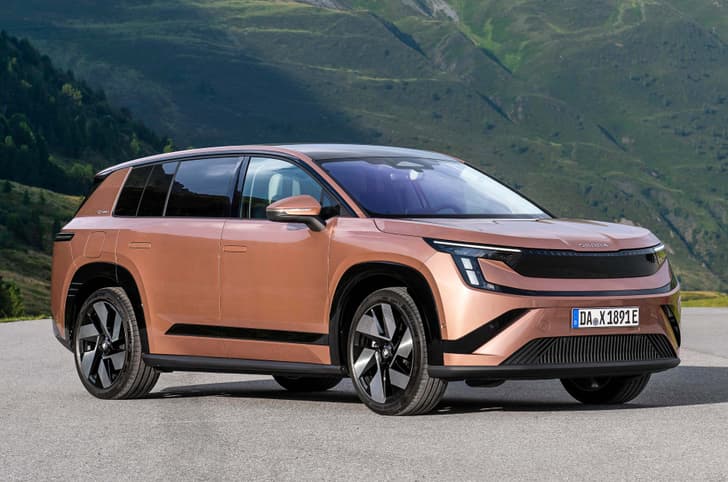
The new-generation Skoda Superb is expected to return to India with a 2.0-litre diesel engine producing 193hp and 400Nm. We had previously reported that the car displayed at the 2025 Bharat Mobility Global Expo used this engine with a seven-speed dual-clutch automatic and all-wheel drive.
The global fourth-generation Superb is also available with petrol and plug-in hybrid powertrains, but the final India-spec engine line-up has not yet been confirmed.
Stretching a bit would also land you the Skoda Superb.
Superb has better comfort, if that's a priority.
Questions you may find useful
I am confused between waiting for the Skoda Superb and going ahead with the purchase of the Toyota Camry. I am looking for an executive sedan that prioritises rear-seat comfort for my parents, who are senior citizens. Mercedes-Benz and BMW models are outside my budget. My last premium sedan was a Skoda Laura, before it was renamed the Skoda Octavia and eventually discontinued. This car will primarily be used for long-distance travel between two cities or towns. Should I wait for the Skoda Superb or go ahead with the Toyota Camry?
Go for the Toyota Camry. Your priorities are rear seat comfort for senior parents and long-distance reliability, and the Camry is the more sensible choice. The hybrid powertrain is smooth, quiet and efficient on highways, and Toyota’s reputation for reliability and service reach is a big advantage for long-term ownership. The rear seat is genuinely comfortable, with good legroom and a relaxed ride, which is exactly what you want for your parents on long journeys.The Skoda Superb is a fantastic car and arguably the better driver’s car, but your usage is rear seat comfort and reliability, not driving dynamics. The Skoda Superb will launch with a diesel engine, which would make it efficient, though we suspect the Camry might be more efficient still. It's also worth noting that Skoda has not confirmed a launch date as yet, so your wait could be longer than you'd like. Pricing remains a question mark too.
Is driving a turbo-petrol car preferable for the health and longevity of the turbo, especially in the case of a 2022 Skoda Superb? My daily commute is only 6-10 km. Would it be better to switch to an NA engine?
With a daily commute of just 6-10 km, the concern is not the turbo itself, but could be for the engine not reaching optimal operating temperature, so your fuel efficiency may not be good. Beyond that, there is no major concern for the health of the turbo itself. However, a downside of the turbo DI engine - like in the Superb - is that they are sensitive to throttle inputs, so during constant short drives with traffic, your efficiency is likely to drop further unless you are very precise with your throttle inputs. For this reason, you could consider an NA engine; otherwise, the turbocharged engine will be fine. A good general habit with a turbo is to avoid revving the engine just before shutting it down, as this raises the turbo's turbine RPM and it then spins free with less lubrication. So arrive at your stop at a sensible speed, leave the car for just a few seconds and then shut it down.
Dear Autocar India experts, I am planning to buy a new car for my daily commute. I live in a hilly area and want my next car to be spacious enough for taking my three kids to school and for family functions. I have been waiting for the Skoda Superb for almost a year. Now that it is finally coming to India, I have heard that it may not be offered with a petrol engine, which is what I was hoping for. I am a fan of diesel cars, but I have had a bad experience with DPF issues in my Velar, so I am now hesitant to go down that route again. As an alternative, I am considering an electric car and have been looking at the Hyundai Ioniq 5 and BYD Sealion 7. I would like to know your expert opinion on these two EVs, particularly when it comes to after-sales service and ownership experience. Which one would you recommend for my requirements, or should I wait and go for the Skoda Superb anyway? I currently use a Brezza diesel for my daily commute and also have a Zen for fun drives. Kindly help me make the right choice. Thank you for your expert advice.
Given your requirements, the Hyundai Ioniq 5 is the better fit. You live in a hilly area, have three kids and need a car for school runs and family functions, so space, comfort and practicality are key. The Ioniq 5 is a large, spacious EV with a flat floor, excellent rear seat space and a big boot, making it well suited to family use. Hyundai also has a far stronger service network and EV support infrastructure than BYD, which is important for long-term ownership confidence.The BYD Sealion 7 is a very impressive EV with a larger battery and longer claimed range, but BYD's service network is still relatively limited compared to Hyundai. In a hilly area where you may need support, that matters. The Ioniq 5's range is already very strong and more than adequate for daily use, so the difference is not worth the trade-off in service confidence.As for the Skoda Superb, it is a fantastic car, but it is coming only as a diesel. Given your bad experience with DPF issues on your Velar and your preference for petrol, it is not the right choice. Modern diesels are cleaner, but DPF issues can still occur in hilly, stop-start conditions if the car is not regularly driven on longer runs.You already have a Maruti Suzuki Brezza diesel for daily use and a Zen for fun drives, so the Ioniq 5 adds a spacious, comfortable and reliable family car to your garage without the DPF concerns. It is the most sensible and future-proof choice for your needs.
I have a Škoda Superb L&K 2022, which comes with a front-wheel-drive (FWD) drivetrain, while in some international markets, the Superb has been offered with a rear-wheel-drive (RWD) setup. My first question is: how does FWD differ from RWD in terms of basic driving dynamics? Secondly, what does chassis weight distribution mean in a car, and what significance does it have for driving dynamics and handling? Is an ideal weight distribution necessarily associated with an RWD setup? Also, is it correct to say that RWD is always better than FWD or AWD? Finally, does a four-cylinder engine with twin turbochargers have any significant advantage over an inline-six-cylinder engine?
The Skoda Superb is a front-wheel-drive car globally, including in international markets. There is no rear-wheel-drive version of the Superb. The confusion may come from the fact that some premium sedans in the same segment, such as the BMW 5 Series and Mercedes E-Class, are rear-wheel drive, but the Superb itself is not. The Superb is available in some markets with AWD (all-wheel drive), but that too is a front-biased system with the rear wheels driven only when needed.The difference between FWD and RWD is most noticeable in driving dynamics. In a front-wheel-drive car, the front wheels are responsible for both steering and putting power down, which can lead to understeer (the car does not turn as much as intended) and torque steer (the car pulls to one side on its own) when pushed hard. In a rear-wheel-drive car, the front wheels steer while the rear wheels deliver the power, which generally results in better balance and a more engaging driving experience, especially in performance driving.Weight distribution refers to how the car's mass is spread between the front and rear axles. A 50:50 weight distribution is often considered ideal because it helps the car remain balanced during cornering. This is not exclusive to rear-wheel-drive cars, but it is easier to achieve in RWD layouts because the drivetrain components are more evenly distributed along the length of the car.It is not correct to say that RWD is always better than FWD or AWD. Each layout has its own advantages. FWD is more space-efficient, cost-effective, and better in slippery conditions; RWD offers better driving dynamics; and AWD provides the best traction in all conditions.On the engine front, a 4-cylinder twin-turbo can produce impressive power and torque, and tends to be lighter, but an in-line 6 or V6 is inherently smoother and more refined. A larger-capacity engine tends to also be more effortless than a boosted low-capacity engine making the same power output. The choice between the two depends on the application: the 4-cylinder is lighter and more efficient, while the inline-6 offers a more premium and refined driving experience.
Hi Autocar team, I am looking for a premium EV. I am confused between the BYD Sealion, Model Y, and Model YL. We are a family of four with mostly city driving and take outstation trips twice a month of about 350-400 km. Which would be the best option in terms of value for money? I also like sporty looks. We plan to set up home charging. I currently drive a Skoda Superb and am looking to replace it.
Go for the BYD Sealion 7. For a family of four stepping out of a Superb, it’s the comfier daily - softer ride, quieter cabin and a roomier rear bench than the Model Y, so city runs and school-office duty feel easy. Your 350-400 km trips should not be an issue with the big battery and fast-charging capabilities. It also gives similar range and kit for less money, so it’s the stronger value. The design is sleek enough and performance is properly quick for India, and though both are limited, BYD car has the edge on dealer network and reach at the moment.The Model Y is more playful to drive and its software and driver aids are slicker. It is the more tech forward choice, and if that's what you're after, it might be worth considering. The Model Y L definitely has the edge on space, although its real-world range and comfort is yet to be proven. It is a much larger vehicle, however, so driving in the city could be cumbersome compared to the others. The Y L is also quite a bit more expensive than the Sealion 7. Test drive both and see if you have a preference, as both the Tesla and BYD are good options, but we would pick the Sealion 7 for your requirement.
Upcoming Cars


Skoda Cars


Trending Cars



Latest Cars