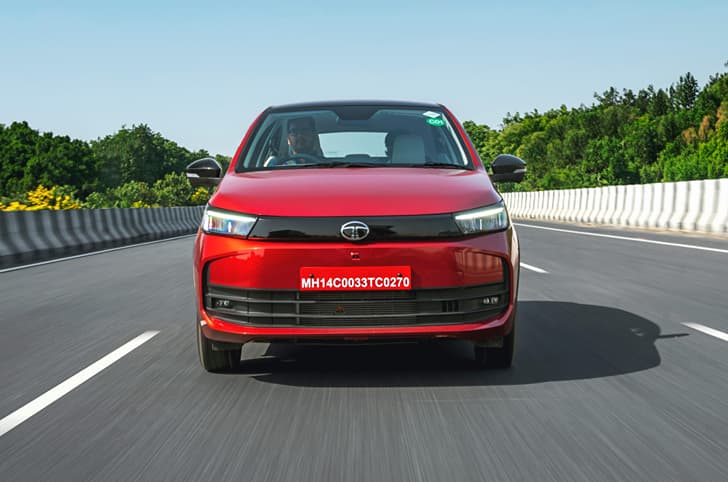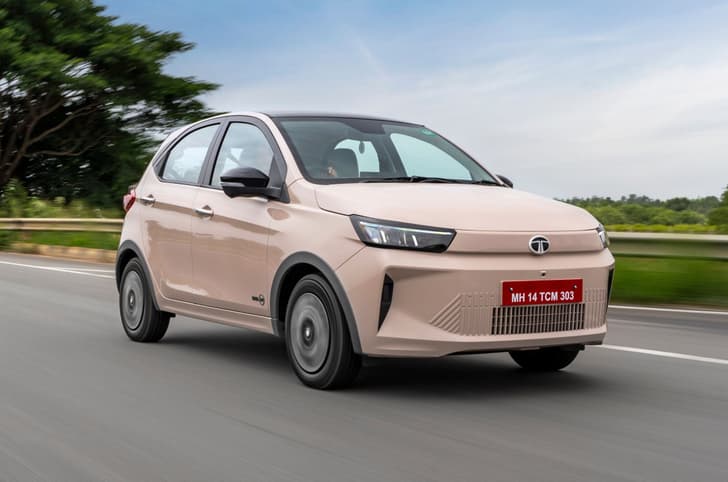


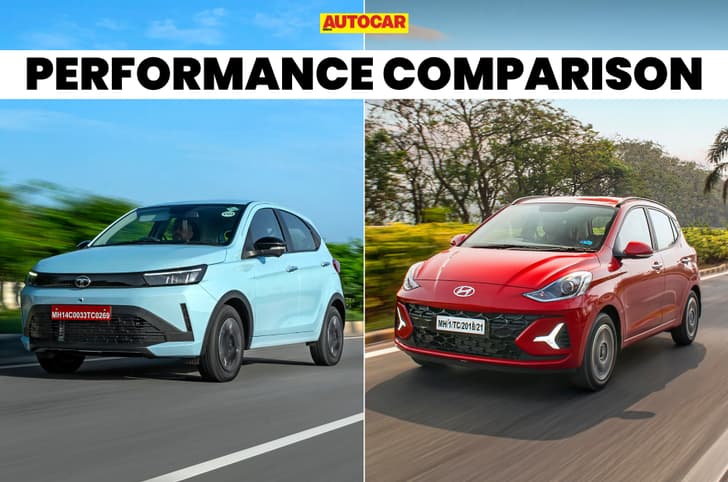
If you’re looking to buy your first-ever car, the Tata Tiago and Hyundai Grand i10 Nios come across as affordable yet sizeable and feature-rich options. But which of the two offers better pep in town? Here, we’ve tested the 0-100kph acceleration and rolling acceleration performance of both hatchbacks to determine which one is quicker. For this comparison, we evaluated their respective naturally aspirated petrol engines paired with a manual gearbox.
Explore full specs, features and a price breakdown in our Tiago vs Grand i10 Nios comparison.
Tata Tiago vs Hyundai Grand i10 Nios specifications
The Tiago churns out slightly more power than the Nios
Powering both the Tiago and Grand i10 Nios are 1.2-litre naturally aspirated petrol engines – the former a three-cylinder mill and the latter a four-cylinder unit. While the Tiago develops 3hp more, the Nios has a 1Nm edge in torque. Additionally, the latter gets a slightly bigger fuel tank. What’s similar on both hatchbacks is a front-wheel-drive layout and a 5-speed manual transmission.
Tata Tiago vs Hyundai Grand i10 Nios: 0-100kph acceleration times
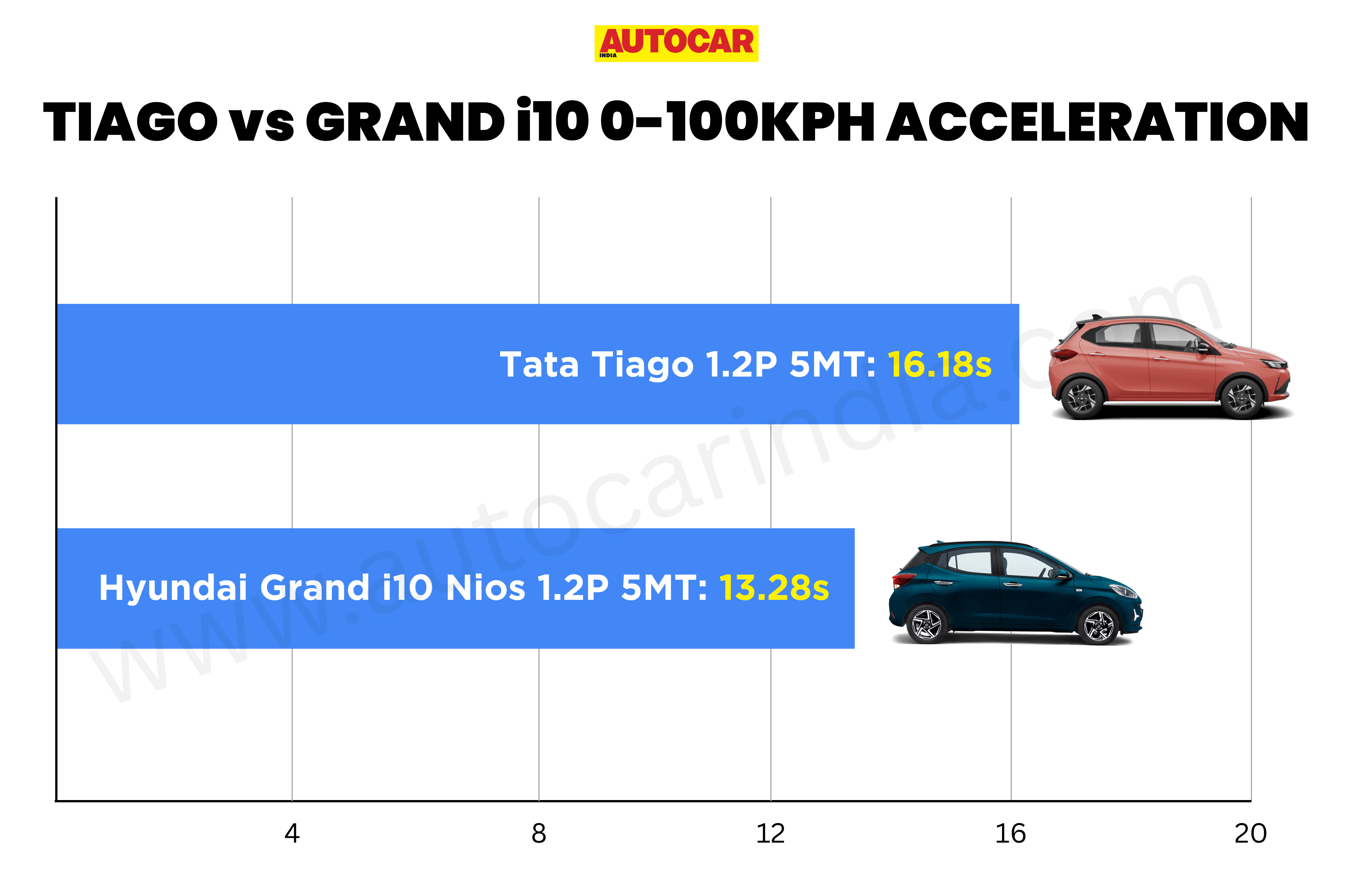
In our 0-100kph acceleration test, the Grand i10 Nios recorded a 2.9-second quicker time. Thanks to Hyundai’s smoother engine and gearshifts coupled with easier clutch modulation, it managed to outperform the Tiago despite developing slightly less power.
Tata Tiago vs Hyundai Grand i10 Nios: Rolling acceleration times
What community is saying on the Tiago?
Grand i10 Nios manages to lead in-gear acceleration timings as well
Even in rolling acceleration tests, the Grand i10 Nios managed to pull ahead of the Tiago. It was 2.36 seconds and 1 second quicker than the Tiago in the 20-80kph and 40-100kph tests, respectively.
Tata Tiago vs Hyundai Grand i10 Nios: Prices
Tiago more affordable by up to Rs 90,000
Price-wise, the Tiago is more affordable than the Grand i10 by a fair margin. At the base and top-end, the Grand i10 is pricier than the Tiago by Rs 90,000 and Rs 22,000, respectively.
Autocar India’s testing standards
Before we conduct our performance tests, we check and maintain tyre pressures based on the manufacturer’s recommendations and ensure the car has a full tank of fuel. The car is then tested in a controlled environment with two people on board, and the data is collected via highly accurate GPS-based timing equipment.


 Uday Singh
 Dipan Sur