Seltos or Innova Hycross: Buy?


Last Updated on: 30 Oct 2026
Engine Type | Strong Hybrid |
Engine Displacement | 1987 cc |
Number of Cylinders | 4 |
Engine Installation | Front |
Fuel Type/ Propulsion | Petrol-Electric Hybrid |
Gearbox Type | e-CVT |
Number of Gears | 10 |
Manual Shifts via Gear Lever on Automatic Gearbox | Yes |
Paddle Shifters for Automatic Gearbox | Yes |
Drive Layout | Front Wheel Drive |
Lockable Differential/s | No |
Max Engine Power | 183.7 hp at 6600 rpm |
Max Engine Torque | 188 Nm at 4400 - 5200 rpm |
Combined Max Power | 183.7hp at 6600rpm |
Max Motor Torque | 206Nm |
User Reported Mileage | 19.86 kmpl |
Fuel Supply System | Direct Injection |
E20 Compatibility | Yes |
Emission Standard | Bharat Stage VI |
Auto Start/Stop | No |
Official Fuel Economy | 23.24 kmpl |
City Fuel Economy as Tested | 13.1 kmpl |
Highway Fuel Economy as Tested | 16.1 kmpl |
Fuel Tank Capacity | 52 litres |
0-100kph | 10.69 s |
20-80kph (in third gear/ kickdown) | 6.1 s |
40-100kph (in fourth gear/ kickdown) | 8.07 s |
Front Suspension Type | MacPherson Strut |
Front Springs | Coil Springs |
Rear Suspension Type | Torsion beam Semi-independent |
Rear Springs | Coil Springs |
Damper Control | No |
Ride Height Adjust | No |
Type of Power Assist | Electric |
Steering Adjust type | Manual |
Steering Adjust | Tilt and Telescopic |
Front Brakes | Disc |
Rear Brakes | Disc |
Wheel Size | 18 inches |
Front Tyre Size | 225/50 R18 |
Rear Tyre Size | 225/50 R18 |
Wheels | Alloys |
Spare Wheel | Space Saver |
Length | 4755 mm |
Width | 1850 mm |
Height | 1790 mm |
Wheelbase | 2850 mm |
Chassis Type | Monocoque |
Doors | 5 |
| Power Windows | Front and Rear |
| Scheduled Cabin Conditioning | |
| Rear Window Sun Shades | |
| Digital Instrument Cluster | Part Digital / Part Analogue |
| Door Pockets | |
| Cup Holders |
| Crash Test Rating | 5 |
| Side Airbag | |
| Speed Sensing Door Lock | |
| Driver Airbag | |
| Day Night Interior Mirror | Automatic |
| Seat Belt Warning |
| Body Coloured Bumpers | |
| Wheel Arch Cladding | |
| Projector Headlamps | |
| Stop Lamp | |
| ORVM turn indicators | |
| Outside rear view mirror (ORVM) |
| Speedometer | Digital |
| Tachometer | Digital |
| Trip Meter | |
| Average Fuel Consumption | |
| Average Speed | |
| Distance to Empty |
| Audio System | |
| Second Row USB port | Type A and Type C |
| Branded Music System | JBL |
| Front USB port | Type A and Type C |
| CD Player | |
| USB Input |
| Find and Book Parking Slot | |
| Find My Car | |
| Live Location Sharing | |
| Remote Car Lock/Unlock via App | |
| Remote AC On / Off via App | |
| Remote Engine Start/Stop |
 Electronic Stability ControlMID (Fully Analogue) Digital Instrument Cluster4 SpeakersIndividual Chairs at RearLED headlampsRear Parking CameraDriving ModesPhone-based Satellite NavigationRemote Engine Start/StopDriver's Seat Height AdjustFront & Rear Parking Sensors1-zone Climate ControlWireless Apple CarPlayRear Seat ArmrestPhone-based Satellite NavigationWith Display Tyre Pressure Monitoring SystemPanoramic SunroofWired Apple CarPlayRemote Engine Start/StopRear Seat Armrest with StorageWireless Apple CarPlayLED fog lampsPanoramic SunroofPhone-based Satellite NavigationWith Display Tyre Pressure Monitoring SystemHands-free Boot OpeningJBL Branded Music SystemRemote Engine Start/StopOttoman SeatsLED Daytime Running LightsAdaptive Cruise ControlPanoramic SunroofOttoman SeatsBlind Spot MonitorJBL Branded Music System
Join the Discussions
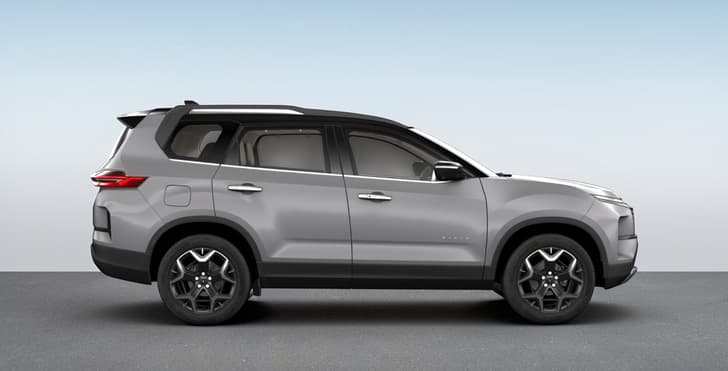
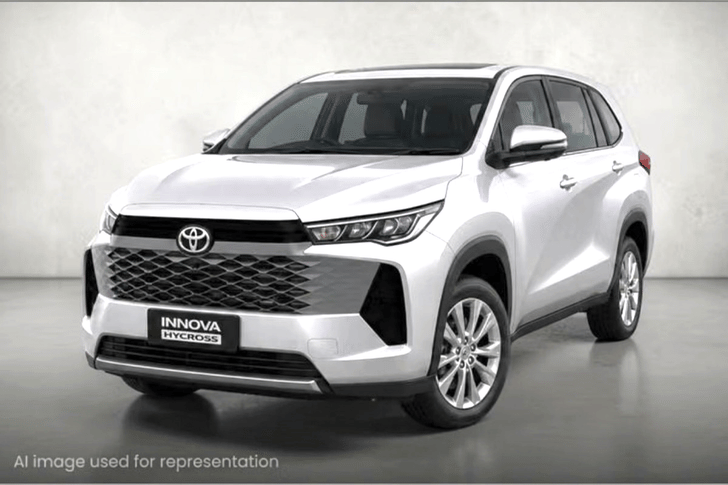
I’m planning to buy a new car, and my annual running is around 40,000km, primarily involving highway drives and ghat sections. I have shortlisted the Kia Seltos Diesel HTX and the upcoming facelifted Toyota Innova Hycross ZX. I’m considering two approaches: either buy the Innova Hycross and keep it for the next 10 years, given its reputation for longevity and the expectation that its engine can last at least 4 lakh kilometres, or buy the Seltos, drive it for around 2 lakh kilometres over 4–5 years, sell it and upgrade to a brand-new Seltos or another car of a similar price and size. On paper, the Innova Hycross Hybrid seems like the better choice, considering its long-term reliability and features such as the Ottoman reclining seats. However, I’m concerned that I might get bored of it after four years or that it may start feeling outdated as newer technologies and features enter the market. This makes the second option appealing, as it would allow me to upgrade to a brand-new car every 4–5 years. Which approach would make more sense in the long run, considering my high annual running and ownership costs?

 Kia SeltosToyota Innova HyCross
I recently booked a Toyota Innova Hycross ZX(O) and have been promised delivery by early November 2026. However, the recent spy shots of the facelift have me second-guessing my decision. I need to replace my current car before February 2027, but I have priority access at my dealer if I decide to switch my booking to the upcoming facelift. Given my February deadline, is it realistic to get the facelifted ZX(O) by then, or should I stick with my current allocation? Overall, is it worth waiting for the facelift?
Toyota Innova HyCrossHi Dear Auto car team , I am OMKAR from Baner , Pune . On 28th June 2026 autocar team had answered my query regarding Toyota Camary . I want to share my further experience. Here’s my experience. I had done quite extensive research on Camary I had a few friends at the dealership I talked with them and they had a demo Camary for sale it was just 17 - 18 months old and had done around 27,000 Km . It was decently priced at around 37.5 lakhs and it was in Pearl White colour . I loved it . I took my family my mom , dad , wife and son on next Sunday to the dealership to see the car . The Camary was out for test drive the sales team told us to wait for about an hour or so till the Camary returns . In that one hour some other sales person offered to show us the Innova Hycross . My whole Family saw the car and they just loved it so much that we ended up booking the Hycross . My family didn’t even see the Camary , Such is the magic of Hycross . The dealership has tentatively told us the delivery will be by mid January. I will share the further experience also . Thanks autocar for your suggestion support and guidance. As always Deep Drive podcasts gets better and better.
I’m quite confused about my next car upgrade and would really appreciate some advice from people who have experience travelling with large families and pets. We are a family of six: my wife, our child, my parents, our dog and me. Until now, I’ve been using a Tata Punch, which has served us reasonably well. However, with our little baby, things have become considerably more complicated. A five-seater no longer seems practical, especially when we travel with luggage and our dog. My usage is a mix of daily commuting (around 20 km a day) and family road trips. We usually undertake 3-4 long trips a year with approx 3-4k kms round trip. I’ve been considering three options: 1. Tata Sierra The idea here is to use all five seats for the family and create a padded, bed-like platform in the boot for our dog. I could use the space underneath the platform for luggage. The ROX edition’s roof carrier is another interesting option, although I’m unsure about the legal restrictions on roof-mounted luggage carriers and whether they could attract challans in states such as Delhi, Rajasthan and Madhya Pradesh. 2. Tata Safari The Safari offers the advantage of a third row. I’m wondering whether I could fold down half of the third row to accommodate luggage while keeping the other half for my dog. I’d probably need to install some sort of secure partition or cage to prevent luggage from shifting onto the dog or flying forward during sudden braking. However, I’m not sure how practical or safe this arrangement would be. 3. Toyota Innova Hycross (GXO) Given that my daily commute is relatively short, I’m not convinced that the hybrid’s additional cost would be justified by fuel savings alone. However, the Hycross’s cabin and luggage space are appealing. I’m wondering whether the third-row floor and boot could be configured to create a sufficiently large, flat and comfortable space for my dog while still accommodating our luggage. At this stage, these are just ideas, and I’m not sure how practical any of them would be in real-world conditions. I’d particularly appreciate advice from people who travel with their dogs, especially on long road trips. How do you manage luggage, ensure your pet’s safety and keep the cabin comfortable for everyone? Are there any other vehicles or practical modifications I should consider? One important consideration is that our baby is still very small, so we don’t have any major trips planned in the immediate future. I’m perfectly happy to postpone our next big road trip for a year or so. Consequently, I’m in no hurry to buy a car and am open to waiting for upcoming launches if something more suitable is on the horizon. I’d love to hear about your actual experiences, particularly with pet-friendly car setups, rather than just theoretical suggestions. Any advice on the choice of vehicle, safe modifications or alternative configurations would be greatly appreciated.
Toyota Innova HyCrossTata SierraTata SafariI recently booked an Innova Hycross GX(O) and have been promised delivery by the beginning of November 2026. However, seeing the recent facelift shots has me second-guessing my decision. I need to upgrade from my current car before February 2027, but I do have priority dealer access if I decide to shift my booking to the upcoming facelift. Given my February timeline, is it realistically possible to get the facelifted GX(O) variant by then? Or should I stick to my current allocation? In comparison, is it worth the while to wait for the facelift?
Toyota Innova HyCross