Last Updated on: 26 Aug 2026
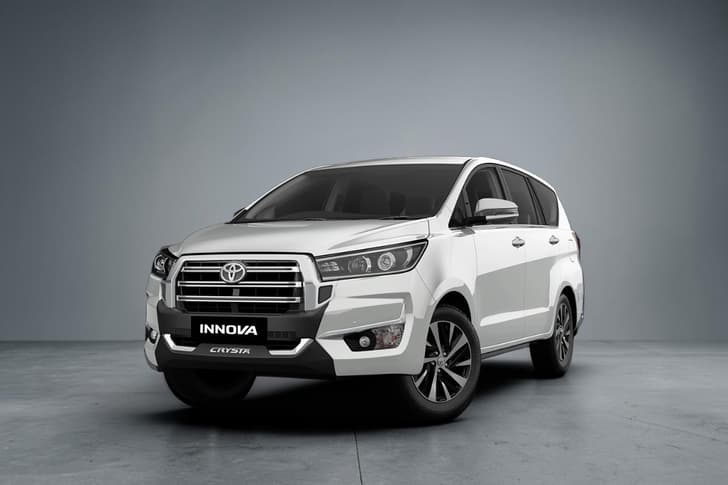
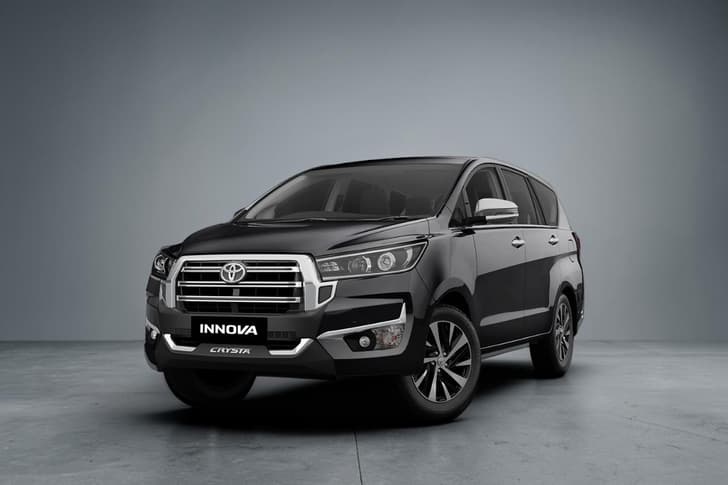
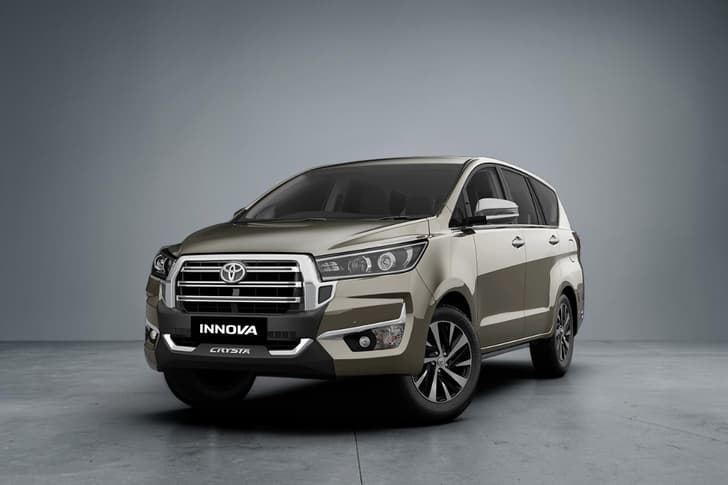
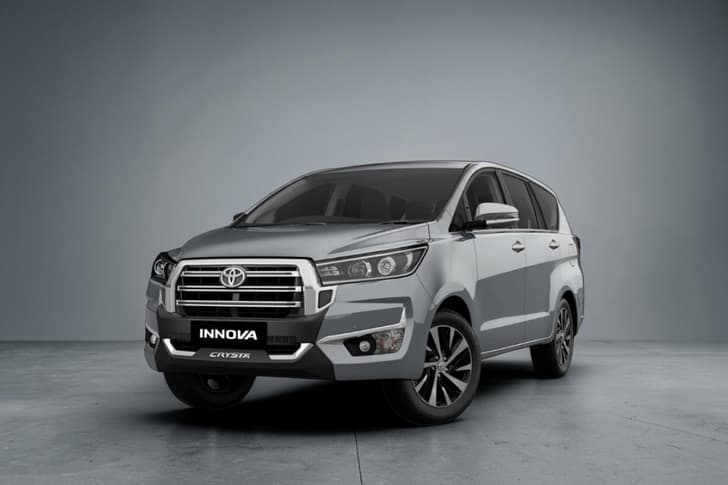
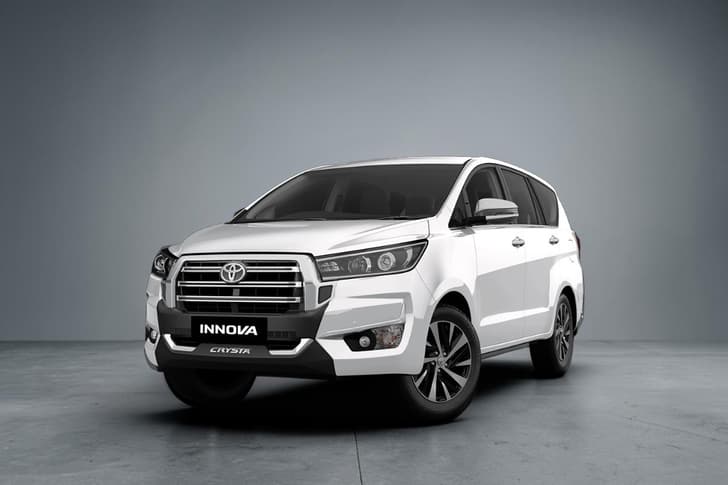
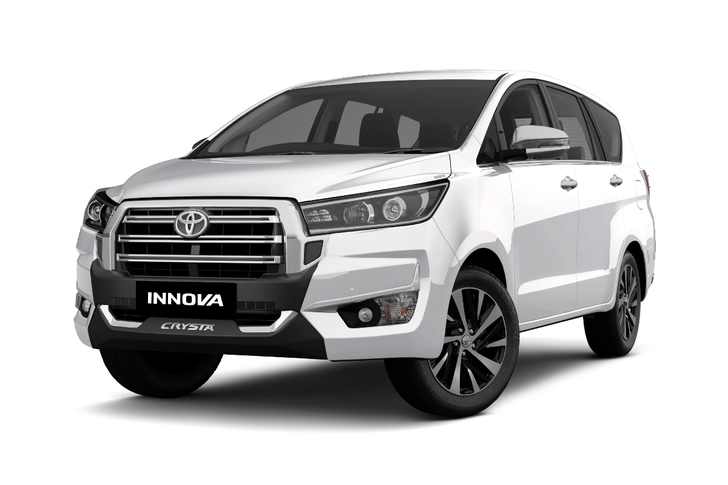
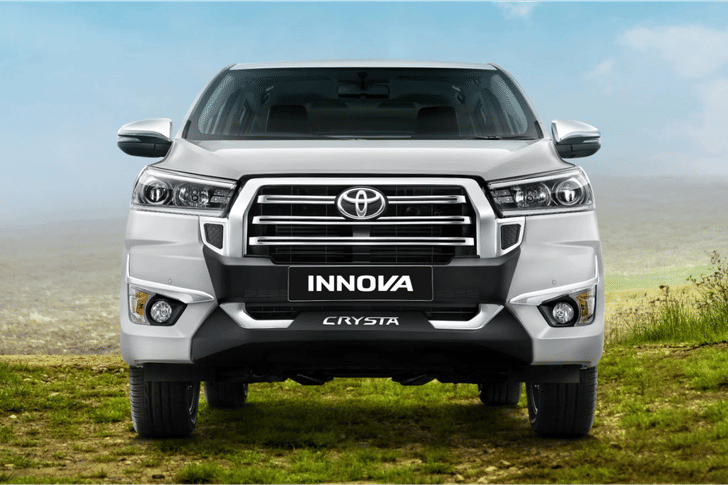
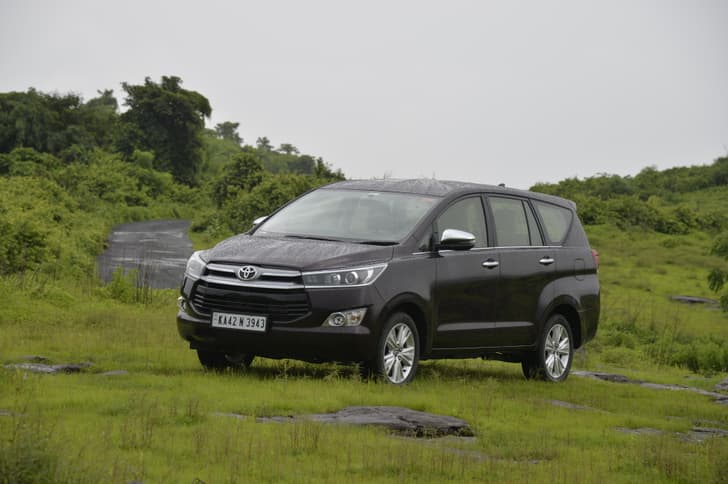
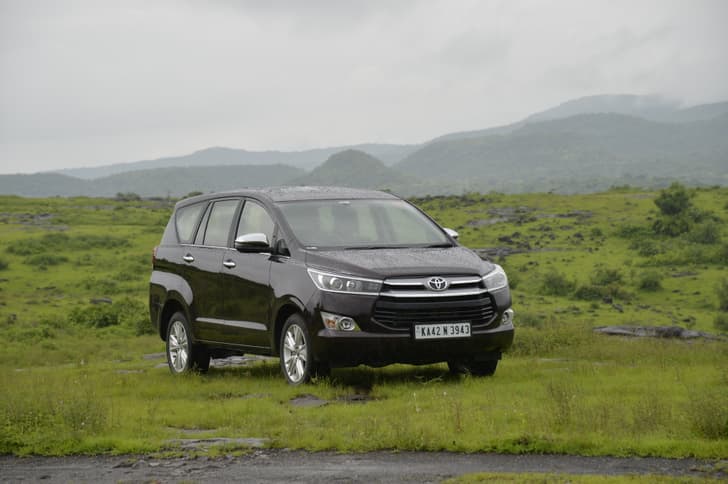
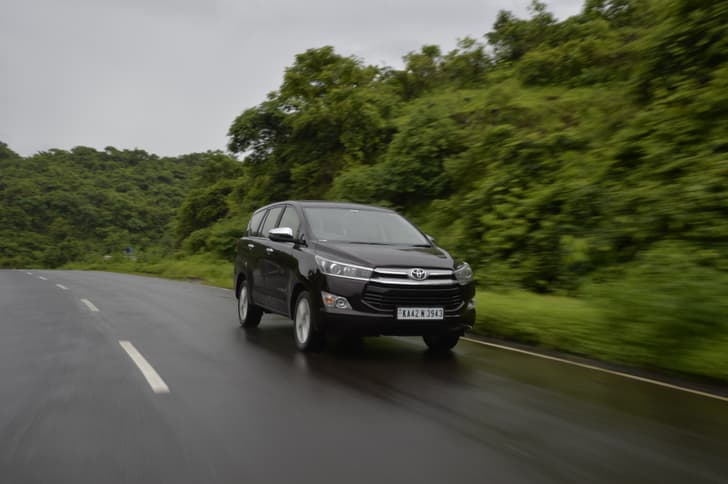
Toyota Innova Crysta 2.4 Diesel GX Plus 7 seat
Toyota Innova Crysta 2.4 Diesel GX Plus 7 seat Key Features
- Front Seatback Pockets
- Leather-wrapped Gear Knob
- Puddle Lamps
Toyota Innova Crysta 2.4 Diesel GX Plus 7 seat specifications
Engine & Transmission
Engine Type | Turbocharged |
Engine Displacement | 2393 cc |
Number of Cylinders | 4 |
Engine Installation | Front |
Fuel Type/ Propulsion | Diesel |
Gearbox Type | Manual |
Number of Gears | 5 |
Paddle Shifters for Automatic Gearbox | No |
Sport Mode for Automatic Gearbox | No |
Drive Layout | Rear Wheel Drive |
Lockable Differential/s | No |
Max Engine Power | 150 hp at 3400 rpm |
Max Engine Torque | 343 Nm at 1400 rpm |
Fuel & Performance
Fuel Supply System | Direct Injection |
Emission Standard | Bharat Stage VI |
Auto Start/Stop | No |
Fuel Tank Capacity | 55 litres |
User Reported Mileage | 14.31 kmpl |
Suspension & Steering
Front Suspension Type | Independent, Double Wishbone |
Front Springs | Coil Springs |
Rear Suspension Type | Multi-link suspension |
Rear Springs | Coil Springs |
Damper Control | No |
Ride Height Adjust | No |
Type of Power Assist | Hydraulic |
Steering Adjust type | Manual |
Steering Adjust | Tilt and Telescopic |
4 Wheel Steer | No |
Turning Radius | 5.4 m |
Front Brakes | Discs |
Rear Brakes | Drums |
Wheel Size | 16 inches |
Front Tyre Size | 205/65 R16 |
Rear Tyre Size | 205/65 R16 |
Wheels | Alloys |
Spare Wheel | Full Size |
Dimensions
Length | 4735 mm |
Width | 1830 mm |
Height | 1795 mm |
Wheelbase | 2750 mm |
Ground Clearance | 178 mm |
Kerb Weight | 1730 kg |
Chassis Type | Ladder Frame |
Boot Capacity | 300 litres |
Doors | 5 |
Toyota Innova Crysta 2.4 Diesel GX Plus 7 seat features
Comfort
| Power Windows | Front and Rear |
| Door Pockets | |
| Roof Grab Handles | |
| Bluetooth Connectivity | |
| Bottle Holder in Doors | |
| Rear Parcel Tray |
Safety
| Airbags | 3 |
| Dashcam | |
| Day Night Interior Mirror | Manual |
| Driver Airbag | |
| Curtain Airbag | |
| Rear Cross Traffic Collision Avoidance |
Exterior
| Body Coloured Bumpers | |
| Outside rear view mirror (ORVM) | |
| Illuminated Logo | |
| LED fog lamps | |
| LED headlamps | |
| LED taillights |
Interior
| Speedometer | Analog |
| Tachometer | Analog |
| Trip Meter | |
| Average Fuel Consumption | |
| Average Speed | |
| Distance to Empty |
Entertainment
| Audio System | |
| Branded Music System | |
| Second Row USB port | Type A |
| CD Player | |
| USB Input | |
| AUX Input |
Connected Car Features
| Find My Car |
Toyota Innova Crysta variants
 Anti-Lock Brakes (ABS)Part Digital / Part Analogue Digital Instrument ClusterPhone-based Satellite NavigationIndividual Chairs at RearHalogen Headlight TypeFront Seatback PocketsLeather-wrapped Gear KnobPuddle LampsAnti-Lock Brakes (ABS)Brake Assist (BA)Front & Rear Parking Sensors1-zone Climate ControlWireless Phone ChargingIndividual Chairs at RearLED headlampsWith Display Tyre Pressure Monitoring SystemElectric Adjust for Driver's SeatLED headlampsWireless Phone ChargingLeatherette Seat Material
Toyota Innova Crysta comparison

Questions you may find useful
I am looking to buy a new EV for my daily office commute, which is roughly 100 km round-trip. My current ride is a Toyota Innova Crysta. While it is a reliable workhorse, I find it increasingly tiring for daily use. The constant body roll, low-speed bounciness, and typical ladder-frame wobble over uneven roads are wearing me down. I want to switch to a smooth, refined electric SUV. My usage will be a mix of self-driving and being chauffeur-driven. My absolute top priorities are: Ride Comfort & Stability: I need a car that glides over bad roads, handles speed bumps cleanly, and minimises vertical movement/head-toss. I want to avoid the wobbliness of the Crysta at all costs. Cabin Space: Generous legroom, good under-thigh support, and a spacious cabin environment are highly important. I am currently considering four upcoming/recently launched options, but I am torn between them: Mahindra XEV 9e, Mahindra XEV 9s, Tata Sierra EV, Tata Harrier EV. Given my 100 km daily run, battery efficiency is a factor, but comfort overrides everything else. Which of these four will offer the most stable, plush, and fatigue-free ride for someone moving away from an Innova Crysta? I do not intend to sell the Innova Crysta, as I want to keep it for the airport and family runs for long distance.

 Tata Sierra EVToyota Innova CrystaMahindra XEV 9eMahindra XEV 9S
My requirement is for a reasonably large 7-seater vehicle because I frequently go on very long drives. Sometimes, I even drive 1,200 km in a single stretch. I have been driving a Toyota Etios Liva for almost 15 years, and the car has given me virtually zero problems. So, I have firsthand experience of Toyota reliability. My budget is around Rs. 24 lakh, and reliability is my number-one priority. I love diesel cars, although I understand that diesel options are fewer. At the moment, I am mainly considering the non-hybrid Toyota Innova HyCross ZX(O) petrol. Within my budget, I mayconsider Innova Crysta, depending on the variant and on-road price. I am also considering Honda City Hybrid, but my concern is the reduced boot space in the hybrid version, and of course, it isn’t a 7-seater. I’m not really looking at too many other brands, although I’m also wondering about the Mahindra XUV 7XO. I haven’t driven it yet, so I’m not sure whether I should seriously consider it. When I compare Mahindra with Toyota, I personally don’t feel that Toyota-level reliability is there and reliability is important to me because I plan to keep the vehicle for many years. I also like some of the newer brands and products such as Citroen but I am concerned whether manufacturers will continue operating in India in the long term. I don’t want to buy a vehicle from a brand that may disappear. So, given my requirements including a 7-seater car for long-distance driving, excellent reliability, comfortable highway cruising, reasonable boot space, and a budget of around Rs. 24 lakh, which car would you recommend? Should I go for the Innova HyCross ZX(O) non-hybrid, Innova Crysta, or take a chance on something like the Mahindra XUV 7XO? I’m particularly interested in your recommendation from a long-term ownership and reliability, comfort perspective, because after owning a Toyota for 15 years, I know what genuine reliability feels like.
Toyota Innova CrystaToyota Innova HyCrossMahindra XUV 7XOMy Innova Crysta’s periodic service quote came to almost Rs 14,000 this time. Does that sound right for the 40,000km service, or should I look around for better rates?
Toyota Innova CrystaI'm in Bangalore and drive a 2017 Toyota Innova Crysta automatic, which came with the 2.8-litre engine. I have covered 1.3 lakh km, and the body, suspension, engine and gearbox are all in excellent condition. I see no reason to replace the car and am happy to drive it for many more lakh kilometres. However, I'm concerned about external factors that could limit the longevity of the car: Legal longevity of a BS4 diesel car in India: My understanding is that only Delhi-NCR currently has a 10-year age limit for diesel vehicles, and I don't recall any other state or city imposing a similar restriction. However, with rising pollution levels in cities and increasing concerns around older diesel vehicles being high-polluting, are you hearing anything from automakers or industry insiders about potential regulations that could limit the use or lifespan of BS4 diesel cars in other parts of India? Iso-butanol blends: I understand that iso-butanol blending in fuel is still in the early stages of exploration. Could higher levels of iso-butanol blending potentially create any compatibility issues with BS4 diesel engines? Given that my car is in excellent mechanical condition, I'm keen to understand whether these external factors could eventually force me to replace it, despite the car itself having plenty of life left.
Toyota Innova CrystaToyota Innova Crysta price in India
Upcoming Cars
Toyota Cars
Trending Cars



Latest Cars