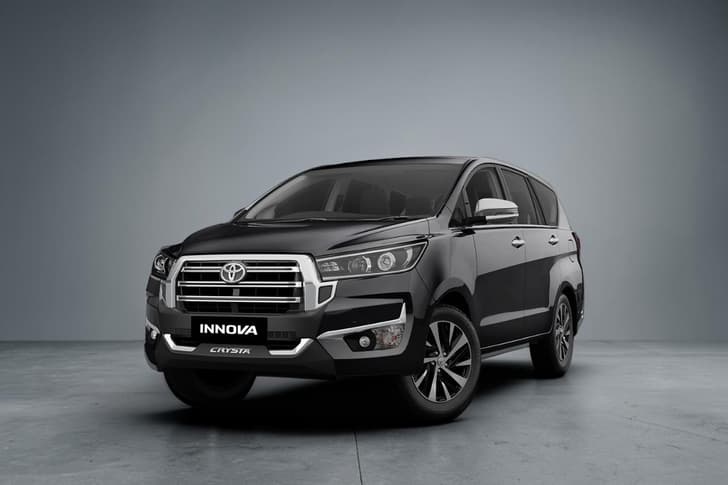
Crysta ZX 2024 Manual: Buy?


Last Updated on: 14 Oct 2026
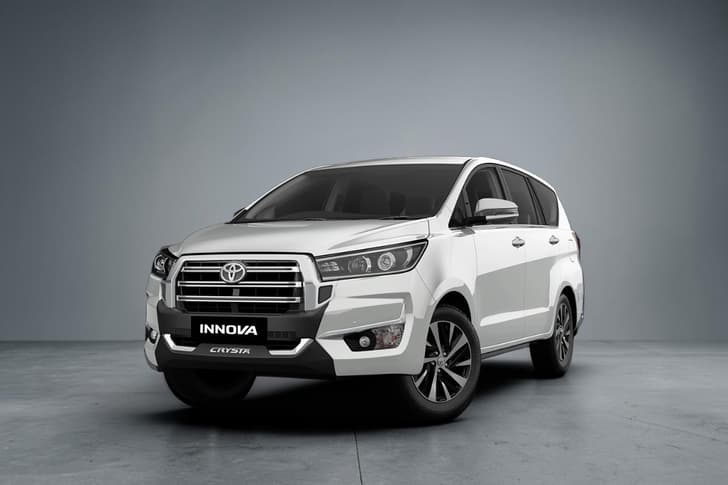
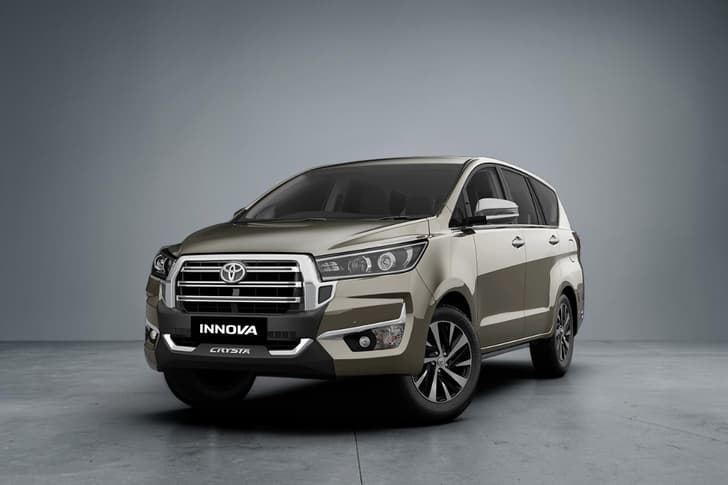
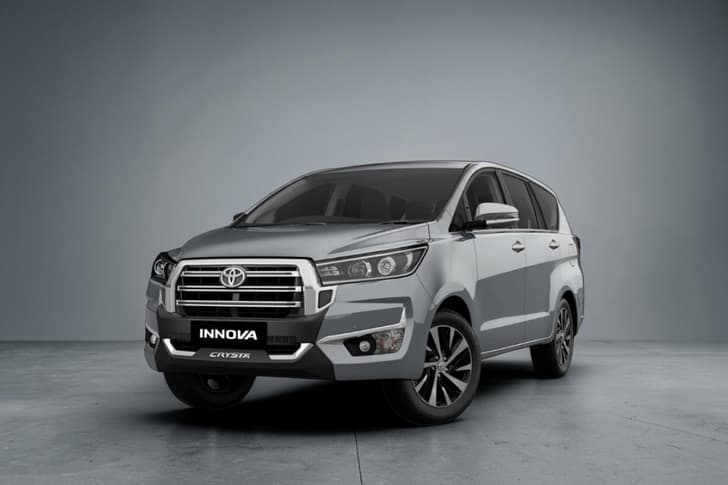
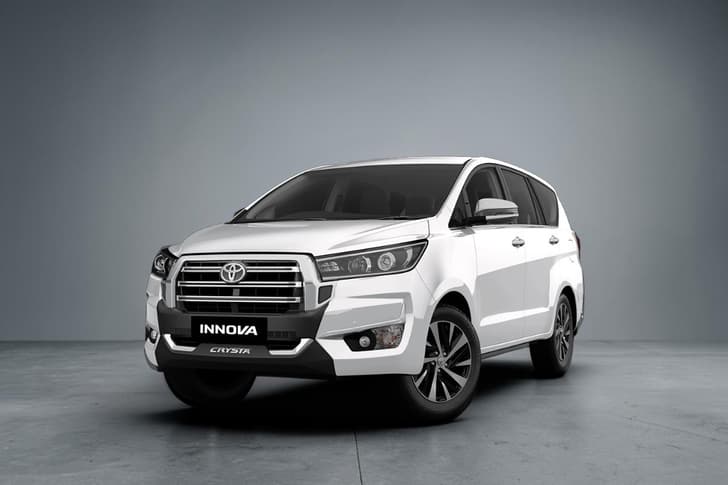
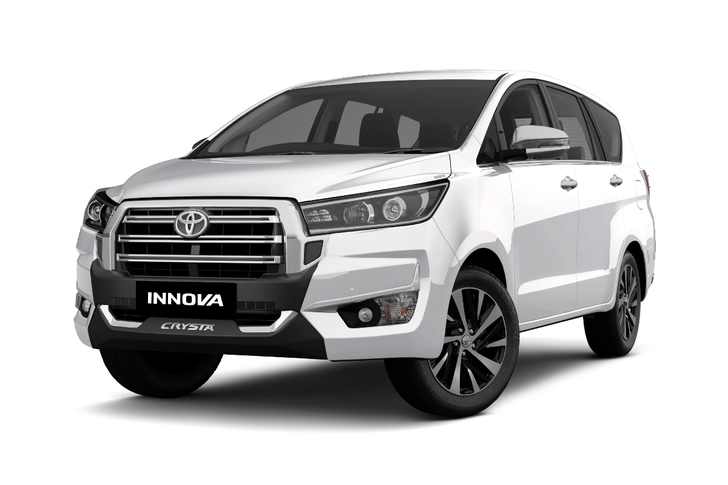
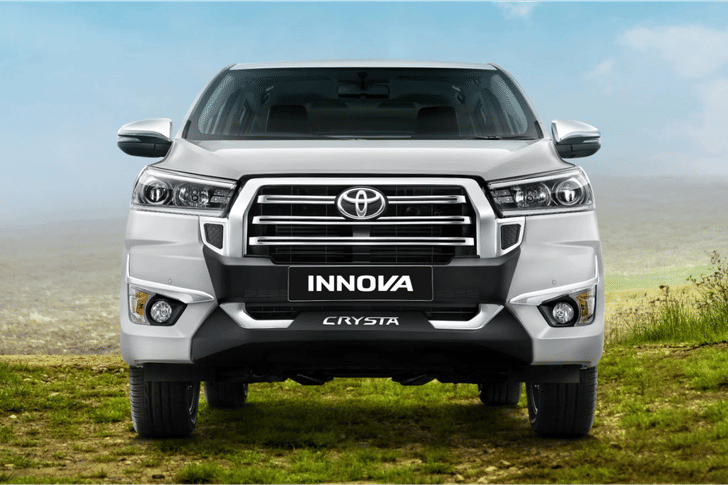
 Anti-Lock Brakes (ABS)Part Digital / Part Analogue Digital Instrument ClusterPhone-based Satellite NavigationIndividual Chairs at RearHalogen Headlight TypeFront Seatback PocketsLeather-wrapped Gear KnobPuddle LampsAnti-Lock Brakes (ABS)Brake Assist (BA)Front & Rear Parking Sensors1-zone Climate ControlWireless Phone ChargingIndividual Chairs at RearLED headlampsWith Display Tyre Pressure Monitoring SystemElectric Adjust for Driver's SeatLED headlampsWireless Phone ChargingLeatherette Seat Material
Toyota Innova Crysta Official Brochure
Download the complete brochure with specs, features, and variants.
Join the Discussions
Hi, I recently sold my Tata Hexa XT after driving it for 1,31,000km over nine years and am now looking for something similar. Please suggest some suitable options. The Toyota Innova Crysta is currently my first choice.

 Toyota Innova Crysta
Hi, my car usage is around 3,000km per month. Currently, I drive a 2020 Ford Endeavour diesel AT 4x4 and a 2017 Mahindra Thar CRDe 4x4 for rough and countryside roads. I enjoy driving both cars on these kinds of roads, although I experience quite a bit of body roll and physical strain. For city driving and highways, I use a 2017 Skoda Rapid diesel MT and an Innova Crysta diesel. I particularly enjoy driving the Skoda, while I prefer travelling as a passenger in the Crysta because of its comfort. As you can see, I have been a diesel car owner so far, but with diesel cars becoming less common in the market, should I consider switching to a petrol engine or a hybrid? My usage covers almost every type of Indian road, including metro cities, countryside roads, highways and hilly terrain, so I am finding it difficult to decide which car would suit my requirements best within a budget of Rs 40 lakh, with an automatic transmission. My top priorities are safety, with zero compromise, followed by driving comfort and the highest possible mileage.
Toyota Innova HyCrossToyota Innova CrystaKia SorentoMy requirement is for a reasonably large 7-seater vehicle because I frequently go on very long drives. Sometimes, I even drive 1,200 km in a single stretch. I have been driving a Toyota Etios Liva for almost 15 years, and the car has given me virtually zero problems. So, I have firsthand experience of Toyota reliability. My budget is around Rs. 24 lakh, and reliability is my number-one priority. I love diesel cars, although I understand that diesel options are fewer. At the moment, I am mainly considering the non-hybrid Toyota Innova HyCross ZX(O) petrol. Within my budget, I mayconsider Innova Crysta, depending on the variant and on-road price. I am also considering Honda City Hybrid, but my concern is the reduced boot space in the hybrid version, and of course, it isn’t a 7-seater. I’m not really looking at too many other brands, although I’m also wondering about the Mahindra XUV 7XO. I haven’t driven it yet, so I’m not sure whether I should seriously consider it. When I compare Mahindra with Toyota, I personally don’t feel that Toyota-level reliability is there and reliability is important to me because I plan to keep the vehicle for many years. I also like some of the newer brands and products such as Citroen but I am concerned whether manufacturers will continue operating in India in the long term. I don’t want to buy a vehicle from a brand that may disappear. So, given my requirements including a 7-seater car for long-distance driving, excellent reliability, comfortable highway cruising, reasonable boot space, and a budget of around Rs. 24 lakh, which car would you recommend? Should I go for the Innova HyCross ZX(O) non-hybrid, Innova Crysta, or take a chance on something like the Mahindra XUV 7XO? I’m particularly interested in your recommendation from a long-term ownership and reliability, comfort perspective, because after owning a Toyota for 15 years, I know what genuine reliability feels like.
Toyota Innova CrystaToyota Innova HyCrossMahindra XUV 7XOI'm in Bangalore and drive a 2017 Toyota Innova Crysta automatic, which came with the 2.8-litre engine. I have covered 1.3 lakh km, and the body, suspension, engine and gearbox are all in excellent condition. I see no reason to replace the car and am happy to drive it for many more lakh kilometres. However, I'm concerned about external factors that could limit the longevity of the car: Legal longevity of a BS4 diesel car in India: My understanding is that only Delhi-NCR currently has a 10-year age limit for diesel vehicles, and I don't recall any other state or city imposing a similar restriction. However, with rising pollution levels in cities and increasing concerns around older diesel vehicles being high-polluting, are you hearing anything from automakers or industry insiders about potential regulations that could limit the use or lifespan of BS4 diesel cars in other parts of India? Iso-butanol blends: I understand that iso-butanol blending in fuel is still in the early stages of exploration. Could higher levels of iso-butanol blending potentially create any compatibility issues with BS4 diesel engines? Given that my car is in excellent mechanical condition, I'm keen to understand whether these external factors could eventually force me to replace it, despite the car itself having plenty of life left.
Toyota Innova CrystaHi team, I am planning to buy a 7-seater Toyota for family use and am confused between Innova Crysta VX Diesel and Innova Hycross VX Hybrid. I already own a Maruti Baleno for daily city commuting, so this vehicle will mainly be used for long highway trips, family vacations, and occasional visits to my village, where some roads are in poor condition. I have taken the test drive of both vehicles. The Hycross felt smoother, more spacious, and very comfortable. However, I noticed that its engine becomes a bit noisy under hard acceleration, so I am not sure how it performs during long highway drives, overtaking, and while carrying a full load of passengers and luggage. My priorities are long-term ownership (10-15 years), reliability and low maintenance, comfort for 7 family members, good highway performance, ability to handle occasional rough village roads and good resale value. Considering my usage, which would you recommend between Crysta VX or Hycross VX? I would especially appreciate feedback from owners who have driven or owned both.
Toyota Innova HyCrossToyota Innova CrystaMaruti Suzuki BalenoWe recommend the mid-spec Innova Crysta VX 7-seat, which is priced at Rs 24.93 lakh, as it offers crucial safety kit like seven airbags and TPMS, along with essential features.