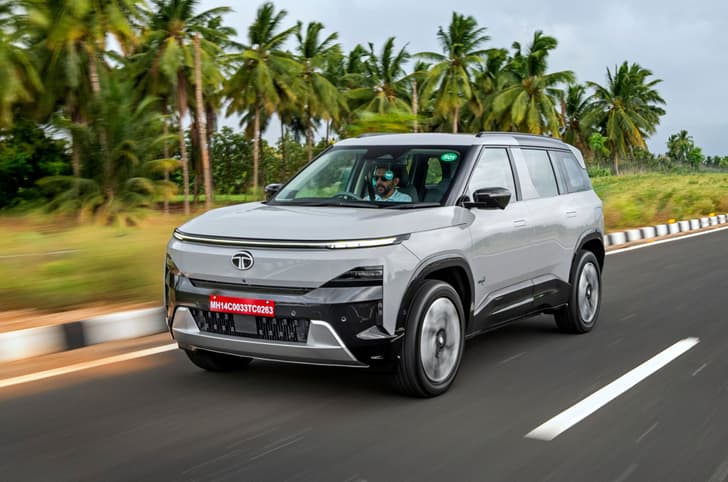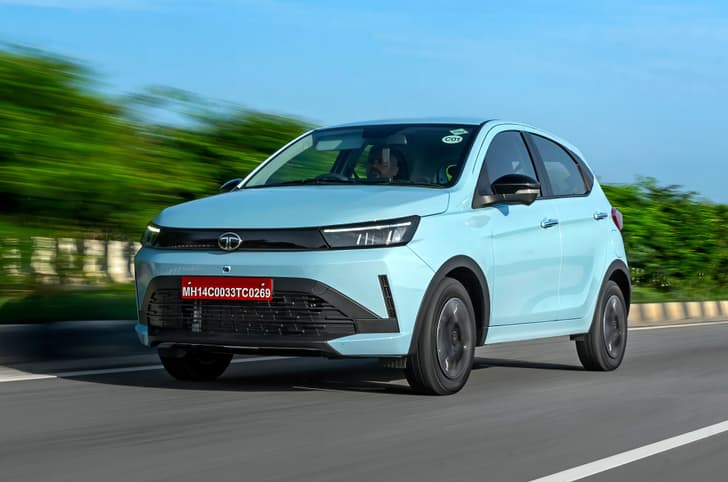

Besides accounting for around 20 percent of Tiago sales, the Tiago EV has also attracted a distinctly different buyer profile. Interestingly, the company says around 60 percent of owners are first-time car buyers, and in three out of four households, it serves as the only car. Its combination of ease of use, low running costs and approachable driving manners has clearly resonated with urban buyers.
For 2026, Tata has given the Tiago EV a comprehensive midlife update. The changes include refreshed styling, a more modern cabin, additional features, faster charging capability, and an extended battery warranty of up to 15 years for the first owner.
Priced between Rs 6.99 lakh and Rs 9.99 lakh, the Tiago EV continues to be offered with either a 19.2kWh or a 24kWh battery pack. Notably, the Indian carmaker has dropped the prices by up to Rs 1.15 lakh, making it more affordable than the outgoing version.
2026 Tata Tiago EV exterior design and engineering – 7/10
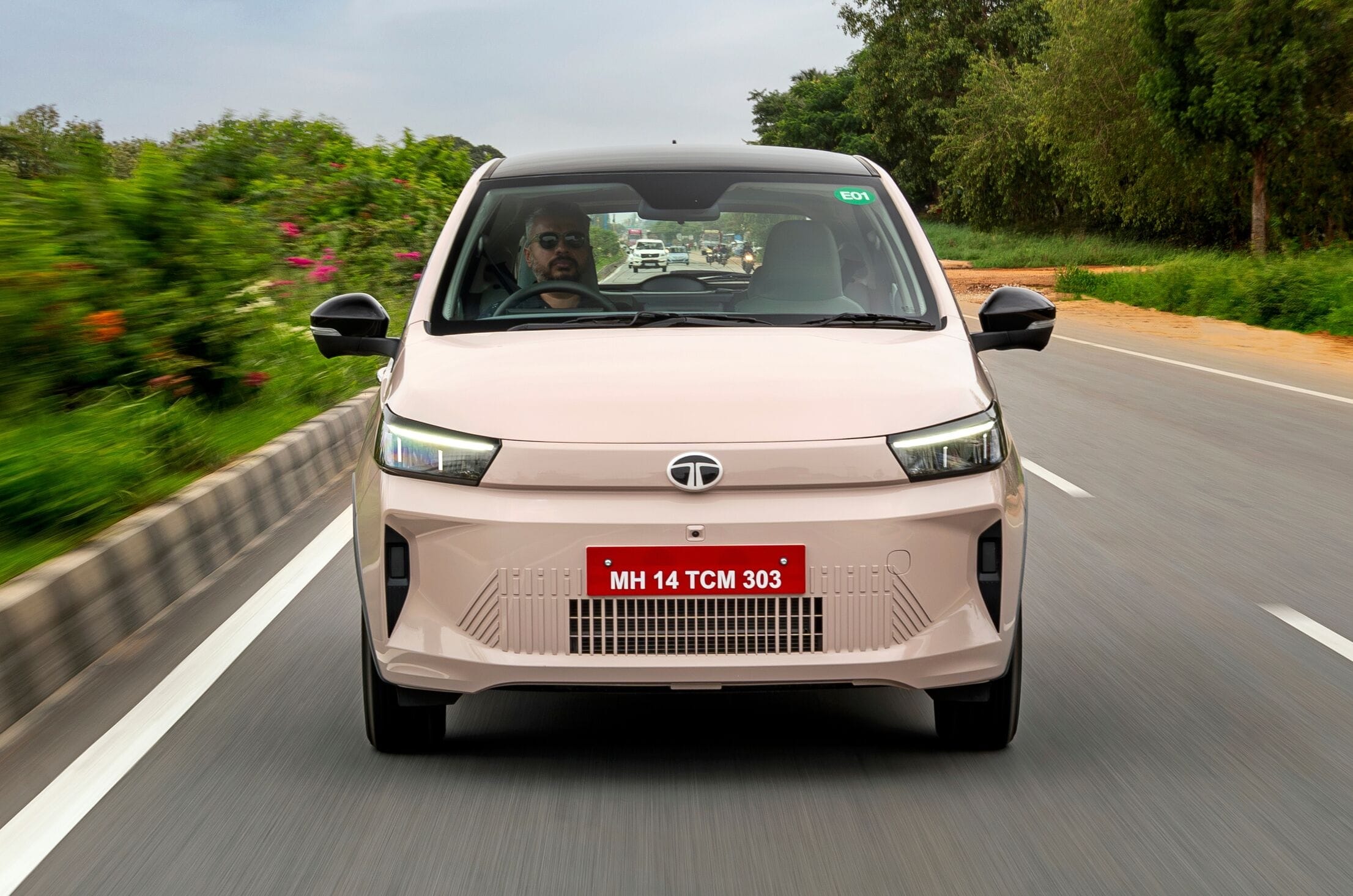
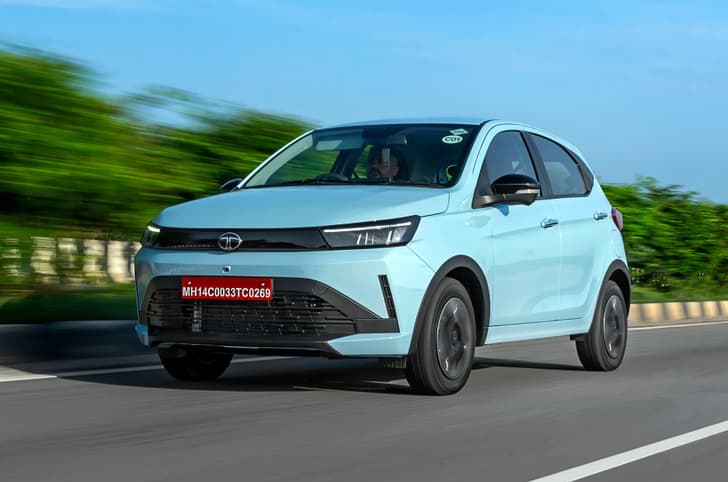
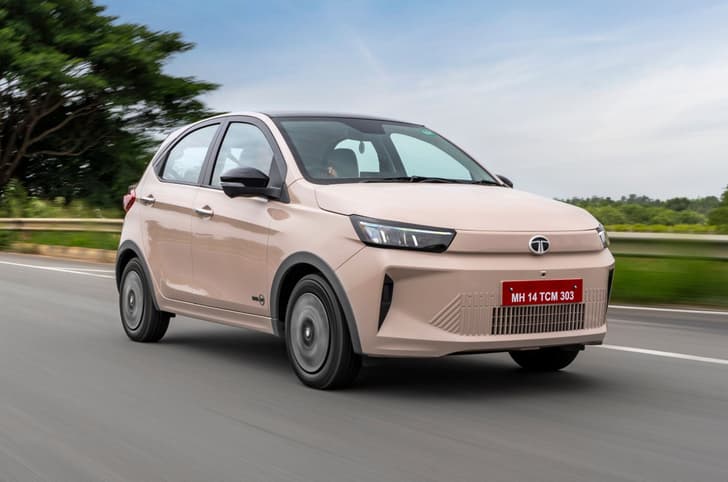
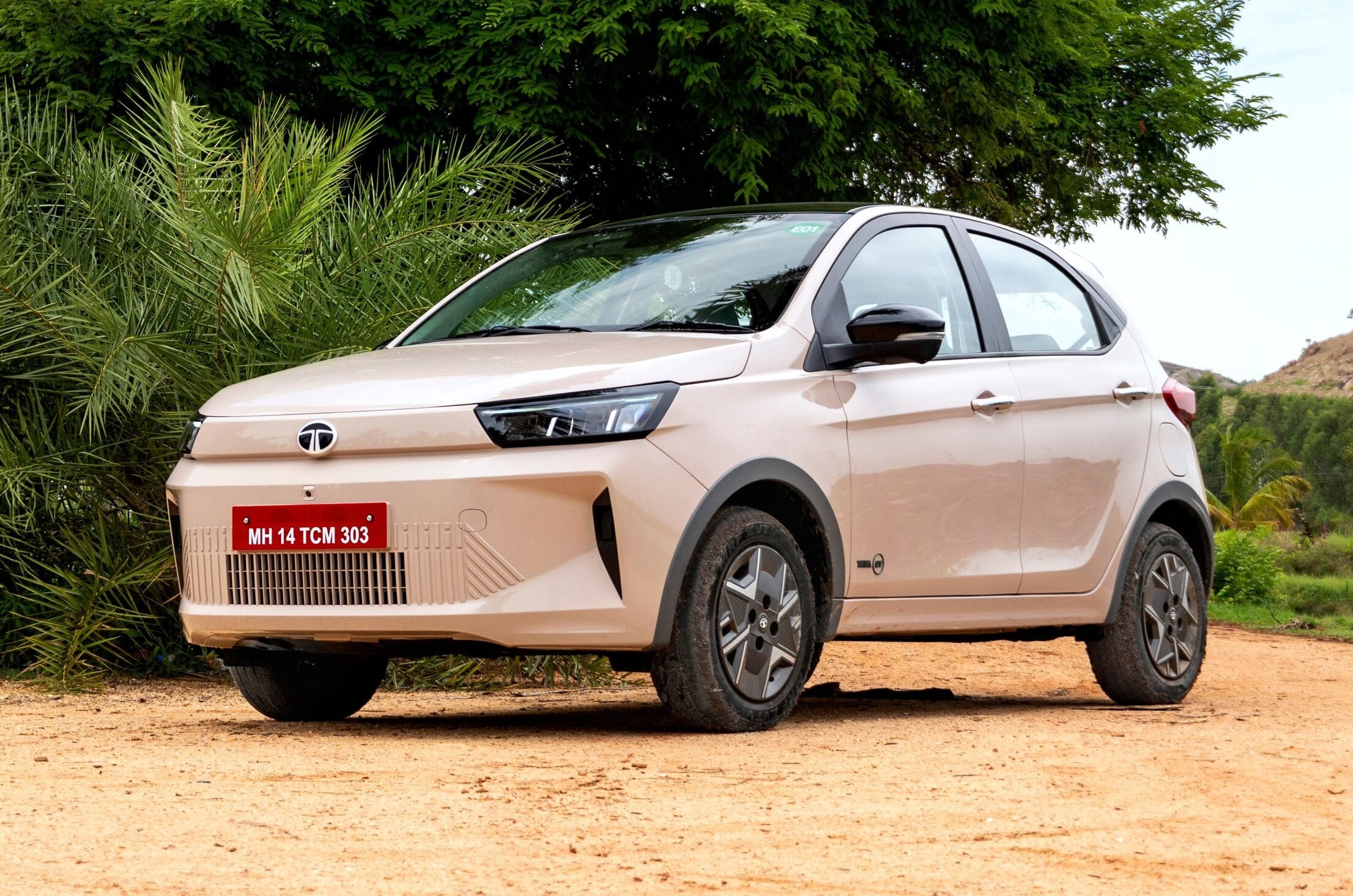
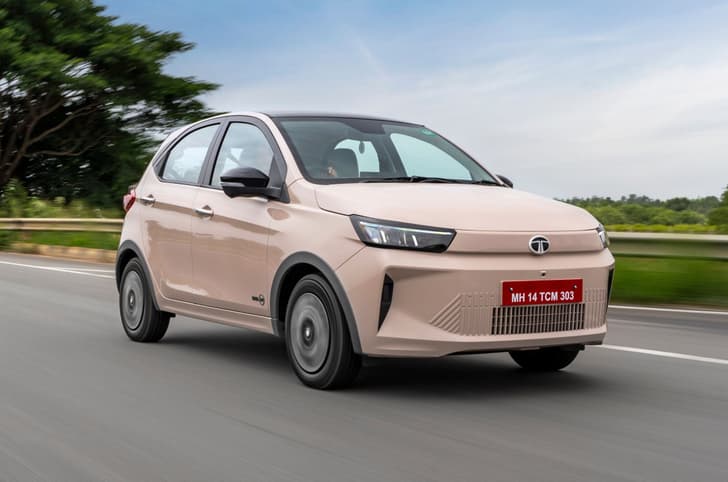
The Tiago has always been one of the more attractive hatchbacks in its class, thanks to its clean proportions and distinctive surfacing. For 2026, Tata has refreshed the design with swept-back multi-reflector LED headlamps, LED DRLs, a redesigned front bumper and an all-new clamshell bonnet.
To establish a stronger EV identity, however, the Tiago EV adopts a monolith-inspired front fascia with a blanked-off nose. While this aligns with contemporary EV design trends, the treatment lacks the visual character of the rest of the car and may not appeal to all buyers.
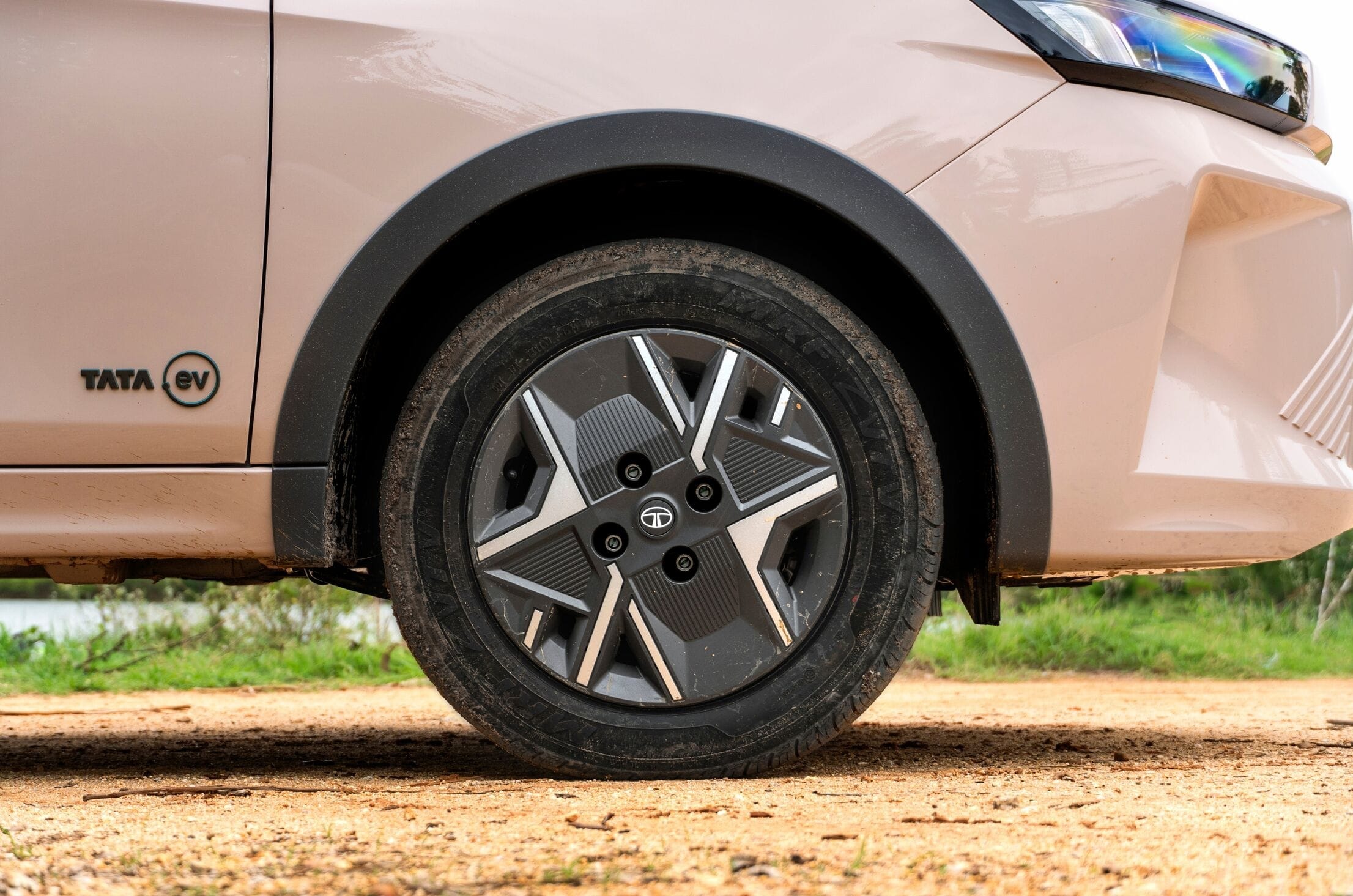
The wheel arches now feature cladding made from recycled materials, finished with a distinctive speckled texture. However, even the top-spec version rides on 14-inch stylised steel wheels, which appear somewhat undersized within the newly clad arches.
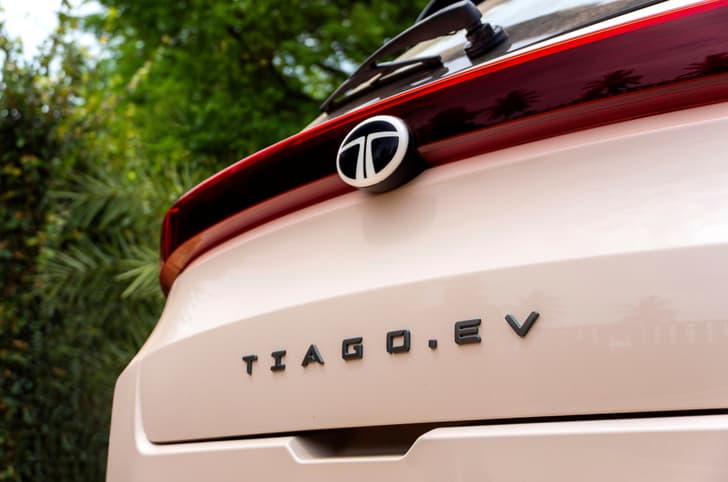
Other updates include chrome-finished door handles, a shark-fin antenna, revised tail-lamps with new LED elements and a full-width reflector strip. The rear styling is arguably more successful than the front, thanks to the blacked-out bumper elements that add visual contrast and definition. A particularly neat touch is the matte-black badging accented with blue highlights.
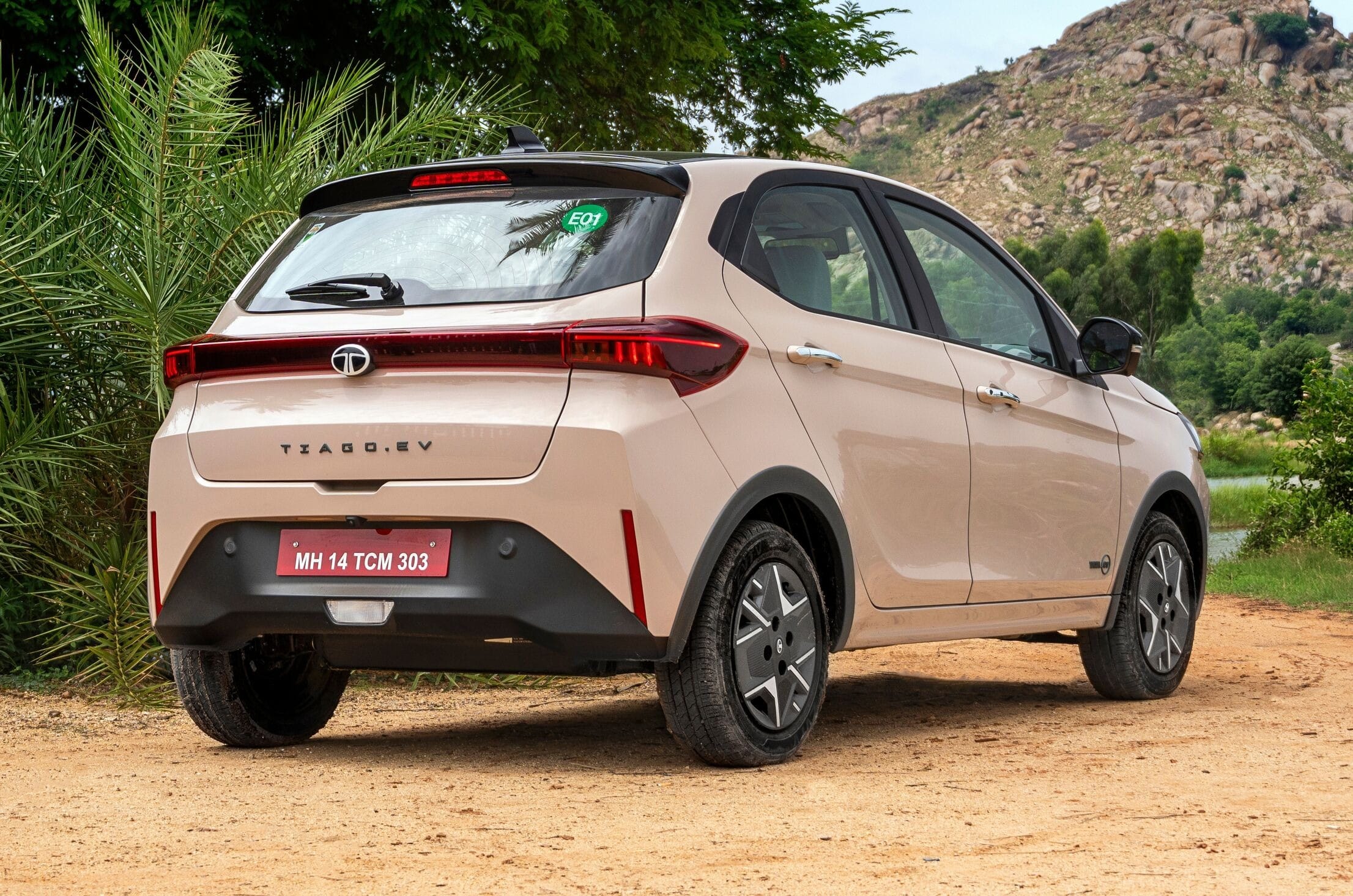
Dimensionally, the Tiago EV is now 48mm longer, 7mm wider and 26mm taller than before, although its 2,400mm wheelbase remains unchanged.
2026 Tata Tiago EV interior space and comfort – 8/10
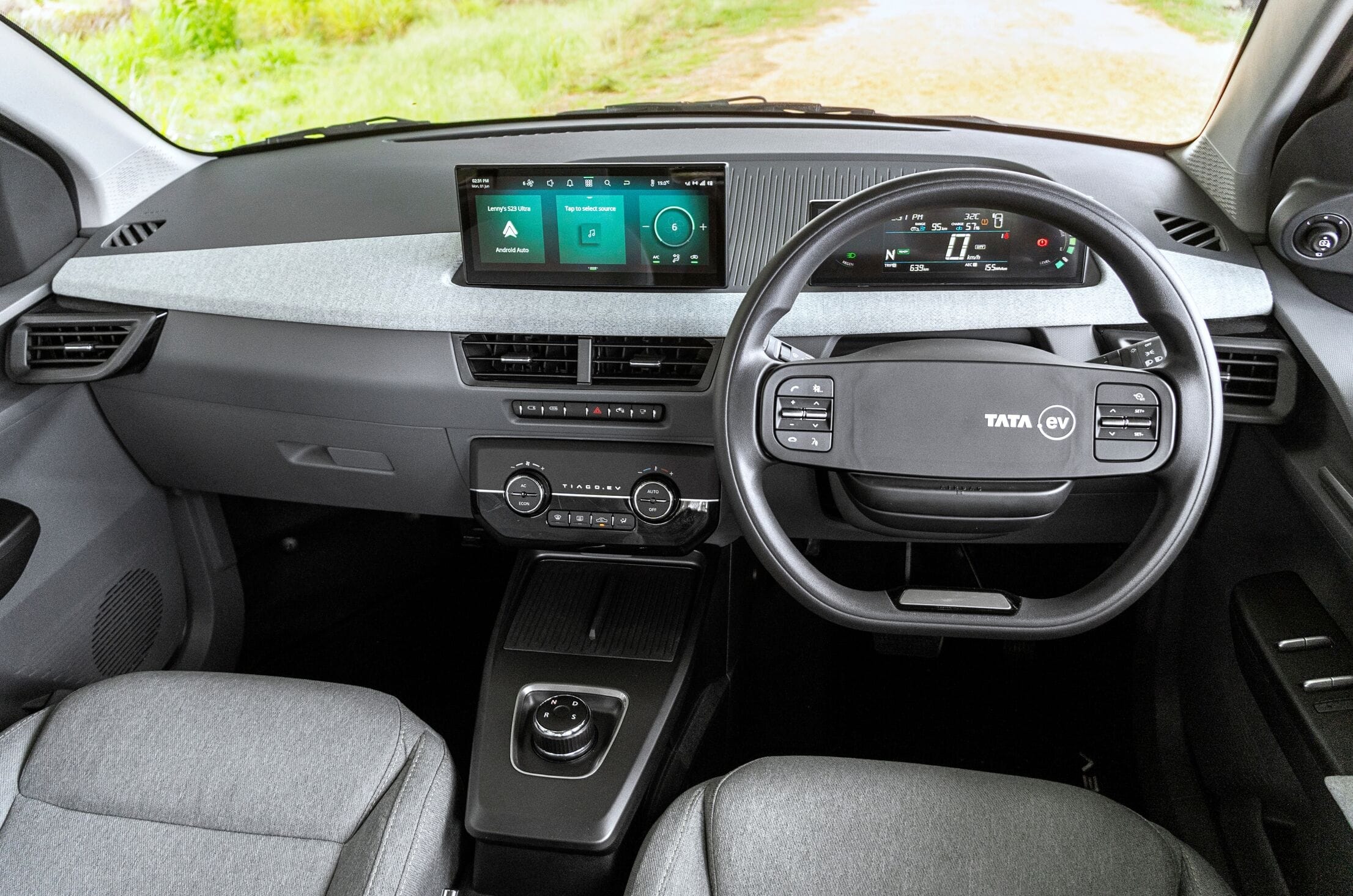
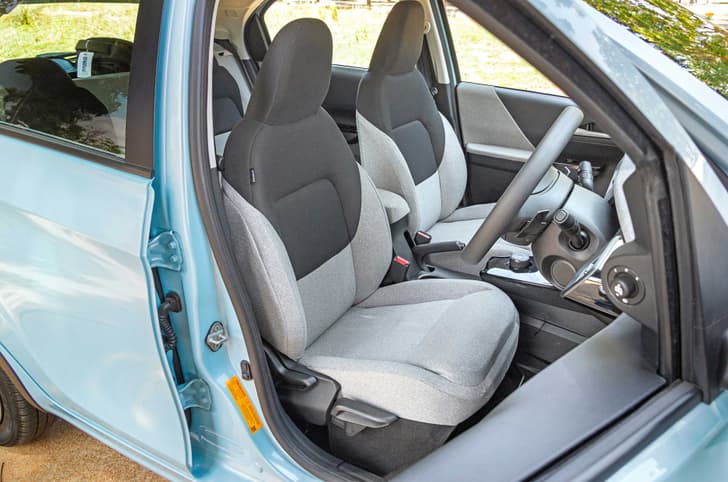
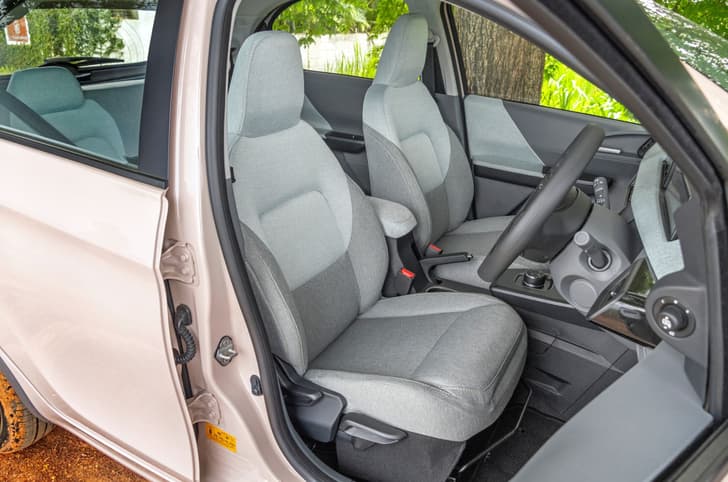
The cabin has received a substantial makeover and feels noticeably more upmarket than before. Grey fabric trim now extends across the dashboard, door pads and seats, creating a warmer and more inviting ambience. Compared to the previous off-white leatherette upholstery, the new material feels more breathable and should prove easier to live with over time. Tata says recycled materials account for 20 percent of the interior, a detail subtly highlighted on the A-pillar.
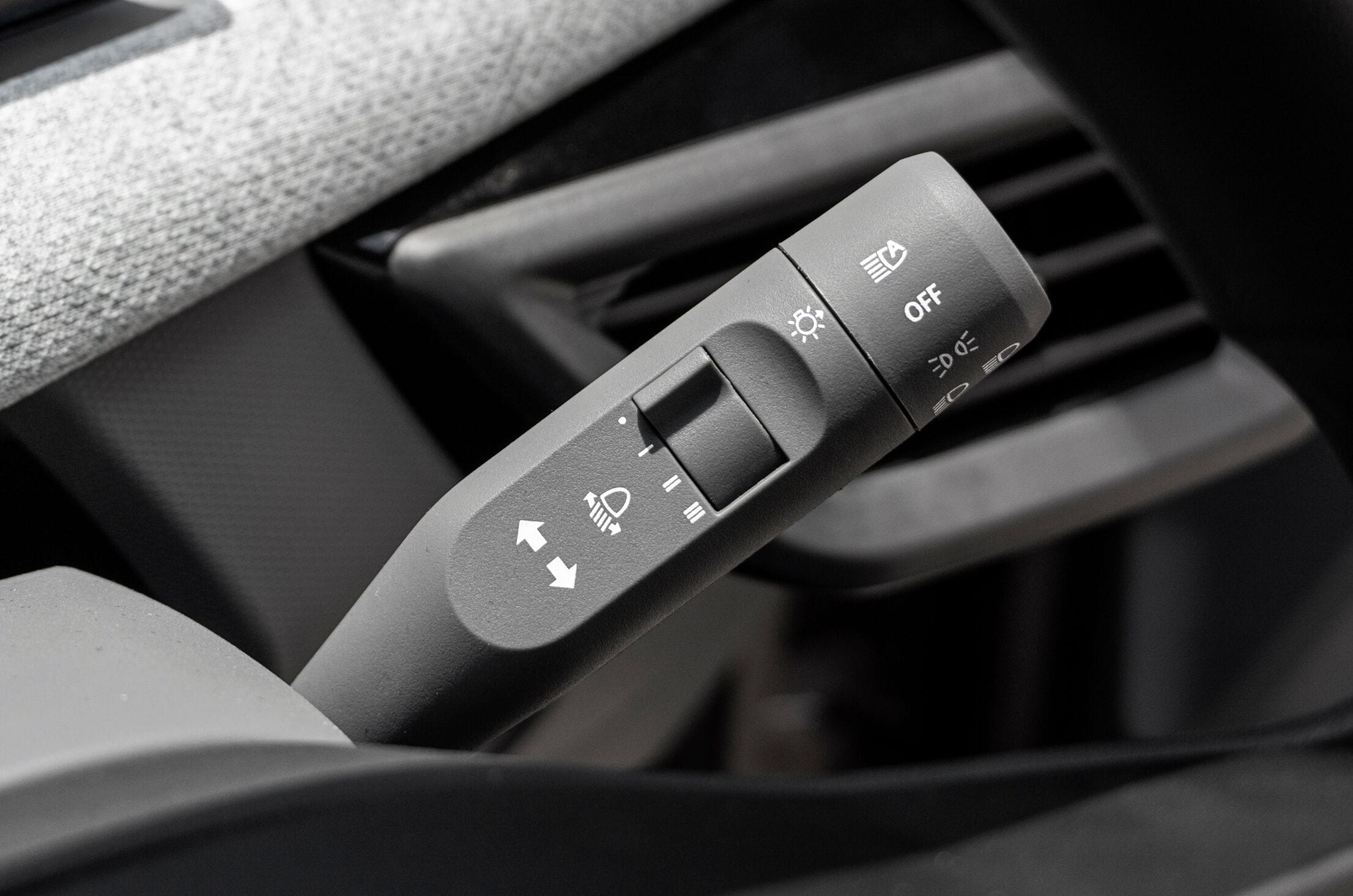
Not all changes are for the better, however. The premium knitted roof liner from the previous model has made way for a more conventional woven fabric, resulting in a slight reduction in perceived quality.
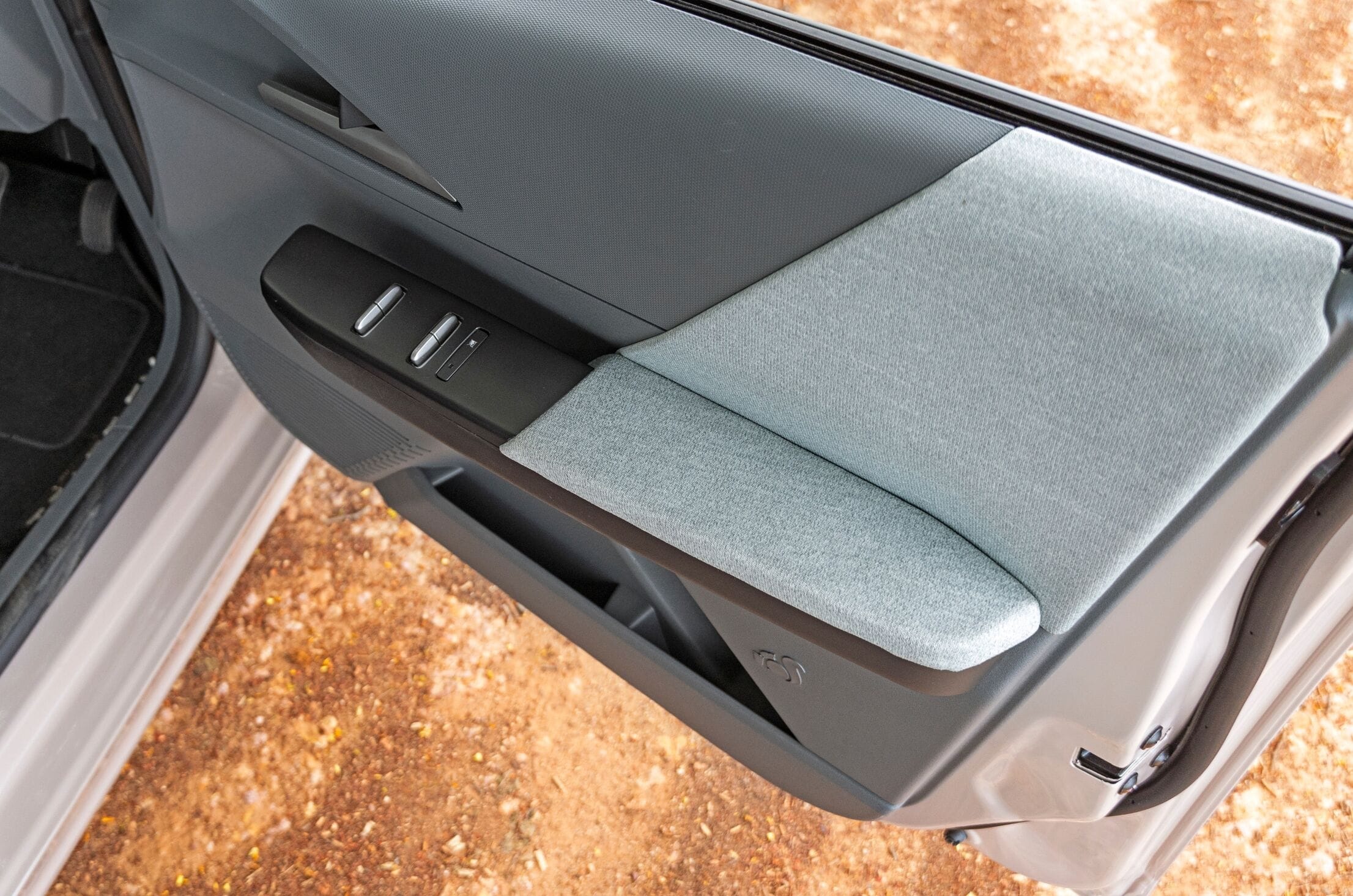
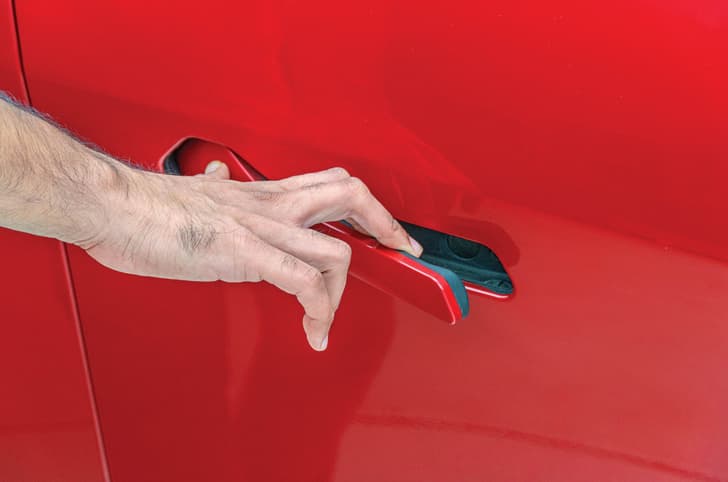
Like the Sierra, the Tiago EV now gets floating-style interior door handles that feel solid and well engineered. Ahead of the driver sits a new freestanding instrument display, which modernises the dashboard layout, although portions of the screen can be obscured depending on the driver's seating position.
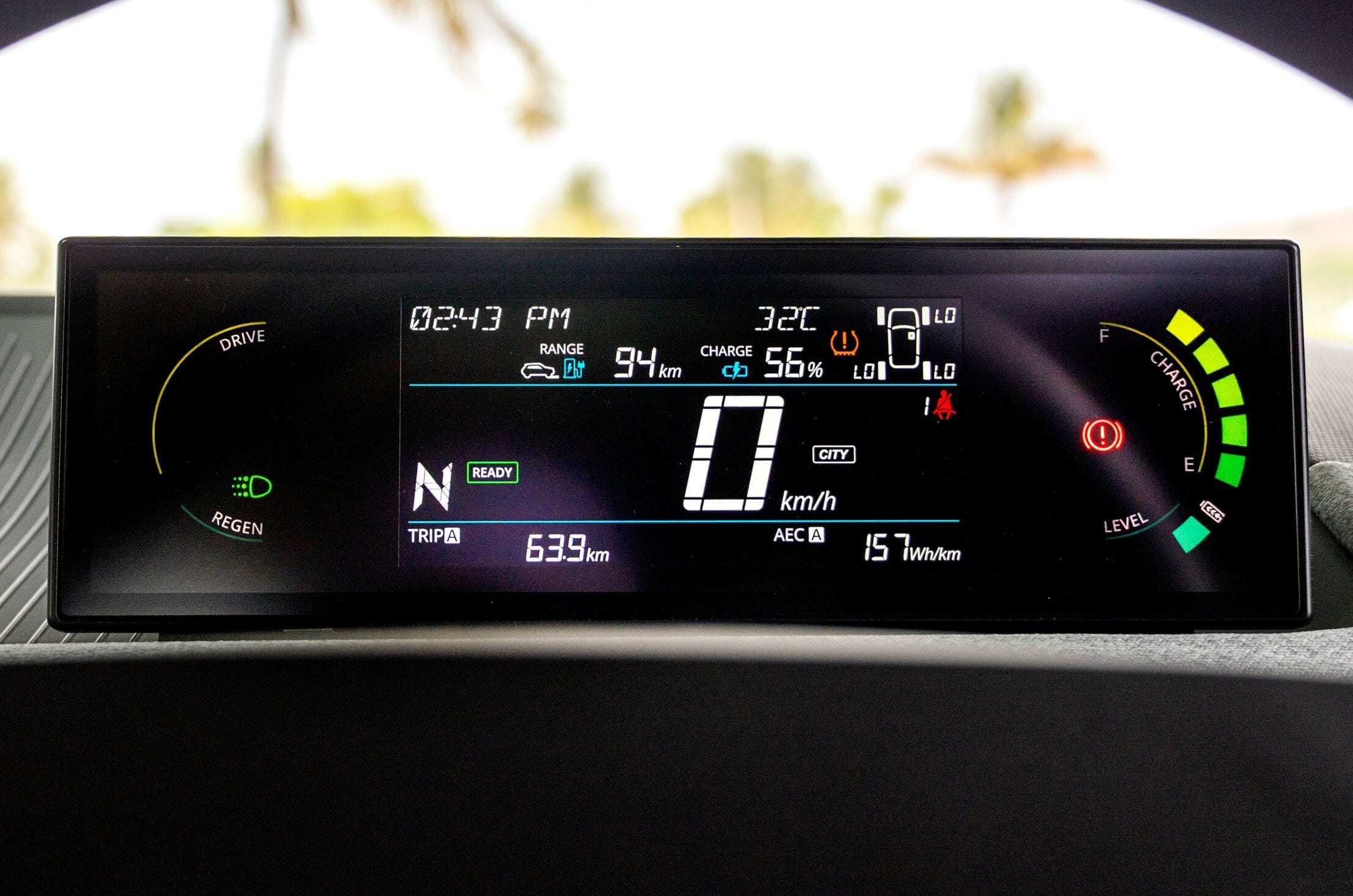
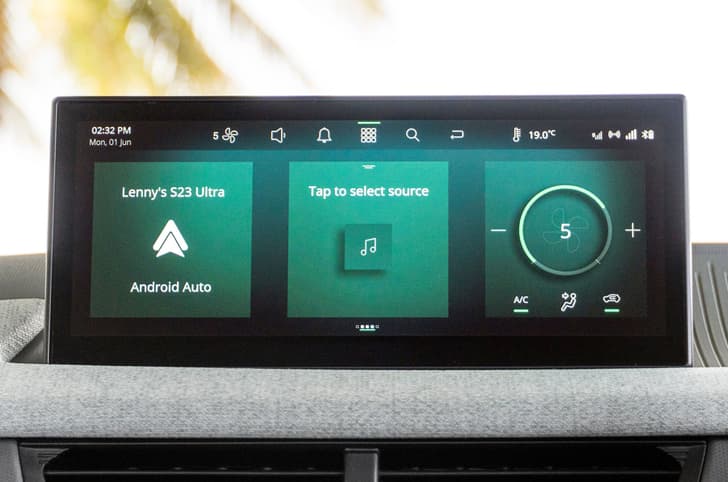
The 10.25-inch touchscreen is also mounted in a floating configuration, while the new two-spoke steering wheel feels cleaner and more premium without the gloss-black surfaces that were prone to reflections. Importantly, Tata has retained physical controls for the climate control system, ensuring ease of use while driving.
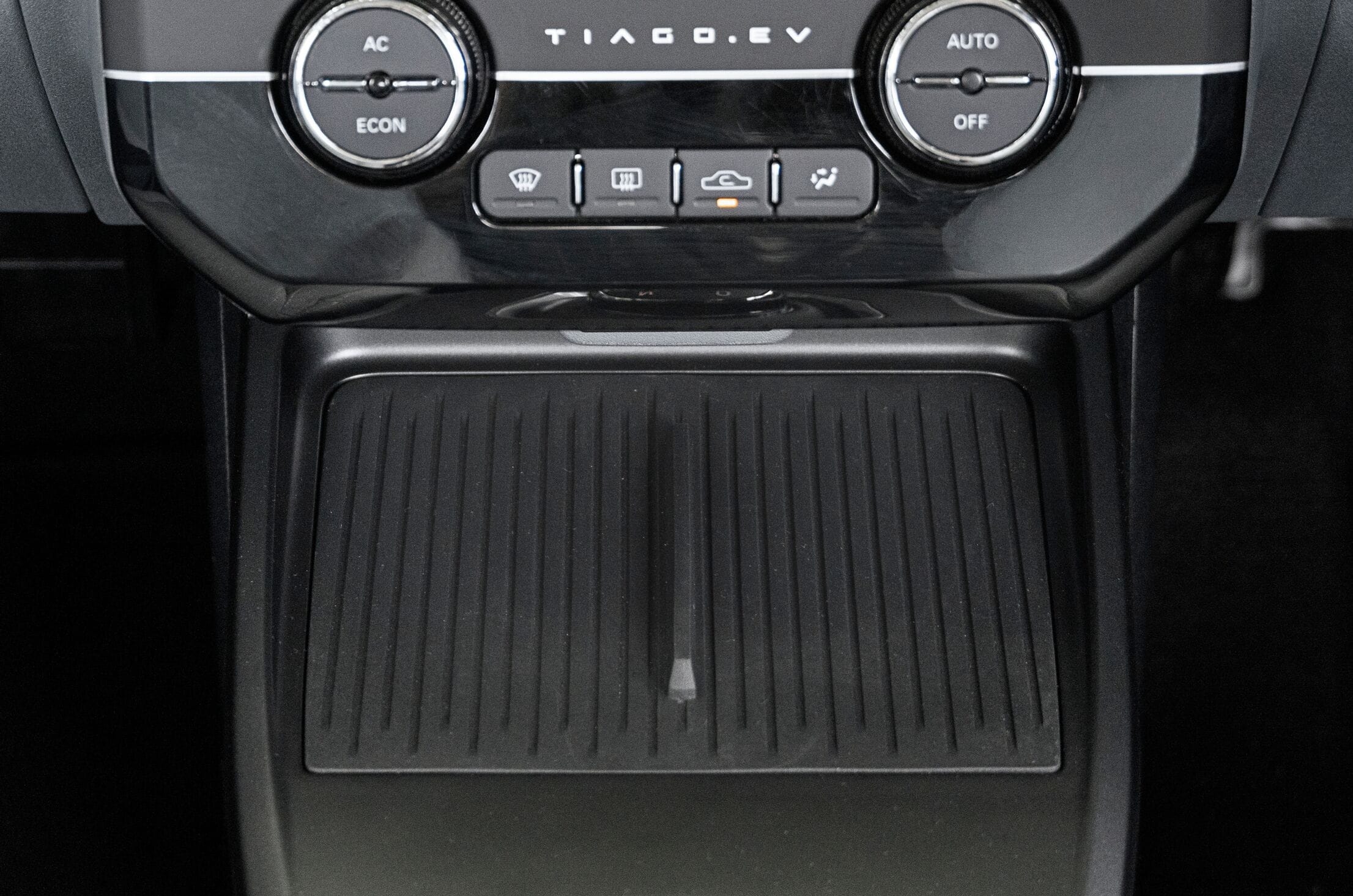
The redesigned centre console is more practical than before, incorporating rubberised phone holders that prevent devices from sliding around. Wireless charging is absent, but a 65W USB-C port enables rapid charging of compatible devices. Cupholders have been retained, while the addition of a centre armrest improves long-distance comfort.
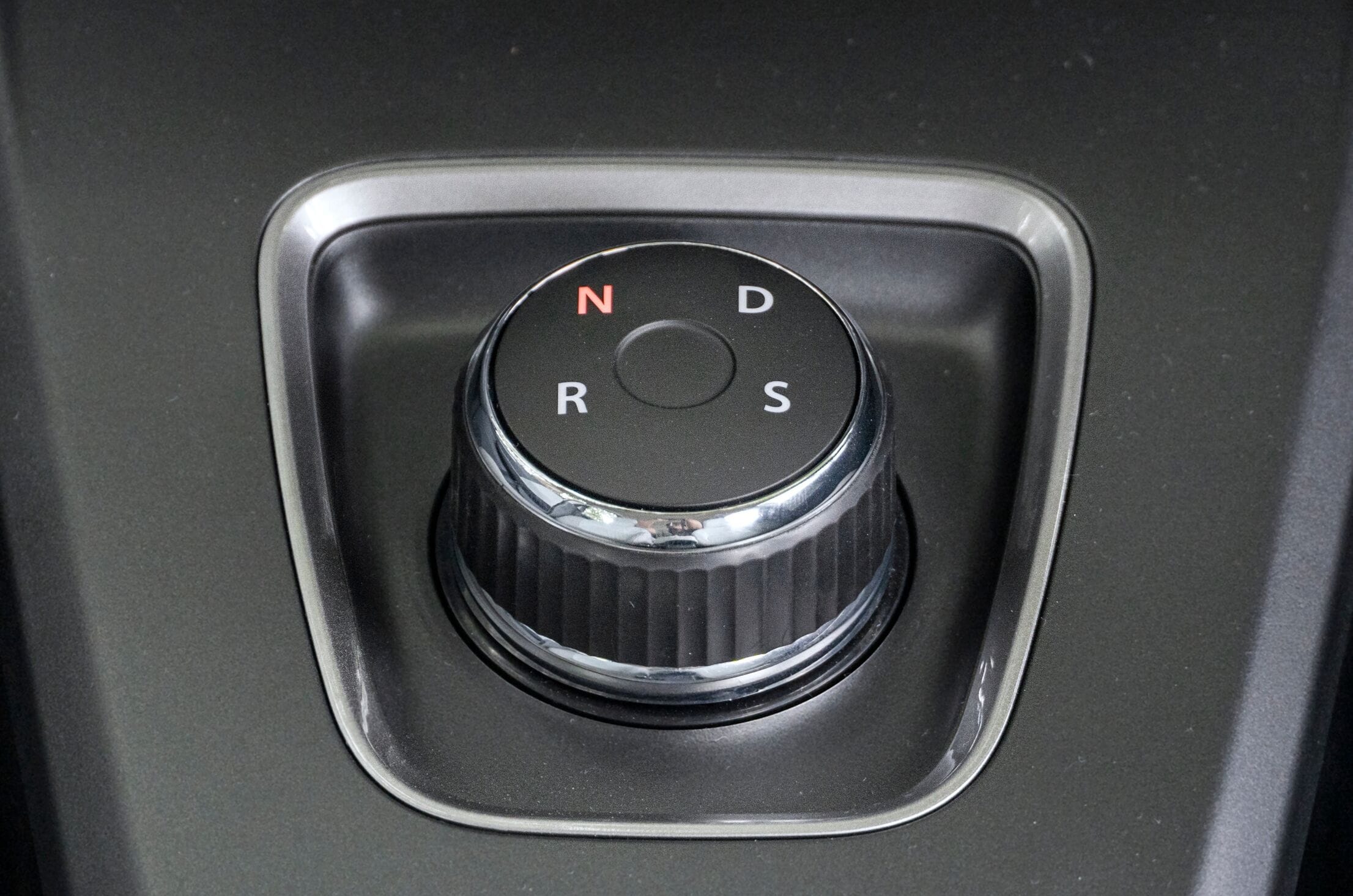
The rotary drive selector also feels quicker and more intuitive to operate, although its faint backlighting still makes it difficult to confirm selections at a glance. Regenerative braking levels continue to be adjusted via buttons below the touchscreen, as paddle shifters remain unavailable.
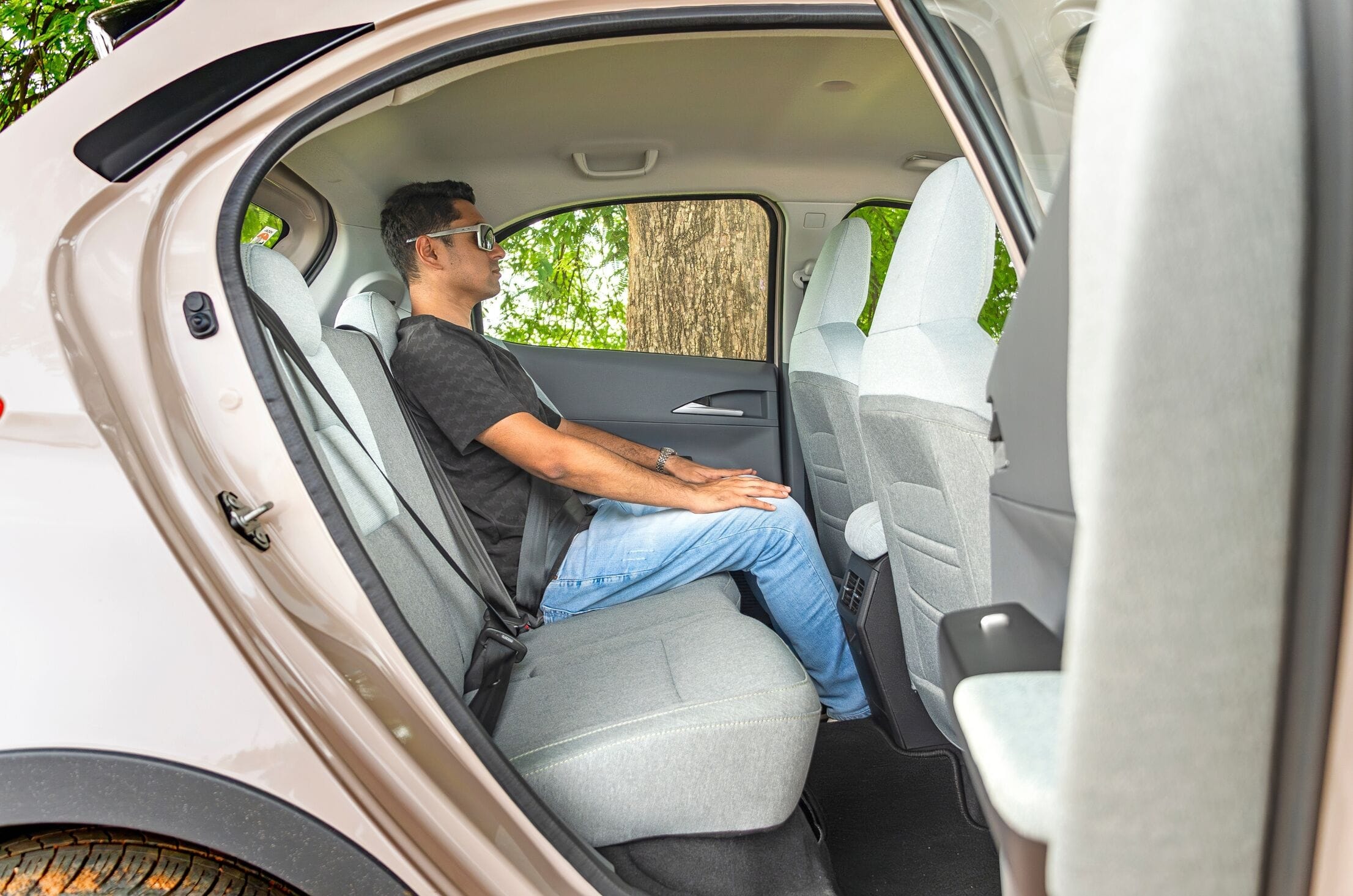
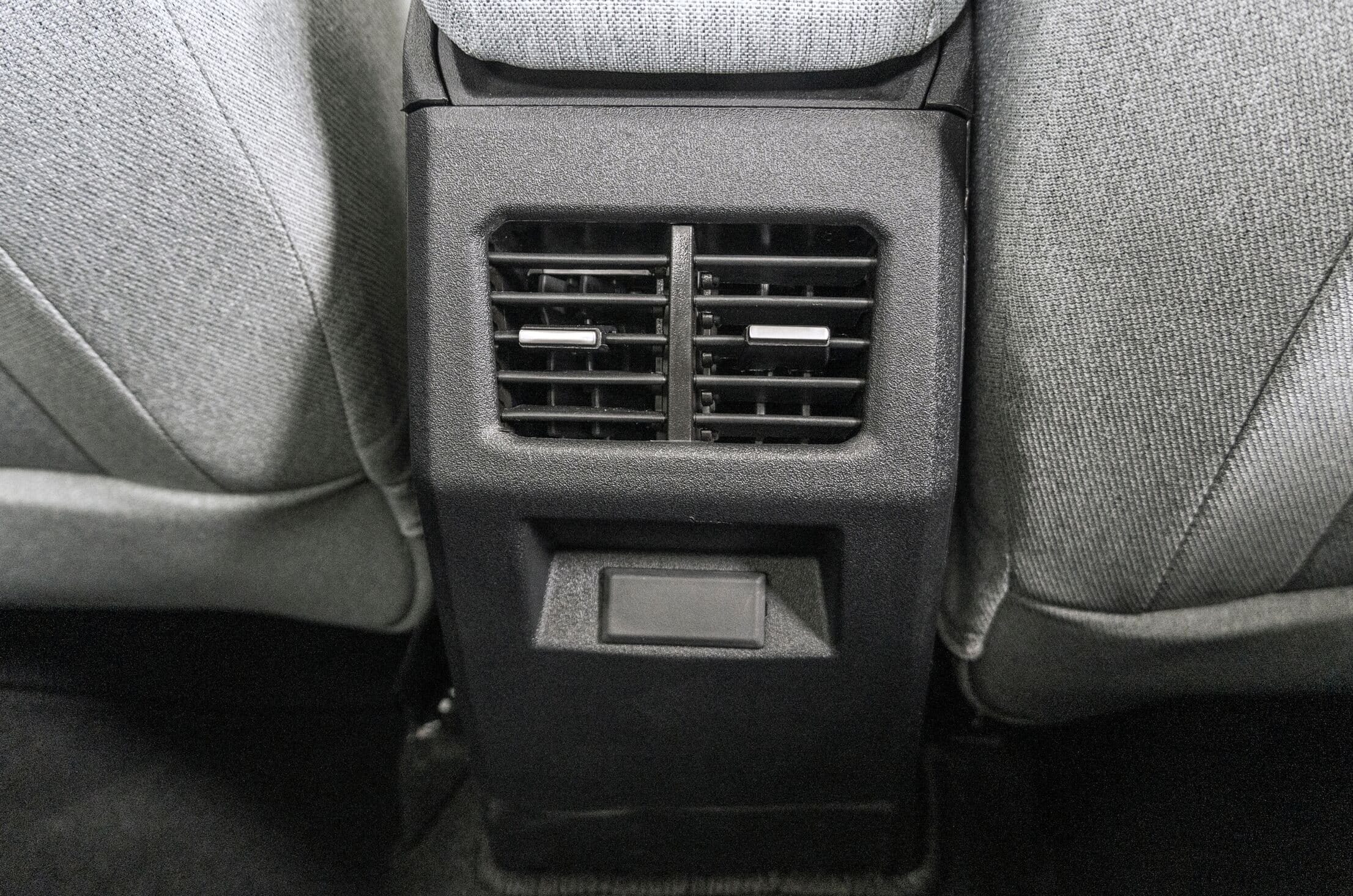
Comfort levels have improved thanks to revised seat cushioning, better bolstering and enhanced thigh support. Most occupants will find the front seats comfortable, although taller drivers may miss adjustable head restraints. Rear-seat space remains respectable for a hatchback of this size, and new rear AC vents add to passenger comfort.
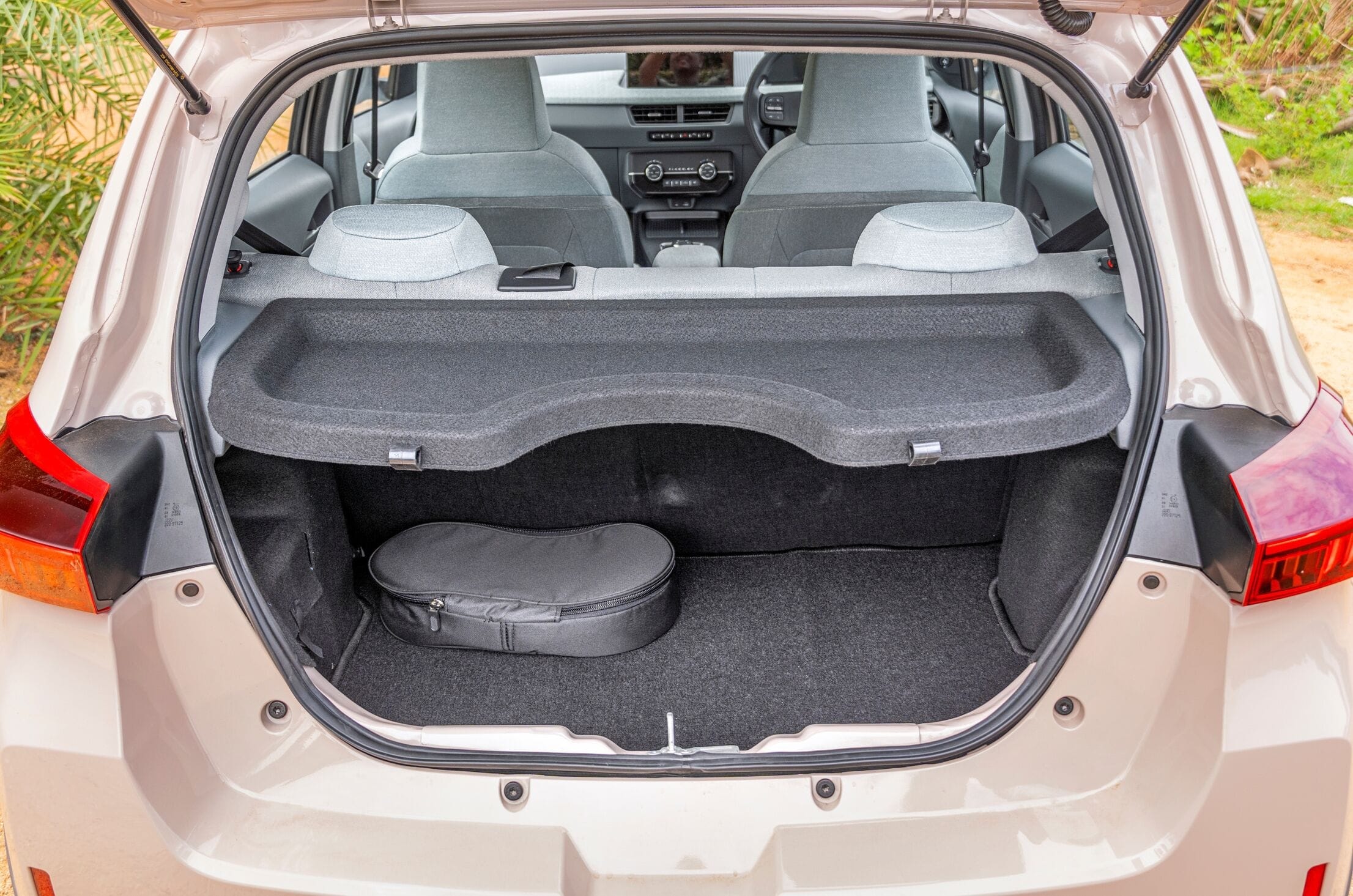
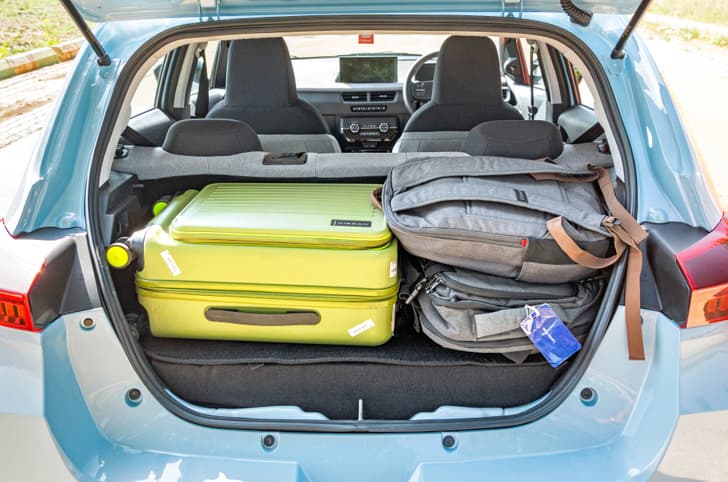
The 240-litre boot is reasonably practical, though unlike the ICE version, the EV does without a spare wheel and instead relies on a puncture repair kit.
2026 Tata Tiago EV features and safety – 8/10
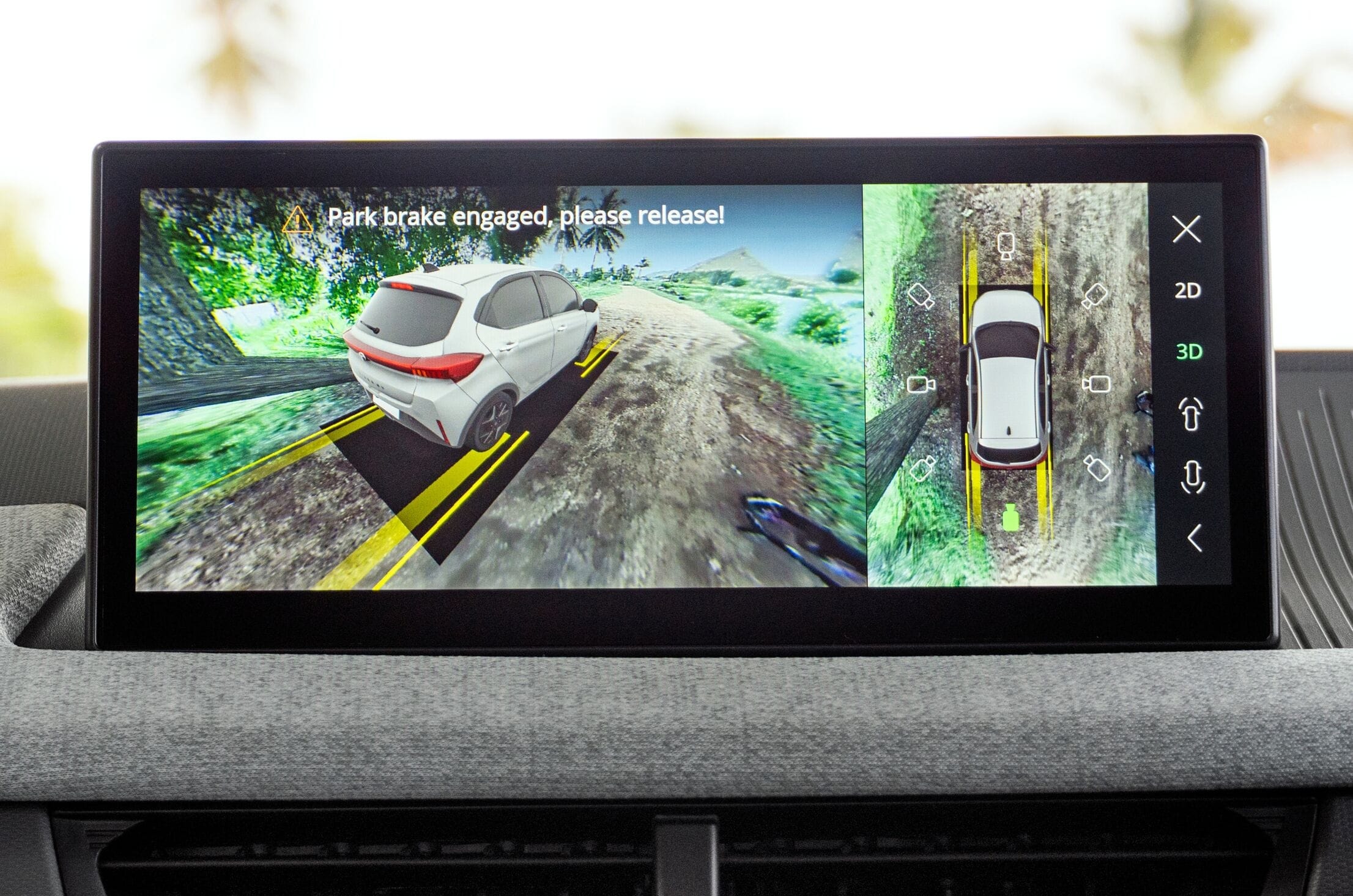
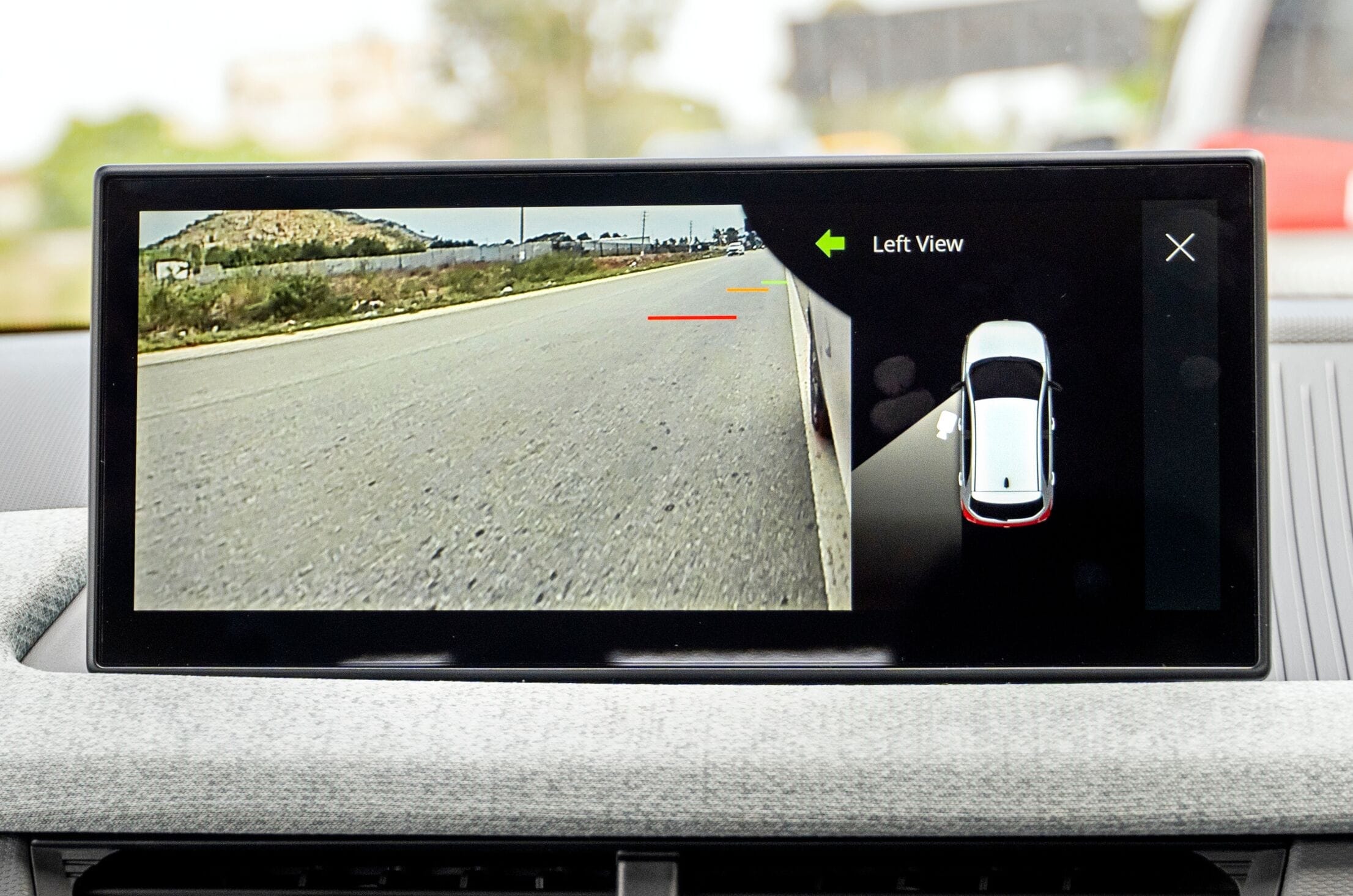
The Tiago EV's feature list has been strengthened with the addition of an excellent 360-degree camera and a blind-spot monitoring system. The latter displays a live camera feed on the central touchscreen whenever the indicators are activated, helping improve visibility in traffic. While useful, the system takes over the entire screen, which can be distracting if you're simultaneously relying on navigation guidance.
The range-topping Creative Plus variant comes generously equipped with auto-LED headlamps, a 10.25-inch touchscreen with wireless Android Auto and Apple CarPlay, a digital instrument cluster, automatic climate control, keyless entry, cruise control, a cooled glovebox, rear wiper and washer, stylised wheels and a shark-fin antenna.
Safety equipment is comprehensive, with six airbags, ABS with EBD, ESP, hill-start assist and rain-sensing wipers offered as part of the package.
One notable casualty of the update is the excellent Harman audio system, which has been replaced by a conventional six-speaker setup. While the new system should satisfy most users, enthusiasts may miss the richness and clarity of the earlier unit. Adjustable rear head restraints and rear-seat load-cell sensors also continue to be absent.
2026 Tata Tiago EV performance and refinement – 8/10
For 2026, the Tiago EV receives a host of updates, including revised accelerator mapping, software enhancements aimed at improving efficiency, dual-cell balancing during both charging and driving, dynamic state-of-charge calibration, and more accurate range predictions.
Like before, the Tiago EV offers two drive modes. City mode, which is selected by default, limits torque output to roughly 75 percent, while Sport mode unlocks the motor's full performance potential. This time around, accelerator response in City mode has been intentionally softened even further, to deliver a smoother, more gradual rollout from standstill. As a result, it feels relaxed and unhurried, with low-speed performance tuned to avoid overwhelming first-time EV users. For urban commuting, however, it feels perfectly at home and should satisfy most owners.
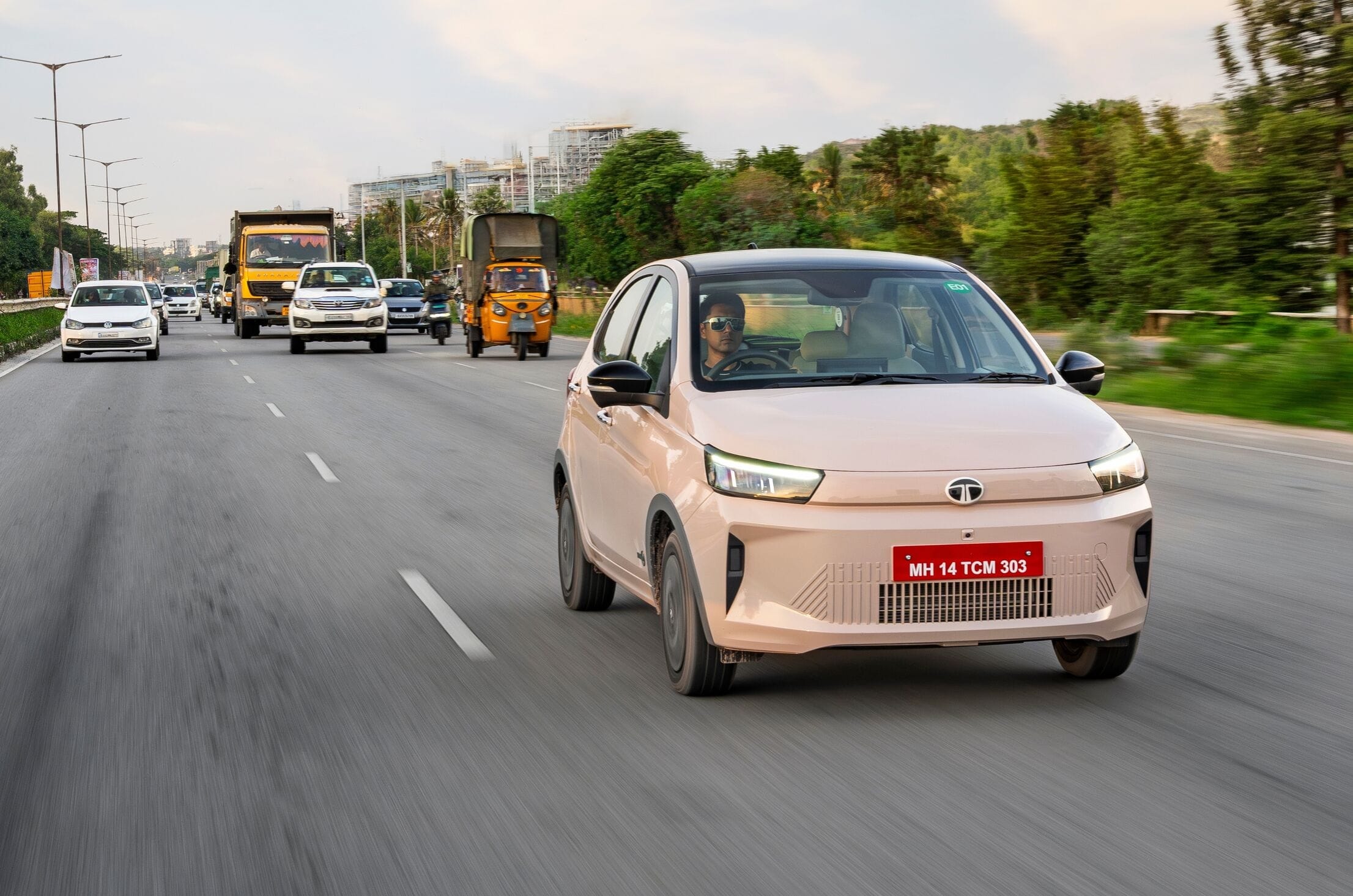
You will, however, find yourself switching to Sport mode more often for a more effortless driving experience. Even here, acceleration isn't particularly sporty and throttle response remains linear, but the performance advantage over City mode is significant and especially noticeable on the open road.
The EV reaches a top speed of 122kph (indicated), which is more than adequate given its intended role as a city-focused hatchback. A useful hill-hold function is also included, keeping the car stationary for a couple of seconds on steep inclines after the brake pedal is released.
The Tiago EV continues with three levels of regenerative braking, along with a Level 0 setting that disables regeneration altogether. The higher levels provide a natural deceleration effect, similar to gently applying the brakes. However, while they slow the car to a crawl, the Tiago EV still lacks a true one-pedal driving mode, requiring the brake pedal to bring the vehicle to a complete stop.
2026 Tata Tiago EV range and charging – 8/10
With the 24kWh battery pack, the Tiago EV carries a certified range of 285km. Tata's internal testing suggests a more realistic range of 205-215km, and in our preliminary real-world testing, it delivered around 200km. For a city-focused hatchback, that figure feels entirely usable and reassuring.
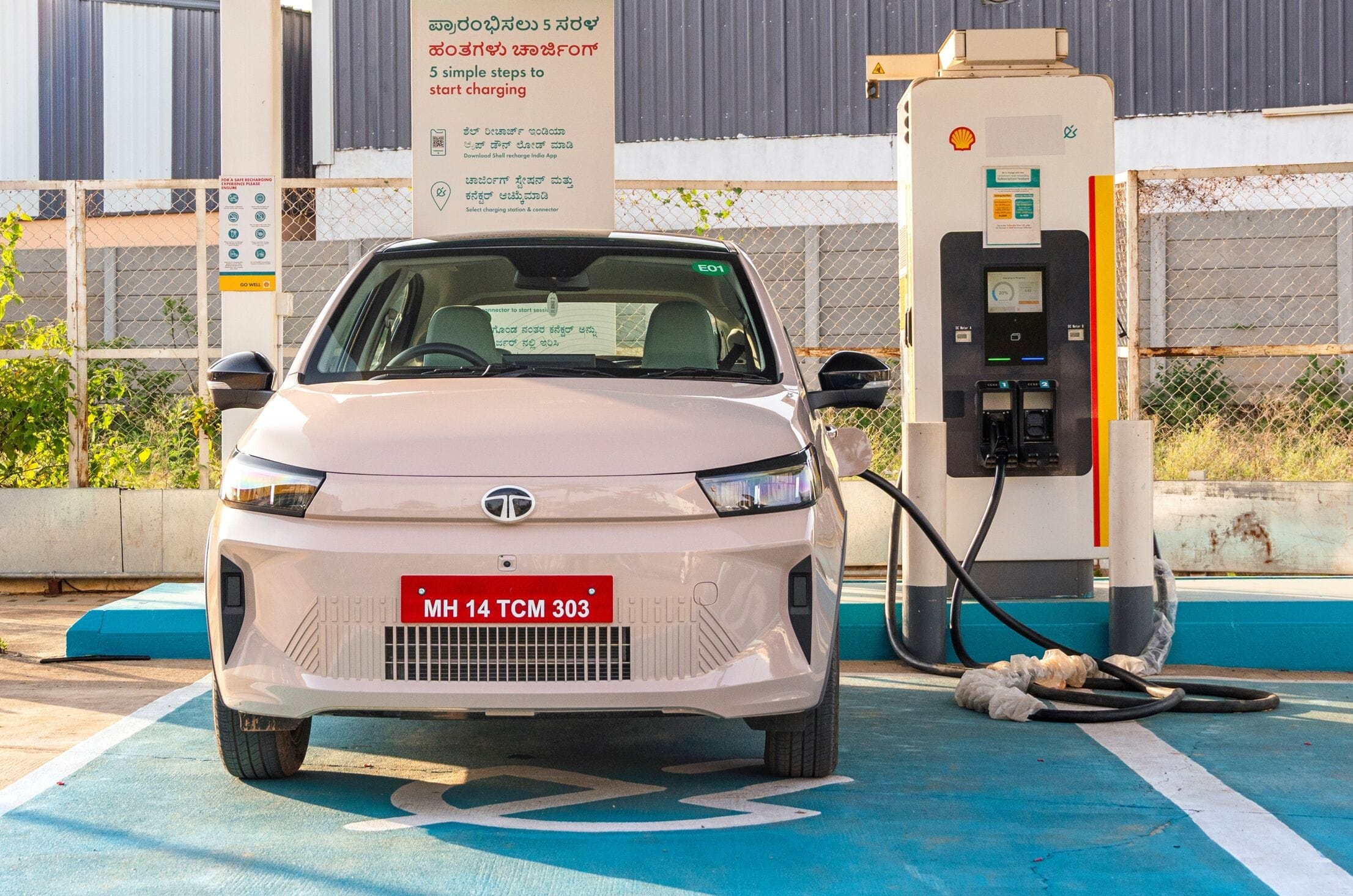
Improvements to the chemistry of the LFP battery cells, combined with software revisions, have also resulted in faster charging speeds. Connected to a DC fast charger, the battery charged from 20 to 80 percent in just 30 minutes, a significant improvement over the outgoing model's 45-minute duration. In real-world terms, this translates to shorter charging stops on long journeys. Interestingly, charging speeds taper off sharply beyond 93 percent, with the final few percentage points taking an additional 21 minutes to reach full charge.
2026 Tata Tiago EV ride comfort and handling – 9/10
Although mechanically unchanged, the Tiago EV’s suspension has been fine-tuned, and as a result ride comfort is even better than before. While the ICE version’s suspension has a slightly firm edge at low speeds, the EV’s feels plush and doesn’t allow road shocks to filter through. Even as you pick up the pace, the Tiago EV feels reassuringly stable and confident at highway speeds. The steering remains one of its strengths, being light in town, consistent in feel and progressively weighted as speeds increase. This inspires confidence behind the wheel. Braking performance too feels natural, and enhances the driving experience even further.
2026 Tata Tiago EV value for money – 8/10
With improved comfort, additional features and software enhancements, the 2026 update builds upon what was already an excellent city EV. Tata also offers the EV under its Battery-as-a-Service (BaaS) programme, which lowers the upfront purchase price by up to Rs 2.3 lakh by allowing buyers to finance the battery separately and pay Rs 2.6 per kilometre. While this strategy helps reduce the sticker price, adoption is likely to remain low due to the scheme's complexity and minimum monthly usage commitments, which can make it uneconomical for low-mileage users.
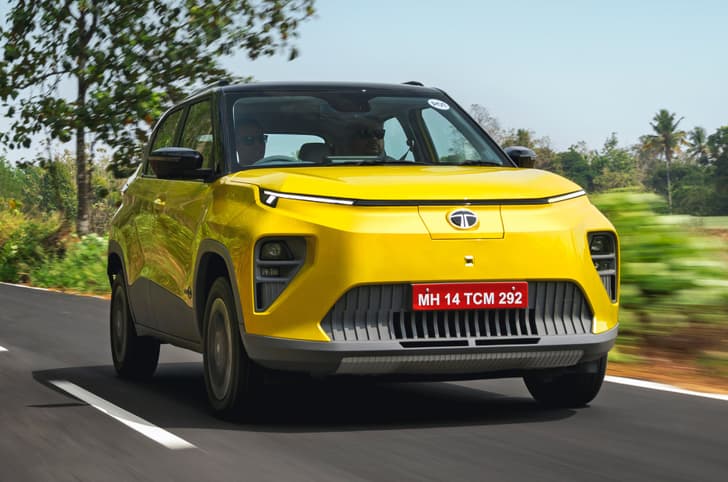
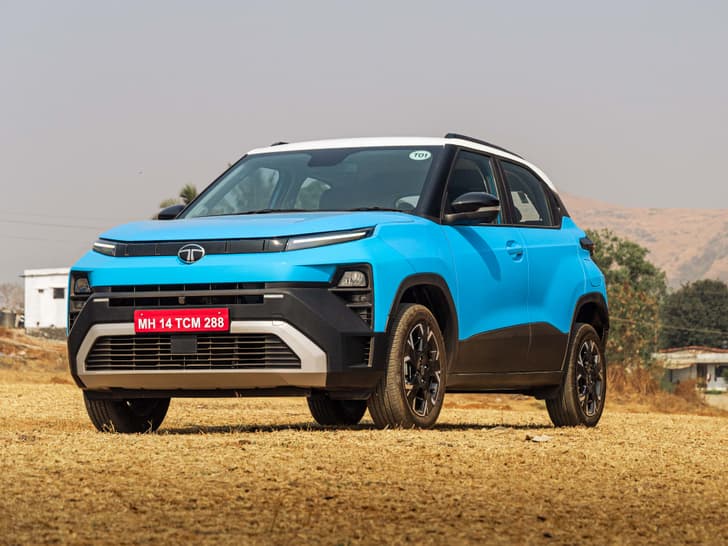
But the 24kWh Tiago EV faces stiff competition from within Tata's own showroom. The entry-level Punch EV is not only priced below the top-spec Tiago EV but also offers a larger 30kWh battery, greater range, and the practicality and desirability associated with SUVs.
That said, whether you choose the Tiago EV or the Punch EV, both remain compelling options for buyers seeking an easy-to-drive, economical and user-friendly electric city car.

 Gavin DSouza
 Soham Thakur
 Nikhil Bhatia
 Lenny D'sa