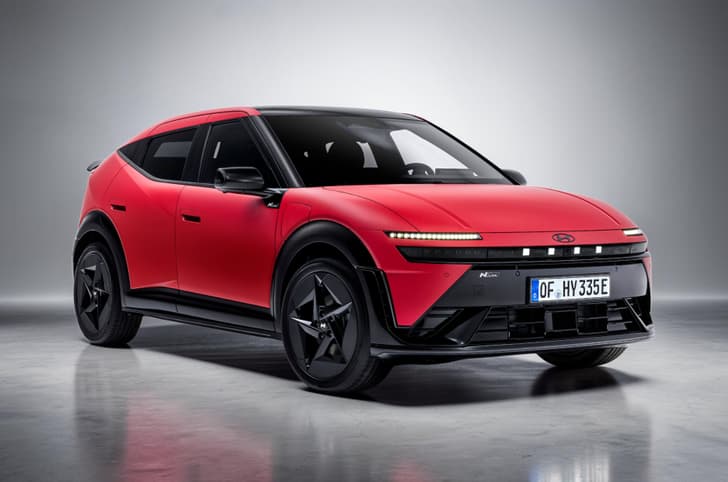
After previewing it as the Concept Three in September 2025, Hyundai has now unveiled the new Ioniq 3 at the Milan Design Week 2026. The Korean brand’s latest pure-electric model has been designed in Europe and is aimed primarily at the European market. The Ioniq 3 will be produced at Hyundai’s Izmit facility in Turkiye and shares its underpinnings with the Kia EV2.
- Uses Hyundai’s 400V Electric-Global Modular Platform
- Claimed WLTP range of 344km (Standard Range) and 496km (Long Range)
- Crossover styling, signature lighting elements, up to 19-inch aero wheels and more
- Gets Android Auto-based Pleos Connect infotainment system
Hyundai Ioniq 3 powertrain
Standard Range and Long Range battery options will be available
The Ioniq 3 will be sold in Europe with 42.2kWh and 61kWh battery packs, representing Standard Range and Long Range variants. The smaller battery has a WLTP-claimed range of up to 344km, while the larger unit’s maximum range is 496km.
Hyundai will offer an 11kW AC charger as standard and a 22kW charger as an option with the Ioniq 3. With a DC fast charger, a 10-80 percent top-up is possible in a claimed 29 minutes or so. Additionally, the Hyundai Ioniq 3 will come with vehicle-to-load (V2L) functionality.
The Ioniq 3’s single front-mounted electric motor is available in two states of tune, producing 135hp in the Base variant and 147hp in the N Line variant. Meanwhile, the torque figure remains the same at 250Nm. The Hyundai Ioniq 3 has a claimed top speed of 170kph, and the carmaker quotes a 0-100kph time of 9 seconds for the Standard variant.
Hyundai Ioniq 3 design
The exterior styling is a mix of hatchback, coupe and SUV design cues
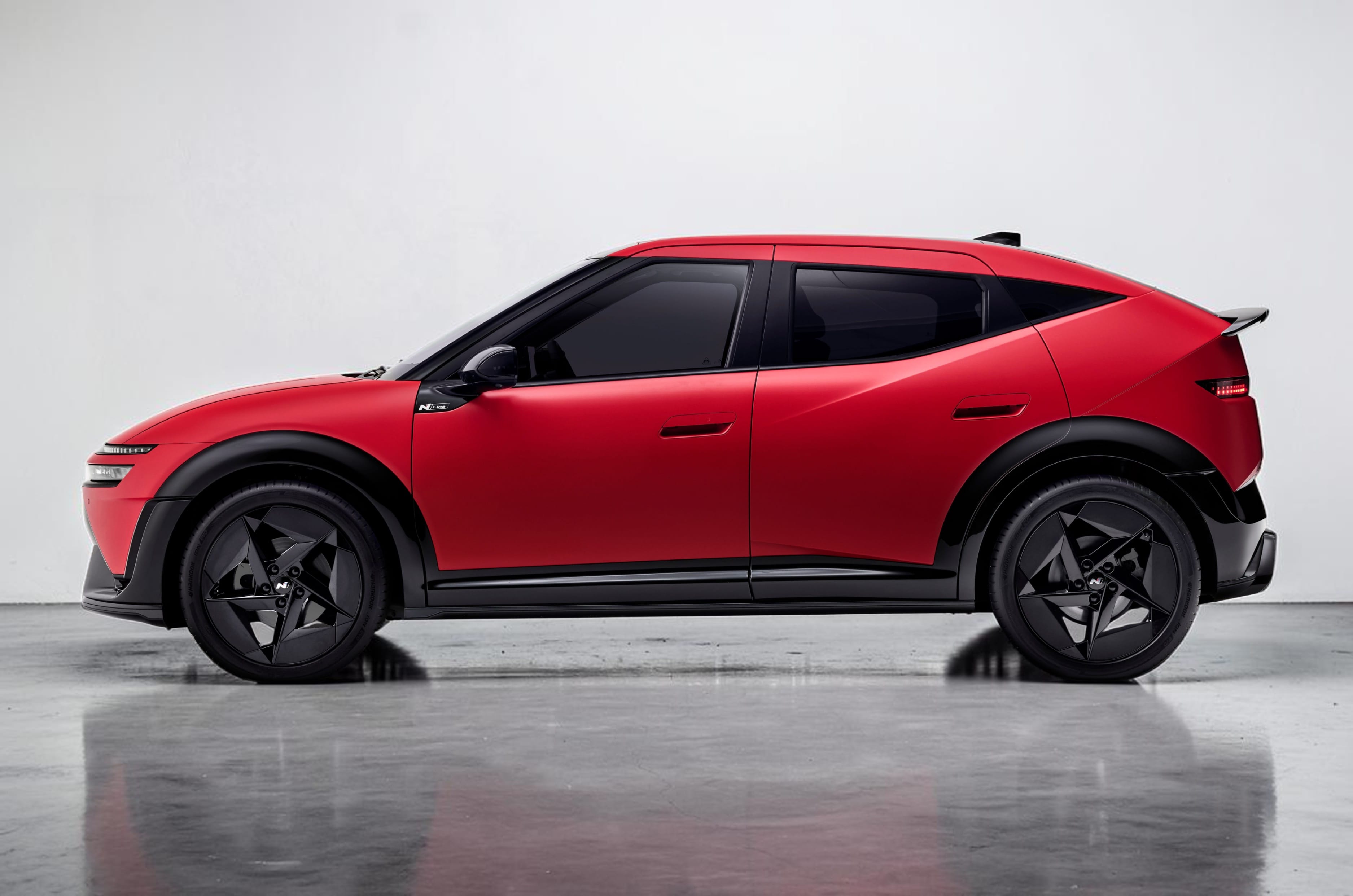
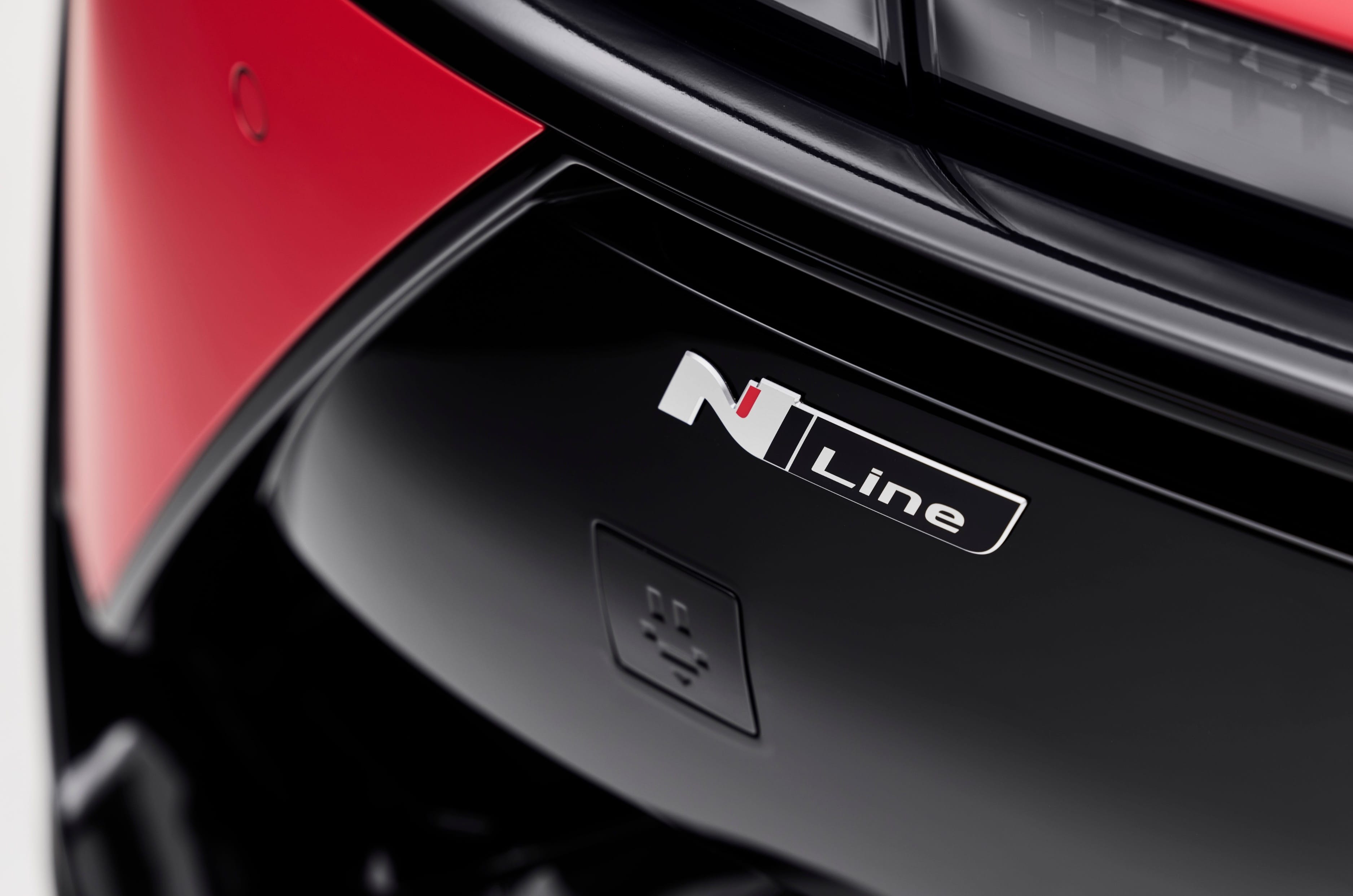
The Ioniq 3 uses the Korean brand’s new design language called “Art of Steel”. The exterior gets sharp creases, a rising shoulder line and a sloping roofline – the N Line further adds chunky body cladding, larger 19-inch alloy wheels, a rear spoiler and ‘N Line’ badges. There is Hyundai’s signature pixel lighting with “H” displayed in Morse code and flush door handles, while a rear diffuser finished in gloss black will be part of the N Line.
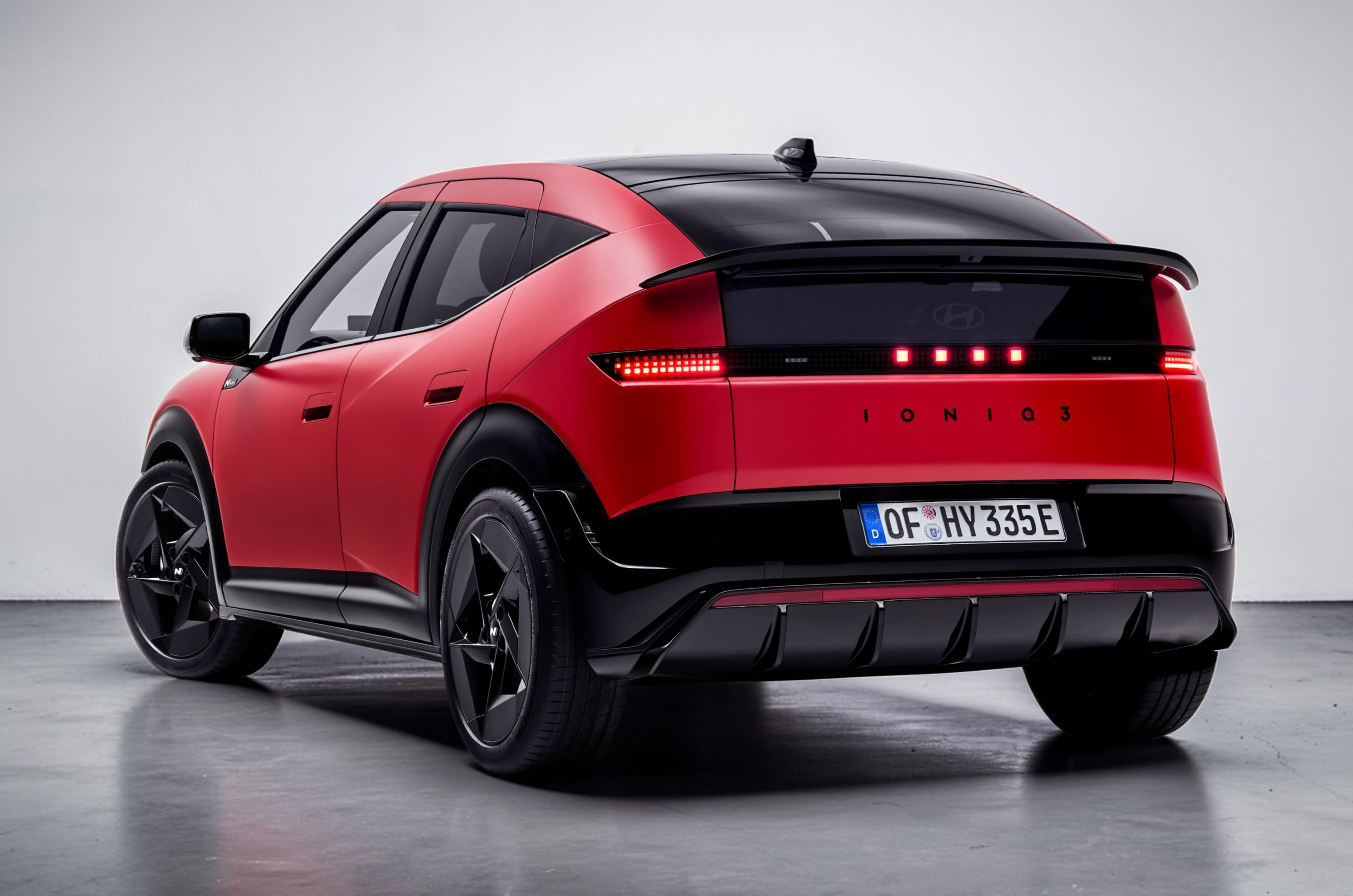
Depending on the market, the Hyundai Ioniq 3 will be offered in eight exterior colours. The Ioniq 3 measures up to 4,170mm in length, 1,800mm in width, 1,505mm in height, and features a 2,680mm wheelbase. The Ioniq 3’s interior will be able to seat up to five occupants, while the total cargo capacity is rated at 441 litres.
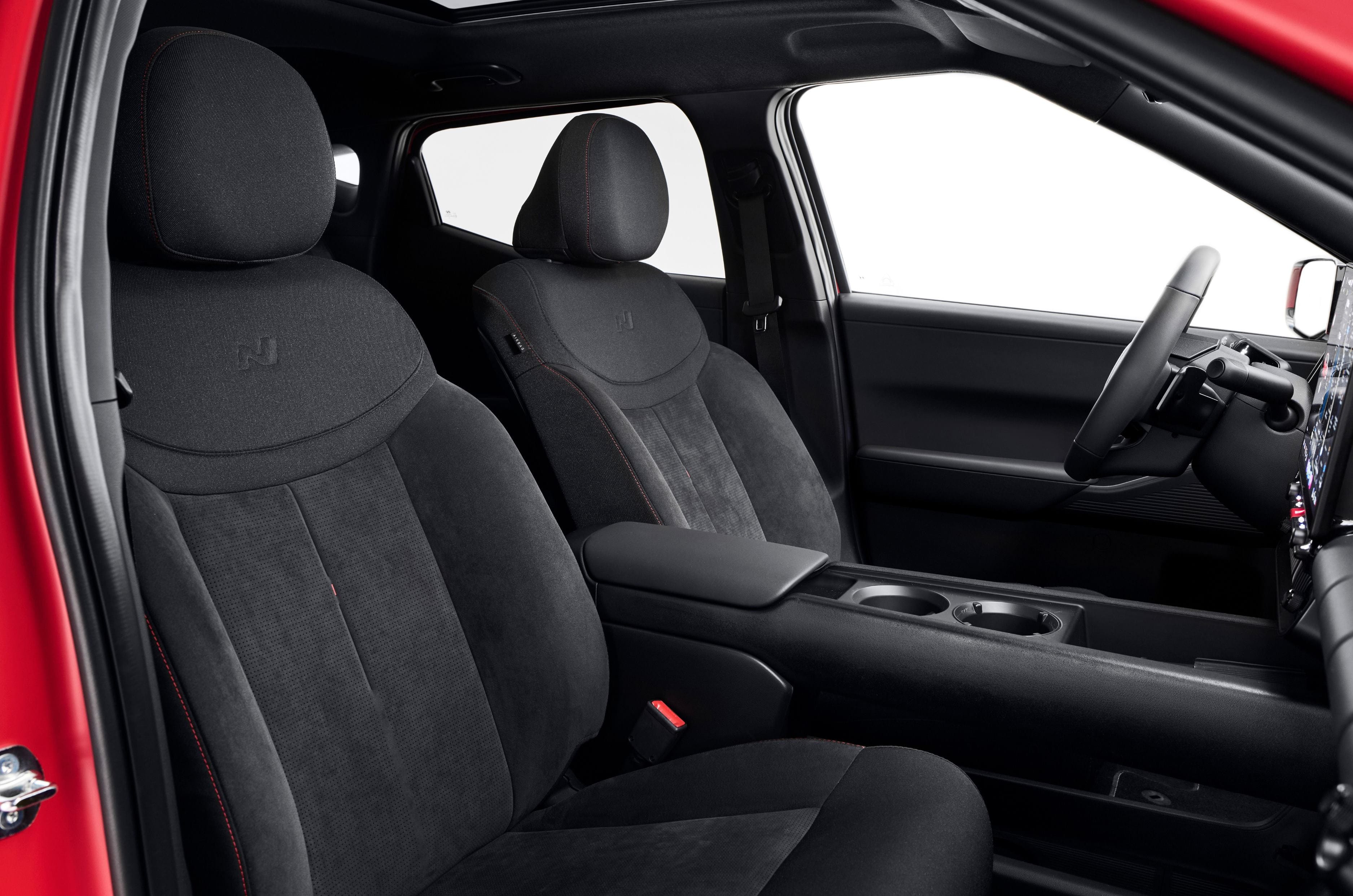
The N Line variant of the Hyundai Ioniq 3 gets a dark interior colour theme with contrasting red accents on the dashboard, steering wheel, seats and rear AC vents. There are ‘N’ logos on the steering wheel and seats, with the latter being partially upholstered in a suede-like material.
Hyundai Ioniq 3 features
The electric crossover will come fairly well-equipped in Europe
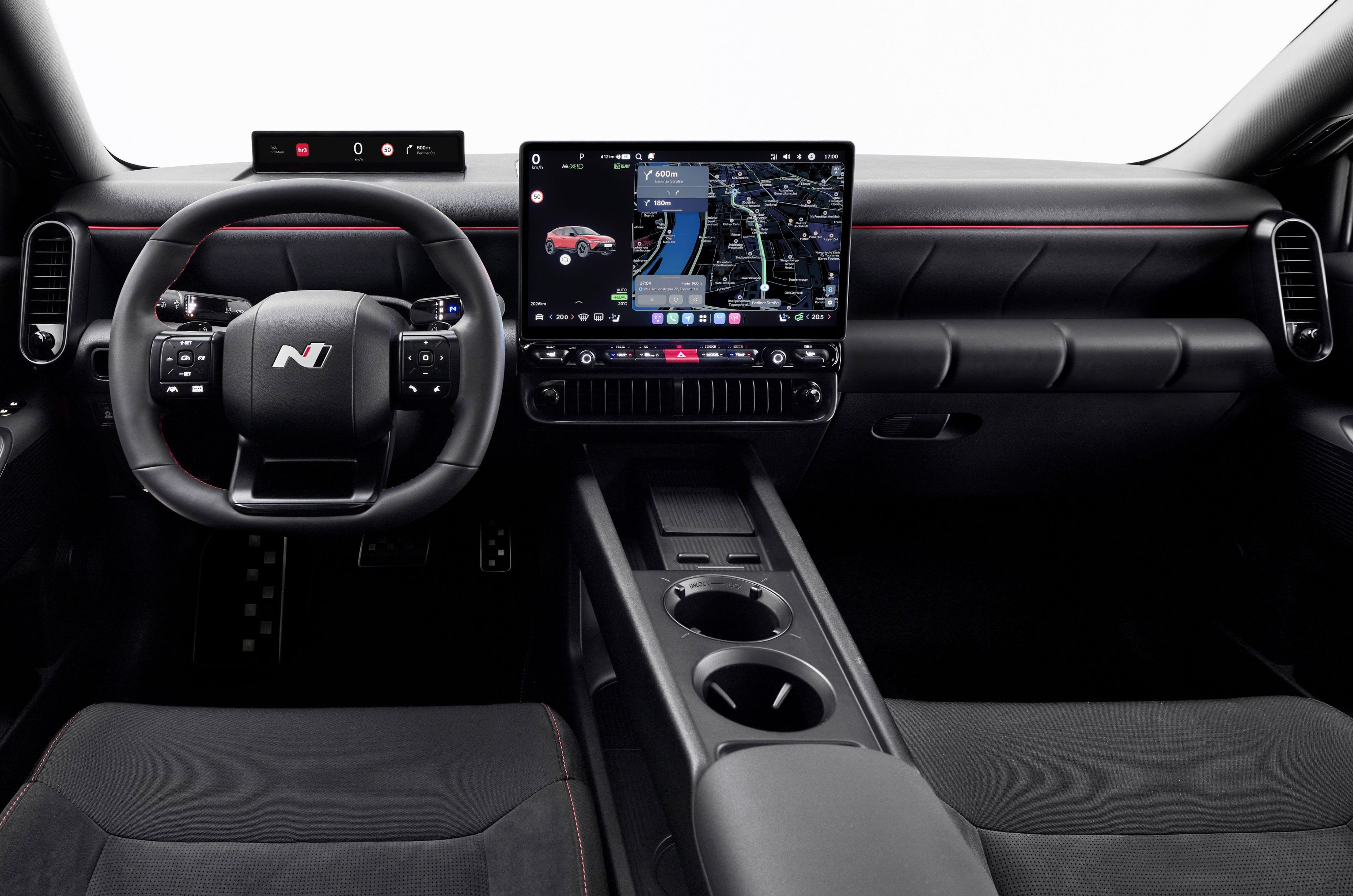
Depending on the variant and trim level, the Ioniq 3 will get heated and ventilated seats, dual-zone automatic climate control, a Bose audio system, a slim digital instrument cluster and a 14.6-inch touch-infotainment display. The Ioniq 3 is the first Euro-spec Hyundai model to sport the brand’s new Pleos Connect infotainment system, which is based on Android Automotive OS. It will also offer the latest generation of the brand’s connected-car suite, called “Hyundai Digital Key”.
The safety features of the Ioniq 3 include the SmartSense advanced driver assistance systems (ADAS). This suite incorporates adaptive cruise control, auto emergency braking, blind-spot monitoring, surround-view cameras and adaptive headlamps. There are also 7 airbags, plus electronic stability control and hill-hold control, among other basic safety measures. While the Ioniq 3’s global launch is expected in the next few months, Hyundai has not yet confirmed an official date, and there is currently no word on its introduction in India.
 Dipan Sur
 Viraaj Bhatnagar