Last Updated on: 29 Jul 2026
TVS Orbiter
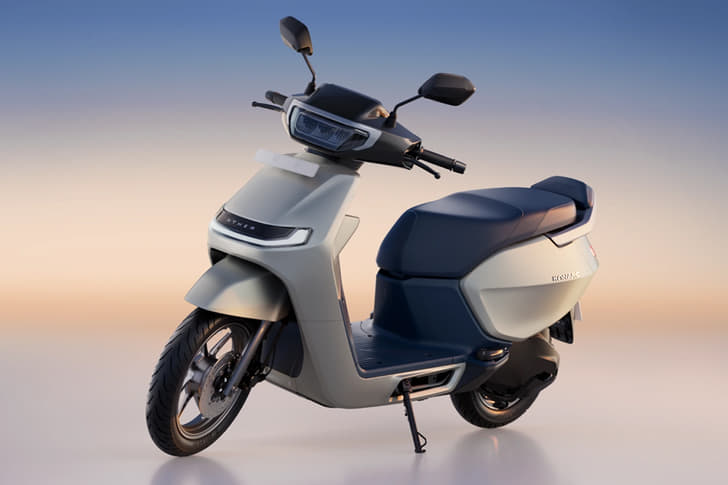
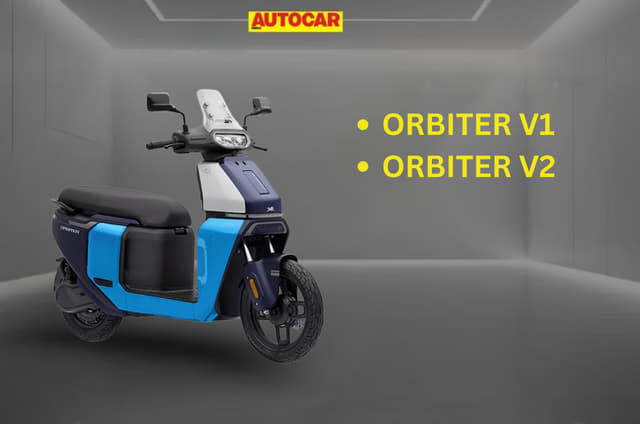
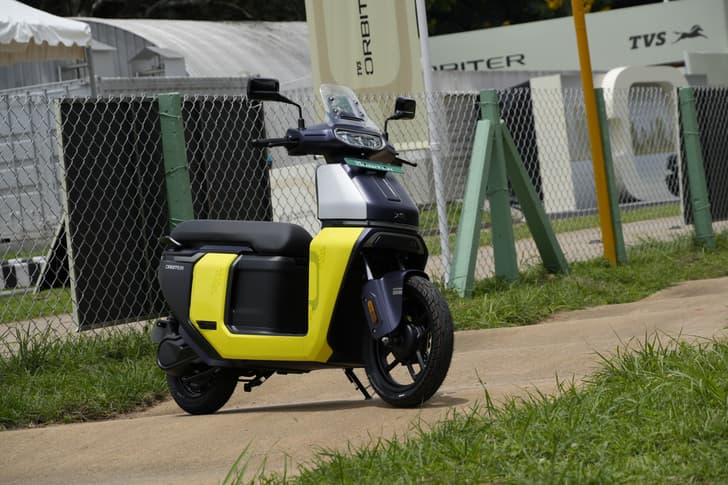
The TVS Orbiter is an affordable electric scooter that was launched in India in August 2025. It sits below the TVS iQube in the brand’s lineup and comes with a 34-litre under-seat storage area that can hold twin helmets, a 14-inch front alloy wheel, a long flat seat, cruise control, and reverse parking assist. The TVS Orbiter is available in two variants: Orbiter V1 and Orbiter V2, and depending on the variant chosen the price of this electric scooter varies.
The TVS Orbiter price starts at ₹88.25 thousand and goes up to ₹1.05 lakh (ex-showroom). The TVS Orbiter on road price generally ranges between ₹98,369 and ₹1.17 lakh, depending on insurance, variant, and other factors.
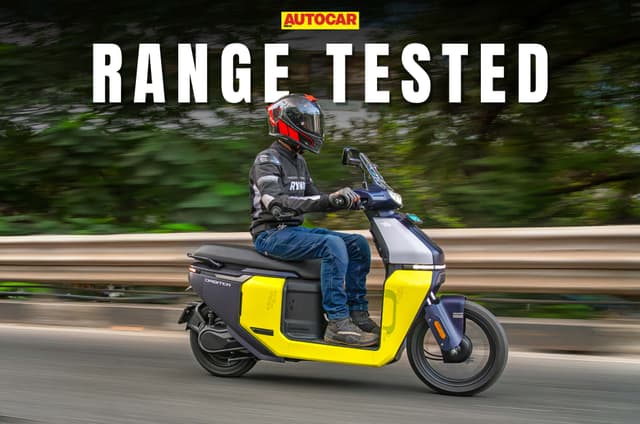
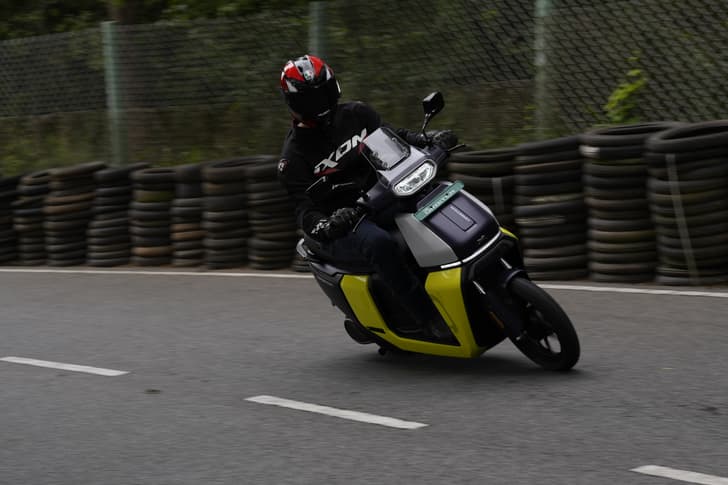
The TVS Orbiter uses a BLDC motor and offers two riding modes: Eco and City. The V2 variant comes with a 3.1kWh battery pack, while the V1 uses 1.8kWh battery. The TVS Orbiter mileage or range as claimed by the company is 158km for the V2 and 86km for the V1. But, in our test, the V2 variant returned 112km of range in city mode when it was ridden gently. In terms of acceleration, the Orbiter V2 takes 6.8 seconds to go from 0-40kph, while the V1 does it in 6.3 seconds.
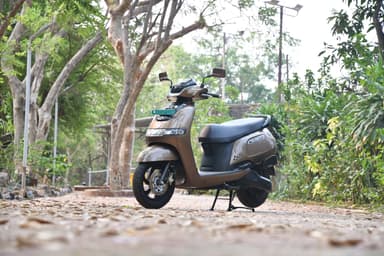
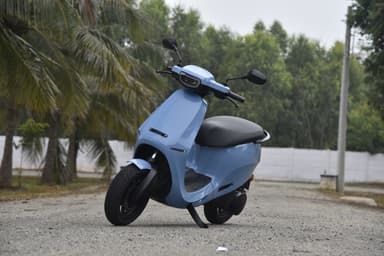
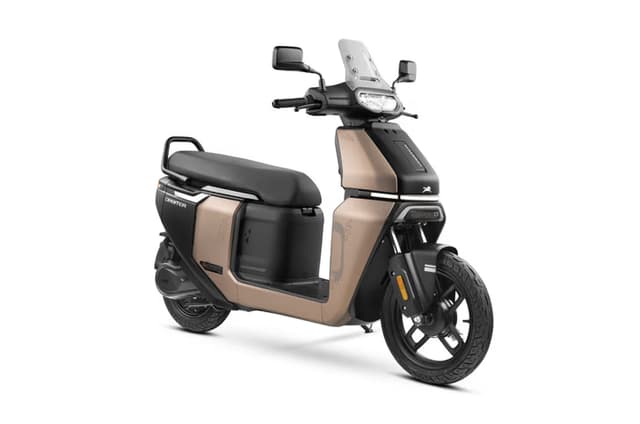
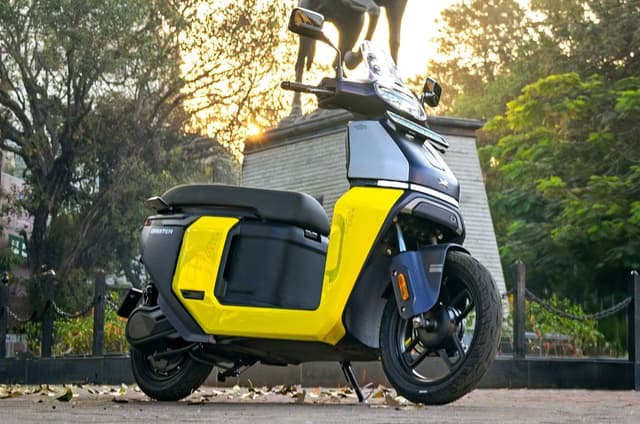
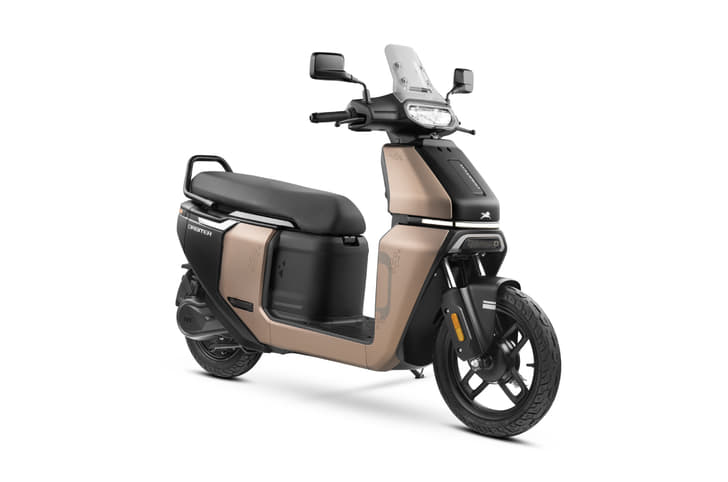
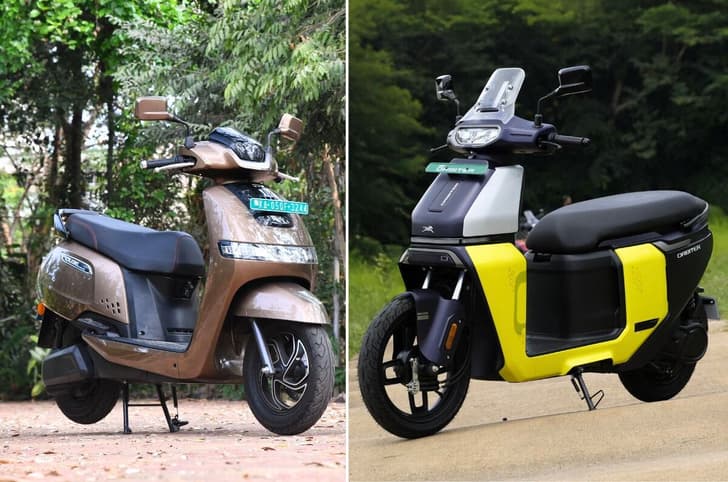
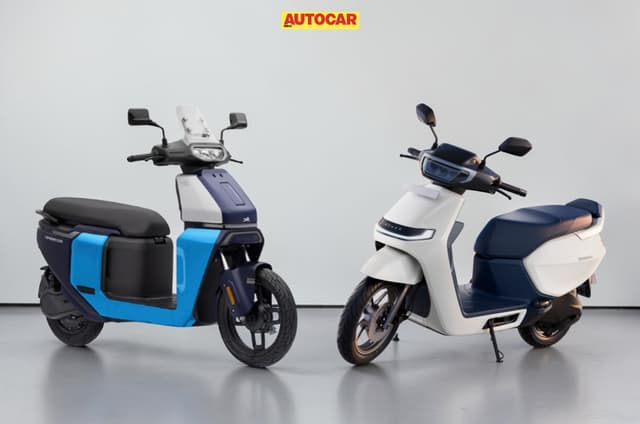
The TVS Orbiter colours list includes six shades: Cosmic Titanium, Lunar Grey, Martian Copper, Neon Sunburst, Stellar Silver, and Stratos Blue. The V1 is available in Martian Copper and Stellar Silver, while the V2 is offered in all six shades.
TVS Orbiter Specifications
Here are the key TVS Orbiter specifications:
- Motor type: BLDC
- Drive modes: Eco and City
- Battery capacity: 1.8kWh (V1), 3.1kWh (V2)
- Claimed range: 86km (V1), 158km (V2)
- Charging time (0-80%): 2hr 20min (V1), 4hr 10min (V2)
- Acceleration (0-40kph): 6.3sec (V1), 6.8sec (V2)
- Kerb weight: 101kg (V1), 112kg (V2)
- Ground clearance: 165mm
- Seat height: 760mm
- Seat length: 845mm
- Length: 1855mm
- Width: 728mm
- Height: 1284mm
- Tyre size (F/R): 90/80-14 and 90/90-12
- Front suspension: Telescopic
- Rear suspension: Dual shock
- Front and rear brake type: Drum
- Boot space: 34 litres
TVS Orbiter Features and specifications
Our Rating | Yet to be Reviewed |
Body Type | Scooter |
Battery Range | 86 km - 158 km |
Fuel Type | Electric |
Transmission | Automatic |
Claimed Electric Motor Range | 158 km |
| Fuel Type/ Propulsion | Electric |
| Motor Type | BLDC |
| Lithium-ion battery | Yes |
| Max Motor Power | 1.80 kW |
| EV Battery Capacity | 3.1 kWh |
| Claimed battery range | 158 km |
| Tested battery range | (CITY MODE) 112 km |
| Claimed Charging Time | 0-80% in 4 Hr 10 Min |
| Chassis name | Steel Tube |
| Chassis type | Tubular steel frame |
| Front Suspension Type | Telescopic Fork |
| Rear Suspension Type | Dual Shock Absorber |
| Length | 1855 mm |
| Width | 728 mm |
| Height | 1284 mm |
| Seat height | 760 mm |
| Anti-Lock Brakes (ABS) | |
| Combined Braking System | |
| Cornering ABS |
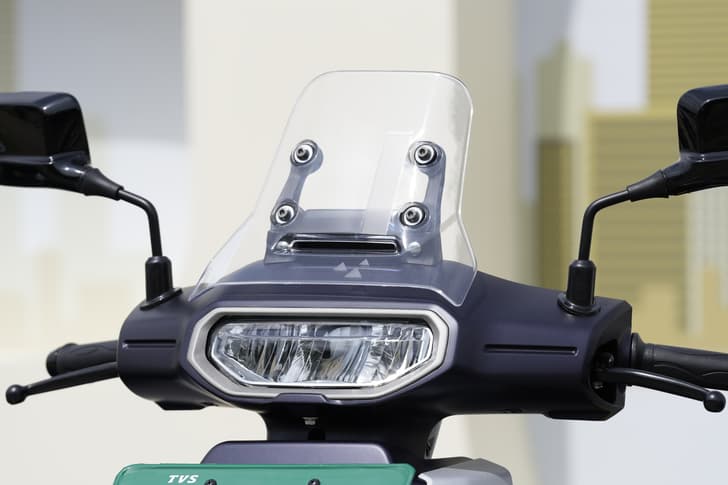
| Adjustable Windscreen | |
| Antilock Braking System | |
| Bluetooth Connectivity | |
| Bluetooth Telephone Function |
| Gear Indicator | |
| Instrument console | Digital |
| Shift Indicator | |
| Speedometer | LCD |
TVS Orbiter price & variants
The TVS Orbiter is available in 2 variants, and depending on the variant selected, the price varies. The TVS Orbiter price starts at ₹88.25 thousand for the V1 variant and goes up to ₹1.05 lakh for the top V2 variant (ex-showroom).
On the other hand, the TVS Orbiter on road price in major Indian cities generally ranges between ₹98,369 and ₹1.17 lakh, depending on insurance, variant, etc.
TVS Orbiter User Reviews
Tell us about your experience
TVS Orbiter reviews

TVS Orbiter comparison
TVS Orbiter Range
Since the TVS Orbiter is an electric scooter, its mileage is measured in terms of range per full charge rather than kpl. The TVS Orbiter range varies depending on the variant and battery capacity. Here’s a clear breakdown of the TVS Orbiter mileage (claimed range) across variants:
- TVS Orbiter V1 (1.8kWh battery): 86km
- TVS Orbiter V2 (3.1kWh battery): 158km
| PowertrainThe combination of engine type, fuel, and transmission that powers your vehicle and determines how it drives and what it runs on. | ARAI RangeMileage certified by the government, tested under controlled lab conditions. Real-world mileage will vary. |
|---|---|
Electric-Automatic (Automatic) 1.8 kWh | 86 km |
Electric-Automatic (Automatic) 3.1 kWh | 158 km |
TVS Orbiter Images
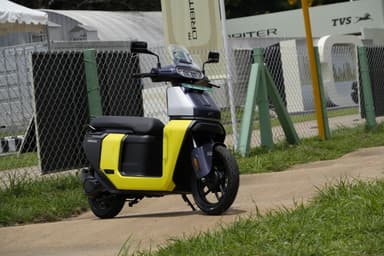
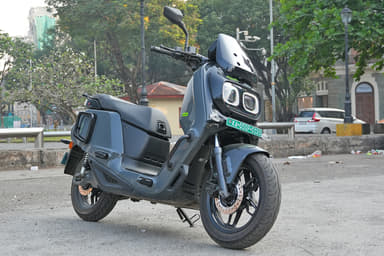
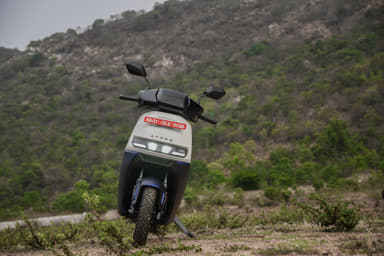
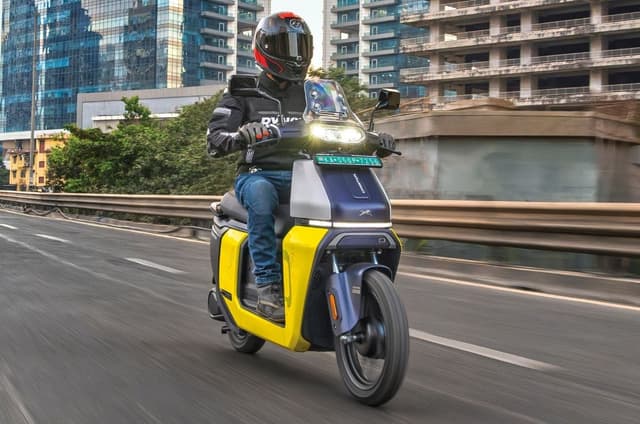
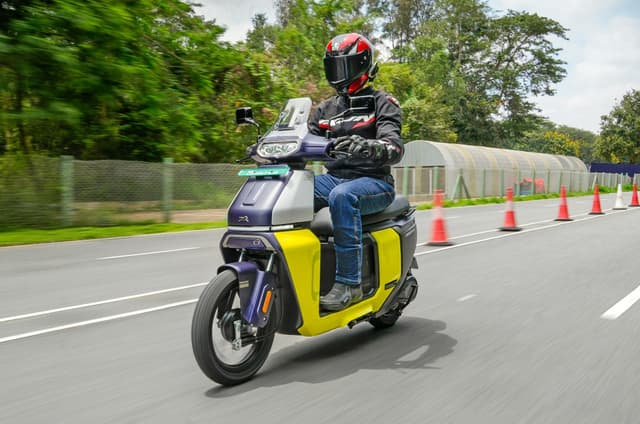
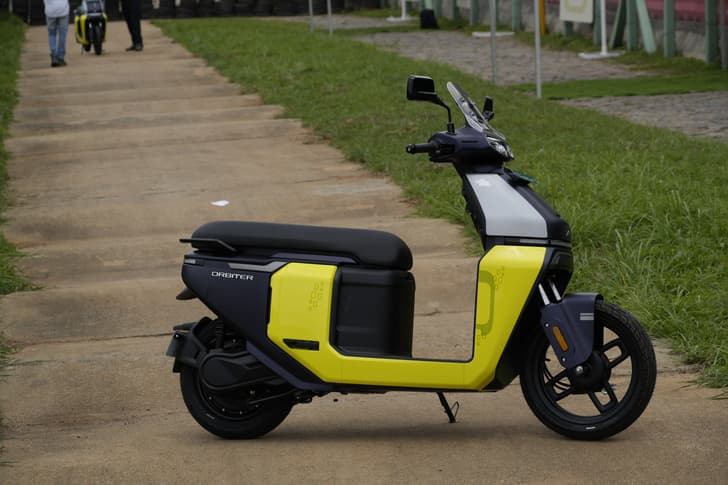
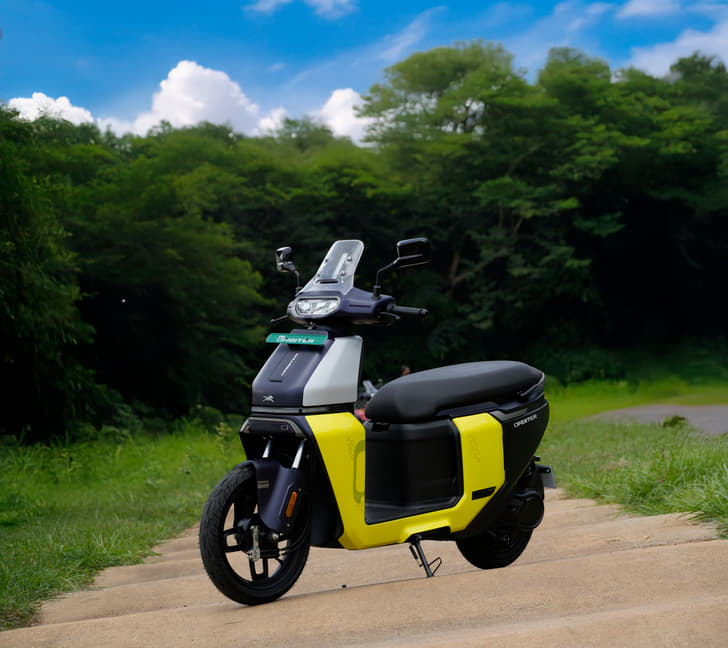
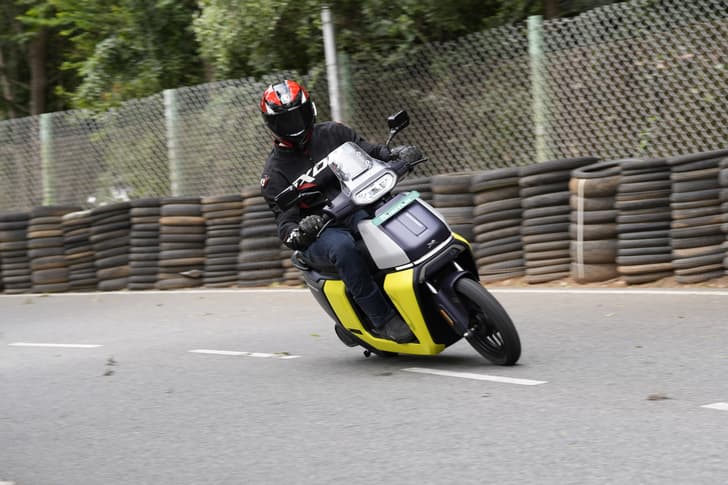
The TVS Orbiter images highlight its clean and practical electric scooter design. The image gallery showcases:
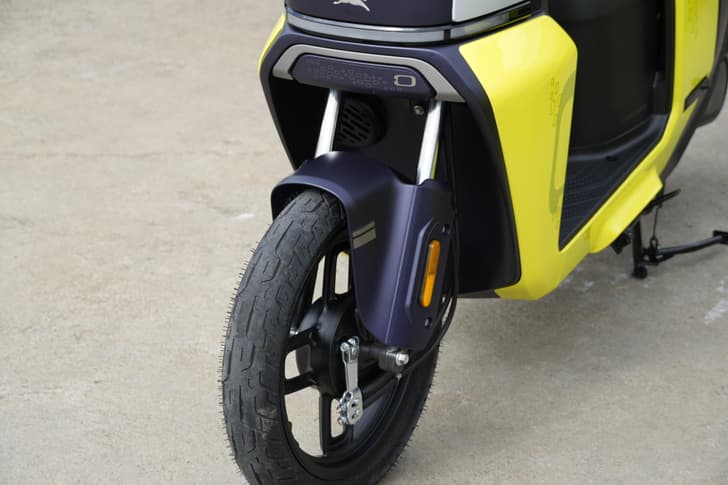
- 14-inch front alloy wheel
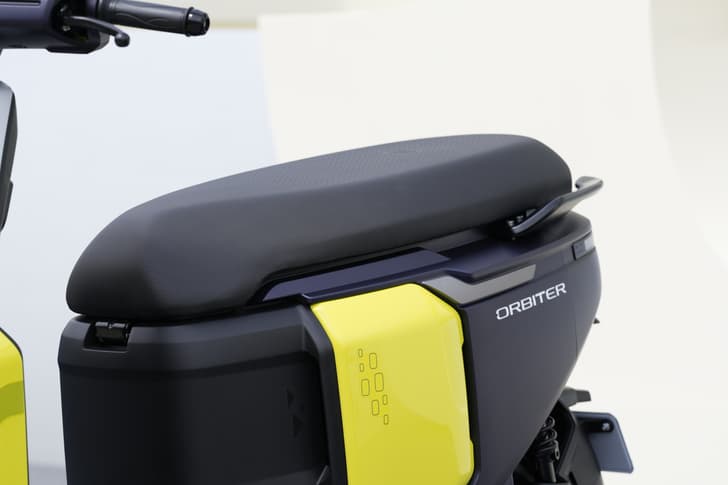
- Long flat seat
- 34-litre twin-helmet boot space
- Straight line footboard
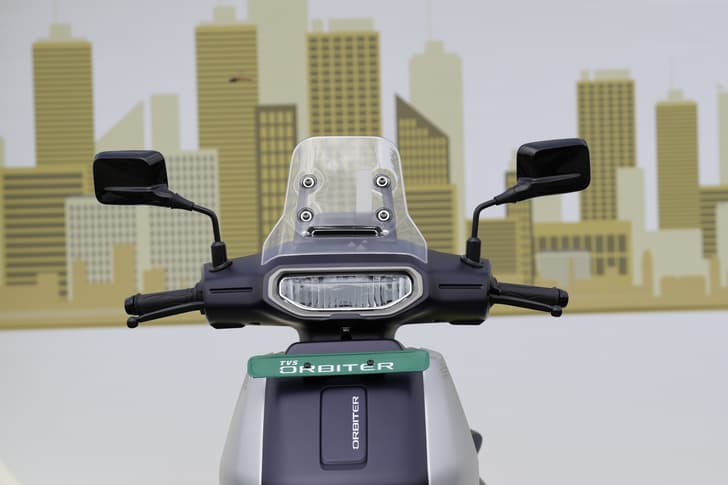
- Crystal LED headlamp and combination lamps
- Bluetooth-connected LCD cluster, etc.
Browse through 58 TVS Orbiter images to explore the scooter from multiple angles and understand how it looks in different colour options.
TVS Orbiter videos
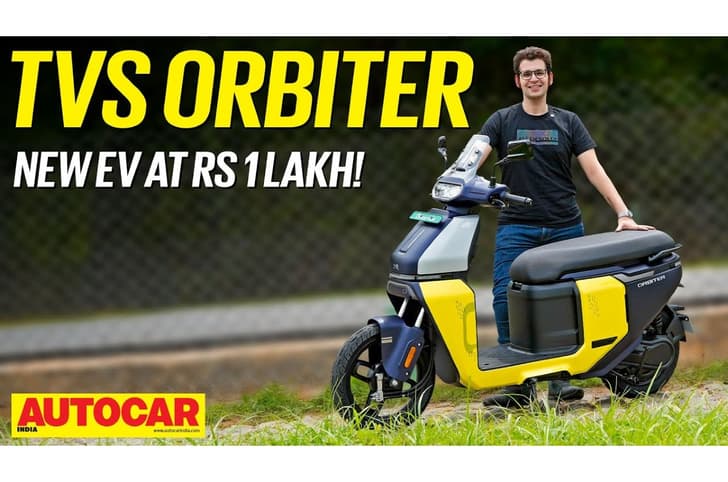
The TVS Orbiter is featured in 1 videos, giving you a closer look at its design, performance, and features. Through these videos, you can get a better understanding of this electric bike’s overall look, handling, and real-world performance.

TVS Orbiter Colours
The TVS Orbiter colours lineup includes 6 shades in total: Neon Sunburst, Stratos Blue, Stellar Silver, Martian Copper, Cosmic Titanium, and Lunar Grey. But, the colours vary depending on the variant selected.
The TVS Orbiter V1 is available in only 2 shades: Martian Copper and Stellar Silver. Meanwhile, the Orbiter V2 is available in all 6 shades.
TVS Orbiter FAQs
The TVS Orbiter price starts at ₹88.25 thousand and goes up to ₹1.05 lakh (ex-showroom).
The TVS Orbiter on road price generally falls between ₹98,369 and ₹1.17 lakh, depending on insurance, variant selected, etc.
TVS Orbiter mileage/range varies depending on the variant selected. The base variant, V1 offers 86km of range and the top variant, the V2 delivers 158km, as claimed by the brand.
The TVS Orbiter is available in 2 variants: V1 and V2.
The TVS Orbiter gets a 1.8kWh battery in the V1 and a 3.1kWh battery in the V2.
The TVS Orbiter charging time from 0-80% is 2hr 20min for the V1 and 4hr 10min for the V2.
The TVS Orbiter seat height is 760mm.
Yes. The TVS Orbiter is designed primarily for city commuting, It focuses on comfort, range, and practicality.
The TVS Orbiter weight is 101kg for the V1 and 112kg for the V2.
The TVS Orbiter ground clearance is 165mm.
Yes. The TVS Orbiter comes with a Bluetooth-connected LCD cluster and connected mobile app support.
The TVS Orbiter colours include Neon Sunburst, Stratos Blue, Stellar Silver, Martian Copper, Cosmic Titanium, and Lunar Grey.
The TVS Orbiter gets a 34-litre under-seat storage area.
Yes. The TVS Orbiter comes with cruise control.
Yes. The TVS Orbiter features reverse as well as forward parking assist.
Questions you may find useful
Hi, I am planning to buy an EV scooter with a budget of max 100K. My daily ride would be approx 30 Km per day, and it may go up to 50 km in the coming months. Which one is better between TVS Orbiter and Ampier Magnus Neo? Thanks.
The Orbiter is a sensible electric scooter that focuses on maximising range and practicality, and of the two options, the Orbiter will be the safer bet in the long run. Do bear in mind that the Orbiter's performance is quite mellow, especially in Eco mode, and if your daily commute involves a lot of flyovers or riding in hilly regions, then you will have to use the scooter in City mode as well as keep the throttle pinned. The Ampere Magnus will likely be a bit more affordable, but in the real world, small quality-related niggles are more common than they should be, and after-sales can be patchy depending on your city.One thing to watch with the Orbiter is that the top 3.1kWh variant's price will be over Rs. 1 lakh on-road in your city, so you may have to stretch your budget by a small amount.If stretching your budget is simply not an option and you must have an EV from a reputed brand, choose the Hero Vida VX2 Go 3.4, which should give you enough range and performance.Try to take test rides of the Orbiter and VX2 before you make your decision.
Is there any news about more variants of the TVS Orbiter launching this year, especially one with a 4.7kWh battery pack?
There’s no official word yet from TVS about additional Orbiter variants launching in the near term, and nothing has been shared publicly about a larger 4.7kWh battery - seen on the recently resurrected TVS iQubeS - for it.If range is a key consideration for you, we'd recommend you stick with the higher iQube models only. The iQube has better judged acceleration and braking performance for nearly all real-world situations than the Orbiter, which can feel a little too slow in its quest to maximise range.
Hi Autocar Team, I am planning to replace my 2012 Hero Honda CD Deluxe. My usage is strictly within the city, specifically a 28 km daily round trip for office and market chores. Interestingly, we already have two Hero Vida V1s at home (one Pro and one Plus). Since the V1 is quite feature-heavy, I don’t want to spend extra on premium features or performance for this new purchase. That’s why I have ruled out the Ather Rizta and TVS iQube. I am looking for a reliable, no-nonsense entry-level electric scooter. My current shortlists are: Hero Vida VX2 Go (3.4 kWh) TVS Orbiter Bajaj Chetak 2501 Since all of these offer the basic, essential features I need, which one would be the most practical choice for a daily city workhorse? Does sticking with the Vida ecosystem (VX2 Go) offer any real advantage, or should I consider the Orbiter or the all-metal Chetak 2501 instead?
Since you are intimately familiar with the Vida ownership experience, buying the Vida VX2 Go 3.4 will likely be your safest bet. This scooter also offers more range and performance than the TVS Orbiter and Bajaj Chetak C2501 models you have shortlisted. So, objectively speaking, you should stick with the Vida e-scooter.The Orbiter's USP is that it is one of the most spacious electric scooters around, while on the other end of the spectrum, you have the petite Bajaj Chetak C2501. Unless you have an unusually tall or shorter physique, we'd recommend sticking with the Vida. The only reason you should look at the others is if you want to change things up and switch to a different brand.
I'm planning to buy a two-wheeler for my father, preferably a scooter. My budget is around Rs. 80,000 to Rs. 1 lakh. It will be used mainly for city commuting, with a maximum daily running of 20-25 km. Should I go for an ICE scooter or an EV? Also, which model would you recommend?
Within your budget, there are only two EVs from reputed brands available, like the Vida (Hero) VX2 Go 2.2 and TVS Orbiter V2 (3.1kWh battery). These have enough range for a 25km daily loop and will surely help reduce your running costs to a great extent. If you have a secure charging location, then opting for an EV definitely makes sense. They have gentle but surefooted performance, and to decide between these two, take a test ride before you make your decision.If, however, you are not keen on making the switch to an EV, then sticking with proven options like Honda Activa 110, TVS Jupiter 110 and Suzuki Access 125 makes sense. The Activa and Jupiter are slightly more frugal than the Access, which consequently has zippier performance. All three are proven products, and you should go for the one you gel with the most on your test ride.
I'm looking for an electric scooter under Rs. 1 lakh (on-road) in Mysore as a secondary two-wheeler alongside my Honda CB350RS (e20 compliant). The EV will be mainly used by my wife for daily errands, and I will occasionally use it for my office commute, which is 3 km one way. Our maximum daily running will be around 12 km. Which one would you recommend?
The TVS Orbiter V2 will just about fit in your budget and is a good fit for your basic daily needs. If you can make the small stretch for it, go for the iQube 2.2, which will offer you a more appealing overall experience.
Upcoming Bikes


TVS Bikes


Trending Bikes
Latest Bikes