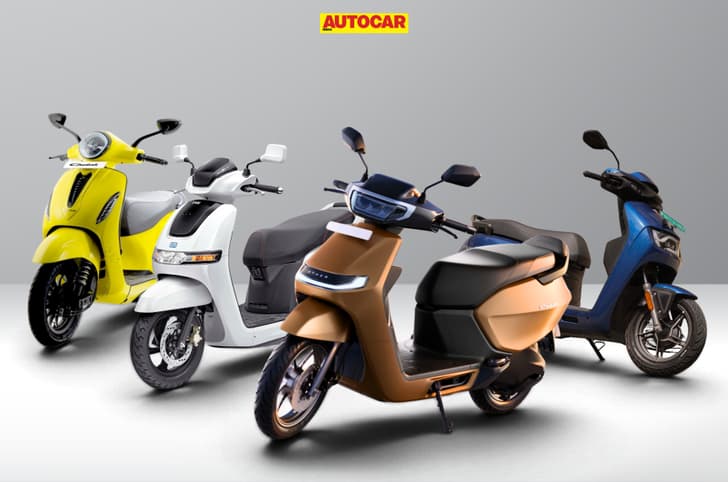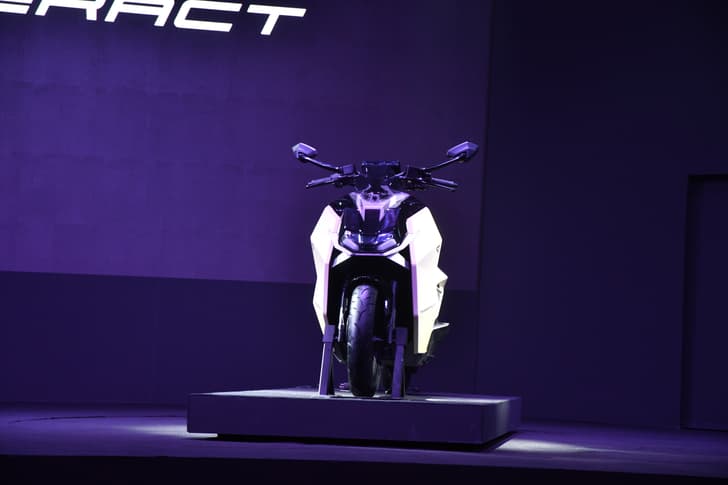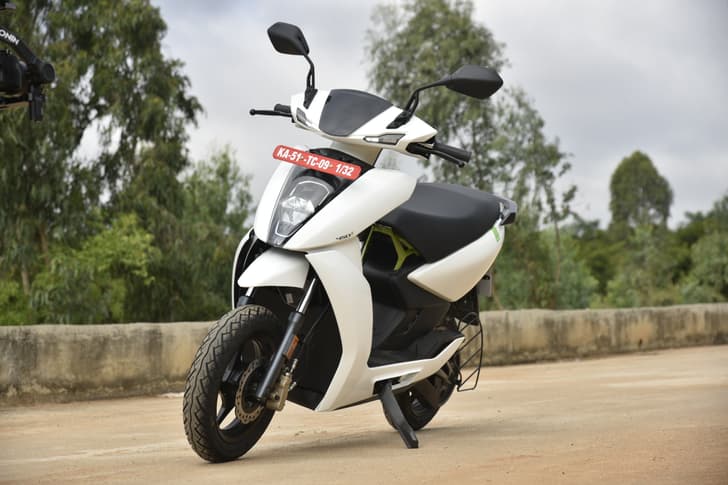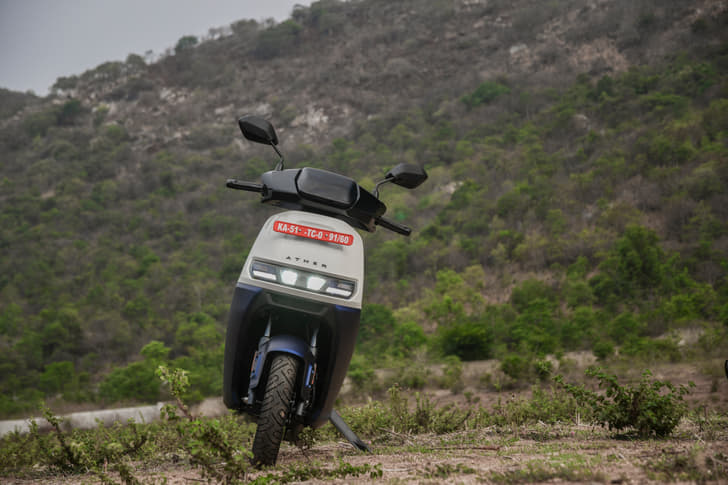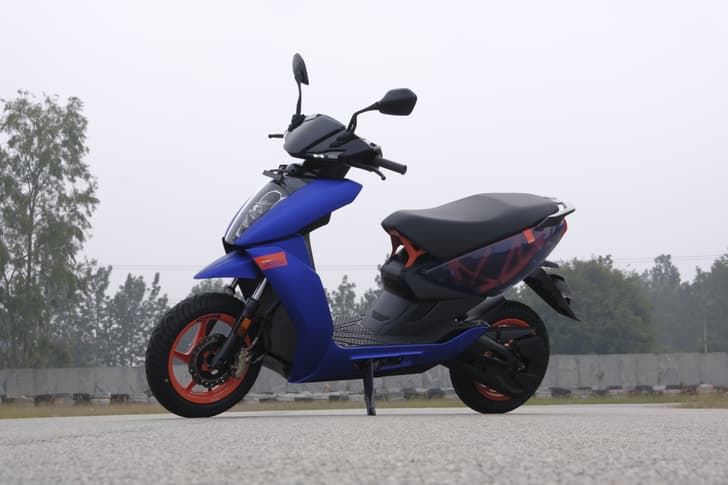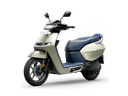
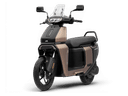

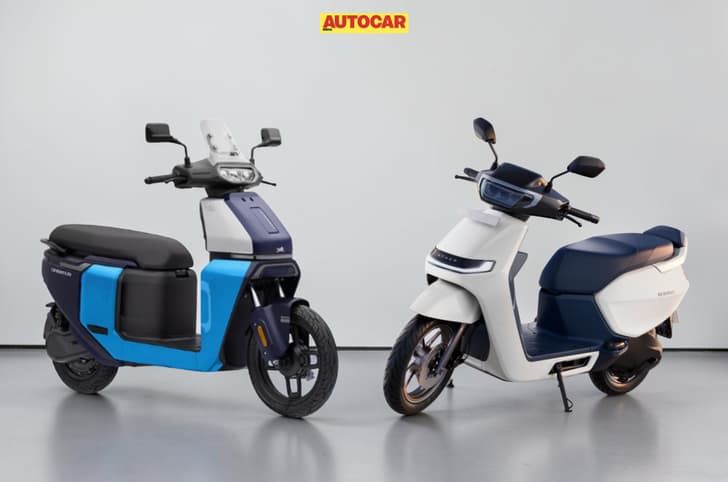
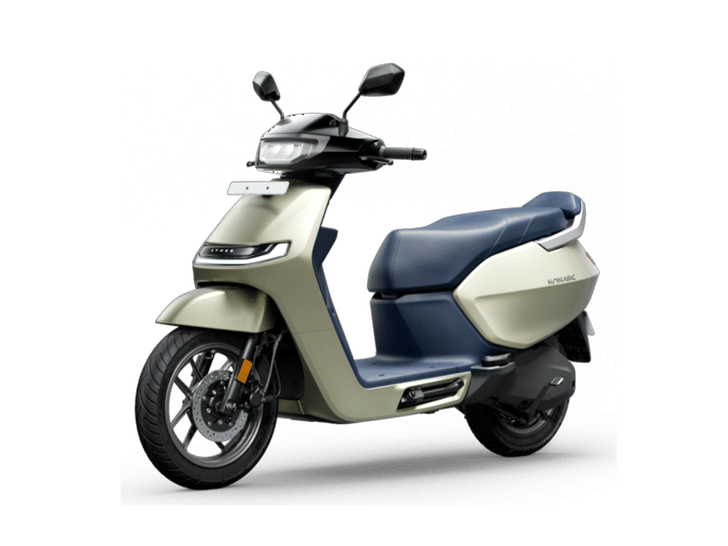
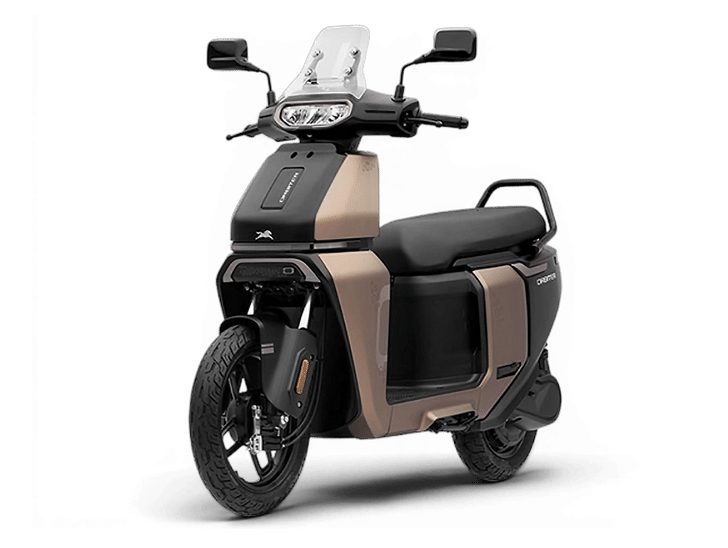
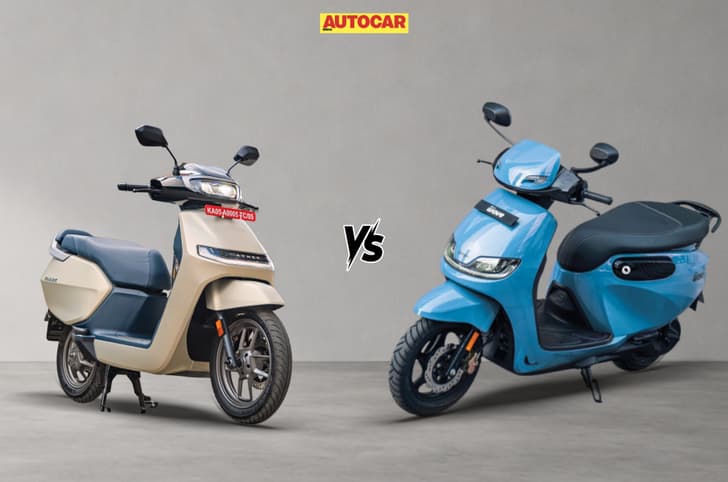
Ather has launched the Konarc with a brand-new EL platform at prices starting as low as Rs 99,999. This makes the scooter an obvious rival to the TVS Orbiter, which was revealed last year to target the urban scooter market. Since the Ather Konarc’s entry-level variant isn’t due for release until late next year, let’s see how the Konarc S 125, available later this month, compares to the TVS Orbiter V2.
Ather Konarc S 125 vs TVS Orbiter V2: Motor, battery and charging
Orbiter has more battery capacity and range
Starting with the motor, the TVS Orbiter falls short of the Ather in terms of peak power. TVS has not mentioned a peak torque output for the Orbiter. However, the Orbiter bounces back with a higher battery capacity and range, as well as a quicker 0-80 charge time with a faster 650W bundled charger.
That said, both scooters offer optional hardware to speed up charging times. The Ather Konarc comes with a built-in 450W charger as standard, and it can be bundled with an external 450W charger for a faster 900W total charging speed, cutting the time down to 2 hours and 25 minutes. The Orbiter also offers a faster 950W charger as an add-on accessory, but it takes a longer 2 hours and 38 minutes to get to 80 percent from nil.
Ather Konarc S 125 vs TVS Orbiter V2: Dimensions and underpinnings
Orbiter is more accessible
The Orbiter starts strong with an advantage in two important areas for a practical scooter: seat height and ground clearance. The Konarc is also the heavier scooter, with a 14.5kg higher kerb weight than the Orbiter. TVS hasn’t shared the wheelbase figure for the Orbiter.
Ather Konarc S 125 vs TVS Orbiter V2: Brakes, tyres and suspension
Konarc has the better ride package
The hardware package is where the Konarc gains significant ground. It gets a front disc brake compared to the Orbiter’s drum brake, along with wider front and rear tyres. Suspension setups are more evenly matched between the two, although the real-world experience could tip the scales towards one.
Ather Konarc S 125 vs TVS Orbiter V2: Features
TVS remains in (surprising) lockstep
Ather has reserved most of the headlining new features, such as the TFT instrument cluster, auto (boot) pop, smart key, and so on, for the Z line. The Konarc S gets a DeepView LCD instrument cluster and comes with AirWalk, which takes the motor’s assistance to make manually moving the scooter easier. Considering Ather’s tech-savviness, this is unsurprising. Some other tech-powered features include turn-by-turn navigation, AutoHold (hill hold), Vehicle FallSafe, TrueRange, and Find my Scooter, among others. The catch, however, is that all of them require you to pay for Ather StackPro, a one-time Rs 16,000 add-on to the Konarc S 125’s ex-showroom price.
The Orbiter, on the other hand, has a much smaller LCD cluster but matches almost all of Konarc’s features, such as turn-by-turn navigation, hill-hold, smartphone connectivity, theft and tow alerts, crash and fall alerts and motor cut-off on fall. TVS also offers cruise control, which is currently only on the Ather 450 series of scooters. Right now, you get access to all the features mentioned above at no extra cost on the Orbiter, but it remains to be seen if that will change, as the TVS iQube charges an annual subscription of Rs 999 for some advanced features.
Ather Konarc S 125 vs TVS Orbiter V2: Price
Konarc starts higher, and it only gets more expensive
The two variants in comparison here make the Ather about Rs 8,000 more expensive than the Orbiter. If you prefer access to all the smart features offered by Ather StackPro, that will increase the gap even further. Even though the two e-scooters are aimed at bringing in more mainstream users to the brands, both have been designed with different demographics in mind. If you happen to be in the common demographic, though, you should definitely take a test ride before picking one over the other because the on-paper specs don’t tell the whole story.



 Autocar India Team
 Vishal Venugopal