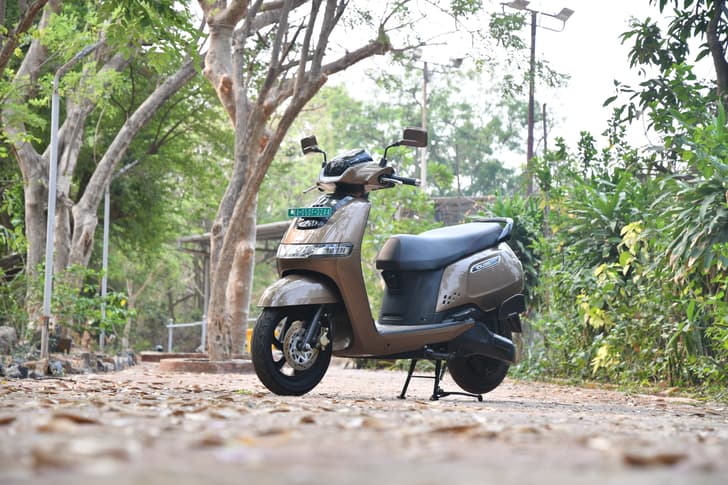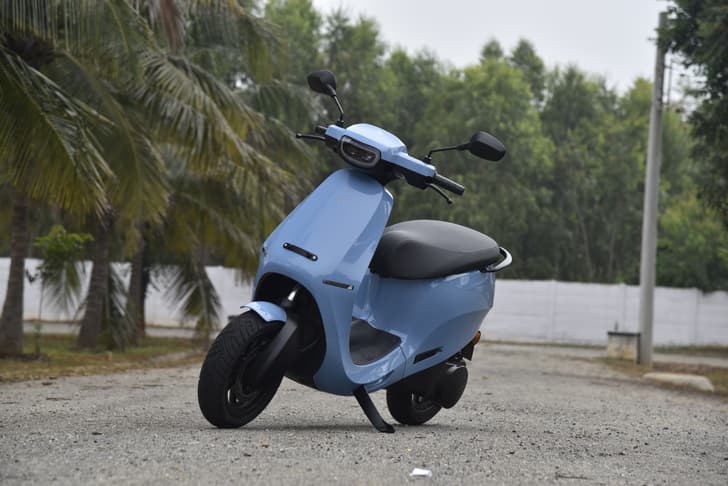

For the last six months on the trot, TVS has topped the electric two-wheeler sales charts in our market. Its success in the EV space can overarchingly be attributed to the popularity of its iQube line-up, but not happy to rest on its laurels, the company has brought out a new, more affordable electric scooter called the Orbiter, which is based on a platform that’s mostly new. After spending some time aboard it at TVS’ test track, we’ve come away with mostly positive things, but also one rather puzzling question. Let me elaborate.
TVS Orbiter design and quality - 8/10
It’s a quirky-looking thing but, typical of TVS, is well finished
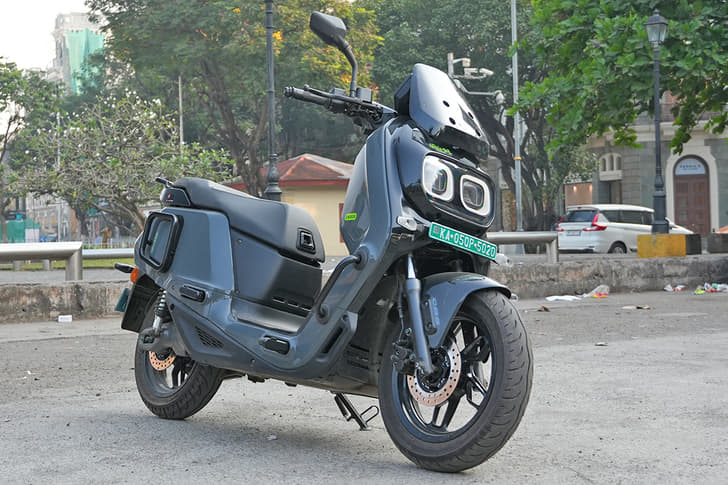
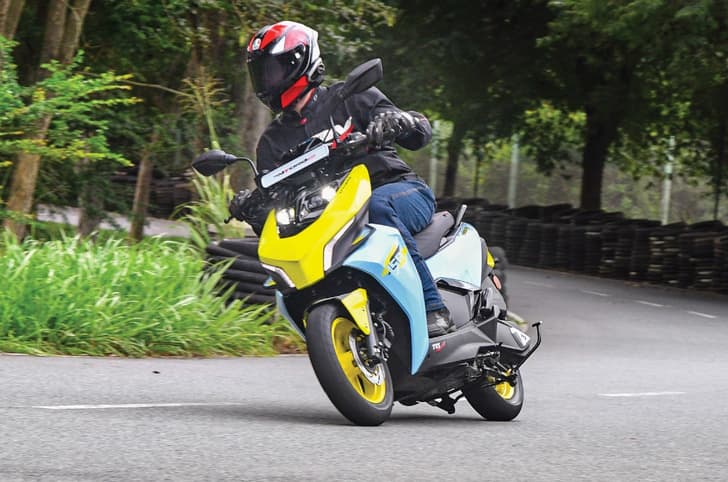
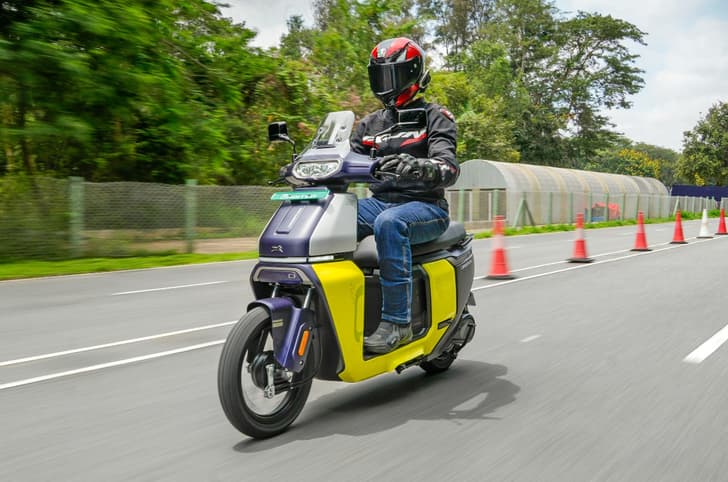
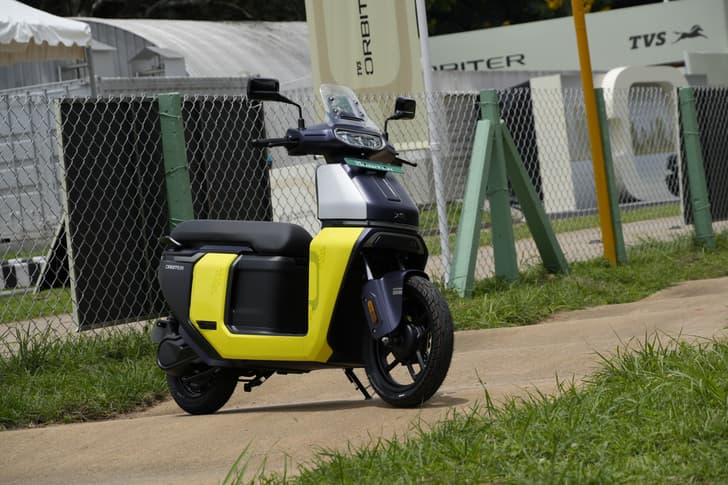
With the iQube, TVS wanted its debut electric scooter to look as innocuous as possible, but with EVs now becoming increasingly commonplace, the company went a different (read: bolder) design direction with the Orbiter. This unusual-looking EV has mostly boxy styling with a few curves and edges sprinkled in here and there.
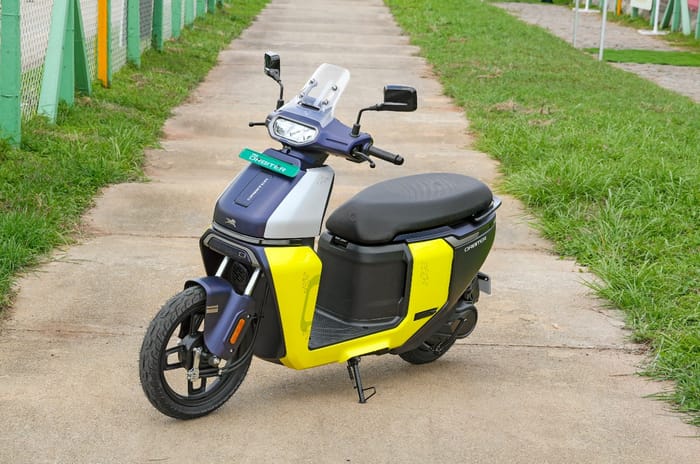
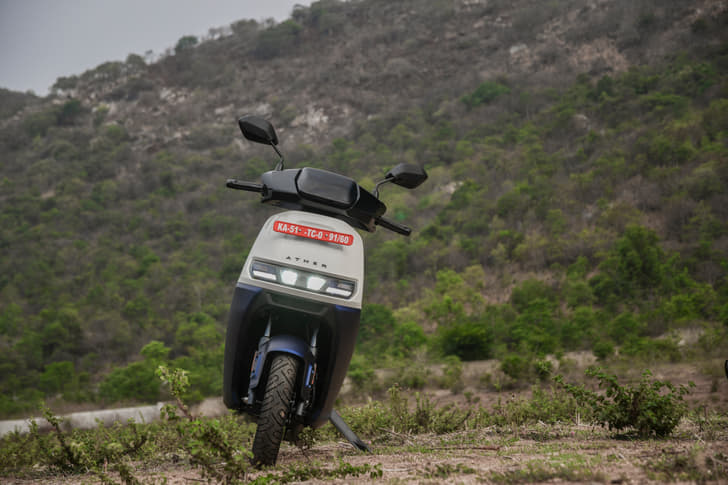
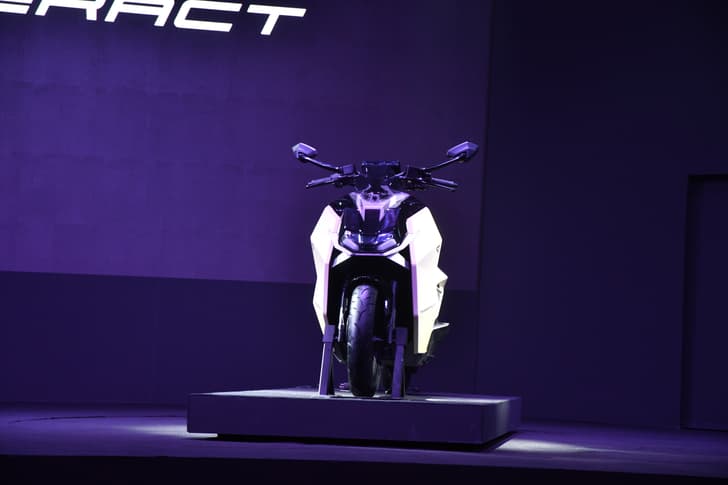
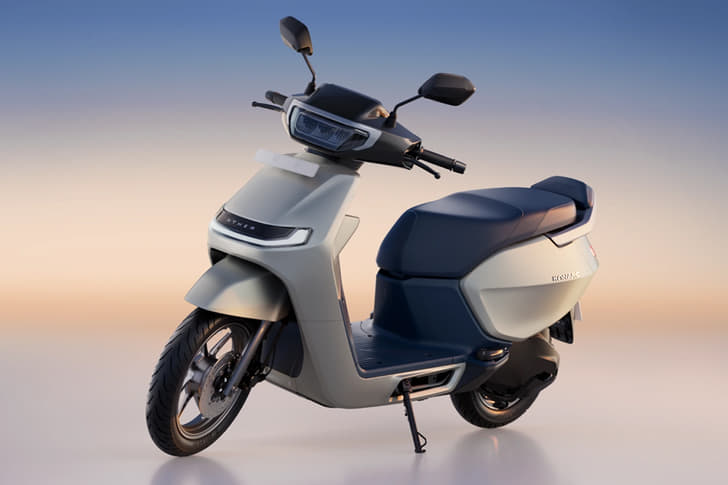
While this design will probably not find universal appeal – unlike the iQube – it does stand out from the crowd, especially in one of the brighter colour options. One curious thing that’s rather amusing was that the handlebar-mounted headlight and the entire front cowl assembly looked a little too familiar to the Ather EL01 concept that was unveiled just a few weeks ago. The Orbiter was launched before that, so it’s surely a coincidence, but it’s still amusing to wonder who copied whose homework. Nevertheless, the Orbiter is a well-finished product with good quality plastics used for the body panels with no panel gaps or rough edges in sight or touch – a typical TVS affair.
TVS Orbiter riding position and comfort - 9/10
Neutral and spacious rider’s triangle
The Orbiter is based on a clean-sheet new frame design in comparison to the iQube, and that has allowed TVS to offer the magical sweet spot of having a low seat height while also having a spacious riding position for a taller rider like myself (5’11).
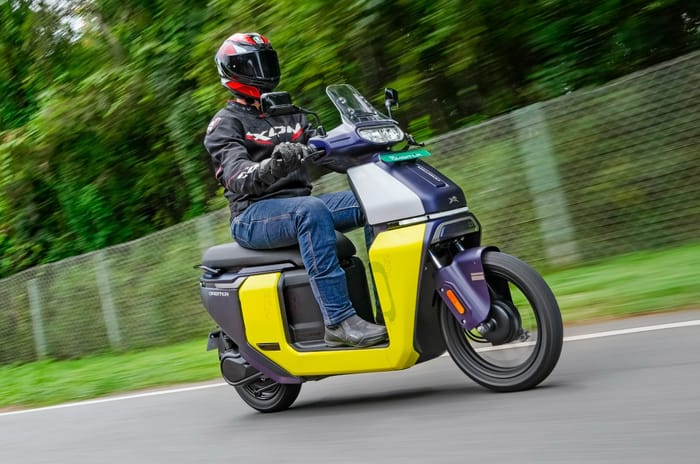
This means that when I’m making lock-to-lock turns, the Orbiter’s handlebar has enough room to pivot so that it doesn’t foul my knees. And while the seat height is low, the riding position doesn’t feel like you’re sitting knees up, which is quite an achievement. The seat itself is also quite generously sized, and I don’t foresee any hassles with carrying a pillion or some luggage.
TVS Orbiter performance and refinement - 8/10
Hub motor is whisper-quiet and has enough pep for city duties
Just like the iQube, the Orbiter also uses a hub motor, but this one isn’t sourced from Bosch (the company hasn’t shared who the supplier is), and it also has lower peak output figures. One of the advantages of a hub-mounted motor is that you get pin-drop silence, whether you’re at 16kph or 60kph, and if this is your first time riding an EV with one, you’ll be quite surprised at how eerily calm it is – riding without any noise at all – although it is something you quickly get used to.
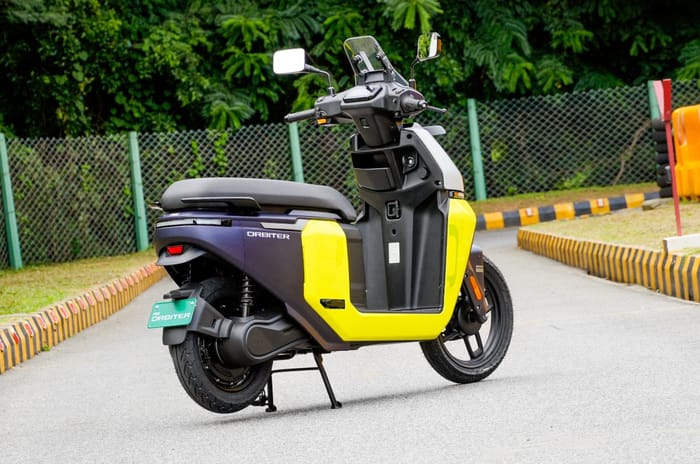
The Orbiter comes with two riding modes – Eco and City – with the former limiting you to 45kph, while the latter has enough juice to allow you to achieve the 68kph claimed top speed. Performance can best be described as unhurried, although it’s not lackadaisical like some other EVs can feel like, even in Eco mode.
Motor BLDC, Hub-mounted | Nominal power 1.8kW | Peak power 2.5kW |
Torque 120Nm | Top speed 68kph | Gradeability 7 degrees |
One thing that we are yet to confirm is the Orbiter’s ability to climb steep slopes and flyovers, especially if a pillion is aboard. With just 7 degrees of gradeability, the Orbiter’s capabilities are a step below the iQube (which is rated at 10 degrees), and only a real-world test will paint a clearer picture.
TVS Orbiter range claims - 8/10
3.1kWh battery is shared with the iQube but has a higher range claim here
The Orbiter packs in the same 3.1kWh battery as the iQube – the only option, because it comes in a sole variant – but has a higher 158km claimed IDC range figure. In comparison, the iQube 3.1 is rated for 123km on the IDC (Indian Driving Cycle). TVS claims the motor’s tuning and the Orbiter’s aerodynamic efficiency are responsible for this gain. While that is quite likely true, we also need to factor in the Orbiter’s lower performance ceiling, which is almost certainly also playing a part.
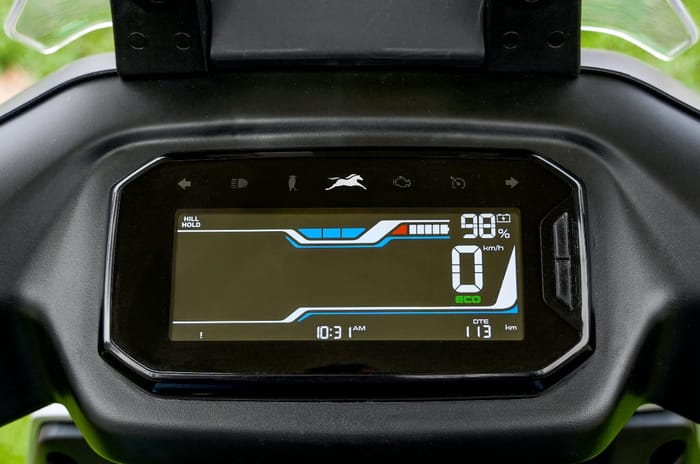
While we didn’t get to test the Orbiter’s range claims, what I can share with you is that on a fully-charged scooter, Eco mode indicated 115km, while city mode displayed 97km. TVS’ range indicator has been highly accurate in our previous experience with the iQube, and we expect that to continue here as well. Nonetheless, the question of real-world range can only definitively be answered once we get to exhaustively test the scooter back in Mumbai.
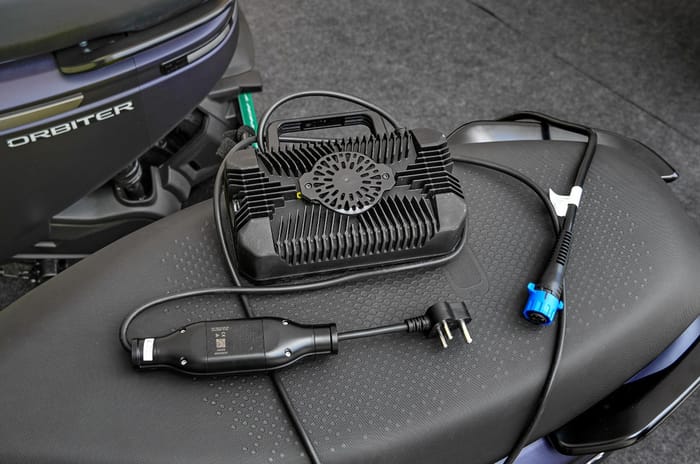
As for how you charge the scooter, the Orbiter ships with a pretty quick 650W charger as standard, and TVS claims a 0-80 percent charge will take 4hr10min.
Battery capacity 3.1kWh | Claimed IDC range 158km | Charging time (0-80%) 4hr10min |
Charger wattage 650W |
TVS Orbiter ride comfort and handling - 8/10
Suspension is tuned toward comfort, not sportiness
With a practical electric scooter such as this, it would be rather unfair to ding it for not having razor-sharp handling, so I'm not going to do so. Instead, what impressed me was that the Orbiter’s soft suspension keeps you comfortable – at least over the precious few bumps we encountered at TVS’ test track.
Seat height 763mm | Kerb weight 112kg | Underseat storage area 34 litres |
Ground clearance 165mm | Wheelbase 1330mm |
How it tackles the chaos and truly atrocious roads of a city like Mumbai is something we'll have to see at a later date. However, the iQube, Jupiter and Ntorq have already proven that TVS does this very well.
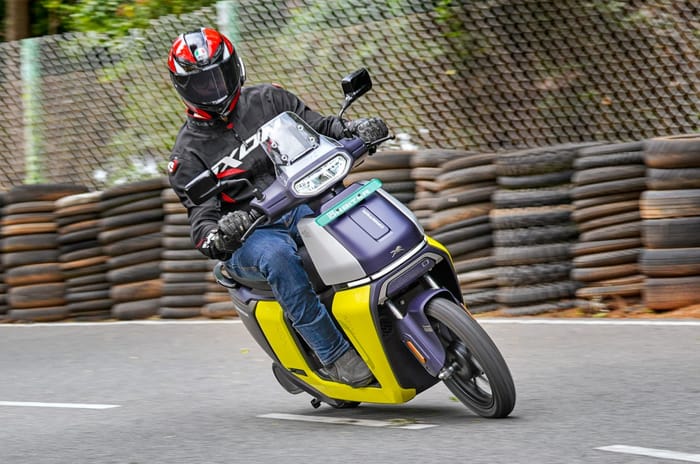
Speaking of tackling bumps, that 14-inch front wheel should aid stability at higher speeds or through rough roads. Surprisingly, there’s very little tradeoff when flicking the Orbiter from side to side, and it feels very similar to a conventional scooter in that sense – a very good thing.
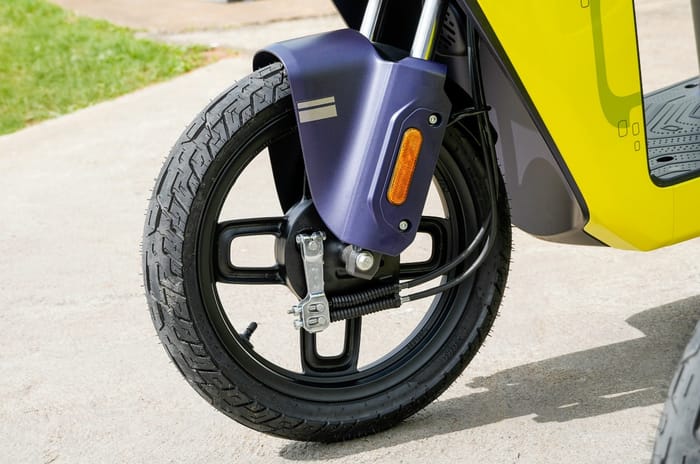
Suspension (F/R) Telescopic fork / Twin shock absorbers | Tyres (F/R) 90/80-14 / 90/90-12 | Brakes (F/R) 130mm durm / 130mm drum |
TVS Orbiter features and safety - 8/10
Cruise control and hill hold are standard
Technology seems to have become non-negotiable on even budget-conscious products these days – for the life of me, I can’t fathom why! – and the Orbiter is no different. This rather humble electric scooter comes with a colour LCD screen (which looks an awful lot like the one on the TVS Raider), cruise control and hill-hold control. The dash can show you call alerts, turn-by-turn navigation, and you can check parameters like battery SOC on your phone via the TVS app. Frankly, outside of the hill hold feature, none of this is likely to be used on a regular basis.
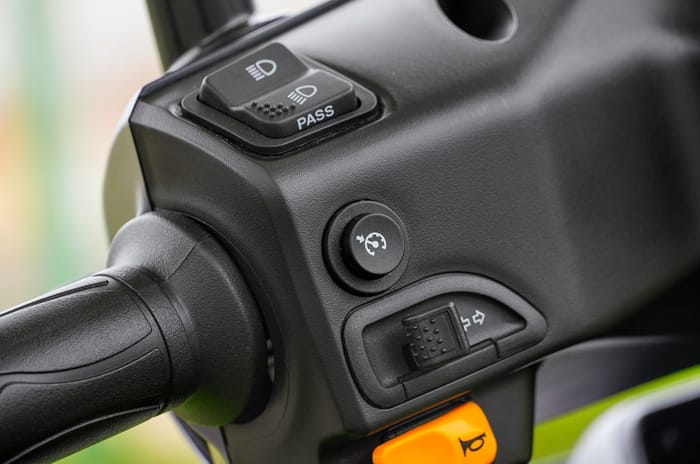
Speaking of the hill-hold function, the way it is activated is that you come to a halt, press either or both brake levers, wait until the scooter beeps, and then you can let go. Subsequently, once you’re ready to go, you simply twist the accelerator and set off – it truly has been executed neatly!
On the utility side of things, you have a large 34-litre boot (although it’s a rather shallow unit), which can accommodate two half-face helmets and a spacious cubby on the front apron with a rather narrow opening.
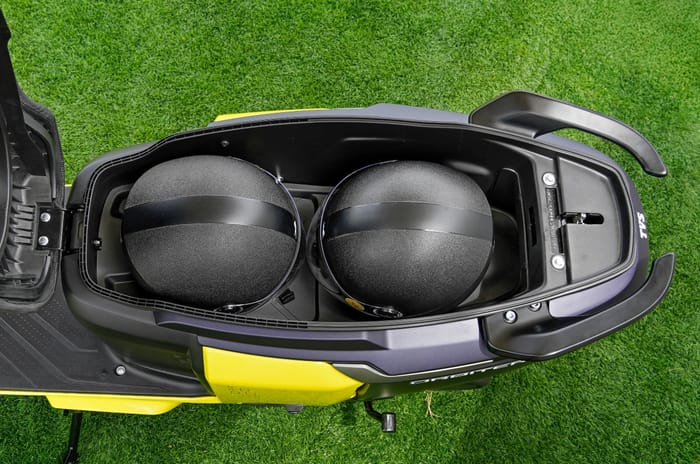
This is actually a good thing, because it will minimise the chances of your belongings falling out when you encounter a larger bump on the road.
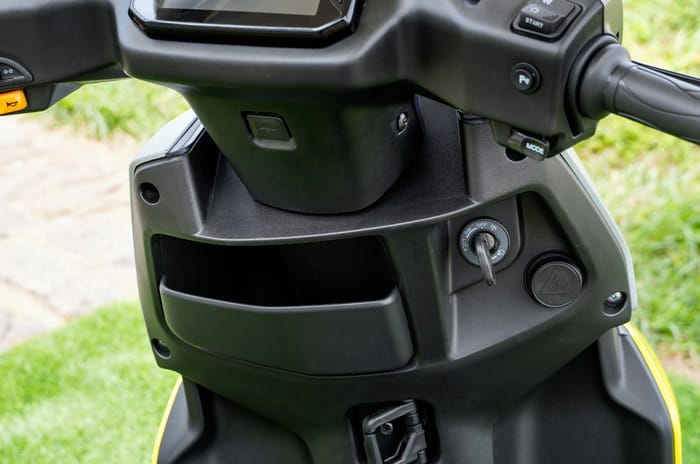
There’s also a USB charger above the said cubby, and you even get a good old-fashioned parking brake lock clasp. While the Orbiter is decently well equipped, the omission of a front disc brake (at least as an option) seems like the bean counters got preference over the engineers in this regard.
TVS Orbiter price and verdict - 8/10
It is a well-rounded product, but it doesn’t have a clear place in the line-up
At Rs 99,900 (ex-showroom, Bengaluru, inclusive of PM e-Drive subsidy and charger), the Orbiter is priced Rs 2,700 below the base iQube 2.2 and Rs 10,100 less than the iQube with a similarly sized 3.1kWh battery, making it the entry-level EV in TVS’ portfolio.
Price (ex-showroom, Bengaluru, inclusive of charger and PM e-Drive subsidy) Rs 99,900 | Vehicle/Battery/Charger warranty 3 years / 50,000km |
Summing up, the Orbiter is a bit of a tough cookie to crack, because on one hand, it does have some clear advantages over the iQube – more space, better claimed range, a slightly larger boot, a big front cubby, as well as cruise control and hill hold.
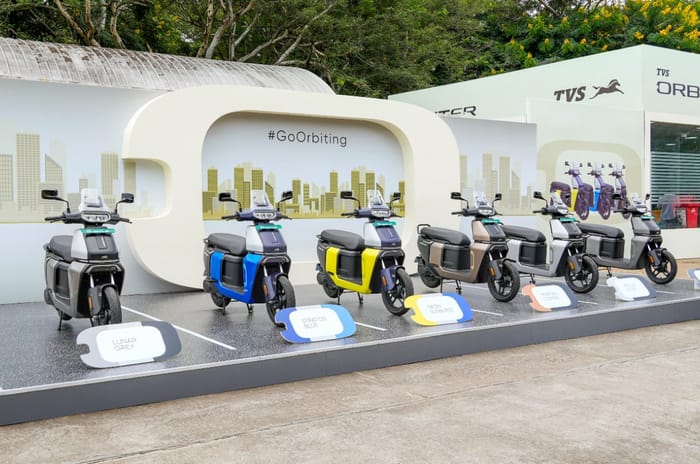
At the same time, its performance is a noticeable step down, but it is also very similar to the iQube in the sort of riding experience it delivers. The similarities in the overall usability leave me wondering – where does the Orbiter fit in? While we can’t yet answer who the Orbiter is exactly for, what is without a doubt is that both it and the iQube are well-engineered and practical, so whichever road you go down, your journey is likely to be a smooth affair!
 Rishaad Mody