Last Updated on: 16 Aug 2026
Bajaj Chetak
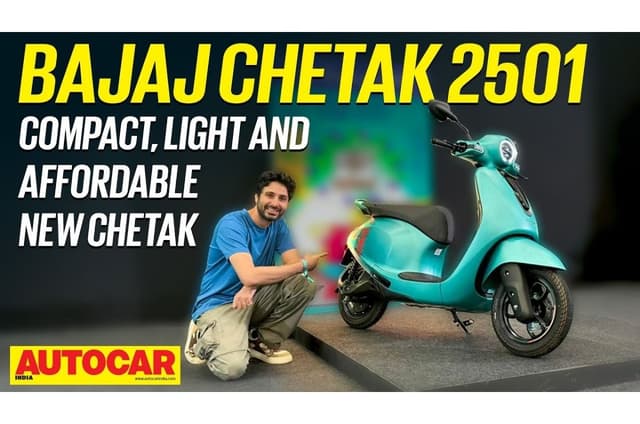
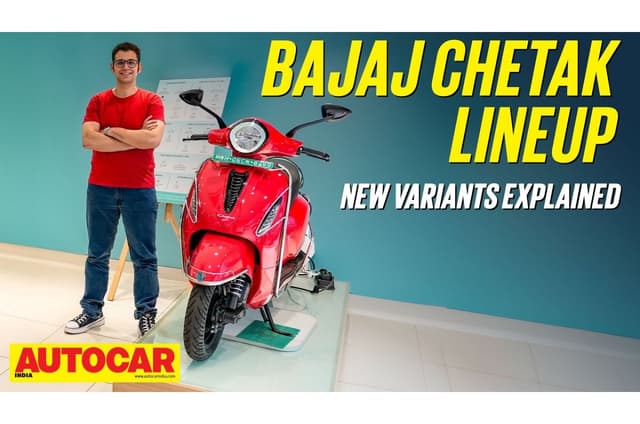
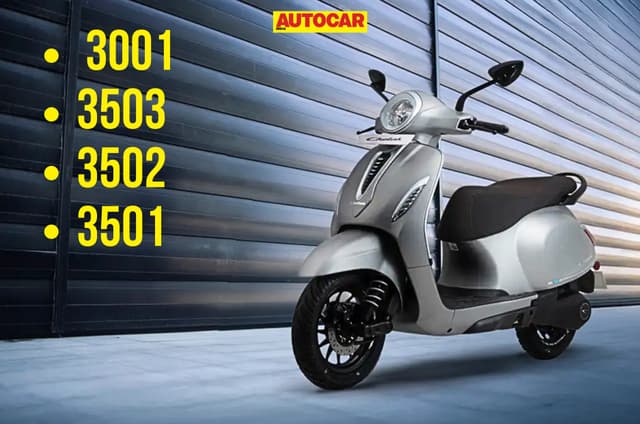
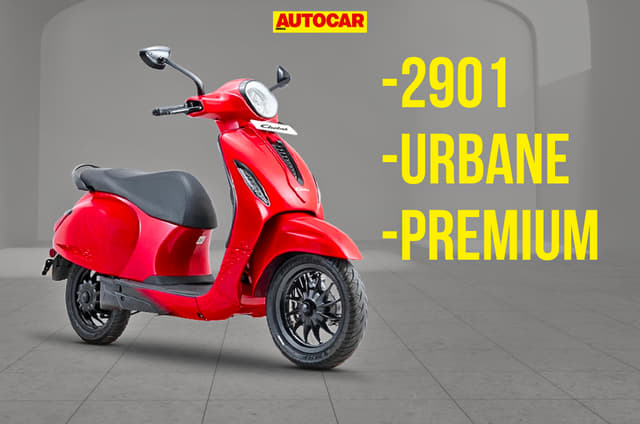
With the launch of the electric version of the iconic Bajaj Chetak on January 14, 2020, the brand made a comeback in the scooter market. Today, the Chetak is available in five variants: C2501, 3001, 3503, 3502, and 3501. The Chetak price starts at ₹96.40 thousand and goes up to ₹1.34 lakh (ex-showroom). On the other hand, the Bajaj Chetak on road price generally falls between ₹1.07 lakh and ₹1.49 lakh, depending on RTO, insurance, and city.
Over the years, the Bajaj Chetak electric scooter has grown into a proper modern scooter. It now offers better range, more features, and a higher top speed. Many people still remember the old Bajaj Chetak, but the new electric version is a completely updated product that is mainly built for city use.
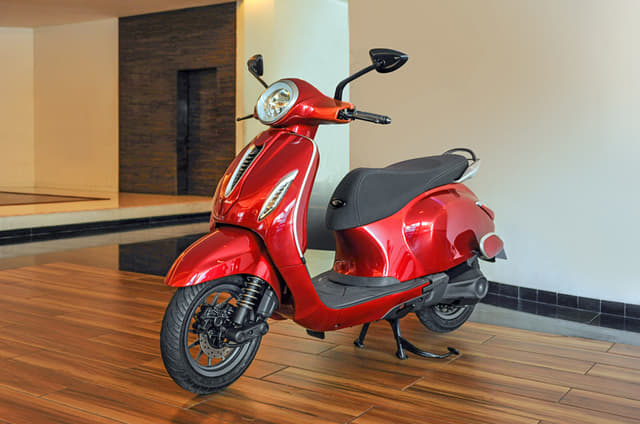
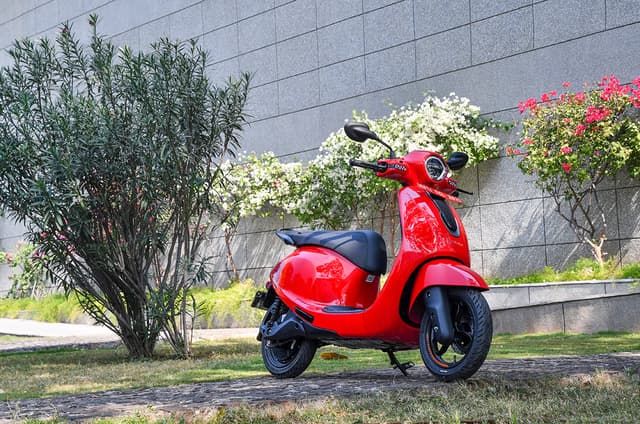
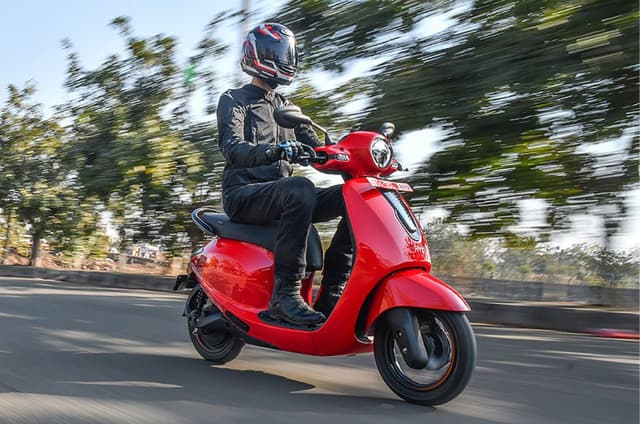
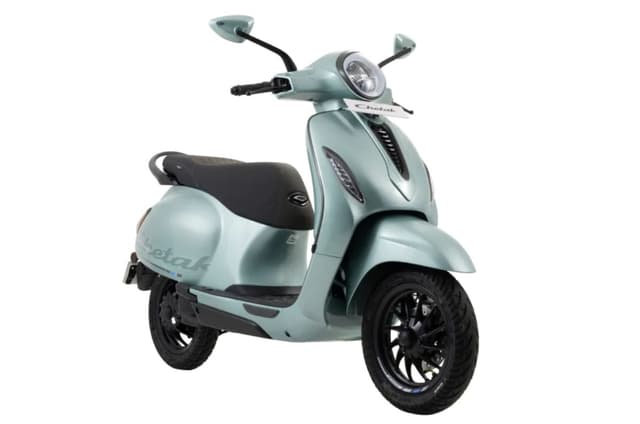
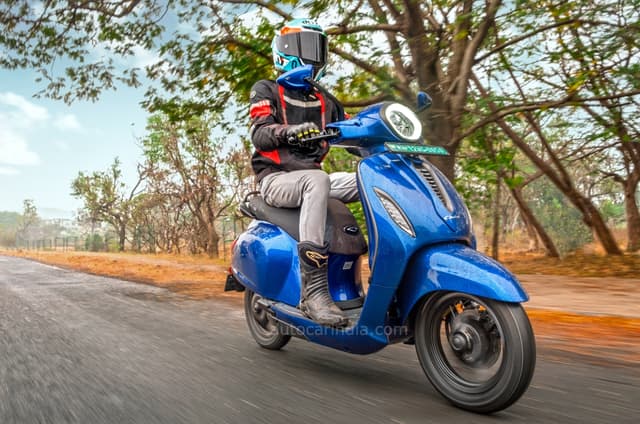
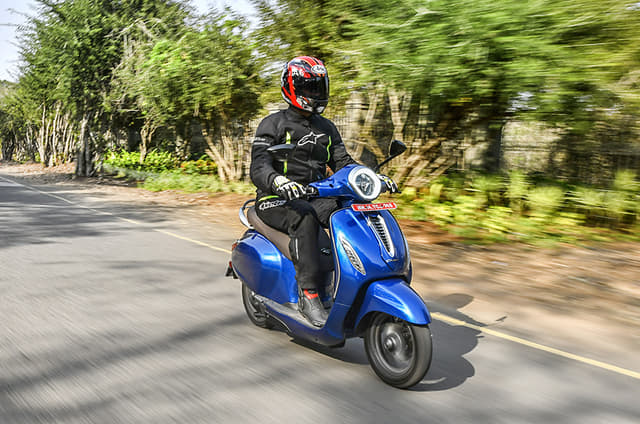
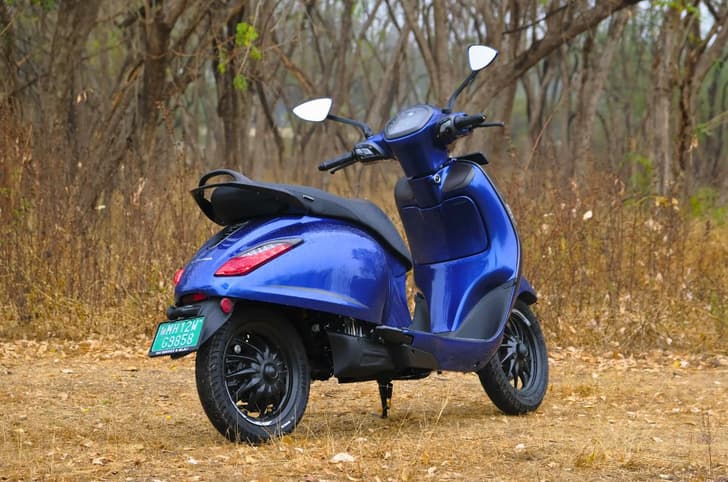
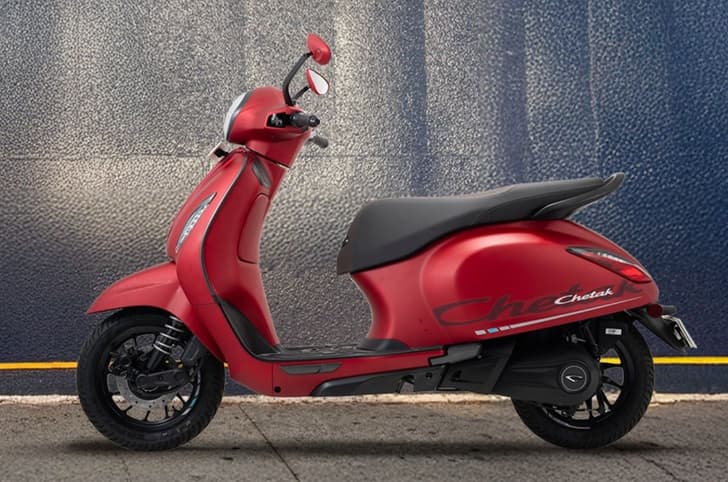
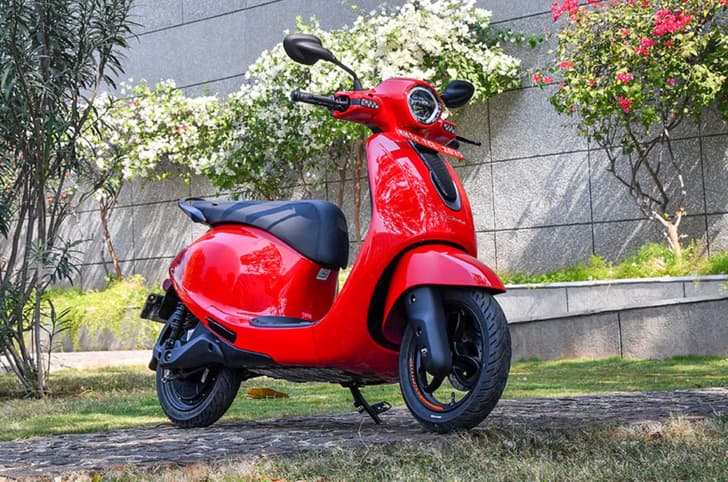
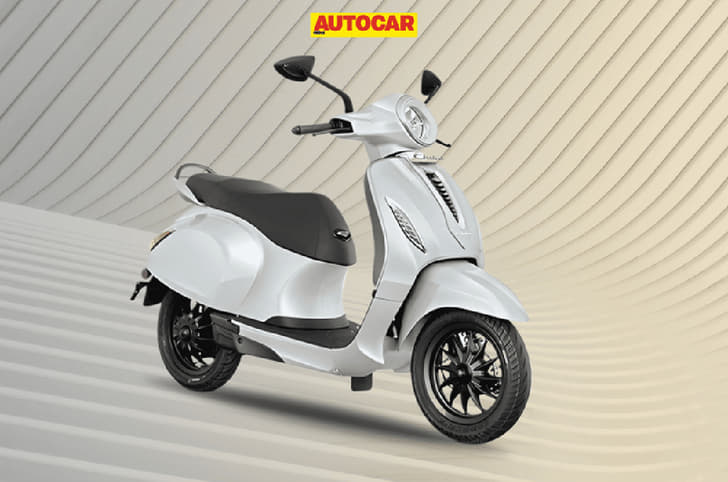
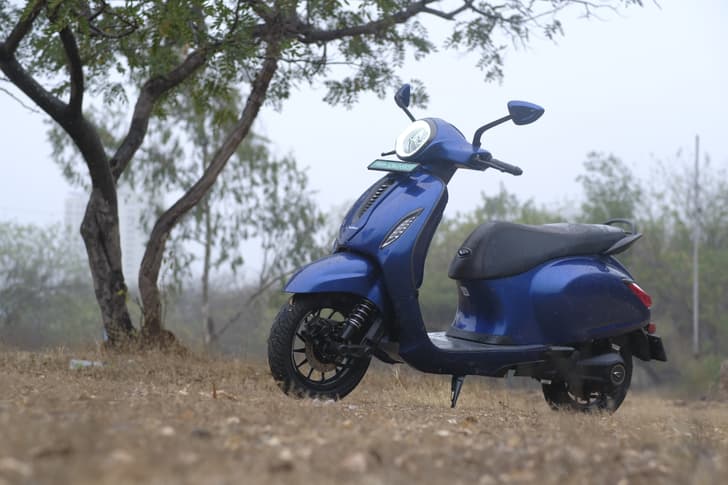
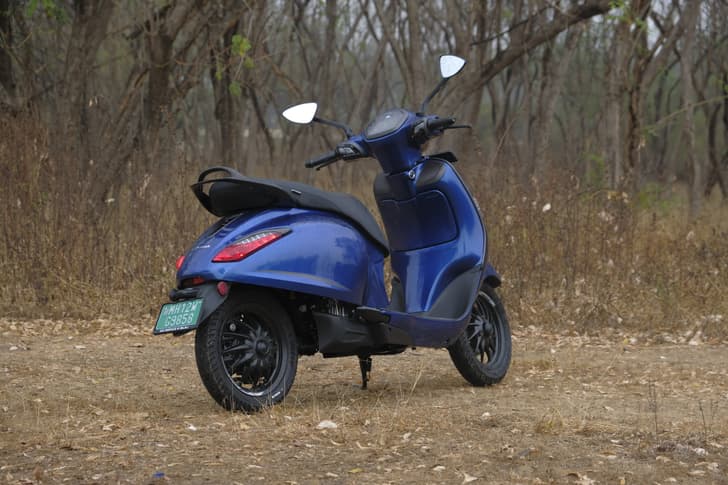
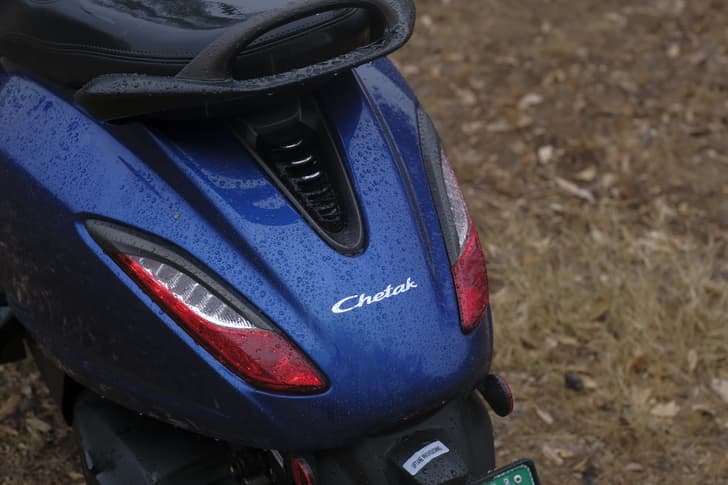
In terms of design, the Chetak is still one of the best-looking electric scooters on sale. It retains its metal body panels and a classy, retro-modern aesthetic. The seat is well padded and comfortable, there is enough space on the footboard, and the riding position feels natural. Some riders may find the ride to be slightly firm, but the Chetak handles bumps quite well and stays stable while taking turns.
The Bajaj Chetak range varies depending on the variant you choose. The Chetak base variant, the C2501 offers a company-claimed range of 113km, while the 3001 variant delivers up to 127 km. Among the 3.5 kWh battery variants, the 3503 offers a claimed range of 151 km, whereas the 3502, and 3501 variants deliver up to 153 km on a full charge.
Chetak Features
The Bajaj Chetak electric scooter comes with a wide range of features depending on the variant:
- 5-inch colour TFT display (Premium variants)
- Reverse mode
- Eco riding mode
- Optional TecPac for Sport mode, navigation, call alerts, music control
- Bluetooth connectivity via Chetak app
- LED lighting setup
- Hill-hold assist (TecPac)
- 21-litre underseat storage (Premium variant)
- 5.5-litre front glove box
Bajaj Chetak Features and specifications
Our Rating | 9 |
Body Type | Scooter |
Battery Range | 113 km - 155 km |
Fuel Type | Electric |
Transmission | Automatic |
Claimed Electric Motor Range | 153 km |
| Fuel Type/ Propulsion | Electric |
| Motor Type | BLDC Motor |
| Lithium-ion battery | Yes |
| Max Motor Power | 3.1 kW |
| EV Battery Capacity | 3.5 kWh |
| Claimed battery range | 153 km |
| Claimed Charging Time | 0-100% in 3 hrs |
| Top Speed | 73 kph |
| Chassis name | Underbone |
| Chassis type | Underbone |
| Front Suspension Type | Single Sided Leading Link |
| Rear Suspension Type | Monoshock |
| Length | 1914 mm |
| Width | 725 mm |
| Height | 1142 mm |
| Wheelbase | 1355 mm |
| Combined Braking System | |
| Hazard lights |
| Bluetooth Connectivity | |
| Brake/Tail Light | LED |
| Clock | |
| Cruise Control |
| Average Speed | |
| Instrument console | Digital |
| Touchscreen | |
| Trip Meter |
Bajaj Chetak price & variants
The Chetak is available in 5 variants: C2501, 3001, 3503, 3502, and 3501. The price of the base variant Chetak C2501 is ₹96.40 thousand, whereas the top-end variant, the Chetak 3501, is priced at ₹1.34 lakh (ex-showroom).
View the latest ex-showroom Chetak electric scooter price, based on variants:
- Chetak C2501: ₹96.40 thousand
- Chetak 3001: ₹99.500 thousand
- Chetak 3503: ₹1.09 lakh
- Chetak 3502: ₹1.22 lakh
- Chetak 3501: ₹1.34 lakh
Also, view the difference in battery capacity, range and charging time based on the variants:
Chetak Variant | Battery Capacity | Range | Charging Time |
Chetak C2501 | 2.5kWh | 113km | 0-80% in 2.25 hrs & 0-100% in 3.45 hrs |
Chetak 3001 | 3.0kWh | 127km | 0-80% in 3.5 hrs |
Chetak 3503 | 3.5kWh | 151km | 0-80% in 3.25 hrs |
Chetak 3502 | 3.5kWh | 153km | 0-100% in 3.25 hrs |
Chetak 3501 | 3.5kWh | 153km | 0-100% in 3 hrs |
Bajaj Chetak expert review
We like
Usable acceleration despite modest specs, brisk up to 50kph in Sport mode
Tempting price with TecPac, competitive with rivals
Unmistakably Chetak design with good build quality
We don't like
Low 55kph top speed limits highway capability
Front suspension feels too soft over sharp bumps, makes thudding sound
8
- The C25 retains the iconic Chetak design language despite being built on a ground-up new architecture with every panel redesigned.
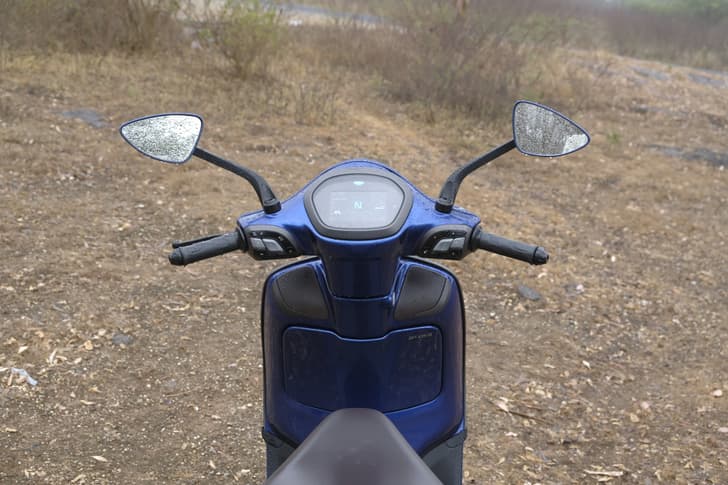
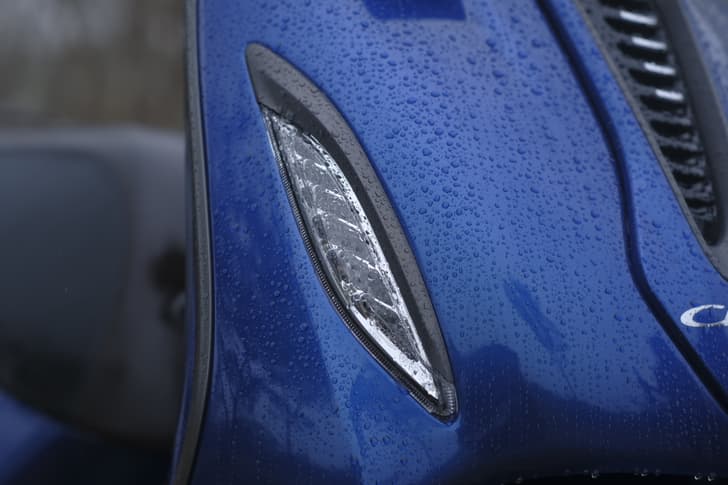
- New LED lamps feature at both ends, facing a simple reverse LCD display that's easy to read in bright sunlight.
- Build quality is impressive with well-finished panels throughout, aside from one minor uneven gap where painted plastics meet black plastics near the handlebar.
- The compact platform sheds 100mm of wheelbase, reducing boot capacity from 35 litres to 25 litres, though it remains deep enough to fit a full-face helmet, a rarity in this segment.
- Practical touches include two open storage cubbies in the front apron and a bag hook.
7
- The ultra-low 763mm seat height makes this exceptionally accessible for short riders and beginners, while the comfortable seat provides adequate room even for taller riders, the 6'1" tester fit reasonably well.
- At just 108kg, the C25 is over 20kg lighter than existing Chetaks, making it easy to handle and maneuver.
- It's a tight fit for two large riders but manageable for short distances.
- The pliant rear suspension with dual shocks soaks up bumps and potholes well, though the front feels too soft on sharp impacts, producing noticeable thudding sounds that encourage cautious riding over bad roads.
7
- The new 2.2kW peak output hub motor (1.8kW continuous) delivers a modest 55kph top speed on paper, but Bajaj has ensured usable real-world performance.
- Two modes are offered: Eco caps speed at 45kph with dulled response, while Sport allows the full performance envelope. In Sport mode, the C25 accelerates briskly to an indicated 50kph and eventually reaches 62-63kph on the display with the throttle pinned.
- The accelerator calibration is smooth and well-executed with a light feel and pleasantly short travel, requiring no exaggerated twisting motions.
- Like most hub motor scooters, it operates nearly silently with only a slight high-frequency whine detectable when pushed hard.
- The scooter climbs flyovers without stress solo, though pillion performance remains to be tested.
7
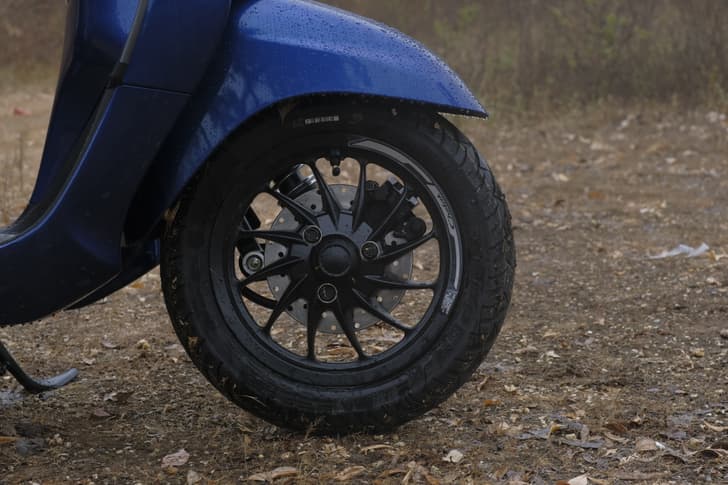
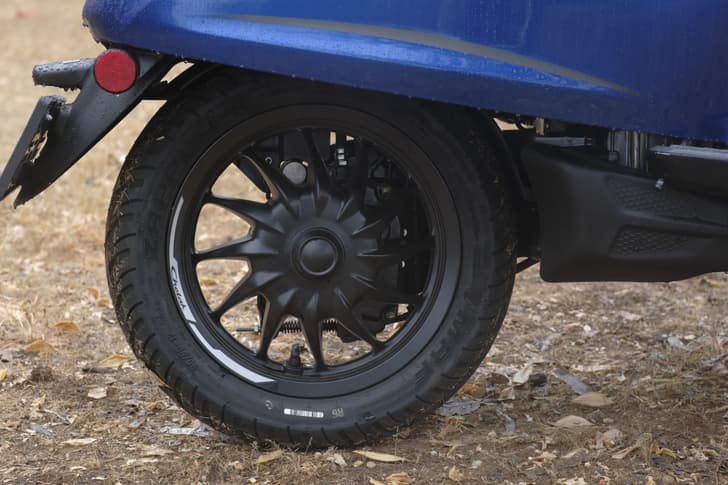
The new platform features telescopic forks at the front and dual rear shocks supporting the lighter 108kg chassis with metal body panels (except plastic front fender and headlamp shroud).
The rear suspension is nicely pliant, absorbing bumps and potholes with composure, but the front feels overly soft on bigger impacts, producing a thudding sound over sharp bumps that detracts from refinement. Despite this, the scooter remains light and easy to maneuver with predictable handling characteristics.
The front disc brake provides good stopping power, and overall, the C25 maintains a quality feel that belies its entry-level positioning.
8
- The simple reverse LCD display shows essentials like battery state of charge, range, speed, and riding mode with excellent sunlight legibility. LED lamps feature at both ends.
- The critical TecPac (₹3,000 optional upgrade) unlocks Bluetooth connectivity with call and music control, Hill Hold, Eco mode, reverse mode, remote boot opening, and parking brake lock, highly recommended as the scooter is limited to just 45kph and Eco mode only without it.
- The 2.5kWh battery pack offers a claimed 113km IDC range with around 90km expected in real-world use. There's no onboard charger, but Bajaj supplies a powerful 750W portable unit enabling 0-100% charging in 3 hours 45 minutes through a port under the seat with cable routing that allows locked-boot charging.
9
- The Bajaj Chetak C25 successfully carves out a new entry-level niche as a compact, lightweight, beginner-friendly electric scooter at an attractive price point (with essential TecPac).
- This is a ground-up new product on a fresh architecture, not just a stripped-down existing Chetak, and it shows thoughtful engineering throughout. Despite modest specs on paper, the C25 delivers usable real-world performance with brisk acceleration to 50kph and responsive throttle calibration that keeps pace with city traffic.
- The ultra-low 763mm seat height and 108kg weight make it exceptionally accessible for shorter or newer riders, while still accommodating taller riders surprisingly well.
- The 25-litre boot is smaller than the 35-litre on regular Chetaks but remains one of few scooters fitting a full-face helmet.
- Build quality doesn't feel compromised despite the lower price, maintaining Chetak's premium metal body construction and finishing.
- The front suspension could be better damped over sharp bumps, and highway riders will miss having more top-end performance, but for short urban commutes where simplicity and ease-of-use matter most, the C25 hits the sweet spot.
- At current price, it matches the Vida V2 Go 2.2 and undercuts the TVS iQube 2.2, making it excellent value for a well-made, well-thought-out entry-level EV that expands rather than dilutes the Chetak family.
Reviewed by: Rishaad Mody
Bajaj Chetak reviews

Bajaj Chetak Range
Since the Chetak is an electric scooter, its mileage is measured in terms of range per full charge rather than kpl. The Bajaj Chetak range varies depending on the variant and battery capacity.
Here’s a clear breakdown of the Bajaj Chetak mileage (claimed range) across variants:
- C2501 (2.5 kWh battery): 113 km range
- 3001 (3.0 kWh battery): 127 km range
- 3503 (3.5 kWh battery): 151 km range
- 3502 (3.5 kWh battery): 153 km range
- 3501 (3.5 kWh battery): 153 km range
| PowertrainThe combination of engine type, fuel, and transmission that powers your vehicle and determines how it drives and what it runs on. | ARAI RangeMileage certified by the government, tested under controlled lab conditions. Real-world mileage will vary. |
|---|---|
Electric-Automatic (Automatic) 2.5 kWh | 113 km |
Electric-Automatic (Automatic) 3 kWh | 127 km |
Electric-Automatic (Automatic) 3.5 kWh | 155 km |
Bajaj Chetak news
Bajaj Chetak Images
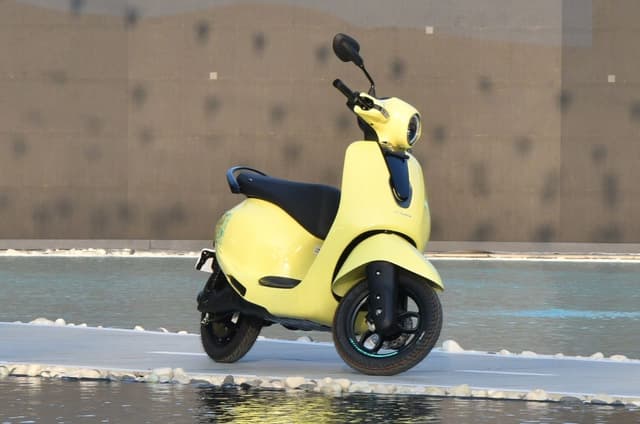
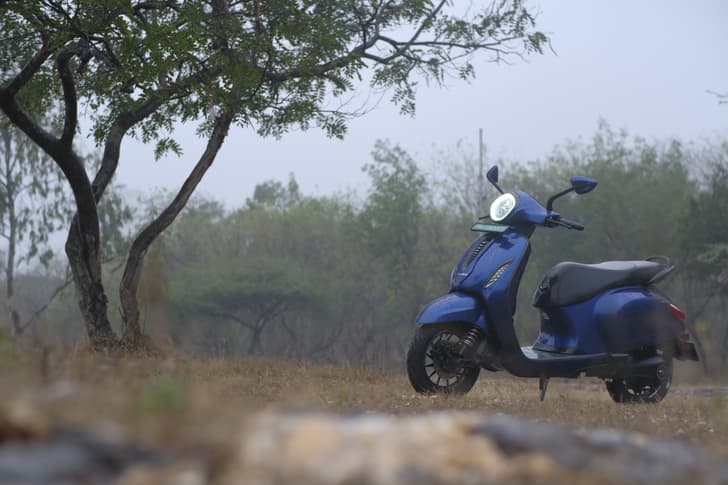
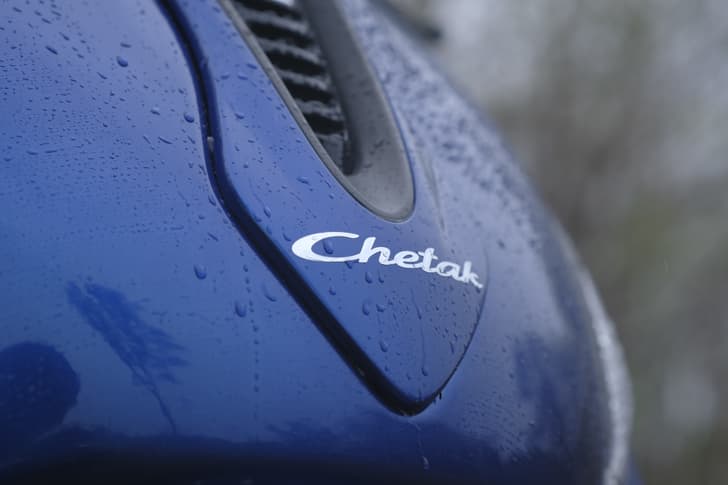
The Chetak images highlight its retro-modern styling, metal body construction, and clean design language. The gallery showcases:
- Signature round LED headlamp with integrated DRLs
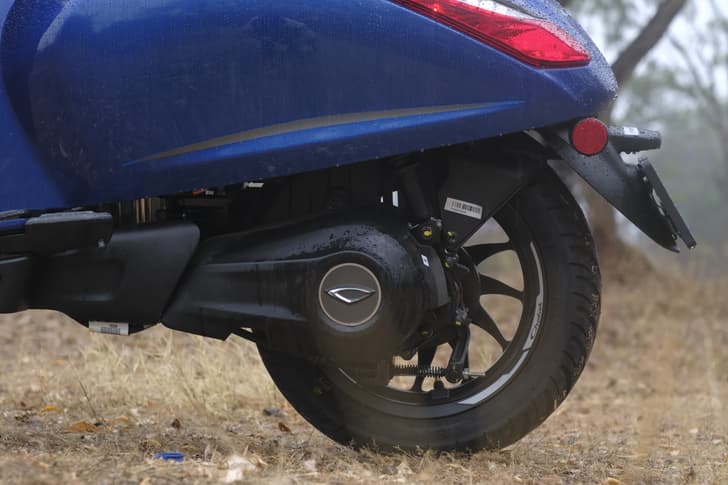
- Solid metal body panels with smooth curves
- Colour-matched alloy wheels
- Premium dual-tone seat finish
- Flush-fitting panels and high-quality paint finish
- Rear LED tail-lamp and minimalist side profile, etc.
Browse through 38 Bajaj Chetak electric scooter photos to understand its design from multiple angles and across all available variants.
Bajaj Chetak videos
The Bajaj Chetak appears in 5 videos, offering viewers an in-depth look at its design, performance, and features. These videos help potential riders gain valuable insights into this electric bike's appearance, handling, and real-world capabilities.


Bajaj Chetak Colours
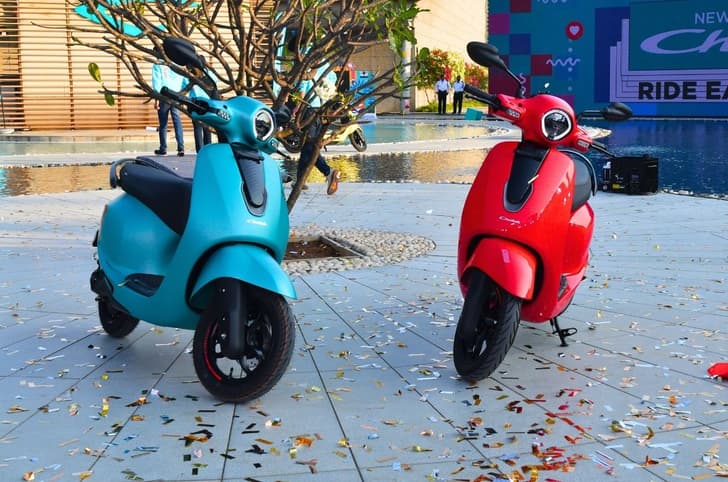
The Chetak colours lineup includes 6 shades:
- Brooklyn Black
- Citrus Rush
- Cyber White
- Hazelnut
- Indigo Metallic
- Velluto Russo
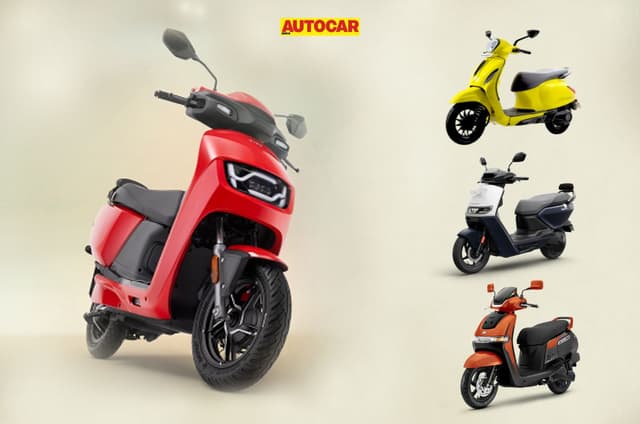
Similar Bikes to Explore
Bajaj Chetak FAQs
The Bajaj Chetak price starts at ₹96.40 thousand and goes up to ₹1.34 lakh (ex-showroom), depending on the selected variant.
The Chetak electric scooter price on road generally falls between ₹1.07 lakh and ₹1.49 lakh, depending on city, RTO, and insurance charges.
The approximate Chetak battery replacement cost ranges between ₹65,000 and ₹75,000, depending on the battery capacity (2.5 kWh, 3.0 kWh, or 3.5 kWh) and service center location.
Yes. The Bajaj Chetak electric scooter is mainly designed for urban commuting. It offers smooth acceleration, practical storage, and multiple riding modes.
Yes. The Bajaj Chetak electric vehicle is completely different from the Bajaj Chetak old petrol model. The new version is fully electric with modern features and battery-powered drivetrain.
Yes. The Bajaj Chetak black colour option is called Brooklyn Black.
The Bajaj Chetak electric scooter launch took place on January 14, 2020.
Since it is an EV, Bajaj Chetak mileage is measured as range per charge. Depending on variant, it offers between 113 km and 153 km of claimed range.
You can locate a Bajaj Chetak service center through the official Bajaj website or My Chetak app by searching for - Bajaj Chetak near me.
The Bajaj Chetak colours include Brooklyn Black, Citrus Rush, Cyber White, Hazelnut, Indigo Metallic, and Velluto Russo.
The Bajaj Chetak is an electric scooter. Not a motorcycle.
The Bajaj Chetak range varies between 113 km and 153 km depending on the selected variant.
Questions you may find useful
Hi there. I am planning to buy an electric scooter for my daily commute of around 30 km. I have test-ridden the TVS iQube, Bajaj Chetak 3502 and Ather Rizta. I found the Chetak to be quieter and smoother, while the Rizta makes a sound similar to an e-rickshaw. I also wasn't impressed with the braking performance of the TVS iQube, so I've ruled it out. Which scooter would be the better choice in terms of after-sales service, reliability and cost per kilometre?
After-sales and servicing depend on a multitude of factors, and you should choose between the Rizta and Chetak based on which dealer and service centre feels like the safer bet to you. Cost per kilometre will also vary largely based on how much you ride every day and how fast you do so (because range will vary as per the riding mode you're in), so it's hard to accurately gauge this. Both the Rizta and Chetak are proven products and are pretty evenly matched, except in terms of price, where the Rizta is quite a bit more expensive. So, pick whichever one you like more.
I want to buy an electric scooter for nearly 30 km of daily travel. My budget is around Rs. 1.45 lakh. I am confused between Vida VX2 Plus and Chetak 3503. I also looked for Ather Rizta S Base which has low range but it is out of my budget. For TVS IQube, I looked for 3.5kwh base model that was around Rs. 1.49 lakh but I have heard of some issues with it during rainy days and it does not support fast charging. Vida VX2 Plus is the cheapest of all but I have heard about its AUX issues, build quality of switches, app glitches. For Chetak, I have heard of its battery issues and that, it does not support fast charging for 3503. Please suggest which EV would be suitable for daily city use in this budget. My priorities are good reliability, low maintenance and good range.
In the electric scooter segment, the TVS iQube and Bajaj Chetak models are hard to go wrong with, and no matter which one you choose, you're likely to end up with a safe purchase which will safely last you many years. Coming to issues with using the iQube during the monsoon, you're unlikely to have any - this is a scooter that has proven its mettle over the past 6 years that it has been on sale. The base 3.5 variant of the iQube in your shortlist, has a 650W charger as standard and it should be sufficiently quick for most daily needs. Its a similar story with the Bajaj Chetak. Any unfortunate battery issues you face will be covered under warranty and even so, these instances are few and far between, not widespread occurrences. The Chetak 3503 also has pretty quick charging times, with the Bajaj website stating a 3hr25min duration for a 0-80 percent top-up, which should be more than enough for your daily needs. Hero's Vida VX2 has come onto the scene relatively later but judging by the fact that these have started to become a fairly commonplace sighting on our roads, the market seems to have given it a good response. We'd recommend a visit to each scooter's authorized dealership and take thorough test rides to ensure you cover every aspect before you make your decision.
Hi Autocar Team, I am planning to buy an electric scooter that will be used by all members of my family. I am currently considering the Ather Rizta (2.9 kWh), Bajaj Chetak 3501, and TVS iQube S. Could you please suggest which of these options would be the best overall choice in terms of comfort, practicality, performance, and reliability?
All three options you have shortlisted are actually very well-rounded EVs and are frontrunners in the electric scooter market in terms of sales, long-term reliability and brand recall. Therefore, picking between them will boil down to personal preferences toward design, comfort, real-world range and features. The TVS iQube S and Bajaj Chetak 3501 are undoubtedly more VFM here because they come with larger battery packs, thus, longer distances before you need to charge them. You can easily expect a real-world range of over 100km, even when ridden quite aggressively, which the Ather Rizta 2.9 will not be able to match because it has a smaller battery pack. When it comes to boot space, it might seem like all three are evenly matched, but the real-world picture is slightly nuanced. To recap, the iQube S has 32 litres of underseat storage, whereas the Ather Rizta has 34 and the Bajaj Chetak has 35. Now, on paper, it's a negligible difference, but the TVS' boot is much shallower than the Bajaj and Ather scooters. It means you'll have to be smart with how you pack your belongings in it. Plus, an imported ECE-certified helmet will not fit inside the TVS, in case that is a consideration for you. When it comes to after-sales experience, all three are largely good to live with, although it will vary depending on where you're located.Take an exhaustive test ride of all three before you make a decision. All three are straightforward, practical, reliable EVs, so no matter which one you choose, it's likely you'll be happy with it.
Hi Autocar Team, I am planning to replace my 2012 Hero Honda CD Deluxe. My usage is strictly within the city, specifically a 28 km daily round trip for office and market chores. Interestingly, we already have two Hero Vida V1s at home (one Pro and one Plus). Since the V1 is quite feature-heavy, I don’t want to spend extra on premium features or performance for this new purchase. That’s why I have ruled out the Ather Rizta and TVS iQube. I am looking for a reliable, no-nonsense entry-level electric scooter. My current shortlists are: Hero Vida VX2 Go (3.4 kWh) TVS Orbiter Bajaj Chetak 2501 Since all of these offer the basic, essential features I need, which one would be the most practical choice for a daily city workhorse? Does sticking with the Vida ecosystem (VX2 Go) offer any real advantage, or should I consider the Orbiter or the all-metal Chetak 2501 instead?
Since you are intimately familiar with the Vida ownership experience, buying the Vida VX2 Go 3.4 will likely be your safest bet. This scooter also offers more range and performance than the TVS Orbiter and Bajaj Chetak C2501 models you have shortlisted. So, objectively speaking, you should stick with the Vida e-scooter.The Orbiter's USP is that it is one of the most spacious electric scooters around, while on the other end of the spectrum, you have the petite Bajaj Chetak C2501. Unless you have an unusually tall or shorter physique, we'd recommend sticking with the Vida. The only reason you should look at the others is if you want to change things up and switch to a different brand.
After five years of remote work, I now commute 40 km daily. I previously owned a Yamaha FZ-S (2012), which I’ve given to my uncle, and I currently use a Honda Dio (2012) for short trips, but the Dio gives me back pain on longer rides. My priorities are reliability, comfort, lightness, and efficiency. I’m interested in electric scooters like the TVS iQube and Bajaj Chetak, but I’m worried about back pain. Please suggest electric motorcycles (if any) or ICE bikes within a ₹2 lakh budget, with a little flexibility.

Currently, in the electric two-wheeler space, scooters are proving to be a far more convincing purchase and in the sub-2L space, we would suggest you go with any of these three options for a 40km daily commute: Ather Rizta Z 3.7, Bajaj Chetak 3502 or 3503 or the TVS iQube 3.1 / 3.5. Do take a test ride of all of these to see which one is the most comfortable for your physique.Coming to ICE bikes, you have a litany of options under the 2L mark for your sort of usage. For good comfort, efficiency and lightness we would recommend a 160cc commuter machine like the Bajaj Pulsar N160, TVS Apache RTR 160 4V, Honda Unicorn / SP160 or the Suzuki Gixxer 150 models. Since you have used an FZ previously, you could also look at a modern model, although in our opinion, the options mentioned above give you more for your money.
Upcoming Bikes


Bajaj Bikes

Trending Bikes
Latest Bikes